HRM L5: Expanding the talent pool (Staffing / Talent Acquisition)
 Call Kai
 Learn
Learn Practice Test
 Spaced Repetition
 Match
Match Flashcards
 Knowt Play
1/30

There's no tags or description
Looks like no tags are added yet.
Name | Mastery | Learn | Test | Matching | Spaced | Call with Kai |
|---|
No analytics yet
Send a link to your students to track their progress
31 Terms
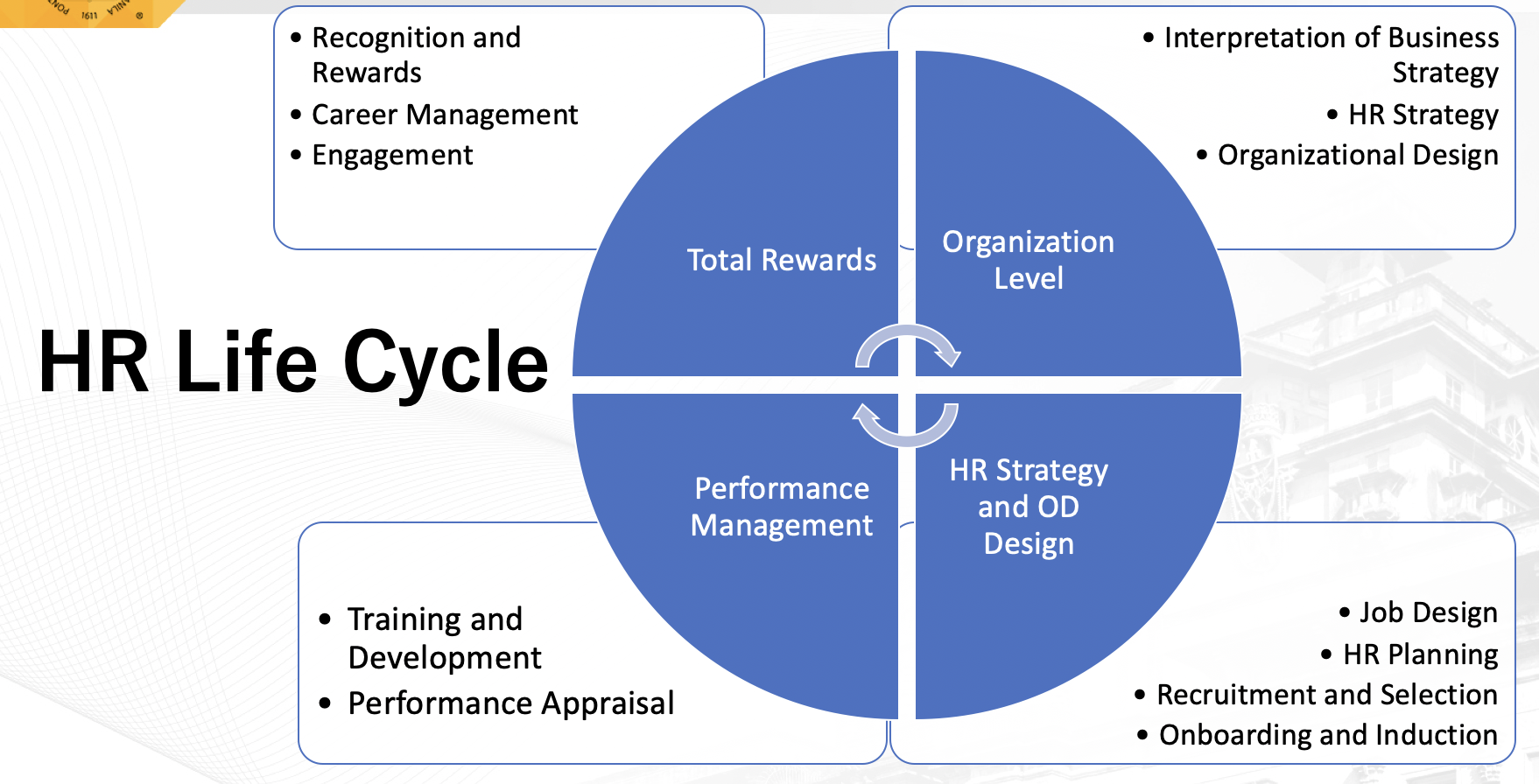
HR life cycle
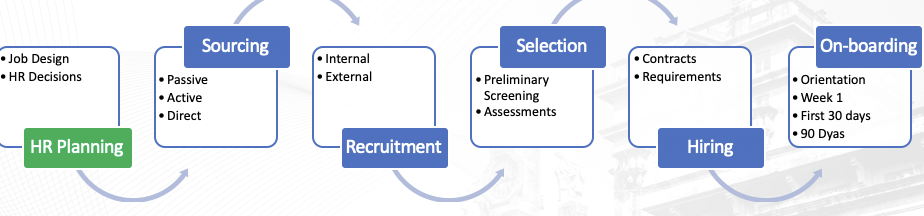
talent acquisition process
HR planning: job design & HR decisions
sourcing: passive, active, direct
recruitment: internal & external
selection: preliminary screening & assessments
hiring: contracts & requirements
on-boarding: onboarding, week 1, first 30-90 days
strategic aspects of recruiting
decisions about talent
broad factors that affect a firms recruiting strategy
decisions about talent
how recruitment is planned carefully to support the organization’s long-term goals, not just to fill job vacancies quickly
all decisions about the talent need to be considered within the context of a business strategy & priorities
example: if company plans to expand customer service / dining experience, HR are to recruit: skilled chefs & experienced waitstaff
broad factors that affect a firms recruiting strategy
recruiting abilities: company’s ability to attract hires
recruit externally VS internally: hire inside / outside of company
labor market for types of positions it is recruiting: availability of skilled workers
strengths of a firms employment brand: company reputation as a workplace
list of positions / people who recruits
large firms: HR recruiters / generalist
smaller firms: managers / supervisors
work teams
recruiting process outsourcing (RPO): practice of outsourcing an organization’s recruiting function to anoutside firm
example: agency
should a firm recruit internally or externally?
most managers follow a policy of filing job vacancies above entry level through promotions and transfers
in this way, organizations can capitalize on the investments it already made in employees since current employees already know the company / how it works
may also look for jobs elsewhere if they have no promotion opportunities
these are advantages and disadvantages for both
inbreeding
behavior when managers and business owners tend to form their project / business teams to be “monolith” (group that is very uniform / all the same)
team is consisted of employees with whom they have a lot in common
managers adjust their selection policy to support this aim
effects: no more newness / new set of skills
labor markets
area from which applicants are to be recruited
shows whether companies can easily find employees or not
2 types of labor market
tight market
loose market
tight market
high employment, few available workers
company must compete to attract employees
ex: many companies are opening new restaurants in a city, but most chefs and waiters already have jobs. hence, restaurants may:
offer higher salaries / benefits
loose labor market
low employment, many available workers
employers can easily find workers
ex: during economic recession, many business close & people lose their jobs. due to this:
companies receive applications, employers may offer lower salaries
factors determining relevant labor market
skills and knowledge required for a job: competitive advantage: specialize on certain areas
level of compensation offered for a job: the higher the pay = more stressful / demanding
reluctance of job seekers to relocate: do not want / hesitant to move to another place for a job
ease of commuting to workplace: easy / convenience of employees to travel to work
location of job: geographic location of the workplace. is it urban or non urban?
sourcing
identifying where / who to recruit
4 kinds of sourcing
passive sourcing
active sourcing
direct sourcing
indirect sourcing
passive sourcing
target: candidates who are not actively looking
when you need a lot of people in one position
can be employed but not looking for a job
example:
a recruiter finds a professional on LinkedIn to invite to join in the company
active sourcing
target: when candidates actively search
can be employed or unemployed individuals
example:
people applying through job boards, company websites, or career fairs
direct sourcing
target: specific candidate for a job position usually for a higher level such as an executive company directly searchers for / contacts candidates instead of relying on agencies / third parties.
example:
HR directly messages potential applicants
indirect sourcing
relying on agencies / third parties to source applicants for you
2 types of recruitment
internal recruitment
external recruitment
internal recruitment
the process of filling job vacancies with current employees
reduces hiring costs, accelerates onboarding, and boosts morale
identifying talent through performance appraisals
skill inventories and replacement charts
example: promotions, transfers, or internal job postings.
external recruitment
the process of hiring candidates from outside an organization to fill vacancies access to a wider, more diverse talent pool and fresh industry perspectives
usually through advertisements, walk ins / unsolicited applications, internet, social networking, mobile recruiting, job fairs
can also be done through employee referrals, re-recruiting, executing search firms, professional associations, labor unions, agencies, employee listings and educational institutions
example: company joins a job fair at a university to hire fresh graduates
warning signs of a weak talent “bench”
takes a long time to fill key positions
key positions can be filled only by hiring from the outside
vacancies in key positions cannot be filled with confidence in the abilities of those chosen for them
replacements for positions are often unsuccessful in performing duties
promotions are made on the basis of whim, favoritism, nepotism
3 ways to improve effectiveness of recruiting
using realistic job previews
surveys
recruiting metrics
using realistic job previews
giving applicants honest / complete description of the job both good and difficult parts
no sugar coating to understand what the job really is
surveys
HR uses this to gather feedback about the recruitment process
to find out what works well and what needs improvement
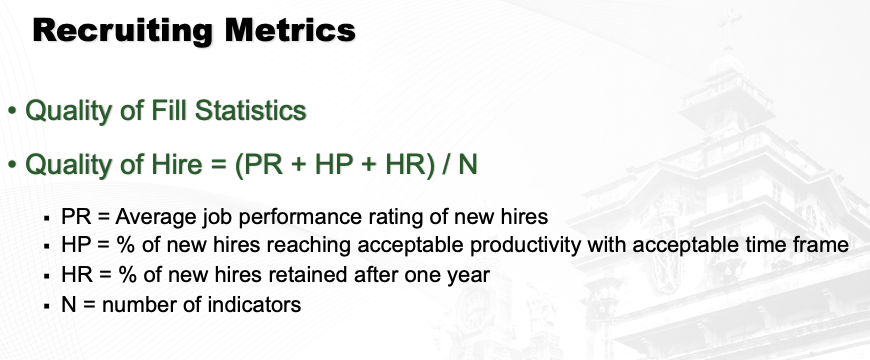
recruiting metrics
data / measurements used to evaluate how effective the recruitment process is
to see whether the strategies implemented are working
recruiting metrics example
time to fill
number of days from when a job opening is approved to the date the person ultimately chosen for the job is selected
yield ratios
percentage of applicants from a recruitment source that make it to the next stage selection process
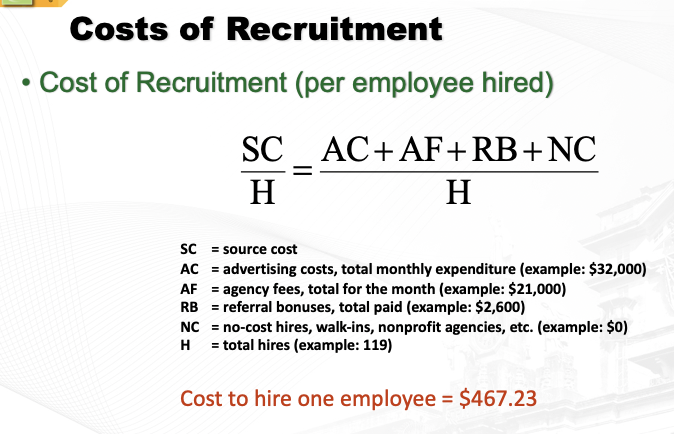
cost of recruitment