PSIO LAB Block 3
 Call Kai
 Learn
Learn Practice Test
 Spaced Repetition
 Match
Match Flashcards
 Knowt Play
1/29

There's no tags or description
Looks like no tags are added yet.
Name | Mastery | Learn | Test | Matching | Spaced | Call with Kai |
|---|
No analytics yet
Send a link to your students to track their progress
30 Terms
Esophagus function and sphincter
ingestion
Upper esophageal sphincter: regulate swallowing reflex and keeps excess air out of esophagus when not in use
Peristalsis - occurs to move food
Lower esophagel sphincter - prevents reflux of contents from stomach
Pyloric sphincter
keeps contents in stomach until liquified and regulates slow release of chyme
Stomach Layers and function
Muscosa
Submucosa
Muscualris
Serosa
digestion
Small intestine parts and sphincter and function
Duodenum
Jejunum
Ileum
ilocecal sphincter: valve separating the small from the large intestine
absorption and digestion
How does the small intestine do so much absorption
Plicae circularis (circular folds)
Villi
Microvilli
Large intestine function and sphincter and function
Function: absorbs remaining water
Internal anal sphincter(SM)
External anal sphincter (skeletal muscle) of anus
absorption and elimination
Teeth and their functions
Molars: grind food
Premolars: crush and grind food
Canines: tear food
Incisors: cut food
Enamel function
protect the tooth from wear and tear
Dentin
makes up the majority of the tooth
Pulp cavity
contains pulp (connective tissue containing nerves and BV)
Cementum
bone-like substance that attaches the root to the periodontal ligament
Periodontal Ligament
helps anchor the tooth to the underlying bone
Apical Foramen
opening at the base of root canal through which BV, lymph vessels, an nerves enter a tooth
Liver and gallbladder functions
Produces bile (single unit is known as a lobule)
Gallbladder - stores and concentrates bile
Pancreas functions
Endo and exocrine
Exocrine: secretes digestive enzymes and bicarbonate into duodenum through duodenal papilla
Oral cavity function
ingestion and digestion
Peritoneal folds that holds the small intestine to the posterior abdomnial wall
Mesentary
Peritoneal folds that holds the large intestine to the posterior abdominal wall
Mesocolon
Peritoneal folds that binds the liver to the anterior abdominal wall
Falciform ligament
Peritoneal folds that is a layer of fat that loosely covers the transverse colon and small intestine
Greater Omentum
Peritoneal folds that connects the medial curve of the stomach with the liver
Lesser Omentum
Bile flow from heaptocytes of liver to hepatopancreatic sphincter
Hepatocytes of liver lobule
Bile cancaliculi
bile ductule
R/L Hepatic duct
Common Hepatic duct
Common Bile Duct
Cystic Duct to Gallbladder
Gallbladder
Cystic duct to common bile duct
hepatopancreatic sphincter
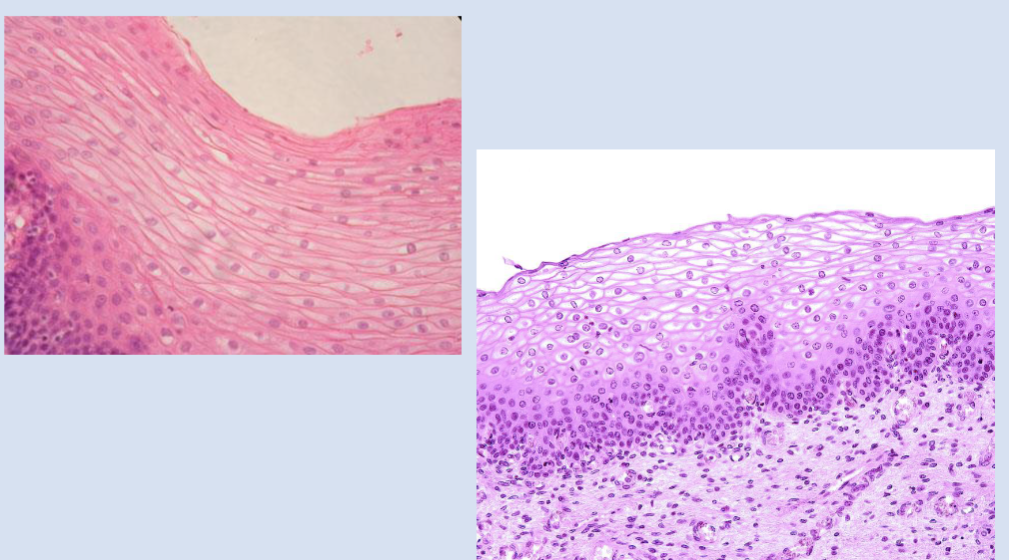
Stratified Squamous Esophogus
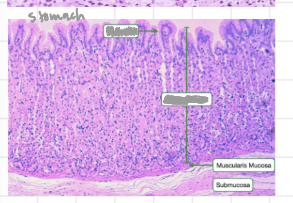
Stomach
Gastric pits above, gastric glands below
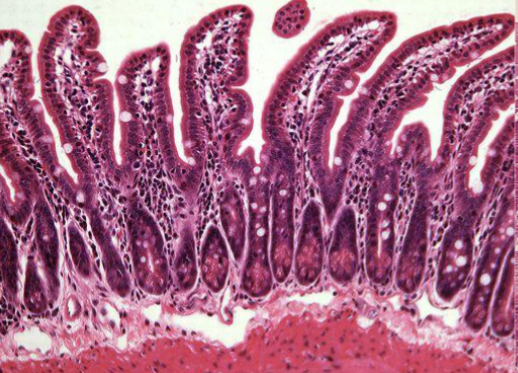
Small intestine
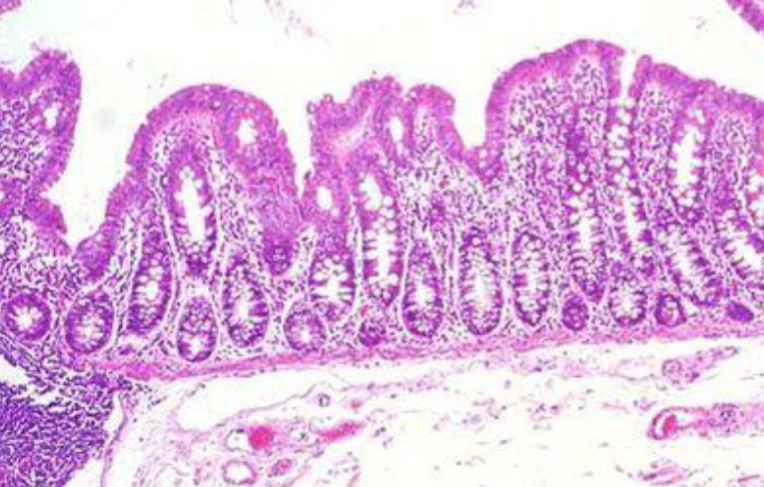
Large intestine
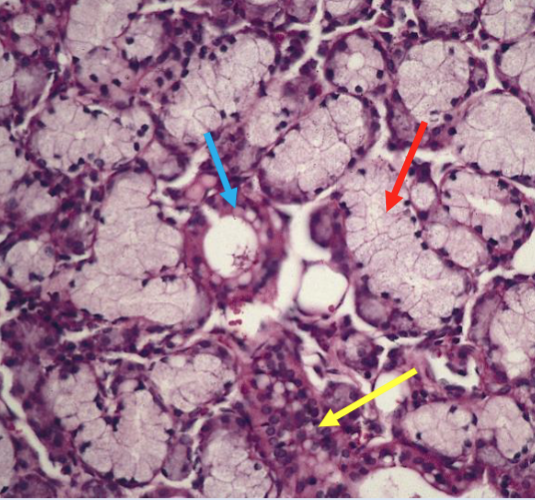
Salivary Gland Histology
Secretory cells:
serous acini/cells-watery fluid, enzyme (yellow arrow)
Mucous cells - mucus (thick) (red arrow)
Duct cells:
form ducts leading to oral cavity (blue arrow)
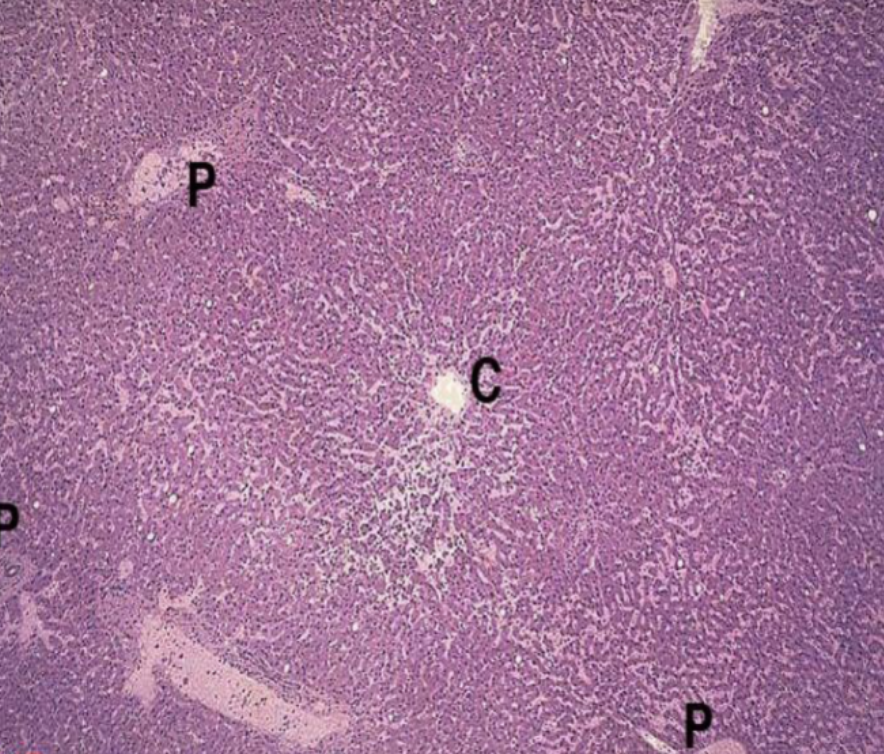
liver lobule go to goodnotes to label
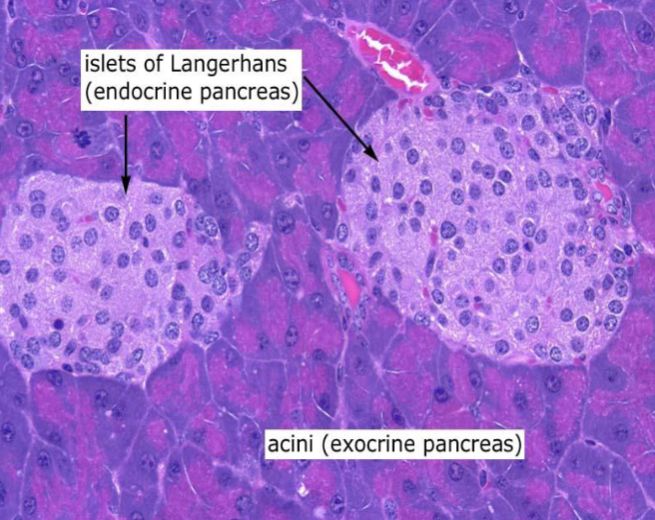
Pancreas - islets of Langerhands (endocrine)
acini (exocrine)
Explore top notes

