PC physical forces
 Call Kai
 Learn
Learn Practice Test
 Spaced Repetition
 Match
Match Flashcards
 Knowt Play
1/45

Earn XP
Description and Tags
all done
Name | Mastery | Learn | Test | Matching | Spaced | Call with Kai |
|---|
No analytics yet
Send a link to your students to track their progress
46 Terms
2 ways physical force can damage objects + examples (4, 2)
directly: by causing rotation, deformation, stress and pressure
indirectly: by causing collision between objects or object parts
5 important force related effects + descr.
impact: result of something striking an object, object striking hard surface/objects striking each other, can be concentrated (and increase susceptibility of object to force) or spread out
shock: result of strong impact, induces large deformations/strains in objects/parts, important in shipment
vibration: oscillating motion of an object relative to fixed point of reference
pressure: force applied on unit area of material, result of gravity or handling, if objects stacked - compressive loads applied to lower items
abrasion: where movement between two surfaces in contact
unit for shock intensity
g units of acceleration (1 g is acceleration due to earths gravity)
4 types of vibration
free vibration: vibration prone object will vibrate freely if displaced from its equilibrium position and released, eg tuning fork
forced vibration: object vibrating in response to externally applied source of vibration eg packaged item inside a transport vehicle
harmonic motion: simplest form of continuous vibration - movement that repeats itself exactly
random vibration: complex combination of many vibration frequencies with randomly varying amplitudes, eg in moving vehicles
2 quantities for describing vibration
frequency: in cycles per second/Hertz
amplitude: as displacement, velocity or acceleration
What is construction vibration amplitude expressed as, what does it correlate with
particle velocity, correlates with development of cosmetic cracking in structures
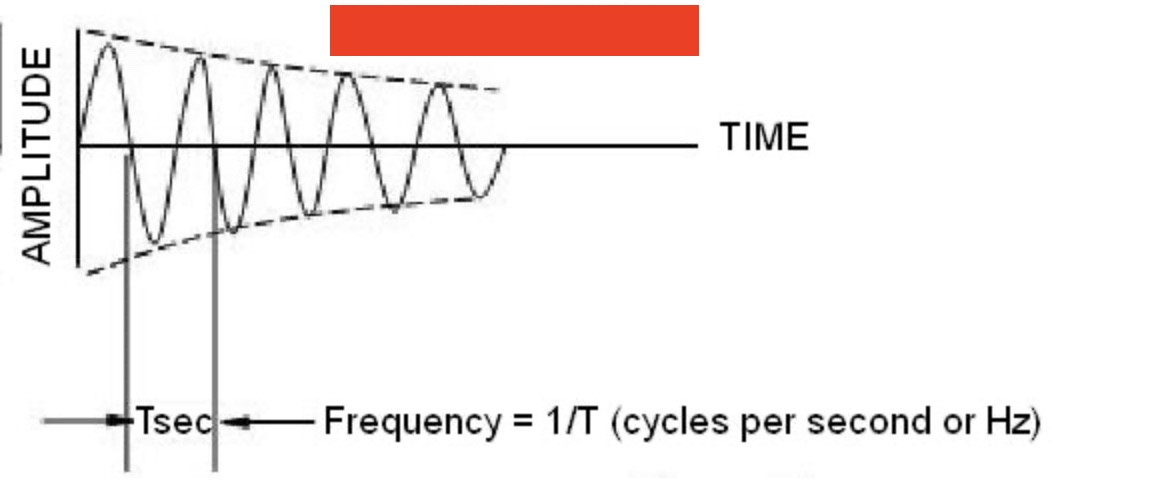
what vibration type is this + descr.
free vibration, amplitude diminishes with time due to damping forces eg friction and air resistance that dissipate vibration energy
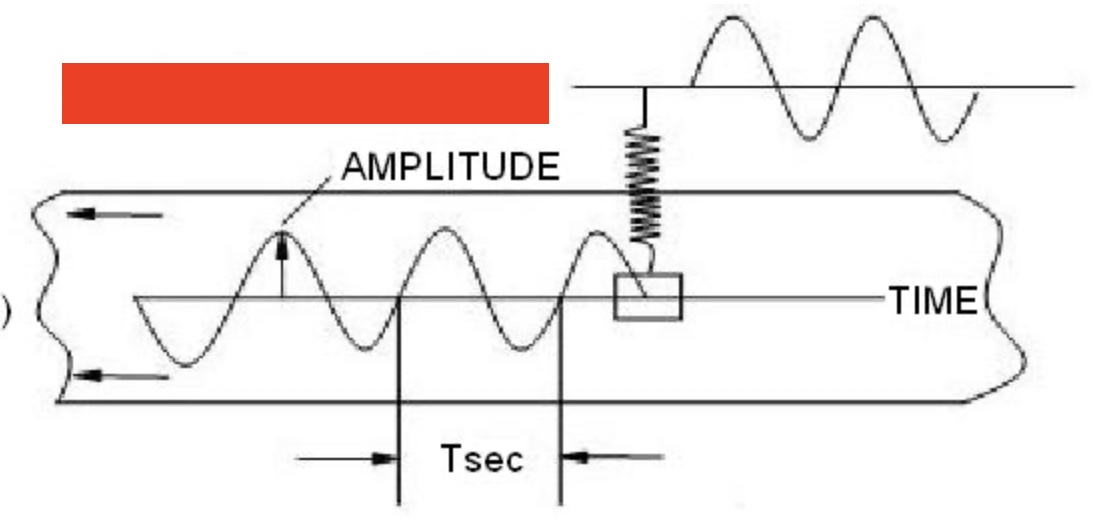
what vibration type + descr.
continuous vibration - sine curve, amplitude vs time
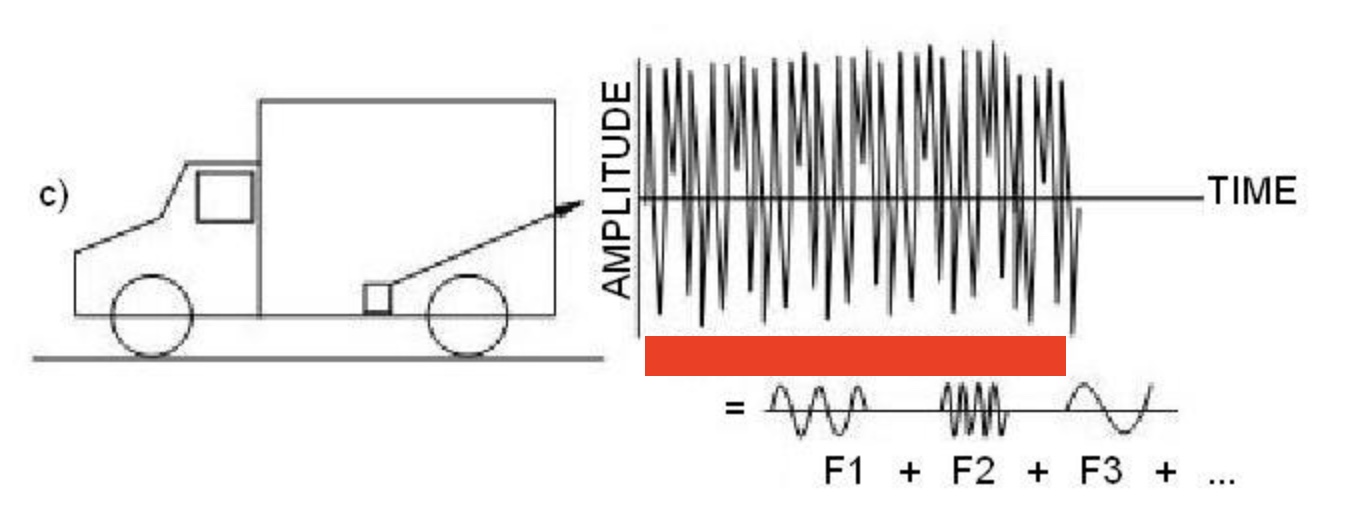
what vibration type + descr.
random vibration, info on frequency components helps assess its effect on structures
How to calculate pressure on flat surface
force divided by the area on which the force acts
abrasion effects - what will it vary according to, + more stuffq
surface durability, amount of pressure applied to the surfaces, profile of the surfaces, presence of abrasive material between surfaces can cause/accelerate it, damage may appear after long period of exposure or quickly if surface is fragile!!
direct effects of force (8)
incompression, punctures, dents, tears, cracks, chips, scratches, abrasion
issues with load
gravity makes a continuous load on all objects, improperly made supports may lead to distortion of objects bc of load
mechanical shock description
energetic response of an object, characterized by substantial displacement and strains
4 possible outcomes of mechanical shock
low levels of shock can be absorbed and dissipated in the object w/o damage - eg bell
impact may cause object or its parts to movie → collision between objects, object parts and their surroundings
high shock levels may cause movement and induce strains in excess of critical threshold resulting in fatigue damage
if shock magnitude high enough - damage occurs in a single event (stress fracture)
vibration effects on people
can percieve as low as amplitudes of 0.1 to 0.5mm/s, peak is 5 to 30 Hz
what frequencies can objects vibrate at
many diff ones, due to their geometry, mass and elasticity
natural frequency def
lowest vibration frequency of an object
resonant frequencies def
vibration tendencies higher than natural frequenceies
4 examples of vibration prone objects
vase in cushioning, 2 flexible elements, tightly stretched string, canvas painting
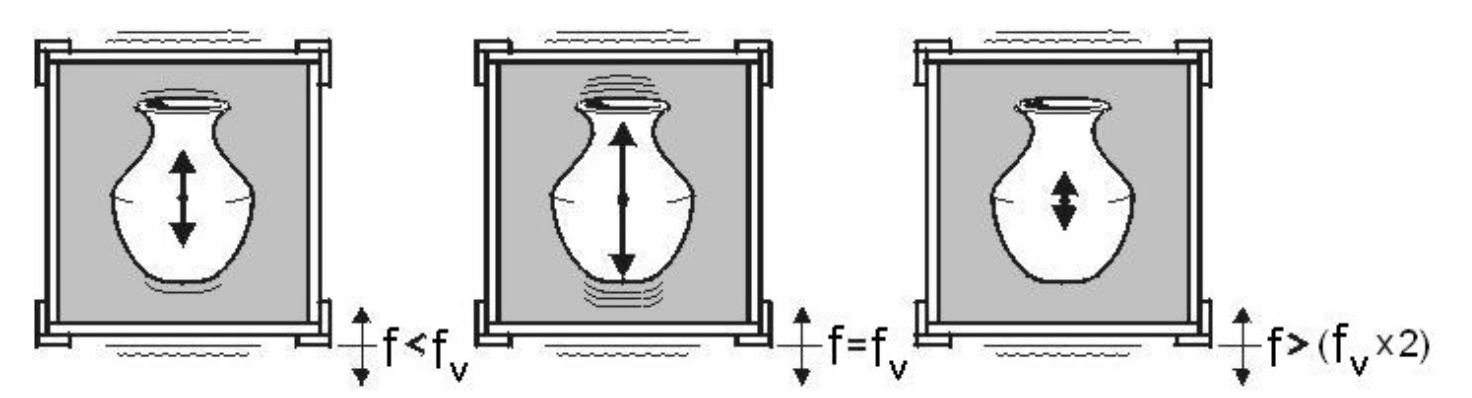
label the vibration types
transmission: if vibration frequency lower than (fv), vase will vibrate at the same frequency and amplitude as the vibration source
resonance: if source matches the resonant frequency, amplitude of the vase will be greater than the vibration source, why package designers usually avoid having object resonances in the same range as the cushion system
attenuation: if vibration frequency is greater - vase will appear almost motionless while the package oscillates
damaging effect of vibration
mechanical fatigue
what must take place for mechanical fatigue to happen
critical stress threshold must be attained or exceeded during each vibration cycle, damage then occurs after a time interval that depends on the number of vibration cycles and their peak values
cycles and stress levels
if stress levels are below a critical level - almost indefinite cycling is possible w/o damage, BUT if sufficiently high stress - stress fracture can occur in one cycle
is fatigue an issue for museums
not really
cosmetic cracking def
damage to buildings by construction vibration
what to do with low level vibration due to construction - 4 scenarios
if far enough away do nothing, relocation of objects near is advisable (if objects can be moved safely), if moving not feasible - if object is in contact with a surface that transmits vibration (eg floor) separate the object from the floor with cushioning material, sliding of objects can be a concern - restraining appropriate for the type would be good
are acoustic sources (like live music) a concern for museum objects?
no! very hard to accidentally damage objects acoustically
important vibration effect
the by-product of the movement it causes - eg unrestrained objects on a shelf that may fall
catastrophic forces (low incidence/high intensity) (5)
earthquakes (most damage from movement rather than the forces of the earthquake), war and vandalism, shipment disasters, extreme handling hazards, roof or floor collapse
Working forces (High Incidence, Moderate-to-High Intensity) descr
Forces encountered in daily activities with moderate-to-high magnitudes and incidence rates, force magnitudes are usually predictable, they may affect one, several, or many items at a time
Working forces (High Incidence, Moderate-to-High Intensity) 6 egs
handling, transit (in house), shipment, gravitational loads, construction vibration, excavation
Cumulative Forces (High Incidence, Low Intensity) descr
Low-intensity forces with a high (based on collection use rates) or continuous (e.g. gravity) incidence that inflicts ongoing damage to one or many items in a collection
Cumulative Forces (High Incidence, Low Intensity) egs
handling, shipping, gravity
Low-level Forces (Variable Incidence, Low Intensity) descr + 3 egs
no risk; building vibration, construction vibration, acoustic sources
6 commercial shock fragility ratings
extremely fragile, very delicate, delicate, moderately delicate, moderately rugged, rugged
what affects sensitivity of any given object to forces (5)
mass (bc F = ma, as mass inc. force also does), material weakness, geometry, flexibility (weakness cause has a tendency to vibrate- can have resonance), vibration susceptibility
2 kinds of forces
long range (eg gravity), contact forces (normal or tangential (sheer, along a surface)
newtons law of motion
how objects respond to motion, brings together long range and contact forces, Fnet = ma
how does acceleration change with bigger mass
acceleration gets smaller
inertial mass def
how the object resists acceleration when force is applied to it
free body diagram
used to help analyze the forces of a system
newtons 3rd law
Fab = -Fba - is body a exerts force on body b then b exerts a force backwards on body a
what are normal forces in a museum setting
pressure/crushing
tangential forces in a PC setting
abrasion
what does friction do
convert a normal to a tangential force

