Entrepreneurship, Innovation, and Organizational Structures in Business
 Call Kai
 Learn
Learn Practice Test
 Spaced Repetition
 Match
Match Flashcards
 Knowt Play
1/148

There's no tags or description
Looks like no tags are added yet.
Name | Mastery | Learn | Test | Matching | Spaced | Call with Kai |
|---|
No analytics yet
Send a link to your students to track their progress
149 Terms
Entrepreneurship
The pursuit of lucrative opportunities by enterprising individuals.
Creative destruction
Joseph Schumpeter
-A process of industrial mutation that incessantly revolutionizes the economic structure
from within, incessantly destroying the old one, incessantly creating a new one.
Entrepreneurial activities
invention, innovation, imitation
Innovation
The process of commercializing an invention, making it into something of value.
Imitation
The adoption of an innovation by similar firms.
Entrepreneur
One who takes advantage of an opportunity.
Intrapreneur
A manager within a company who promotes innovative product development and marketing, with corporate support.
Recipes for success
A great product, a viable market, and good timing
Franchising
market presence, market share and profit margins, a franchisor has already developed a successful product or service and is looking to expand their store.
Transaction fee
Selling goods and services for a price.
Advertising support
Advertisers pay the site operator to gain access to the demographic group visiting the site.
Intermediary
An entity that brings together buyers and sellers and charges a commission on their sale.
Affiliate
A business model where commissions are paid to other sites to drive traffic to one's own site.
Subscription models
Charging a monthly or annual fee for site visits or access to content.
Social entrepreneurship
Leveraging resources to address social problems using market-based methods.
Social Enterprise
organization that applies business models and leverages resources in ways to address social problems
Going Public
The process of conducting Initial Public Offerings (IPOs) to raise capital.
Opportunity analysis
A description of the product or service, assessment of the opportunity, and specification of activities and resources needed, sources of capital
Business plan
A document that describes all the elements involved in starting a new venture.
Corporate Entrepreneurship
Also known as intrapreneurship, it involves building idea support within an organization.
Skunkworks
Project teams designated to produce a new product within a specified time frame.
Bootlegging
Informal efforts by employees to create new products and processes of their own choosing and initiative.
Organization chart
A diagram that depicts the formal position in the firm, lines of authority, and decision-making locations.
Alfred Chandler
structure follows strategy
Differentiation
An aspect of an organization's internal environment created by job specialization and division of labor.
Division of Labor
Division of work into a number of separate tasks to be performed by different workers
Specialization
different people perform specific parts of a task
Coordination
link the various parts of the organization to achieve the organization's mission.
Sequential interdependence
work completed in succession
reciprocal interdependence
work completed by different jobs or groups working together in a back-and-forth manner
pooled interdependence
work completed by having each job or department independently contribute to the whole
Integration
The process of coordinating differentiated units to achieve an overall product.
Authority
The right to make decisions and direct others. Position rather than person
Board of Directors
Major decisions, governed by charter and bylaws
CEO
accountable to board and/or president
Top Management Teams
regularly meet with their top management teams to make decisions as a unit
Centralization
An organizational structure where high-level executives make most decisions and pass down to lower levels
Decentralization
An organizational structure where lower-level managers also make decisions.
Span of control
Wide = flatter, Narrow = Taller
Functional Structure
structured around functional, specialized activities such as production, marketing, and HRM.

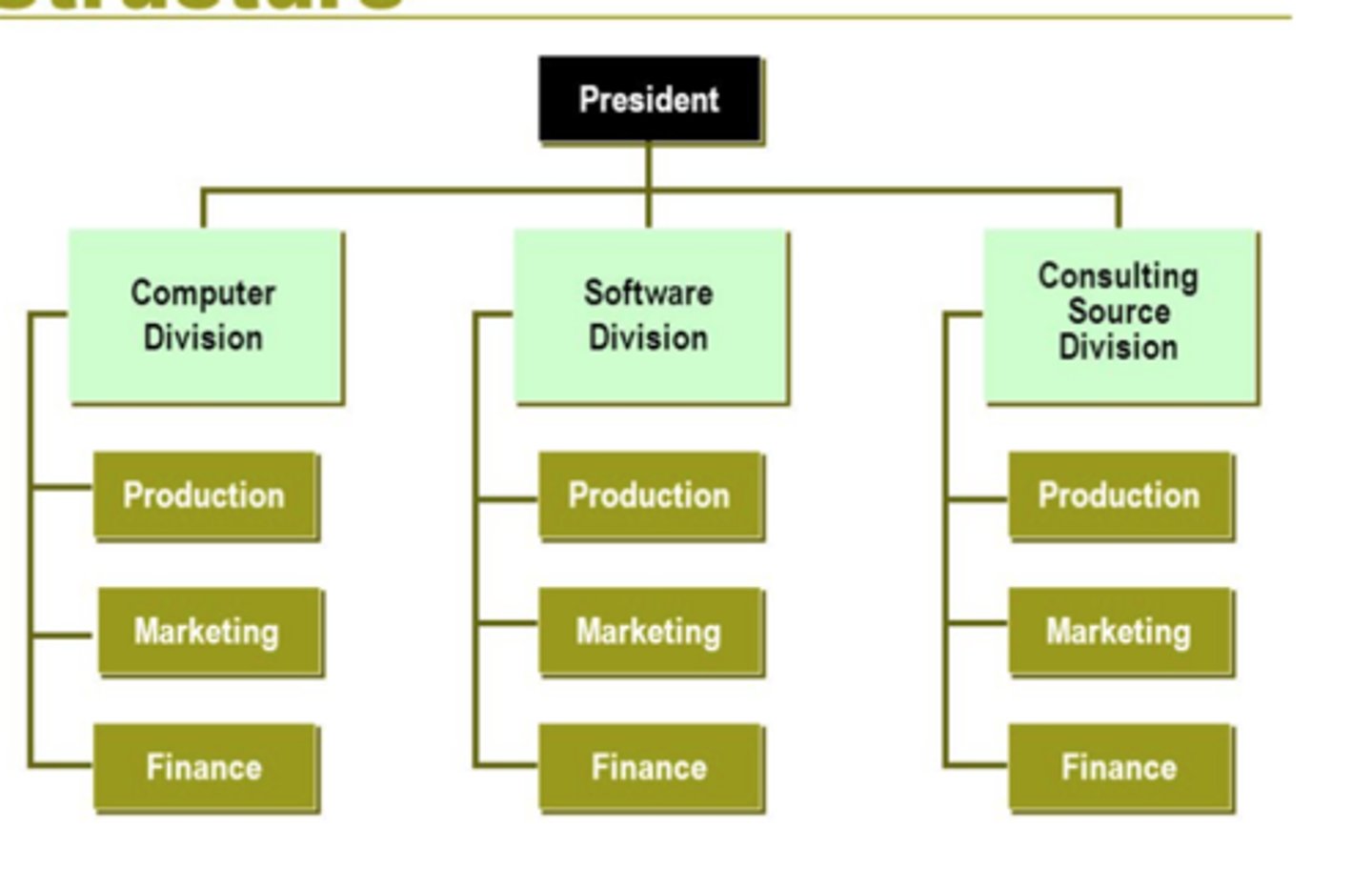
Divisional Structure
departments around product, customer, geographic regions
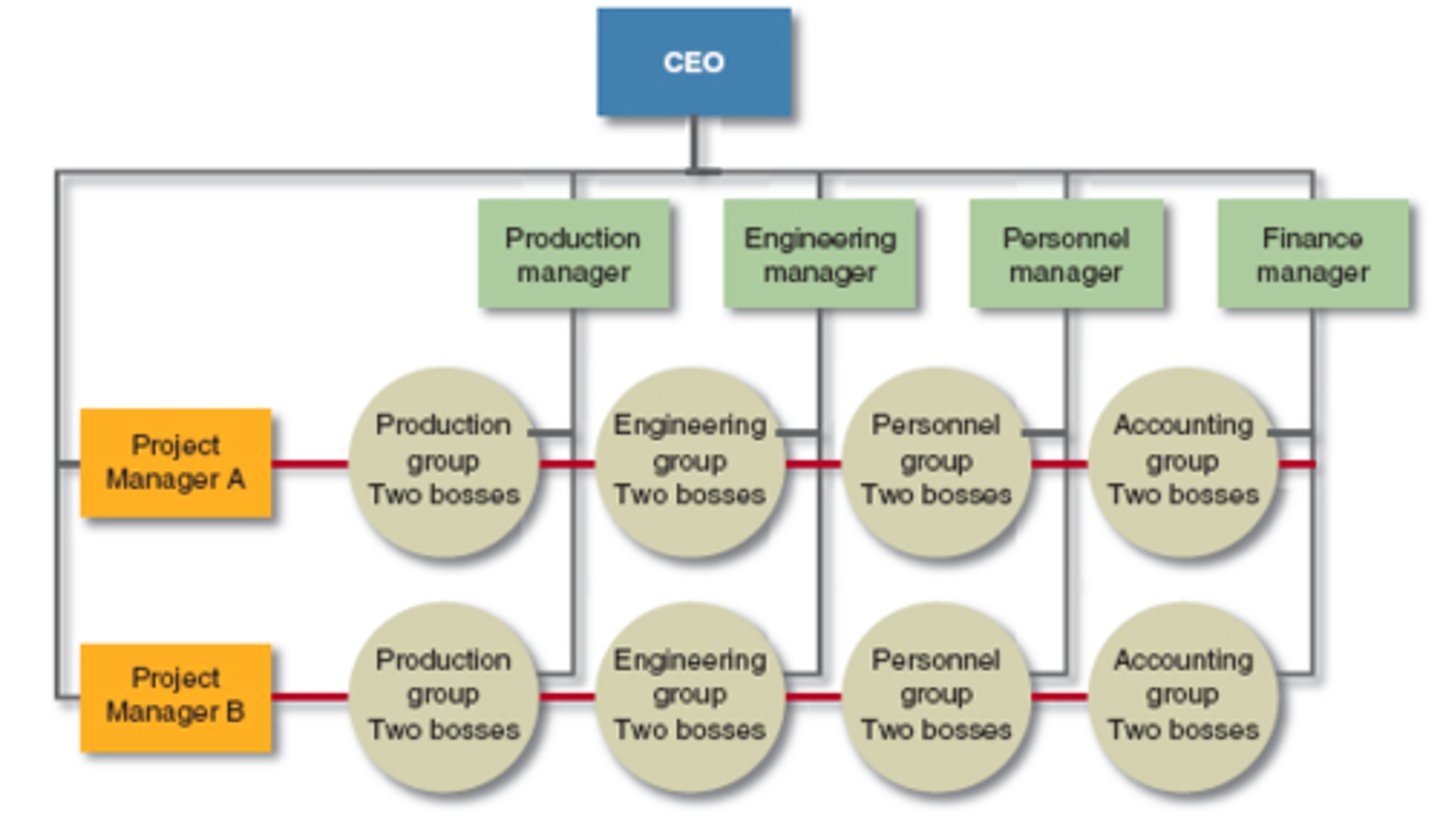
Matrix Structure
Dual reporting relationships in which an employee reports to two superiors
Hybrid Structure
consists of any combination of the above structures
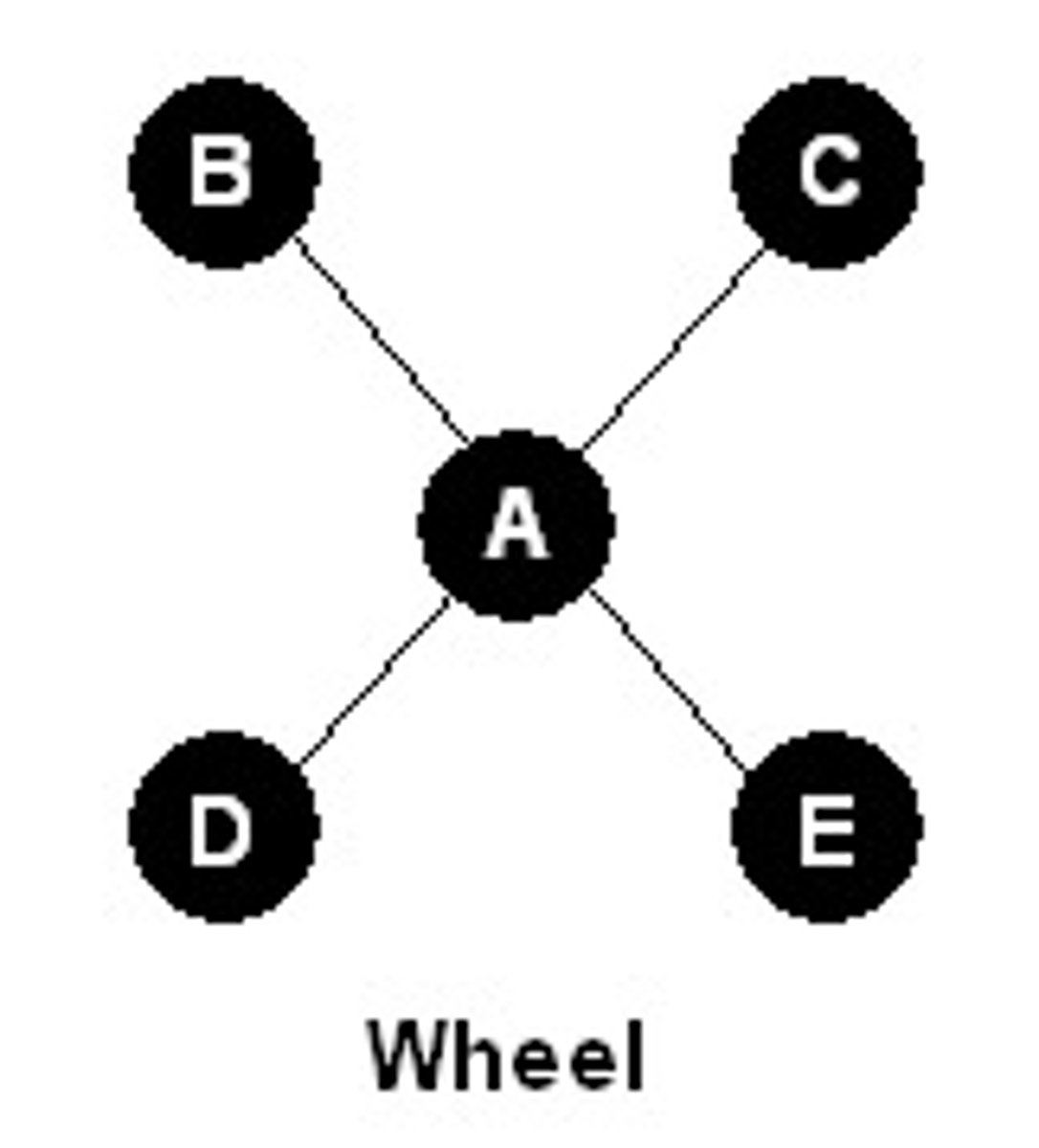
Network Structure
A collection of independent, mostly single-function firms that collaborate on a good or service
Organizational Integration
standardization, formalization, coordination by plan, coordination by mutual adjustment
Standardization
establishing common rules and procedures, apply to all
Formalization
presence of rules and regulations governing how ppl in organizations interact
coordination by plan
Interdependent units contribute to a common goal.
coordination by mutual adjustment
feedback and discussions to jointly figure out how to approach problems and devise solutions that are agreeable to everyone
Span of Control Principle
There's a finite number of people a manager can supervise effectively
Unity of Command Principle
Employees must have one and only one boss.
Scalar Principle
There is a chain that connects people up and down the organizational hierarchy; communication must go through everyone in the chain
authority-and-responsibility principle
A manager has the right & obligation to make decision, use resources, but he/she must report and justify outcomes to those above
Delegation-Accountability Principle
When transferring authority and responsibility to subordinates, the accountability remains with the 'delegator'
Peter Principle
In most organizations, people tend to be promoted to their level of incompetence.
HR Planning Process
right number and types of people are available, programming specific activities, evaluating results
Demand Forecast
determining how many and what type of people are needed
Labor Supply Forecasts
How many and what types of employees the organization actually will have.
Job analysis
Systematic study of the job itself (tasks, responsibilities, conditions, etc.)
Job description
The role, responsibilities, duties, and scope of a particular job
Job specification
Skills, experience, education required to perform the job
RJP
explaining the important aspects of the job prior to the offer
Recruitment
Help to increase the pool of candidates that might be selected for a job
Selection
Decision on whom to hire. Based on application, resume, interview, reference, background checks
Structured Interviews
Situational and behavioral description
Applicant Testing
Options for assessing candidates
Layoffs
Result of acquisitions, divestiture, and increased competition
Outplacement
Helping people who have been dismissed regain employment
Termination
Employment at will → employee can be terminated for any reason
Equal Pay Act
Legal issue concerning pay equity
Title VII
Prohibits discrimination on the basis of race, color, religion, sex, national origin, age
BFOQ
Bona Fide Occupational Qualification; allows discrimination on basis of religion, sex, national origin, age
Training
Teaching lower-level employees how to perform their present job
Orientation training
Familiarize new employees with their new jobs
Team training
Facilitate working together on the job
Diversity training
Building awareness of diversity issues and increasing skills
Performance Appraisal
Assessment of an employee's job performance
Trait appraisal
Subjective judgments about employee performance
Behavioral appraisal
Based on observable aspects (e.g., Graphic Rating Scales; BARS, Critical incidents)
Results appraisals
Sales volume, units produced, or profits
Management by Objectives (MBO)
Subordinate + supervisor meet and agree in advance on goals for the subordinate
360-degree appraisal
Using multiple sources of appraisal to gain full perspective on performance
Pay Decisions
Determining compensation for employees
Incentive Systems
Programs designed to motivate employees through rewards
Merit pays
Objective based performance not available, but pay is on performance
Cafeteria benefits
Employees choose from a menu of benefits
Individual incentive plans
objective standard in which performance is observed
Comparable Worth Doctrine
The belief that women should receive the same wages as men if the levels of skill and responsibility in their jobs are equivalent
Required Benefits
social security, unemployment insurance, workers compensation
Gainsharing
saving money, profit sharing - incentives based on productivity
Determinants of Union Voting Behavior
Economic needs, beliefs in union power, job attitudes, Union image
Managing Diversity
involves recruiting, training, promoting, and utilizing individuals with different backgrounds, beliefs, capabilities, and cultures
Diversity challenges
Unexamined assumptions, lower cohesiveness, communication problems, mistrust and tension, and stereotyping
Multicultural Organizations
Values cultural diversity and seeks to utilize and encourage it. Fully integrate gender, racial, and minority group members both formally and informally.
monolithic organization
low degree of structural integration, few women and minorities. If groups other than the norm are employed, they are in low status jobs and must conform to the group
Pluralistic Organization
relatively diverse population, effort to involve women and minorities
-use an affirmative action approach to managing diversity:
-Fails to address the cultural aspects of integration
How to cultivate a diverse workforce
Top Management, funding, accommodating work and family needs,
Competitive advantage through diversity
- Attracting, motivating, and retaining employees.
• Understanding differentiated markets.
• Creative problem solving.
• Organizational flexibility.
Power
Ability to get others to do things that they otherwise would not do.
Legitimate power
Leader has authority to tell others what to do.

