anatomy lab : microscopes
 Studied by 0 people
 Call with Kai
 Learn
Learn Practice Test
 Spaced Repetition
 Match
Match Flashcards
 Knowt Play
1/12

There's no tags or description
Looks like no tags are added yet.
Name | Mastery | Learn | Test | Matching | Spaced | Call with Kai |
|---|
No analytics yet
Send a link to your students to track their progress
13 Terms
rules for proper microscope use
-carrying with two hands (one on arm & one on base)
-keep microscope upright
-keep lens clean
-use only the fine-focus knob when using high-power objective lens
higher magnification
results in smaller FOV
⭐️less area, more detail⭐️
lower magnification
results in wider FOV
⭐️more area, less detail⭐️
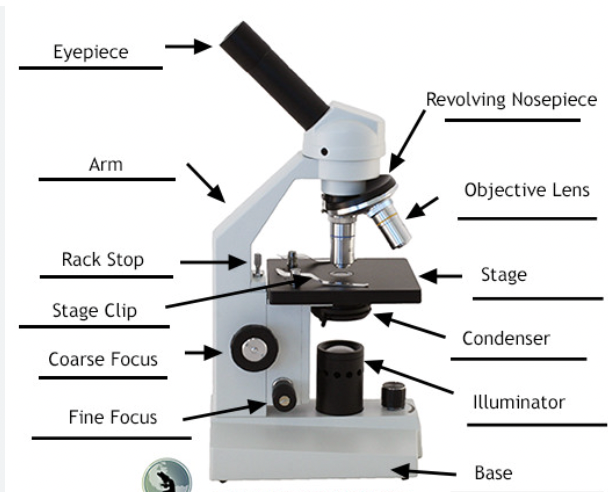
microscope diagram
😆
calculation total magnification
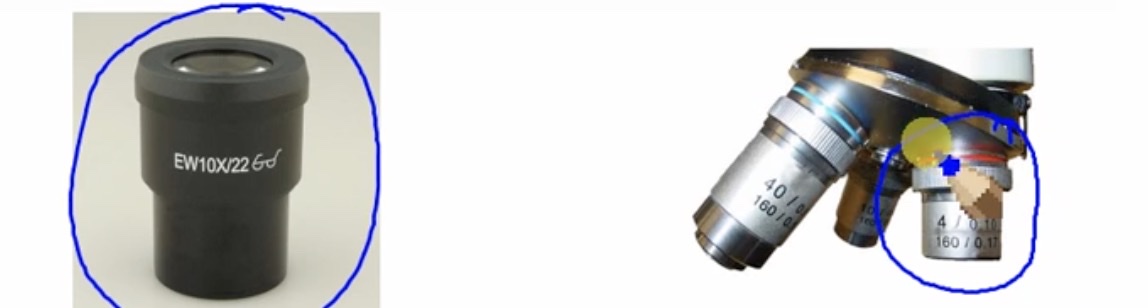
eyepiece (ocular) magnification X low-power objective magnification
ex → 10X x 4X + 40X
what happens to the depth of field with increasing magnification?
field of view decreases
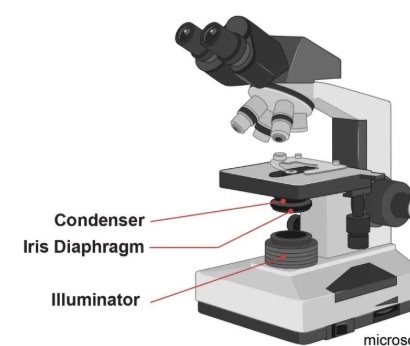
iris diaphragm function
-controls the amount of light reaching the specimen
coverslip
thin glass plate placed on top of specimen
microscope we use in lab
compound light microscope
name of circle you see when you look through the ocular lens of the microscope
field of view (FOV)
when should you use the scanning lens on a microscope?
to get a broad overview of the slide & locate your specimen
how should you clean the lens of a microscope?
70% alcohol or distilled wate
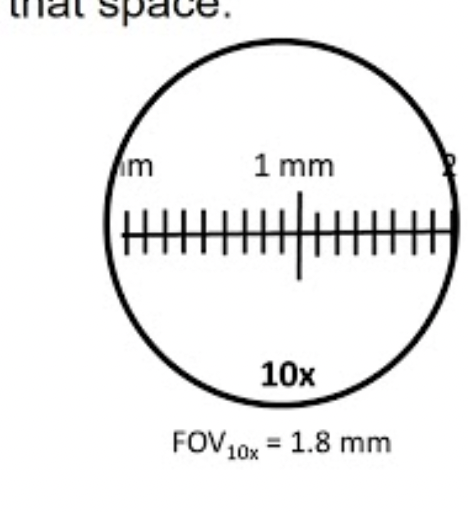
FOV to determine size of object under microscope
Object Size = Field of View Diameter
÷divided by ÷ Number of Objects (Fit Number).
 Note
Note  Flashcards (20)