physiology and immunology
 Call Kai
 Learn
Learn Practice Test
 Spaced Repetition
 Match
Match Flashcards
 Knowt Play
1/8

There's no tags or description
Looks like no tags are added yet.
Name | Mastery | Learn | Test | Matching | Spaced | Call with Kai |
|---|
No analytics yet
Send a link to your students to track their progress
9 Terms
what is the difference between innate and adaptive immunity?
Innate:
non specific
rapid
does not improve on repeated contact with invading organism
relies on generic pathogen associated molecular patterns (PAMP’s) and PRR’s
adaptive:
specific
slow
acquired responses not encoded in the germline
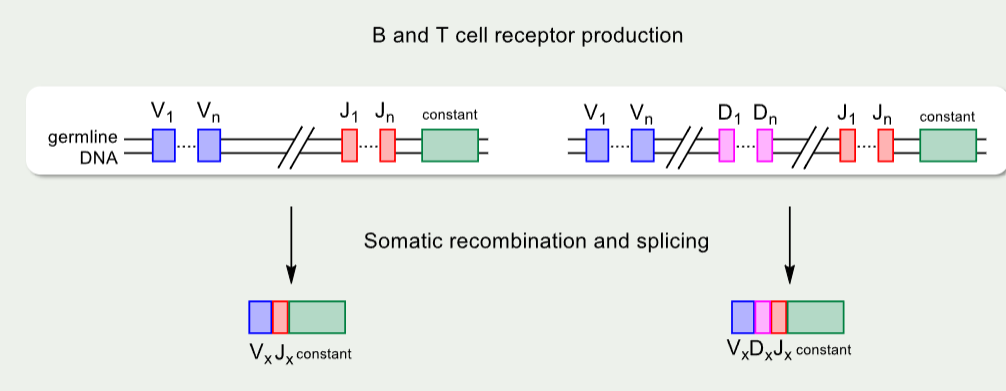
result from genetic rearrangements of genes involved in recognition
a specific receptor for each invading organism is selected from a randomly created repertoire of receptors
Phagocytosis
primarily innate immunity but also plays crucial role in initiating adaptive immune responses
move towards pathogen
make contact
engulf - phagosome
fusion with lysosome
killing - toxic chemicals
digest remains
innate immunity in invertebates
found in all animals
invertebrates with few exceptions only have innate immunity
proteins:
antimicrobial peptides
complement (system of proteins that help destroy proteins)
cells:
phagocytes
crystal cells (immune cell in insects, seal wounds)
lamellocytes (type of immune cell found in insects that trap invaders)
innate immunity in vertebrates
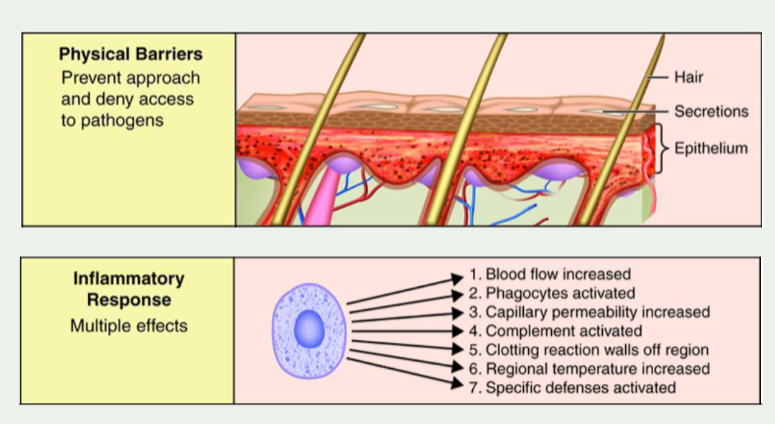
like invertebrates both humoural and cell mediated response
circulatory system with blood delivers the response rapidly to where its needed
molecules and cells diffuse out of capillaries into tissue fluid around cells
interferons mediate viral innate immunity (send out warning signals when virus) - increase resistance of cells to infection, slow the spread of disease
complement system - attacks and breaks down cell walls, attracts phagocytes and stimulates inflamation
fever- body temp rises in repsonse to pyrogens, inhibits pathogens
phagocytes- remove debris and pathogens
extracellular killing - destroys abnormal cells
mammalian adaptive immunity
specifity
memory
tolerance to self and harmless antigens
humoural immune reponse mediated by antibodies produced by B lymphocytes
cellular immune reponse mediated by T lymphocyes
what is an antigen?
antigen = antibody generator
substances that bind to receptors on immune cells
typically a small subsection of an antigen, an epitope binds to the receptor
B lymphocytes
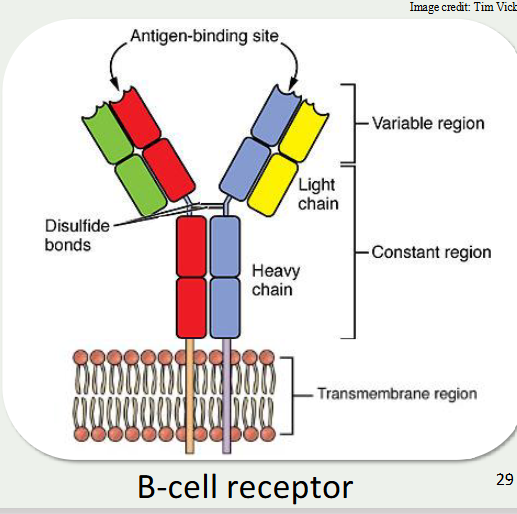
mature to have a unique membrane receptor that recognises a specific antigen
after interacting with the antigen the b cell proliferates
these cells differentiate into specific antibody secreting B cells
antibodies are immunoglobins that bind to specific antigens
antibody tagged antigens are recognised for disposal by effectors such as complement or macrophages
B memory cells are also made
T lymphocytes
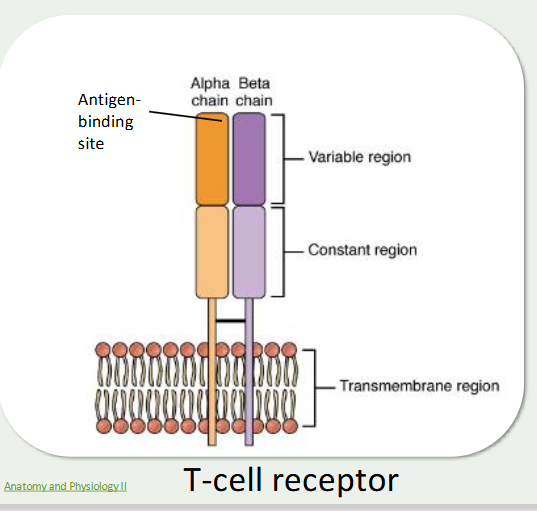
mature in thymus gland and produce t cell receptors
there are subpopulations of t lymphocytes like t helper cells and cytotoxic t cells
TCR’s and BCR’s only fir one key and open it
How is diversity in TCR and BCR’s produced?
somatic recombination and splicing