2.6 - role of kidney in homeostasis (TRIPLE)
 Call Kai
 Learn
Learn Practice Test
 Spaced Repetition
 Match
Match Flashcards
 Knowt Play
1/28

There's no tags or description
Looks like no tags are added yet.
Name | Mastery | Learn | Test | Matching | Spaced | Call with Kai |
|---|
No analytics yet
Send a link to your students to track their progress
29 Terms
What are the 2 functions of the kidneys?
Regulate water content of the blood
Remove waste products from the blood
What is urea and where is it made?
Urea is a poisonous substance made of amino acids
Urea is made in the liver
What do your kidneys remove, from where?
Your kidneys remove urea and excess salt ions
from your blood.
What is urine?
Urea and salt dissolved in water
Describe the journey of the blood to and from the kidney
Blood from the heart,
Through the renal artery INTO the kidney
Blood LEAVES the kidney through the renal vein
Blood travels via vena cava,
Back to the heart
What is the ureter and its job?
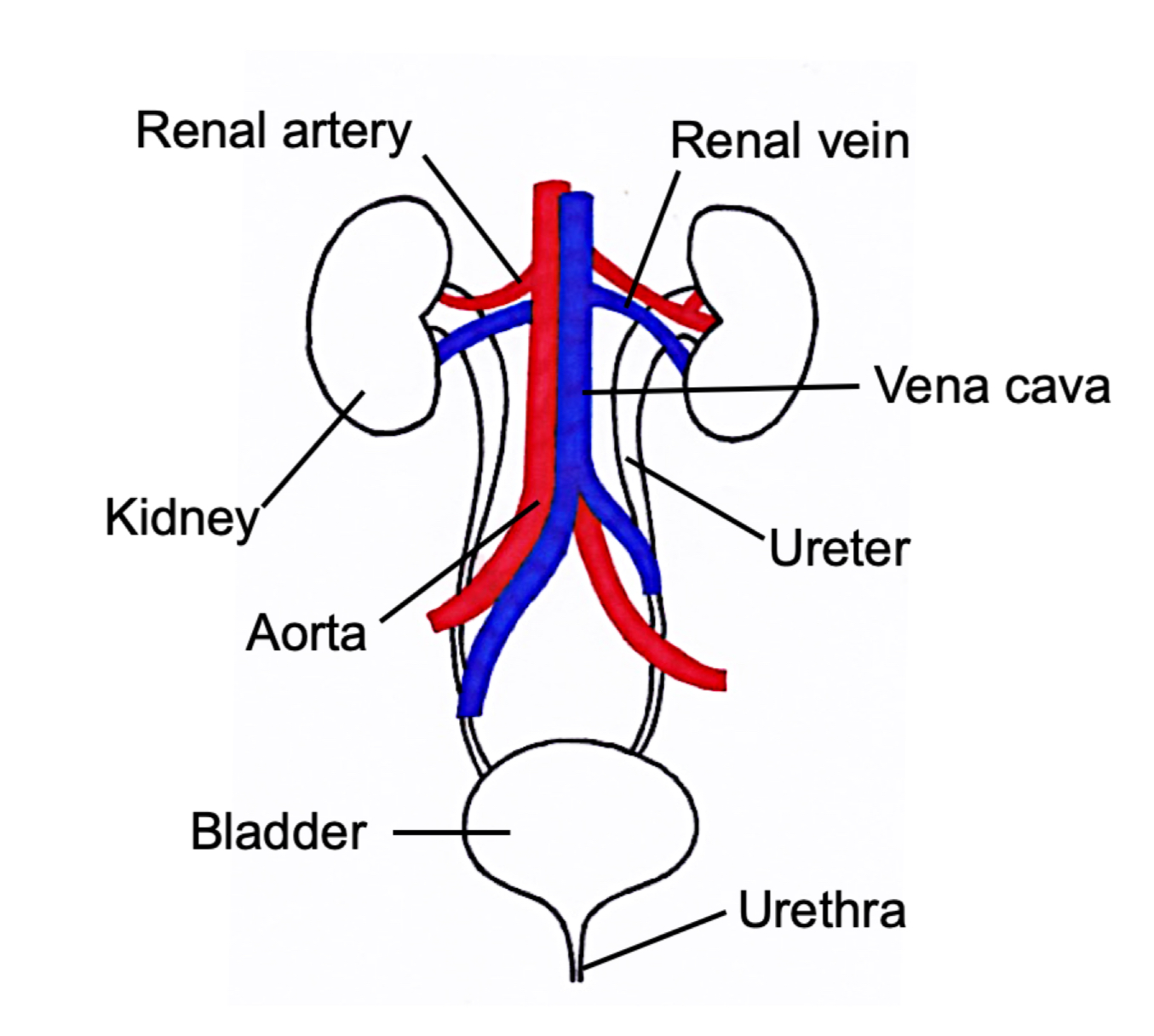
The ureter is the tube that carries urine from the kidneys to the bladder
What is the urethra and its job?
The urethra is a tube that carries urine out of the body from the bladder
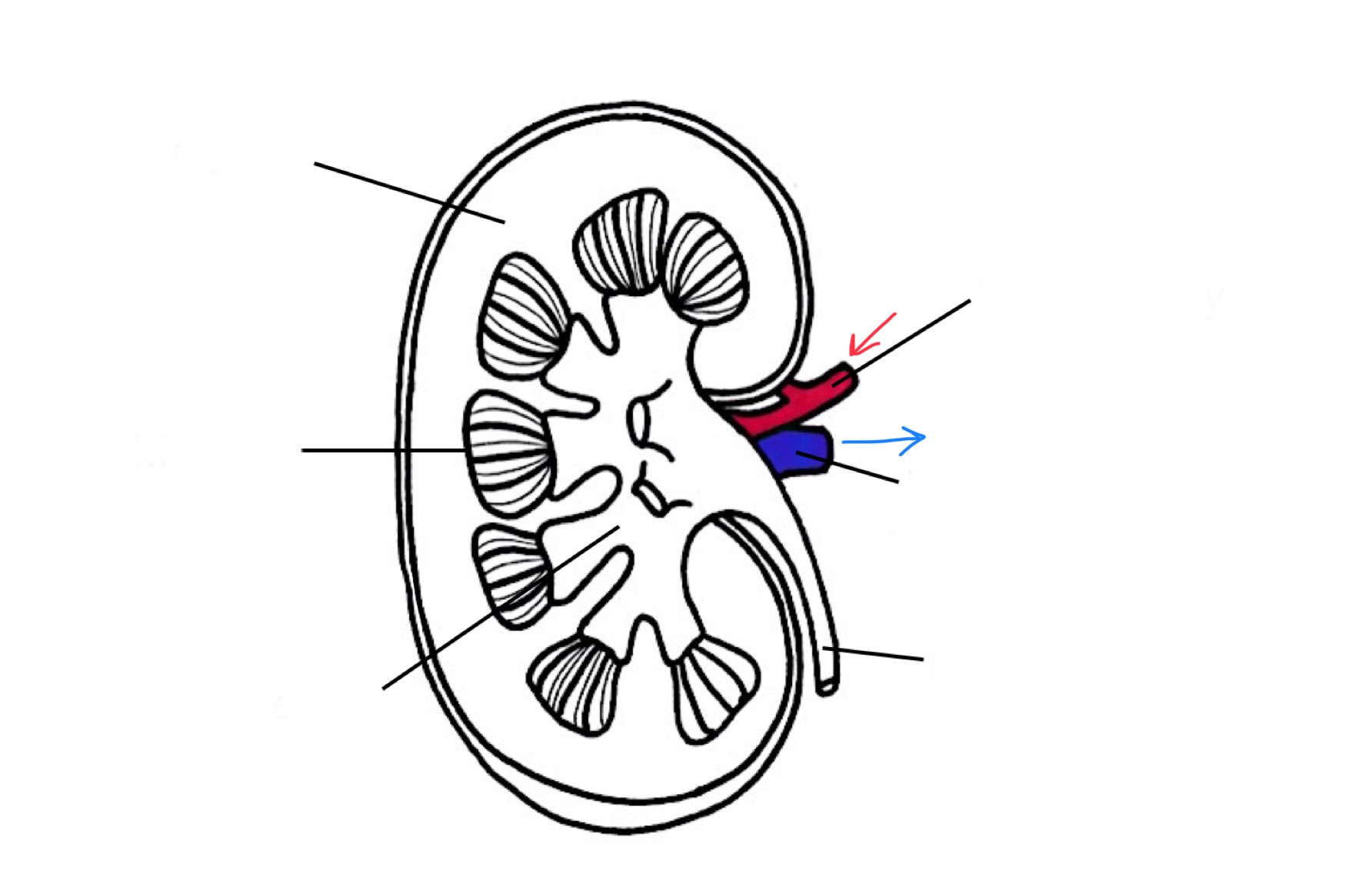
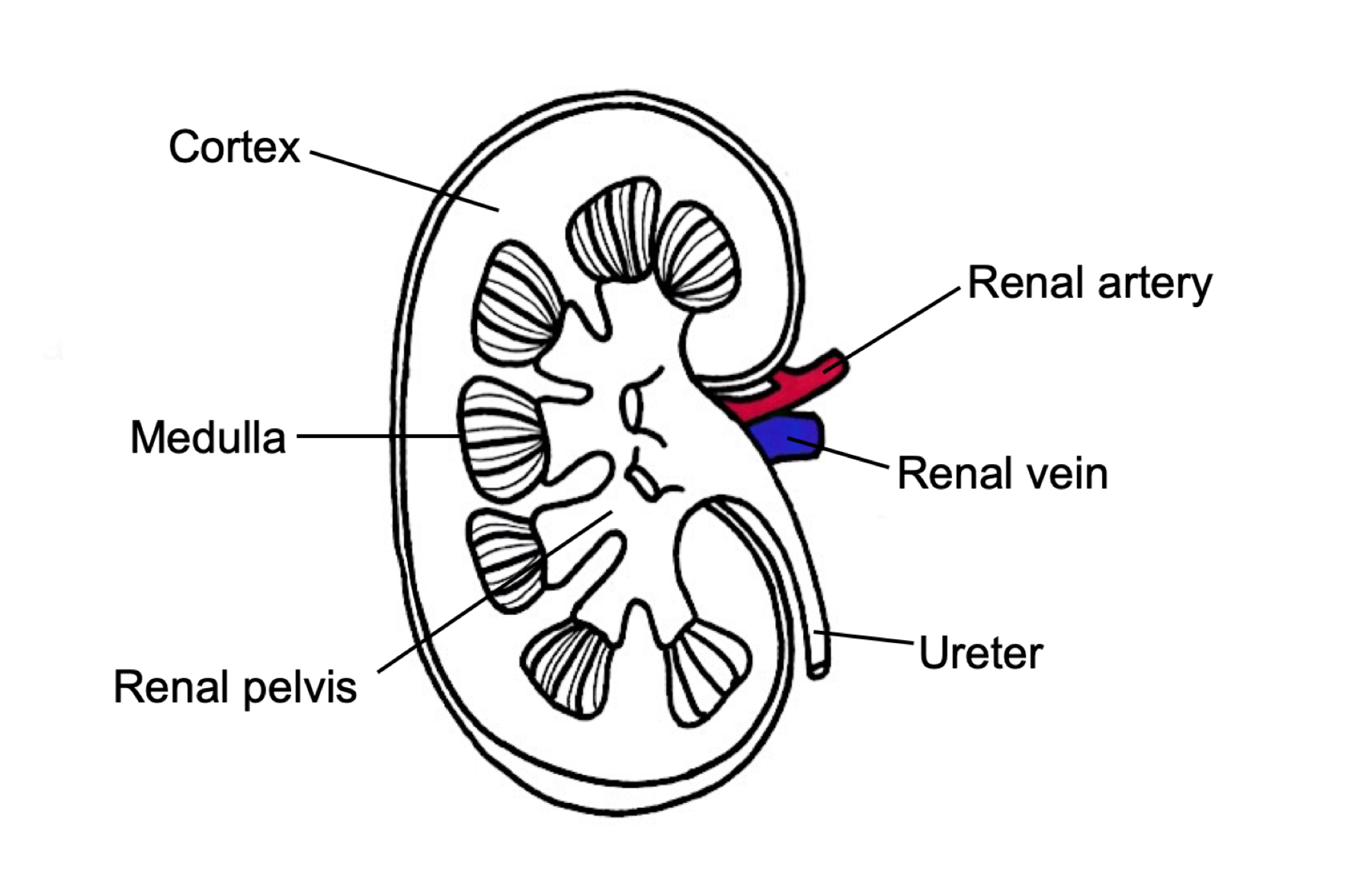
Label the kidney:
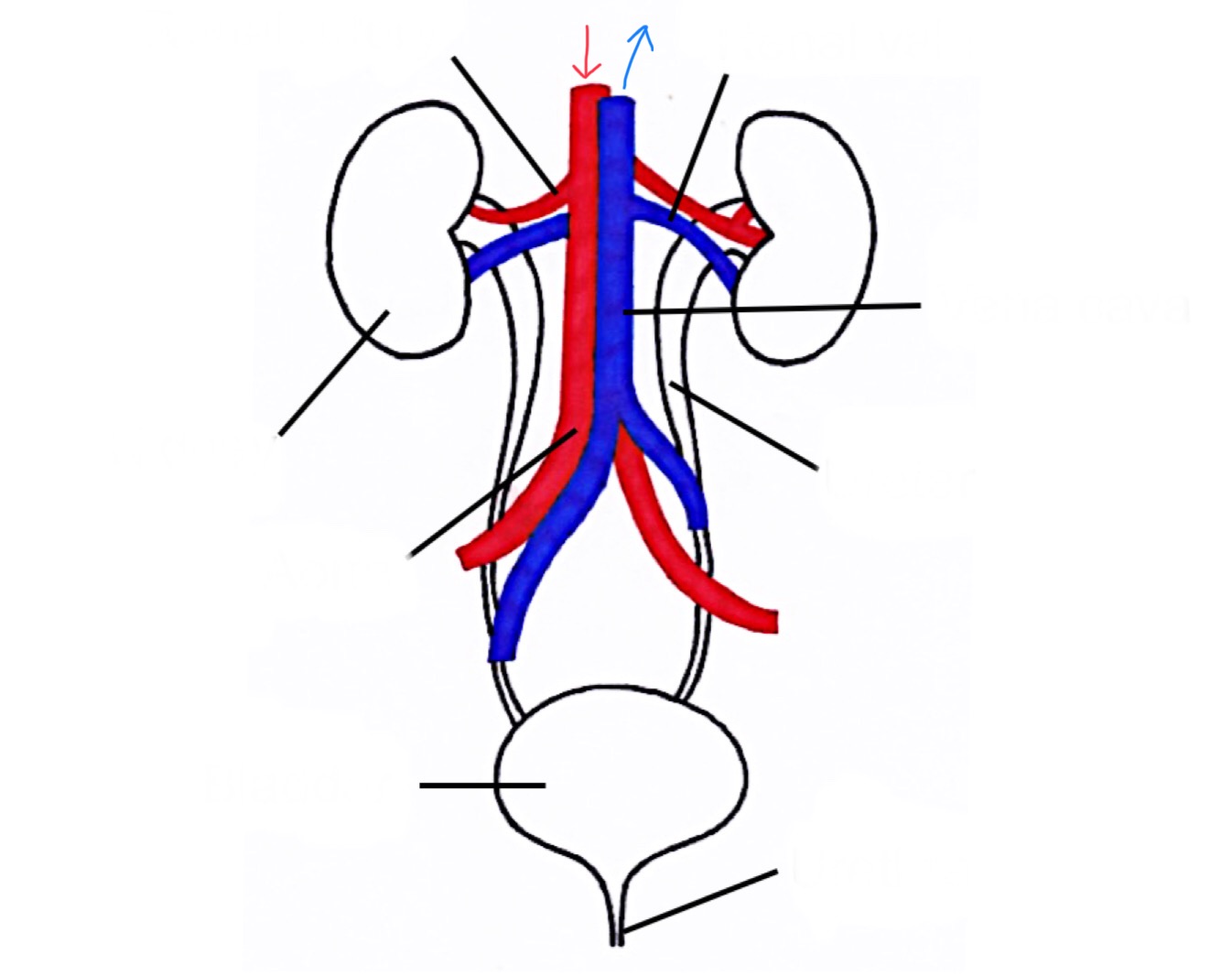
Label the human excretory system:
What is ultrafiltration?
Filtration of small molecules under pressure from the capillary knot into the Bowman’s capsule
What is selective reabsorption?
Useful molecules being reabsorbed back into the blood from the tubule
Describe the process of ultrafiltration
The arteriole bringing blood to the capillary knot is wider than the one taking it away, so high pressure builds up
High pressure forces small molecules in the blood out of the capillary and into the Bowman’s capsule
What particles are and aren’t filtered during ultrafiltration?
Are filtered: small molecules (water, urea, salts, glucose)
Are NOT filtered: particles too big to leave the capillaries (large plasma proteins & red blood cells)
Describe the process of selective reabsorption
The blood capillaries around the kidney tubules reabsorb useful substances from the fluid in the kidneys back into the blood
The remaining fluid (containing urea, excess water & salts) passes to the collecting duct.
This fluid is now called urine
What does ADH stand for, and what does it control?
ADH: anti-diuretic hormone
ADH controls water content of the blood
What is the effect of ADH?
ADH increases tubule permeability, allowing our kidneys to reabsorb more water back into the blood
What in our body monitors water levels?
The brain
Describe the process that takes place in our body if there’s too much water in our blood?
The pituitary gland in our brain releases LESS ADH
The kidneys reabsorb LESS water
Therefore making more DILUTE urine
Describe the process that takes place in our body if there’s too little water in our blood?
The pituitary gland in our brain releases MORE ADH
The kidneys reabsorb MORE water
Therefore making more CONCENTRATED urine
What is added to the patient’s blood if they require to use a dialysis machine, and why?
BLOOD THINNERS
Prevents blood clotting and prevents a blockage
The _____ ______ takes blood INTO the dialysis machine
The renal artery takes blood INTO the dialysis machine
The _____ ____ takes blood AWAY from the dialysis machine
The renal vein takes blood AWAY from the dialysis machine
What is a COUNTER-CURRENT FLOW, and why is it needed?
The dialysis fluid flows in the opposite direction to the blood
It is needed in order to maintain a concentration gradient for diffusion
What does the dialysis solution contain, and why?
There is NO UREA - so urea diffuses from the blood and into the dialysis solution across a concentration gradient
Equal concentration of GLUCOSE AND SALT IONS compared to the blood - prevents losing these substances
What are 2 options may a patient with kidney failure choose?
Dialysis machine
Kidney transplant
3 positives and negatives of going on a DIALYSIS MACHINE
Non-invasive
No drugs needed
No problems with rejection
Temporary treatment
Diet restrictions
Patient must visit hospital several times a week
3 positives and negatives of a KIDNEY TRANSPLANT
Potential to cure problem for years
No diet restrictions after treatment
Patient doesn’t have to regularly visit the hospital
Involves major surgery
Patient must take immunosuppressant drugs everyday for the rest of their life
New kidney could be rejected
What does the presence of protein in urine indicate?
Kidney disease
What does the presence of glucose in urine indicate?
Diabetes

