Complete Denture Week 6 - Blue Line Mould Chart & Setting Anterior and Posterior Teeth
 Studied by 0 people
 Call Kai
 Learn
Learn Practice Test
 Spaced Repetition
 Match
Match Flashcards
 Knowt Play
1/109

There's no tags or description
Looks like no tags are added yet.
Name | Mastery | Learn | Test | Matching | Spaced | Call with Kai |
|---|
No study sessions yet.
110 Terms
T/F: If patient has denture teeth, you can use the same teeth if they like them
true
T/F: If patient does not have current denture, you can have the patient show you a picture of them before losing their teeth to try to match
true
What are the two options for desired tooth form?
- Soft
- Bold
What are the width options for tooth selection?
- Small
- Medium
- Large
T/F: For teeth selection, the length of teeth ranges from short to long
true
Typically, what type of tooth "form" do men choose?
bold
Typically, what type of tooth "form" do women choose?
soft
For color section for teeth, what is typically used as a reference to make the shade as natural as possible?
eyes
Before tooth setting, you need to make sure the cast is properly articulated at the desired _______ and correct _______
VDO, centric relation
What is necessary due to these reasons when teeth setting?
- Impossible to realize the tooth arrangement intra-orally
- Difficult to assess the movement of the trial base dentures on the soft tissues
- Difficulty posed by the presence of saliva
- Complication to obtain proper patient cooperation
articulator
When using a bilateral balanced occlusion, the minimum requirement for the choice of articulator is what?
semi-adjustable
T/F: The denture acts as one unit, and any force applied to a single denture tooth will be directly transferred to the rest of the denture.
True
What three things have been suggested to impact the lateral forces on the denture and residual ridge?
- Posterior tooth morphology
- Set-up
- Occlusal scheme
The maxillary cast is articulated using what?
facebow record
The mandibular cast is articulated using what?
centric record at desired VDO
What is the ideal occlusal scheme for complete dentures?
Bilateral balanced occlusion
T/F: Although complete dentures have been used in dentistry for a long time, there is still a lack of compelling evidence supporting any one occlusal philosophy
True
At TUSDM, what posterior teeth do we use?
Ivoclar Ortholingual posterior teeth
What area of the denture teeth is removed prior to setting them?
cervico-lingual
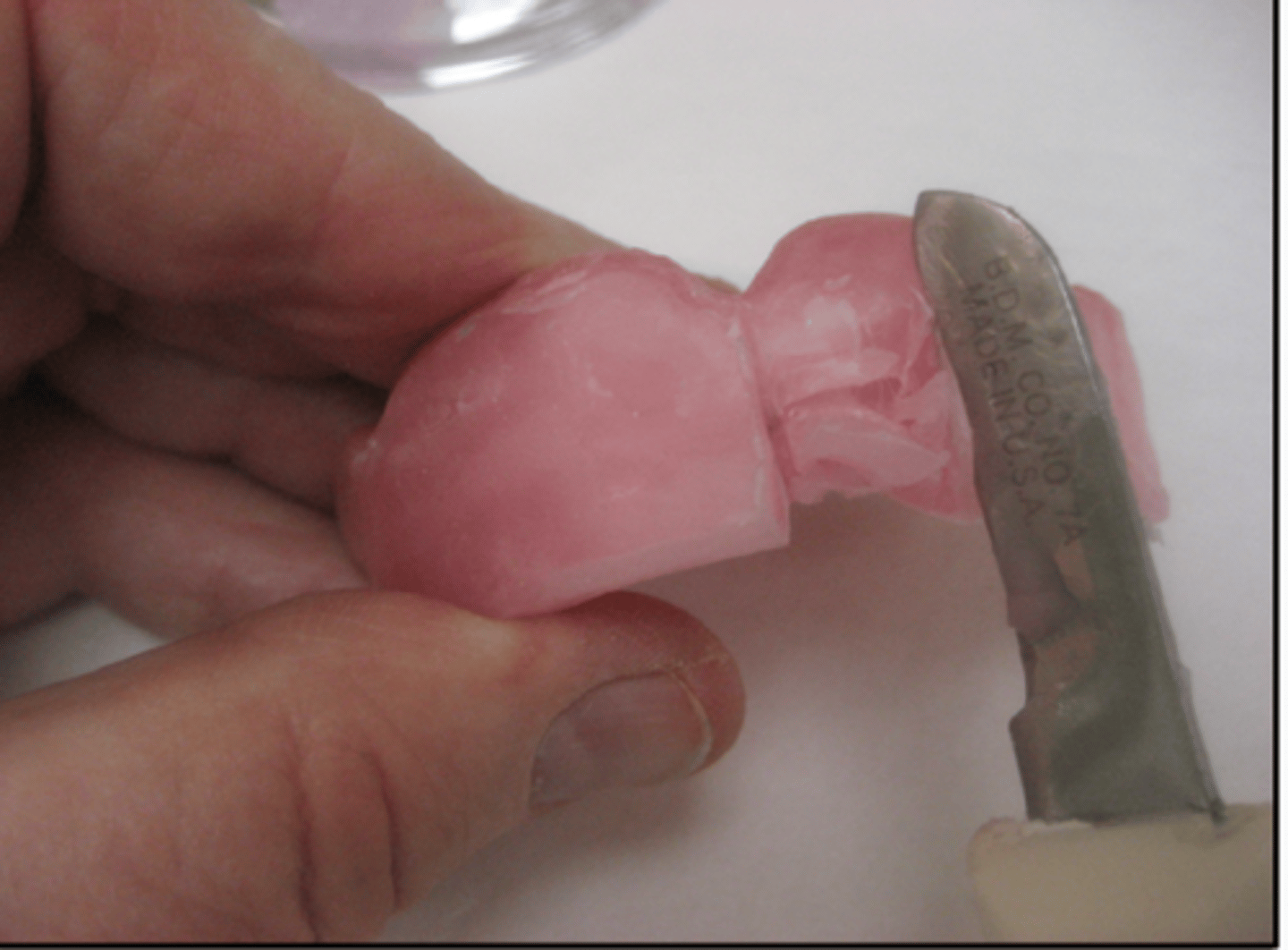
Prior to setting the maxillary central teeth, how much of the wax rim is removed?
15 mm
The facial surface of the maxillary central incisor is how many mm anterior to the center of the incisive papilla?
10 mm
All of the following are requirements for setting what tooth?
- On the midline
- On the occlusal plane
- In the frontal plane, the tooth long axis is straight up and down
- The facial surface is 10 mm anterior to the center of the incisive papilla
Maxillary central incisor
In clinical cases, where might you have to grind material from in addition to the cervico-lingual area of the tooth?
thickness of baseplate
There are 6 guidelines to follow when setting max. central incisiors:
1) mesial surface is on the ___________
midline
There are 6 guidelines to follow when setting max. central incisiors:
2) incisal edge is on _________ plane
inciso-occlusal
There are 6 guidelines to follow when setting max. central incisiors:
3) long axis is straight up and down OR inclined _________ when viewed from frontal plane
slightly distal
There are 6 guidelines to follow when setting max. central incisiors:
4) The incisal area is slightly ________ to the cervical area when viewed from the sagittal plane
buccal
There are 6 guidelines to follow when setting max. central incisiors:
5/6) Please refer to the guidelines on the land areas on your maxillary cast which are in line with the center of the incisive papilla. Make sure the facial surface of the central incisor is _____ mm anterior to the center of the incisive papilla
10 mm
What are the three types of residual ridge shapes?
- Tapered
- Ovoid
- Square
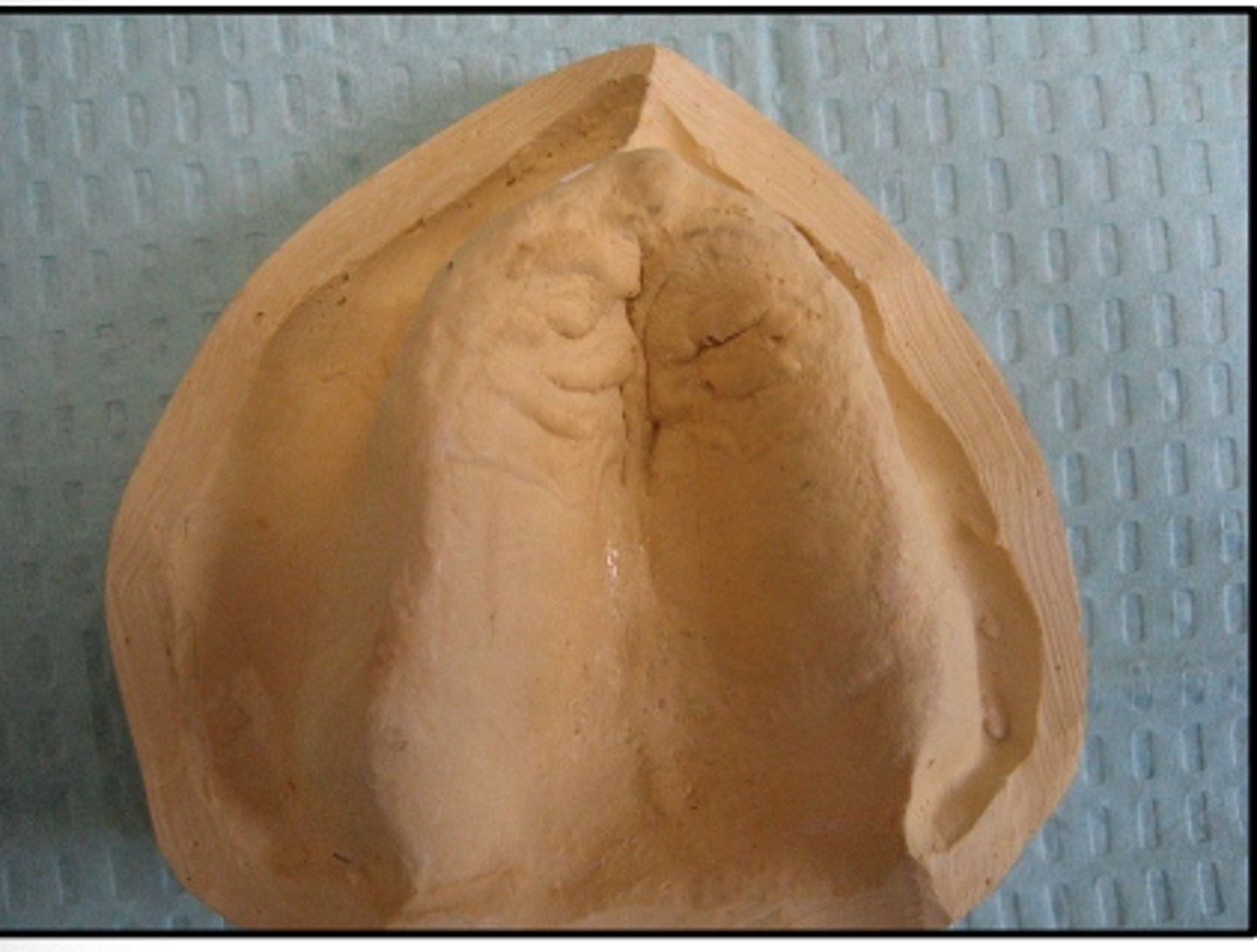
This is what type of residual ridge shape?
tapered
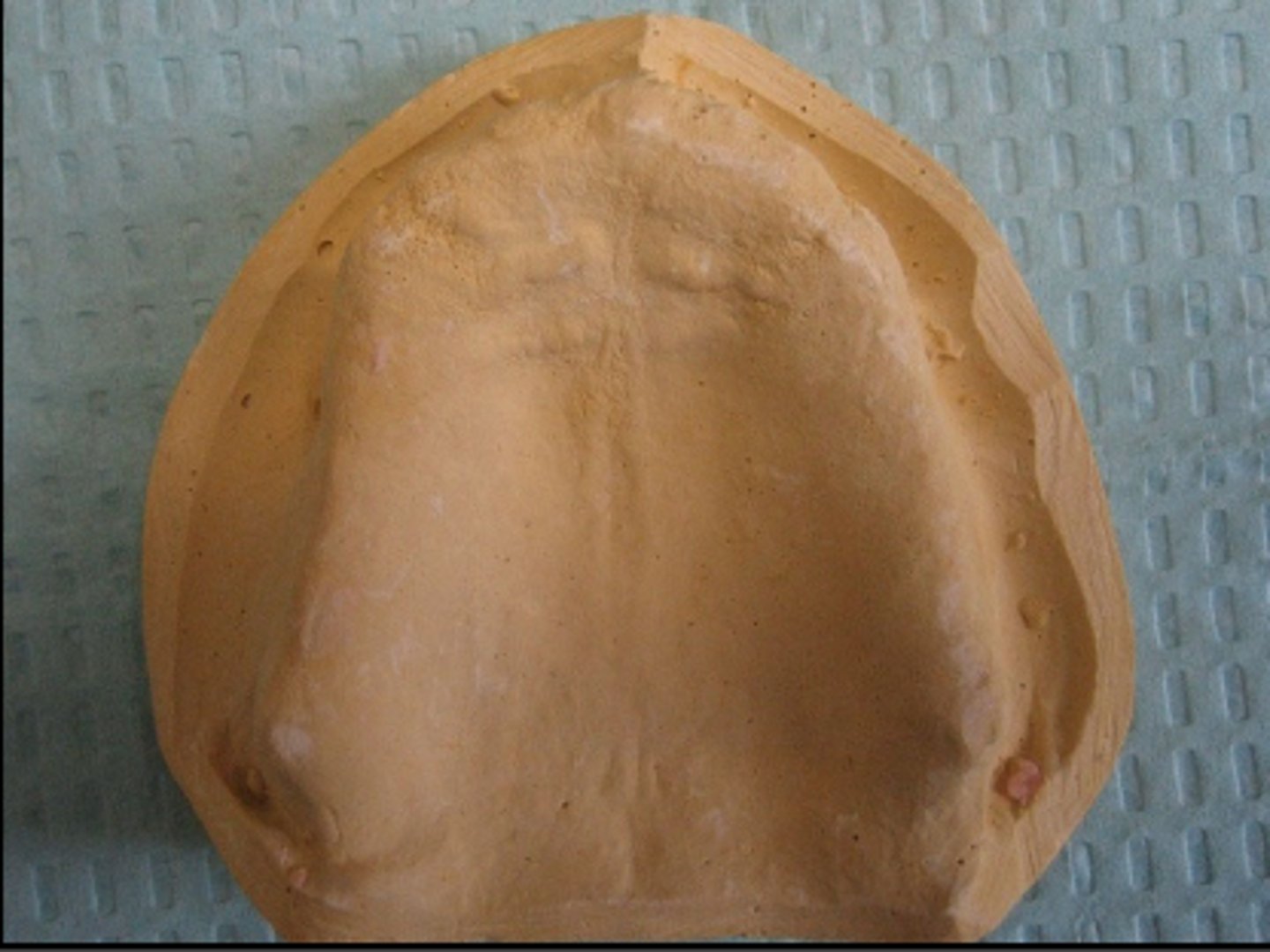
This is what type of residual ridge shape?
ovoid
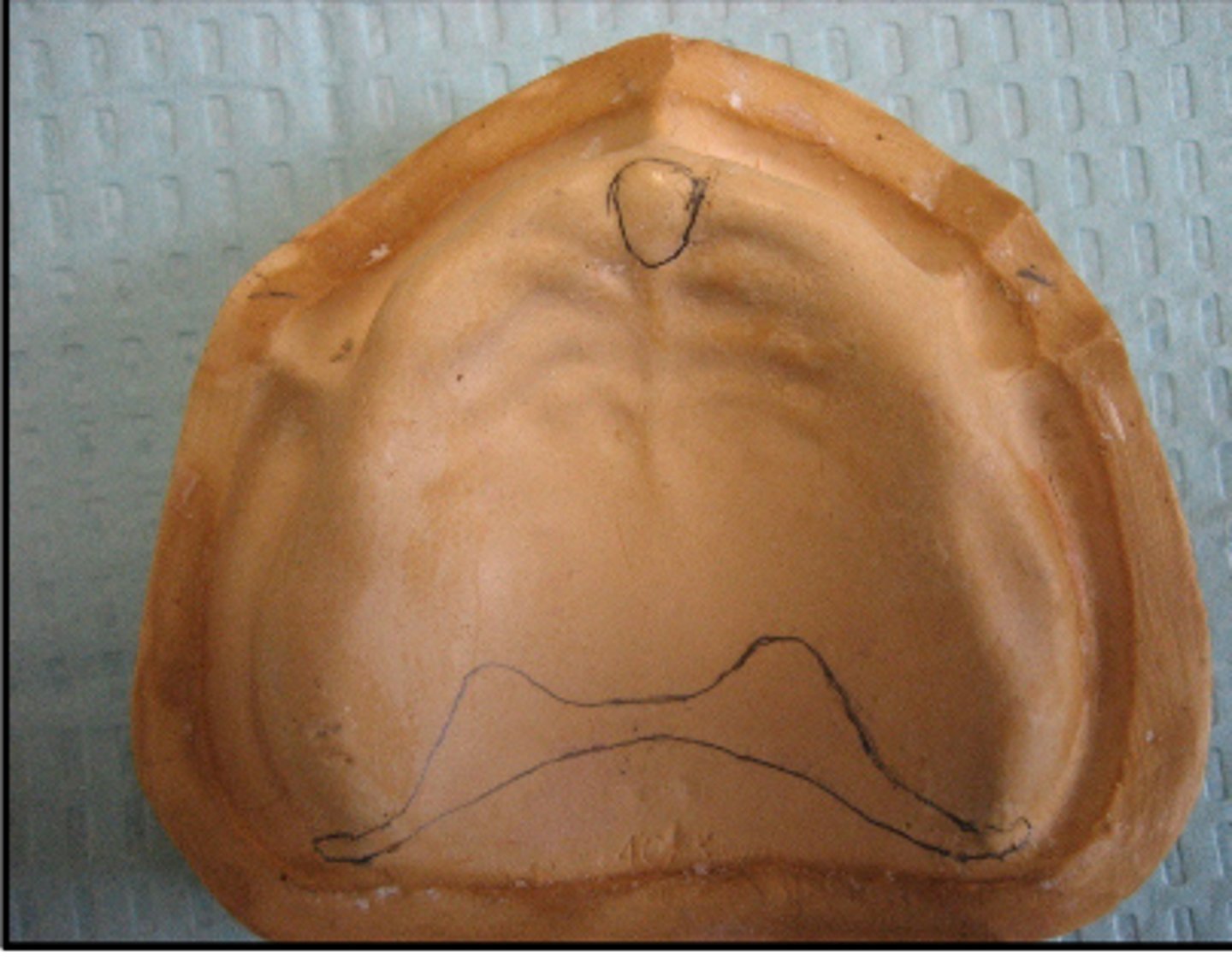
This is what type of residual ridge shape?
square
What are the two options for the level of the maxillary lateral incisors edge when placing them (from a frontal plane)?
- At the level of central incisors edge
- Up to 1 mm higher than incisal edge of central incisor
T/F: The maxillary lateral incisors can be placed lower than the incisal edge of the central incisors
False (NEVER)
What are the two options for the maxillary lateral incisor placement when looking at them from the horizontal plane? (lateral incisor antero-posterior position)
- On the same plane with central incisor
- Slightly posterior to central incisor
T/F the max lateral incisors can NEVER be placed more anterior than the central incisor
True
Where does the cusp tip of the maxillary canine fall?
occlusal plane
What is the significance of the maxillary canine?
corner/turn of the arch
The axial inclinations of the maxillary canine is ________ inclined
distally
The distal aspect of the maxillary canine is oriented towards what to "turn the corner"?
palate
Where is the mandibular midline?
Same as maxillary midline
T/F Axial inclinations of the mandibular anterior teeth are the same as the corresponding maxillary anterior teeth for both the frontal and sagittal planes.
True
Mandibular anterior denture teeth are set with ___-___ mm for both horizontal and vertical overlap
1-1.5 mm
The arch form of the mandibular anterior teeth follows what?
Arch form of maxillary
Define the following:
Concept that describes the manner in which teeth should and should not contact in the various functional and excursive positions of the mandible
Occlusal scheme
For natural dentition, what is the preferred occlusal scheme?
Mutually protected occlusion (canine guidance/canine function)
What are synonyms for mutually protected occlusion?
- Canine guidance
- Canine function
For mutually protected occlusion, in MIP, what kind of contacts are present in the posterior teeth?
solid and even
For mutually protected occlusion, In MIP, what kind of contacts are present in the anterior teeth?
slightly lighter
For mutually protected occlusion, in lateral excursive movement, working contacts (preferably canines) disclose which teeth?
nonworking and posterior
For mutually protected occlusion, in protrusion, ______ teeth disclude ______ teeth
anterior, posterior
For mutually protected occlusion, occlusal forces are along _________
long axis of teeth
Natural dentition or complete denture?
14 independent units per arch
natural
Natural dentition or complete denture?
1 unit
CD
Natural dentition or complete denture?
Teeth have a PDL
natural
Natural dentition or complete denture?
Seated on resilient mucosa (2-4 mm)
CD
Natural dentition or complete denture?
Teeth are stable
natural
Natural dentition or complete denture?
Dislodged more easily
CD
Natural dentition or complete denture?
Bone loss is gradual
natural
Natural dentition or complete denture?
Bone loss is much quicker
CD
Natural dentition or complete denture?
Proprioception
natural
Natural dentition or complete denture?
No attachment
CD
Artificial posterior teeth that are ________ in the bucco-lingual direction have benefits
Narrow
Why do artificial posterior teeth that are narrow bucco-lingually enhance development of correct form for polished surfaces?
So musculature can help maintain and keep dentures in place
Artificial posterior teeth that are narrow bucco-lingually can (increase or decrease) the amount of forces on the slopes of the residual ridge
decrease
What does a decrease in force on the slopes of the residual ridge help with?
prevents tilting and additional resorption
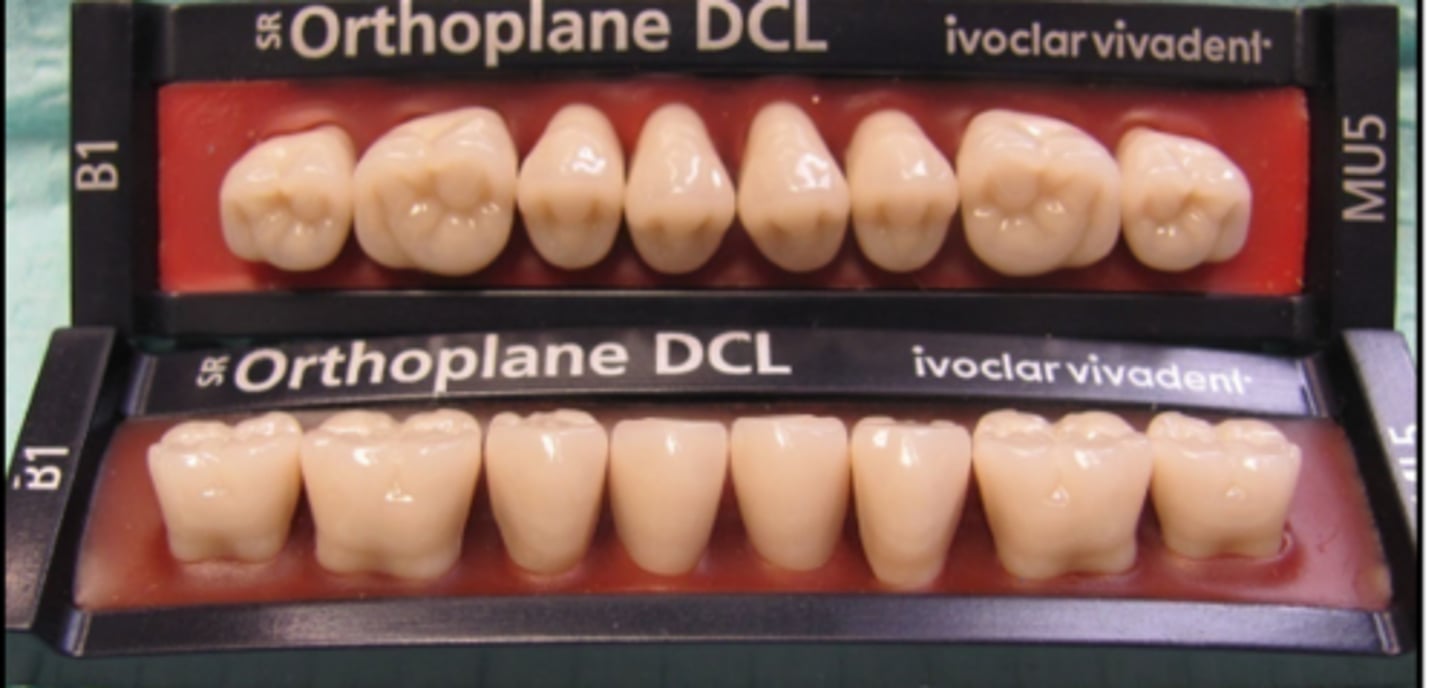
Are these monoplane or anatomic posterior denture teeth?
monoplane
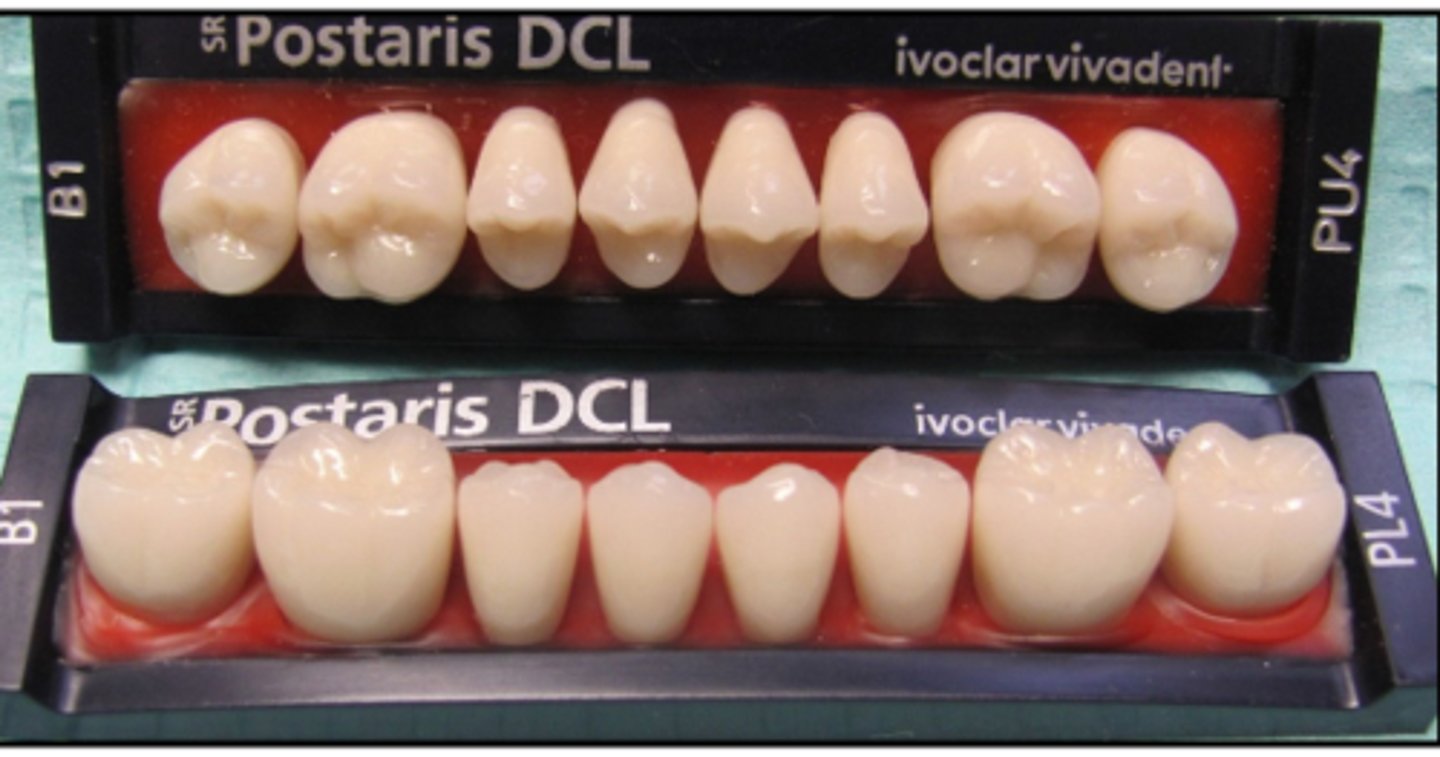
Are these monoplane or anatomic posterior denture teeth?
anatomic
When setting teeth, what three parameters must be considered?
- Esthetics
- Phonetics
- Mechanics
Where are anterior teeth set in relation to the residual ridge due to some resorption of the ridge occurring?
anterior to ridge
Since posterior teeth primarily are for good stability, where are they set in relation to the residual ridge?
on the ridge (sometimes with tilt)
Which occlusal scheme?
The bilateral, simultaneous anterior and posterior occlusal contact of teeth in centric and eccentric positions
Bilateral balanced occlusion (BBO)
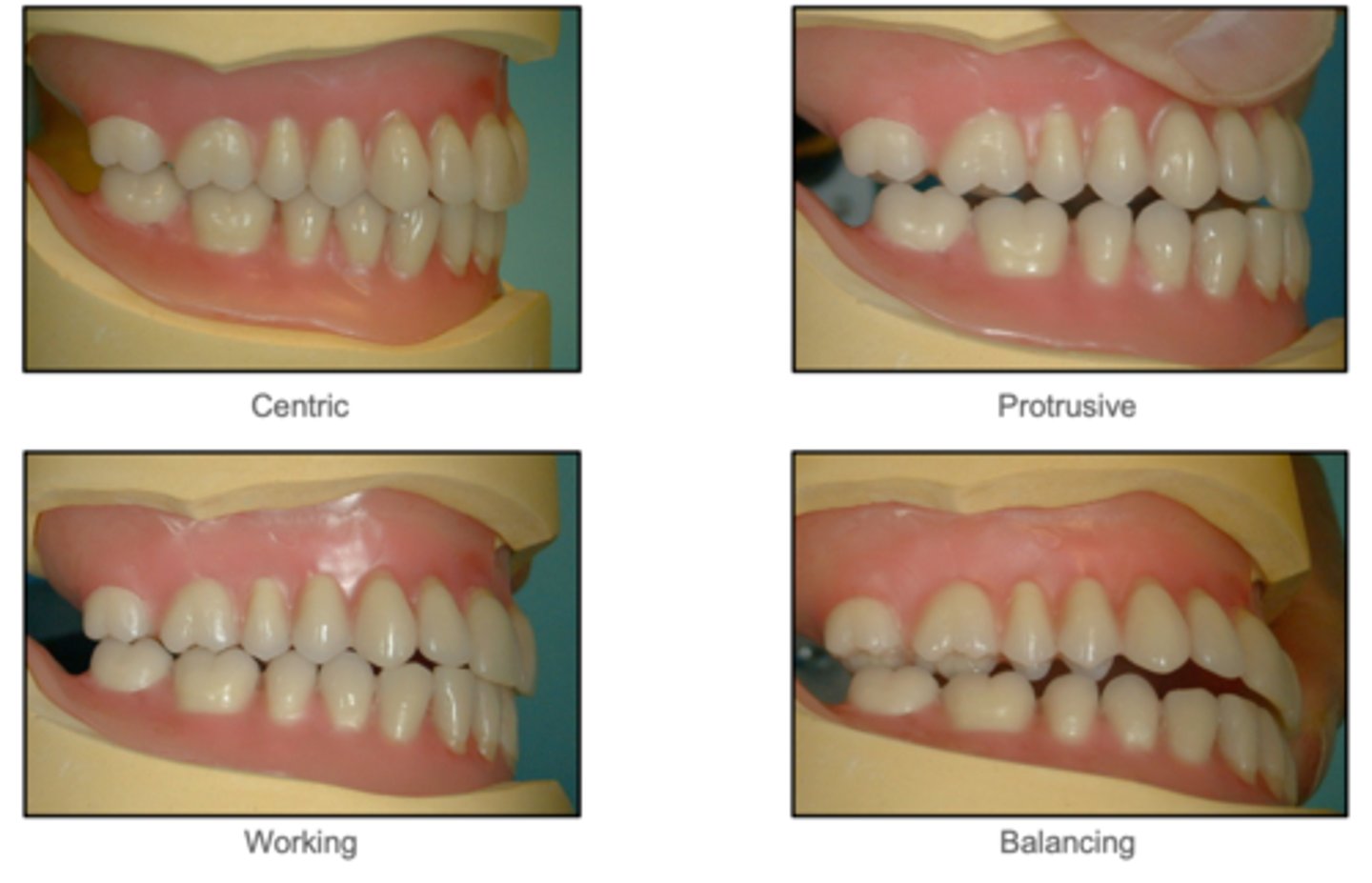
Which occlusal scheme?
Bilateral balanced occlusion (BBO)
What are the two types of bilateral balanced occlusion (BBO)?
- Conventional BBO (CBBO)
- Lingualized occlusion (LBBO)
Which type of BBO?
Cross tooth and cross arch
Conventional BBO (CBBO)
Which type of BBO?
Cross arch only (where only maxillary lingual cusps are involved in centric working and nonworking)
Lingualized occlusion (LBBO)
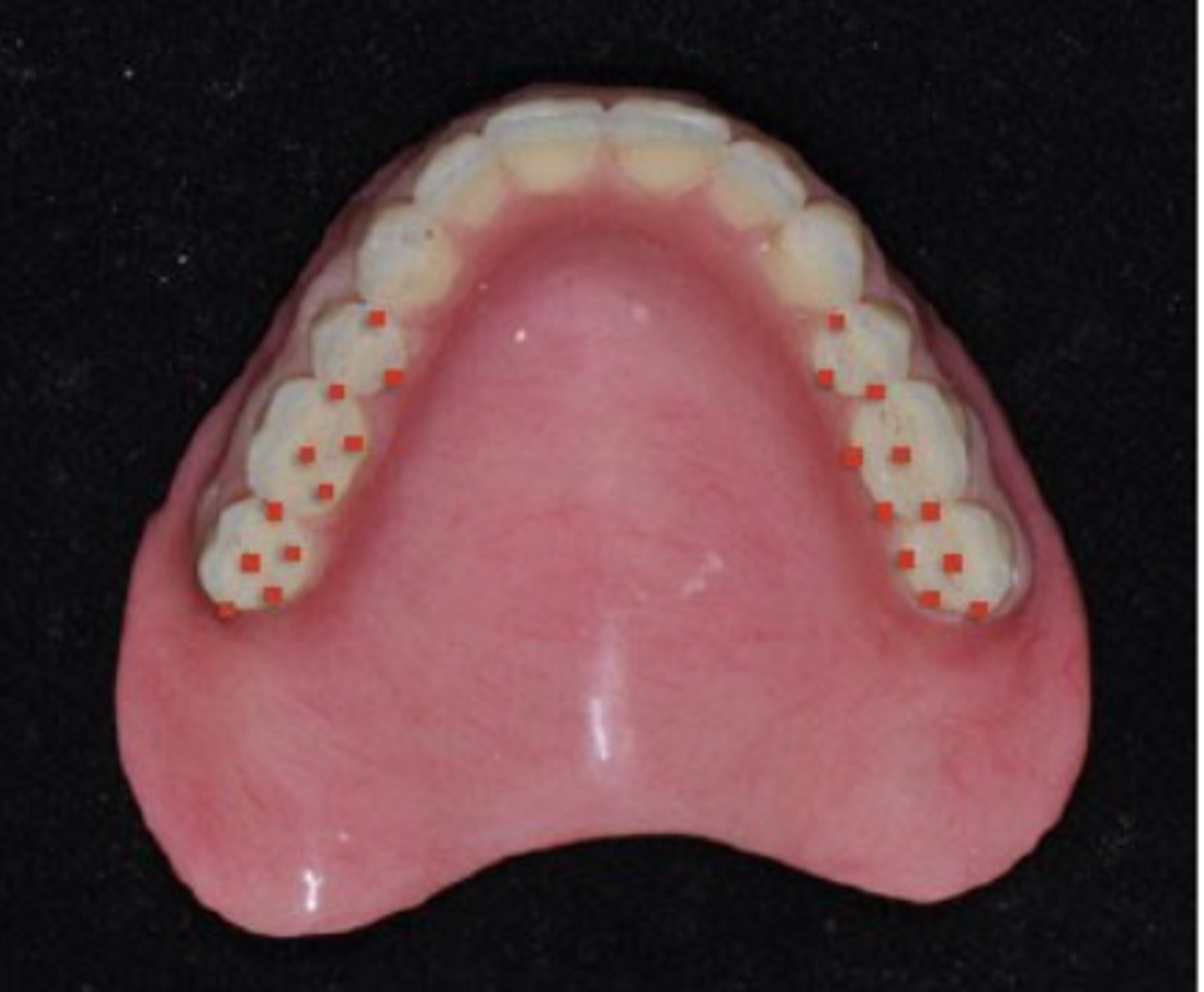
Which type of BBO?
Conventional BBO (CBBO)
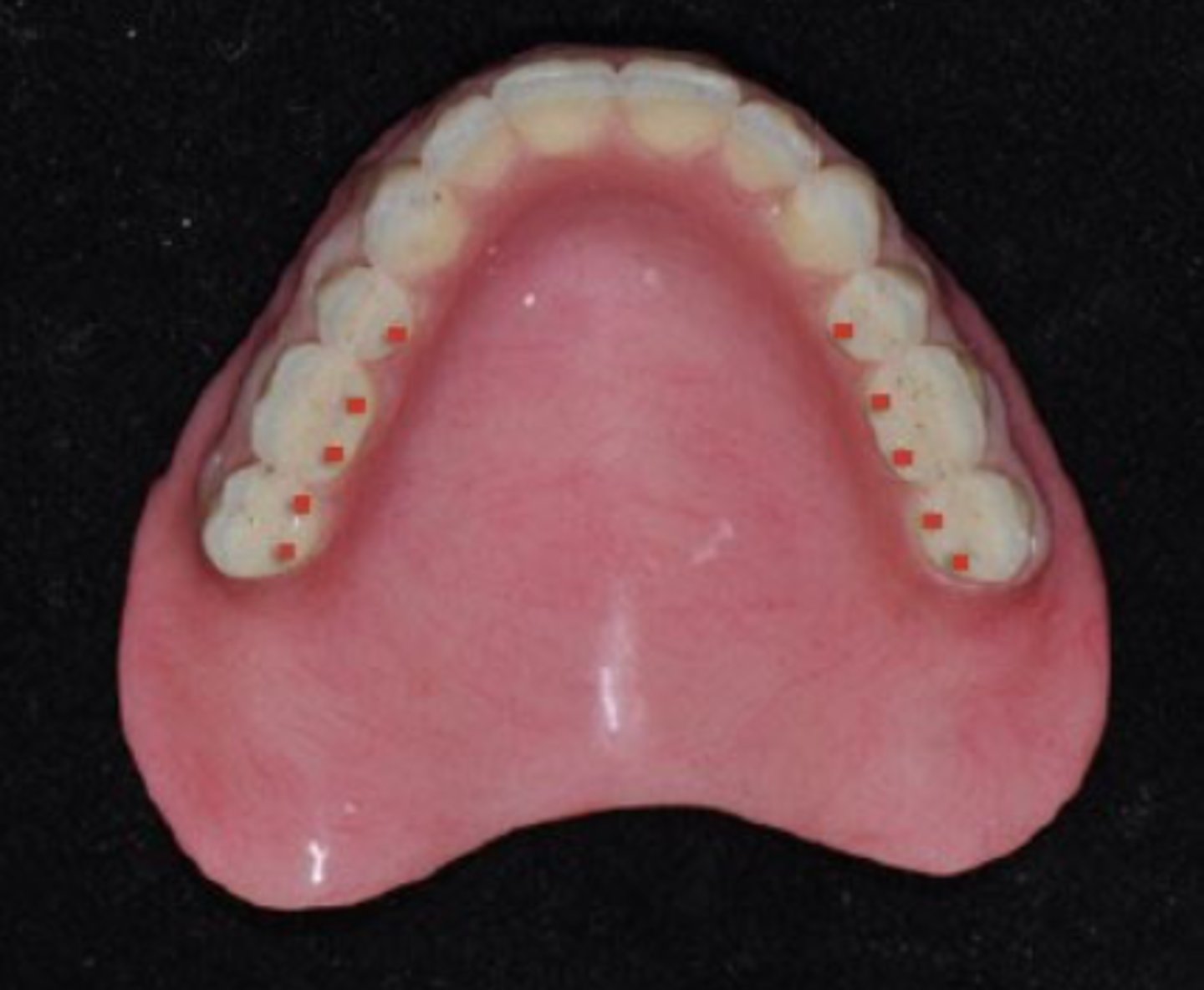
Which type of BBO?
Lingualized occlusion (LBBO)
Aprosthetic curve resembling the curve of Spee and Wilson is made to obtain ___________, it is not necessary if Weinberg's formula is satisfied and either true compensating curve or ramp
Bilateral balanced occlusion (BBO)
To create the curve/ramp, the distal half of the first mandibular molar is elevated how much?
slightly
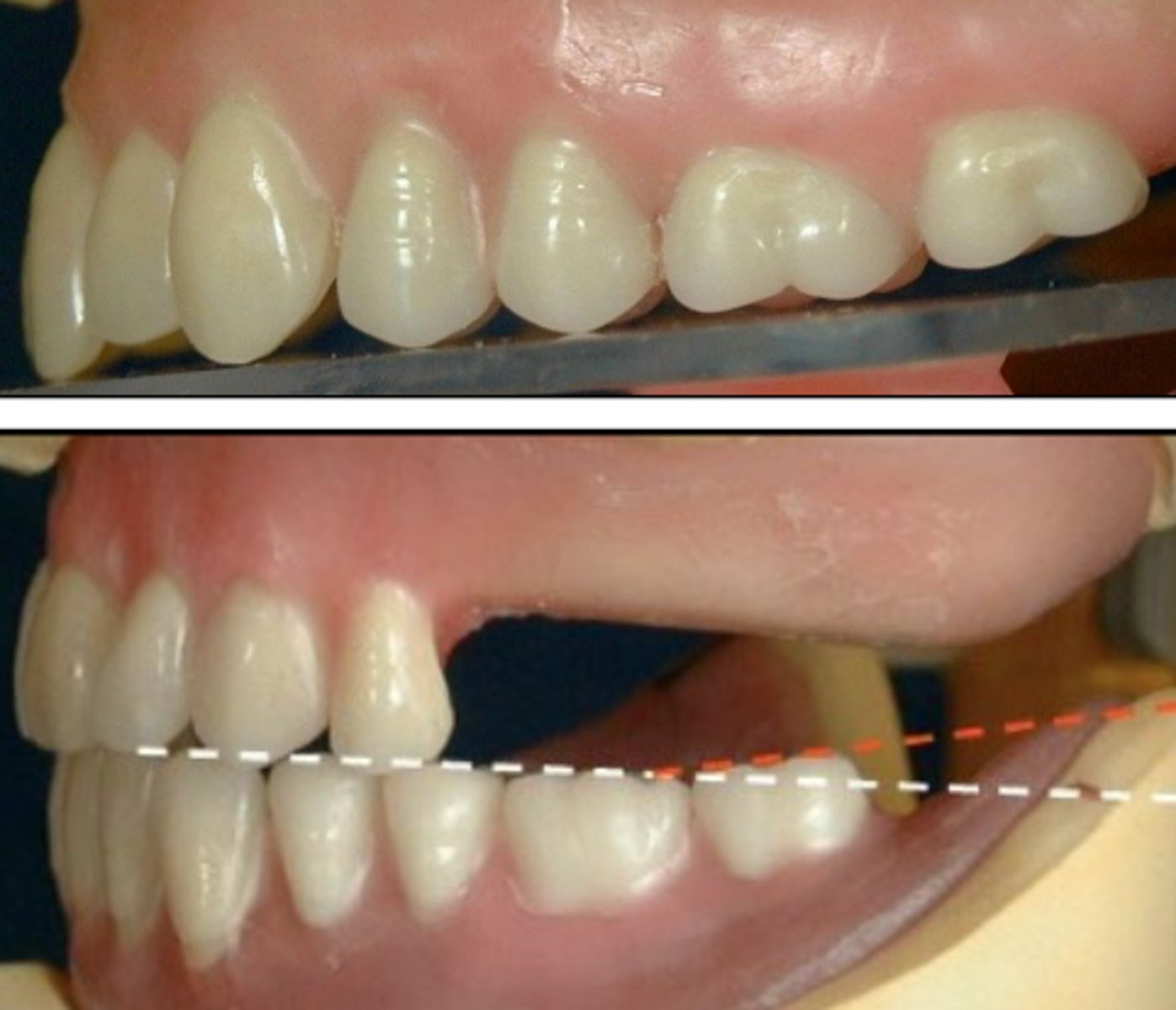
To create the curve/ramp, the second mandibular molar is elevated how much?
15 degrees from occlusal plane
For lingualized occlusion-centric occlusion, the lingual cusps of the maxillary teeth rest where on the mandibular opposing teeth?
central fossa
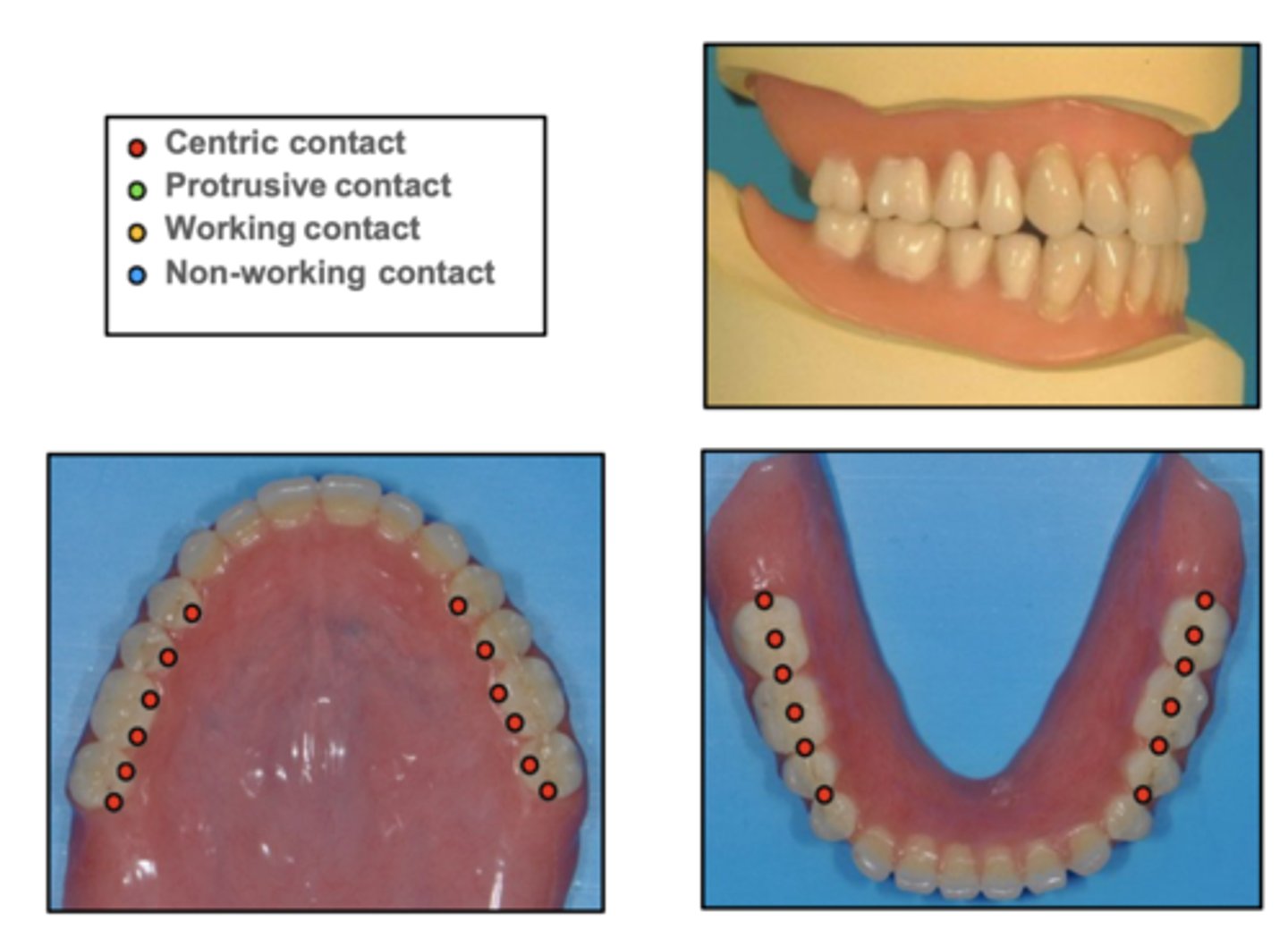
This is what occlusal scheme?
Lingualized occlusion (LBBO) - centric occlusion
For lingualized occlusion-centric occlusion, the buccal maxillary cusps have what relationship with the mandibular teeth?
never in contact
Where is the central fossa of mandibular posterior teeth placed?
directly over crest of mandibular ridge
How can you ensure you place the central fossa of the tooth directly over the crest of the mandibular ridge?
Place your transparent ruler over the ridge lines placed anterio-posteriorly on the left side land areas of the final cast
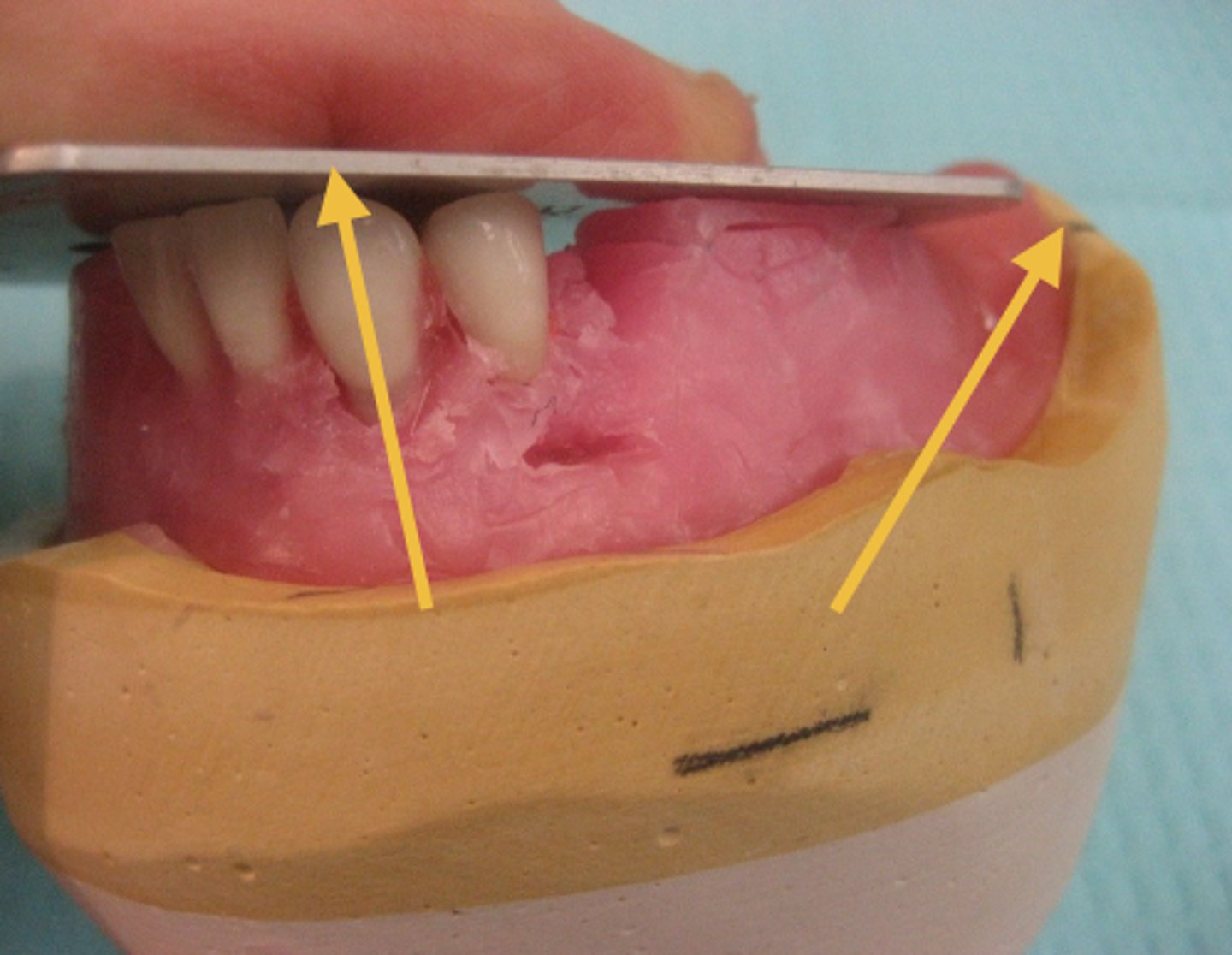
What does this step show when placing the mandibular premolars?
Set this tooth so that its occlusal surface is touching a plane from the tip of the cuspid, anteriorly, to the level that is 2/3 of the height of the retromolar pad posteriorly.
T/F When setting posterior teeth, the occlusal surface should touch a plane and sit squarely
true
The posterior teeth should have what long axis orientation?
straight up and down (NO mesio-distal tilt when viewed buccally)
How much is the distal end of the first molar raised to create a slight anterio-posterior compensating curve?
2mm
What does the anterior/posterior compensating curve allow us to obtain?
Bilateral balanced occlusion (BBO) in protrusion
By raising the mandibular molar 2 mm, are you duplicating the curve of Spee?
No
If you set a tooth posterior to the ascending part of the ramus, what will happen with occlusal pressure?
anterior movement of denture
Maxillary lingual cusps are involved in which movements when in lingualized occlusion?
Centric and excursive
Should the maxillary buccal cusps ever be in contact in lingualized occlusion?
No, never
The first maxillary premolar lingual cusps should have occlusion with which mandibular marginal ridges?
- Distal marginal ridge of 1st PM
- Mesial marginal ridge of 2nd PM
The second maxillary premolar lingual cusps should have occlusion with which mandibular marginal ridges?
- Distal marginal ridge of 2nd PM
- Mesial marginal ridge of 1st molar
When placing the maxillary first premolar, the buccal cusp should be free of which contacts?
- Occlusal
- Excursive
When placing the maxillary second premolar, the buccal cusp should be free of which contacts?
- Occlusal
- Centric
- Excursive
For lingualized occlusion, when a right mandibular movement is made, the working side is which side?
right side
 Note
Note  Flashcards (40)