Lecture 11 - Raising Capital: Debt and Lease
 Call Kai
 Learn
Learn Practice Test
 Spaced Repetition
 Match
Match Flashcards
 Knowt Play
1/83

There's no tags or description
Looks like no tags are added yet.
Name | Mastery | Learn | Test | Matching | Spaced | Call with Kai |
|---|
No analytics yet
Send a link to your students to track their progress
84 Terms
What is debt financing?
Borrowed capital with fixed repayment obligations
What two payments must debt financing include?
Interest payments at fixed intervals
Repayment of principal at maturity
What is short-term debt
Debt with maturity one year or less
What is long-term debt?
Debt with maturity more than one year
Does debt financing dilute ownership?
No ownership dilution
Who has priority in liquidation?
Debtholders
Why is debt financing often cheaper than equity?
Lower cost of raising funds
Lower required return
Interest provides tax shield
What income do equity investors receive?
Dividends
What income do debt investors receive?
Interest
Are dividends tax deductible?
No
Is interest tax-deductible?
Yes — interest is a business expense
What control do equity holders have?
Voting rights
What control do debtholders have?
Loan agreement restrictions
What happens if dividends are not paid?
Firm cannot be forced into bankruptcy
What happens if debt payments are not made?
Firm can enter bankruptcy
What is the bottom-line comparison between equity and debt?
Tax status favours debt but default risk favours equity
What are key advantages of debt financing?
Tax shield
Cheaper capital
No ownership dilution
Discipline for managers
What are key disadvantages of debt financing?
Default risk
Restrictive debt covenants
Higher earnings volatility
Why can debt increase earnings volatility?
Fixed interest payments
When are firms more likely to use debt?
Stable cash flows
Tangible assets
Profitable firms
Low distress costs
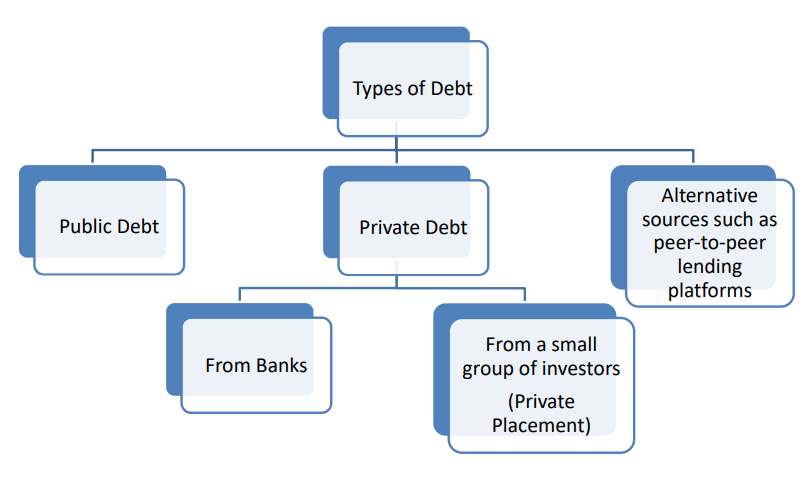
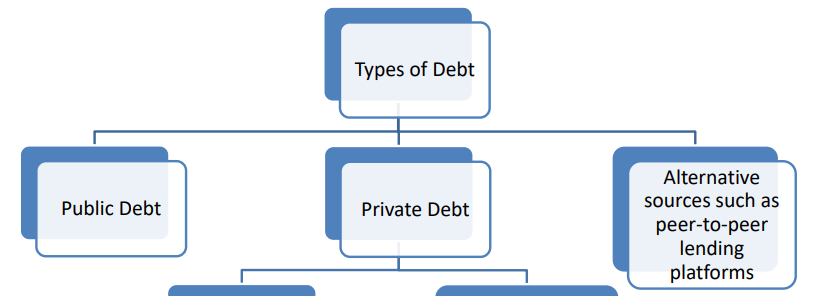
What are the two main categories of debt financing?
Public debt
Private debt
What is public debt?
Debt issued to many investors in public markets
What is private debt?
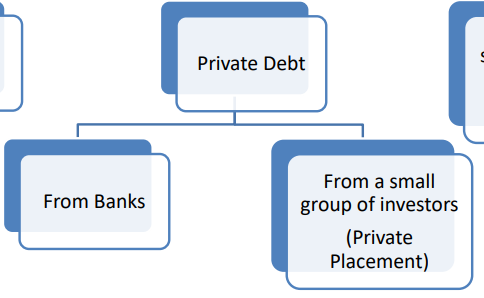
Debt provided by banks or small groups of investors
What are examples of private debt sources?
Bank loans
Private placements
Peer-to-peer lending platforms
What are floating-rate bonds?
Bonds with coupon rates linked to an interest rate index
What are floating-rate bonds?
Bonds with coupon rates linked to an interest rate index
What interest rate indexes are often used for floating bonds?
Treasury bill rate
LIBOR
What does LIBOR stand for?
London Interbank Offer Rate
What risk do floating-rate bonds reduce
Inflation risk
What is a zero-coupon bond?
Bond that pays no coupons and is sold at a discount
Example of zero-coupon bond

Why do investors buy zero-coupon bonds?
They receive the face value at maturity
What are income bonds?
Bonds that pay coupons only if firm income is sufficient
What is a bond?
Public issue of long-term borrowing contract
Who must approve a bond issue?
Board of directors
What must be prepared before issuing bonds?
Registration statement
Who reviews the registration statement?
Regulatory authority
What document defines the bond contract?
Bond indenture
What is a bond indenture?
Formal agreement between company and trust company
What basic terms are included in a bond indenture?
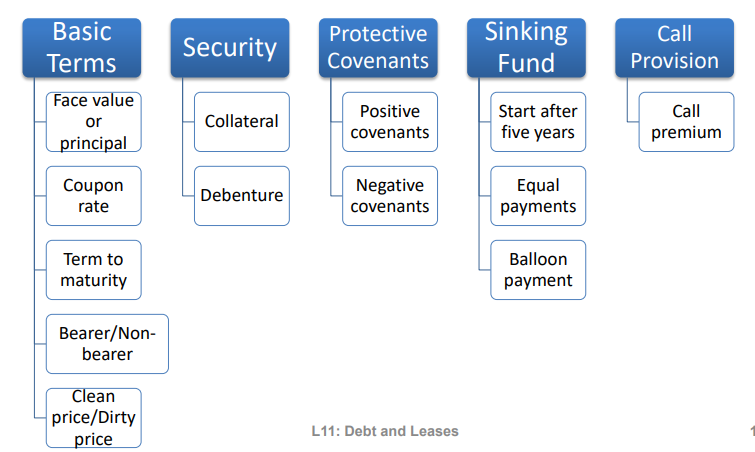
Face value
Coupon rate
Term to maturity
Bearer or non-bearer
Clean price or dirty price
What does bond security describe?
Colleteral pledged
Debenture
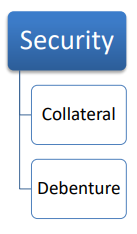
What is a debenture?
Bond without collateral
What are protective covenants?
Rules restricting actions of borrowing company
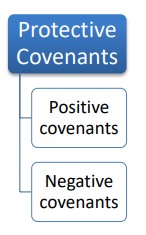
What are negative covenants?
Restrictions on dividends or new borrowing
What are positive covenants?
Requirements to maintain certain financial ratios
What is a sinking fund?
System to repay bond principal gradually
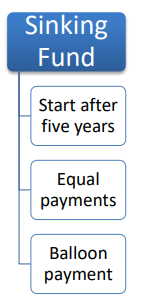
When might a sinking fund start?
Several years after issuance
What types of sinking fund payments exist?
Equal payments
Balloon paymemt
What are equal sinking fund payments?
Regular payments of the same amount made each period into a sinking fund to repay debt over time
What is a balloon sinking fund payment?
Small payments during the loan period followed by one large final lump-sum payment at the end
What is a call provision?
Right of issuer to repurchase bonds early
When do firms prefer to call bonds?
When interest rates fall
Why might firms include call provisions?
To refinance debt at lower interest rates
Why do callable bonds usually have higher coupons?
Investors require compensation for call risk
What is a line of credit?
Bank allows borrowing up to a maximum amount
What is a loan commitment?
Bank promises to lend specified amount at set interest rate
What is a syndicated loan?
Loan provided by a group of banks
Who negotiates syndicated loan terms?
Lead bank
What is a private placement?
Debt issued to a small group of institutional investors
What investors commonly provide private placements?
Pension funds
Insurance companies
What are advantages of private placements?
Lower issuance costs and flexible renegotiation
Why are private placements more flexible?
Easier renegotiation with small group of investors
What is a disadvantage of private placements?
Higher interest rates
What measure is used to estimate cost of debt?
Yield to maturity
What determines YTM in markets?
Creditworthiness
Loan terms
Market conditions
What is a credit rating?
Assessment of borrower’s ability to repay debt
What two major agencies rate debt?
Standard & Poor’s
Moody’s
What factors do rating agencies analyse?
Financial statements
Cash flow stability
Leverage
Liquidity
Covenants
What are the two rating categories?
Investment grade
Speculative grade
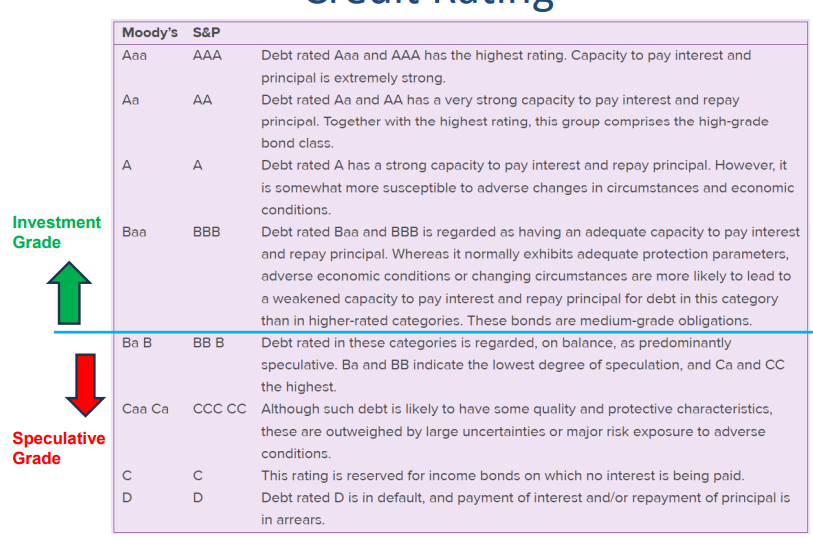
How do credit ratings affect borrowing costs?
Lower ratings lead to higher yields
What is a lease?
Rental agreement to use an asset for periodic payments
Who are the two parties in a lease?
Lessee - user of the asset
Lessor - owner of the asset
Why is leasing similar to debt?
It is similar to borrowing to buy an asset
What assets are commonly leased?
Property
Vehicles
Aircraft
IT equipment
Medical devices
What are the two main types of leases?
Operating lease
Financial lease
What is an operating lease?
Short-term lease similar to renting
(Lessor handles the maintenance)
What is a financial lease?
Long-term lease similar to borrowing to buy
(Lessee handles the maintenance)
Why might firms lease instead of buy?
No large upfront payment
Flexibility to upgrade assets
Transfer residual value risk
Lower transaction costs
Predictable payments
When is buying better than leasing?
Need full control
Long asset life
Cheap borrowing
Asset sensitive to usage
Firm wants depreciation tax shield
Why is leasing not “100% financing”?
Lease is still a financial liability
Why are accounting tricks less relevant today?
IFRS 16 treats leases similar to purchases
Which firms use leasing as substitute for debt?
Small or young firms
How do large firms use leases?
Complement debt financing
Why might low-tax firms lease?
They cannot use depreciation tax shields

