Exam 3 Study Guide
 Call Kai
 Learn
Learn Practice Test
 Spaced Repetition
 Match
Match Flashcards
 Knowt Play
1/16

There's no tags or description
Looks like no tags are added yet.
Name | Mastery | Learn | Test | Matching | Spaced | Call with Kai |
|---|
No analytics yet
Send a link to your students to track their progress
17 Terms
What is Broca’s area responsible for?
Expressive language (speech production), damage causes slow, nonfluent speech.
What is Wernicke’s area responsible for?
Receptive language (language comprehension).
What are the major characteristics of Broca’s aphasia?
Nonfluent; characterized by short sentences with agrammatism; slow, labored speech; articulation errors; good auditory comprehension; poor repetition.
What are the major characteristics of Wernicke’s aphasia?
Fluent; characterized by rapid, incoherent speech; poor auditory comprehension; poor self-monitoring of speech.
What are the differences between closed and open head injuries?
Closed head injury involves fractures that penetrate the brain, tending to be focal. Open head injury may have intact skull but results in diffuse injury.
What happens during an acceleration injury?
Head stops, brain continues moving and slams into the skull (Coup Injury), then rebounds in the opposite direction (Contracoup Injury).
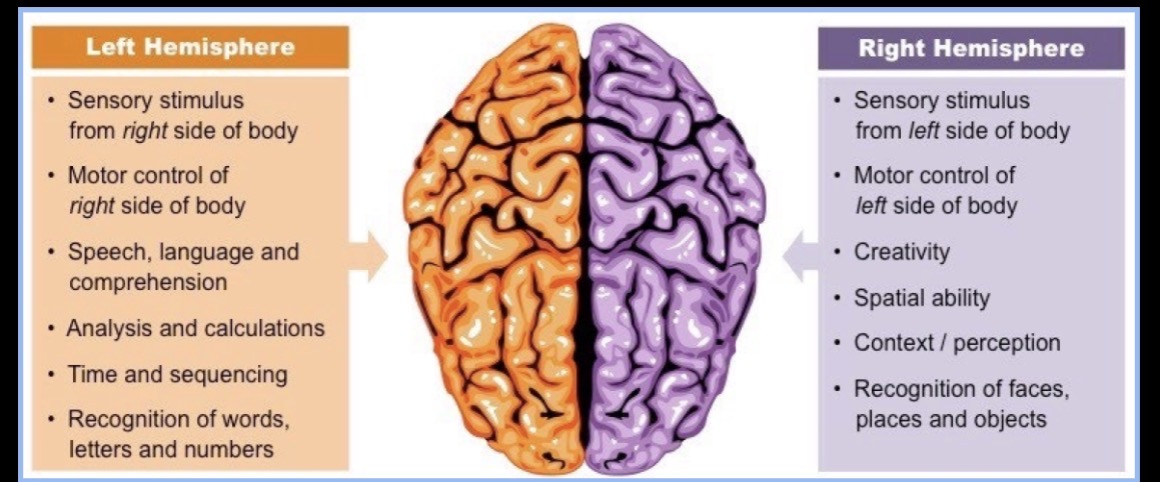
What is the major function of the left hemisphere of the brain?
Language processing.
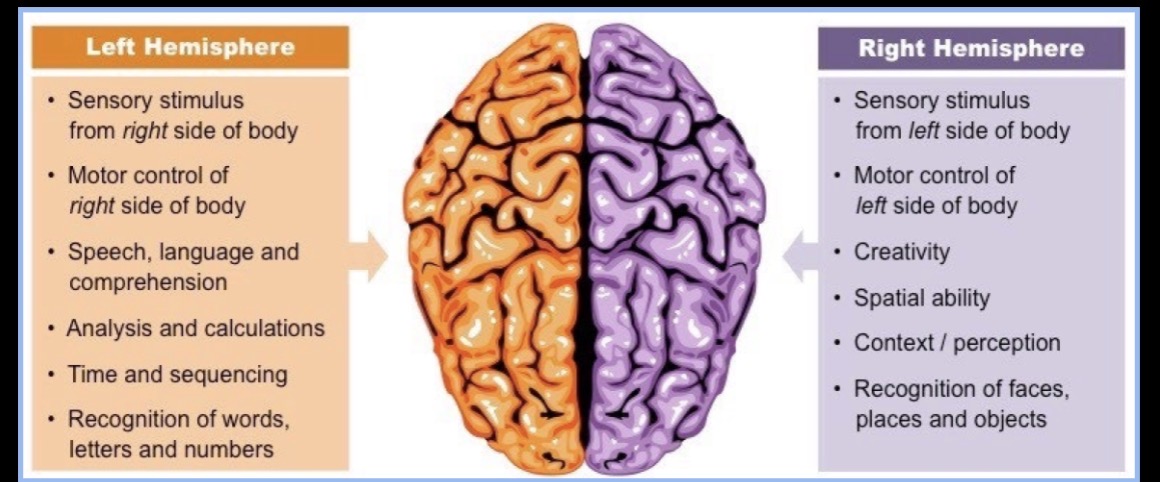
What is the major function of the right hemisphere of the brain?
Nonverbal communication.
What are cognitive communication disorders?
Result from impaired functioning in cognitive processes including attention, memory, perception, insight, judgment, language, processing speed, problem solving, reasoning, organization, orientation, executive functioning, and metacognition.
What are symptoms of dementia?
Memory loss, confusion, personality changes, depression, problems following directions, difficulty eating and swallowing.
What are the major features of aphasia?
A language disorder acquired after developing language competence, affecting receptive and expressive language.
What are the major features of anomia?
Word retrieval difficulty; difficulty naming.
What are the major features of apraxia?
Motor programming deficits impairing movement, balance, and coordination.
What distinguishes apraxia from dysarthria?
Apraxia involves motor programming deficits while dysarthria involves speech/voice deficits.
What causes brain damage?
Bruising, laceration, edema, infection, hypoxia, infarction, and hematoma.
What is the most common cause of aphasia?
Stroke, but also can result from head trauma, brain tumors, and infections.
What factors predict recovery from aphasia?
Initial severity of aphasia, size and site of lesion, and pre-injury status.

