week 1 lab 2
 Call Kai
 Learn
Learn Practice Test
 Spaced Repetition
 Match
Match Flashcards
 Knowt Play
1/50

There's no tags or description
Looks like no tags are added yet.
Name | Mastery | Learn | Test | Matching | Spaced | Call with Kai |
|---|
No analytics yet
Send a link to your students to track their progress
51 Terms
Two types of hair growth:
Definitive
Angora
Angora
hair grows continuously.
Definitive
shed and replaced once given length reached
Pelage is the total body covering of hair and is comprised of
Vibrissae
Guard hair
Underfur
Vibrissae
Long, stiff hairs that serve as tactile receptors; e.g., whiskers
– Have high blood supply
Guard hair
Awn
Bristles
Bristles
firm hairs with angora growth; e.g., lion mane. May be
stiff/enlarged such as the spines/quills on porcupines, hedgehogs,
echidnas, and “spiny mice.”
Awn
(most common) outer layer of hair on most mammals. Exhibit
definitive growth - expanded distally, weakened basally.
Underfur
two types:
– Wool
– Fur
– Fur
relatively short, with definitive growth.
Wool
long, soft, often curly with angora growth.
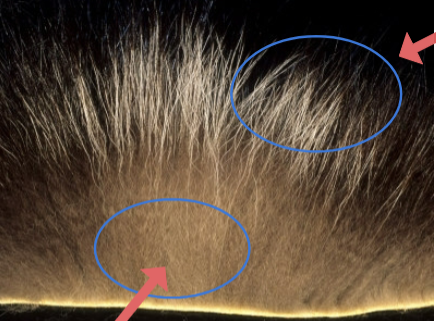
bottom = underfur
top = guardhairs
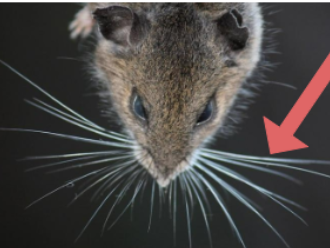
vibrasse
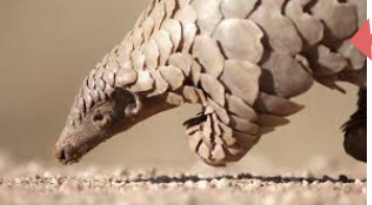
epidermal scales
Molt is
the process of replacing some or all of an animal’s fur.
Post-juvenile molt
juvenile pelage adult pelage.
Annual molts
replaces hairs that are worn.
Seasonal molts
summer vs. winter; i.e., for camouflage.
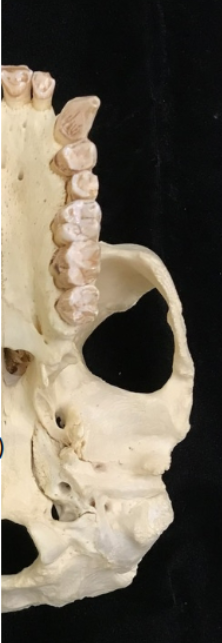
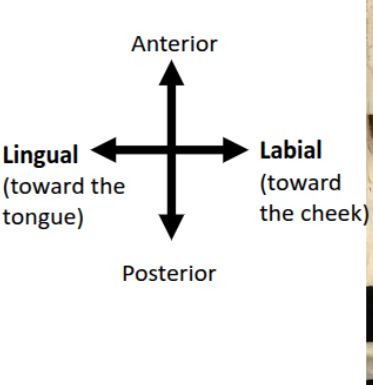
Directional terms for skull: label
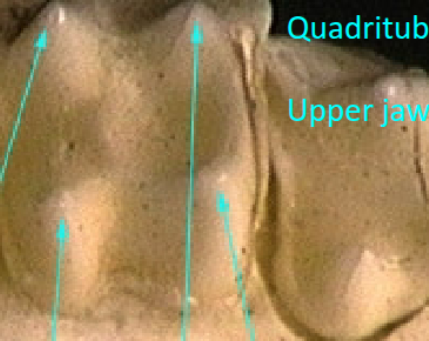
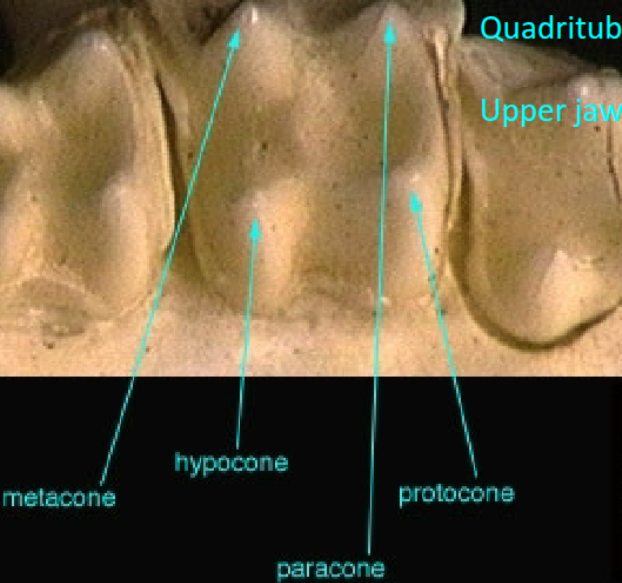
Cusps
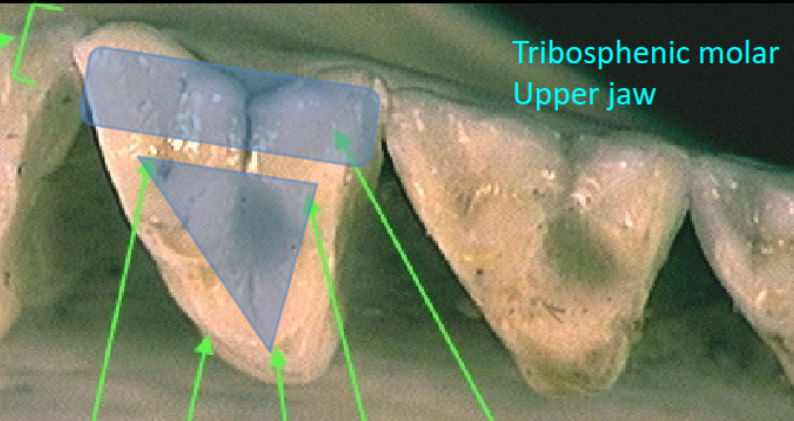
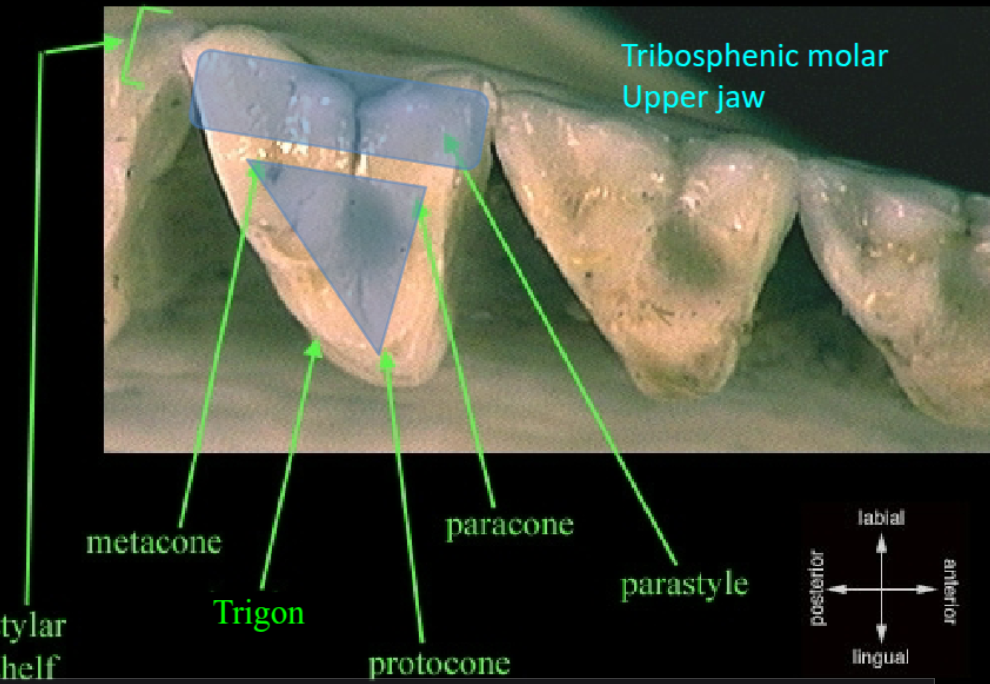
Upper teeth
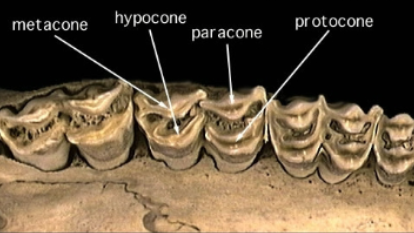
Trigon:
– protocone
– metacone
– paracone
– hypocone
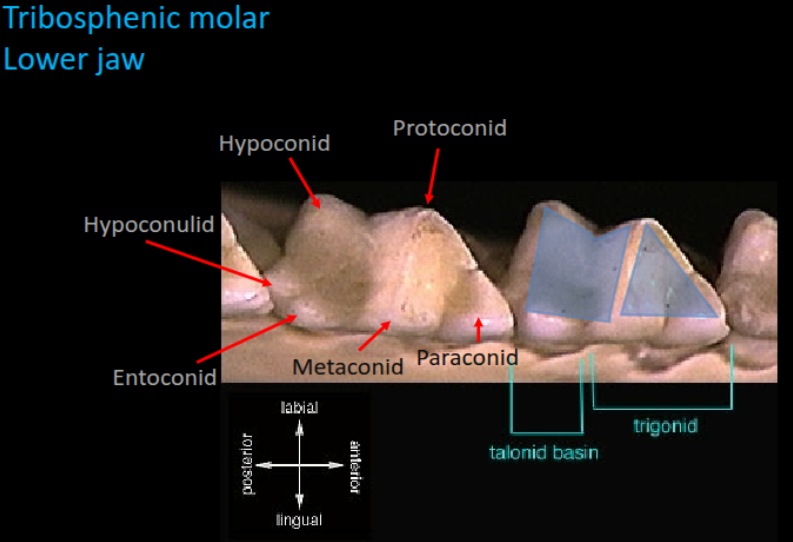
Cusps
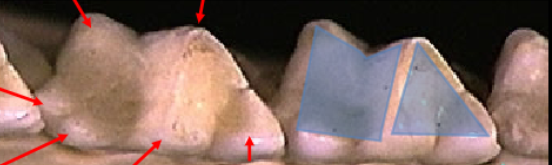
Lower teeth
Trigonid:
– protoconid
– metaconid
– paraconid
– hypoconid
– entoconid
– talonid *know this for tribosphenic molars
Occlusal Patterns
dilamdodont
quadrituberculate
lophodont
selenodont'
secodont
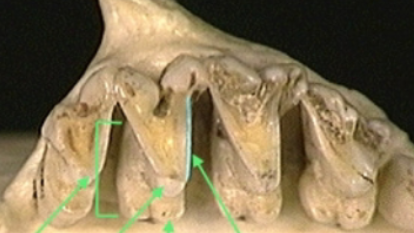
type of pattern
ZALAMBDODONT
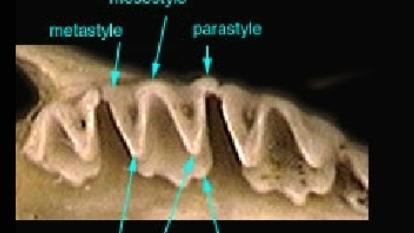
type of pattern
DILAMBDODONT
SELENODONT
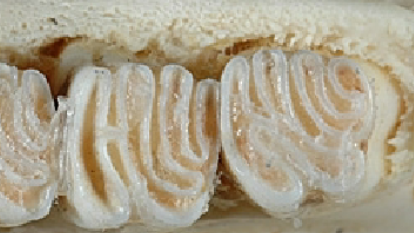
LOPHODONT
Specialized Teeth
Bunodont
Carnassials
Plagiaulacoid
Plagiaulacoid
grinding vegetation;
third premolar (PM3, pm3).
– Found in marsupials
Carnassials
shearing bad boys; a type of
secodont; fourth upper premolar, first lower
molar (P4/m1 – know this!)
Bunodont
low, rounded cusps for crushing
molar power.
– Found in omnivores
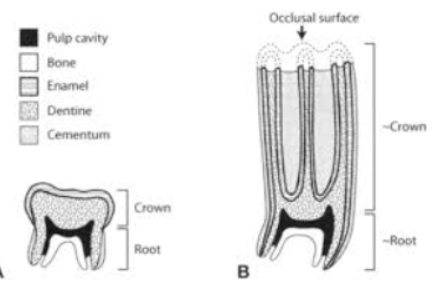
Tooth Crown Height
Brachydonty → low crowned
– e.g., humans, bears, pigs.
• Hypsodonty → high crowned
– e.g., kangaroo rat, deer, horse
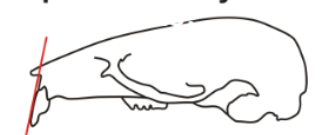
Incisor procumbancy
proodont
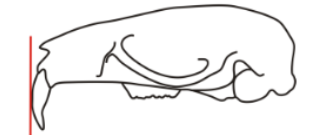
Incisor procumbancy
orthodont
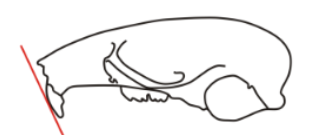
Incisor procumbancy
opisthodont
Horns
● Bony core covered by keratin
sheath (also called bone)
● Unbranched
● Permanent, with
indeterminate growth
● Projection of frontal bone
● Found on males; sometimes
on females
○ larger on males
Pronghorn
● Similar to horns, but
with a prong
● Shed annually
● Projection of frontal
bone
● May be found on
both sexes, but as
with horns, larger on
males
Antlers
● Found only on males
● Exception: female caribou
have antlers
● Solid bone; when growing,
covered by velvet (living
skin, fur)
● Shed annually
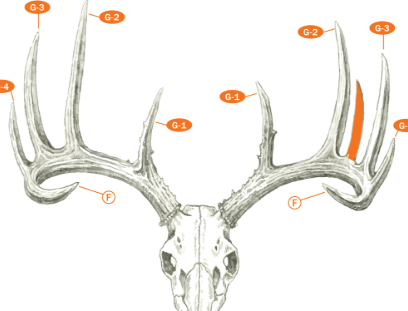
Branched: know/label 5 parts
burr, browtine, mainstem, and crown
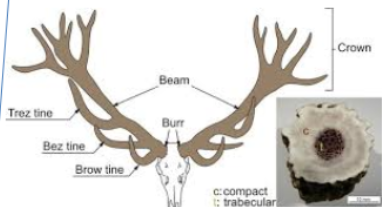
Ossicones
Horn-like structures formed within the skin; secondarily fuse to
skull (over fronto-parietal suture)
● Found in both sexes; remain furred in females, not males
● Giraffe and okapi
Rhinos
have “horns” but these are not bony. They are agglutinized hairs.
three cusps of the upper molar together are called the
trigon
three cusps of the lower molar combined are called the
trigonid
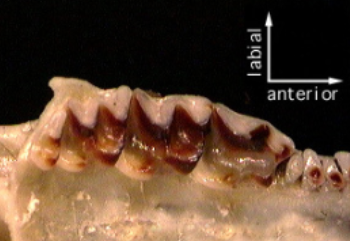
Dilambdont (W shape)
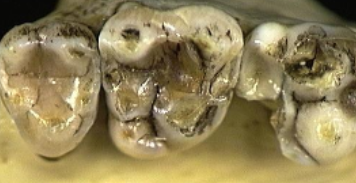
Euthemorphic/Quadritubercular (four main cusps)
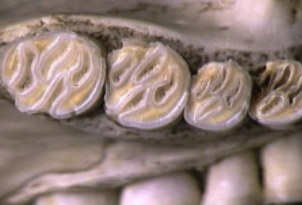
Lophodont (note rounded corners)
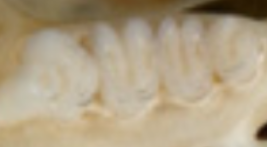
Bilophodont (two lophs)
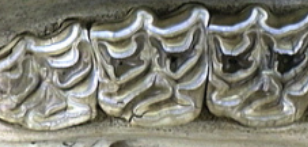
Selenodont (note sharp corners)
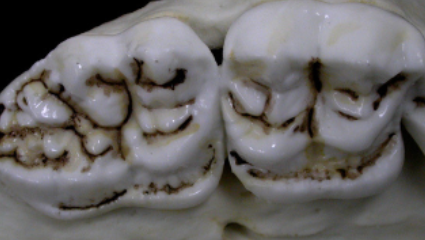
Bunodont (rounded and bumpy)

