A&P Lab Practical 3
 Call Kai
 Learn
Learn Practice Test
 Spaced Repetition
 Match
Match Flashcards
 Knowt Play
1/94

There's no tags or description
Looks like no tags are added yet.
Name | Mastery | Learn | Test | Matching | Spaced | Call with Kai |
|---|
No analytics yet
Send a link to your students to track their progress
95 Terms
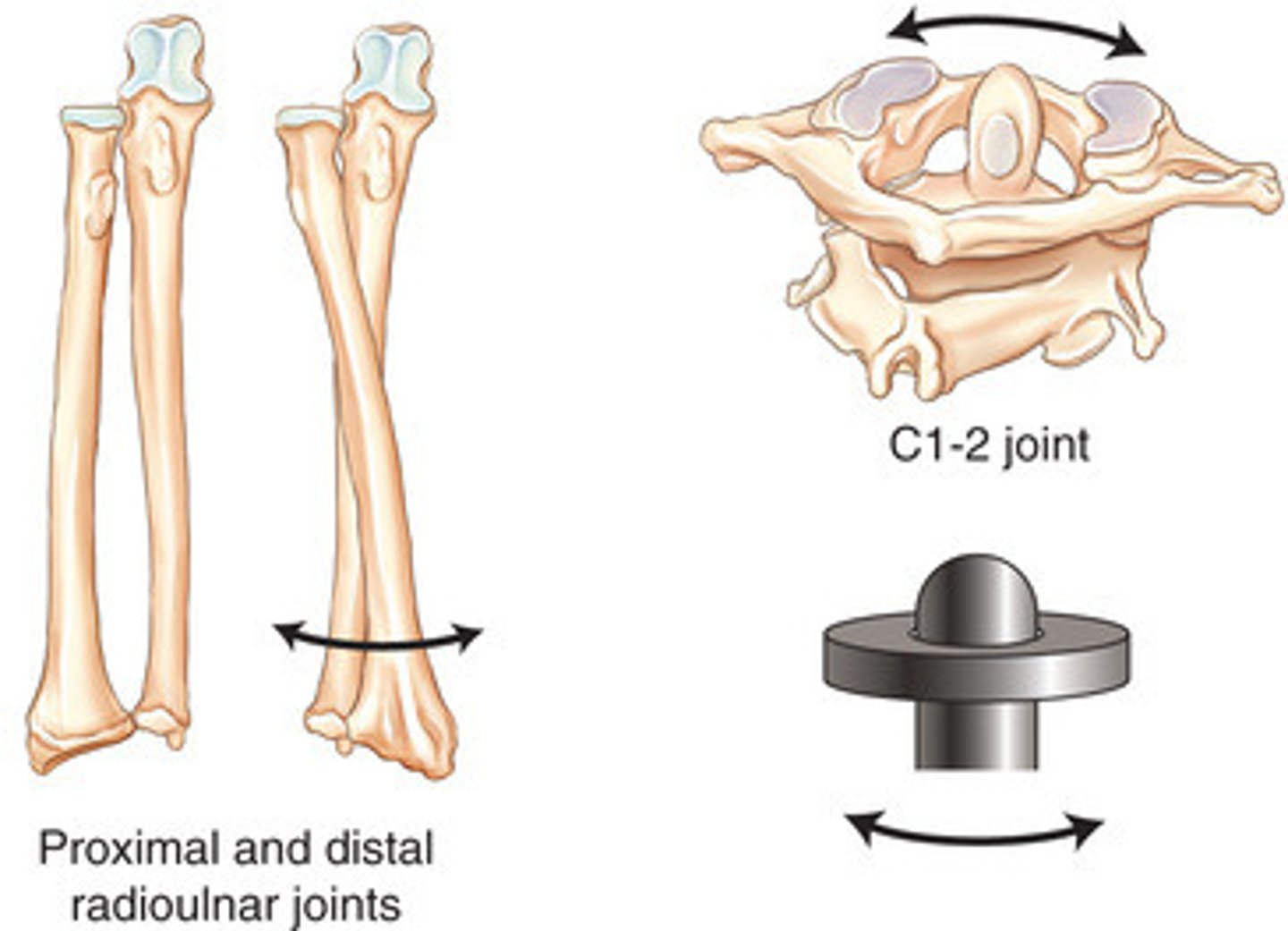
Pivot Joint Movements
Uniaxial, rotation around a single longitudinal axis, pronation/ supination
Plane Joint Movements
Nonaxial, gliding or sliding between flat bone surfaces
hinge joint movements
Uniaxial, flexion, extension
Condyloid (Ellipsoidal) Joint Movement
Biaxial, flexion, extension, abduction, adduction, circumduction (limited)
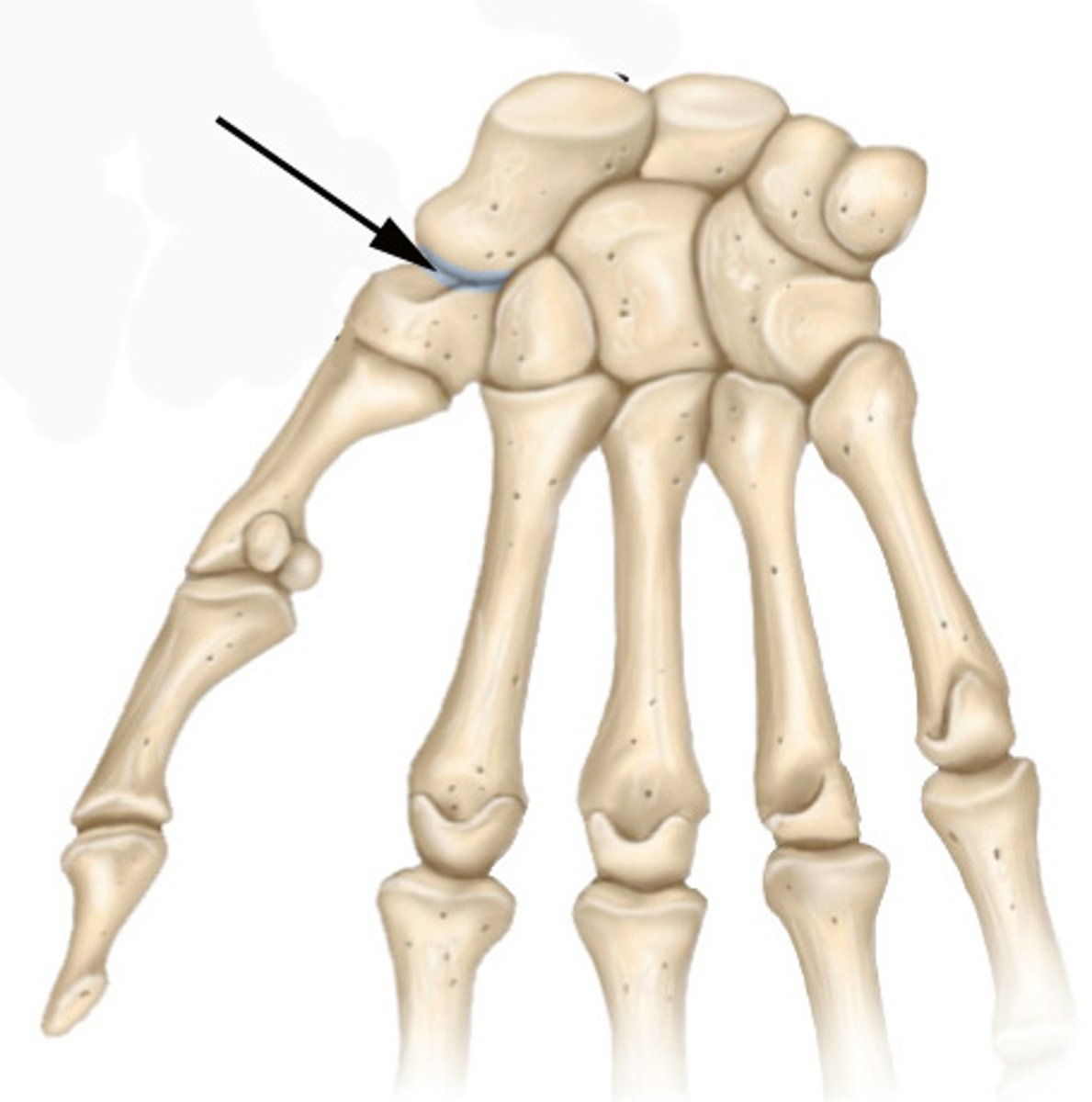
Saddle Joint Movement
Biaxial, flexion, extension, abduction, adduction, circumduction (greater freedom than condyloid)
Ball & Socket Joint
Multiaxial, flexion, extension, abduction, adduction, medial (internal)/lateral (external) rotation, circumduction
Largest to smallest arrangement of muscle fibers
muscle, fascicle, myofiber, myofibril, myofilaments
What is the endomysium?
connective tissue that surrounds each muscle fiber
Perimysium
connective tissue covering around a fascicle
What is the epimysium?
sheath of connective tissue surrounding the muscle
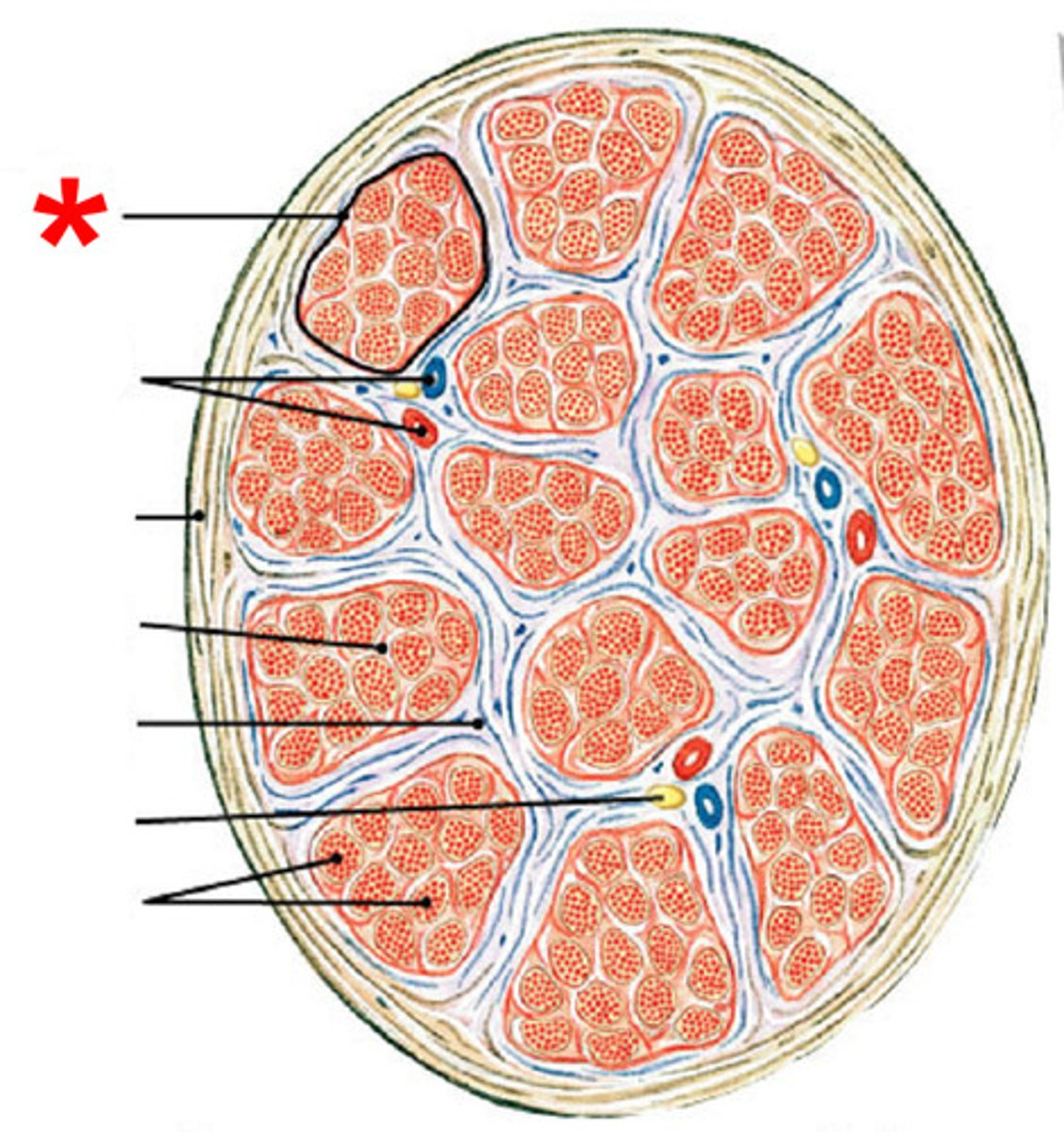
What is a fascicle?
bundle of muscle fibers
What is the neuromuscular junction?
point of contact between a motor neuron and a skeletal muscle cell
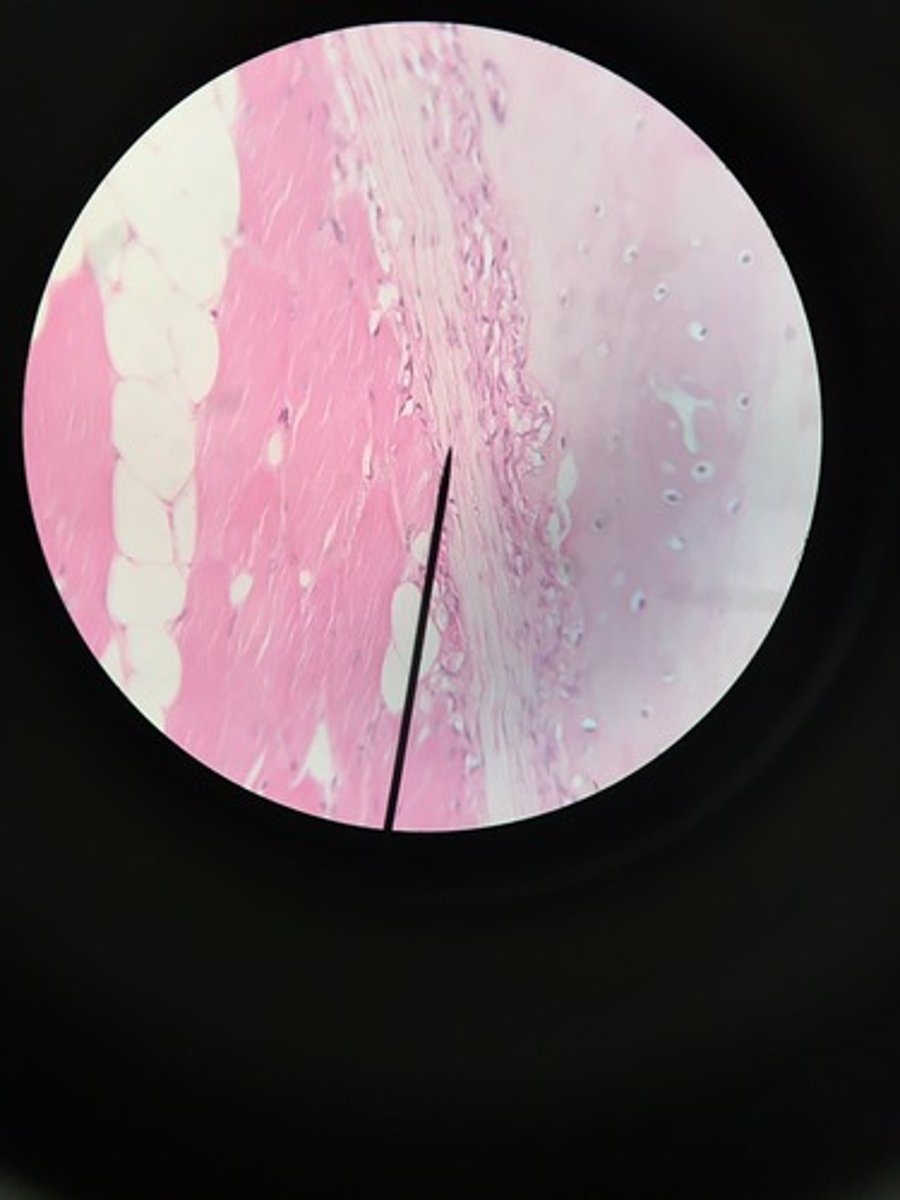
muscle-bone histology
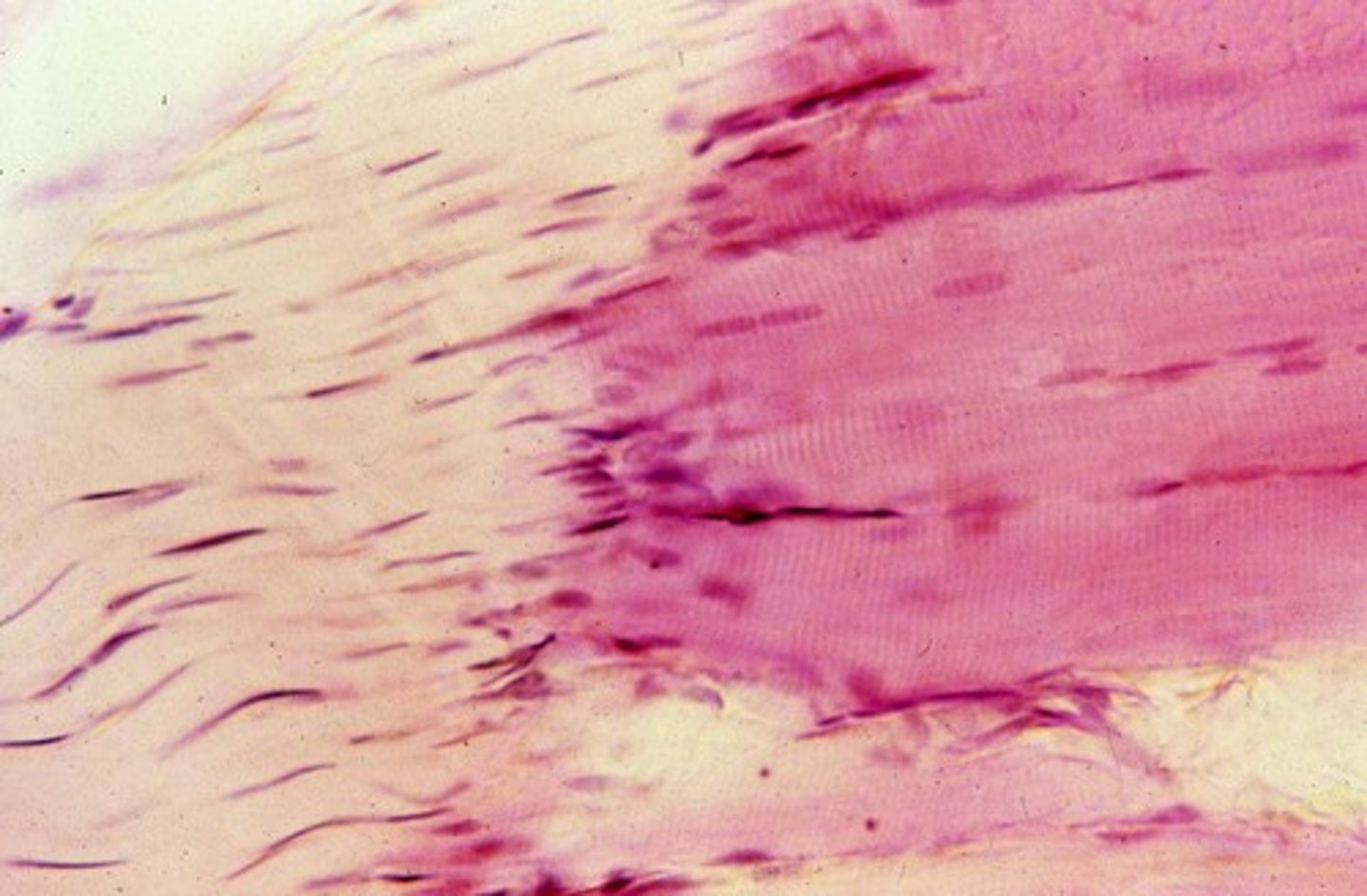
Type I collagen condenses into what?
Muscle-tendon histology
Muscle Fiber
a muscle cell made of myofibrils
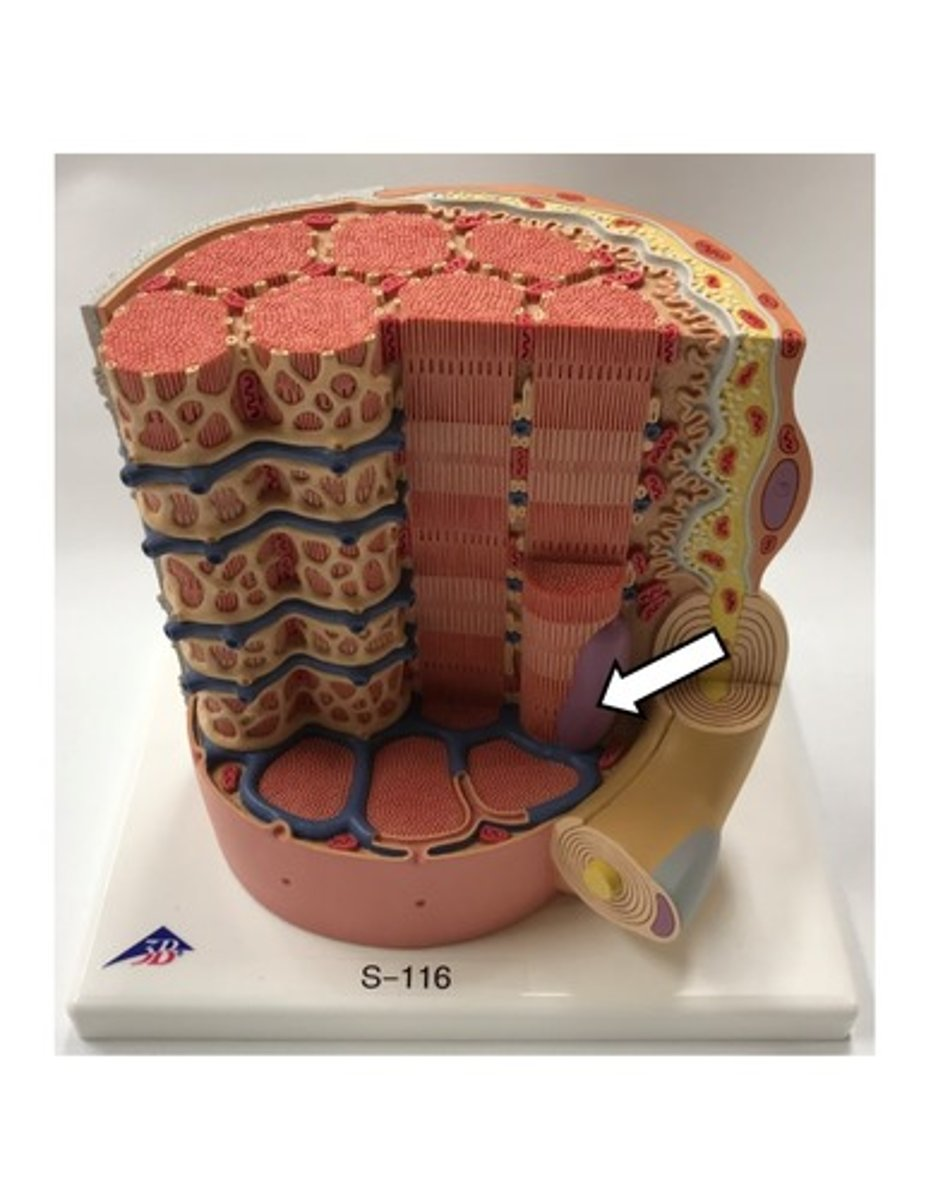
What is this?
Nucleus of muscle fiber
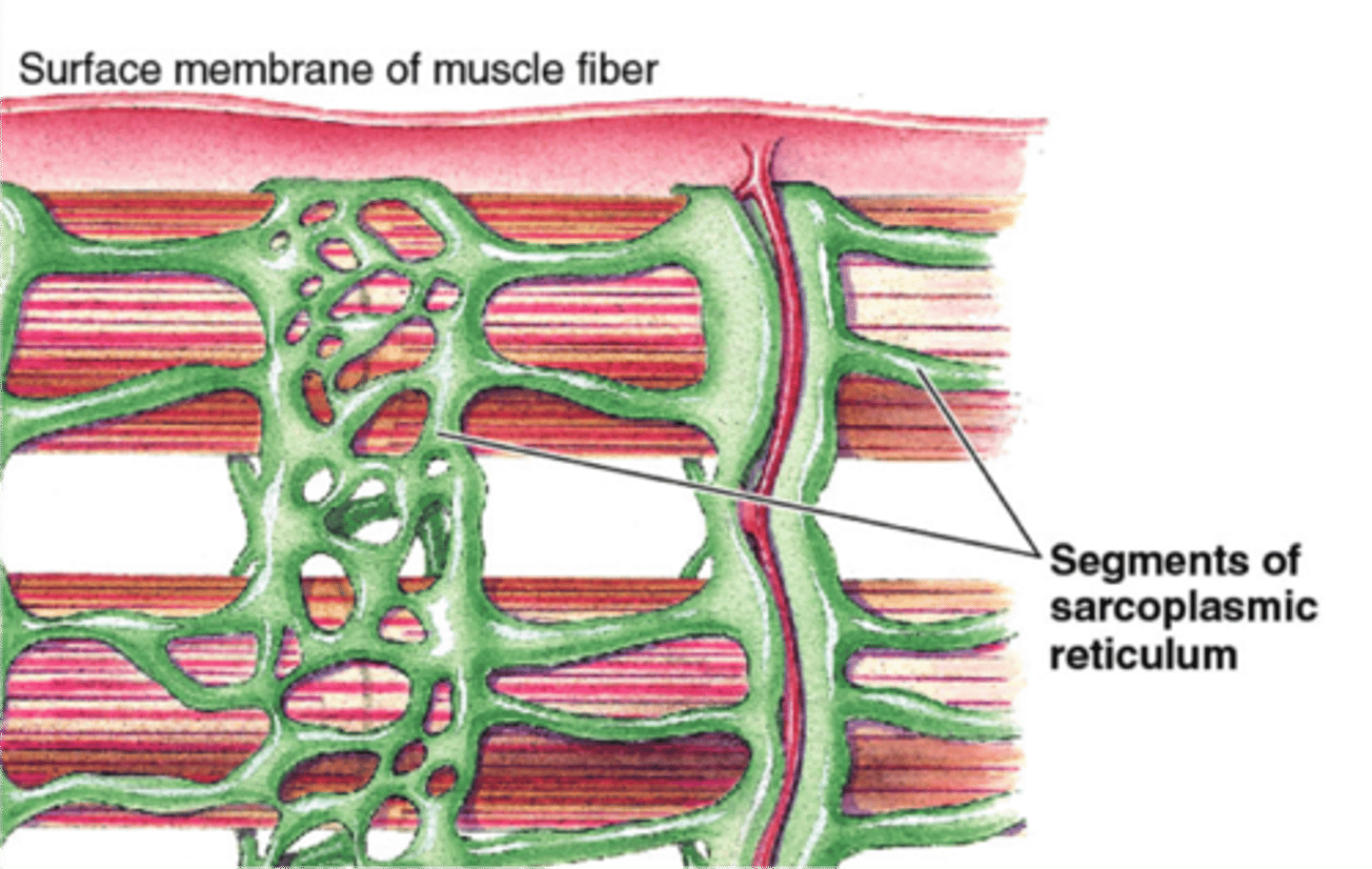
What parts of the sarcoplasmic reticulum is this referring to?
Longitudinal and terminal cisternae
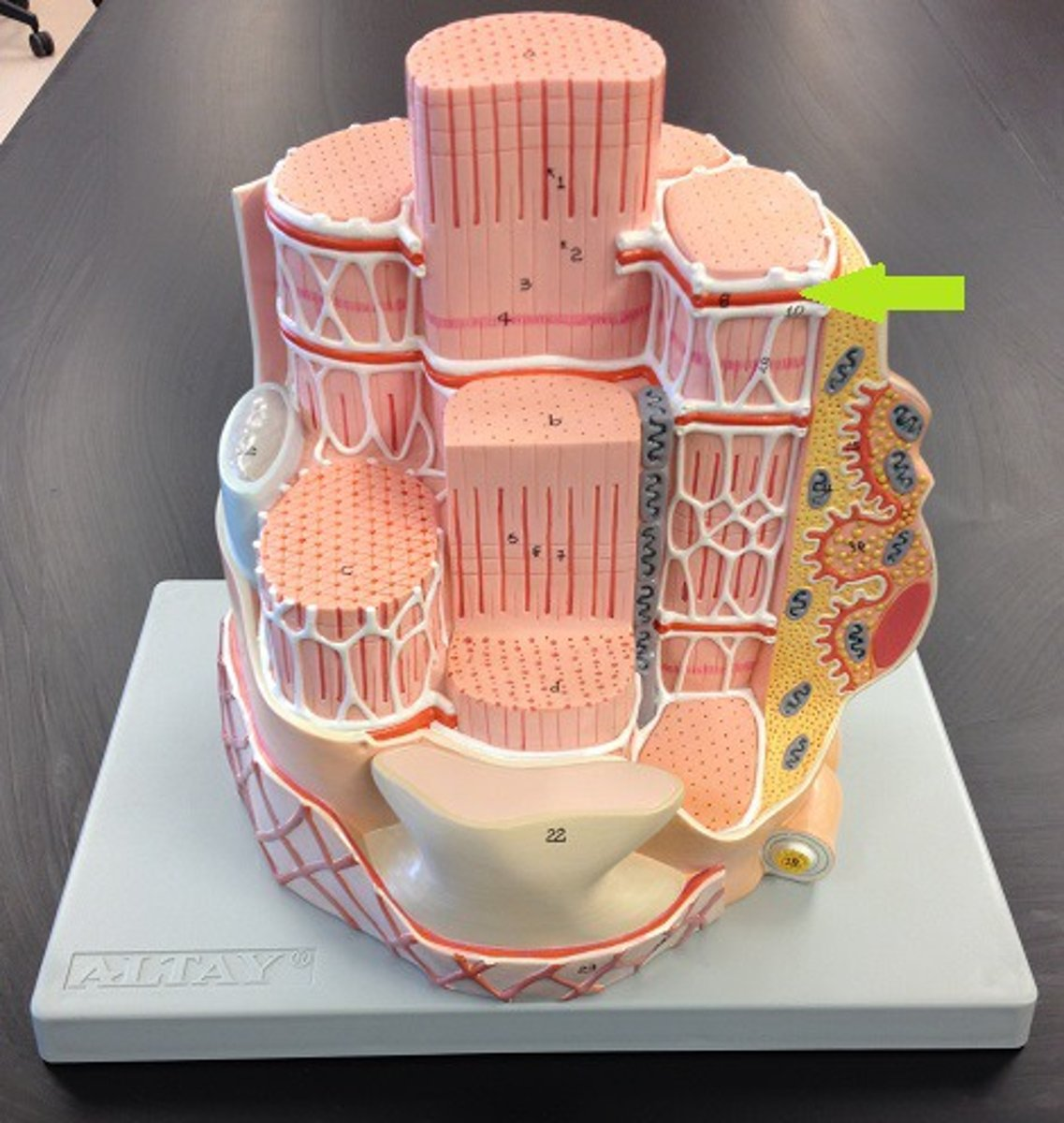
What is this?
Transverse tubule
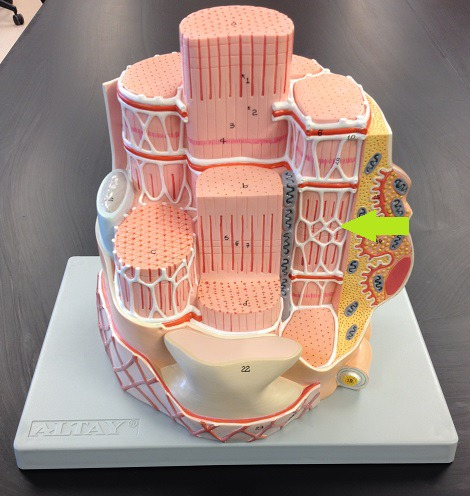
What is this?
Sarcoplasm (cytoplasm of muscle fiber).
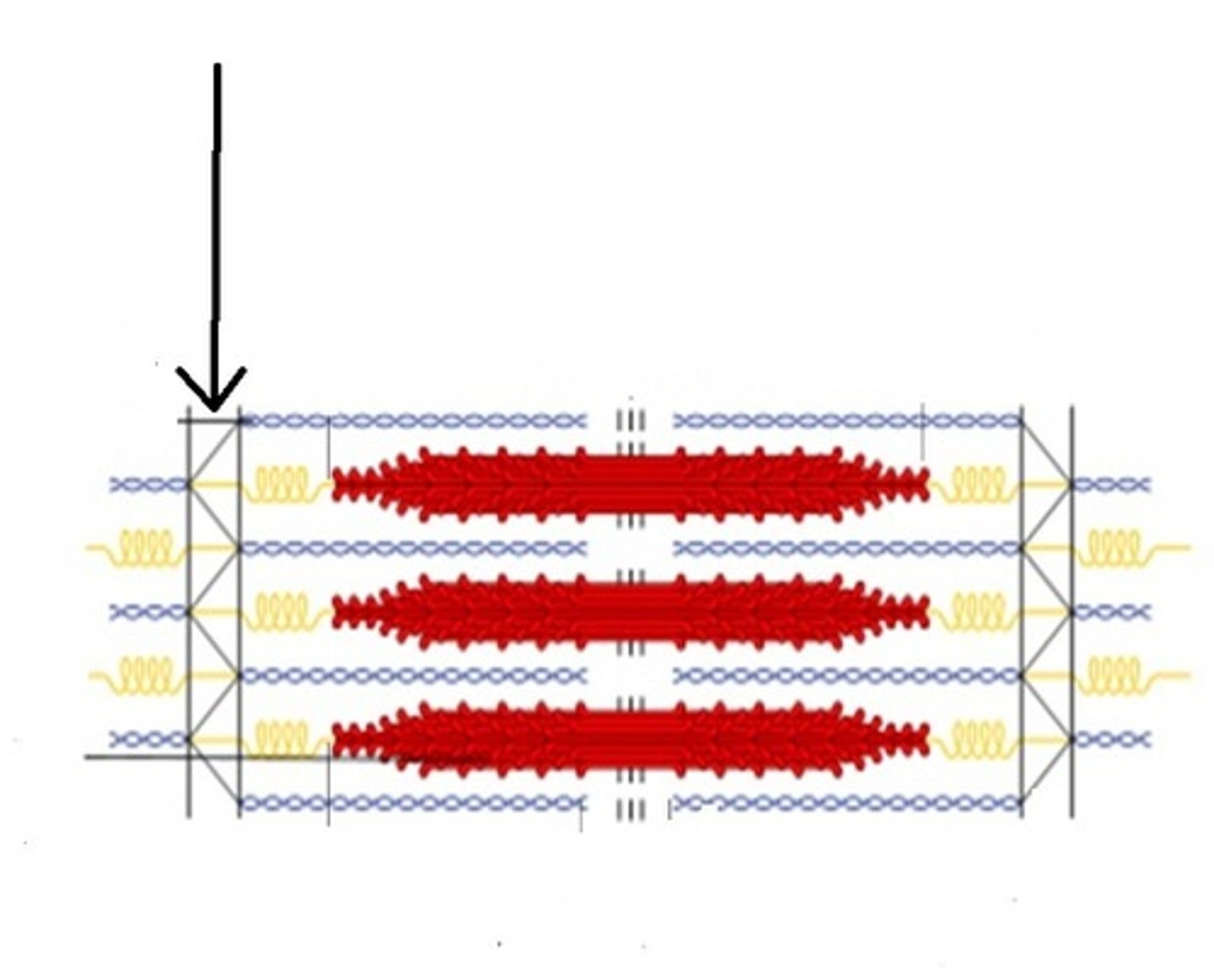
What is the z disc?
Separates the sarcomeres from each other (look thick on the models)
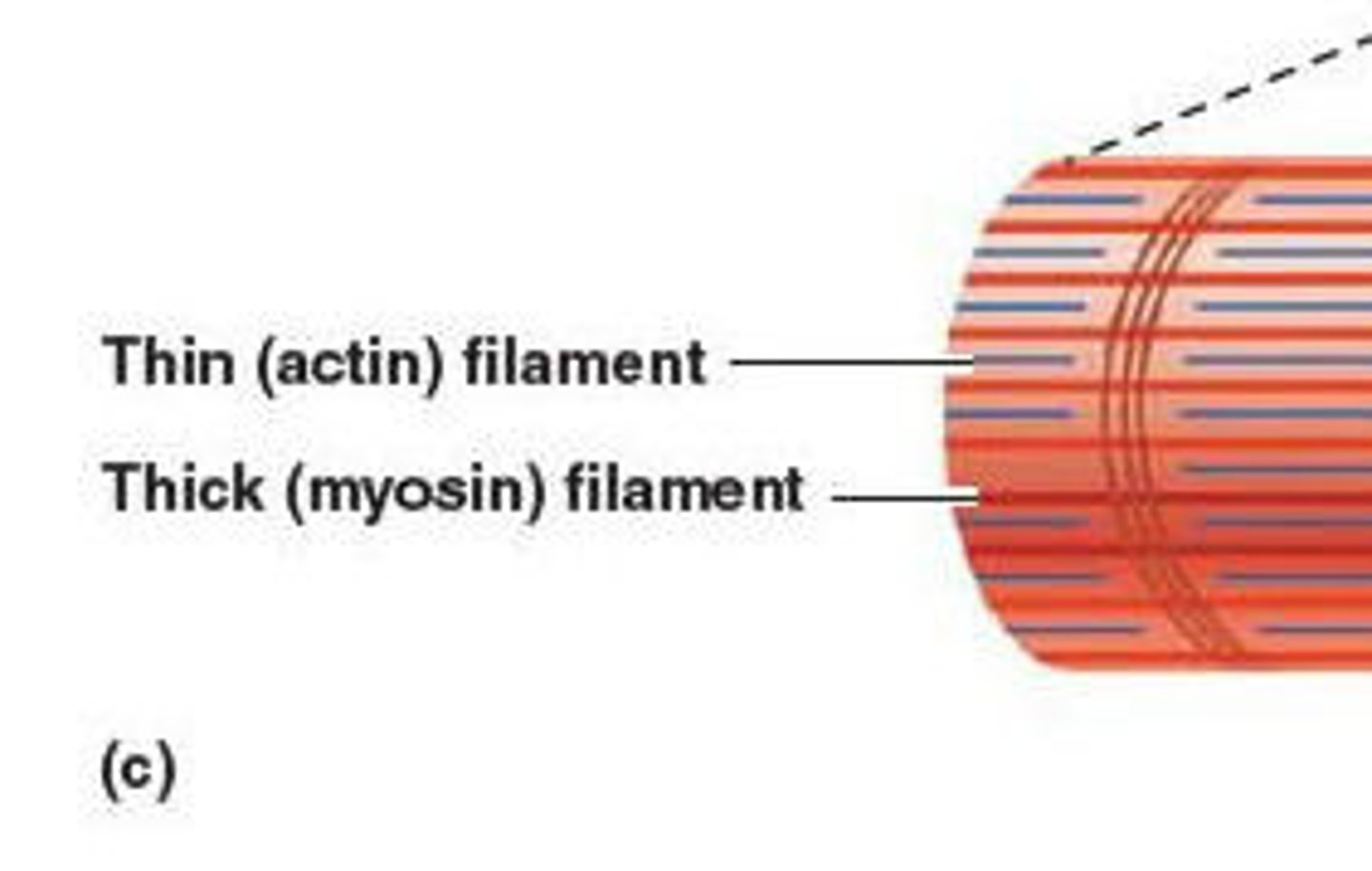
What is this?
Myofilaments, the contractile proteins, actin and myosin, of muscle cells
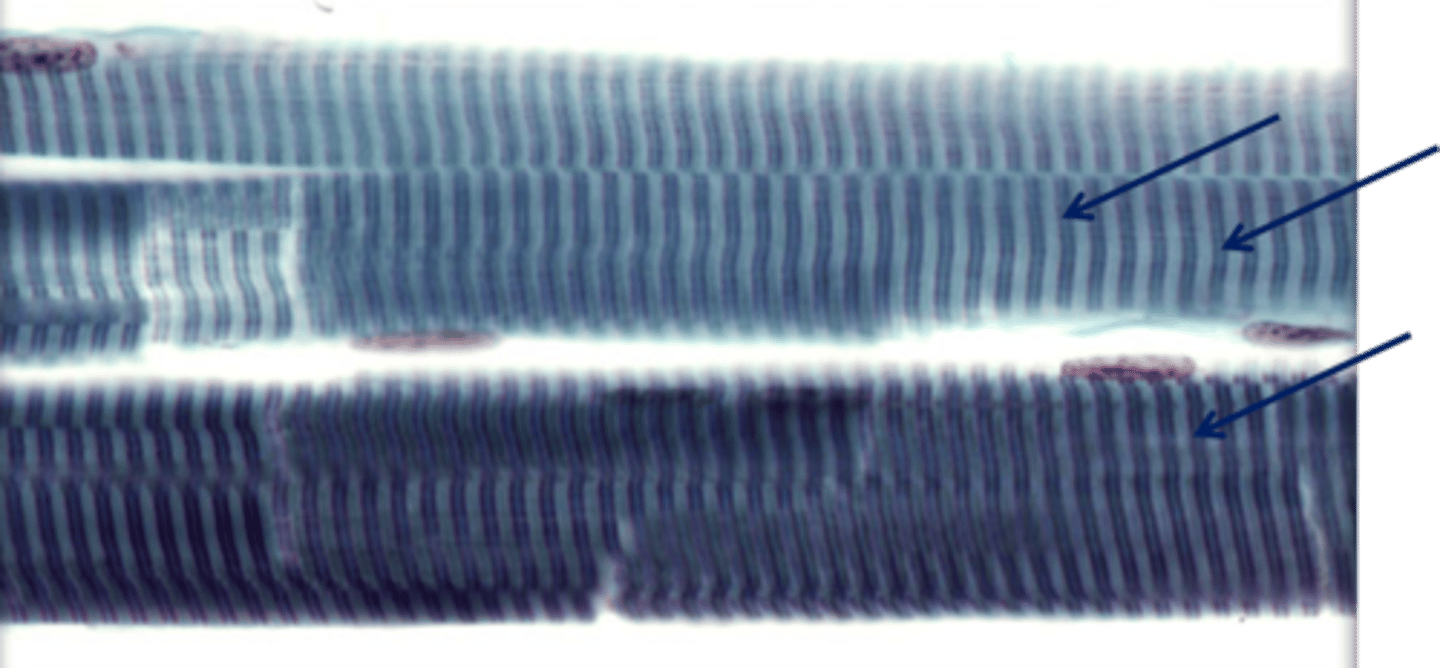
What are these and how do they work?
Muscle striations/toning, caused by the precise, overlapping arrangement of two types of protein filaments
Which sternocleidomastoid muscles contract to move your head left and right?
Right SCM rotates head left, Left SCM rotates head right
Raise your head so that your chin is elevated and pout your lower lip. What muscle forms a thin membrane along the anterolateral neck?
Platysma muscle
Purse your lips and feel the ______muscle as it contracts in the cheek. Clench your teeth and palpate the ____muscle and the masseter.
Buccinator: deep cheek muscle; compresses the cheeks. It helps keep food between the teeth while chewing.
Temporalis: fan-shaped muscle on the side of the skull; elevates and retracts the mandible during chewing.
Masseter: thick muscle at the jaw angle; one of the strongest muscles for jaw closure (elevates mandible).
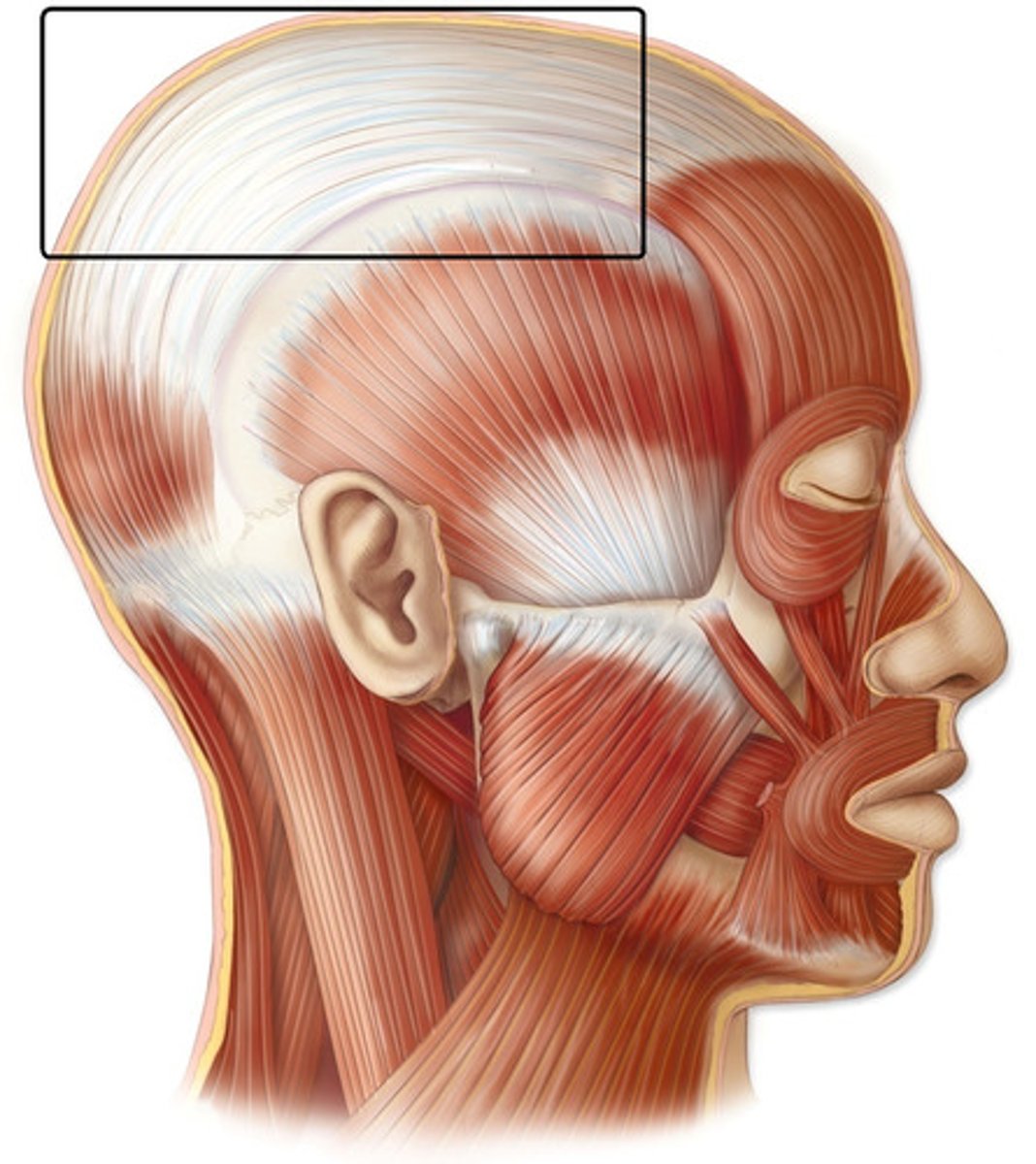
galea aponeurotica
tendon that connects frontalis and occipitals
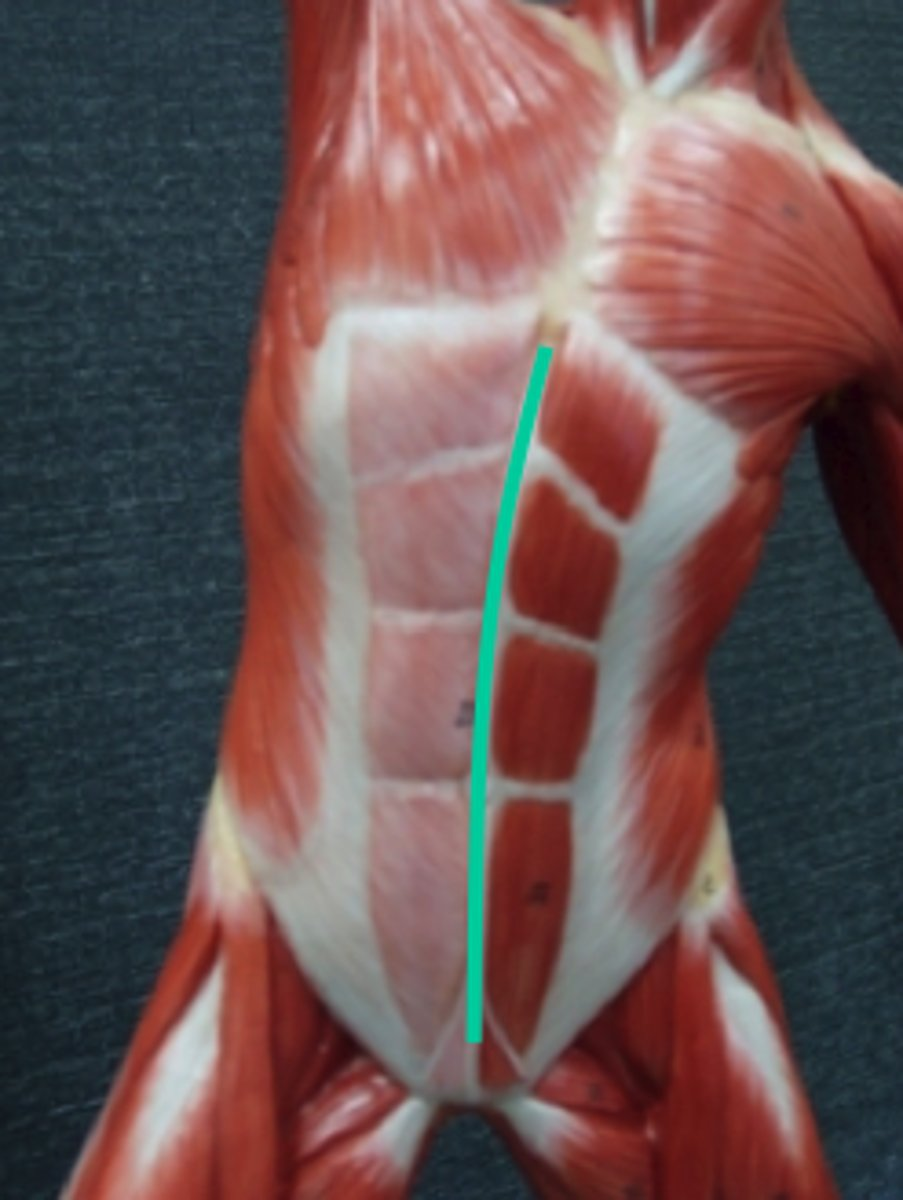
What is this?
Linea alba
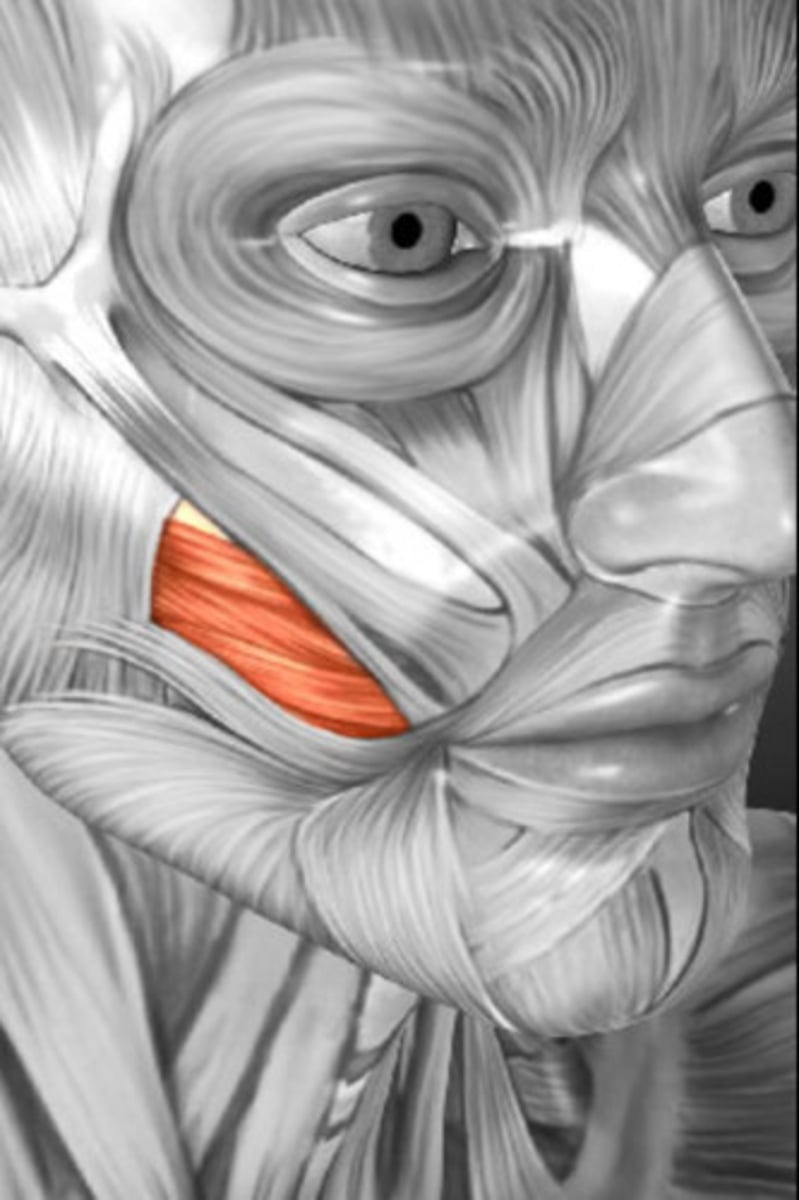
What is this and what does it do?
Buccinator, compresses cheek
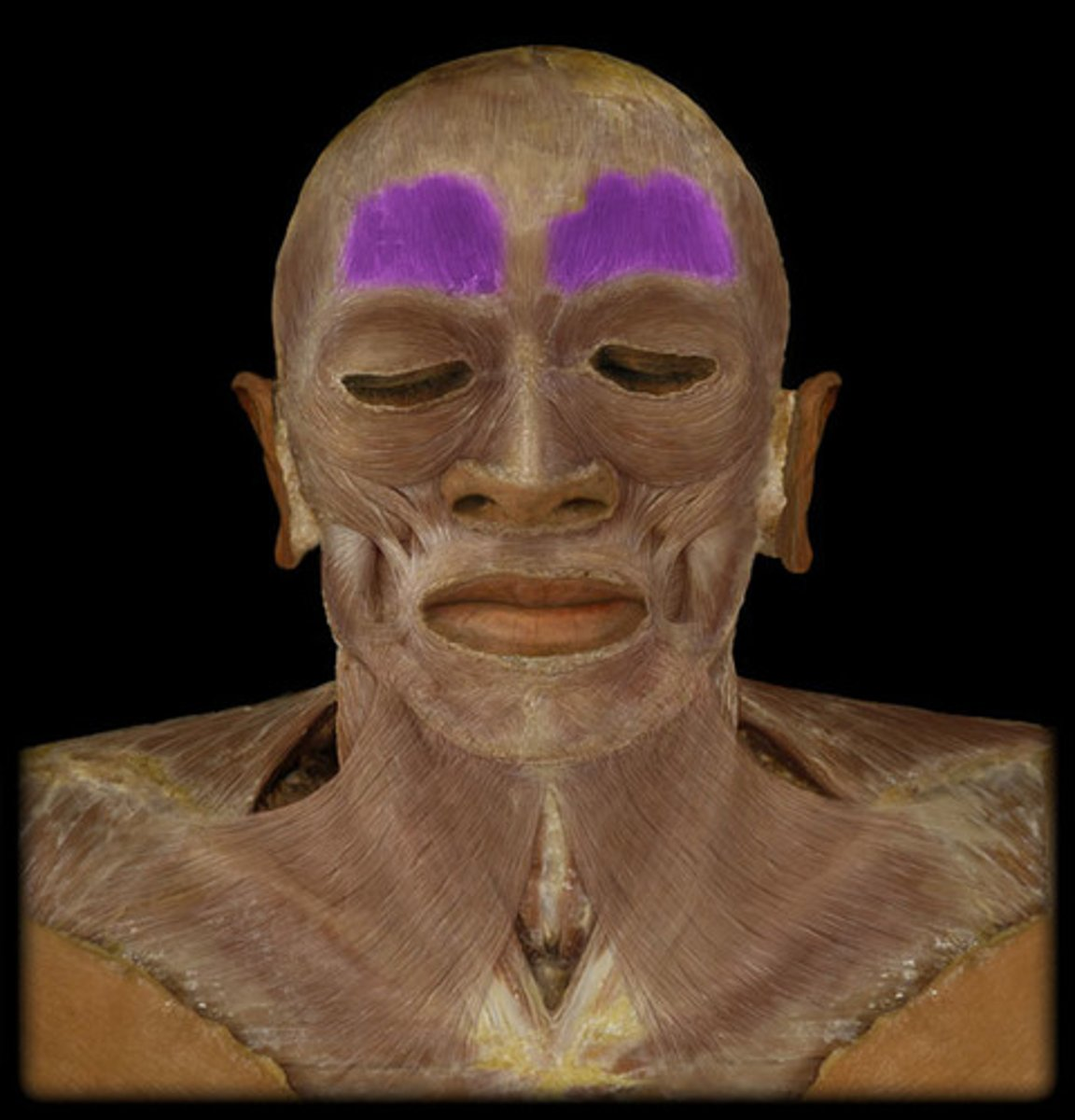
What is this and what does it do?
Frontal belly of occiptofrontalis (epicranius), raises eyebrows, draws scalp anteriorly
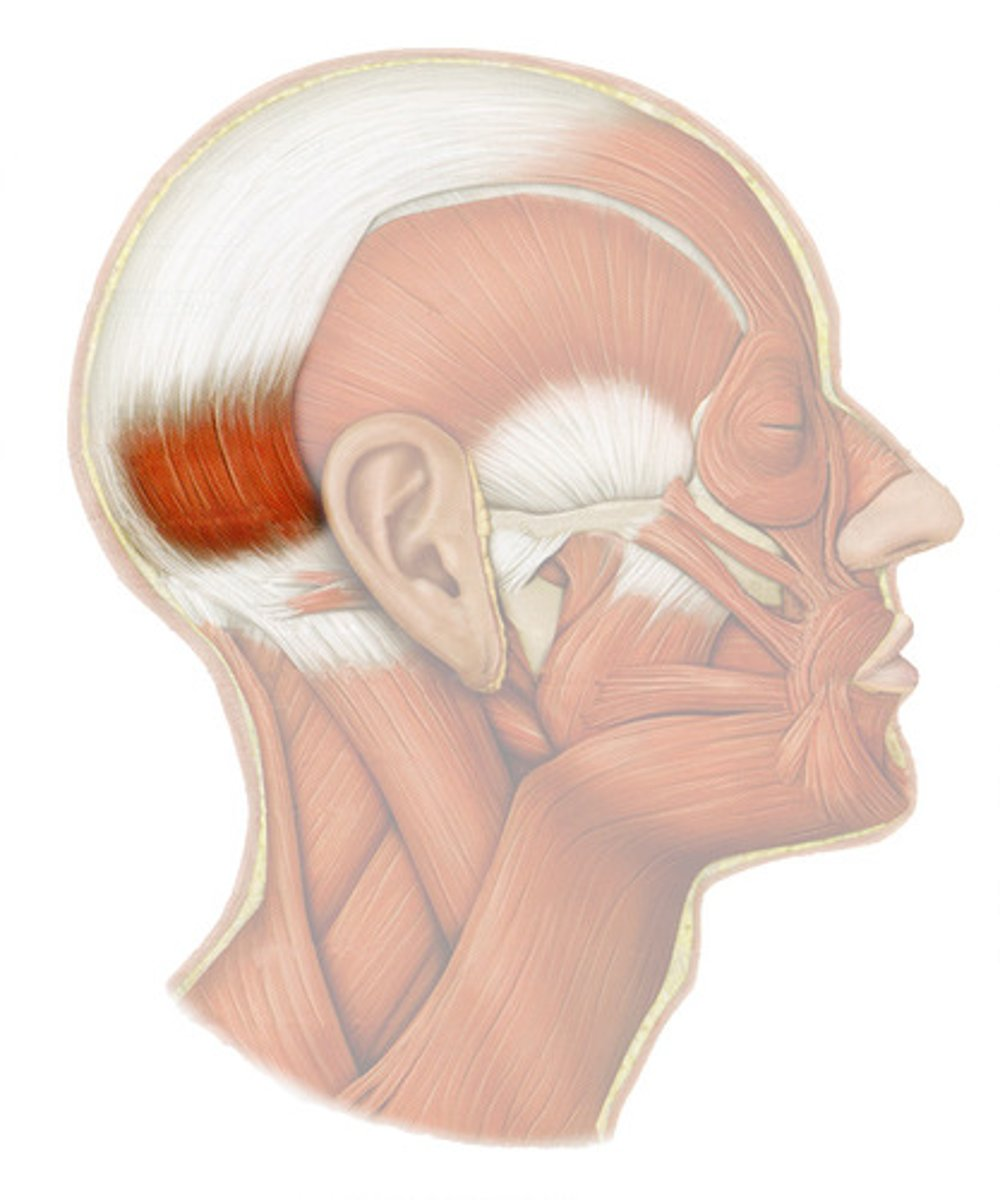
What is this and what does it do?
Occipital belly of occiptofrontalis (epicranius), retracts scalp (on both sides)
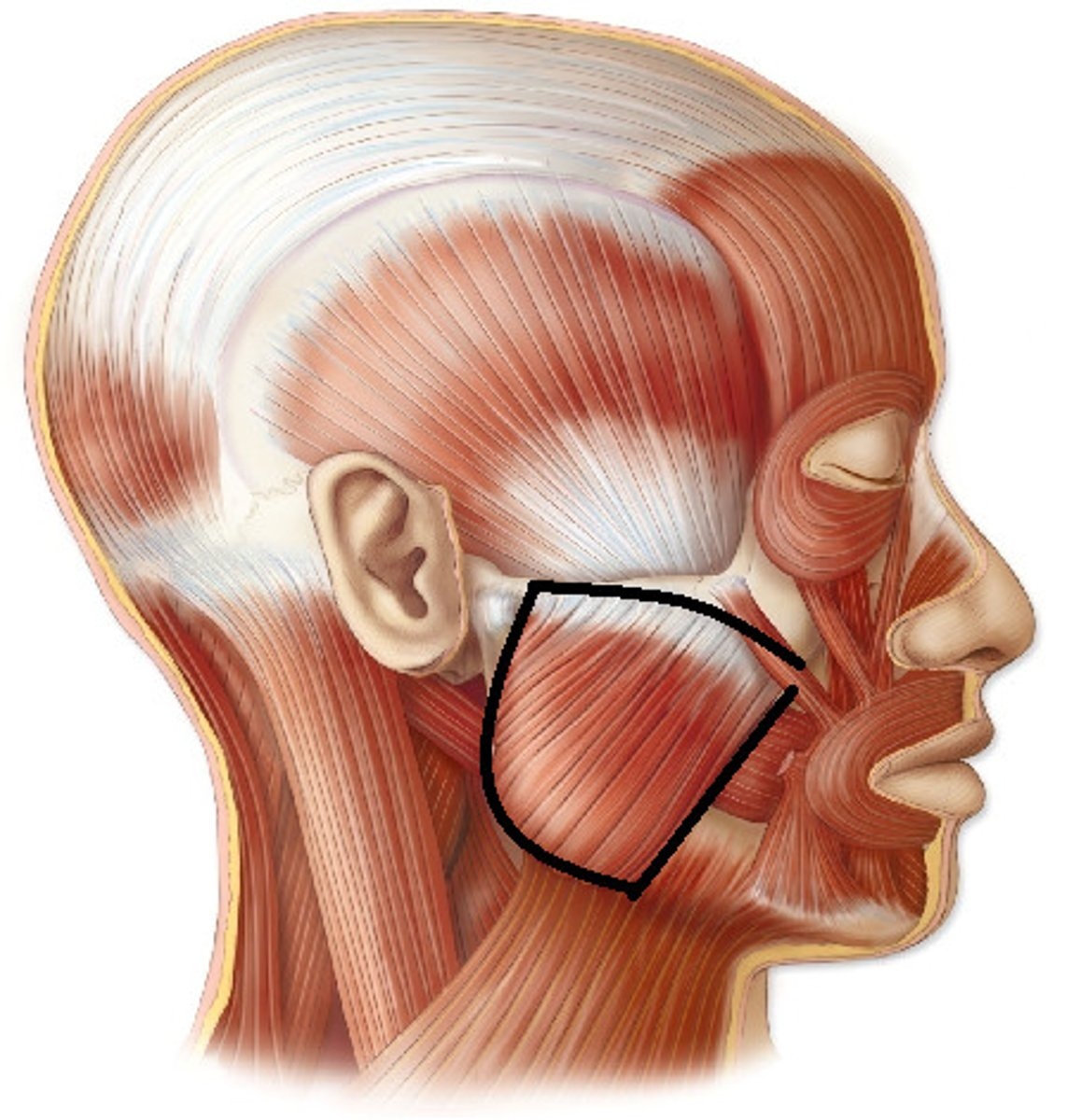
What is this, what does it do, and give and origin and insertion?
Masseter, elevates mandible, origin: zygomatic arch, insertion: ramus of mandible
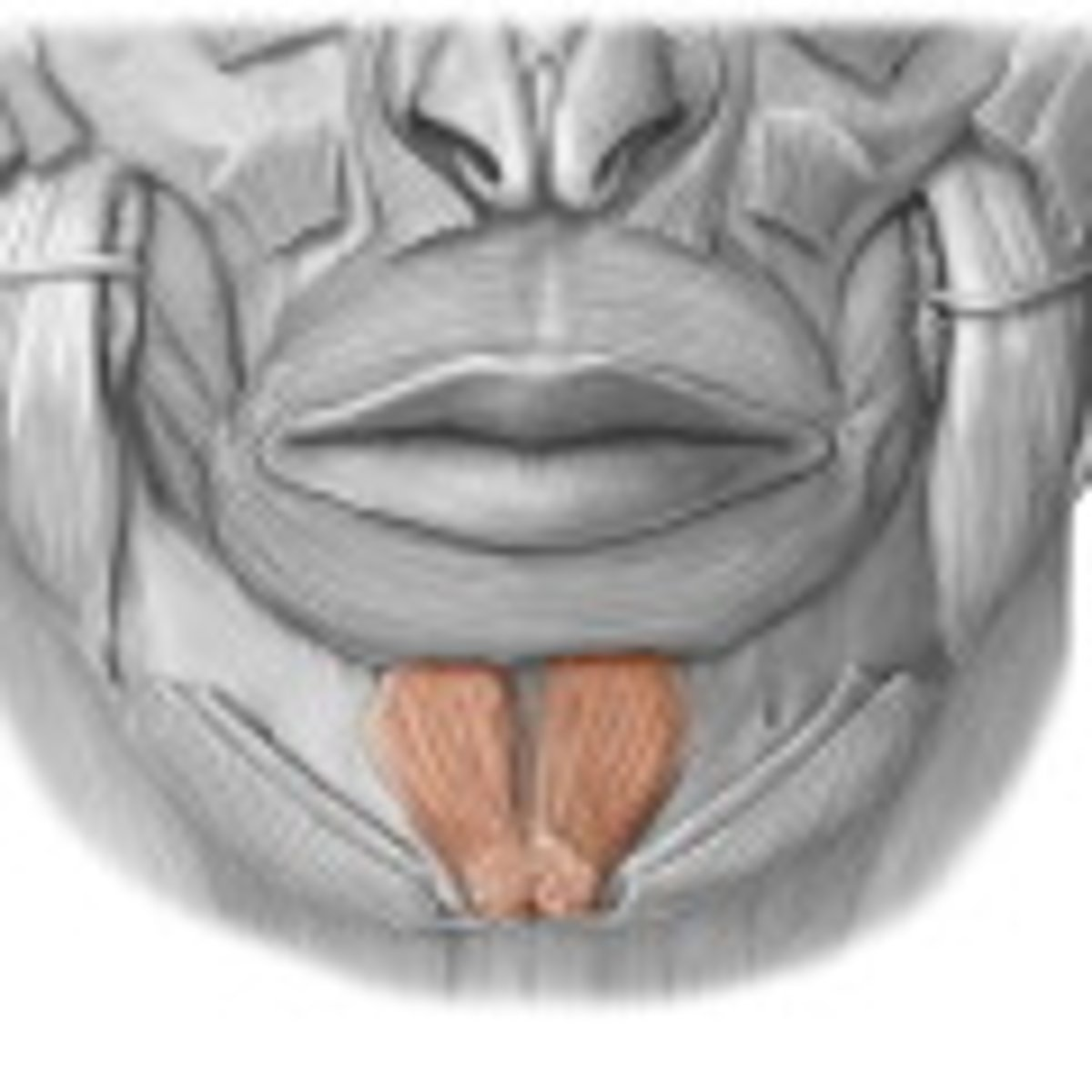
What is this and what does it do?
Mentalis, protrudes lower lip
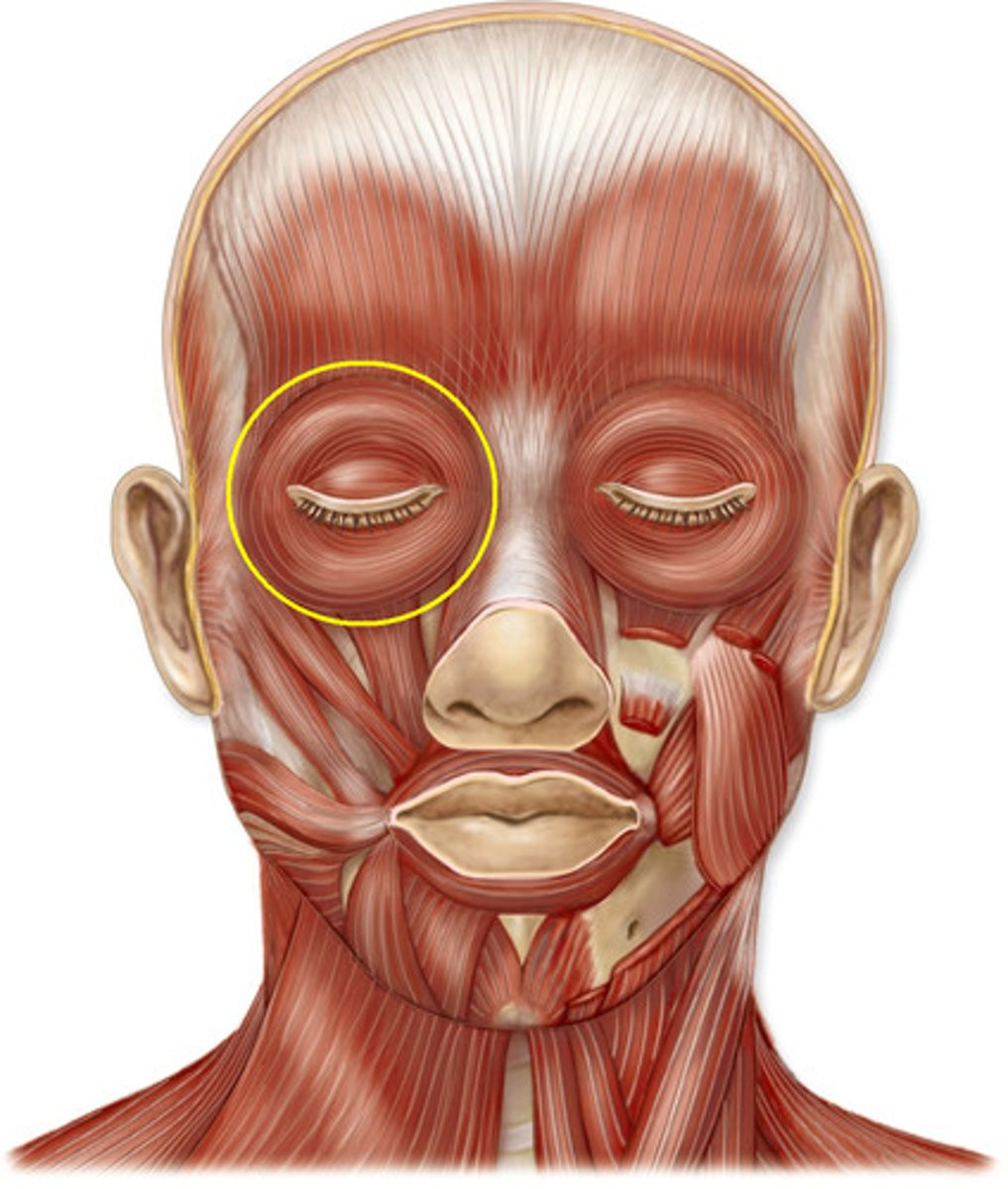
What is this and what does it do?
Orbicularis oculi, closes eyelid
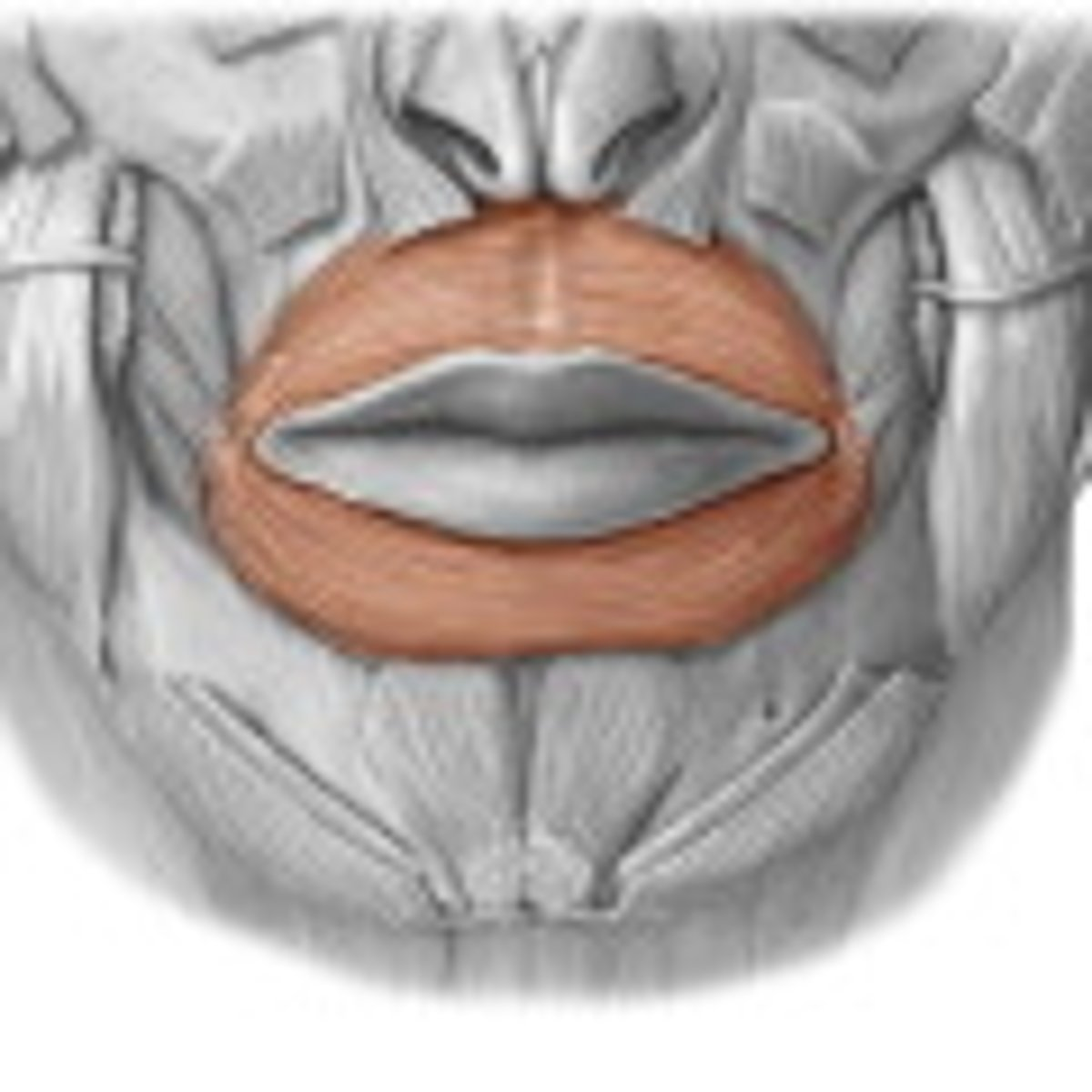
What is this and what does it do?
Orbicularis oris, closes lips
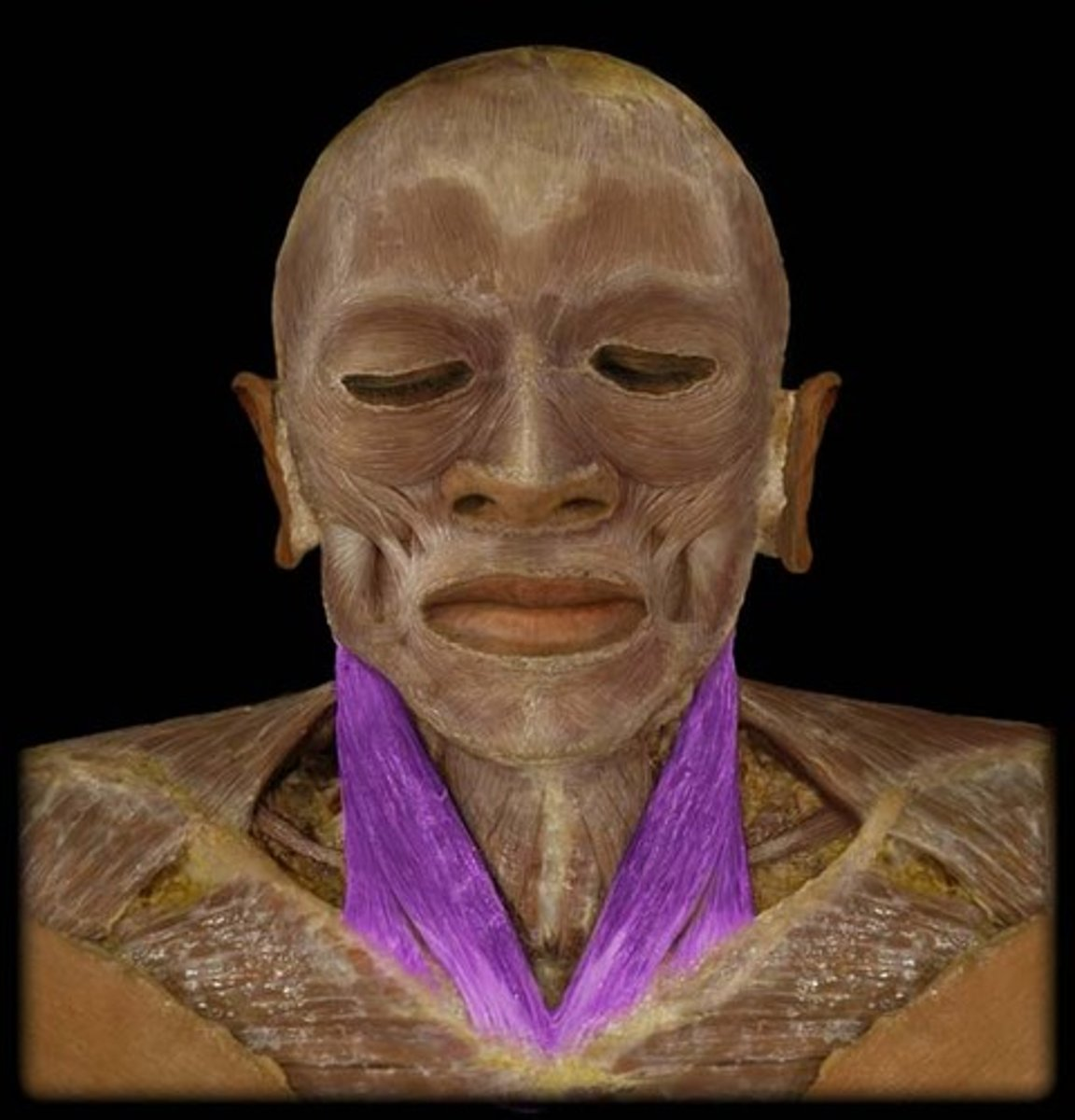
What is this and what does it do? Give an origin and insertion.
Sternocleidomastoid, rotates head, origin: manubrium of sternum, insertion: mastoid process of temporal bone
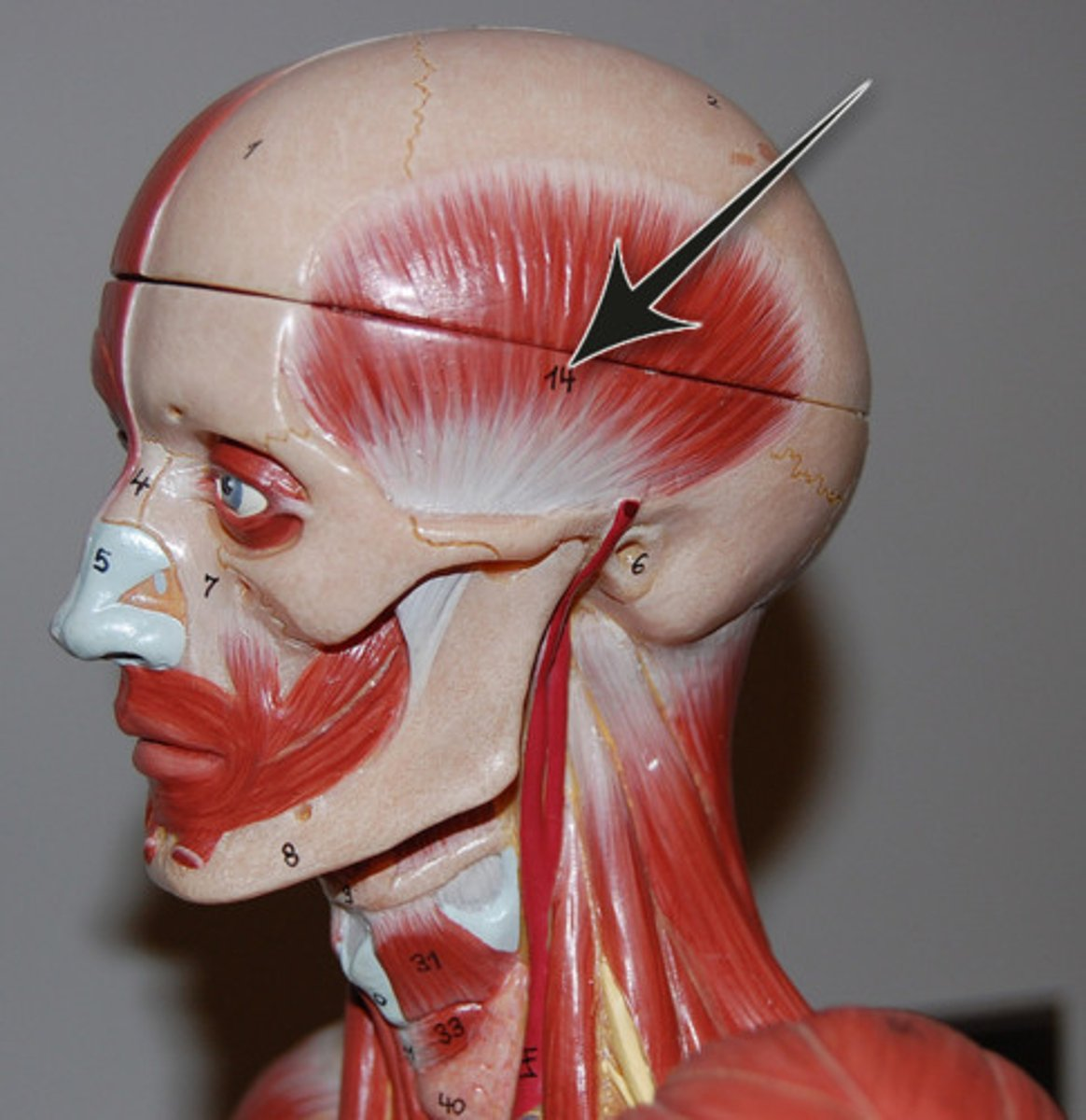
What is this and what does it do? Give an origin and insertion.
Temporalis, elevates (closes) mandible, origin: temporal fossa,
insertion: ramus of mandible
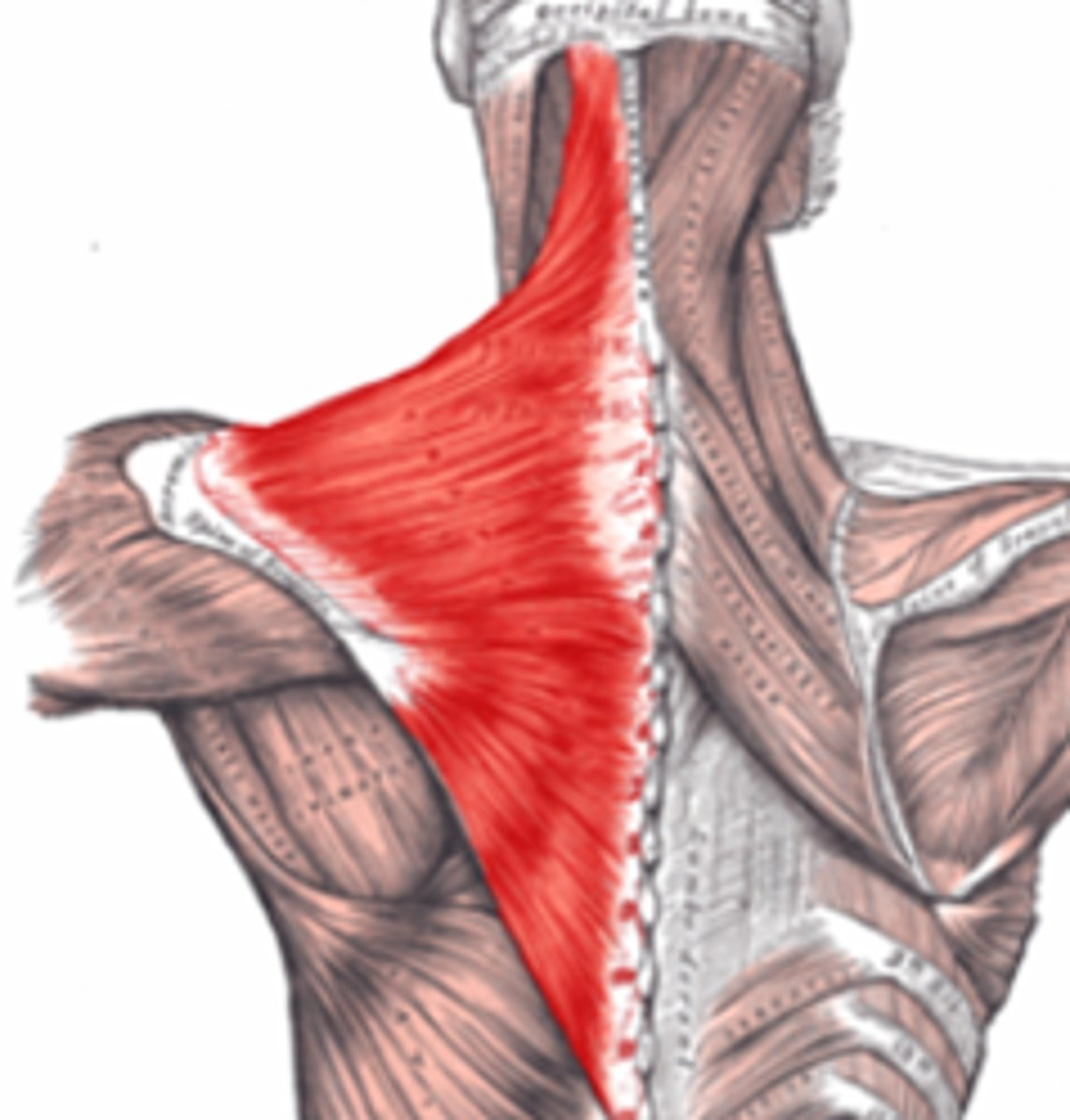
What is this and what does it do? Give and origin and insertion.
Trapezius, extends and abducts head, origin: posterior occipital bone, insertion: spine of scapula
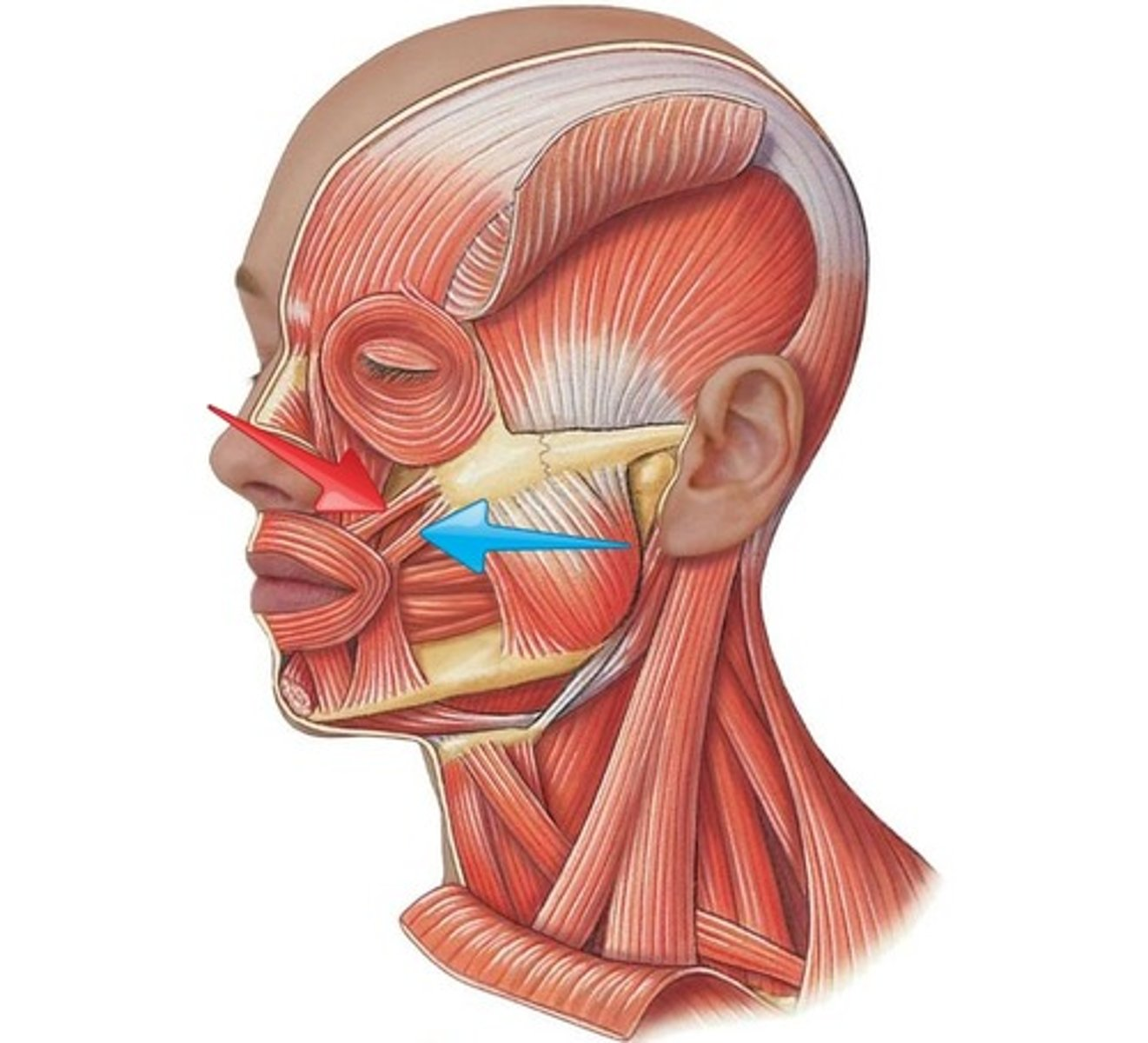
What is the blue arrow pointing to? What does it do? Give an origin and insertion.
Zygomaticus major, elevates corners of mouth, origin: zygomatic bone, insertion: muscles of upper lip
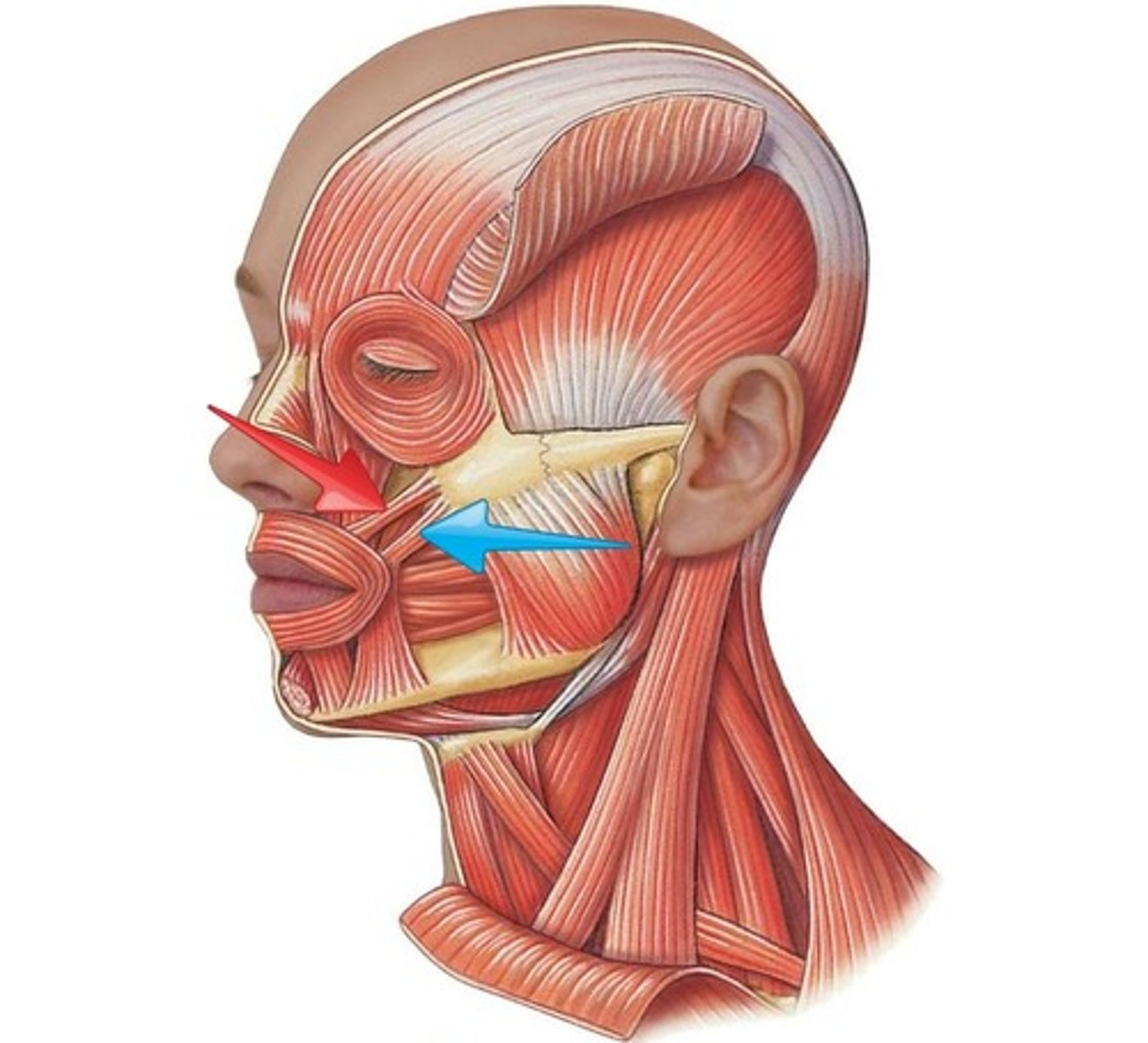
What is the red arrow pointing to? What does it do? Give an origin and insertion.
Zygomaticus minor, elevates corners of mouth, origin: zygomatic bone, insertion: muscles of upper lip
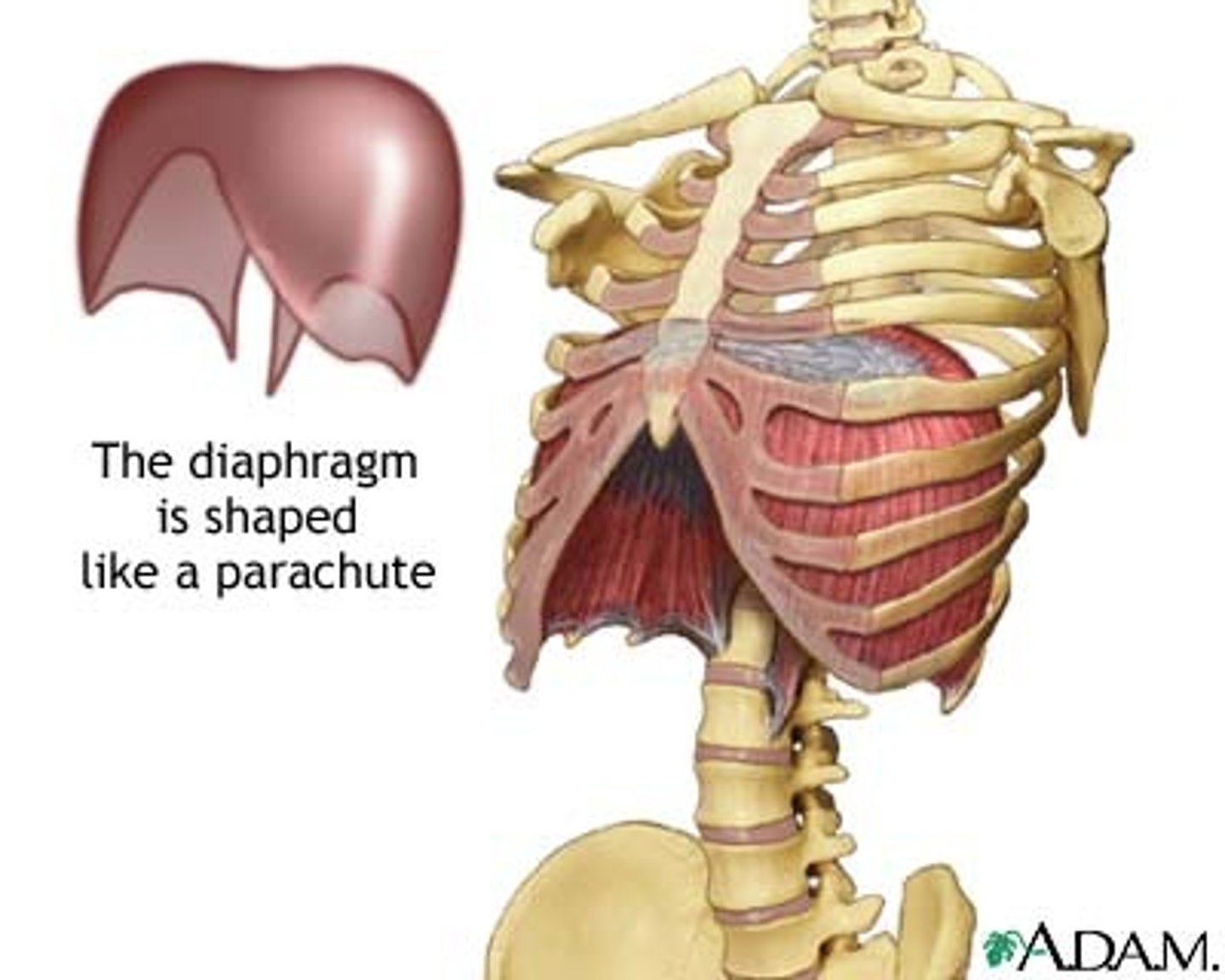
What is this and what is it for?
Diaphragm, inspiration
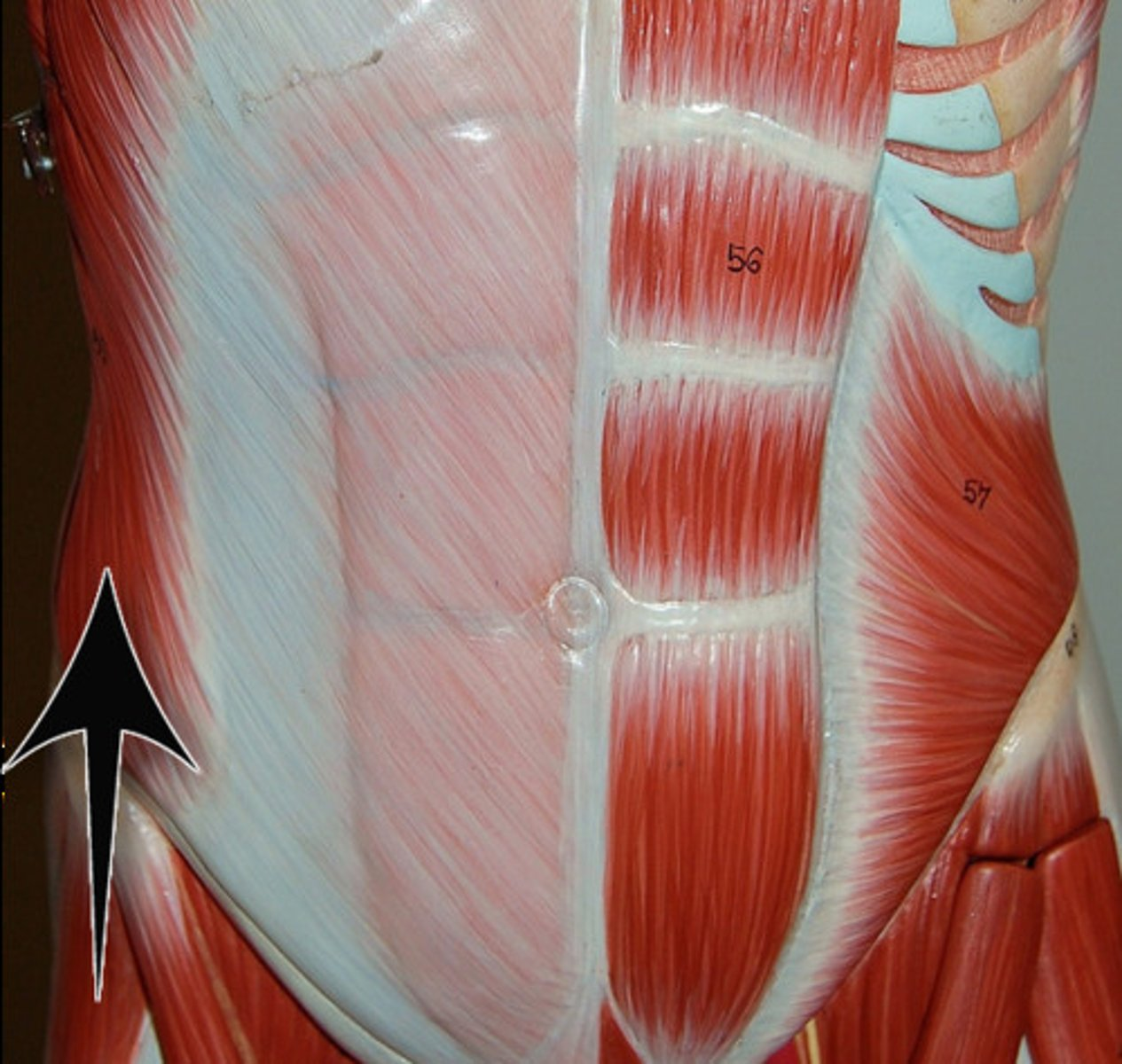
What is this and what does it do?
External oblique (internal has same action), compresses abdominal wall
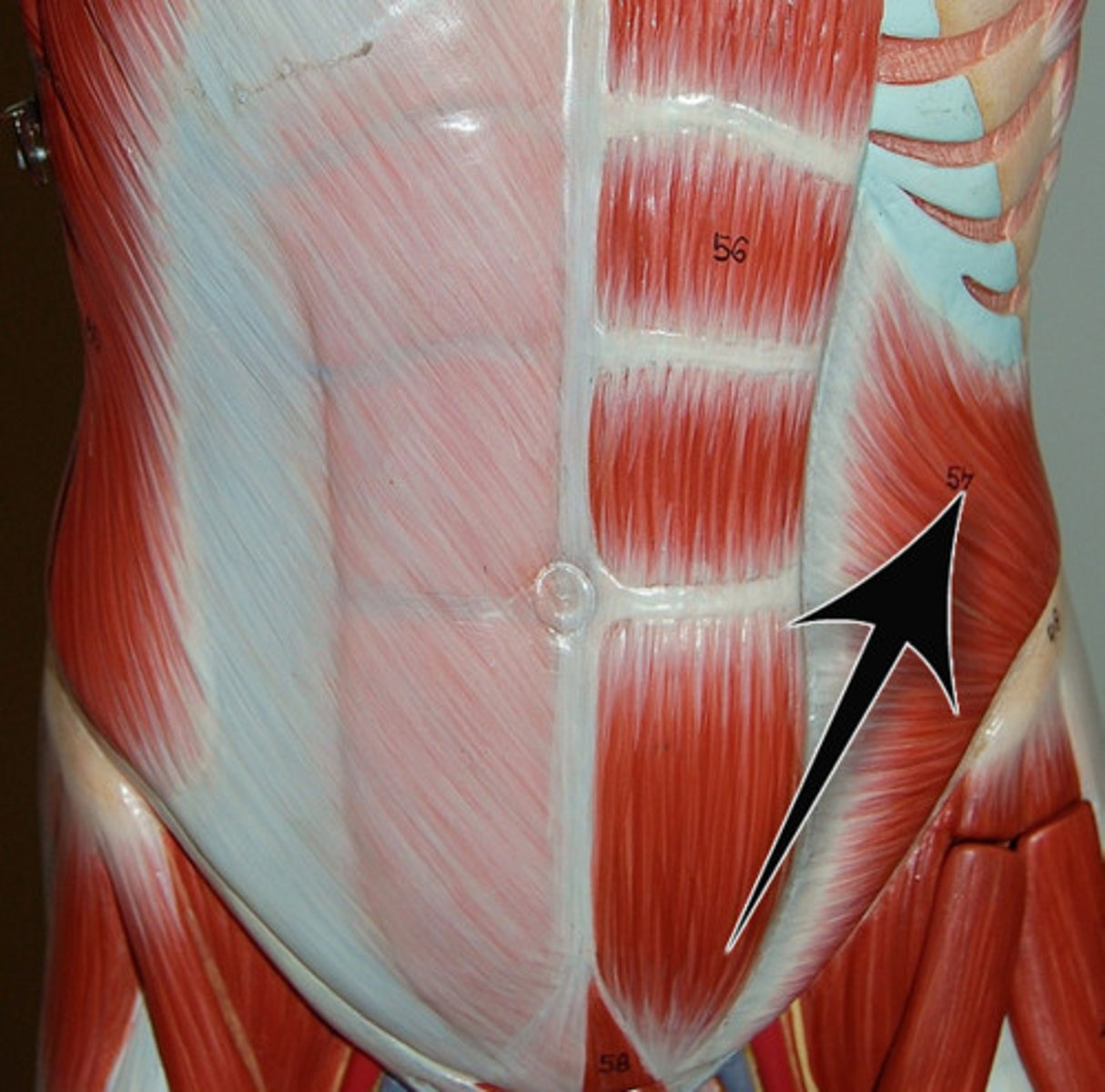
What is this? What does it do?
Internal oblique (external has same action), compresses abdominal wall (picture is bad)
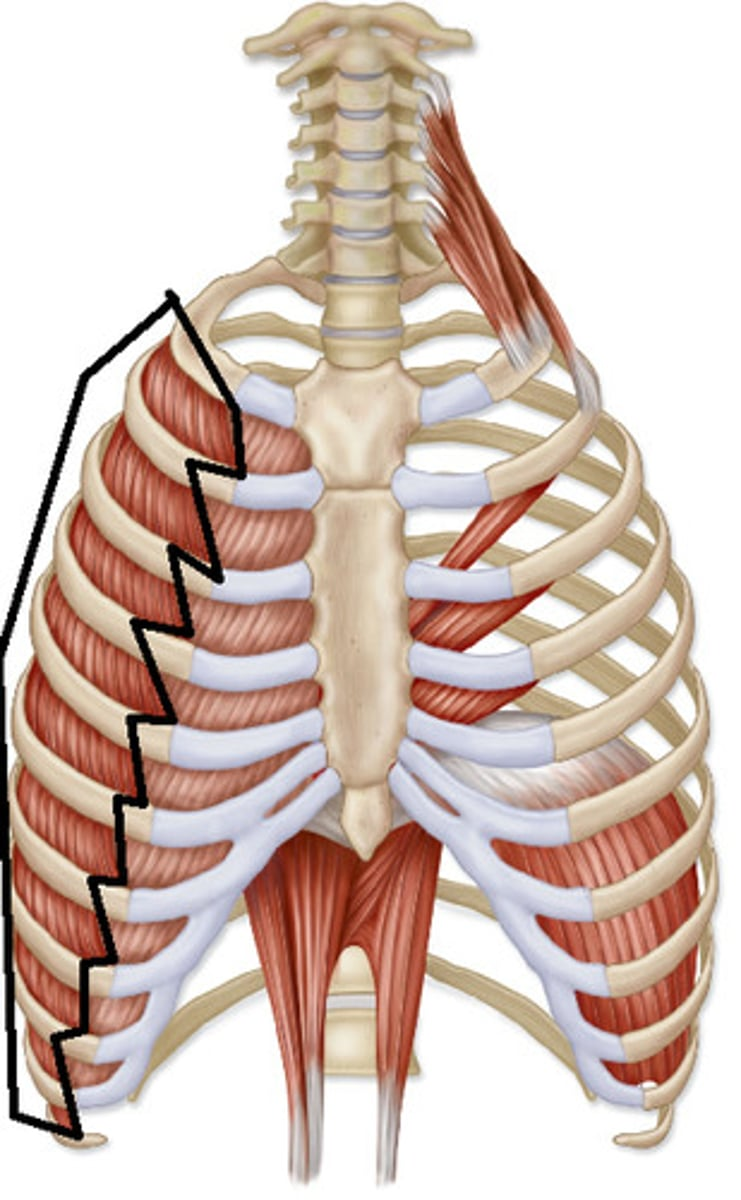
What is this? What does it do?
External intercostal, elevates ribs (increases volume in thorax)
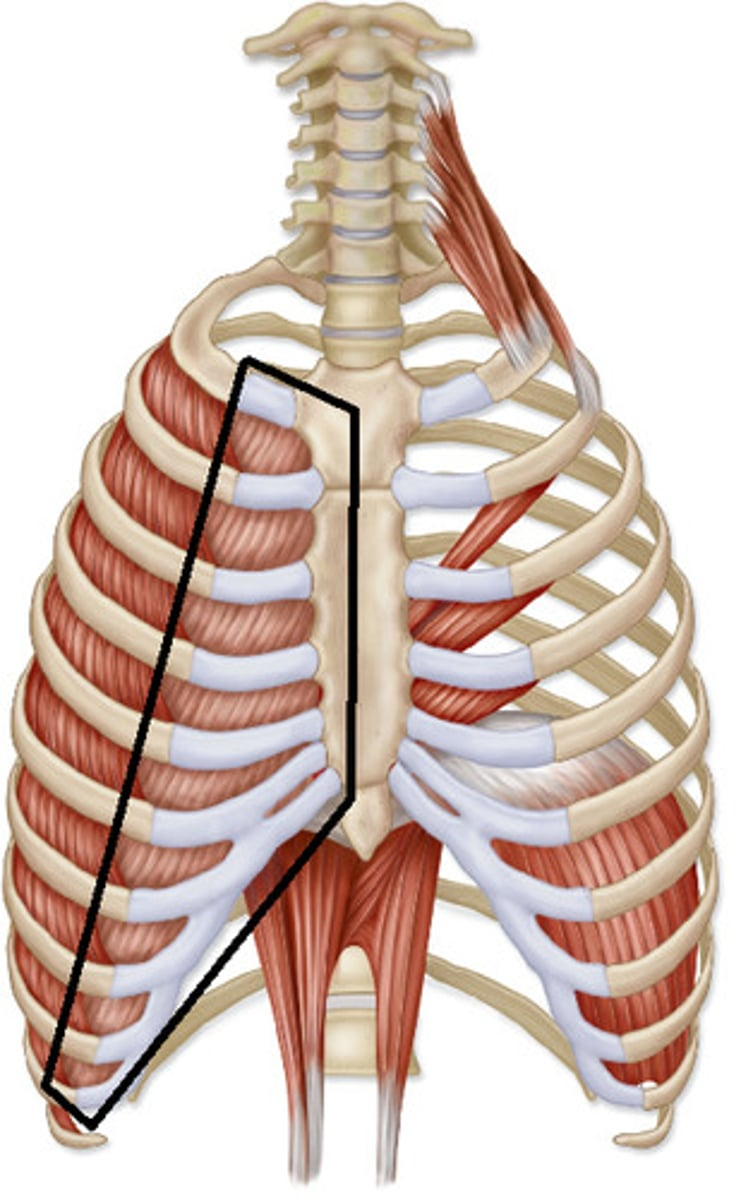
What is this? What does it do?
Internal intercostal, elevates and decompress ribs
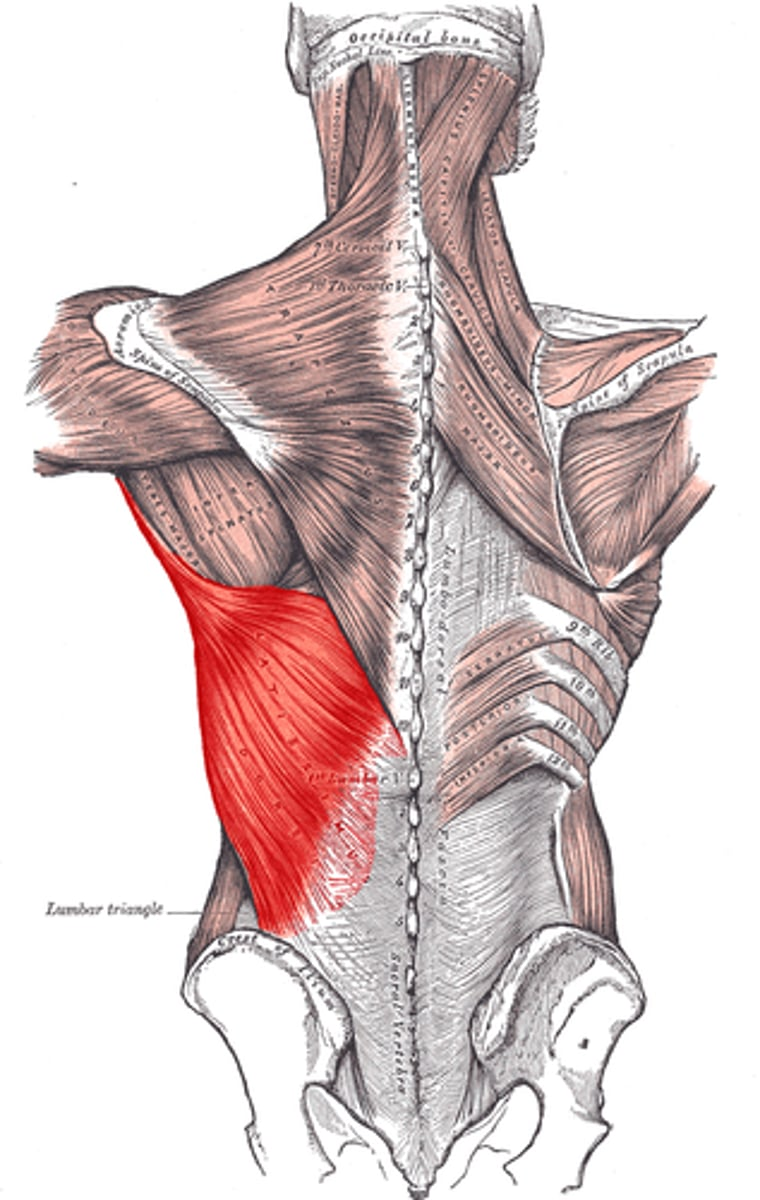
What is this? What does it do? Give an origin and insertion.
Latissimus dorsi, extends humerus, origin: crest of ilium, insertion: intertubercular sulcus of humerus
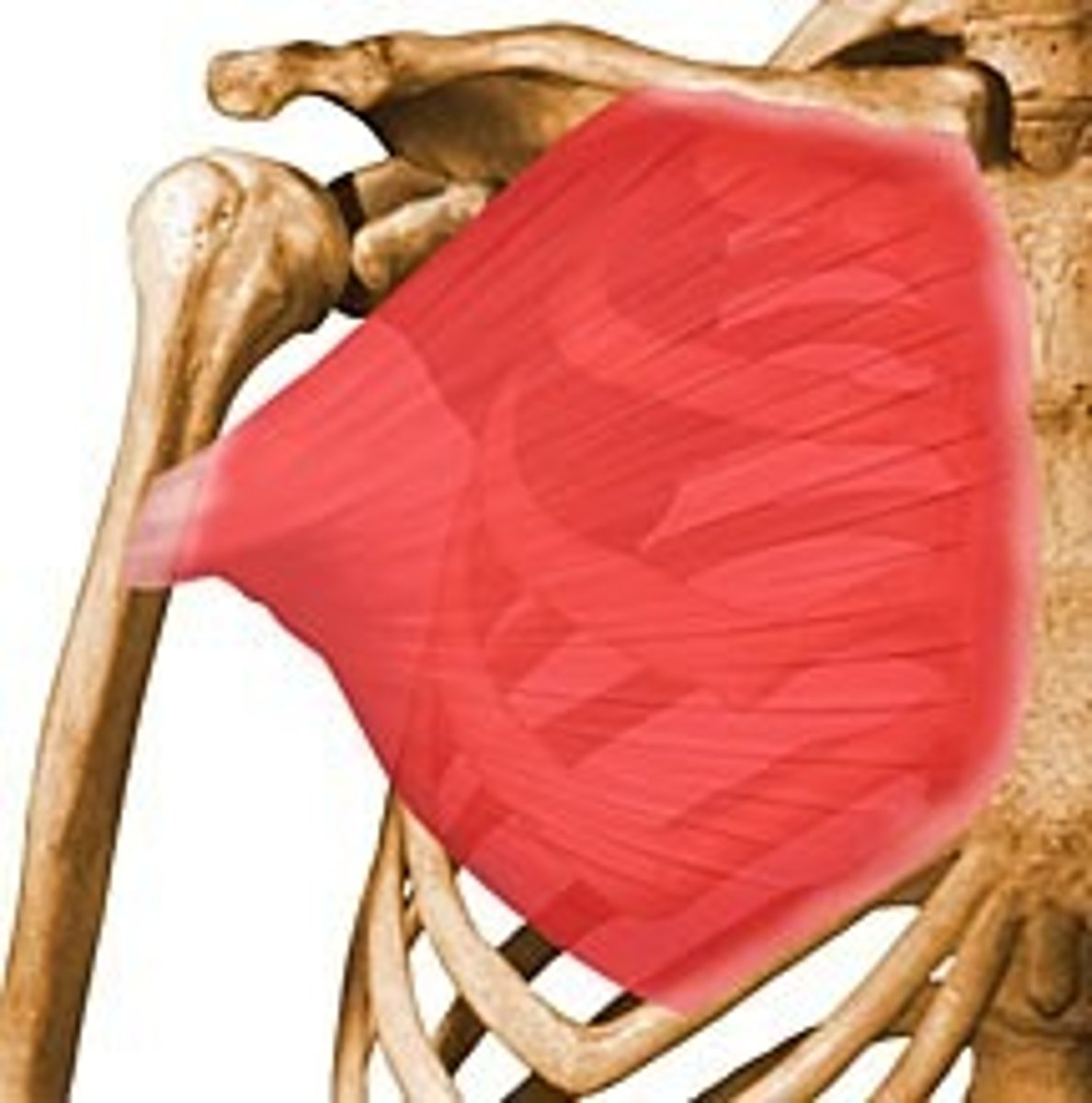
What is this and what does it do? Give an origin and insertion.
Pectoralis major, flexes humerus, origin: clavicle, insertion: crest of greater tubercle of humerus
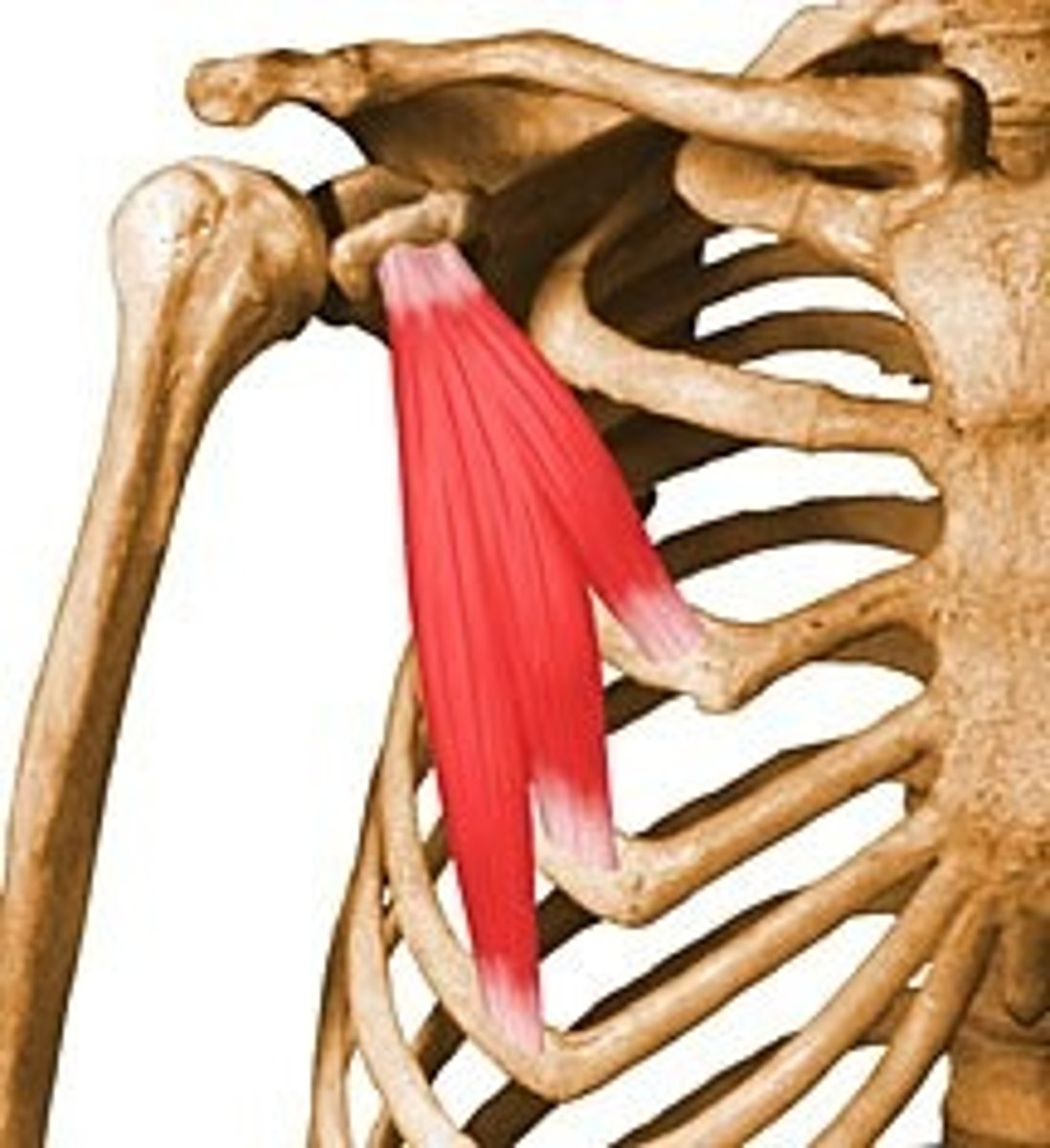
What is this? What does it do? Give an origin and insertion.
Pectoralis minor, depresses glenoid cavity, origin: ribs 3-5, insertion: coracoid process of scapula
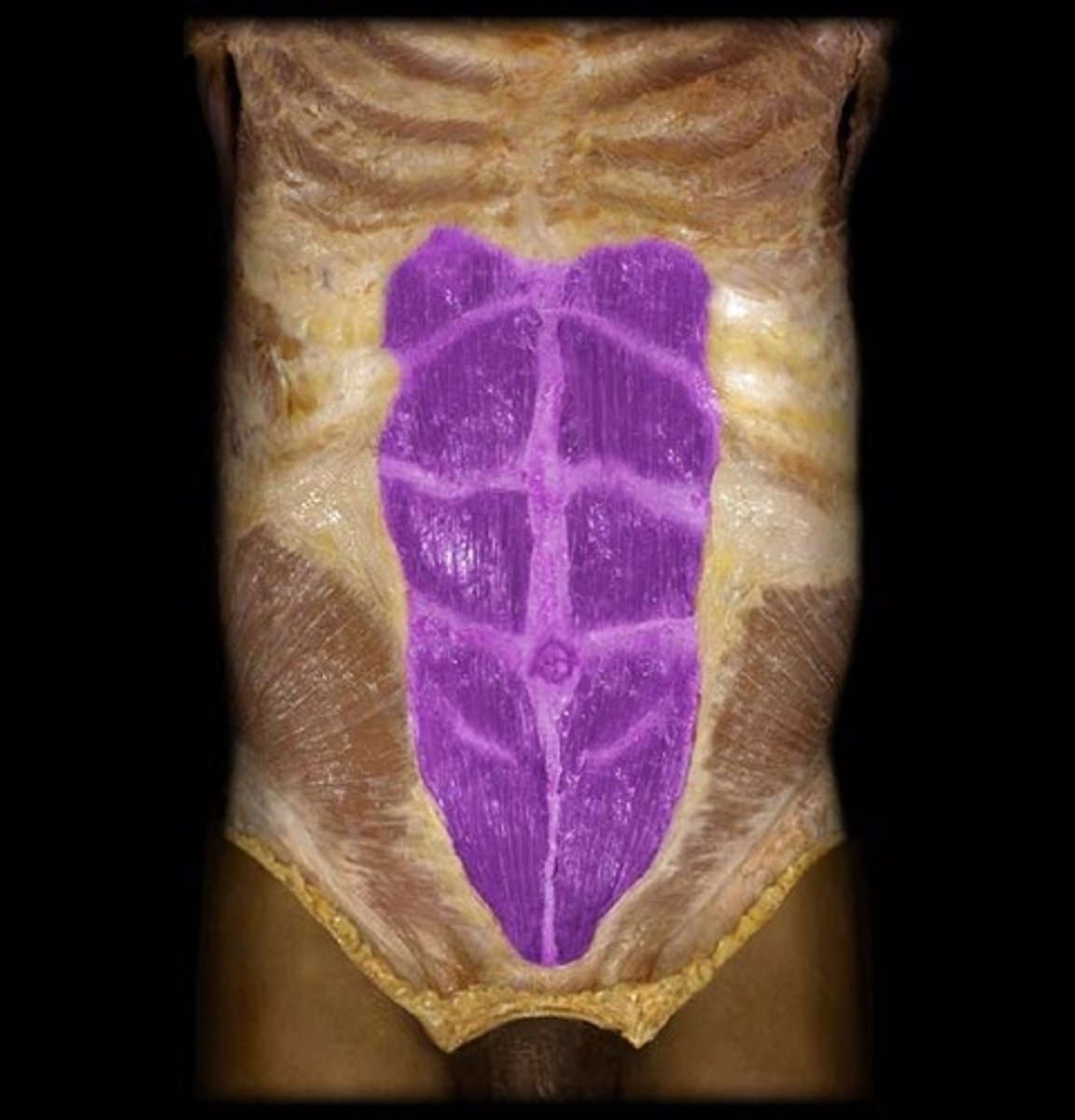
What is this? What does it do? Give an origin and insertion.
Rectus abdominis, compresses abdominal wall, origin: pubic symphysis, insertion: xiphoid process of sternum
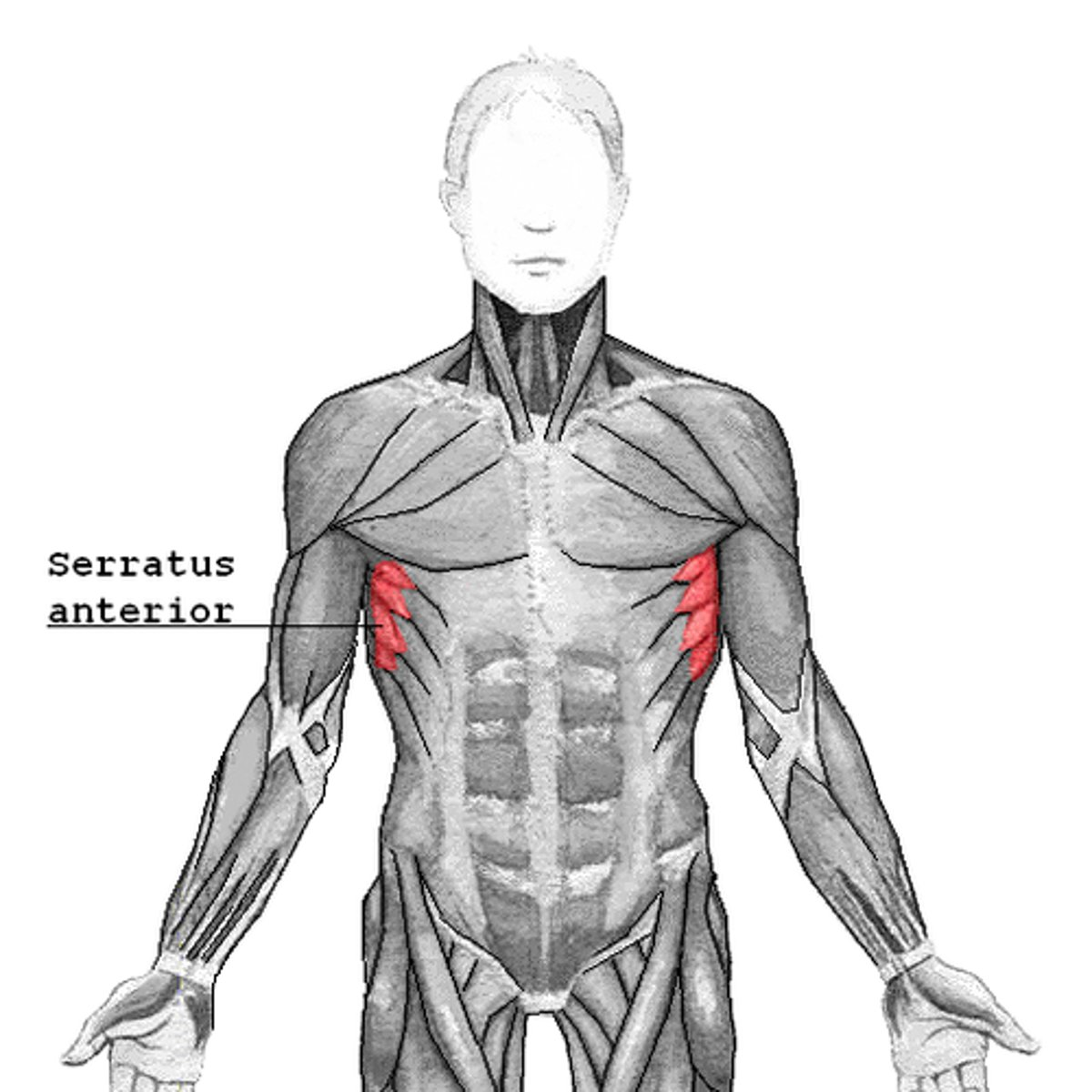
What is this? What does it do?
Serratus anterior, abducts scapula (moves scapula away from spinal column)
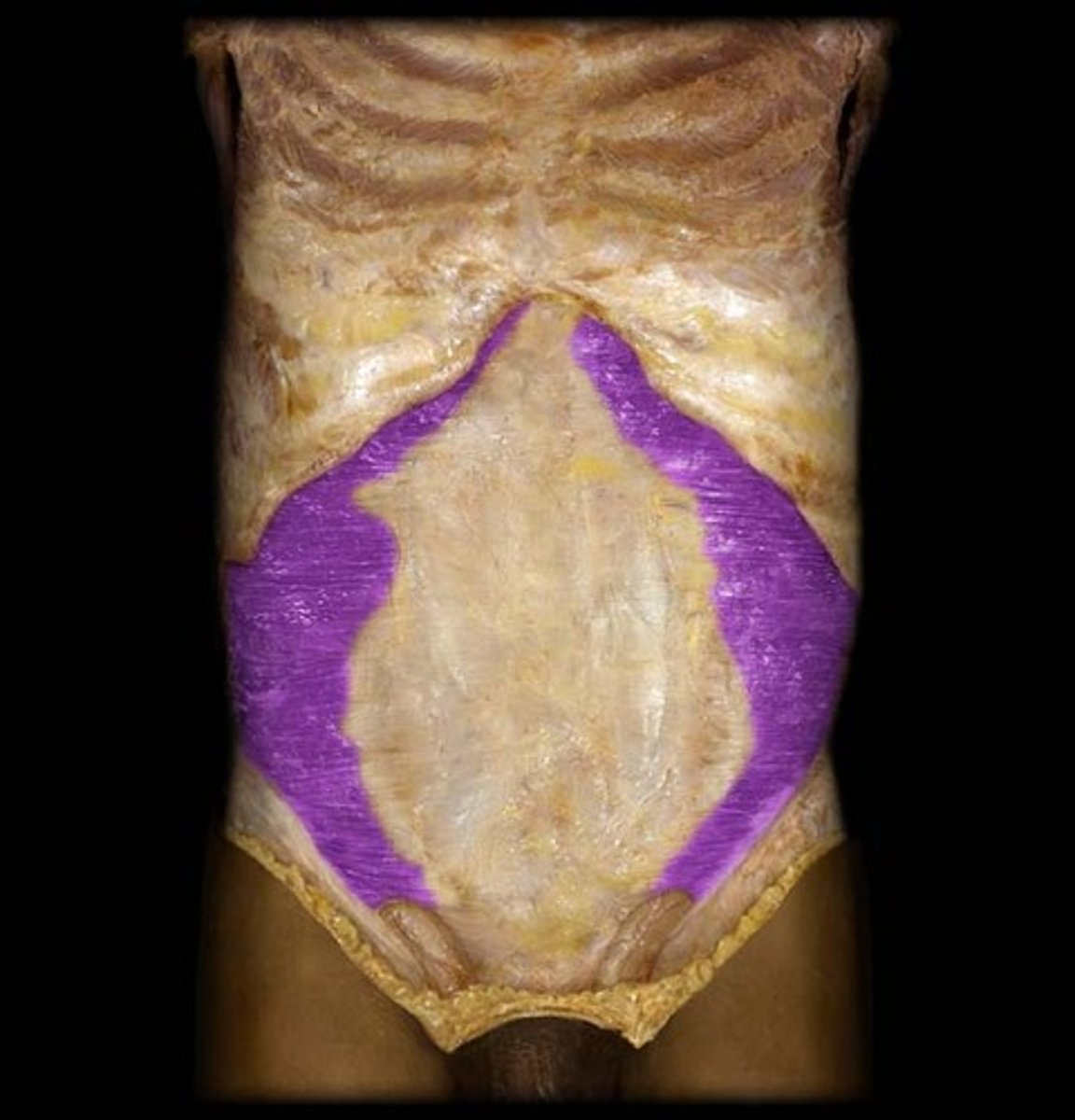
What is this and what does it do?
Transverse abdominal, compresses abdominal wall
What is a synergist?
Muscle that assists a prime mover
What is an agonist?
Prime movers or prime muscles, contract to produce a specific movement, responsible for initiating and carrying out the main action
What is an antagonist?
Oppose the action of the agonist, relax or lengthen to allow the agonist to contract, help to control and stabilize the movement
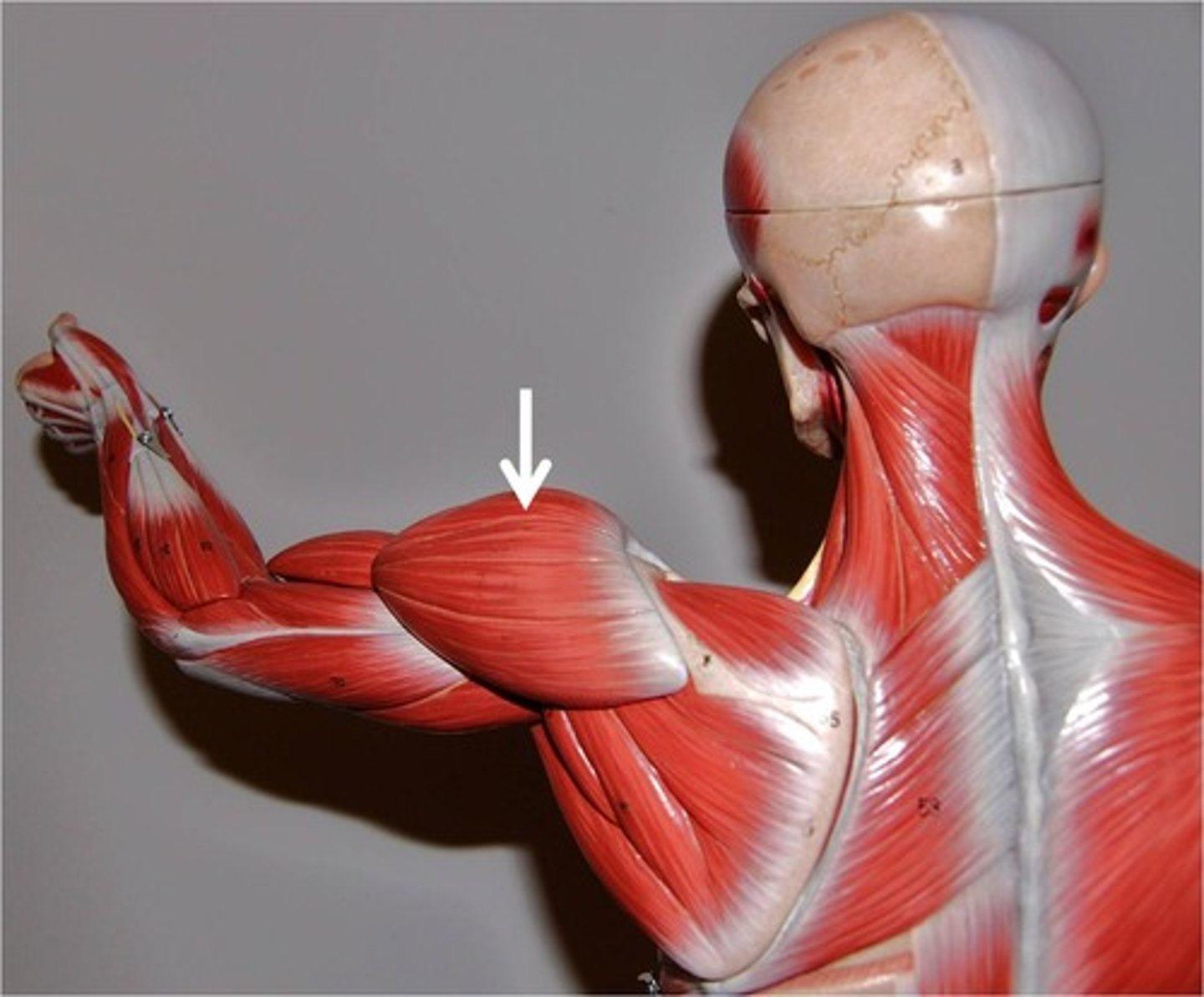
What is this and what does it do? Give an origin and insertion.
Deltoid, flexes/extends humerus, origin: acromion of scapula, insertion: deltoid tuberosity of humerus
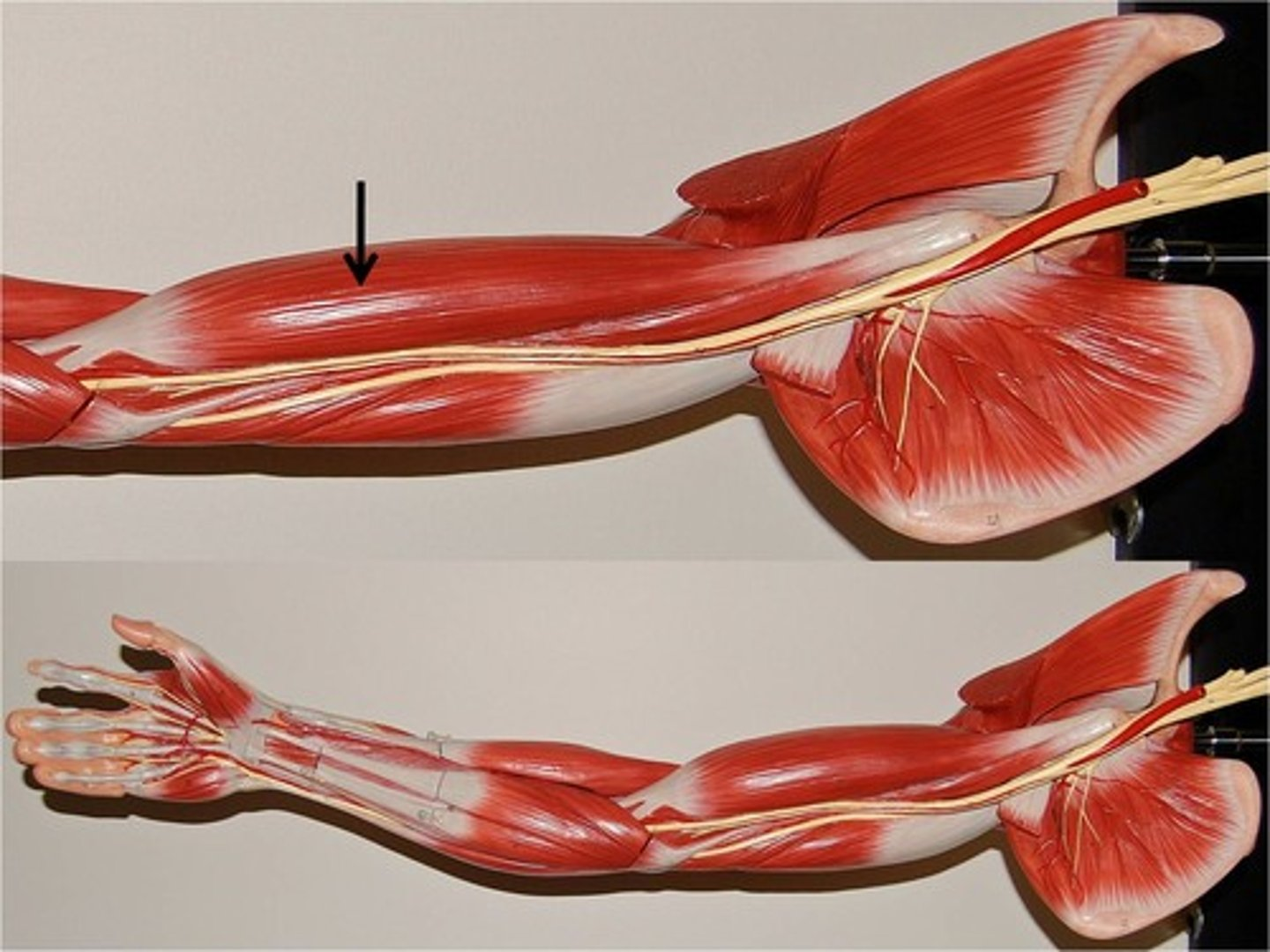
What is this and what does it do? Give an origin and insertion.
Biceps brachii, flexes forearm, origin: short head: coracoid process of scapula, insertion: radial tuberosity
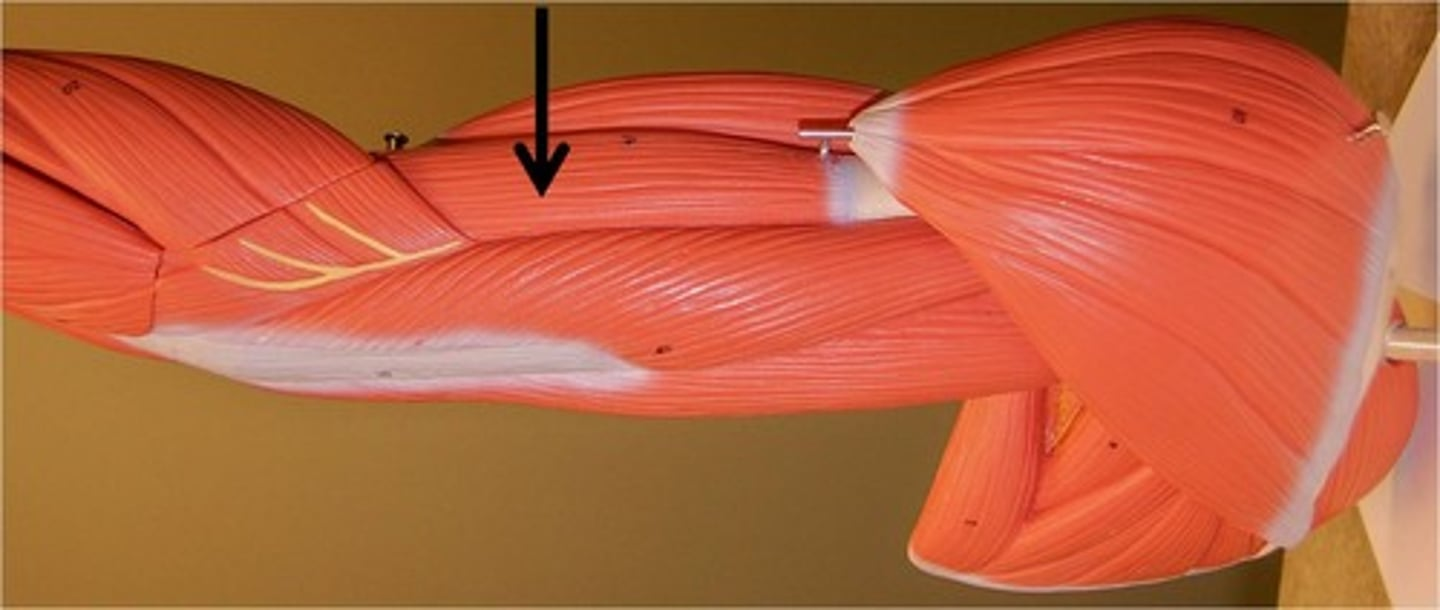
What is this and what does it do?
Brachialis, flexes forearm
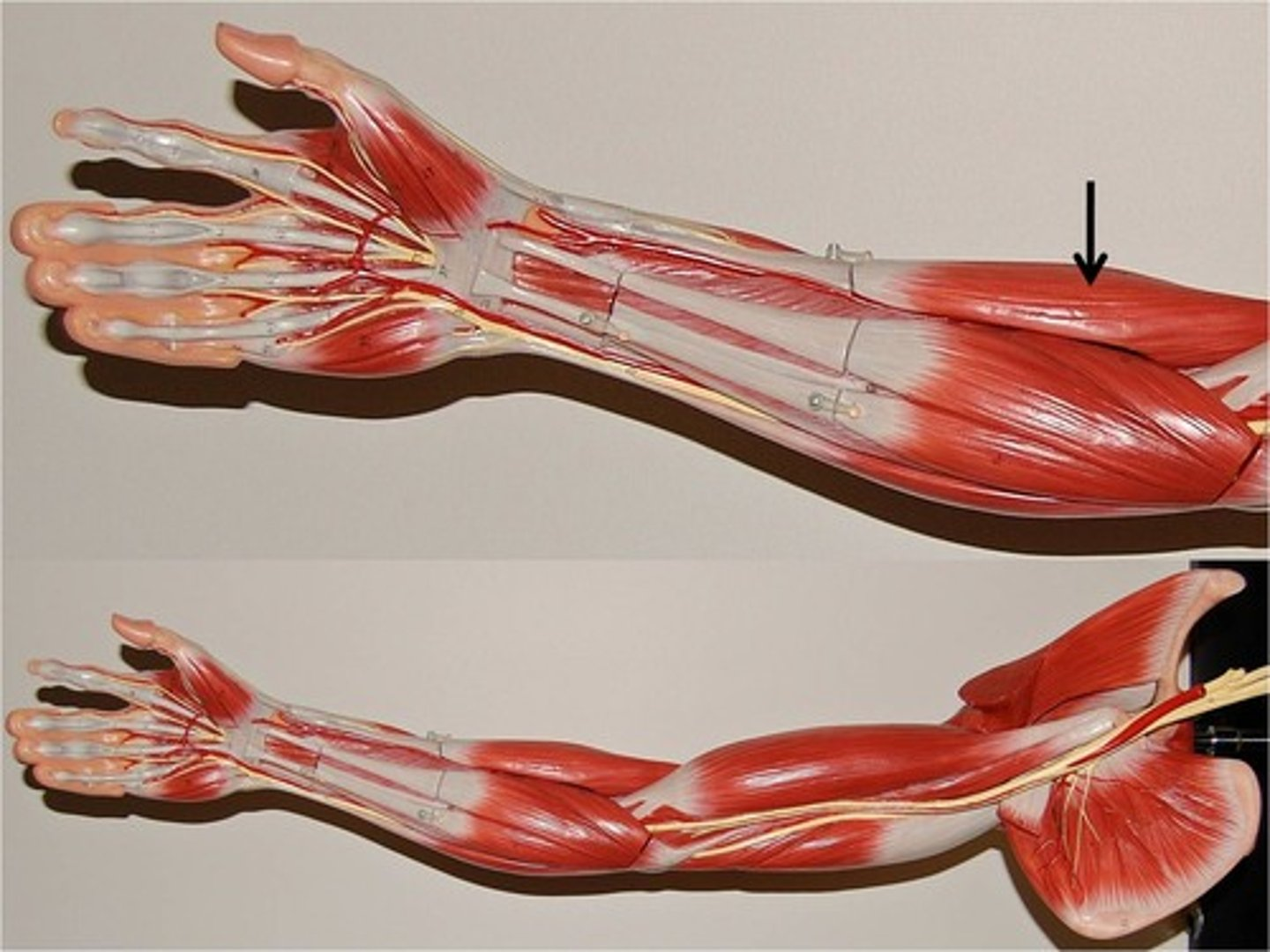
What is this and what does it do? Give an origin and insertion.
Brachioradialis, flexes forearm, origin: lateral supracondylar ridge of humerus, insertion: near styloid process of lateral radius
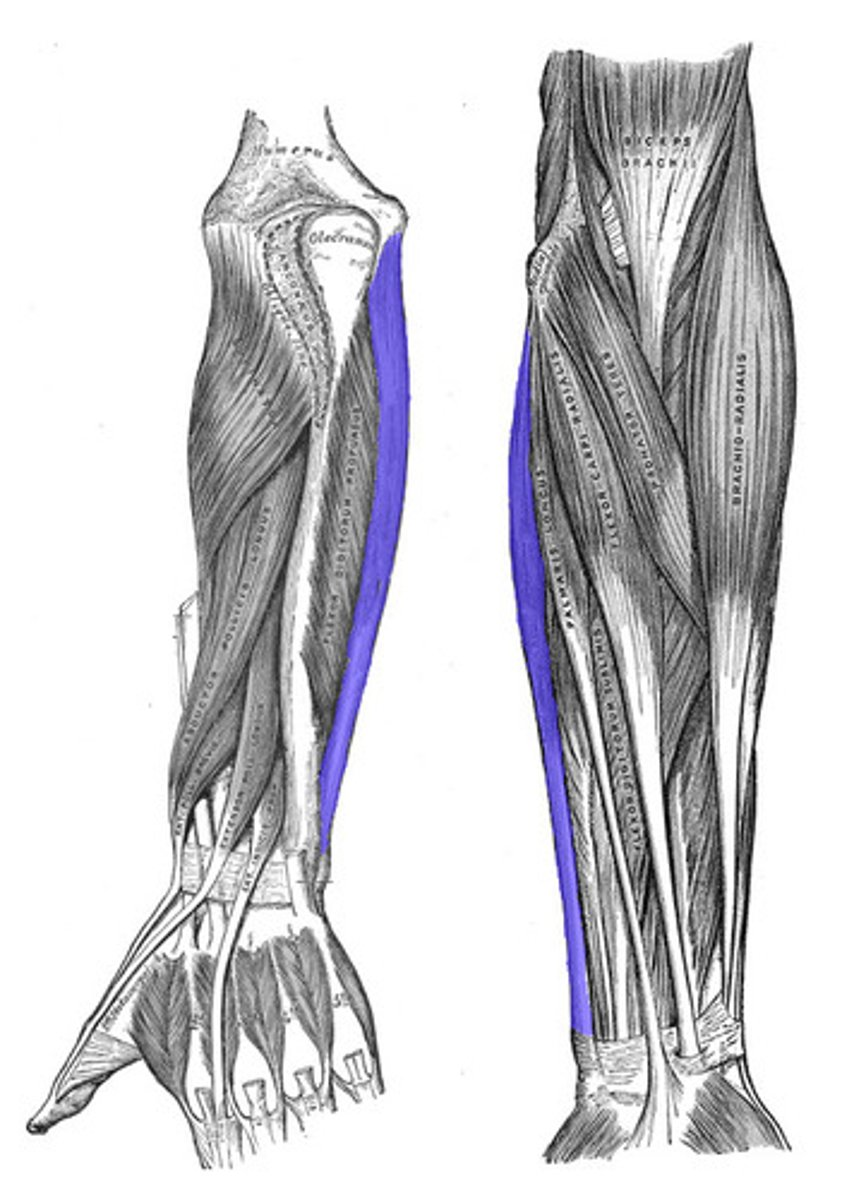
What is this and what does it do?
Flexor carpi ulnaris, flexes and abducts wrist
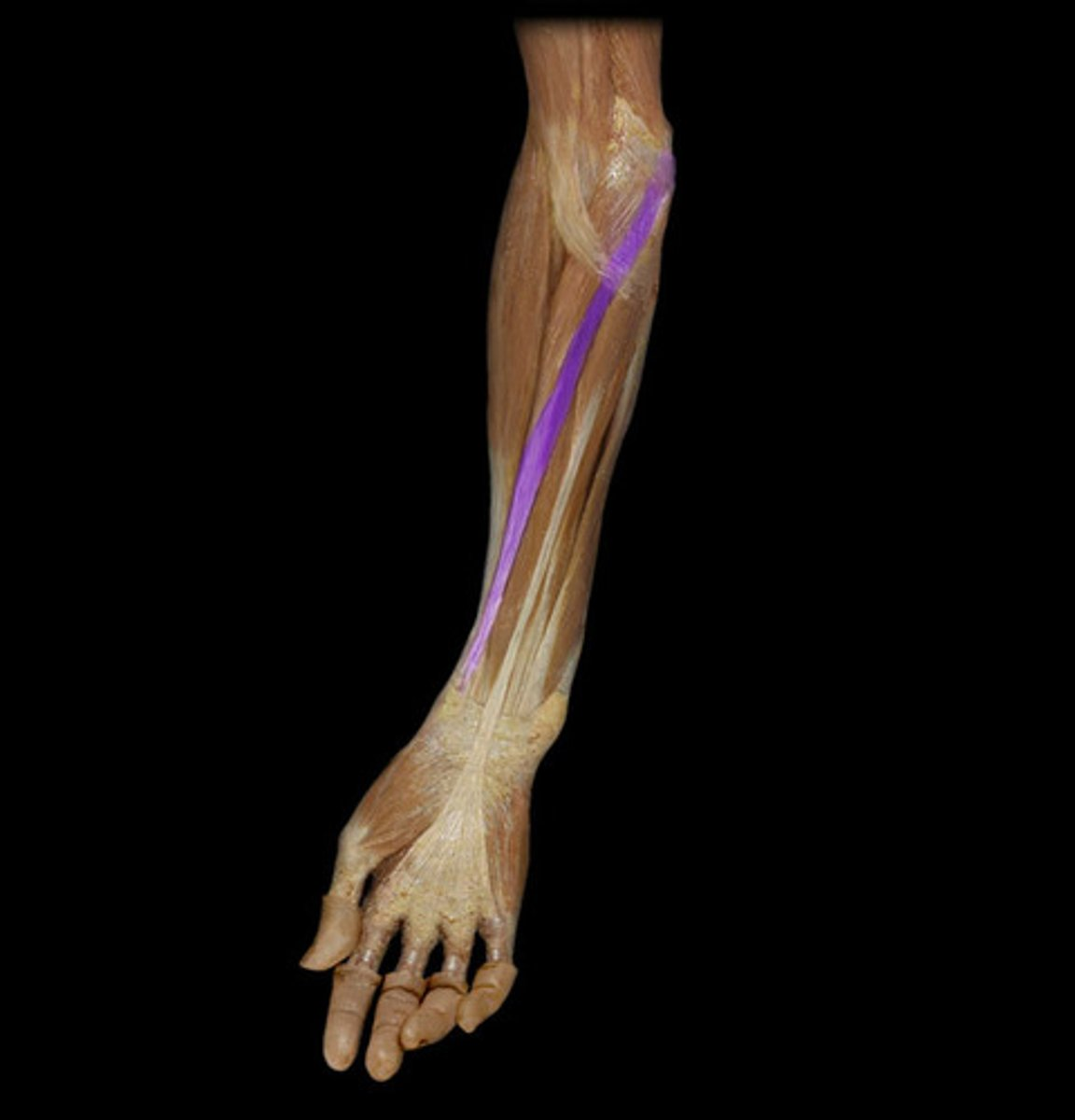
What is this and what does it do?
Flexor carpi radialis, flexes and abducts wrist
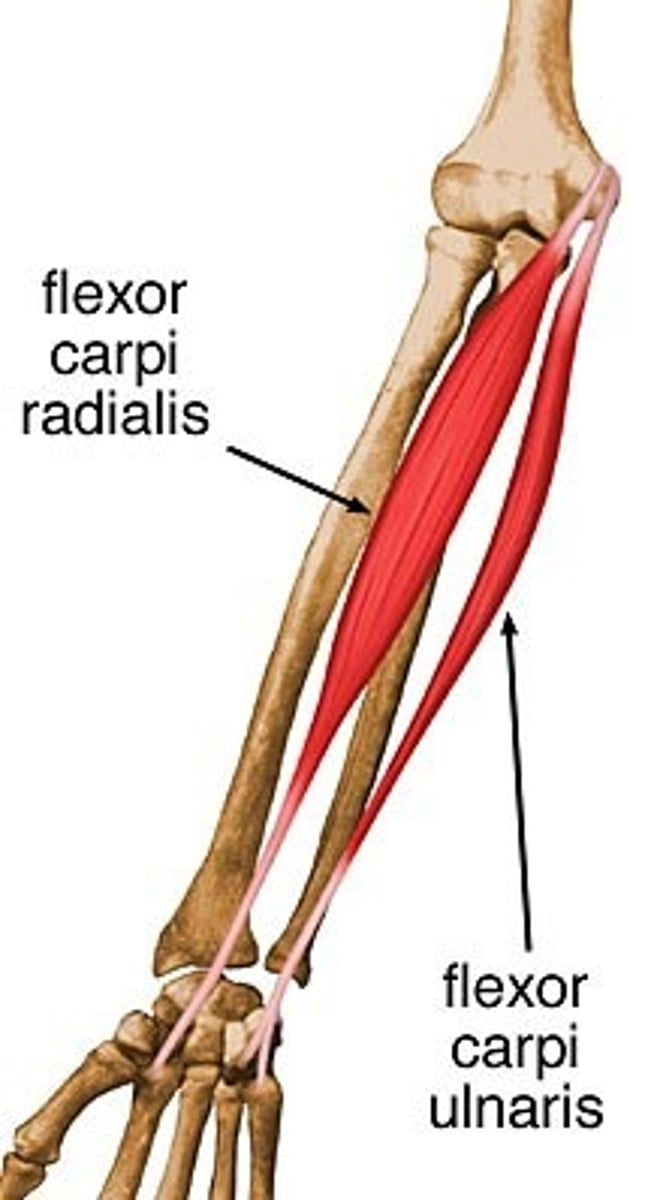
What is this? What does it do?
Flexor carpi radialis, flexes and abducts wrist
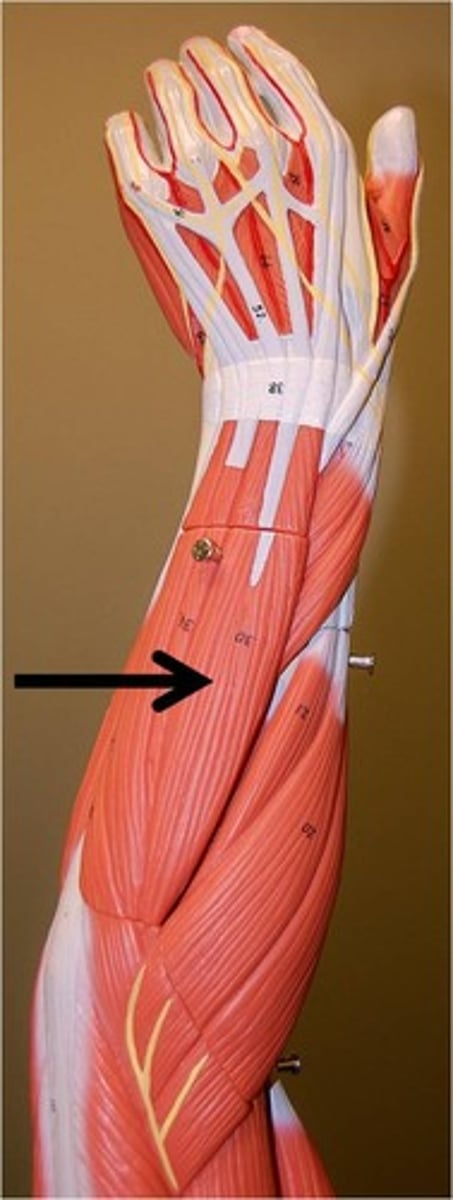
What is this and what does it do?
Extensor digitorum, extends phalanges/hand
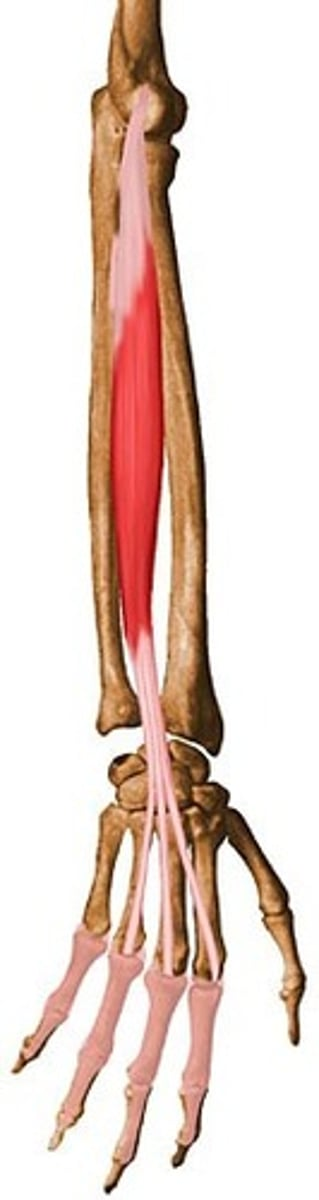
What is this and what does it do?
Extensor digitorum, extends phalanges/hand
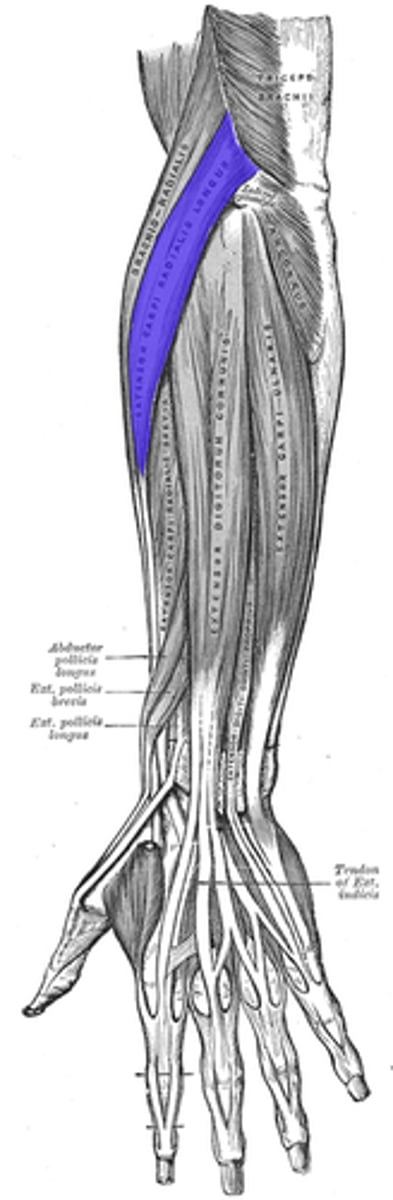
What is this and what does it do?
Extensor carpi radialis longus, extends and abducts wrist
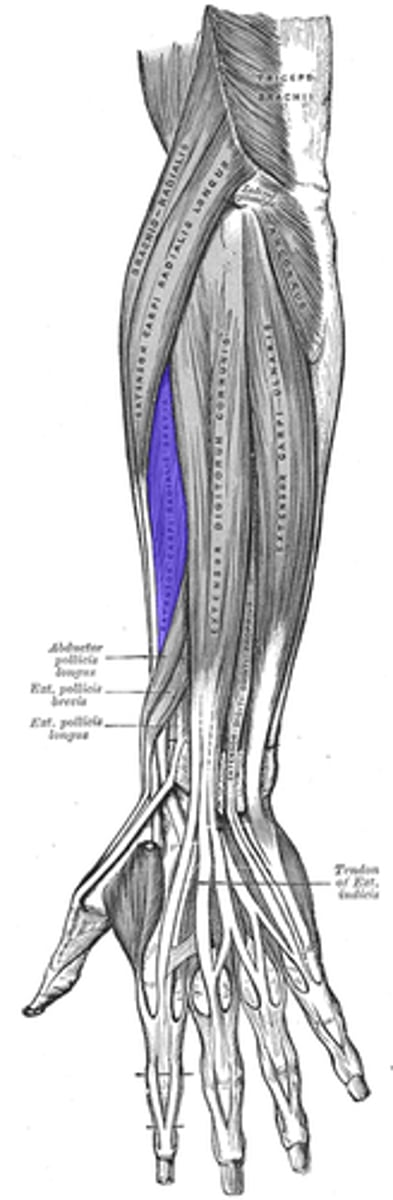
What is this and what does it do?
Extensor carpi radialis brevis, extends and abducts wrist
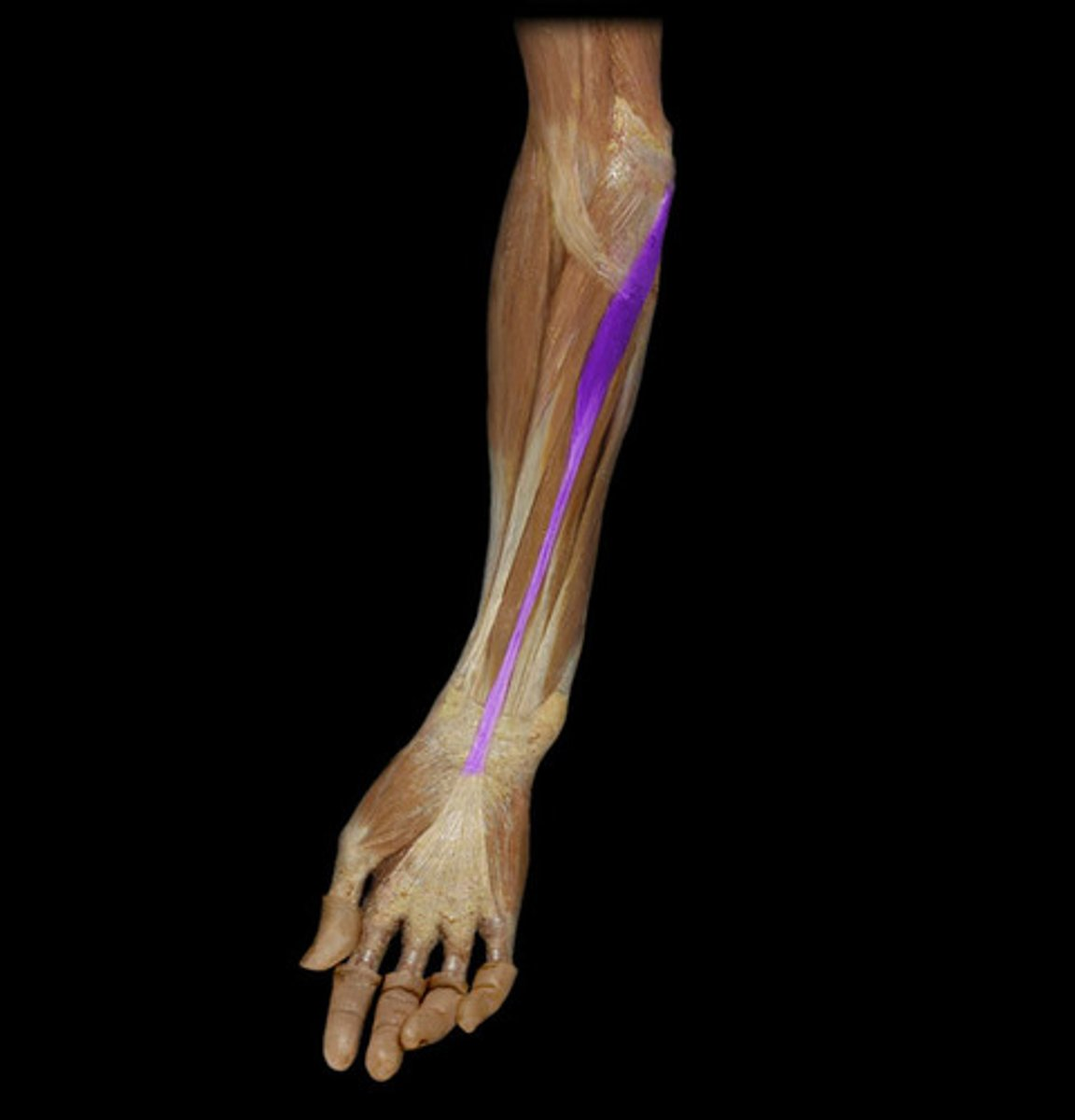
What is this and what does it do?
Palmaris longus, anchors skin and fascia of palmar region
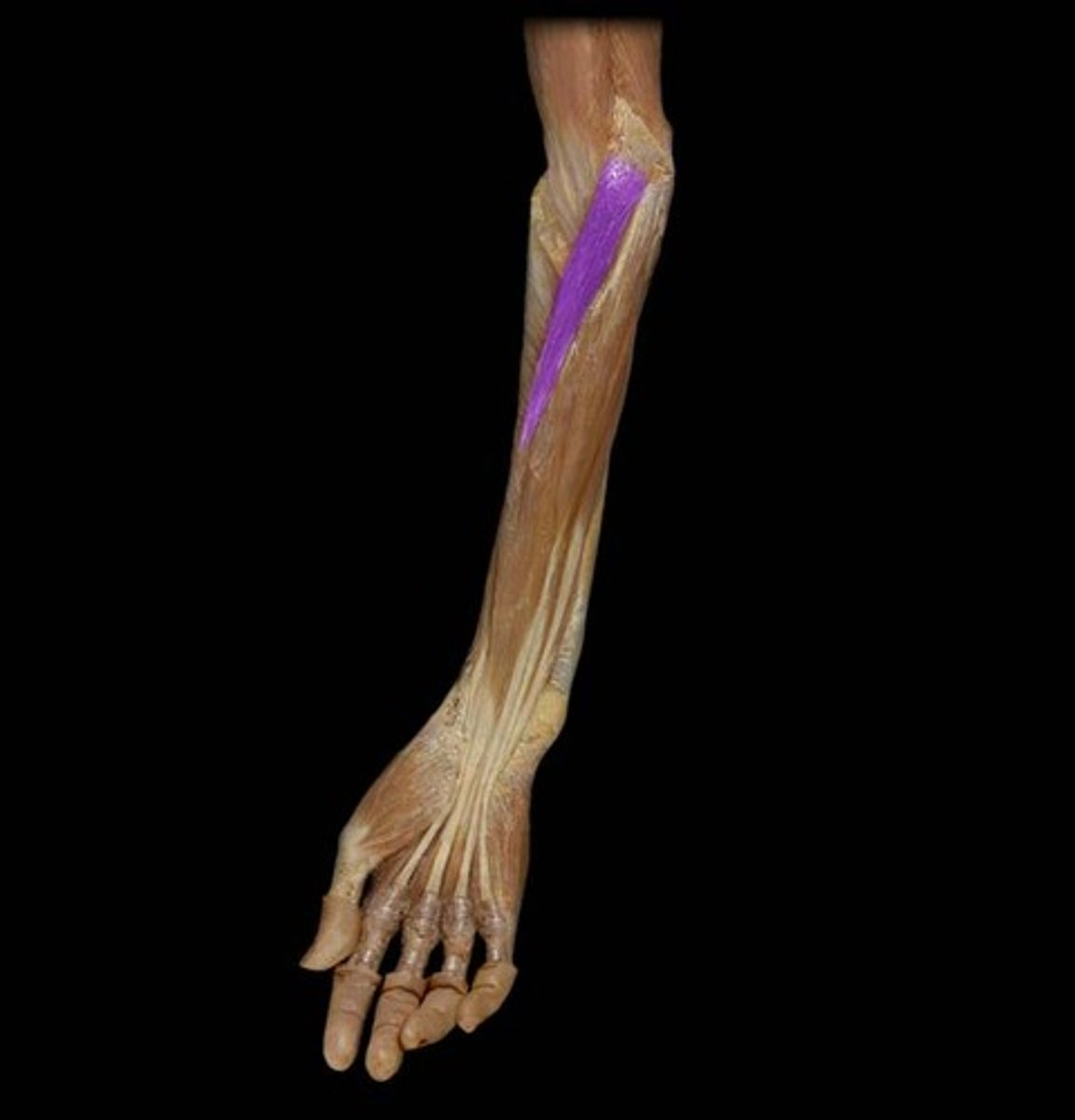
What is this and what does it do?
Pronator teres, flexes forearm
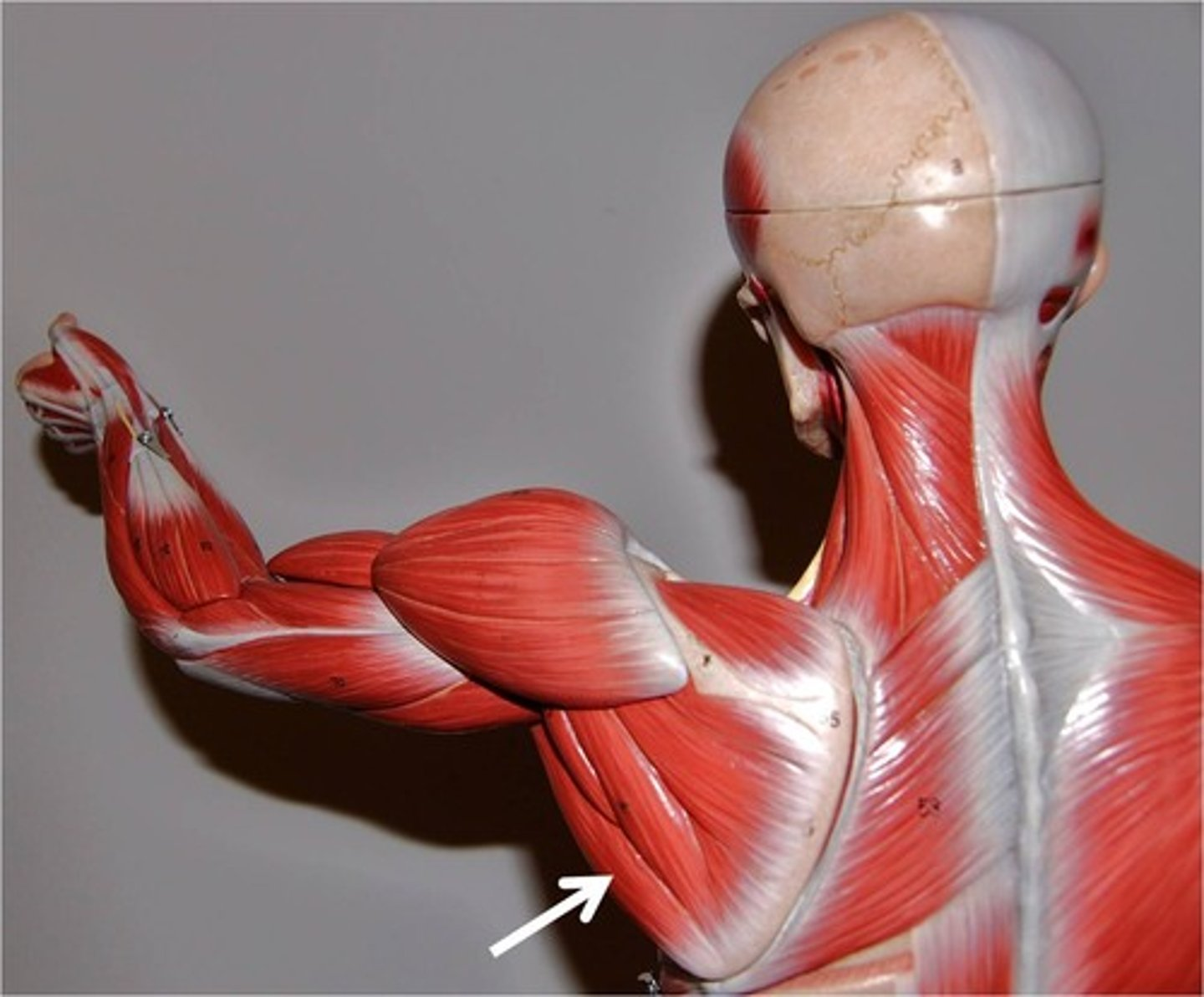
What is this and what does it do? Give an origin and insertion.
Teres major, extends humerus, origin: interior angle of scapula, insertion: crest of lesser tubercle of humerus
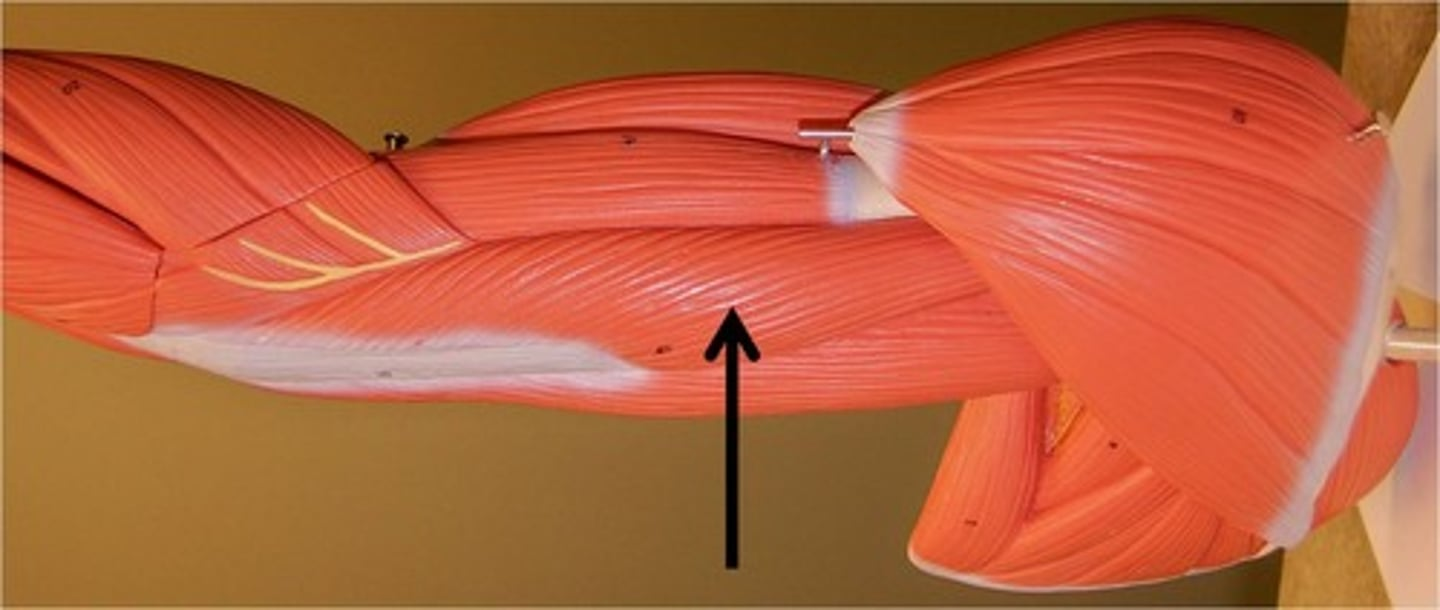
What is this and what does it do? Give an origin and insertion.
Triceps brachii, extends forearm, origin: infraglenoid tubercle of scapula, insertion: olecranon of ulna
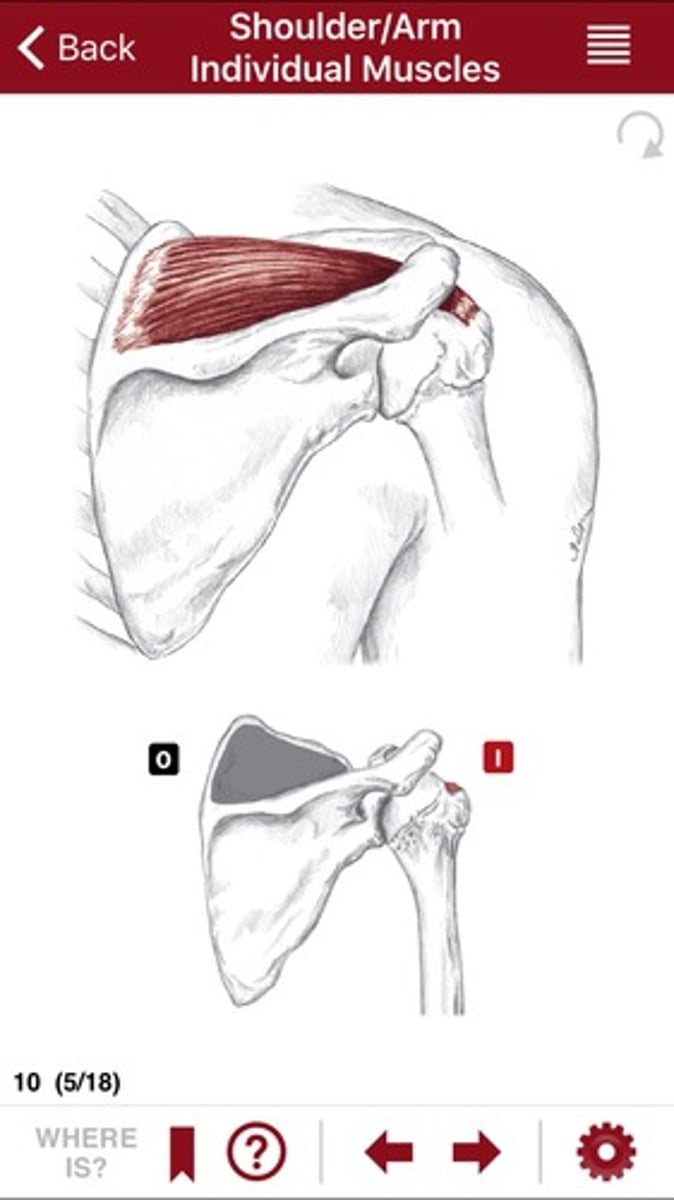
What is this and what does it do? Give an origin and insertion.
Supraspinatus (rotator cuff muscles), helps stabilize shoulder joint, origin: supraspinous fossa, insertion: greater tubercle of humerous
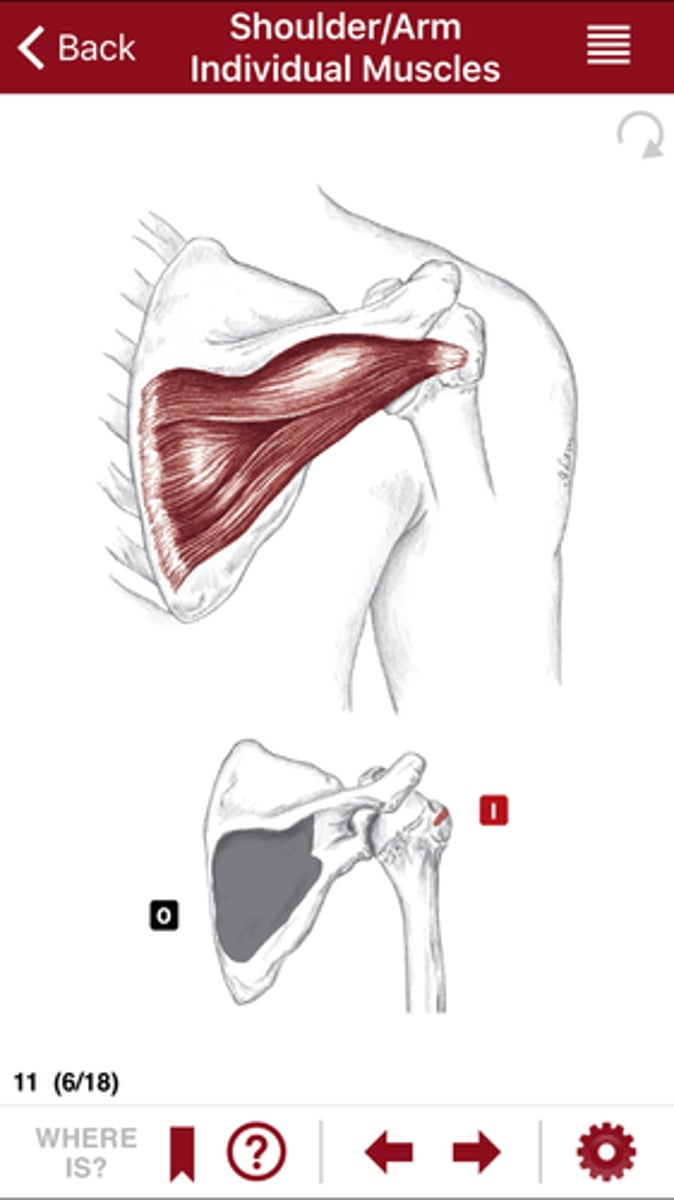
What is this and what does it do? Give an origin and insertion.
Infraspinatus (rotator cuff muscles), stabilizes shoulder joint, origin: infraspinous fossa, insertion: greater tubercle of humerus
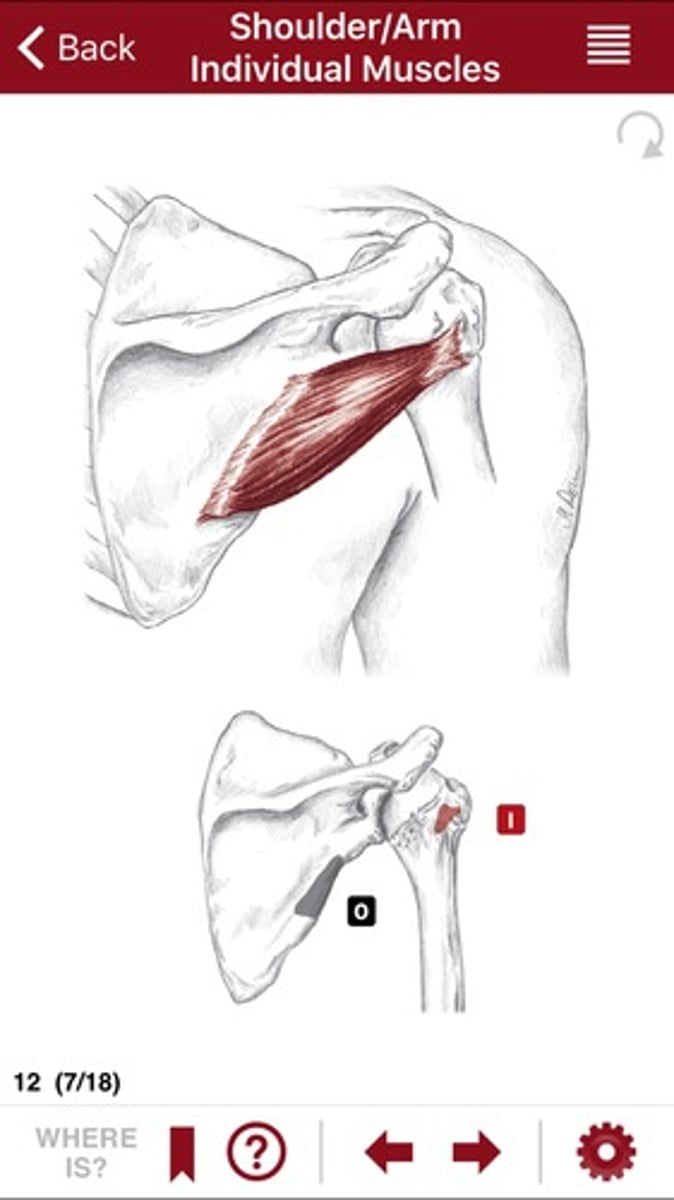
What is this and what does it do? Give an origin and insertion.
Teres minor (rotator cuff muscles), stabilizes shoulder joint, origin: lateral border of scapula, insertion: greater tubercle of humerus
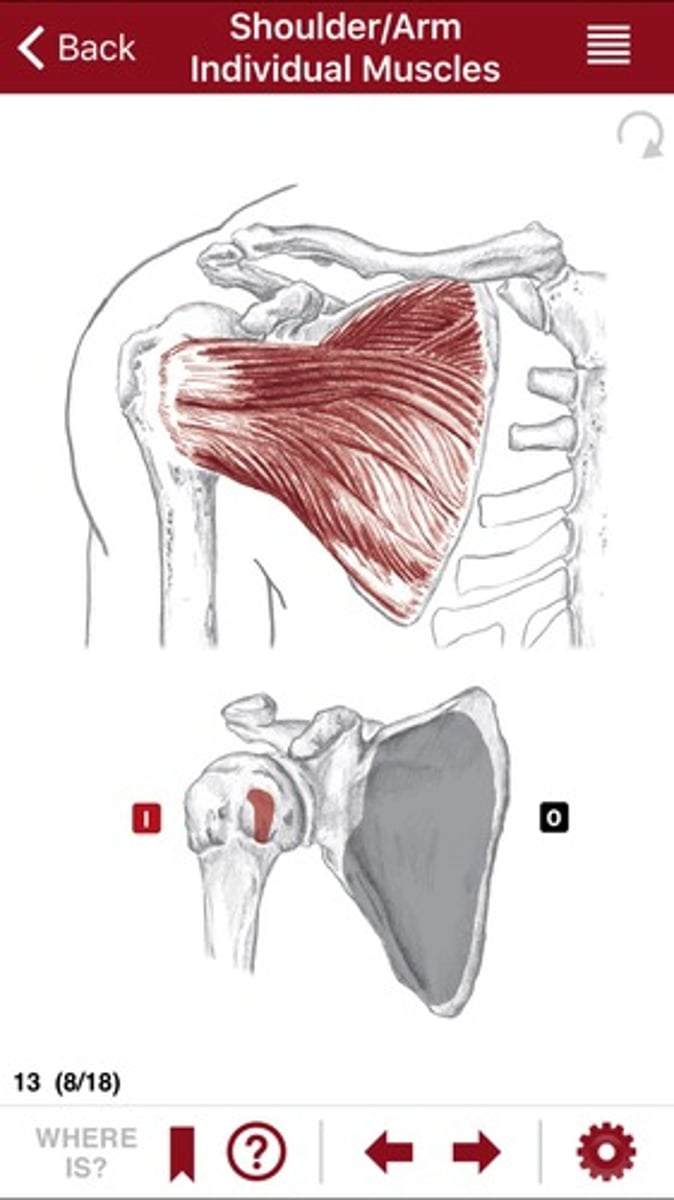
What is this and what does it do? Give an origin and insertion.
Subscapularis (rotator cuff muscles), stabilizes shoulder joint, origin: subscapular fossa, insertion: lesser tubercle of humerus
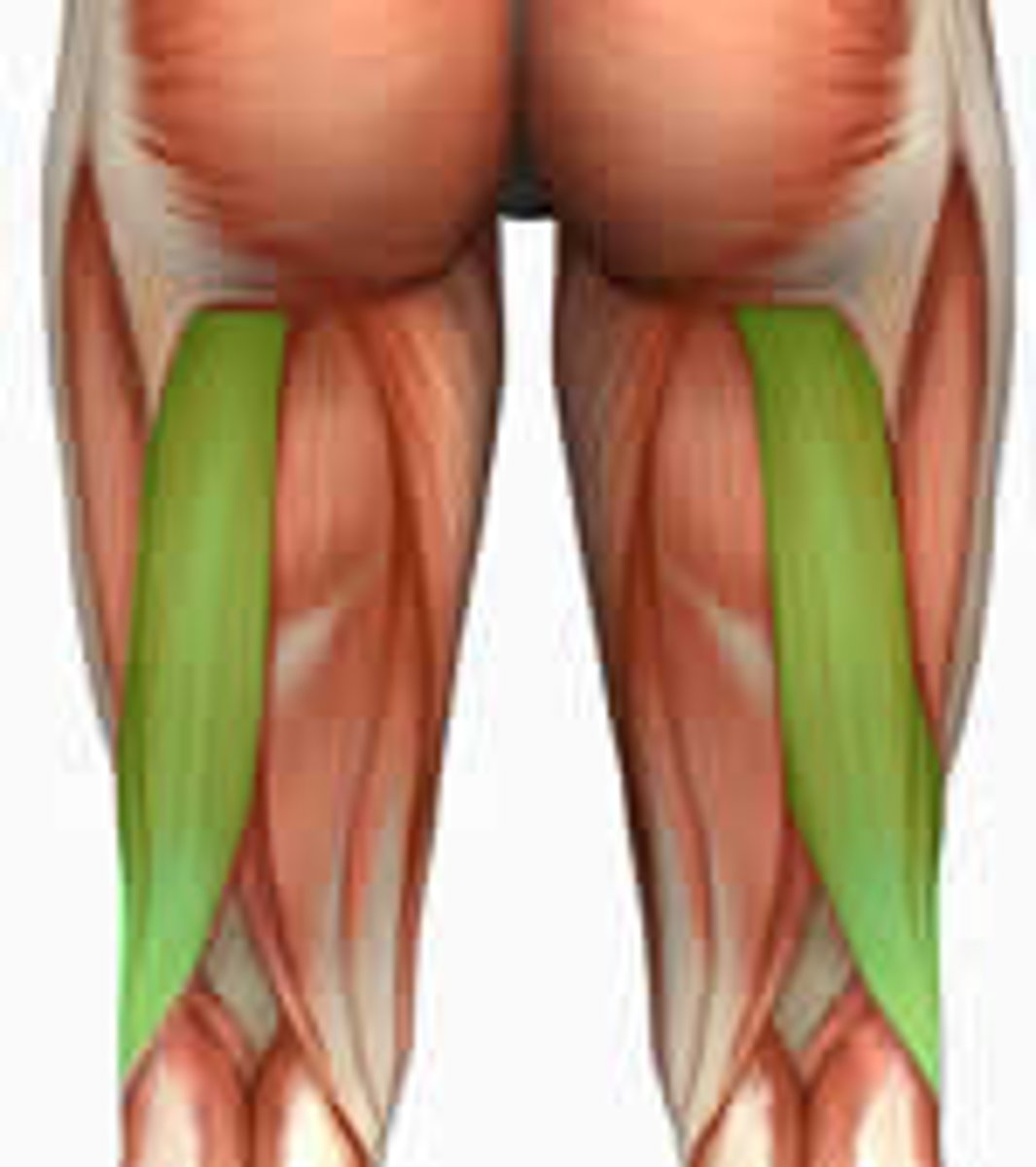
What is this and what does it do? Give an origin and insertion.
Biceps femoris (ischiocrural), extends thigh, origin: ischial tuberosity, linea aspera, insertion: head of fibula
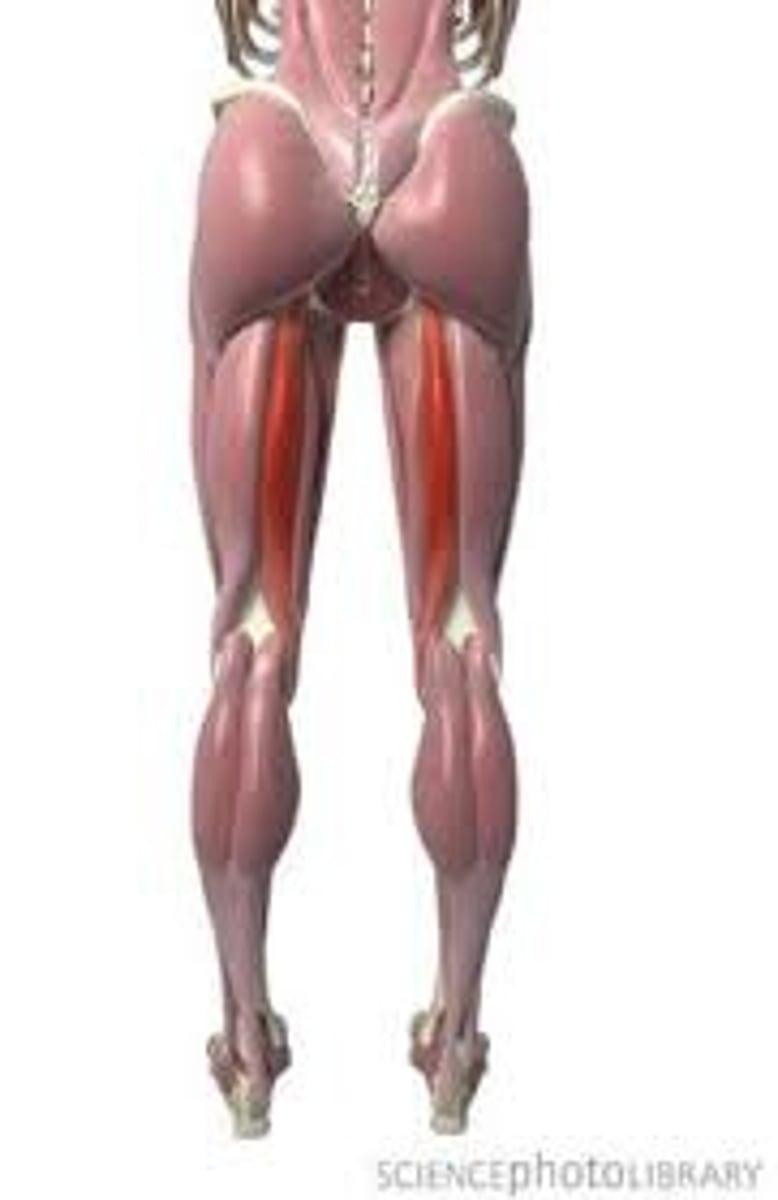
What is this and what does it do? Give an origin and insertion.
Semitendinosus (ischiocrural), extends thigh, origin: ischial tuberosity, insertion: proximal, medial tibia
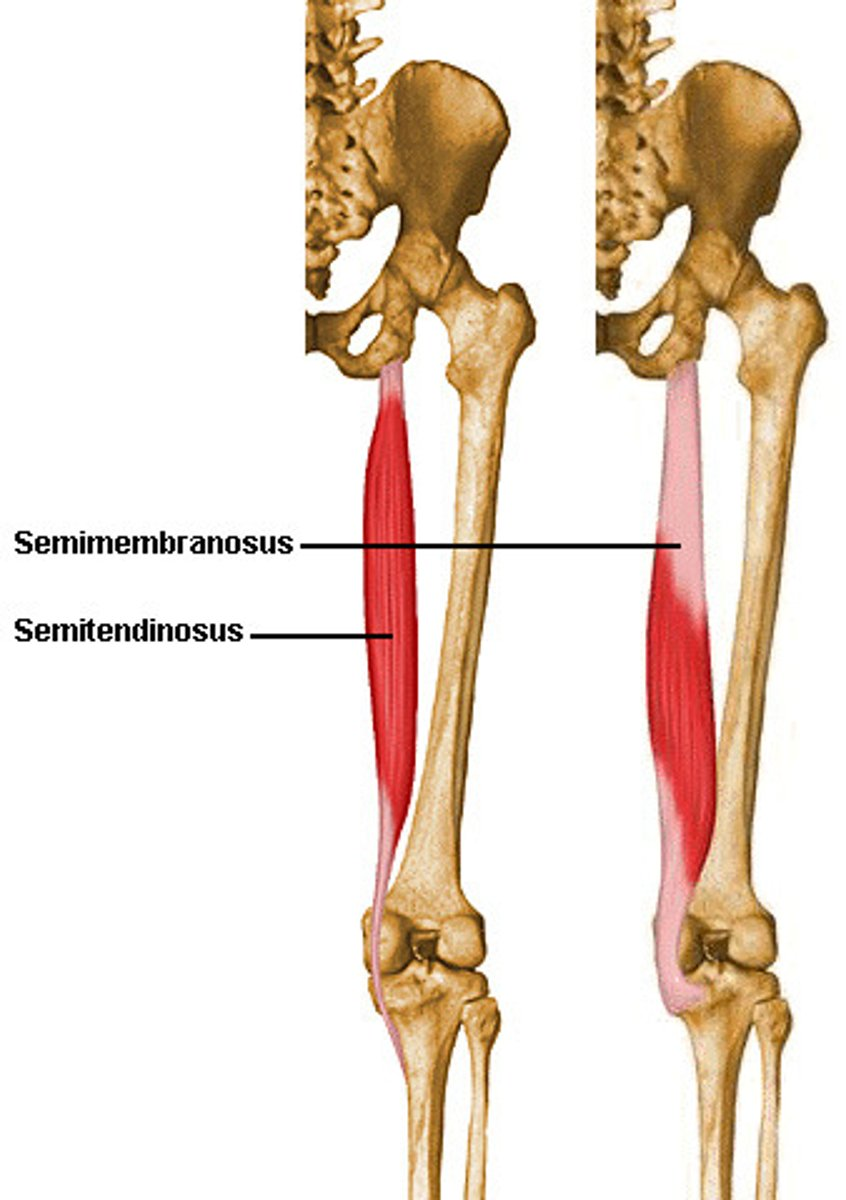
What is this and what does it do? Give an origin and insertion.
Semimembranosus (ischiocrural), extends thigh, origin: ischial tuberosity, insertion: medial condyle of tibia
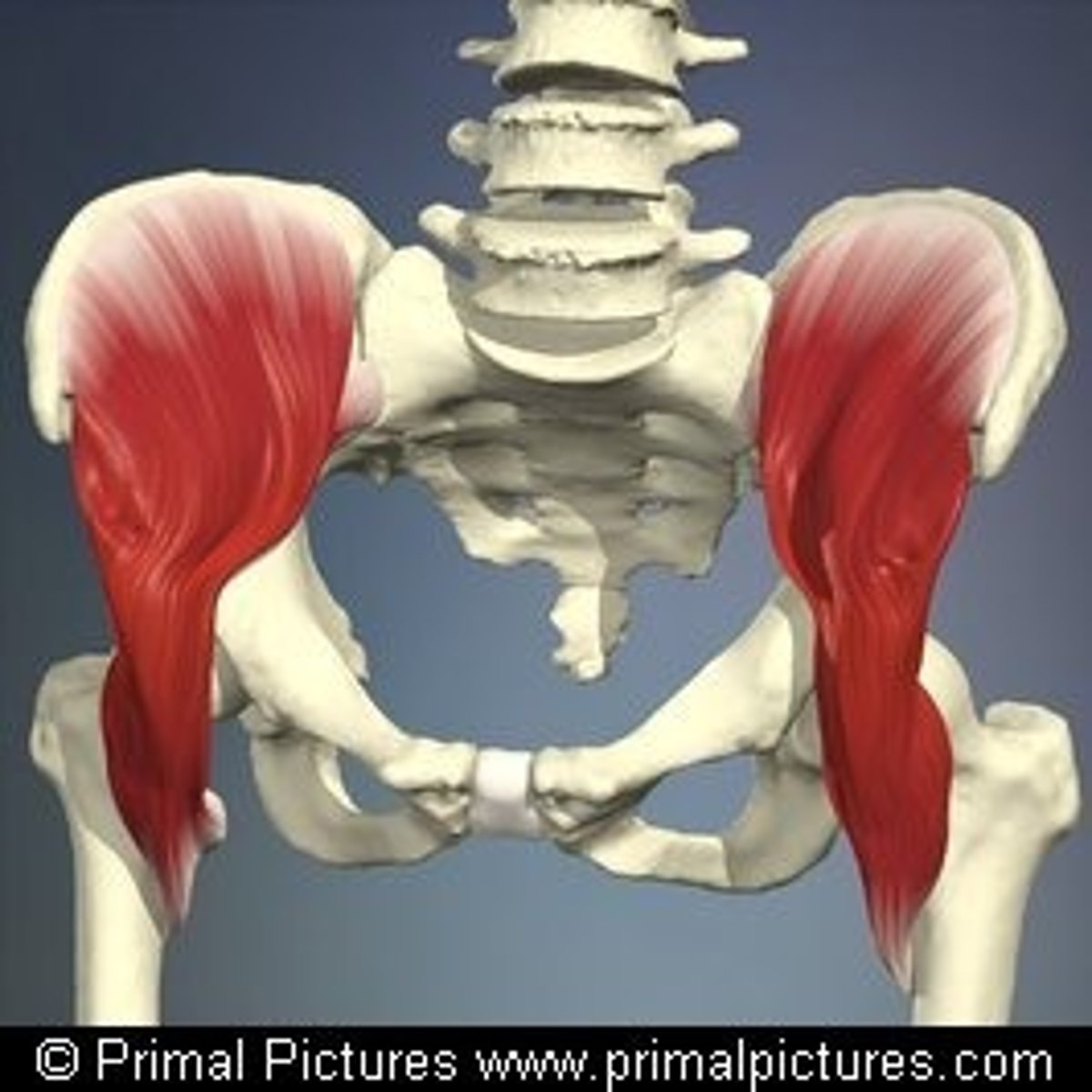
What is this and what does it do? Give an origin and insertion.
Iliacus (iliopsoas), flexes hip, origin: iliac fossa, lumbar vertebrae, insertion: lesser trochanter of femur
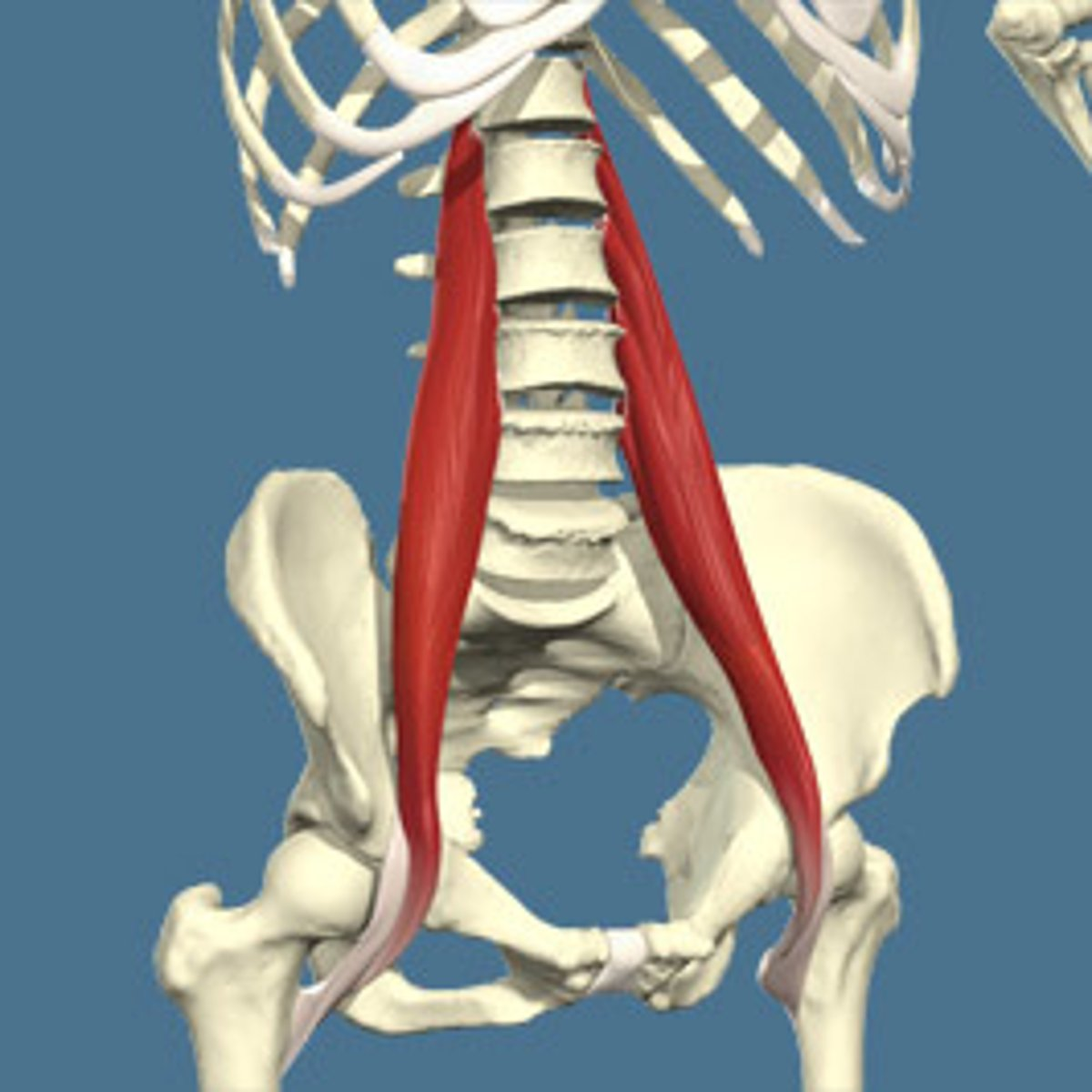
What is this and what does it do? Give an origin and insertion.
Psoas major (iliopsoas), flexes hip, origin: iliac fossa, lumbar vertebrae, insertion: lesser trochanter of femur
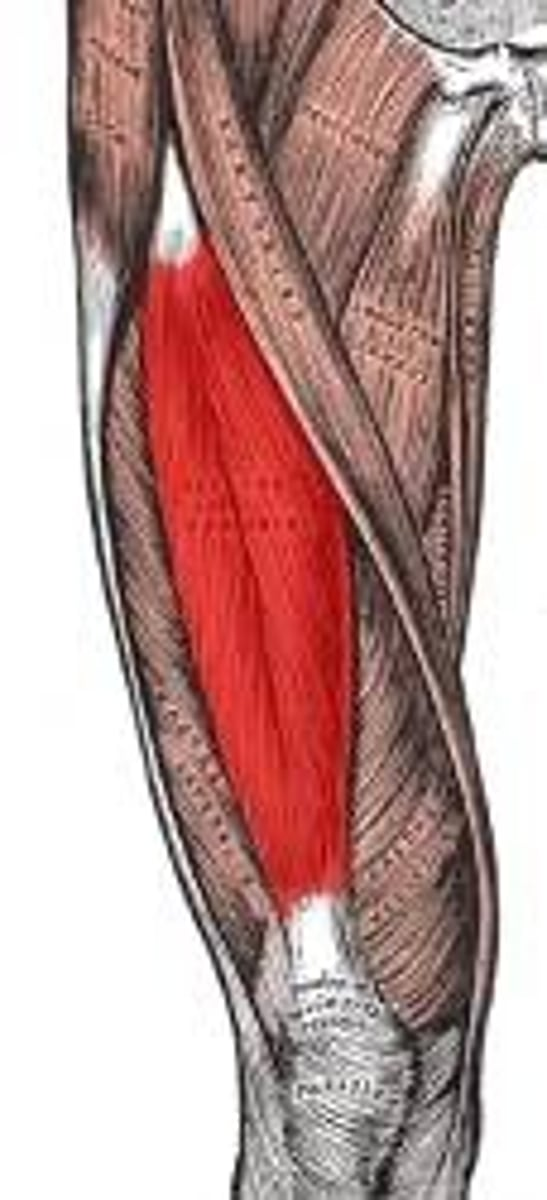
What is this and what does it do? Give an origin and insertion.
Rectus femoris (quadriceps femoris), flexes thigh, origin: margin of acetabulum, insertion: patella
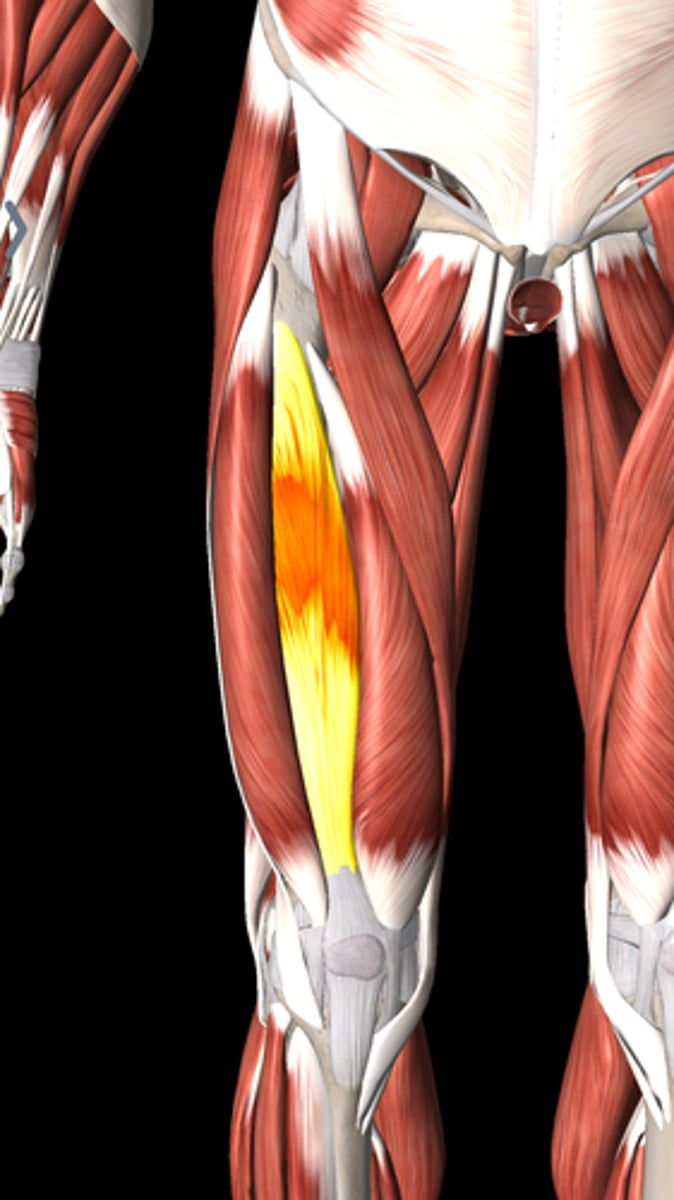
What is this and what does it do? Give an origin and insertion.
Vastus intermedius (quadriceps femoris), extends leg, origin proximal anterior femur, insertion: patella
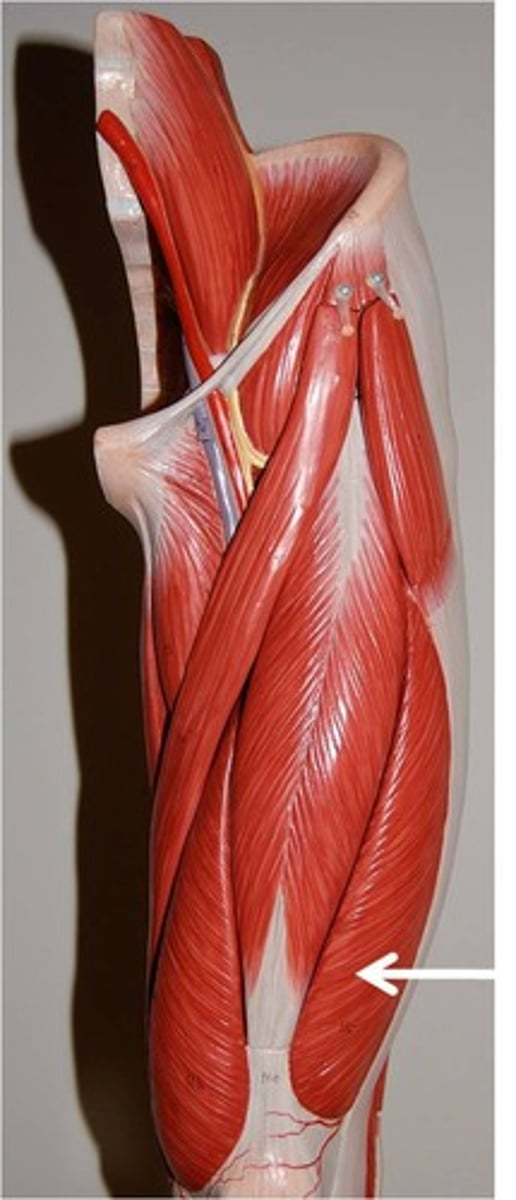
What is this and what does it do? Give an origin and insertion.
Vastus lateralis (quadriceps femoris), extends leg, origin: greater trochanter of femus, insertion: patella
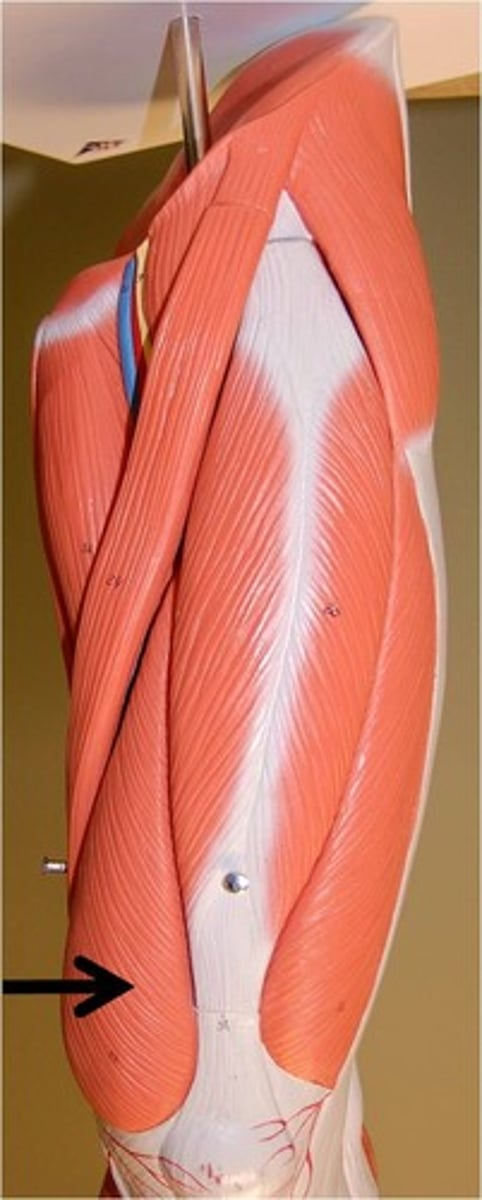
What is this and what does it do? Give an origin and insertion.
Vastus medialis (quadriceps femoris), extends leg, origin: linea aspera medial side, insertion: patella
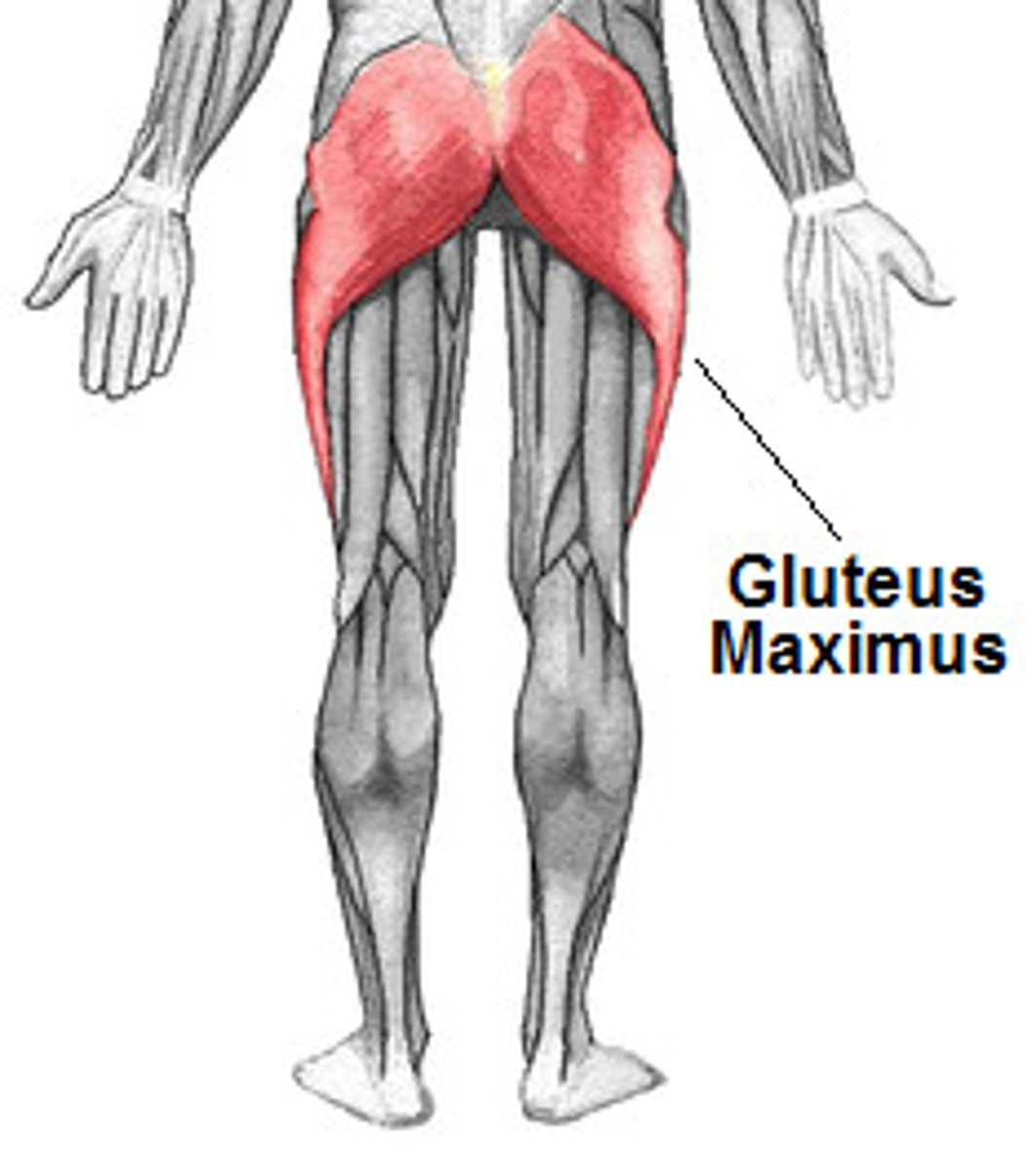
What is this and what does it do? Give an origin and insertion.
Gluteus maximus, extends thigh, origin: sacrum or coccyx, insertion: gluteal tuberosity of femur
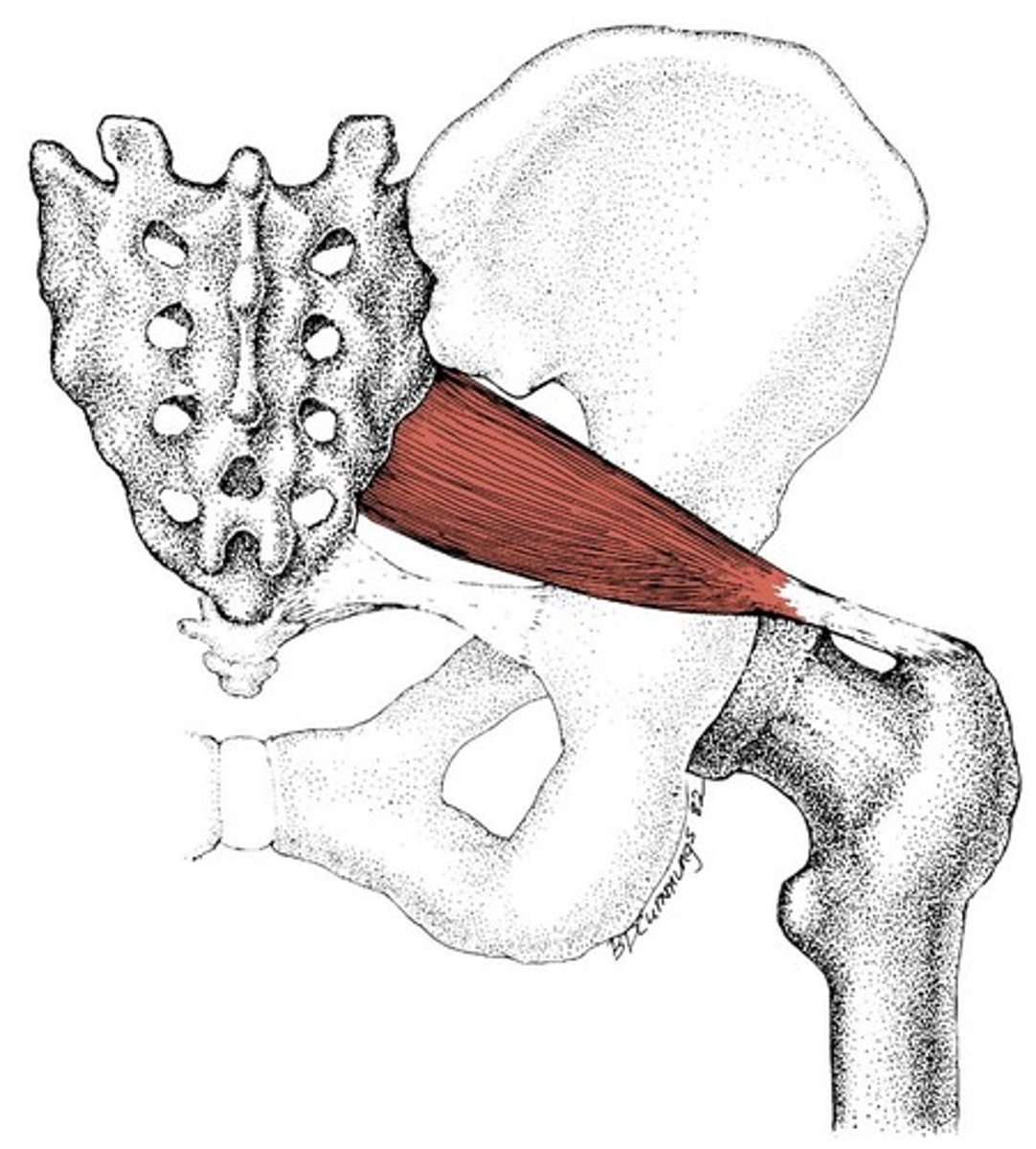
What is this and what does it do?
Piriformis, laterally rotates hip
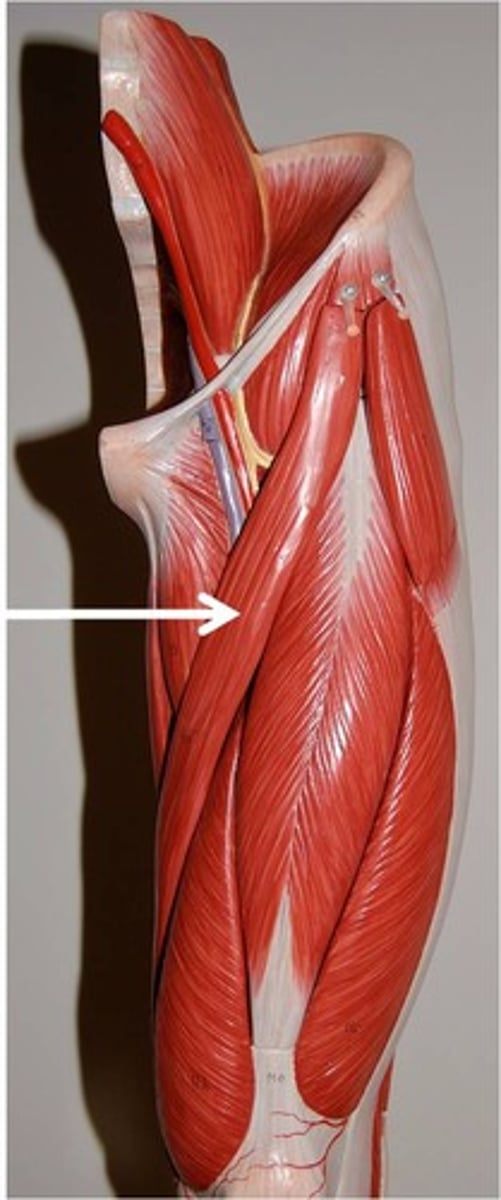
What is this and what does it do?
Sartorius, flexes knee
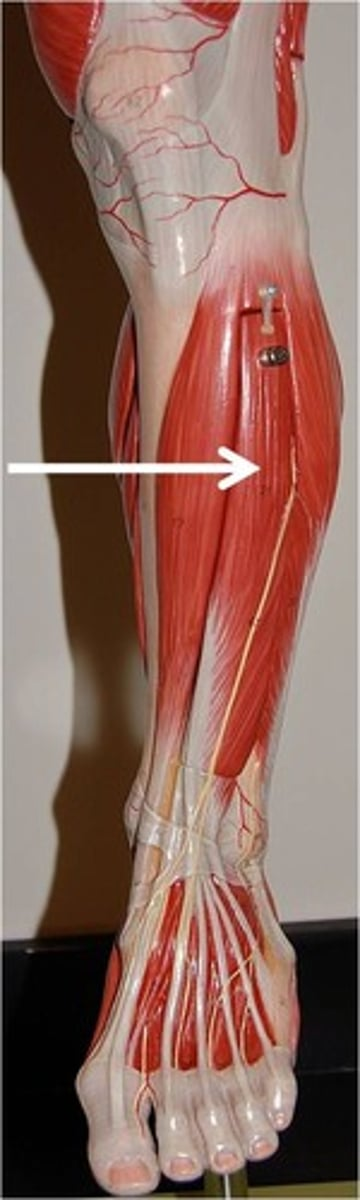
What is this and what does it do?
Extensor digitorum longus, dorsiflexes foot
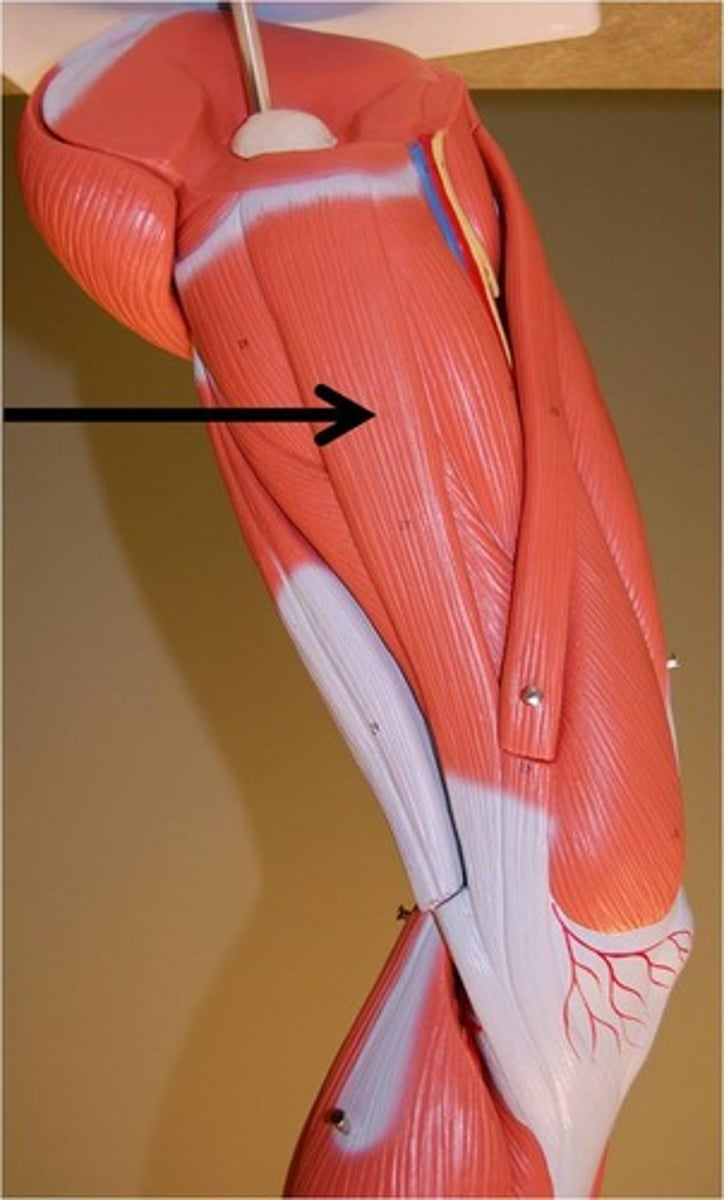
What is this and what does it do?
Gracilis, flexes knee (picture is of inner thigh)
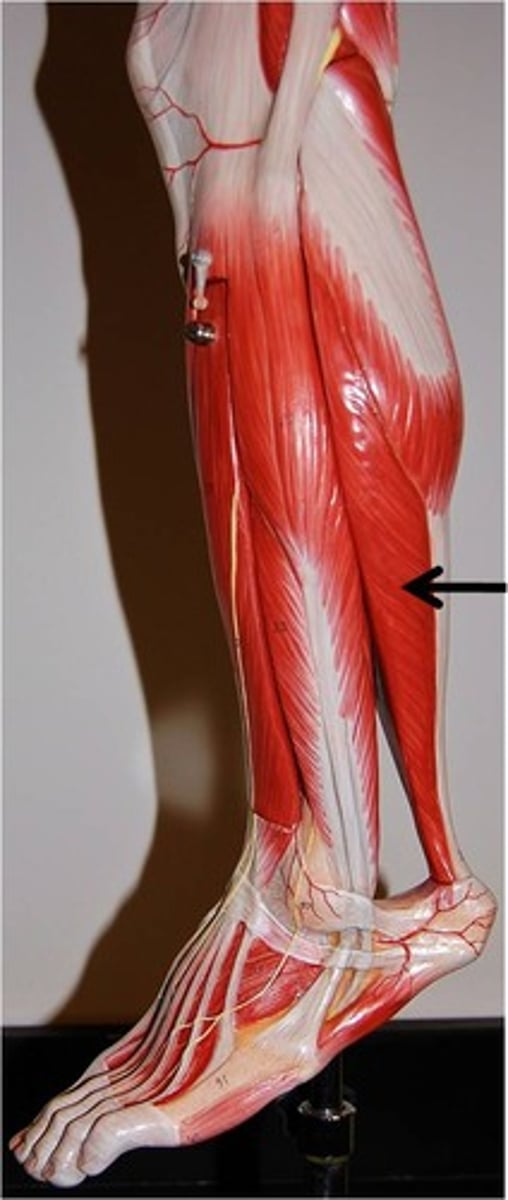
What is this and what does it do?
Soleus, plantar flexes foot
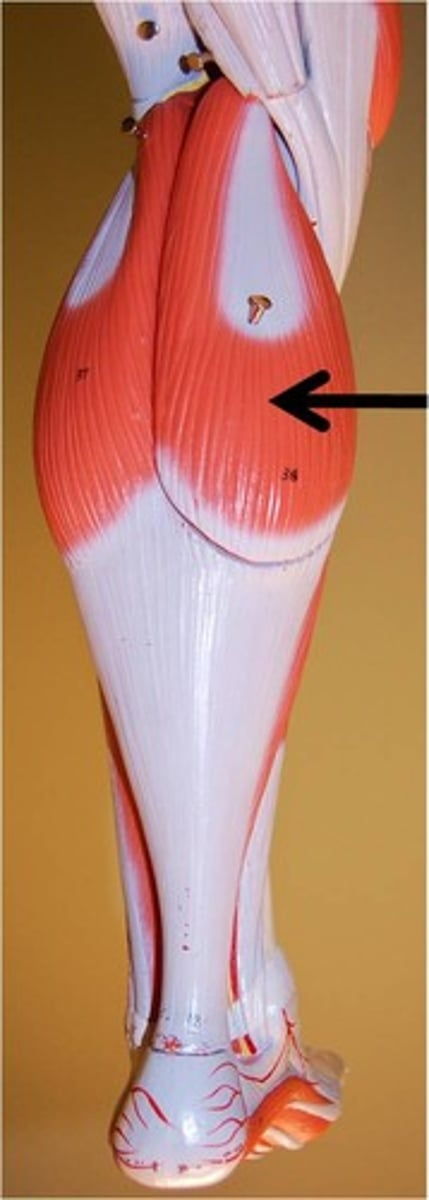
What is this and what does it do? Give an origin and insertion.
Gastrocnemius, flexes leg, origin: femoral condyles, insertion: calcaneus
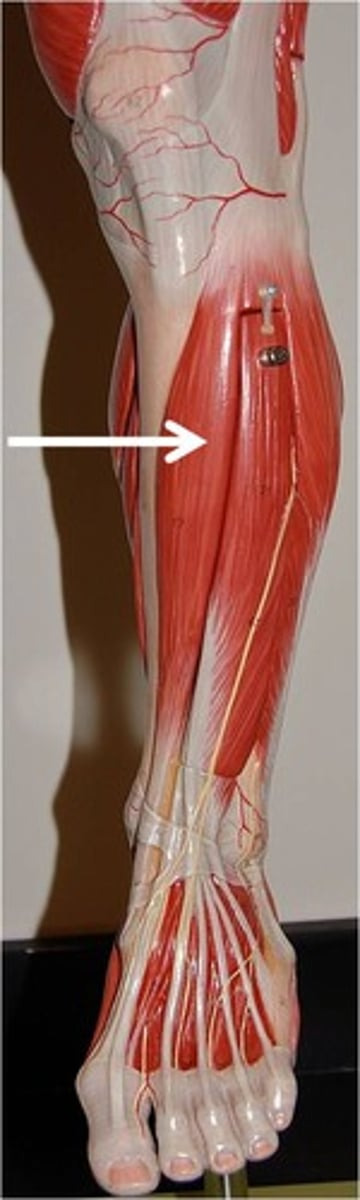
What is this and what does it do? Give an origin and insertion.
Tibialis anterior, dorsiflexes foot, origin: lateral condyle of tibia, insertion: 1st metatarsal
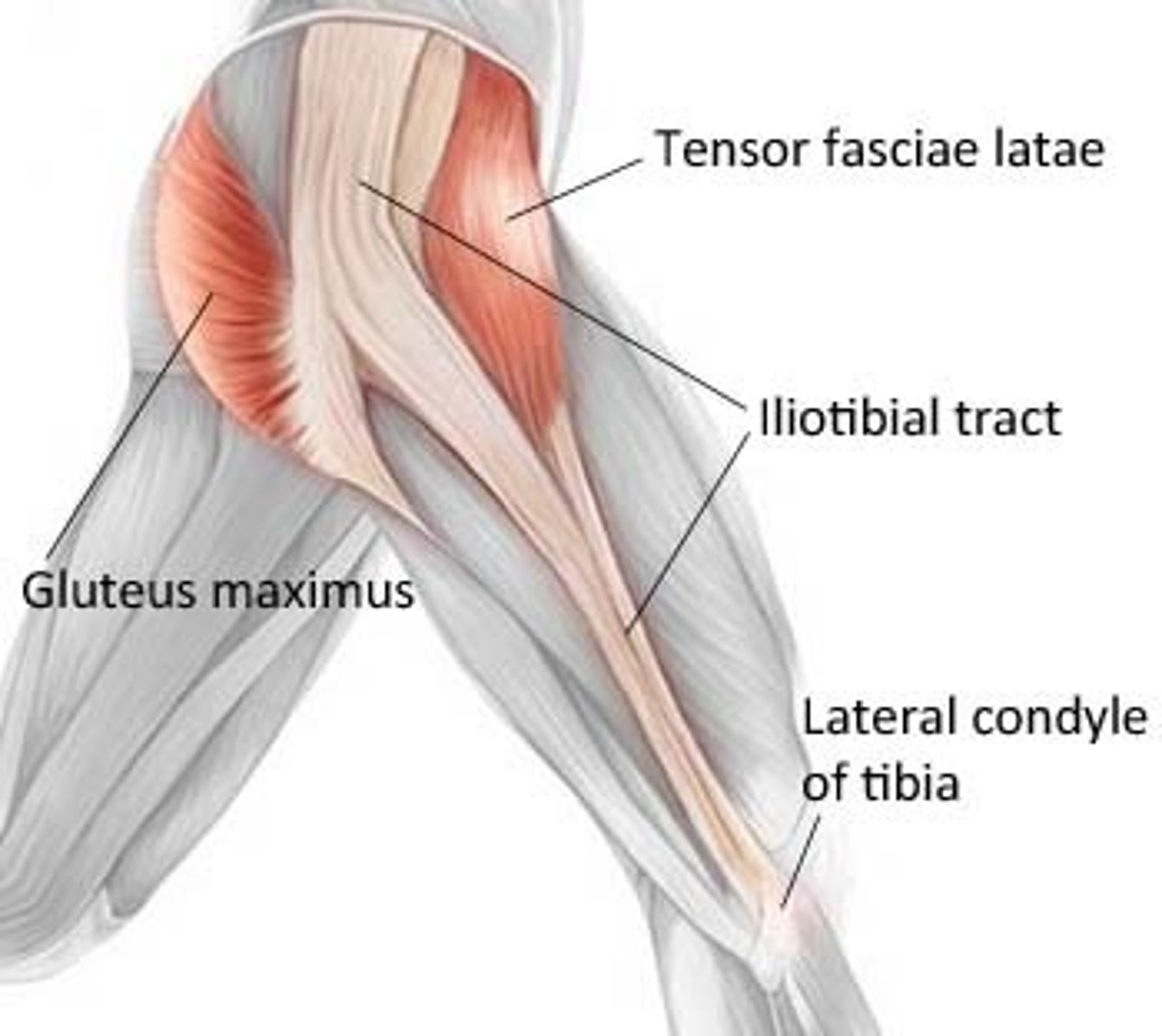
What is this and what is it for?
Iliotibial tract (NOT a muscle), stabilization of hip
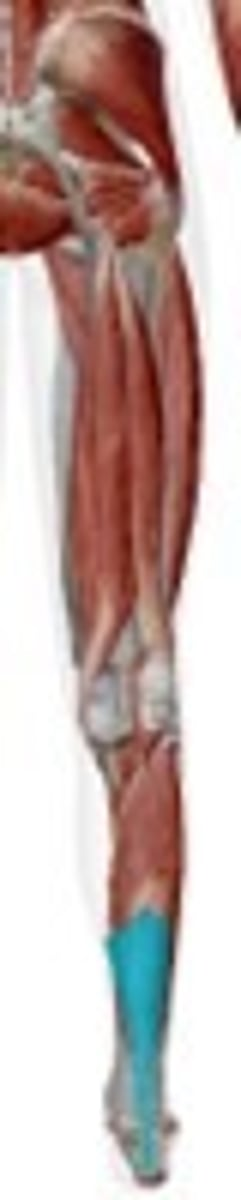
What is this and what is it for?
Calcaneal tendon (NOT a muscle), enables plantar flexion
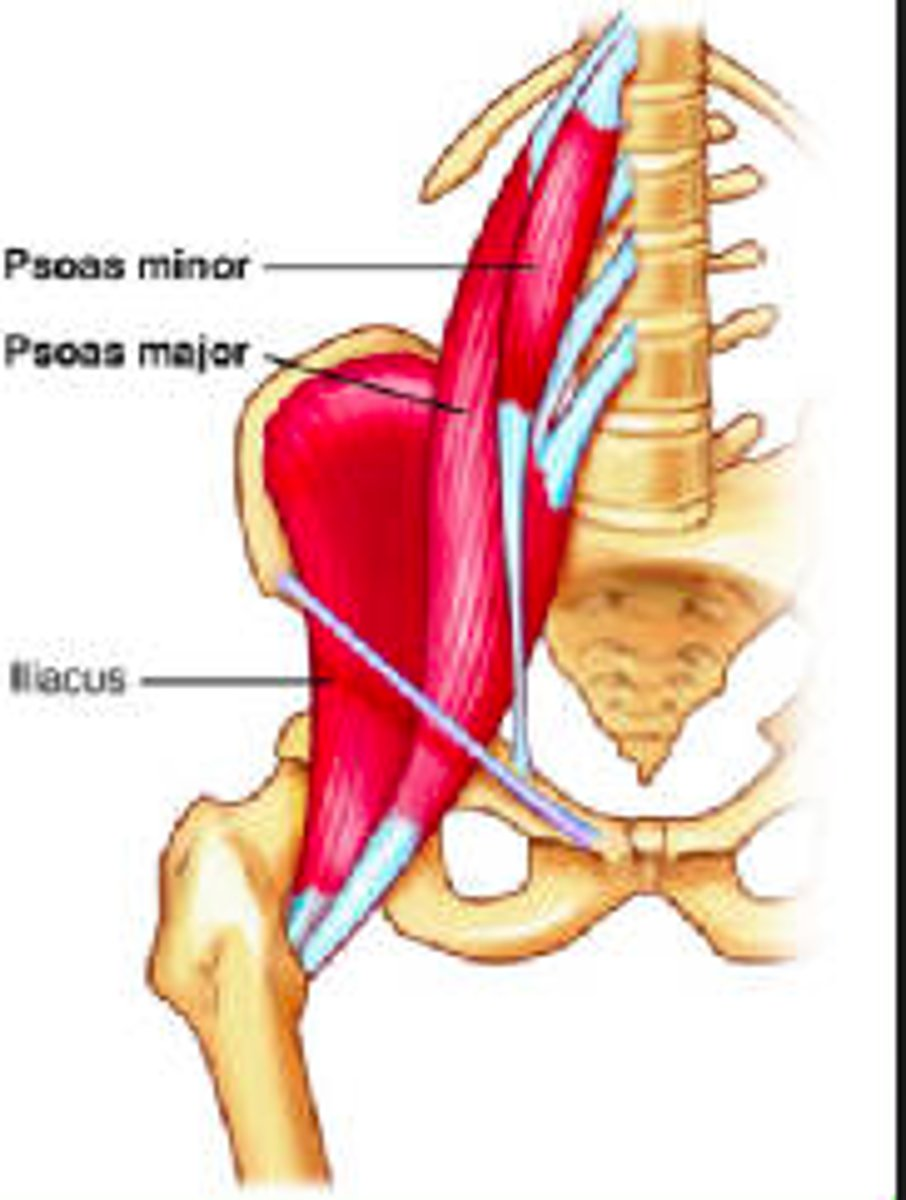
What is this and what is it for?
Iliopsoas group, (iliacus, psoas major (psoas minor))
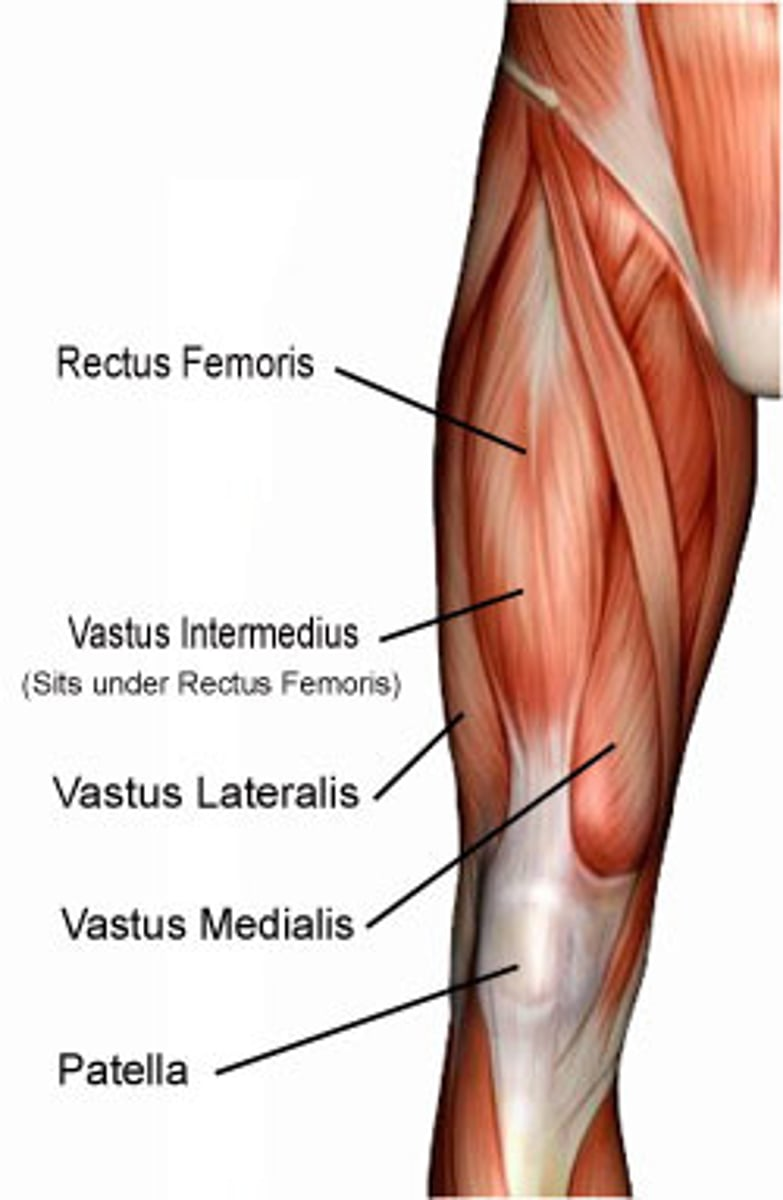
What is this and what makes it up?
Quadriceps femoris group, (rectus femoris, vastus lateralis, vastus medialis, vastus intermedius)
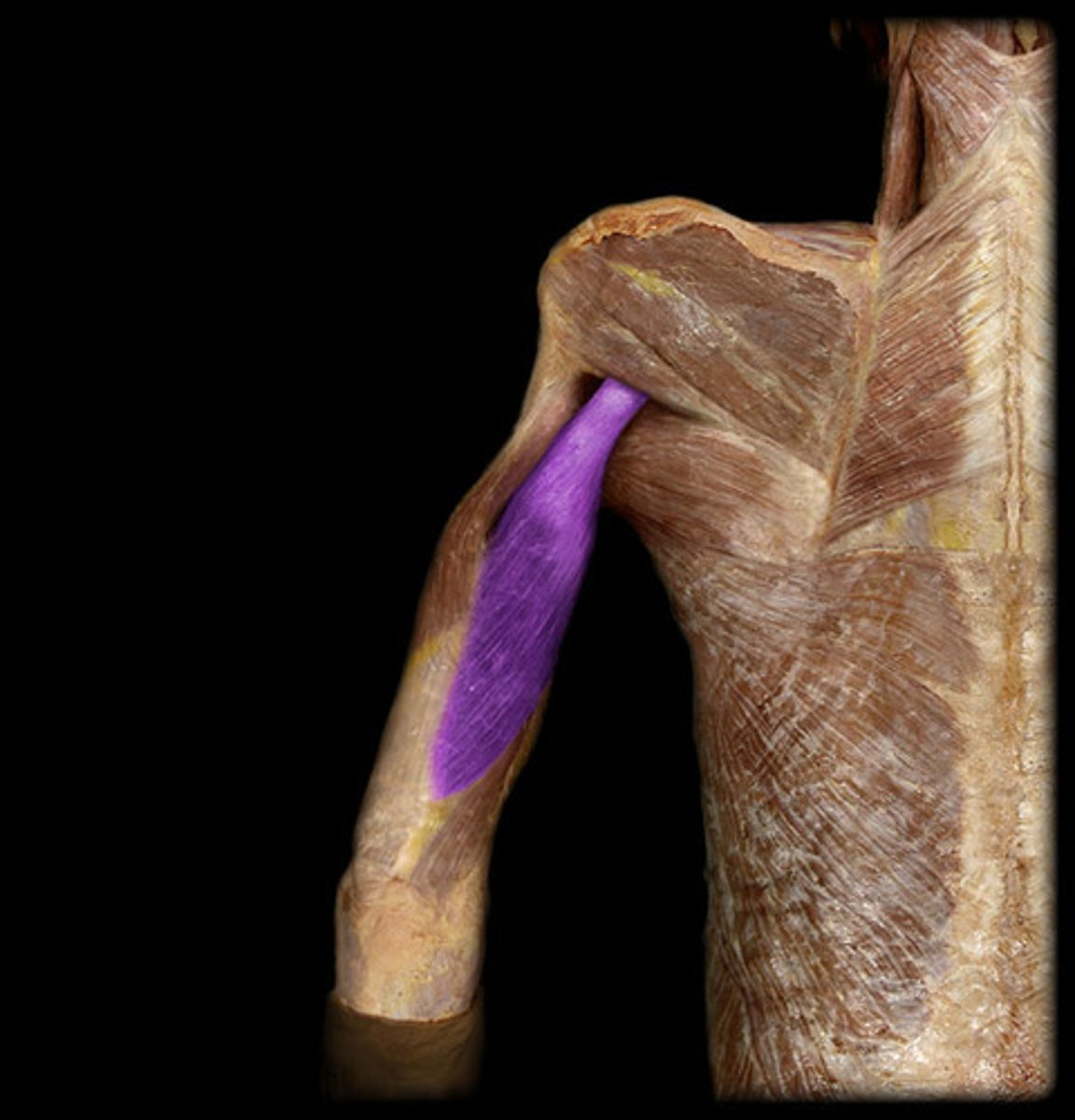
What is this and what is it’s origin?
Triceps brachii origin, infraglenoid tubercle of scapula
What muscles make up the iliopsoas?
Psoas major/minor, iliacus

