Practical 1 - Fish Combined Set
 Studied by 0 people
 Call Kai
 Learn
Learn Practice Test
 Spaced Repetition
 Match
Match Flashcards
 Knowt Play
1/118

There's no tags or description
Looks like no tags are added yet.
Name | Mastery | Learn | Test | Matching | Spaced | Call with Kai |
|---|
No analytics yet
Send a link to your students to track their progress
119 Terms
suffix for fish orders
“-iformes”
suffix for fish families
“-idae”
fish in order Petromyzontiformes
chestnut lamprey
chestnut lamprey location
historically in Missouri River tributaries (not seen since 1989)
chestnut lamprey life history
adults live in rivers and reservoirs
breed in small streams (excavate shallow nests)
semelparous (spawn and die)
larvae live 5-7 years
benthic filter feeders in slow moving water
metamorphose into parasitic adult
chestnut lamprey status in Kansas
threatened
families in order Acipenceriformes
Acipenseridae
Polyodontidae
fish in family Acipenseridae
lake sturgeon
shovelnose sturgeon
pallid sturgeon
sturgeon general characteristics
cartilaginous
heterocercal tail
boney scute rows
sensory barbels, protrusible mouth
declining or endangered in Kansas
lake sturgeon location
historically present in Missouri River
lake sturgeon characteristics
short, thick caudal peduncle - not covered in scutes
no spiracle
lake sturgeon life history
large, slow growing, late maturing (20 years)
hunted for caviar
deep, clean water with firm sand or gravel
lake sturgeon status in Kansas
SINC (and in trouble elsewhere)
shovelnose sturgeon location
historically - Republican, KS
present - Eastern Kansas River
shovelnose sturgeon characteristics
darker, brown
inner and outer barbels halfway between mouth and tip of snout
no scale-like scutes on belly
shovelnose sturgeon life history
most abundant sturgeon in Kansas
eats benthic invertebrates and fishes
lives in large turbid rivers
shovelnose status in Kansas
declining, protected because similar to pallid sturgeon
pallid sturgeon location
Missouri River (northeast KS)
pallid sturgeon characteristics
lighter, grey
barbels closer to mouth than tip of snout
inner barbels shorter than outer barbels
naked belly or scattered scale-like scutes
pallid sturgeon life history
rare
eats benthic invertebrates and fishes
lives in large turbid rivers with strong current
pallid sturgeon status in Kansas
endangered
fish in family Polyodontidae
American paddlefish
American paddlefish location
rivers and reservoirs - common in Marais de Cygnes and Neosho
American paddlefish characteristics
large rostrum with ampullae (detecting plankton)
cartilaginous
no scutes, scales, or barbels
gill arches for filtering plankton
American paddlefish life history
adapted for eating plankton via ram filtration
rostrum is NOT used for digging
lives in rivers rich with zooplankton, gravel bars for spawning
American paddlefish status in Kansas
stable - sport fish in KS
family in order Lepisosteiformes
Lepisosteidae
fish in family Lepisosteidae
longnose gar
shortnose gar
spotted gar
gar general characteristics
ambush predators
heterocercal tail
ganoid scales (armor)
long snout, sharp teeth
cylindrical body
vascularized swim bladders for respiration
longnose gar location
East Kansas: rivers, large streams, reservoirs
longnose gar characteristics
long thin snout
no dark markings on top of head
longnose gar life history
groups of 2-5
piscivore diet - forage fish, mostly shads
lives in larger streams or reservoirs
longnose gar status in Kansas
stable - sport fish
shortnose gar location
East Kansas - slackwater area of rivers
shortnose gar characteristics
short blunt snout
no markings on top of head
can’t tell small shortnose and spotted gar apart
shortnose gar life history
solitary
piscivore diet - sunfish, common carp
more tolerant of turbidity than other gars
shortnose gar status in Kansas
stable - sport fish
spotted gar location
Southeast Kansas - slackwater areas of Neosho and Verdigris rivers
possibly expanding
spotted gar characteristics
short blunt snout
dark markings on top of head
can’t tell small shortnose and spotted gar apart
spotted gar life history
piscivore diet - surface fish and shad
least tolerant of gars to turbidity
spotted gar status in Kansas
stable - sport fish
family in order Hiodontiformes
Hiodontidae
fish in family Hiodontidae
goldeye
goldeye location
historically - Marais de Cygnes river
present - reservoirs/pools of Missouri and Kansas rivers
goldeye characteristics
straight back from gill to dorsal fin
large eye with yellow iris
smooth keeled belly
dorsal fin far back, above anal fin
laterally compressed
goldeye life history
eats zooplankton and invertebrates (occasionally small fish)
crepuscular surface feeders
goldeye status in Kansas
recommended SINC, but understudied
family in order Clupeiformes
Clupeidae
fish in family Clupeidae
gizzard shad
gizzard shad location
almost anywhere with large pools of water
gizzard shad characteristics
serrated keeled belly
dorsal fin close to middle (above or slightly behind pelvic fins)
dark spot behind upper operculum (fades with age)
laterally compressed
gizzard shad life history
stomach has thick muscular wall (like a gizzard)
eats zooplankton, phytoplankton, and detritus
gizzard shad status in Kansas
very abundant
family in order Anguilliformes
Anguillidae
fish in family Anguillidae
American eel
American eel location
historically common
presently - rare in Kansas River
American eel characteristics
elongate body with jaws
pectoral fins, but no pelvic fins
dorsal, caudal, and anal fins connected
American eel life history
opportunistic omnivores - especially likes crayfish
catadromous - spawns in marine environments
only females migrate inland
American eel status in Kansas
declining
Dams block migration into the Verdigris, Arkansas, and Neosho rivers
families in Cypriniformes
Catostomidae
Cyprinidae
general characteristics of Cypriniformes
homocercal tails
Weberian apparatus
one dorsal fin
toothless
cycloid scales
weberian apparatus
connects swim bladder to inner ear
amplifies hearing underwater
dorsal/anal/mouth on suckers
10+ rays in dorsal fin
anal fin closer to caudal fin
fleshy lips oriented downward
dorsal/anal/mouth on native minnows
8 rays in dorsal fins
anal fin farther from caudal fin
lips not fleshy
Catostomidae general features
single spineless dorsal fin with 10 rays
fleshy lips
no scales on head
fish in Catostomidae
river carpsucker
quillback
buffalo (smallmouth, bigmouth, black, and yellow)
white sucker
spotted sucker
golden redhorse
shorthead / pealip redhorse
river carpsucker location
reservoirs, pools, and backwaters in most of KS (historically absent from the west)
river carpsucker physical characteristics
angular lower lip with “nipple”
nares above mouth
shorter snout
laterally compressed w/ short rounded snout and falcate dorsal fin
river carpsucker natural history
opportunistic omnivore, “gizzard” that grinds food
needs reservoirs, pools, and backwaters
quillback location
Arkansas, Kansas, Republican, Verdigris Rivers and reservoirs
quillback physical characteristics
lower lip NOT angular, no lip nipple
longer snout
nares behind mouth
quillback natural history
opportunistic omnivore, has “gizzard” for grinding food
needs larger streams with clearish water, loose sand
smallmouth buffalo location
eastern half of KS, including Arkansas river
smallmouth buffalo physical characteristics
small conical head, long falcate dorsal fin
small subterminal mouth
keeled back, anterior to dorsal fin
smallmouth buffalo natural history
omnivore - primarily microcrustaceans and algae
medium/large rivers, firm substrate
bigmouth buffalo location
eastern half of KS (extirpated from Big Blue River)
bigmouth buffalo physical characteristics
long falcate dorsal fin
large head, large terminal mouth
rounded back anterior to dorsal fin
bigmouth buffalo natural history
omnivore - primarily Midge larvae, plankton, crustaceans
parts of medium/large rivers with little to no flow
black buffalo location
large rivers and reservoirs East Kansas
black buffalo physical characteristics
darker, long falcate dorsal fin
large head, small subterminal mouth
rounded back anterior to dorsal fin
black buffalo natural history
omnivore - Asian clams, diatoms, cyanobacteria
large rivers
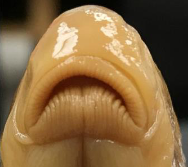
plicate lips
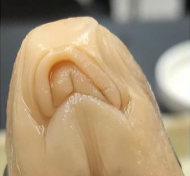
semi papillose lips
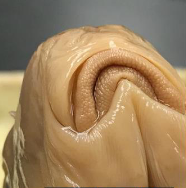
papillose lips
white sucker location
north and northeast kansas
white sucker physical characteristics
slender body, slate dorsal and caudal fins
thick papillose lips
white sucker natural history
omnivore - highly variable across individuals and ages
tolerant of harsh conditions and high nutrient loads
spotted sucker location
southeast Kanas (Neosho, Verdigris, Walnut)
spotted sucker physical characteristics
slender body
horizontal rows of small back basal spots
fleshy, thin plicate lips
spotted sucker natural history
omnivore - whatever’s most abundant
clear pools of slow-flowing creeks with aquatic vegetation
status: SINC
golden redhorse location
east and southeast Kansas - most common redhorse in Arkansas River
golden redhorse physical characteristics
gold, slender body
plicate lips
lower lip V-shaped
golden redhorse natural history
eats primarily insects
needs streams with firm bottoms, little vegetation
status: not listed
shorthead / pealip redhorse location
East and south central Kansas
shorthead/pealip redhorse physical characteristics
slender body, gold with red fins
plicate lips (broken on lower lip)
lower lip straight or slightly concave
shorthead / pealip redhorse natural history
primarily insects
medium/large streams in riffle areas
status: not listed
family in the order Siluriformes
Ictaluridae
fish in the family Ictaluridae
catfish (blue catfish, channel catfish, flathead catfish)
bullheads (black bullhead, yellow bullhead)
stonecat
madtoms
general characteristics of Ictaluridae
homocercal tails
adipose fin
no scales
spines in dorsal and pectoral fins
long barbels on head (sensory organs)
tail shape in bullheads
rounded
 Note
Note  Flashcards (25)