Biology extra credit
 Studied by 0 people
 Call with Kai
 Learn
Learn Practice Test
 Spaced Repetition
 Match
Match Flashcards
 Knowt Play
1/29

Name | Mastery | Learn | Test | Matching | Spaced | Call with Kai |
|---|
No analytics yet
Send a link to your students to track their progress
30 Terms
What is a pigment?
A pigment is something that absorbs light and it is a compound
What is a chlorophyll?
Chlorophyll is the green pigment and plants
This pigment comes from the reflection of the green color on the light spectrum
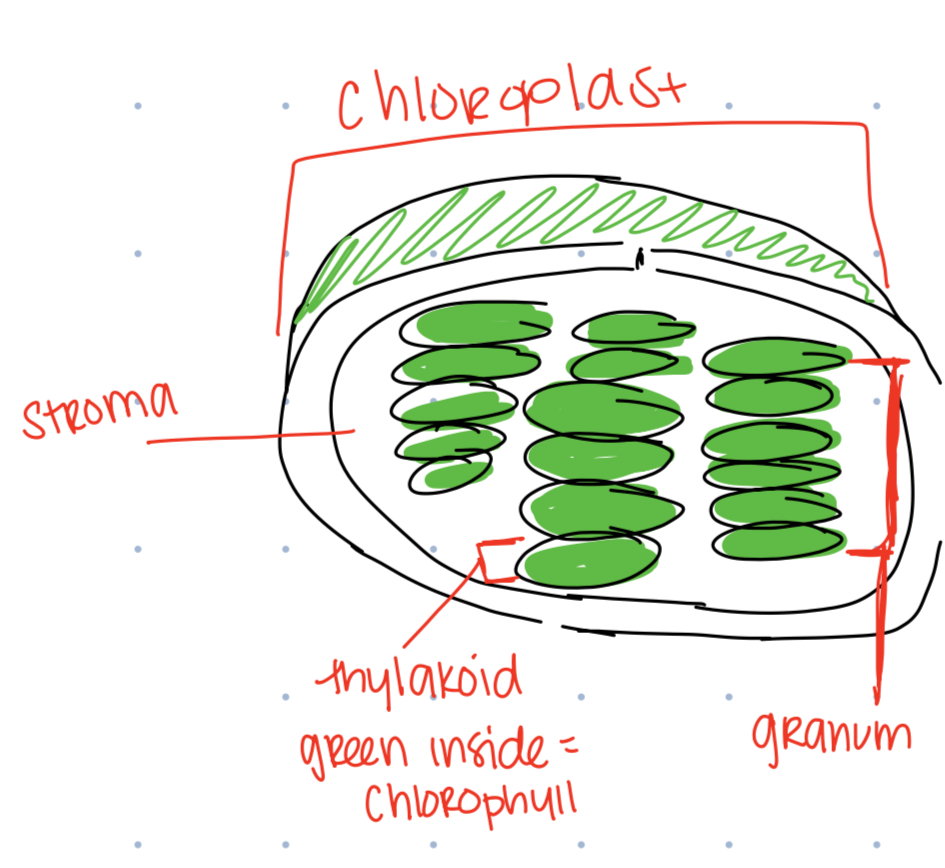
What is a thylakoid?
The thylakoid is a membrane that contains the all of the chlorophyll
What is a grana
It is the stacks of chlorophyll in the thylakoids
What is the STROMA
It is the water like substance that is in the chloroplast similar to cell membrane
What is an electron carrier?
A electron carrier is a compound that accepts a pair of high energy electrons and transfers, their energy to another molecule
What is a chemical reaction?
The chemical reaction includes a 1:2:1 ratio

What is photosystem ll
It is where electrons go through the electron transport chain, and the very first light dependent reaction start
What is the electron transport chain?
This is a process where electrons are moved to ATP reactions
ATP
ATP adenosine triphosphate very important for compound storage

NADPT+ (nicotnamide adenine dinudeorlae enosonate)
It carries molecules this molecule accepts to highly charge electrons and one hydrogen, which then it converts into an ADPH because the hydrogen gets added on, and the electrons gets carried somewhere else in the chloroplast
CAM PLANTS (utilize Crassulacean Acid Metabolism
These plants only allow air in at night during the day. The plant closes up performing carbohydrates. The example of these plants is pineapple desert cactuses.
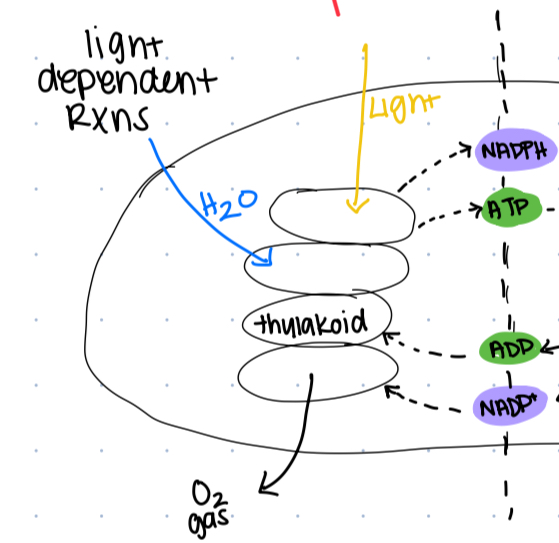
Light dependent reactions
Requires involvement of light and absorbing pigments happens in the thylakoid membrane
What is the photosynthesis
Photosynthesis is proteins and ethics that absorb sunlight and make electrons
photosystem l
photosystem l always happens after photosystem two
Photosystem l definition
Electrons have lost power when they got to photosystem one pigments and photo systems one get energy to charge to give NADP+
Hydrogen ions
Hydrogen ions have been building up in the thylakoids making it positive. The positive reaction creates a positive hydrogen ion remember, charged molecules can’t diffuse by themselves.
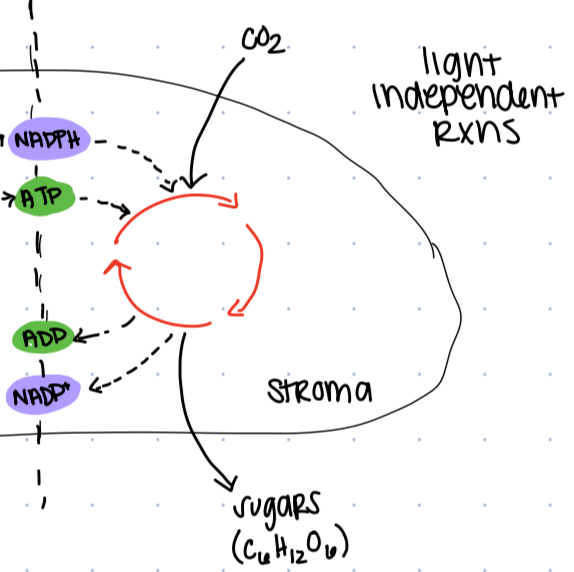
Facts about the Calvin cycle (also known as light dependent or dark reactions)
it was discovered by a scientist named Melvin Calvin, a scientist who discovered the cycle which they named after him
Sugar production
Both of the carbon compounds become food and they are removed which the three compounds are converted back to the 65 carbon compounds which these start the Calvin cycle all over again
64 plants
These plants use low levels of carbon dioxide in the Calvin cycle they produce four carbon compounds and instead of the three normal carbon compounds the examples are corn and sugar can
Carbon dioxide enters the Calvin cycle
The carbon dioxide, when entering it combines the five carbon compound with the carbon dioxide, creating the three carbon compound which this compound goes with the one to two to one ratio
ATP formation
Light dependent reactions make NADPH and ATP when the positive hydrogen combines with ADP it makes ATP
Light dependent reactions information
Remember the solo coins, generate light absorption on opposite sides of the membrane
Chlorophyll
The pigment is formed because green cannot be absorbed (see pigment flash card) this is the shade of color that is on the surface of the chloroplast
Light
Energy from the sound that gets absorbed by the chloroplast
Light dependent reactions
Require direct sunlight to absorb pigment
Light dependent reactions part 1
Light independent reactions
chloroplast diagram
 Note
Note  Flashcards (179)