ARH_VS 3750 Midterm Exam Studyguide
 Call Kai
 Learn
Learn Practice Test
 Spaced Repetition
 Match
Match Flashcards
 Knowt Play
1/19

Earn XP
Description and Tags
These flashcards include key vocabulary terms from the ARH_VS 3750 midterm exam study guide, with definitions relevant to art history and movements discussed in the course.
Name | Mastery | Learn | Test | Matching | Spaced | Call with Kai |
|---|
No analytics yet
Send a link to your students to track their progress
20 Terms
avant-garde
A movement in art that seeks to challenge traditional norms and explore new techniques and ideas.
iconoclasm
The rejection or destruction of religious images and beliefs.
modernism
A cultural movement embracing change and experimentation in art, literature, and architecture.
collage
A technique of composing a work of art by assembling various materials onto a single surface.
photomontage
A photographic composition created by cutting, gluing, rearranging, and overlapping photographs.
primitivism
An art movement that seeks inspiration from non-Western or prehistoric cultures.
trompe l’oeil
An art technique that uses realistic imagery to create the optical illusion that depicted objects exist in three dimensions.
theosophy
A religious philosophy that explores the mystical and spiritual aspects of existence.
suffragism
A movement advocating for women's rights to vote and participate in political life.
readymade
An art object that is made from manufactured items that are not considered art by themselves.
monochromy
The use of a single color in art, often emphasizing its variations in hue and tone.
seriality
The concept of producing works of art in repeated forms or series, emphasizing the process over traditional artistic uniqueness.
modernity
A historical period marked by the transition to modern practices, often associated with changes in social and cultural norms.
complementary color
Colors located opposite each other on the color wheel, which when combined can create visual interest.
contrast
The juxtaposition of differing elements in art, such as light and dark, color differences, or textures.
chance operations
An artistic technique involving randomness and chance to create art, often seen in Dada and Surrealist works.
iconography
The visual imagery and symbolism used in a work of art to convey specific meanings.
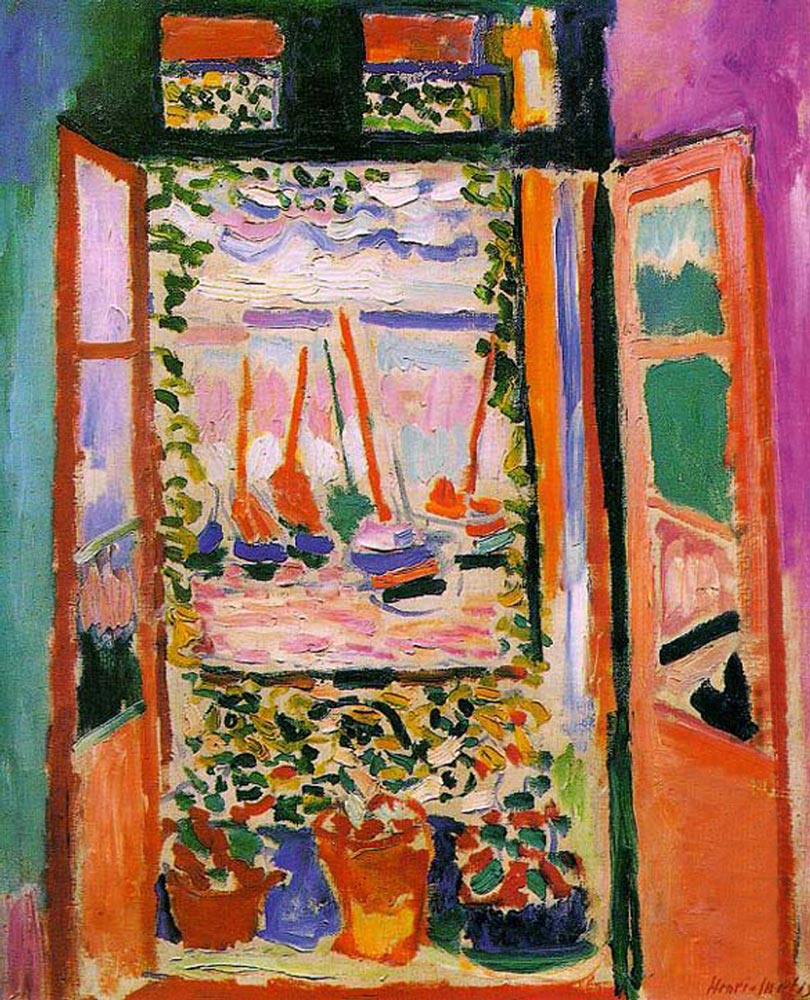
Who painted this and what is the title?
Henri Matisse, the open window (at Collioure)
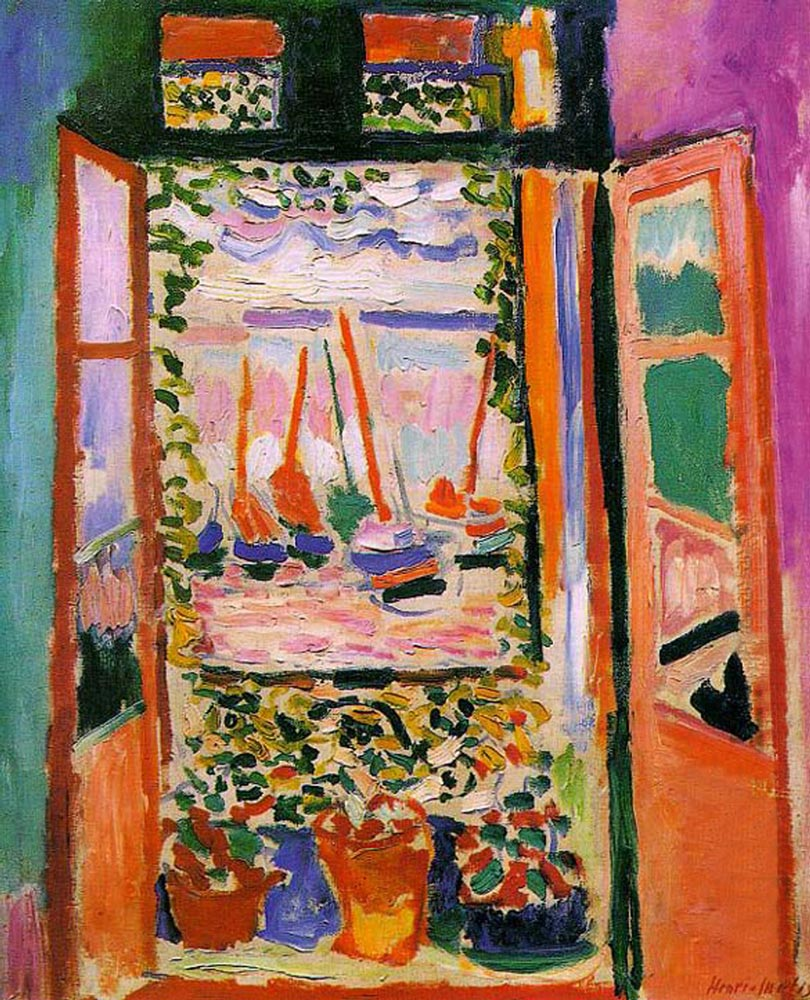
Explain these terms about The Open Window by Henri Matisse
1) the innovative use of techniques and technologies, 2) the effect of
historical events on European art (colonialism, war), 4) the way in which works of art exemplify the qualities of broad political,
cultural, and intellectual movements or formations or aesthetic categories (theosophy, anthroposophy, social democracy,
suffragism, etc.)
Explain why this work of art is significant. Know what is
especially important about them: technically, formally, materially, iconographically, politically, etc.
Innovative use of techniques and technologies
Matisse uses bright, unnatural colors and loose brushstrokes to emphasize emotion rather than realistic depiction, a key feature of Fauvism.
The painting experiments with flattened space and strong color contrasts, showing a break from traditional perspective and academic techniques.
Its style reflects broader modernist influences, including interest in non-Western art that European artists encountered through colonial expansion.
Created in the early 20th century before World War I, it reflects a moment when artists were rejecting tradition and exploring new forms of expression.
The work is significant because it helped establish color as an expressive tool and marked an important shift toward Modernism in European art.
Matisse’s style reflects this wider interest in African, Islamic, and Asian visual traditions that rejected strict European realism.
The painting was created in 1905, during a period of rapid modernization and tension in Europe before World War I, when artists were already challenging older traditions.
Connection to political, cultural, and intellectual movementsThe work reflects the modernist idea of artistic freedom, prioritizing personal expression over academic rules.
Its emphasis on emotion and perception connects to broader intellectual movements exploring spirituality, psychology, and new philosophies about how humans experience reality.
By rejecting strict realism, Fauvist artists helped push forward the broader Modernism movement in art.
This painting is important because it shows the moment when color stopped describing reality and started expressing emotion, a major shift that helped launch modern art.

