EMT Chapter 9 - Airway Management
 Studied by 0 people
 Call with Kai
 Learn
Learn Practice Test
 Spaced Repetition
 Match
Match Flashcards
 Knowt Play
1/30

Earn XP
Description and Tags
Name | Mastery | Learn | Test | Matching | Spaced | Call with Kai |
|---|
No analytics yet
Send a link to your students to track their progress
31 Terms
airway
the passageway by which air enters and leaves the body. The structures of the airway are the nose, mouth, pharynx, larynx, trachea, bronchi, and lungs.
patent airway
an airway that is open and clear and will remain open and clear without interference to the passage of air into and out of the body.
glottic opening
the level of the vocal cords that defines the boundary between the upper and lower airways.
bronchoconstriction
the contraction of smooth muscle that lines the bronchial passages that results in a decreased internal diameter of the airway and increased resistance to airflow.
Stridor
A high-pitched sound indicating severe upper airway narrowing or partial obstruction. In stridor, the obstruction can be a foreign body, or it can be caused by swelling of the upper airway tissues.
Hoarseness
Voice changes reflecting upper airway narrowing; often an ominous sign of swelling near the vocal cords.
Snoring
the sound of the soft tissue of the upper airway creating impedance or partial obstruction to the flow of air. In the case of injury or illness can often indicate a decrease in mental status.
Gurgling
the sound of fluid obstructing the airway. As air is forced through the liquid, the gurgling sound is made.
Head-Elevated, Sniffing Position
the patient’s head is moved in an anterior fashion to replicate the posture a person would take if that person were smelling flowers or sniffing an odor. Optimal position is achieved when the patient’s ear is at the same level as the suprasternal notch.
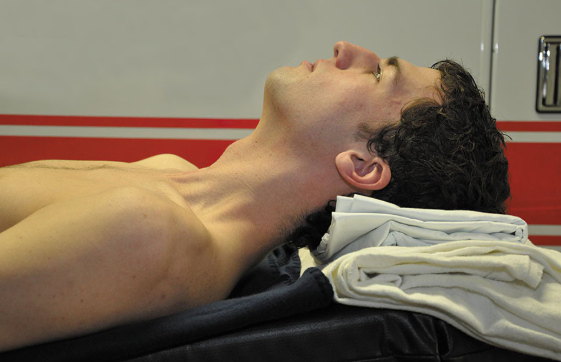
suprasternal notch
is a large, visible indentation located at the base of the neck, just above the sternum
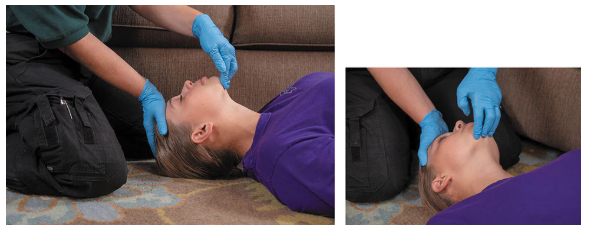
head-tilt, chin-lift maneuver
a means of correcting blockage of the airway by the tongue by tilting the head back and lifting the chin. Used when no trauma or injury is suspected.
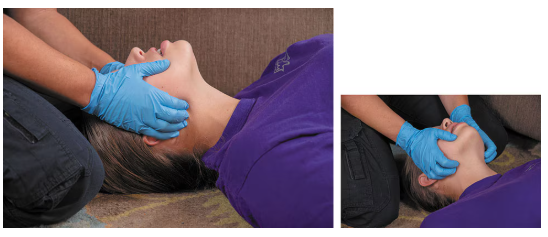
jaw-thrust maneuver
a means of correcting blockage of the airway by moving the jaw forward without tilting the head or neck. Only recommended for unconscious patients with possible head, neck, or spine injury or unknown mechanism of injury.
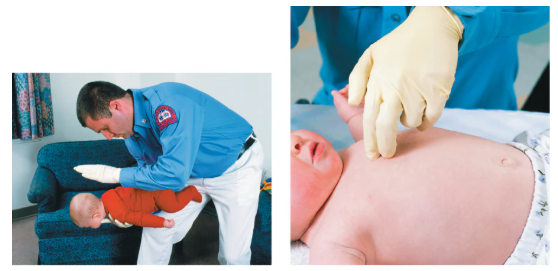
Conscious Choking Infants Care
Support the head and alternate between 5 back slaps (prone) and 5 chest thrusts (supine) with head lower than body.
Conscious Choking Adults and Children Care
Perform abdominal thrusts by delivering quick, upward thrusts with a fist above the navel until the airway is clear or the patient becomes unconscious. Use chest thrusts on the sternum for pregnant or obese patients.
Unconscious Choking Care
begin CPR
Airway adjuncts
devices that aid in maintaining an open airway
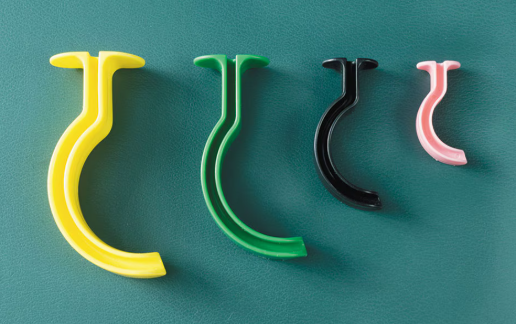
oropharyngeal airway (OPA)
a curved device inserted through the patient’s mouth into the pharynx to help maintain an open airway. only used on patients who exhibit no gag reflex
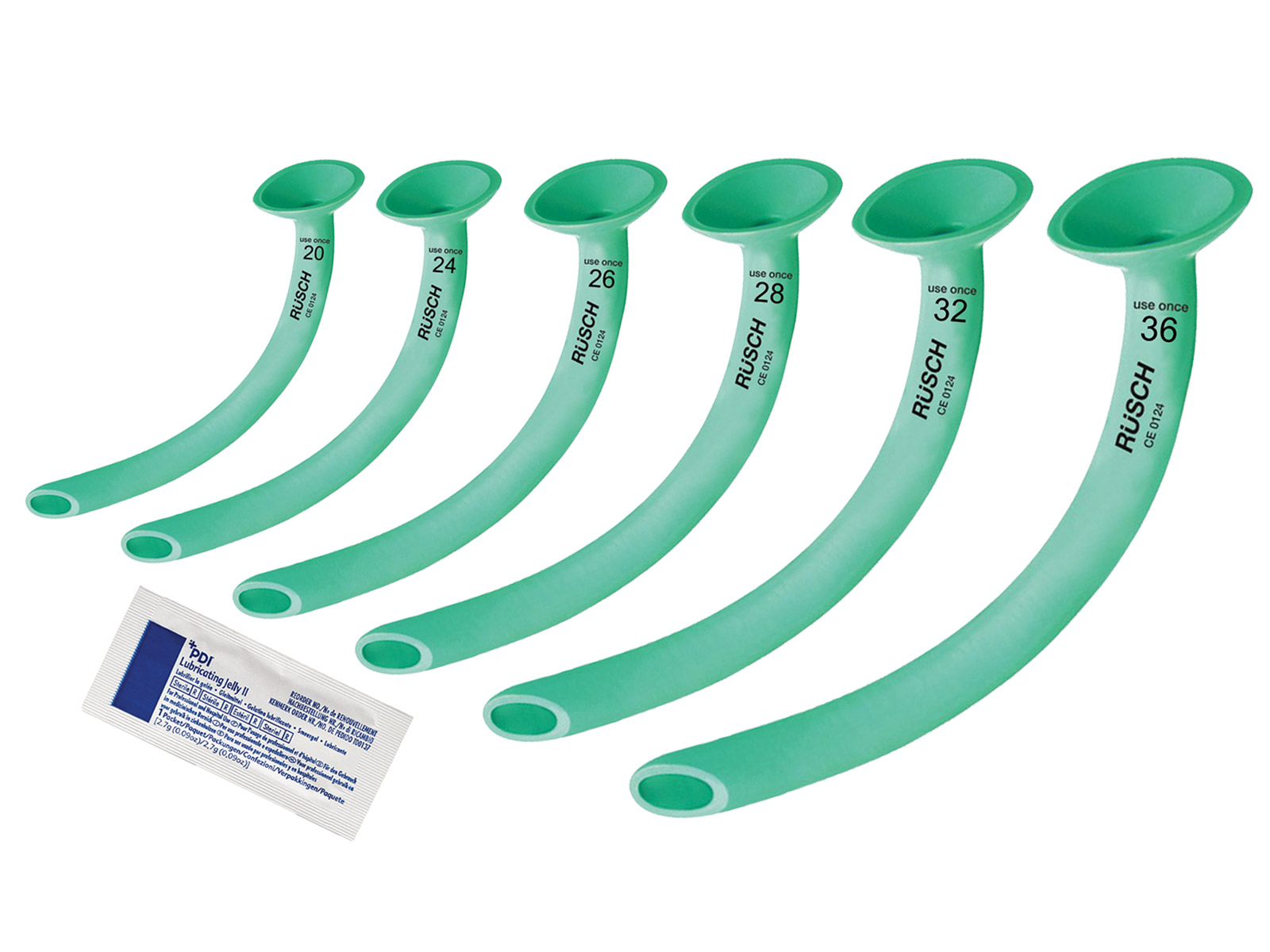
nasopharyngeal airway (NPA)
a flexible breathing tube inserted through the patient’s nostril into the pharynx to help maintain an open airway.
gag reflex
vomiting or retching that results when something is placed in the back of the pharynx. This is tied to the swallow reflex.
crossed-finger technique
crossing the thumb and forefinger of one hand and placing them on the upper and lower teeth at the corner of the patient's mouth
insert an oropharyngeal airway
1. Use head-tilt, chin-lift or jaw-thrust. 2. Open airway/mouth manually. 2. Adults: Insert tip to roof of mouth, rotate 180 degrees at soft palate. 3. Pediatrics: Insert tip down using a tongue blade.
insert a nasopharyngeal airway
1. Measure nostril to earlobe/jaw angle. 2. Lubricate (water-based). 3. Insert right nostril (bevel toward septum); advance along floor until flange rests. Never force.
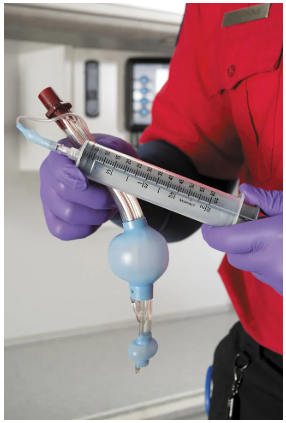
Supraglottic Airways
devices that do not enter the trachea but rather isolate the glottic opening by occupying space in the larynx and hypopharynx.
Supraglottic Insertion Procedures
1. Patient: Use manual/adjuncts first; position head and preoxygenate. 2. Team: Huddle to assign roles (suction, assessment). 3. Device: Size by weight/height, check cuffs, and prepare suction and ETCO2 detection.
Suctioning
use of a vacuum device to remove blood, vomitus, and other secretions or foreign materials from the airway.
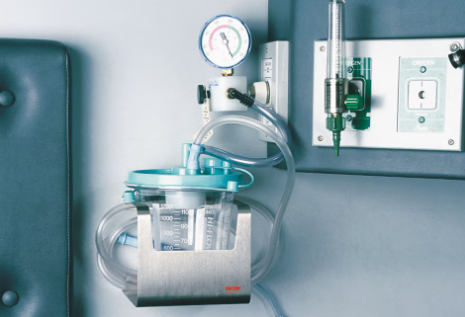
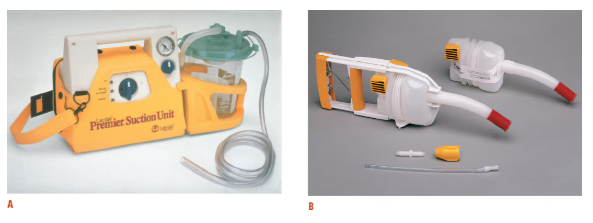
Mounted Suction Systems
Onboard units requiring intake of ≥30 LPM and vacuum of ≥300 mmHg when clamped.
Portable Suction Units
May be oxygen-or air-powered, electrically powered. Mobile units requiring intake of ≥30 LPM and vacuum of ≥300 mmHg when clamped.
pharyngeal tip
A rigid large-bore device for oral suctioning; use briefly in unresponsive patients to avoid gag reflex and vagus nerve-induced bradycardia.
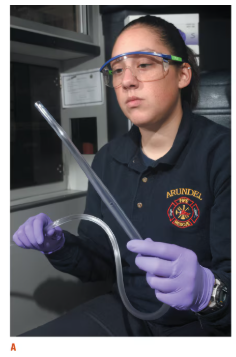
Suction catheters
A flexible small-bore tubes for the nasopharynx or internal tubes; measured in French (higher numbers = larger bore).
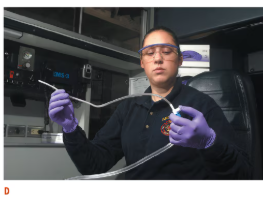
Techniques of Suctioning Rules
always use appropriate infection-control practices while suctioning
try limiting suctioning to no longer than 10 seconds at a time
place the tip or catheter where you want to begin the suctioning, and suction on the way out
external respiration
refers to the exchange of gases between the alveoli and the blood in the pulmonary capillaries
 Note
Note  Flashcards (31)