Road Signs, Signals, and Pavement Markings
 Call Kai
 Learn
Learn Practice Test
 Spaced Repetition
 Match
Match Flashcards
 Knowt Play
1/77

Earn XP
Description and Tags
Lock in brosky
Name | Mastery | Learn | Test | Matching | Spaced | Call with Kai |
|---|
No analytics yet
Send a link to your students to track their progress
78 Terms
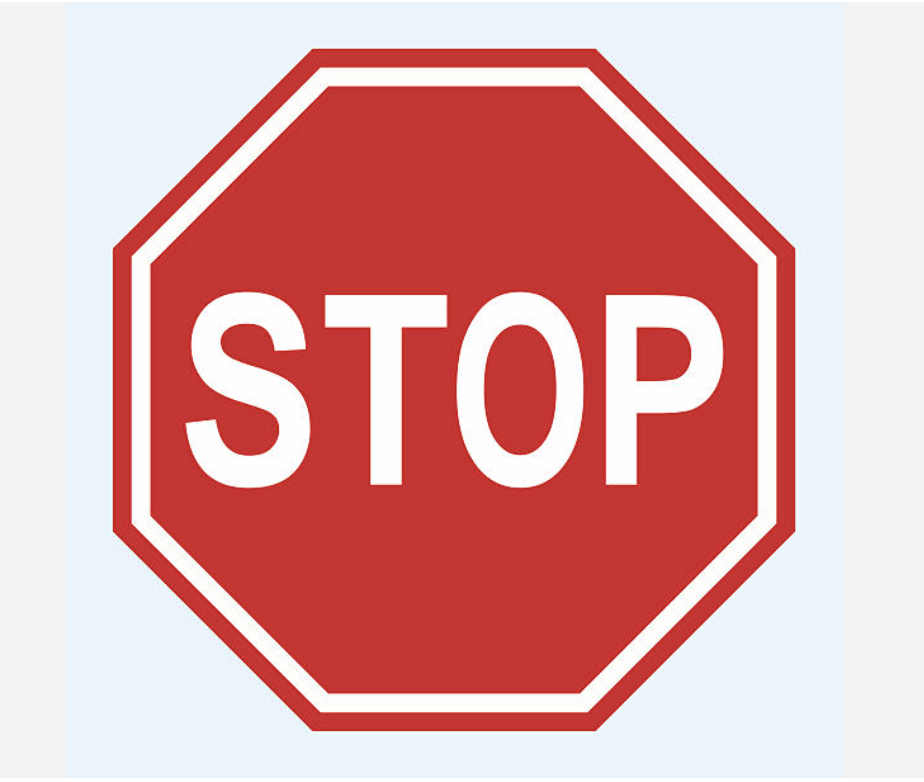
Stop Sign
Has eight sides and is red with white letters. You must come to a full and complete stop at a stop sign or stop line, if one is present. You must wait until crossing vehicles and pedestrians have cleared. You may pull forward only when it is safe to do so.
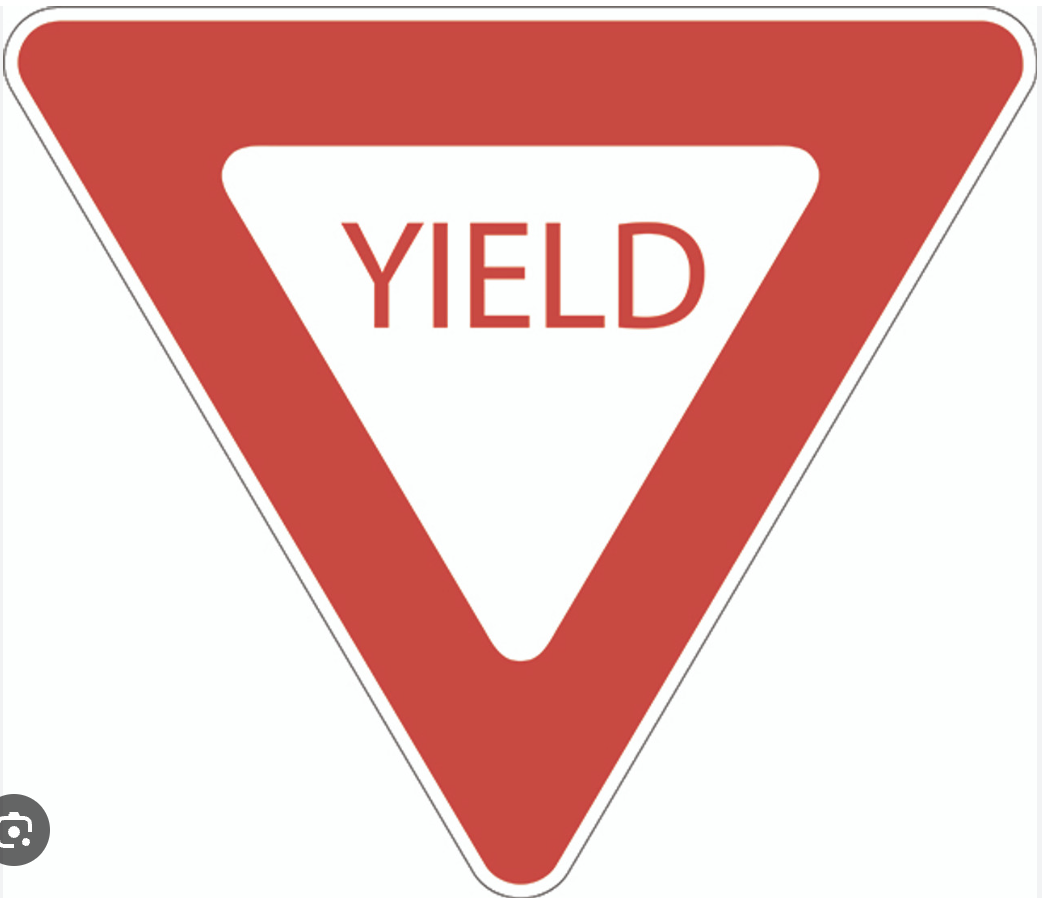
Yield Sign
A downward pointing triangle. It is red and white with red letters. It means you must slow down and yield the right-of-way to traffic in the intersection you are crossing or roadway you are entering.
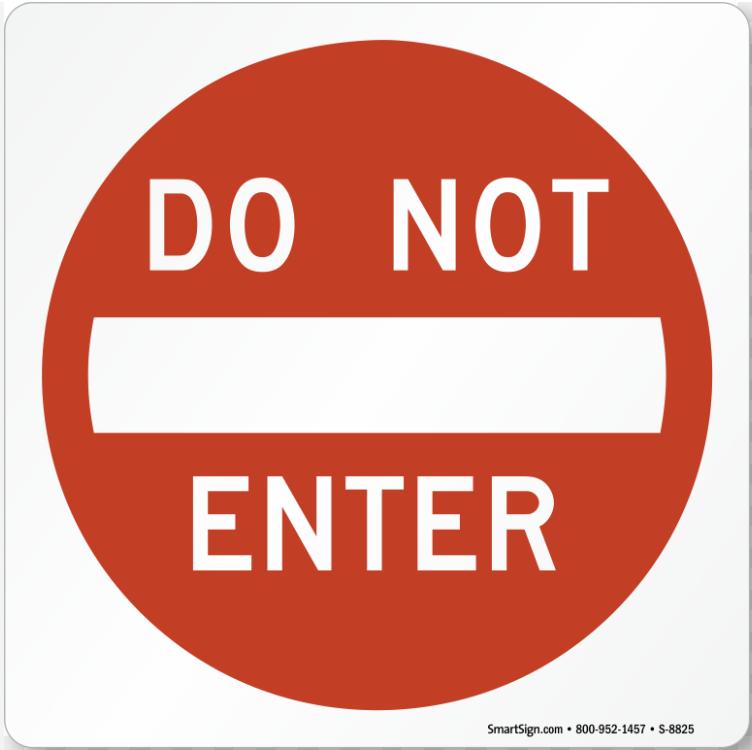
Do Not Enter Sign
A square sign with a white horizontal line inside a red ball means you cannot enter. You will see this sign at road way openings that you should not enter, such as exit ramps where you would be going in the wrong direction, crossovers on divided roadways, and at numerous locations on one-way streets.
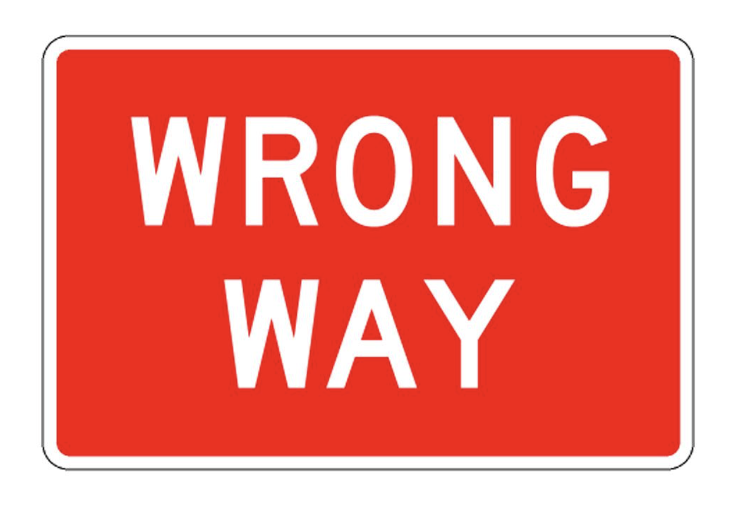
Wrong Way Sign
This sign is used to identify a one-way street, expressway ramp or the wrong direction or wrong side of a divided highway. Do not drive past this sign — turn around.
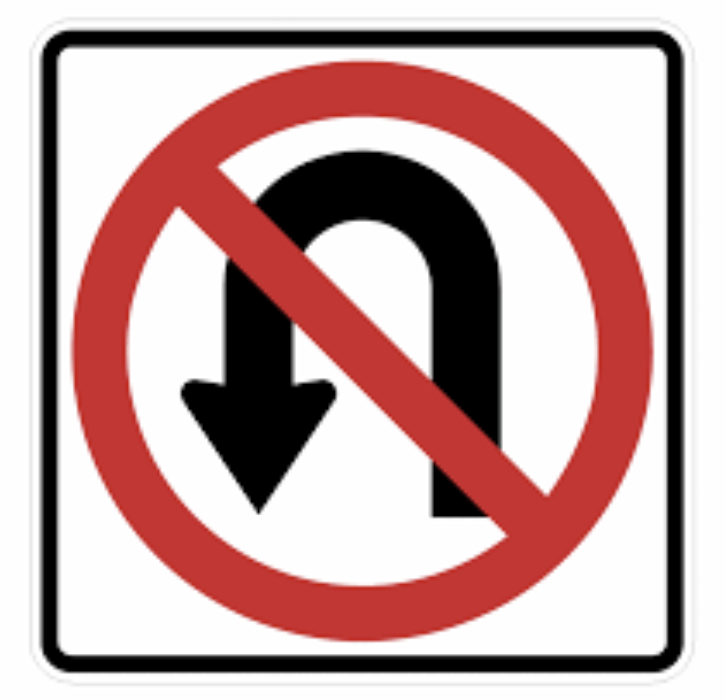
No U-Turn Sign
U-turns prohibited. Special mention should be made of “NO U-TURN” signs that are posted on divided highways or expressways. You may see one where there is an opening in the divided highway that leads to the other side.
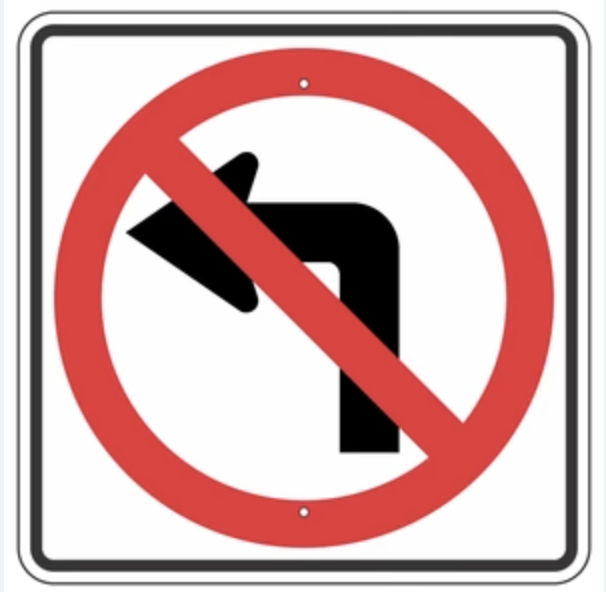
Movement Prohibition Sign
These signs indicate movements that are prohibited from a lane or approach. These signs can be located on the side of the road or hanging over the lane of travel. Sometimes arrows are painted on the road as a supplement to the sign.
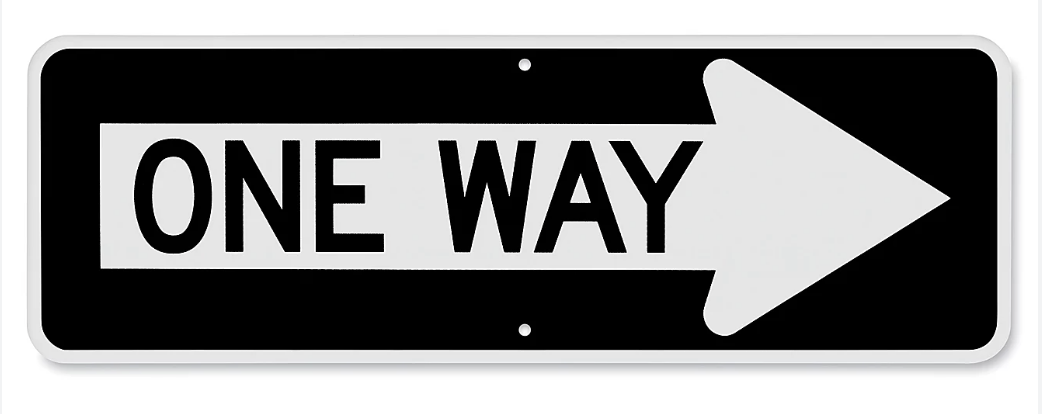
One Way Sign
These signs are used on one-way streets or driveways. You must always go only in the direction of the arrow.
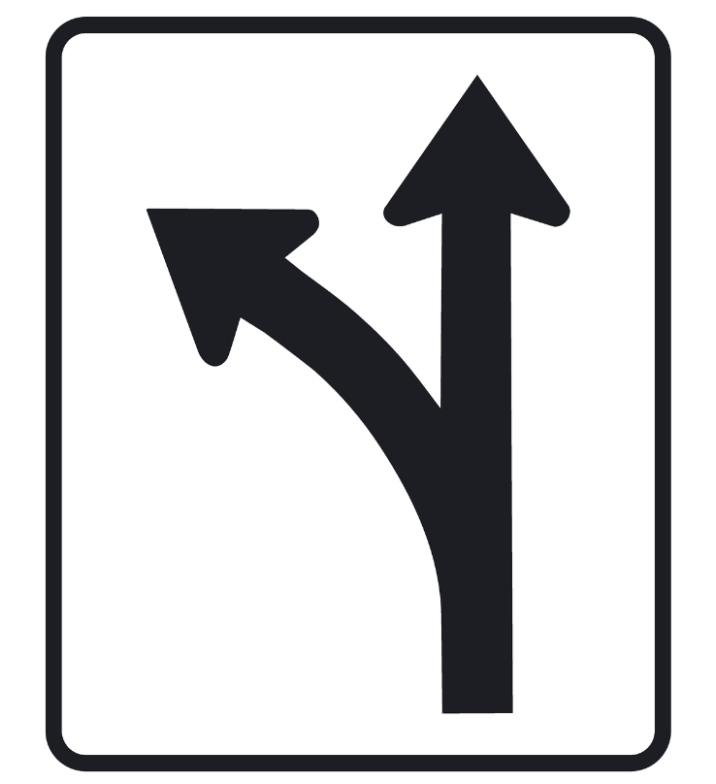
Lane Use Control Sign
This sign indicates permitted movement from a lane.
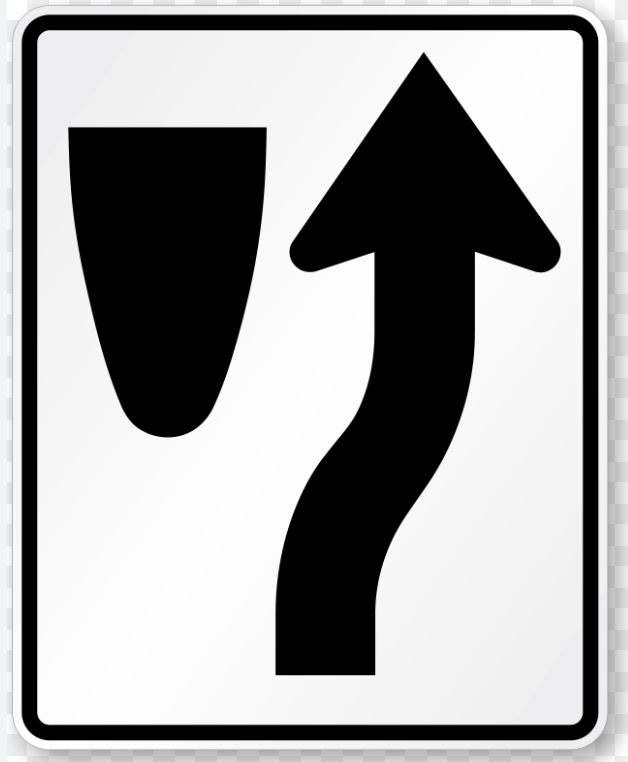
Keep Right Sign
This sign tells you where to drive when you approach traffic islands, medians or other obstructions in the middle of the roadway. You must drive to the side indicated by the arrow.
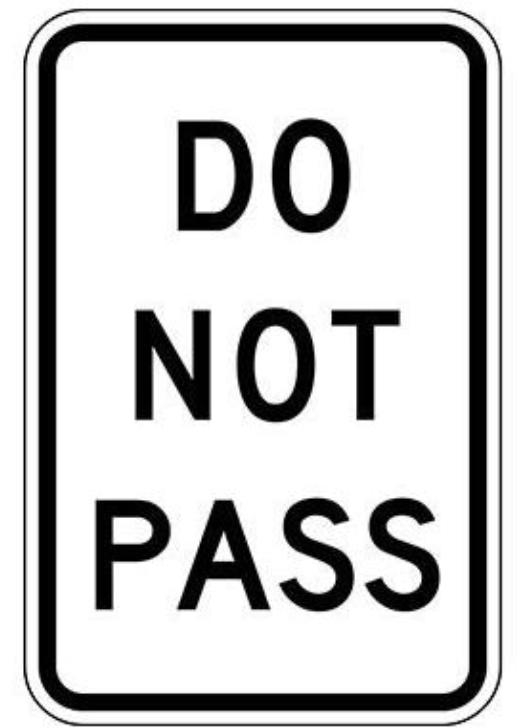
No Passing Sign
These signs tell you where passing is not permitted. Passing areas are based on how far you can see ahead. They consider unseen hazards such as hills and curves, intersections, driveways, and other places where a vehicle may enter the roadway. These signs, along with pavement markings, indicate where you can pass another vehicle, the beginning and ending of a passing zone, or where you may not pass. Where it is permitted to pass, you may do so only if it is safe. Be aware of road conditions and other vehicles.
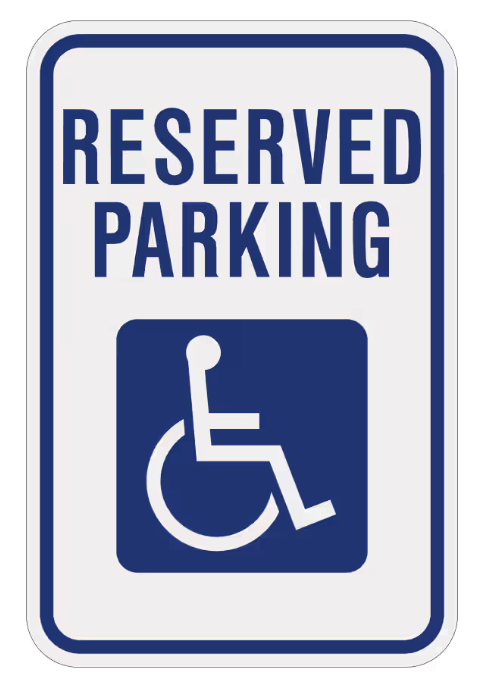
Disabled Parking Sign
Parking spaces marked with these signs are reserved for individuals with disabled parking privileges.
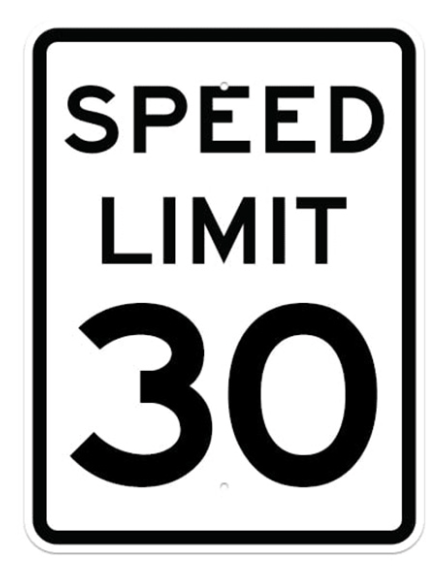
Speed Limit Sign
The sign indicates the maximum speed that should be driven on the roadway.
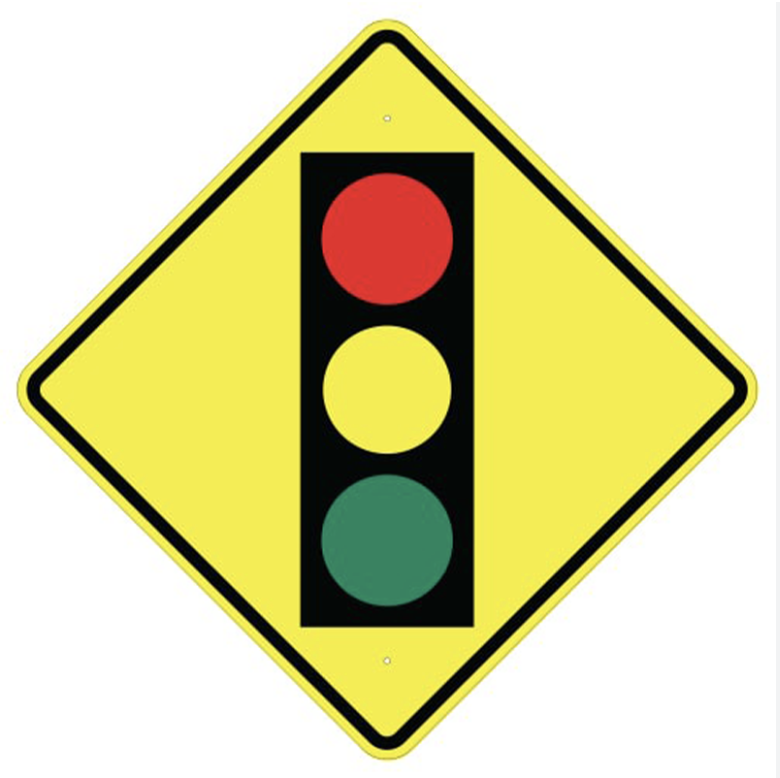
Signal Ahead Sign
Traffic signals are ahead. Slow down and prepare to stop.
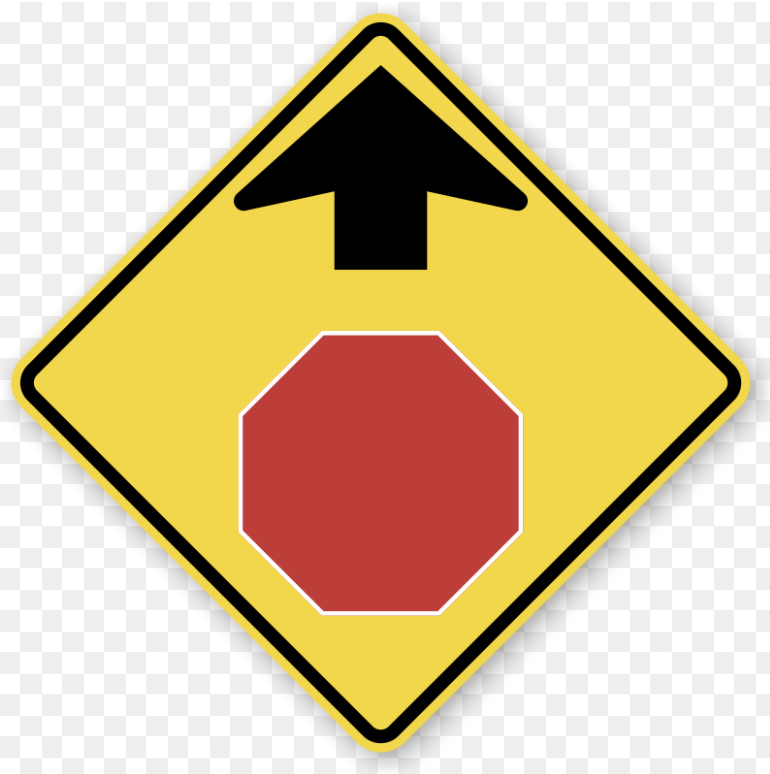
Stop Ahead Sign
A stop sign is ahead. Slow down and prepare to stop.
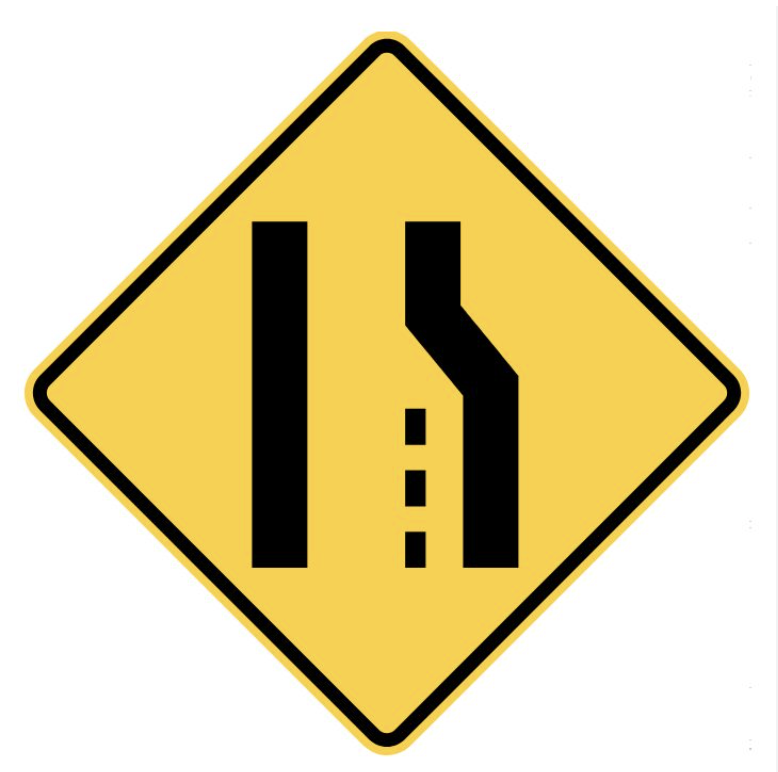
Reduction in Lanes Sign
This sign is used on multi-lane highways to warn you of a reduction in the number of traffic lanes in the direction you are traveling. Be prepared to change lanes or to allow other vehicles to merge into your lane.
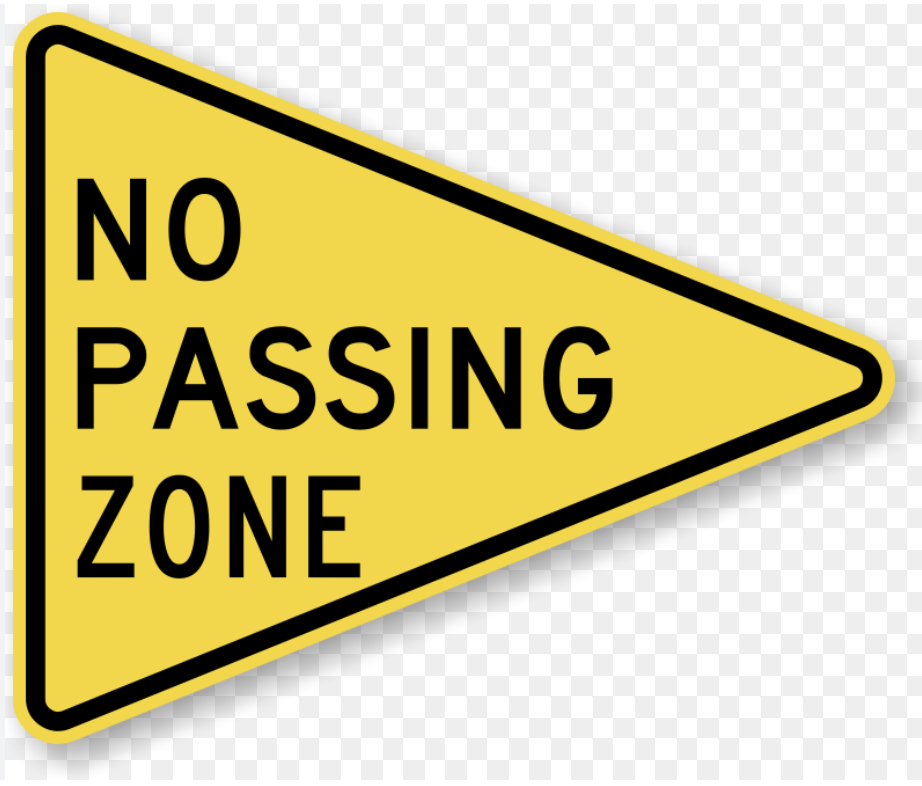
No Passing Sign
This sign marks the beginning of a no passing zone. You may not pass cars ahead of you in your lane.
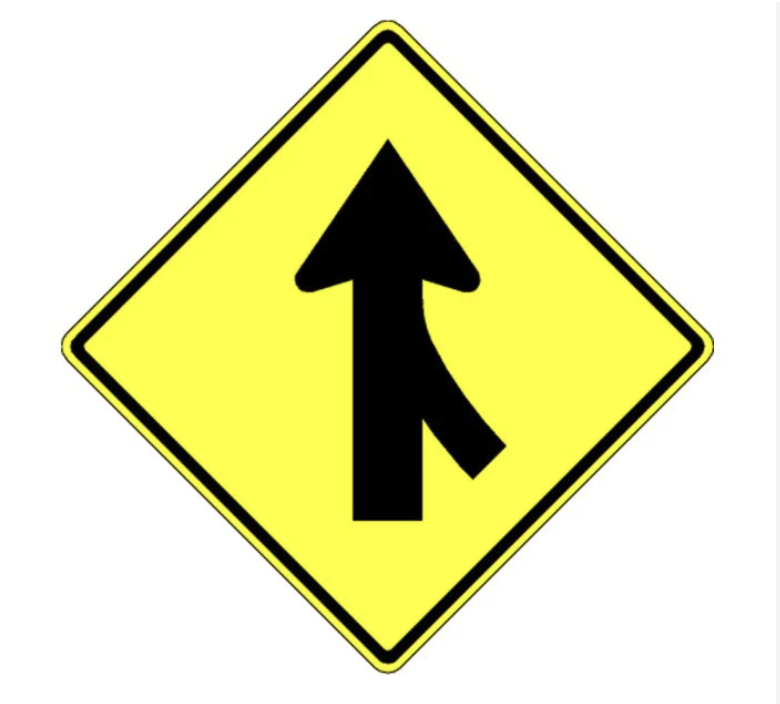
Merge Sign
Two lanes of traffic are about to become one. Drivers in both lanes are responsible for merging smoothly.
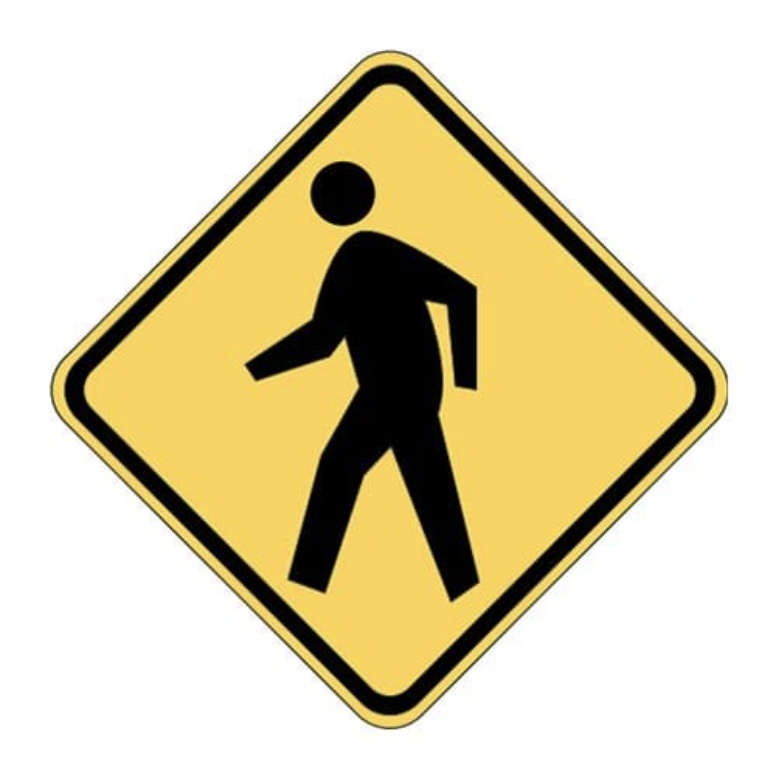
Pedestrian Crossing Sign
Watch for people crossing your path. Be prepared to slow down and stop. Signs may have a separate downward-pointing arrow plaque, which indicates the actual location of the crosswalk.
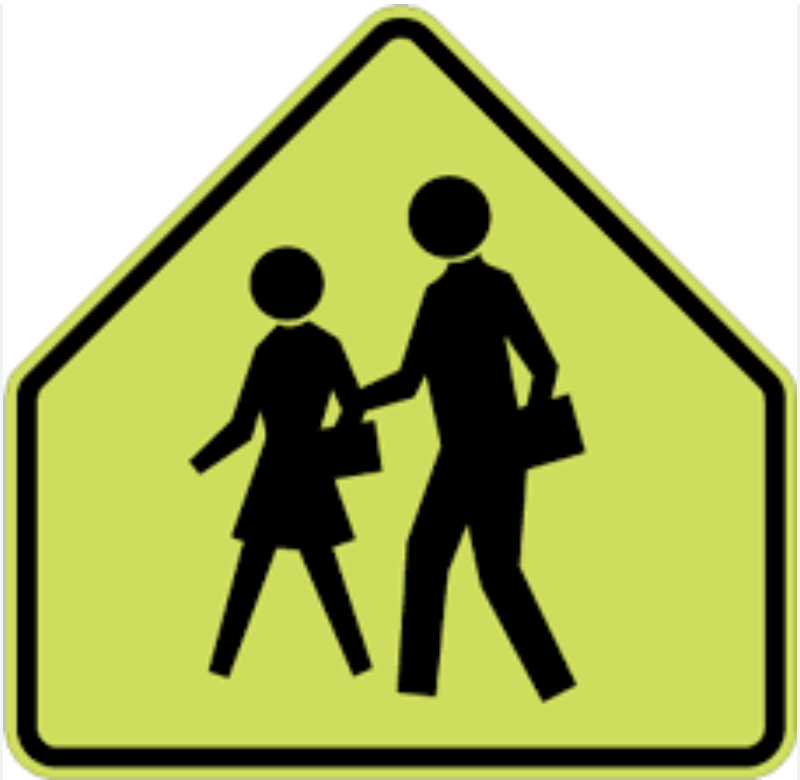
School Zone Sign
Slow down – School grounds nearby. Watch out for children crossing the street or playing. Be ready to stop. Obey signals from any crossing guards.
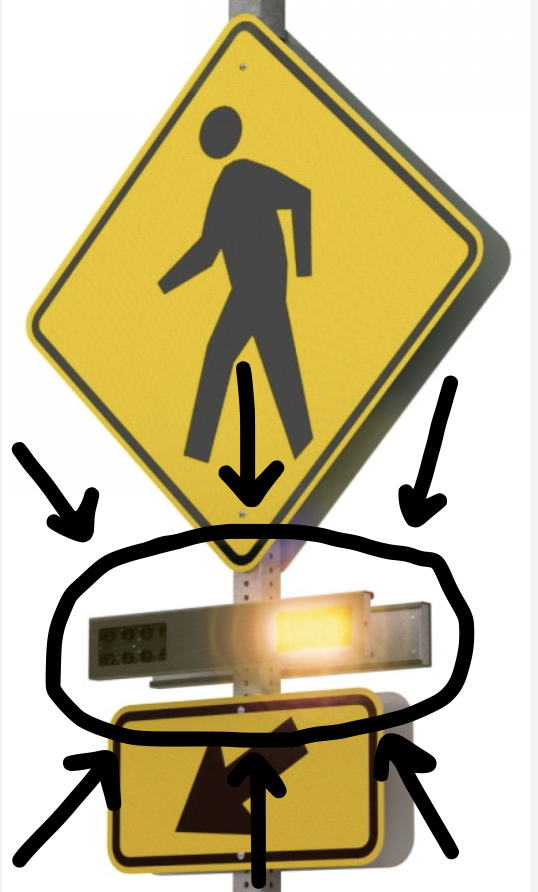
Rectangular Rapid Flashing Beacon (RRFB)
Designed to allow pedestrians to safely cross streets with high volumes of traffic at uncontrolled approached to unsignalized intersections or mid-block pedestrian crossings.
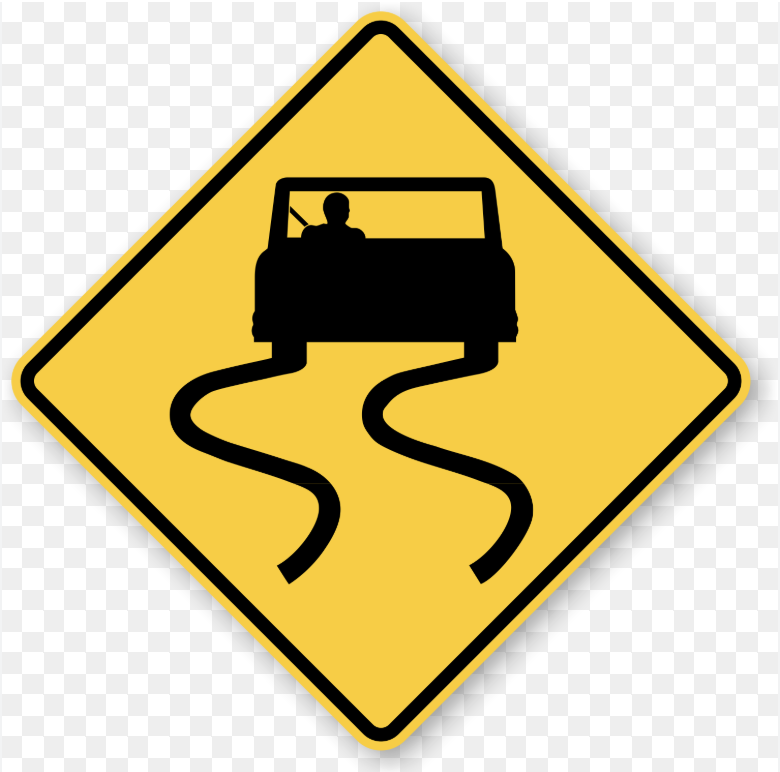
Slippery when Wet Sign
When pavement is wet, reduce your speed. Do not brake hard or change direction suddenly. Increase the distance between your car and the one ahead. These actions are needed on all wet roads and especially on roads where this sign is posted.
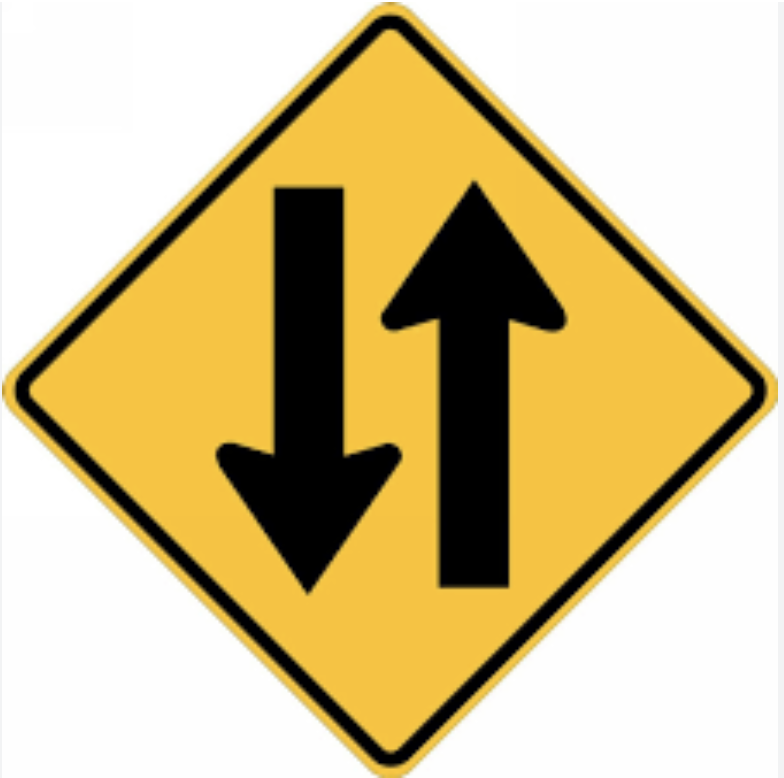
Two-Way Road Way Sign
This sign tells you that you are leaving a divided roadway and will be driving on a two-way highway.
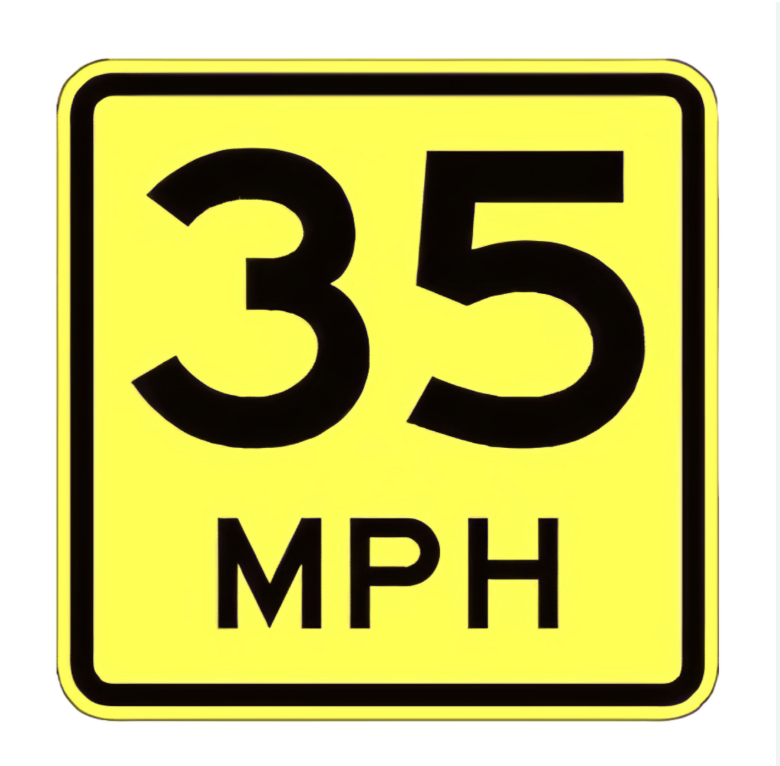
Advisory Speed Plaque Sign
Usually installed below another warning sign. This sign is used to indicate the advisory speed for a condition.
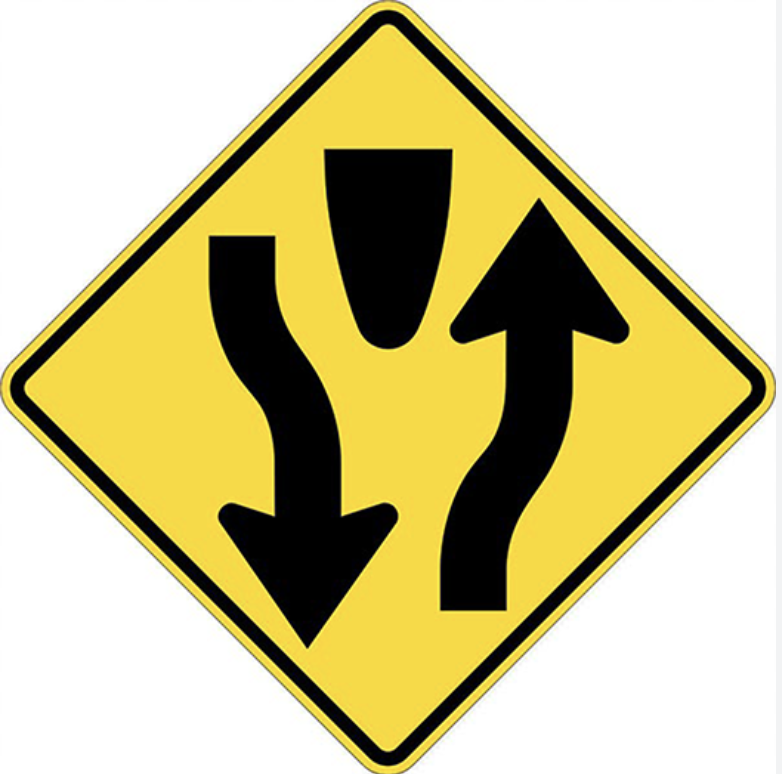
Divided Highway Begins Sign
The highway ahead is split into two separate roadways by a median or divider and each roadway is one-way. Keep right.
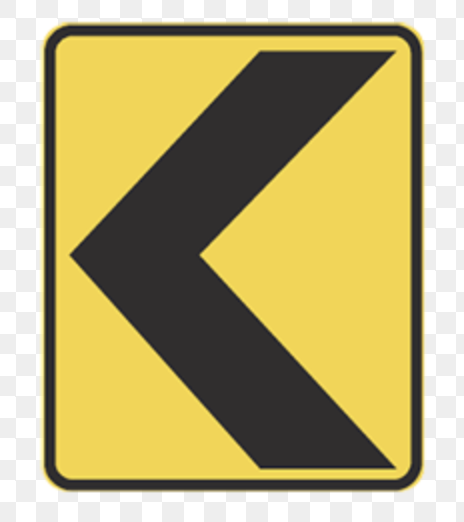
Change in Direction Sign
This sign warns you of a change in direction or narrowing of the road. You may find several of these signs on the outside of a sharp curve or on approaches to a narrow bridge.
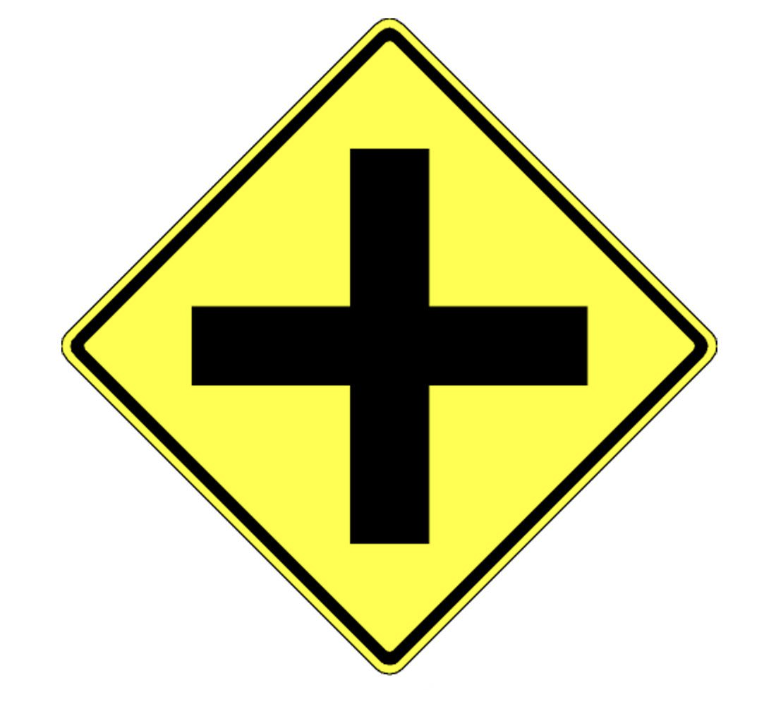
Intersections Ahead Sign: Crossroad
Sign that warns you of intersections ahead where traffic may exist or where a right or left turn may be required. A sign naming the intersecting road may also be posted. (Crossroad)
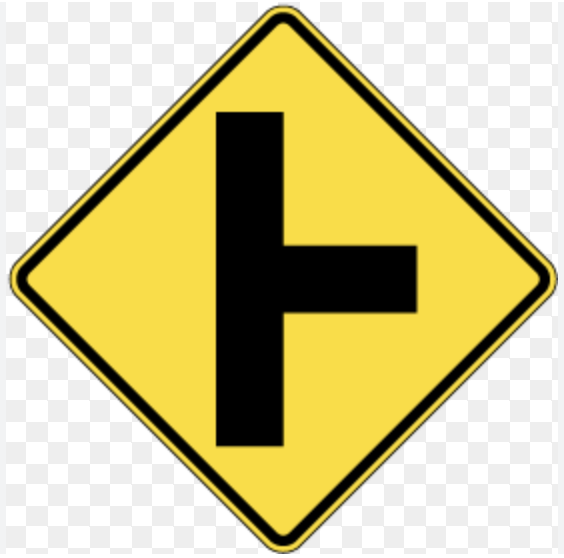
Intersections Ahead Sign: Side Road
Sign that warns you of intersections ahead where traffic may exist or where a right or left turn may be required. A sign naming the intersecting road may also be posted. (Side Road)
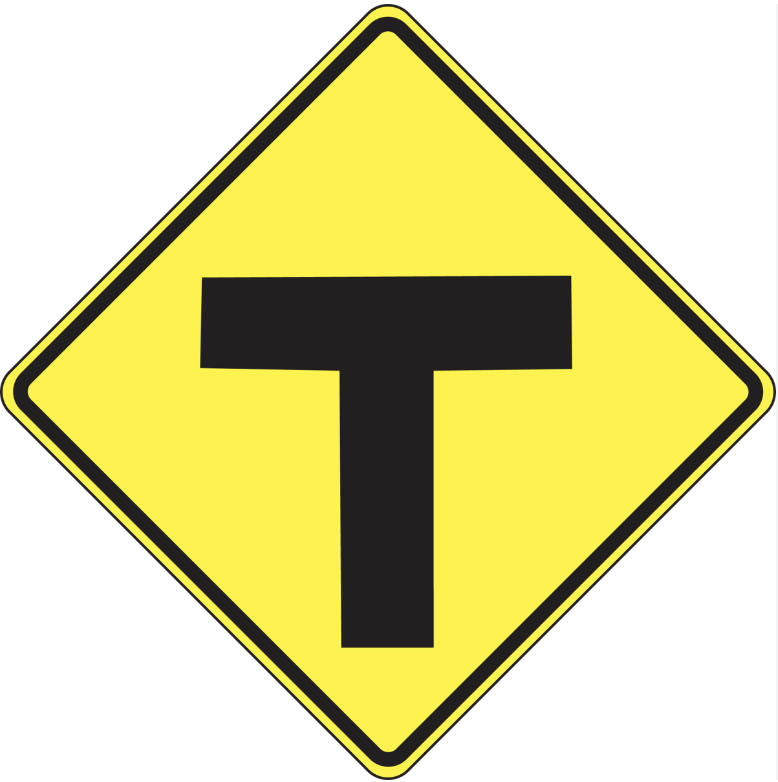
Intersections Ahead Sign: “T” Intersection
Sign that warns you of intersections ahead where traffic may exist or where a right or left turn may be required. A sign naming the intersecting road may also be posted. (“T” Intersection)
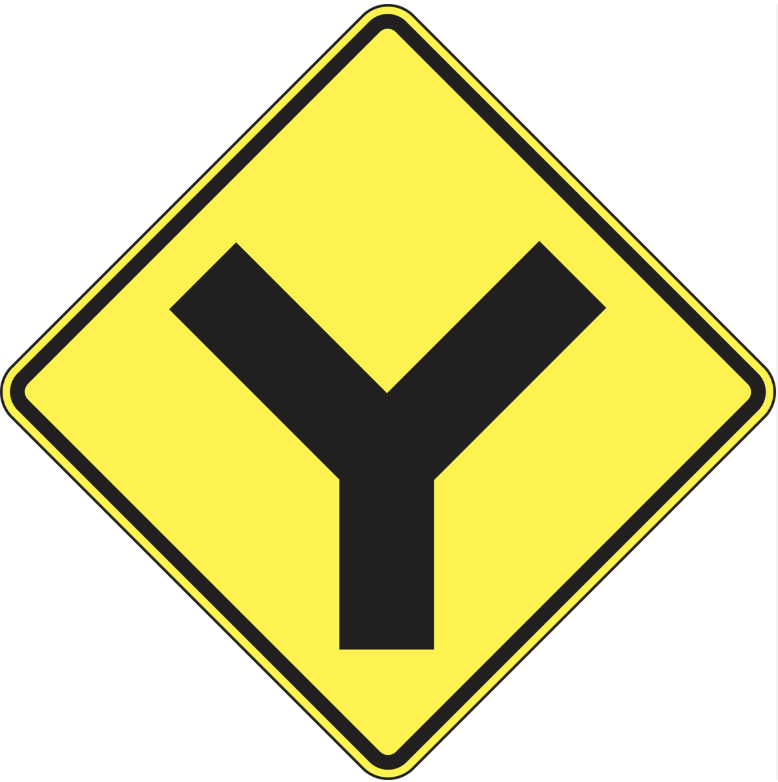
Intersections Ahead Sign: “Y” Intersection
Sign that warns you of intersections ahead where traffic may exist or where a right or left turn may be required. A sign naming the intersecting road may also be posted. (“Y” Intersection)
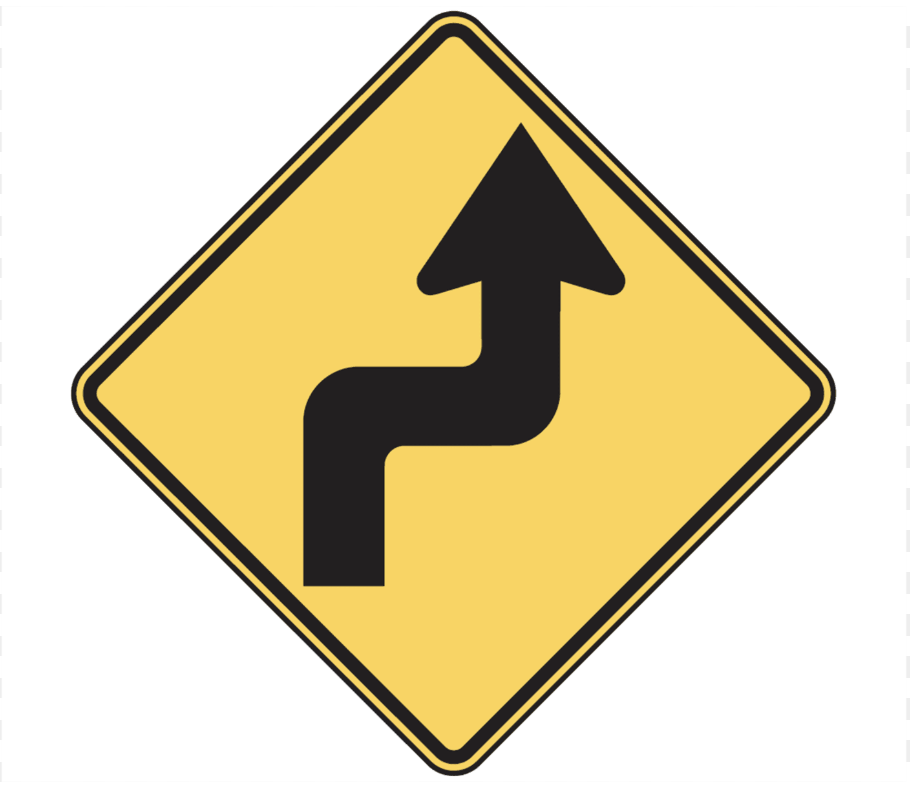
Turns and Curves: Right and Left Turns Coming
Certain signs are posted before turns and curves. The shape of the arrow tells you what to expect. A small sign showing the maximum safe speed may also be posted below the arrow. (Right and Left Turns Coming)
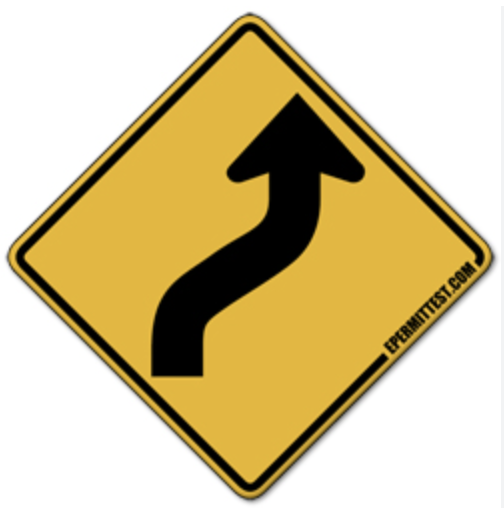
Turns and Curves: Road Curves to Right and Left
Certain signs are posted before turns and curves. The shape of the arrow tells you what to expect. A small sign showing the maximum safe speed may also be posted below the arrow. (Road Curves to Right and Left)
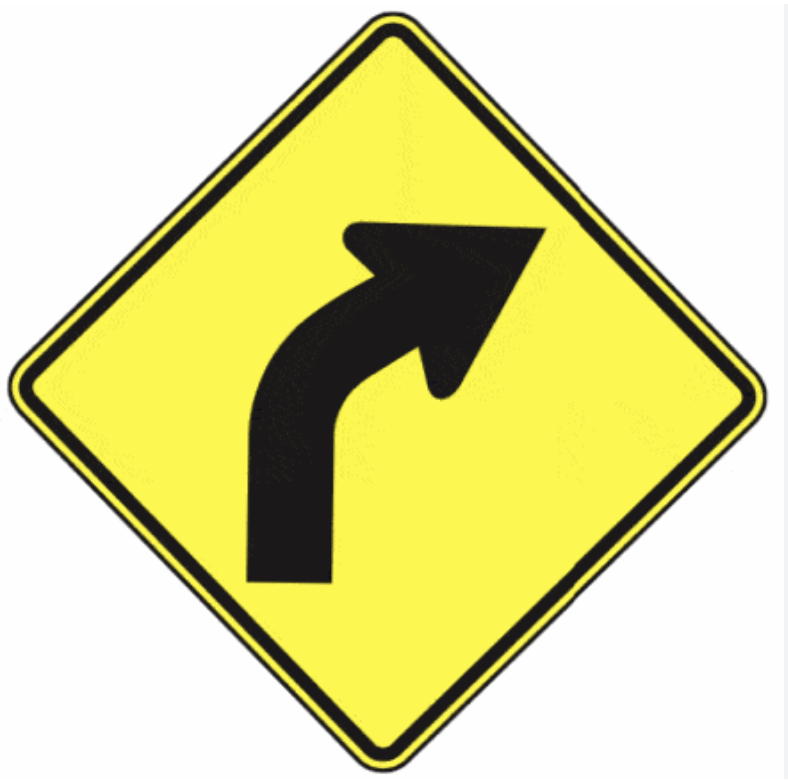
Turns and Curves: Road Curves to Right
Certain signs are posted before turns and curves. The shape of the arrow tells you what to expect. A small sign showing the maximum safe speed may also be posted below the arrow. (Road Curves to Right)
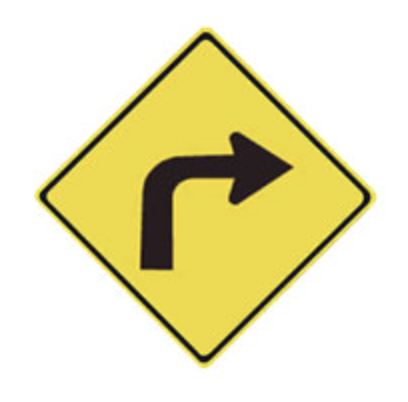
Turns and Curves: Right Turn Ahead
Certain signs are posted before turns and curves. The shape of the arrow tells you what to expect. A small sign showing the maximum safe speed may also be posted below the arrow. (Right Turn Ahead)
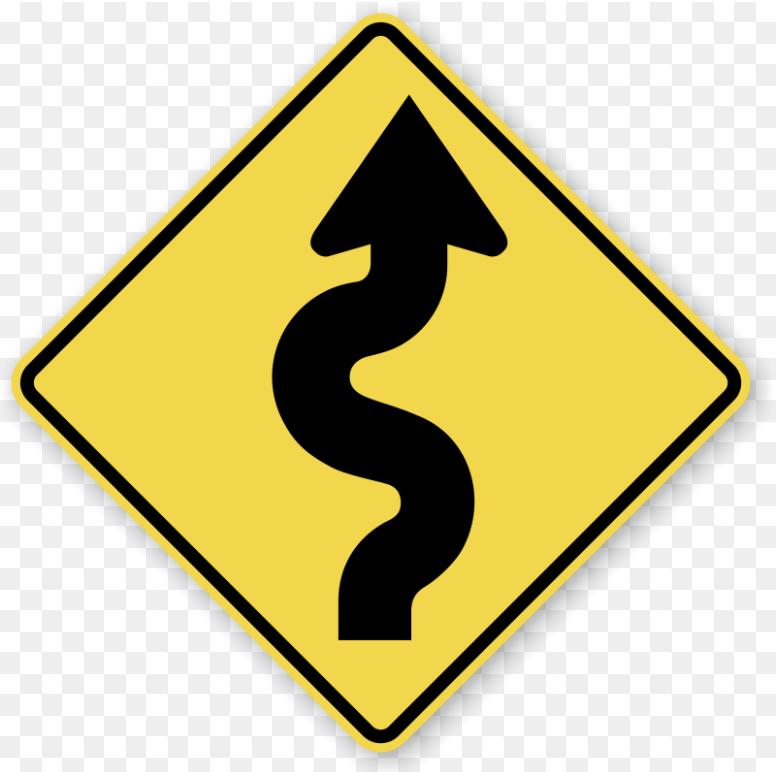
Turns and Curves: Winding Road Ahead
Certain signs are posted before turns and curves. The shape of the arrow tells you what to expect. A small sign showing the maximum safe speed may also be posted below the arrow. (Winding Road Ahead)
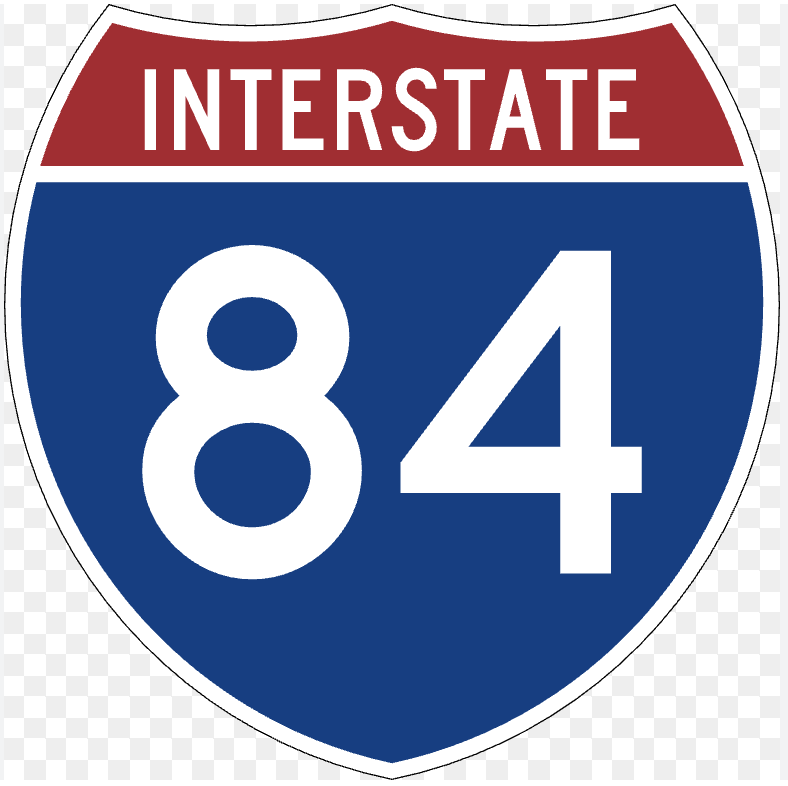
Route Number Sign
The shape and color of a route number sign indicate the type of roadway: interstate, U.S., state, city, or county road. When planning a trip, use a road map to determine your route. During the trip, follow the route signs to keep from getting lost.
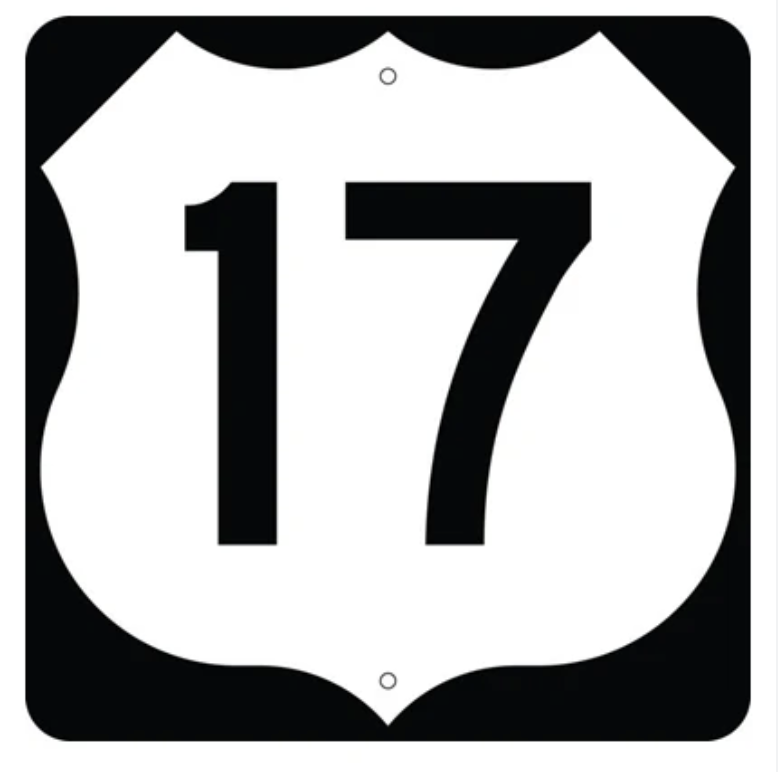
US Route Marker Sign
The shape and color of a route number sign indicate the type of roadway: interstate, U.S., state, city, or county road.
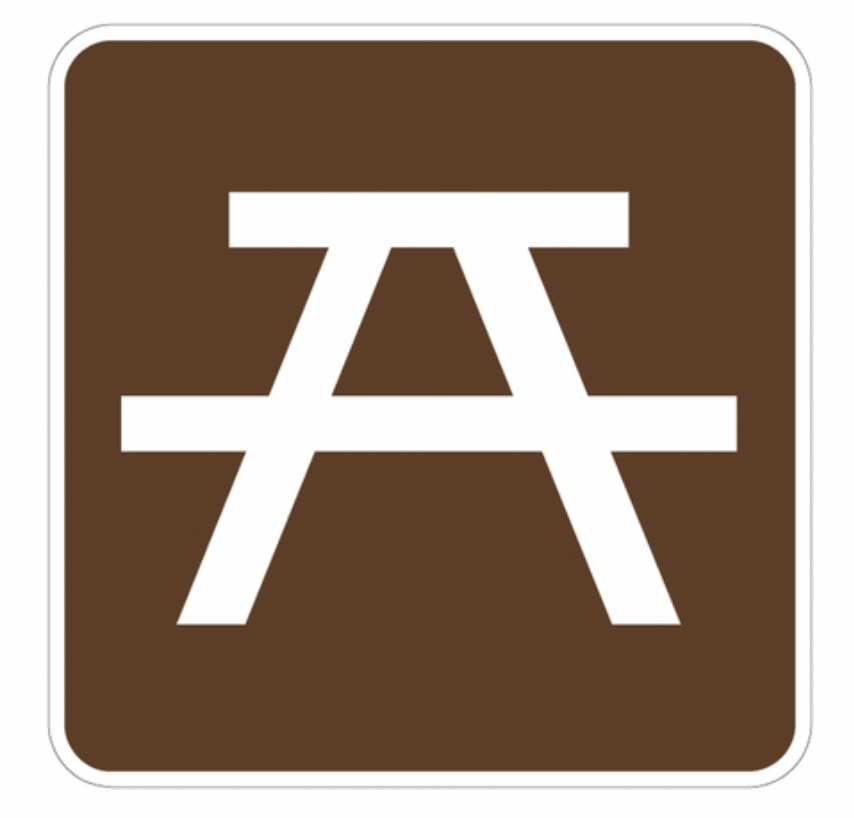
Parks and Recreation Sign
These signs are brown. They guide you to recreational areas and parks.
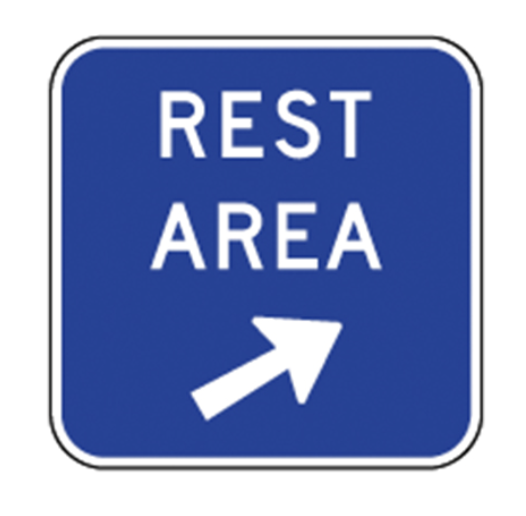
Service Sign
These signs are square or rectangle shaped and are blue with white letters or symbols. They show the locations of various services, such as rest areas, gas stations, campgrounds, or hospitals.
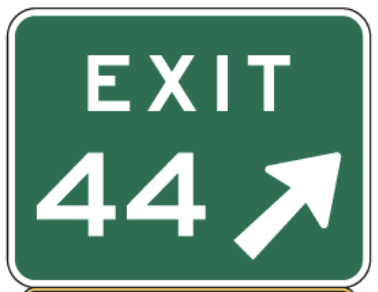
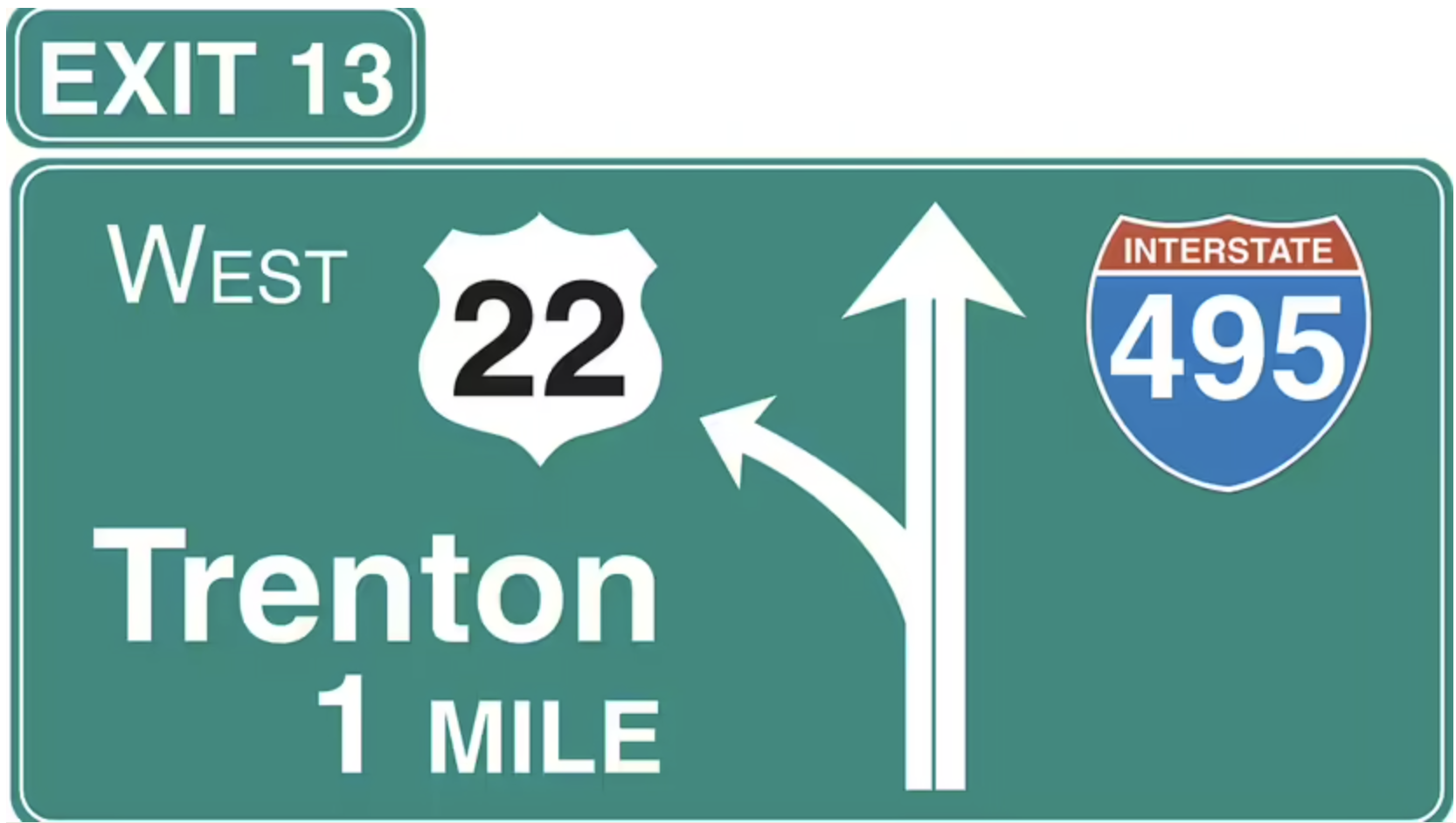
Destination and Distance Sign
These signs are always green. They direct you to bike routes, parking areas, mileposts and specific exits. Mileposts are placed every mile along the freeway from one end of the state to the other. Zero usually starts at the south and west borders of the state. Mileposts can be used to determine the distance to exits, cities or state lines. By using the milepost number and the exit number, you may compute how far you are from the exit you want to use.
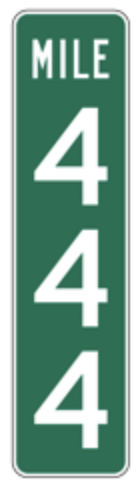
Information Sign
These signs are always green. They include items such as state lines, city limits and other boundaries. You may also find names of streams, elevations, landmarks and other items of geographical interest.
Work Area Signs
These construction, maintenance, or emergency operations signs are generally diamond or rectangle-shaped and orange with black letters or symbols. These warn you that people are working on or near the roadway. These warnings include reduced speed, detours, slow moving construction equipment, and poor or suddenly changing road surfaces. In work areas, a person with a sign or a flag may control traffic. You must obey these persons.
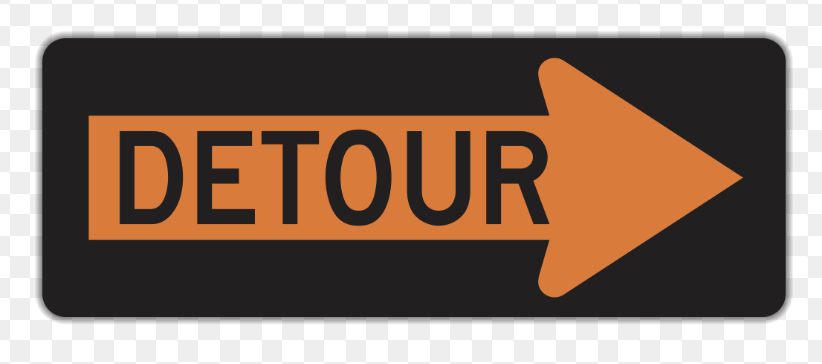
Detour Sign
This sign is used at the beginning of an alternate route that has been established because a road has been closed.
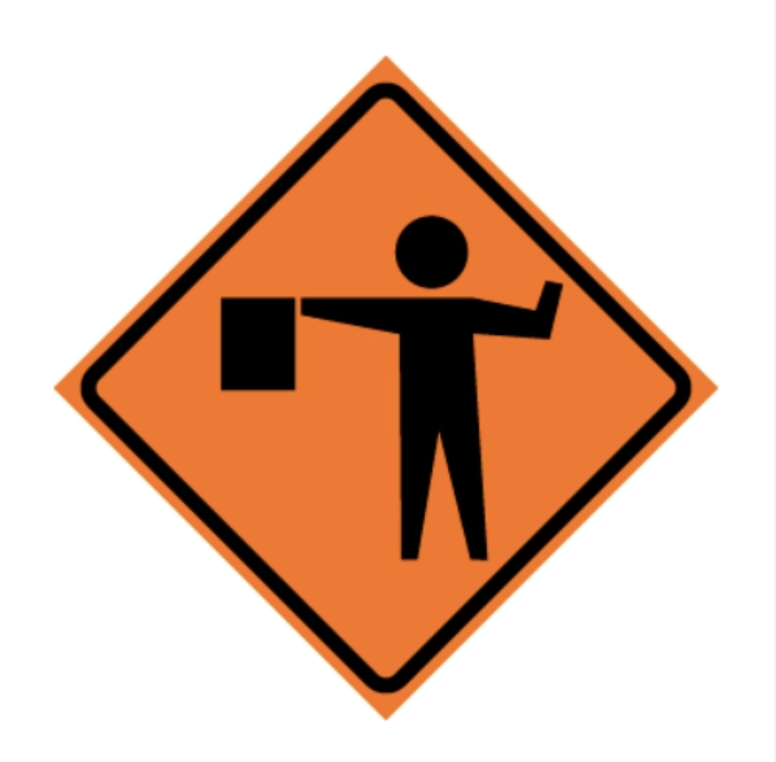
Flag Person Sign
This sign warns that there is a flag person ahead. Always follow his or her directions. Flaggers normally wear orange or yellow vests, yellow-green shirts or jackets. They use STOP/SLOW paddles and red flags to direct traffic through the work zone and to let workers or construction vehicles cross the road.
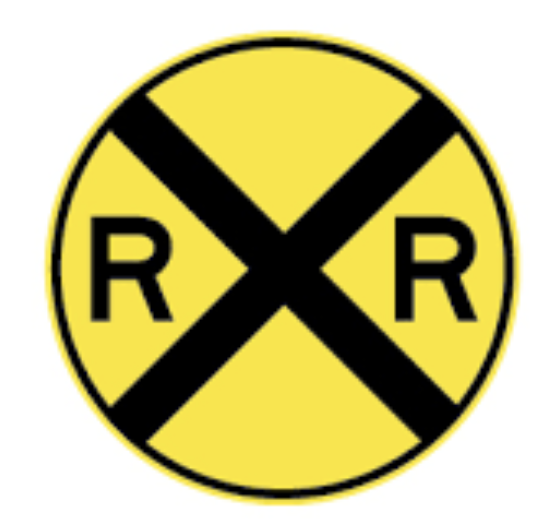
Railroad Crossing Sign
A round yellow warning sign with an “X” symbol and black “RR” letters is placed along the road before you get to a railroad crossing.
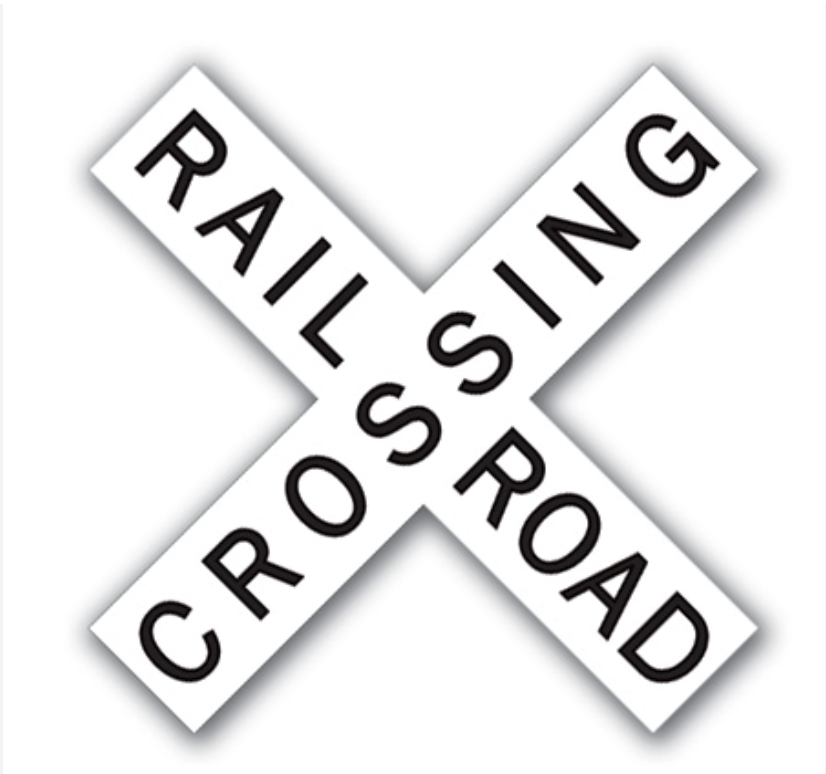
Railroad Crossbuck Sign
A white, X-shaped sign or “crossbuck” with “Railroad Crossing” printed on it is located at the railroad crossing. This sign has the same meaning as a “Yield” sign. You must yield to crossing trains.
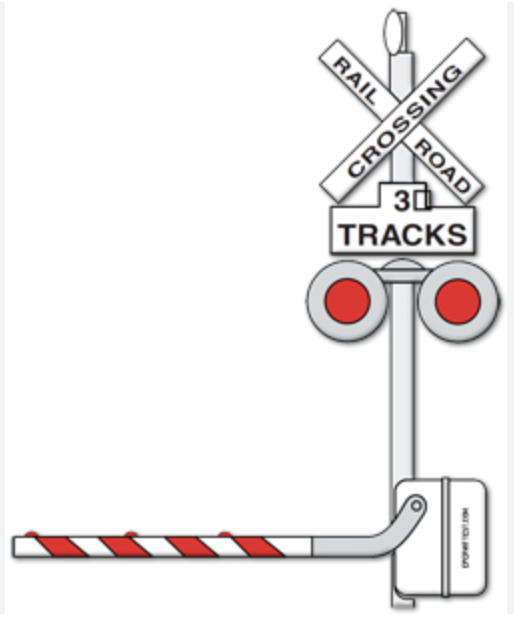
Railroad Crossbuck, Flashing Lights and Gate
Gates are used with flashing light signals at some crossings. Stop when the lights begin to flash and before the gate lowers. Remain stopped until the gates are raised and the lights stop flashing. Do not attempt to drive around the lowered gate. Also, pedestrians may not cross railroad tracks when warned of a train by an automatic signal, crossing gates, flagman or law enforcement officer.
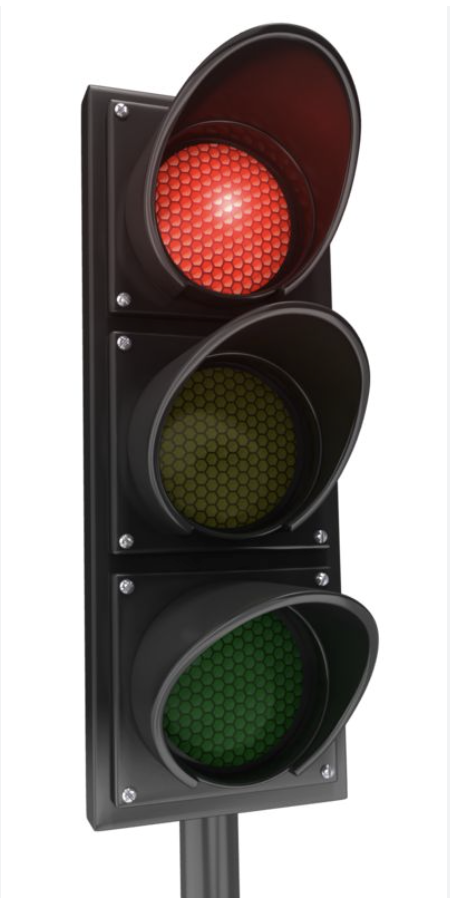
Red Light
Means stop. You must wait until the traffic light turns green and there is no crossing traffic before you may move ahead. If you are turning right on red, you may turn after coming to a full stop and checking to make sure that there is no oncoming traffic and no sign prohibiting the turn on a red light. Watch out for pedestrians crossing in front of your vehicle.
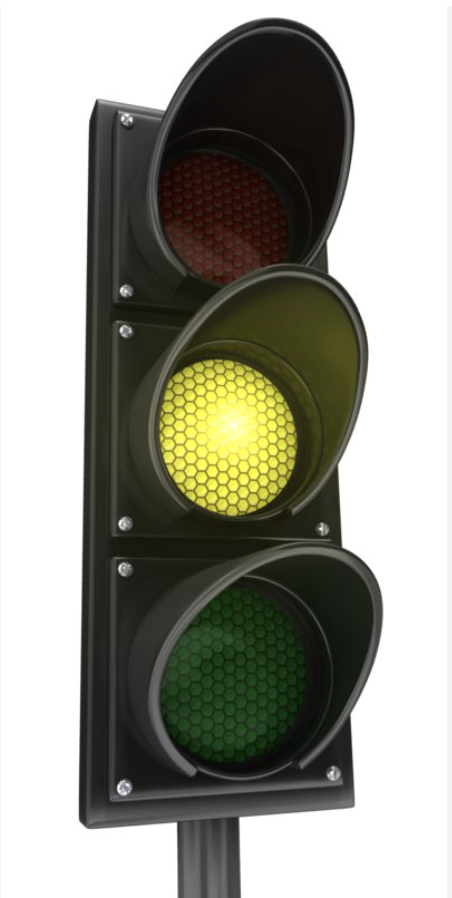
Yellow Light
Means the traffic light is about to change to red. You must stop if it is safe to do so. If you are in the intersection when the yellow light comes on, do not stop-continue through the intersection.
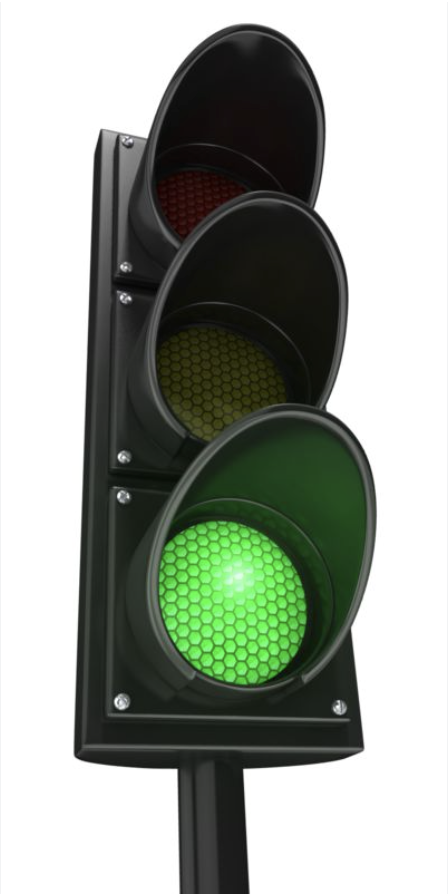
Green Light
Means you can go through the intersection. You must yield to emergency vehicles and others as required by law. If you are stopped and then the light turns green, you must allow crossing traffic to clear the intersection before you go ahead. If you are turning left, a steady green traffic light means you may turn but only when safe to do so. If you are turning right, yield to pedestrians crossing the street.
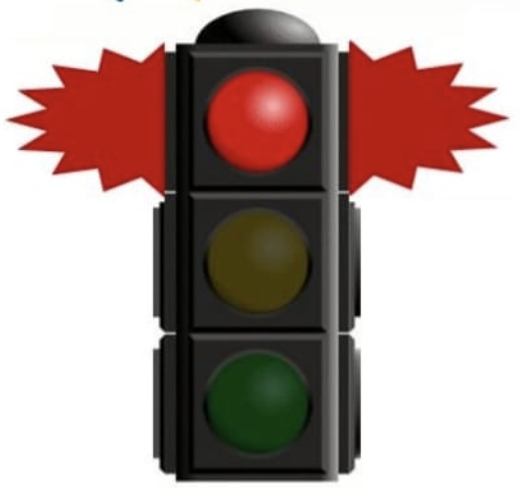
Flashing Red Light
Means the same as a stop sign. You must come to a full stop and you may proceed when it is safe to do so.
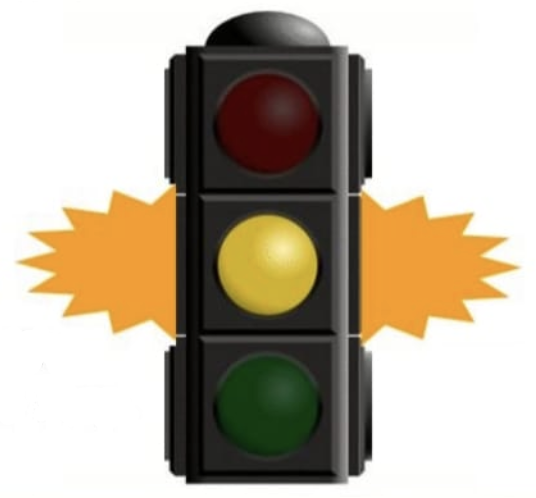
Flashing Yellow Light
Means slow down and proceed with caution.
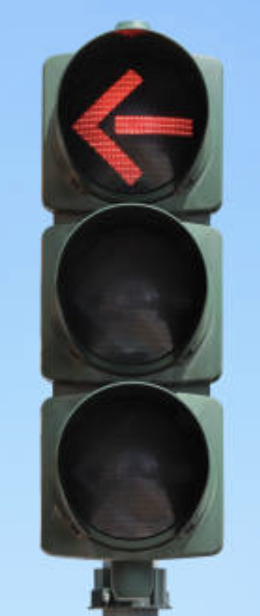
Red Arrow Light
Means you must stop and you cannot go in the direction of the arrow. You may proceed when the red arrow goes out and a green arrow or light goes on.
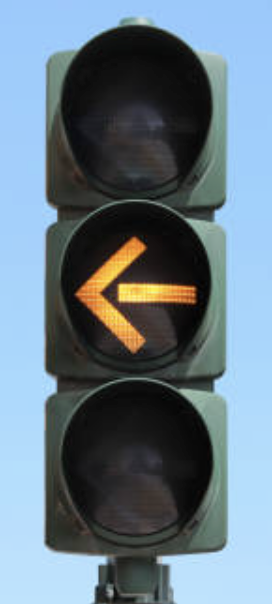
Yellow Arrow Light
Means that the protection of a green arrow is ending; if you are turning in the direction of the arrow, you should prepare to stop.
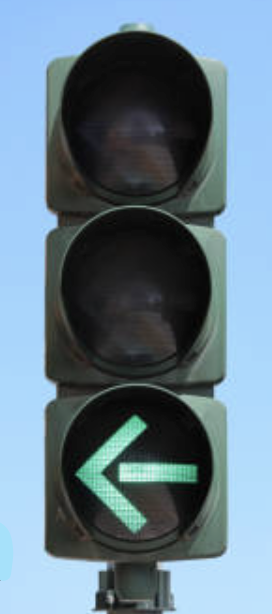
Green Arrow Light
Means you can safely turn in the direction of the arrow. There should be no on-coming or crossing traffic while the arrow is green.
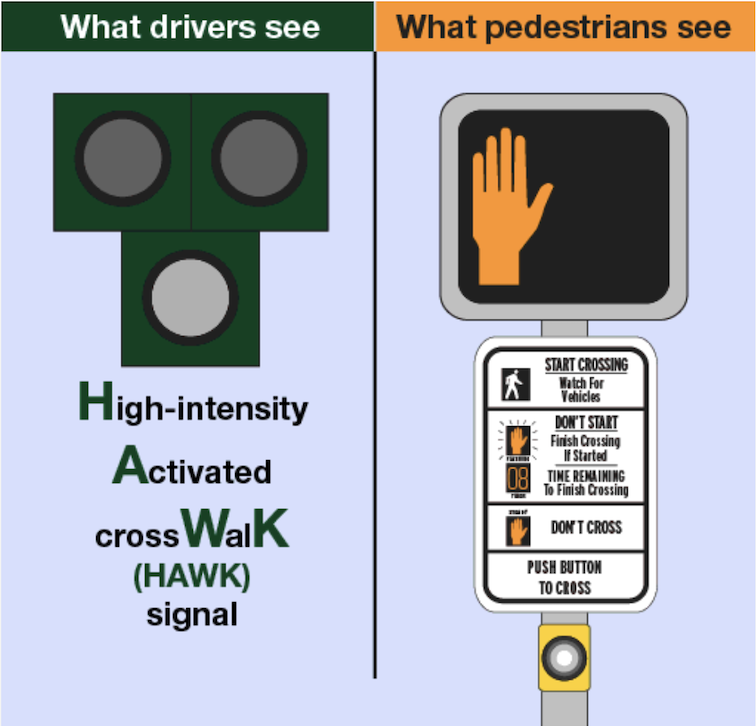
High-Intensity Activated CrossWalK (HAWK) Signals
A pedestrian signal activated by a push button. The HAWK is composed of a circular yellow signal centered under two horizontally-aligned circular red signals. When activated, vehicles must come to a complete stop as the pedestrian crosses. Then vehicles may move once the pedestrians have finished crossing.
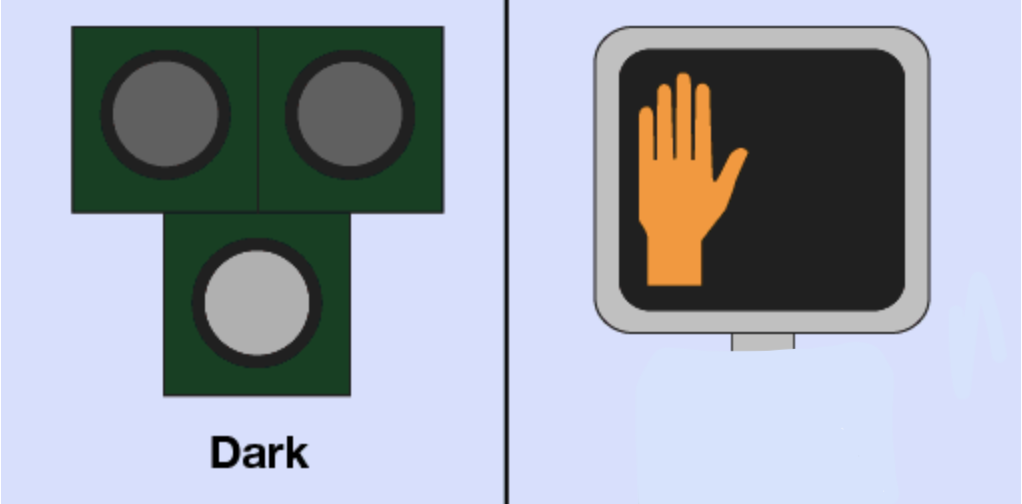
Dark HAWK Signal
HAWK signal has not been activated. Vehicles proceed through pedestrian crossing.
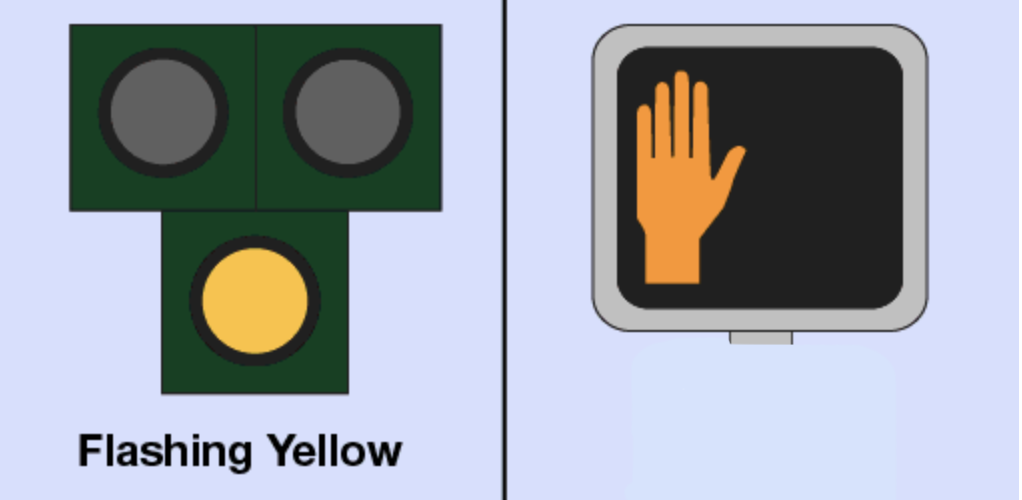
Flashing Yellow HAWK Signal
Pedestrian has activated the HAWK signal.
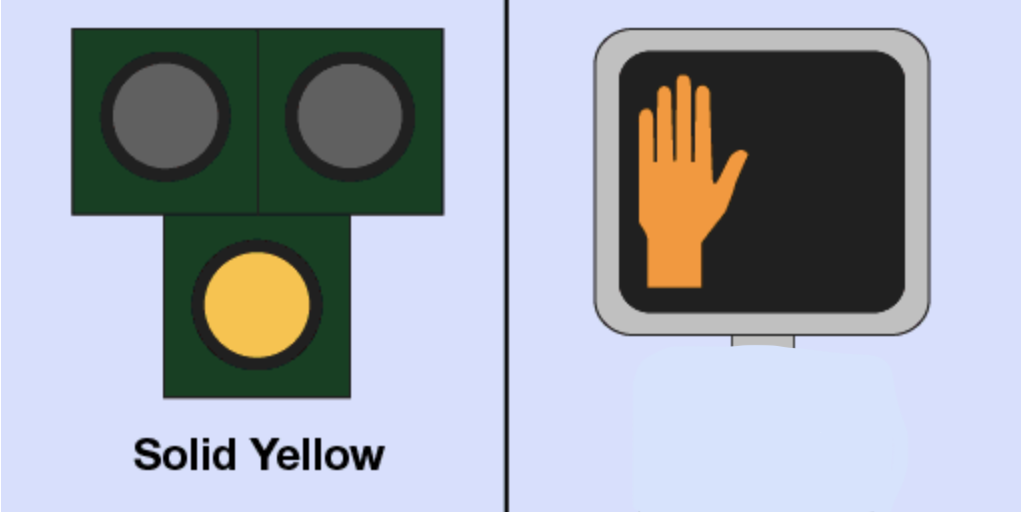
Solid Yellow HAWK Signal
Pedestrian signal is about to change. Motorists are notified their movement is ending and a red signal will be displayed.
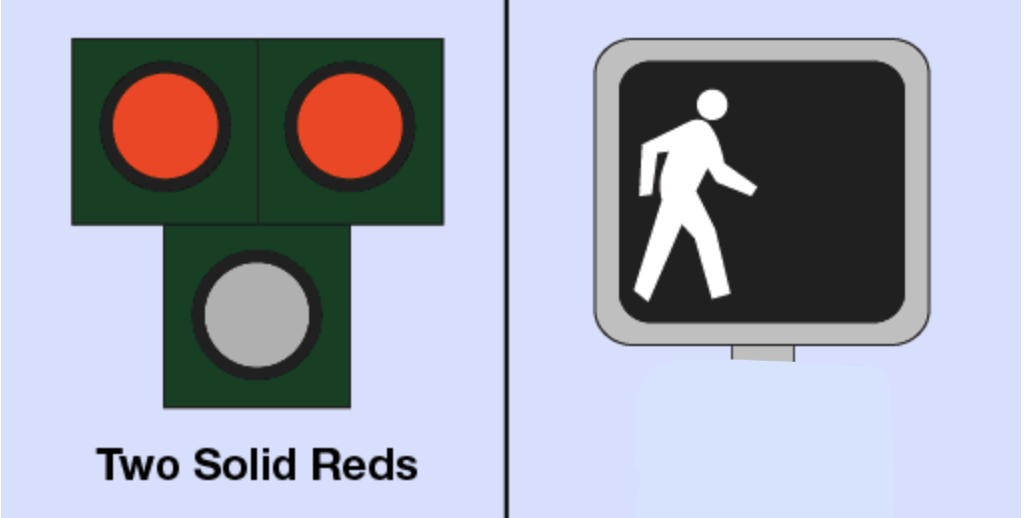
Solid Red HAWK Signal
Pedestrians in crosswalk. Motorists must stop.
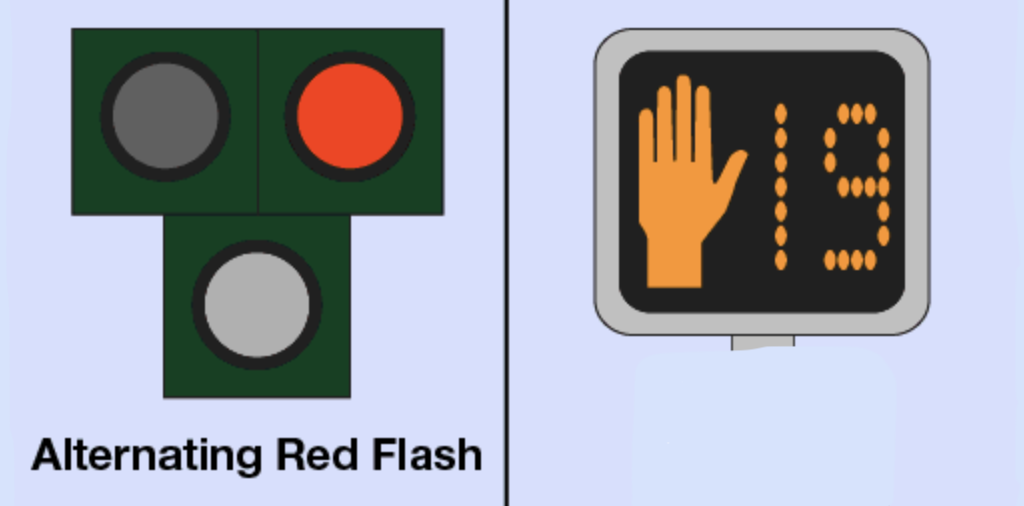
Flashing Red HAWK Signal
The HAWK signal is about to deactivate. Drivers must stop but may proceed when pedestrians have cleared the crosswalk.
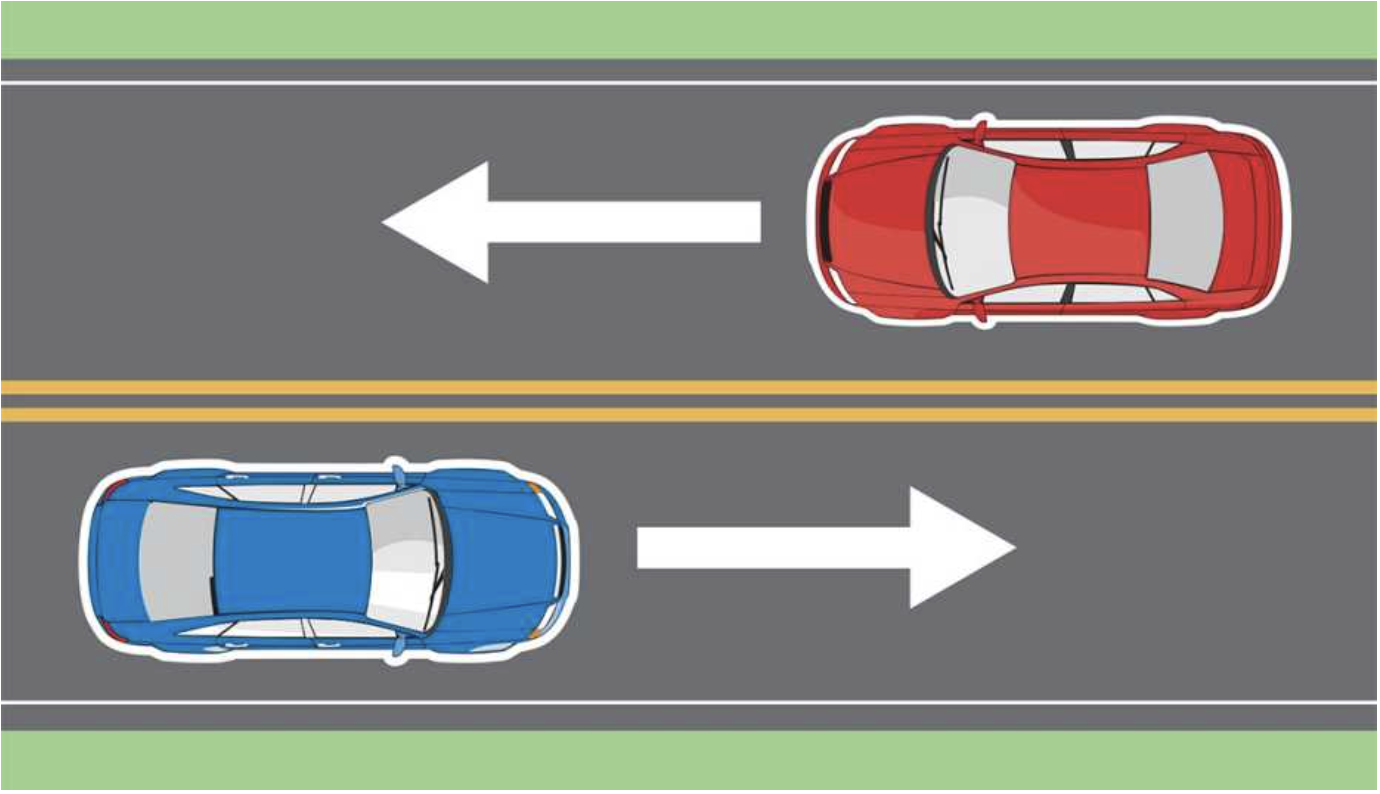
White Lines
Used on the right of the roadway edge.
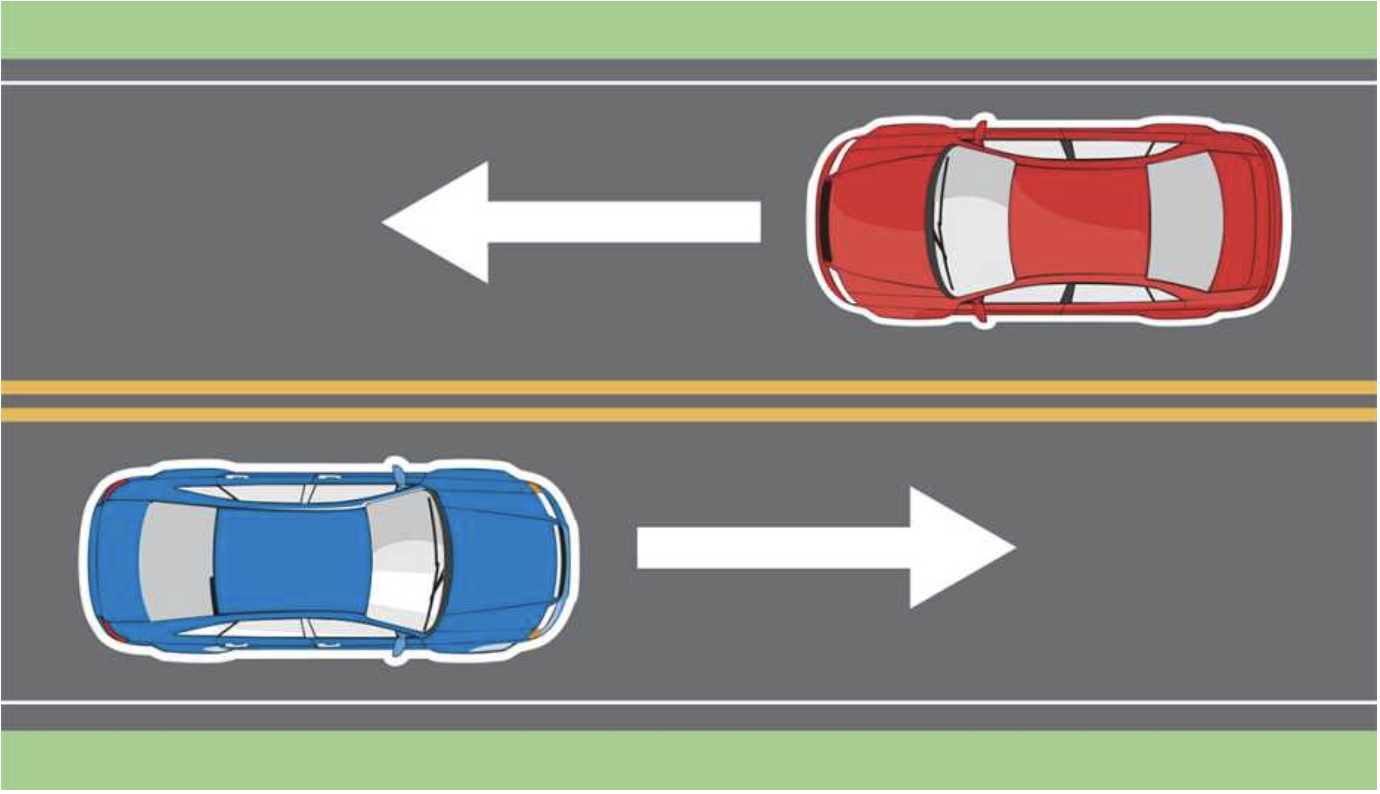
Yellow Lines
Used on the left of the roadway edge of divided streets or roadways.
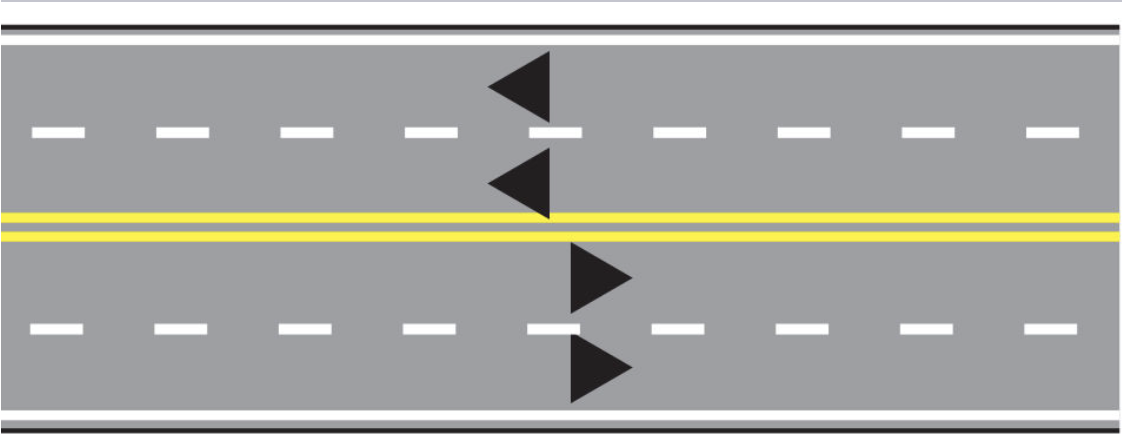
Dashed White Lines
Between lanes of traffic moving in the same direction that indicate you may cross to change lanes if it is safe to do so.
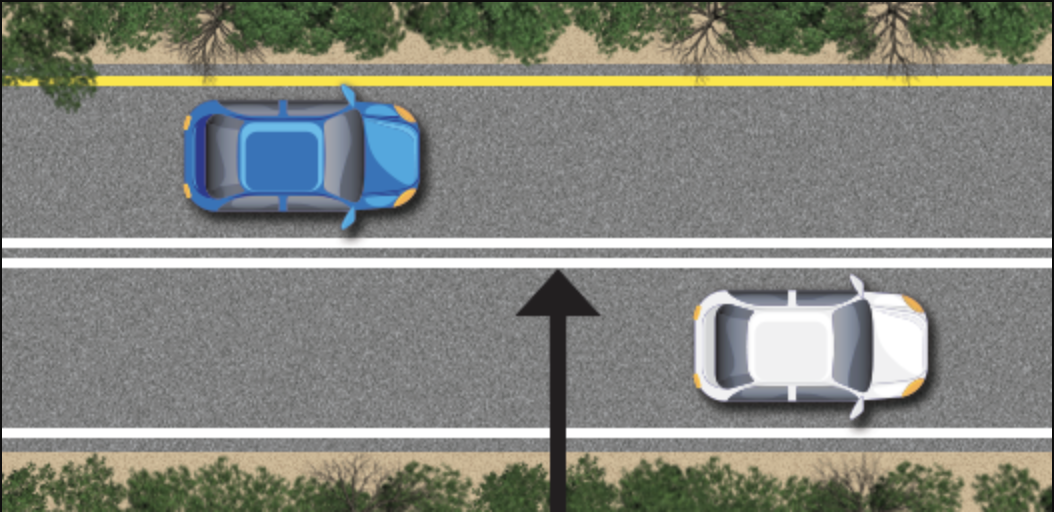
Solid White Lines
Between lanes of traffic that indicate you should stay in your lane unless a special situation requires you to change lanes.
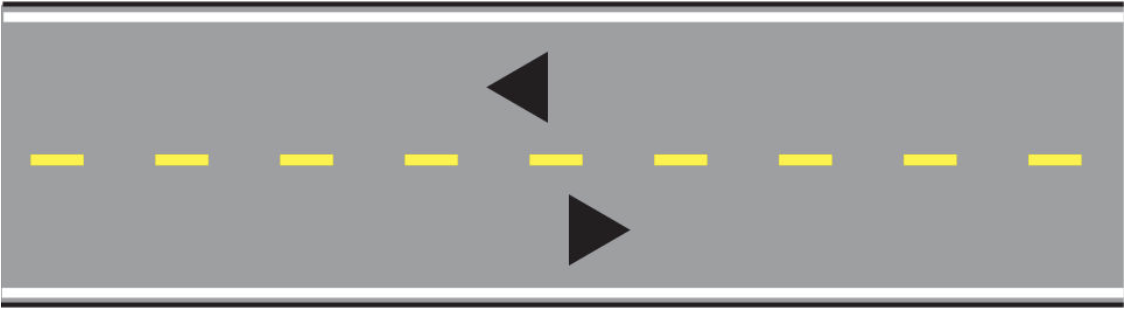
Dashed Yellow Lines
Separates single lanes of traffic moving in opposite directions. Passing is allowed.
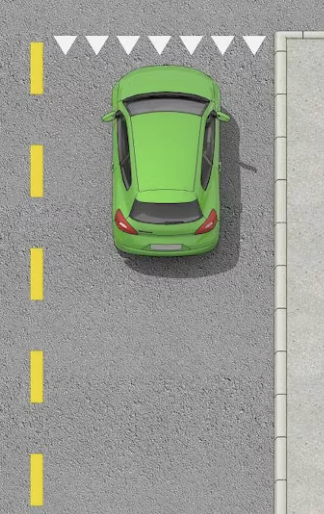
Yield Lines
Used at locations where drivers are required to yield, such as a mid-block crosswalk.
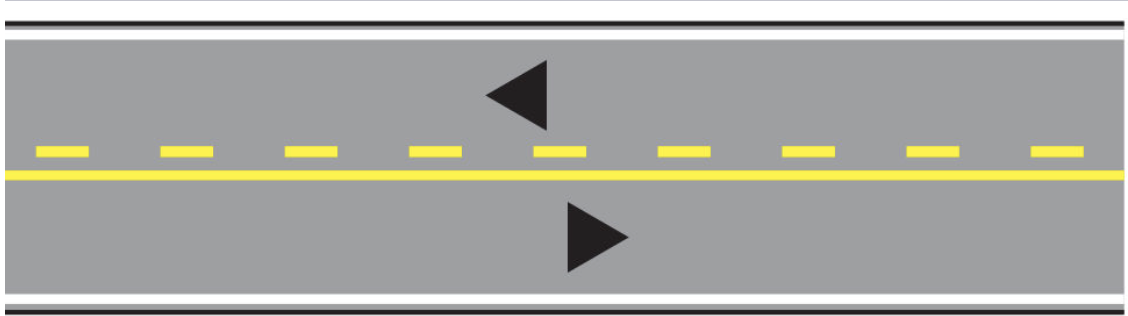
Dashed Yellow Line Alongside a Solid Yellow Line
Indicates that passing is permitted on the side of the broken line, but not on the side of the solid line.
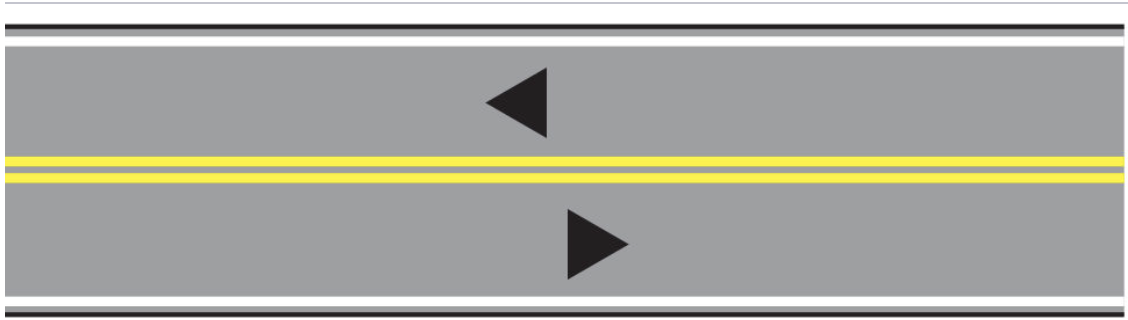
Solid Double Yellow Lines
Used where there are lanes with traffic moving in opposite directions. Two solid lines mark the center of the roadway. Solid yellow lines may be crossed to make a left turn to or from an alley, private road, driveway, or street.
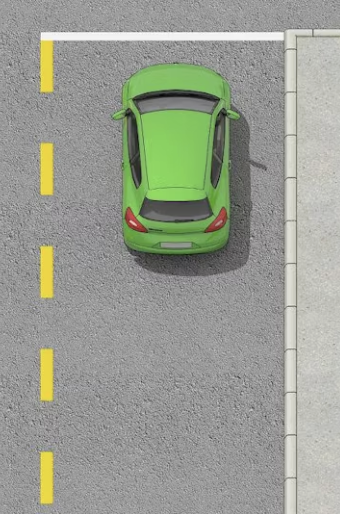
Stop Lines
When required to stop because of a sign or signal, you must stop before your vehicle reaches the stop line.
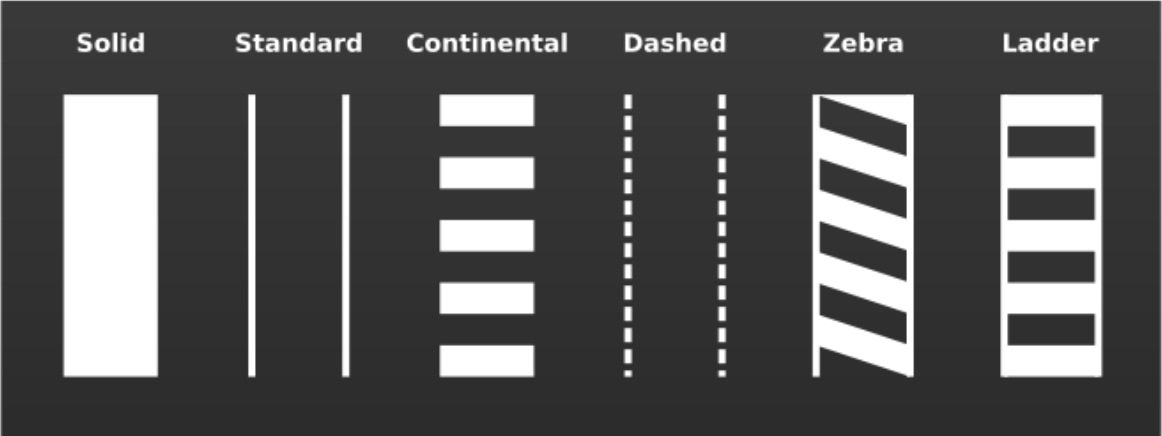
Crosswalks
Define the area where pedestrians may cross the roadway. You must yield to pedestrians in or about to enter a crosswalk. Not all crosswalks are marked. Be alert for pedestrians when crossing intersections.
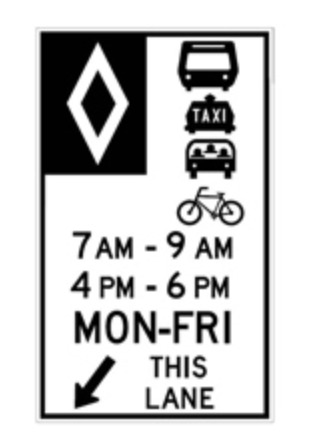
Reserved Lanes Signs
On various roadways, one or more lanes may be reserved for special vehicles. Reserved lanes are marked by signs stating that the lane is reserved for special use and often have a white diamond posted at the side of the road or painted on the road surface. The following apply:
• “Transit” or “bus” means the lane is for bus use only.
• “Bicycle” means the lane is reserved for bicycles.
• “HOV” stands for “High Occupancy Vehicles;” a diamond-shaped marker indicates lanes reserved for vehicles with more than one person in them. Signs are posted that say how many people must be in the vehicle.
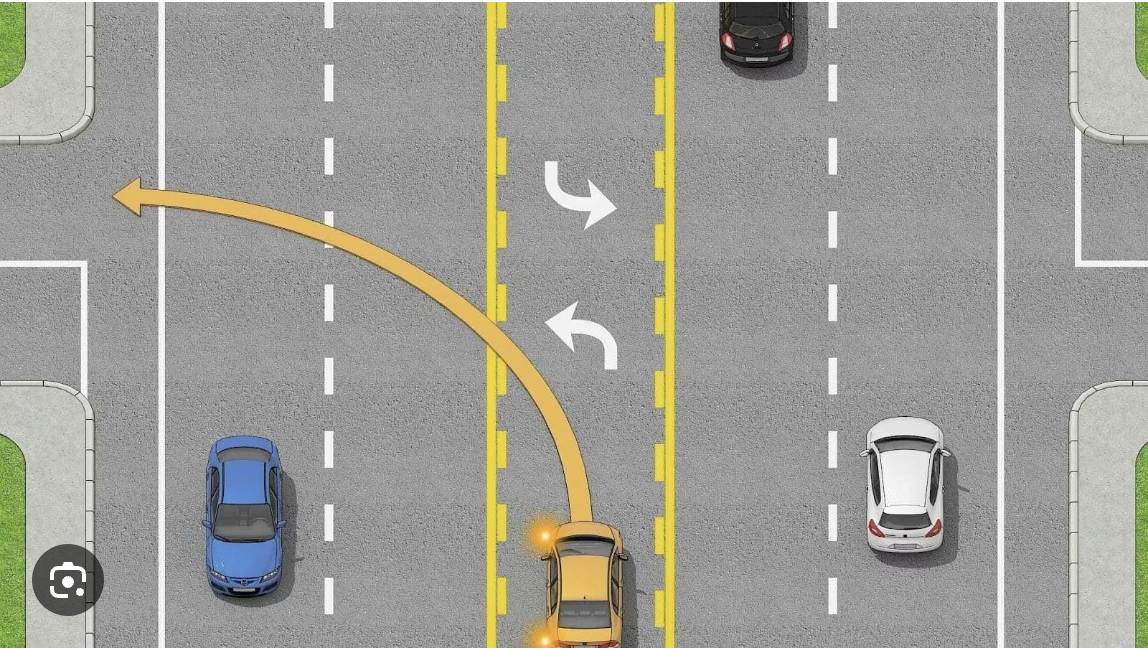
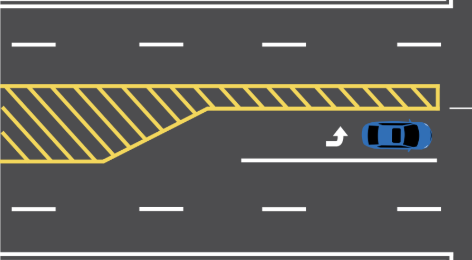
Shared Center Lane
These center lanes are reserved for making left turns (or U-turns when they are permitted), but can be used by vehicles traveling in both directions. On the pavement, left-turn arrows for traffic in one direction alternate with left-turn arrows for traffic coming from the other direction. These lanes are marked on each side by solid yellow and dashed yellow lines. In some areas, the shared center lane becomes a “reversible lane” during rush hours. Be sure you can enter the lane and that it is safe before you do so.
Reversible Lanes
Some travel lanes are designed to carry traffic in one direction at certain times and in the opposite direction at other times. These lanes are usually marked by double-dashed yellow lines. Before you start driving in them, check to see which lanes you can use at that time. There may be signs posted by the side of the road or overhead. Special lights are often used. A green arrow means you can use the lane beneath it; a red “X” means you cannot. A flashing yellow “X” means the lane is only for turning. A steady yellow “X” means that the use of the lane is changing and you should move out of it as soon as it is safe to do so.
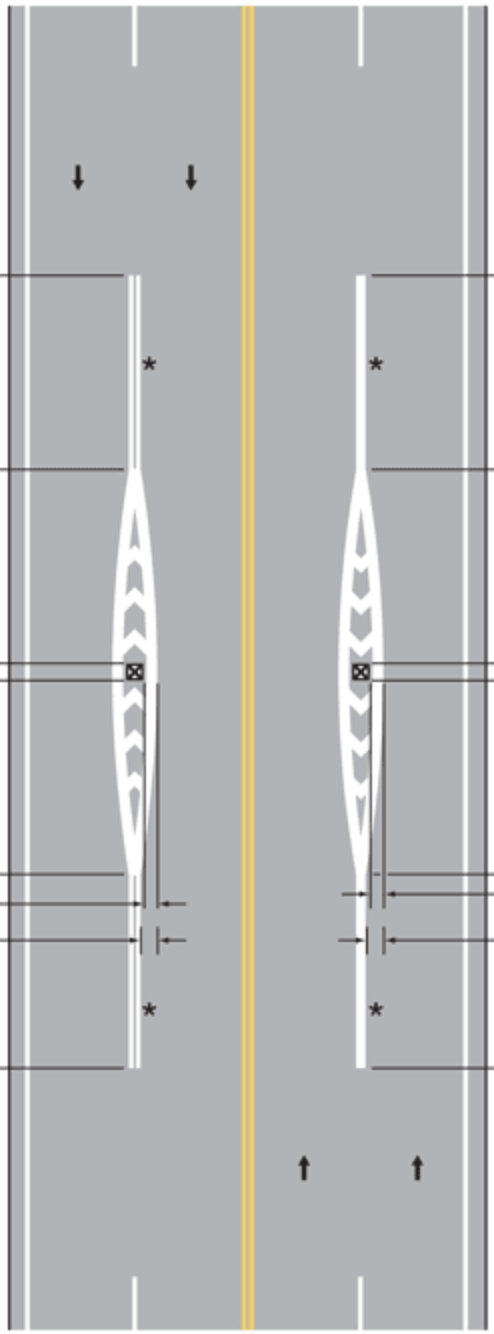
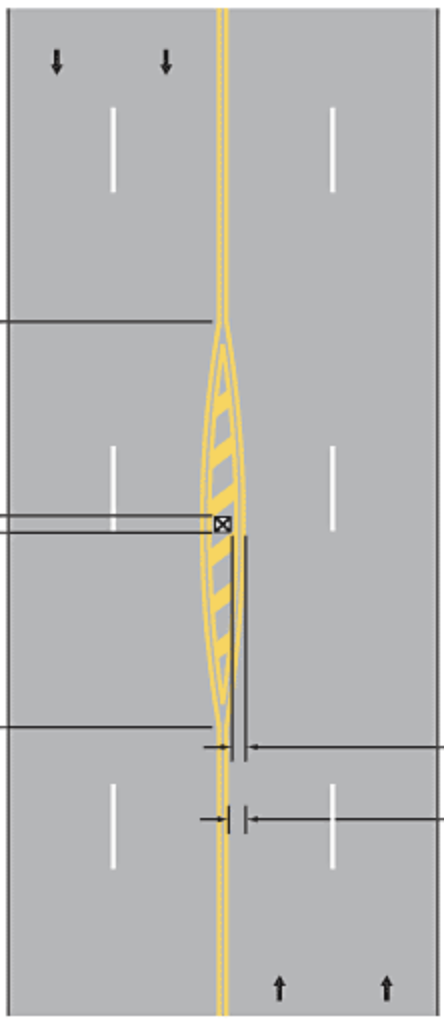
Yellow or White Diagonal Stripes
Used to mark fixed obstructions.
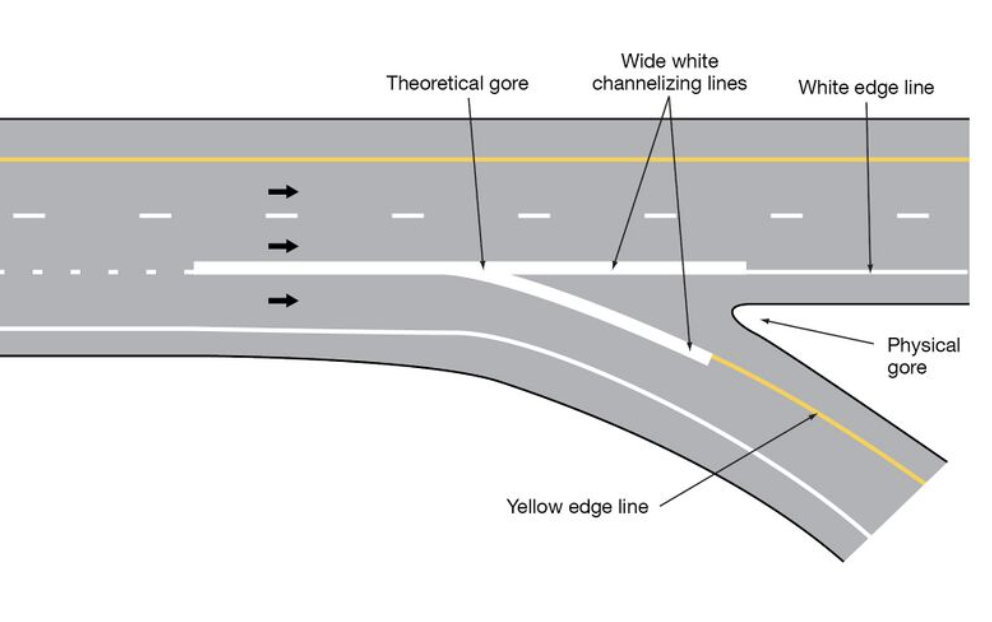
Solid White or Yellow Lines
Sometimes used to channel traffic around a hazard.
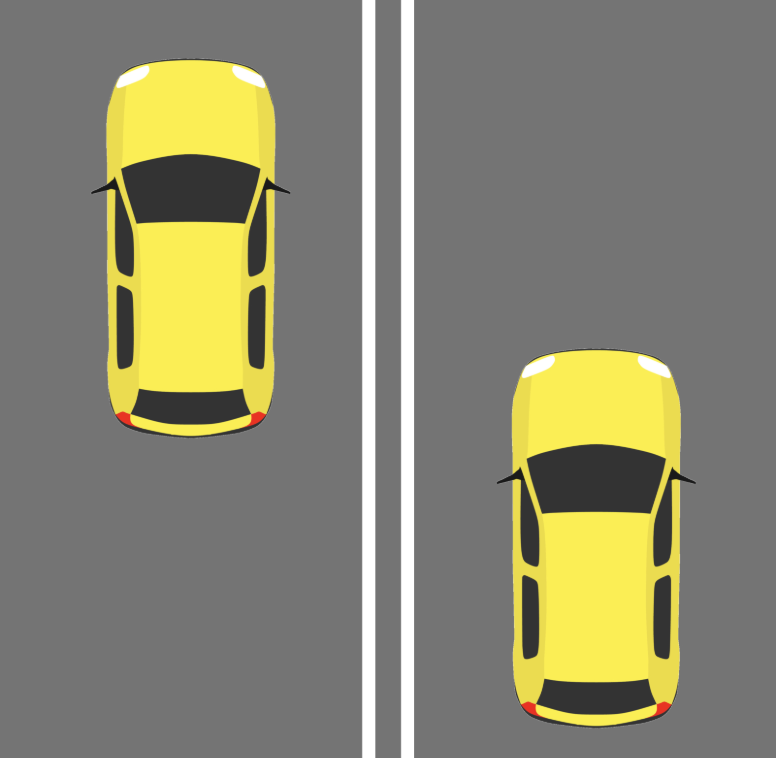
Double Solid White Line
Prohibits lane changing.
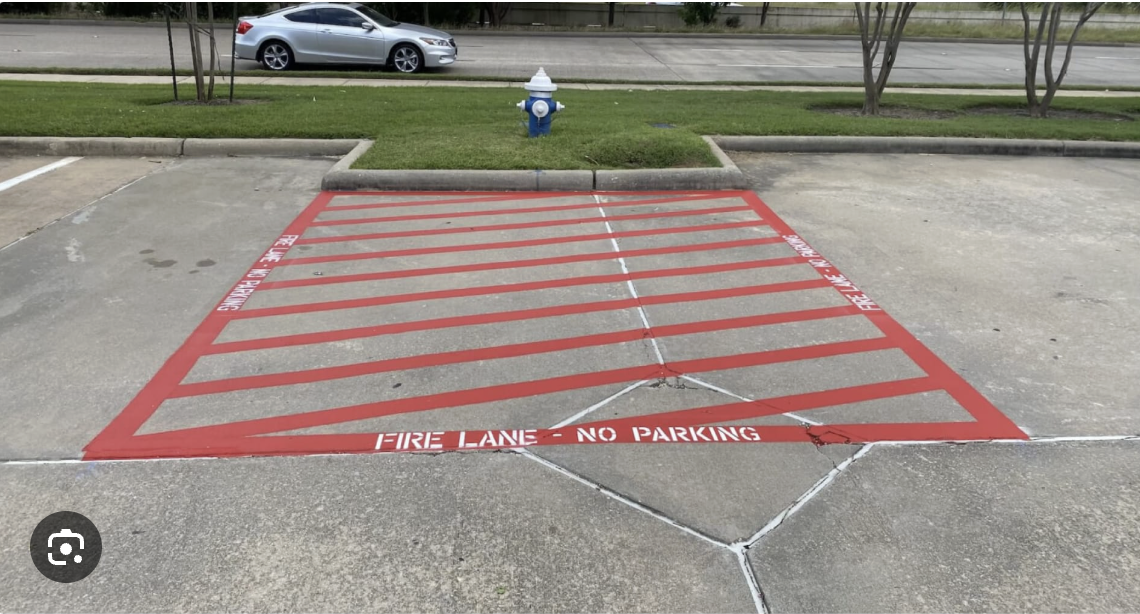
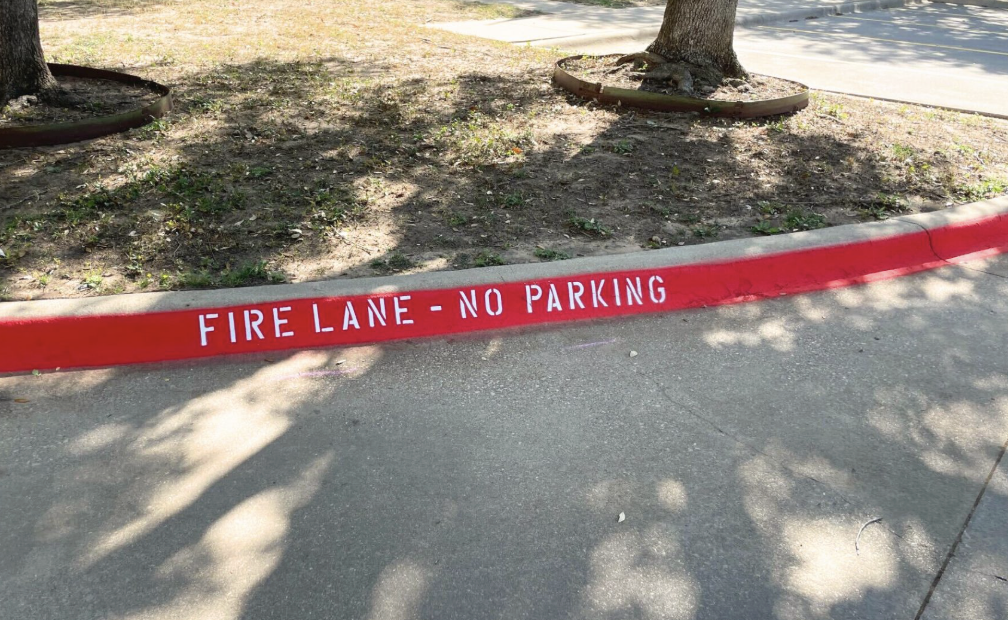
Curb Markings, Fire Lanes and Pavement Markings
May be designated as “No Parking” areas by local authorities.
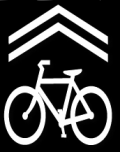
A Bicycle Sharrow/Two Chevrons Painted Above a Bicycle Symbol
Indicates the lane is shared. Vehicle or bicycle traffic may be in the lane. Although you should always keep on the lookout for bicyclists, this serves as an additional warning to watch for bicycles in the lane.

