AP BIO UNIT 4 CELL COMMUNICATION AND CYCLE: all modules
 Studied by 0 people
 Call Kai
 Learn
Learn Practice Test
 Spaced Repetition
 Match
Match Flashcards
 Knowt Play
1/183

There's no tags or description
Looks like no tags are added yet.
Name | Mastery | Learn | Test | Matching | Spaced | Call with Kai |
|---|
No analytics yet
Send a link to your students to track their progress
184 Terms
cancer.
A condition of unregulated cell division, often resulting in the development of tumors and disease.
Interactions between cyclins and cyclin-dependent kinases
what controls the cell cycle
cyclins
A family of several different proteins that are produced in different amounts during different phases of the cell cycle so that they can bind to and regulate cyclin-dependent kinases, thus cueing the progression of the cell cycle.
Mitosis
When do cyclins peak during the cell cycle in sea urchin embryos?
Kinases
What enzymes are present in constant concentrations throughout the cell cycle?
cyclin-dependent kinases (CDKs).
An enzyme that is activated by binding to the appropriate cyclin partner, gaining the ability to transfer a phosphate group to a target protein.
Cyclins received this name after researchers observed that these proteins fluctuate in a cyclical pattern in ways that correlated with the cell cycle.
Describe why the name cyclin is a fitting name for this family of proteins.
CDK is an acronym for cyclin-dependent kinase. The kinase function causes the transfer of phosphates to other regulatory proteins in this process, and the activation of the kinase function is dependent upon the appropriate cyclin protein associating with the CDK protein.
Define the term "CDK" and describe how this term relates to the functions of these proteins.
Three checkpoints are the DNA damage checkpoint, the DNA replication checkpoint, and the spindle assembly checkpoint.
Identify three major cell cycle checkpoints.
The DNA damage checkpoint occurs at the G 1 / S transition. The DNA replication checkpoint occurs at the G 2 / M transition. The spindle assembly checkpoint occurs at the metaphase/anaphase transition.
Identify when in the cell cycle each checkpoint occurs.
Cells that have DNA damage can be arrested, or paused, in G 1 , allowing the activity of enzymes in the nucleus to repair DNA. Cells that have not completely and accurately copied their DNA can be arrested, or paused, before entering M phase, which provides time for DNA to be completely copied. Similarly, a pause before anaphase at the spindle checkpoint can allow time for microtubules to make the correct connections.
Describe how a pause in the cell cycle can benefit a cell.
If DNA damage has occurred, a DNA-damage-dependent kinase will transfer phosphates from ATP to the p53 protein. The p53 with phosphates blocks the synthesis of enzymes and other materials that are needed for DNA synthesis, resulting in G 1 arrest.
Describe cellular conditions in which you would expect to find p53 protein that has had phosphates added.
If the first error in the DNA is a change that allows the cell to escape regulation by the usual cell cycle regulators, subsequent errors in the DNA might also make it past a defective checkpoint. Furthermore, some of the subsequent changes might cause faster growth and result in the ability of such cells to migrate in the body, or metastasize.
Describe how multiple errors in DNA can accumulate in a cell and drive cancer.
multiple checkpoints
Cell cycle progression requires successful passage through
checkpoint
A point of transition between one phase of the cell cycle and the next phase of the cell cycle.
DNA replication
The process of duplicating a DNA molecule, during which the parental strands separate and new partner strands are made.
DNA damage checkpoint
DNA replication checkpoint
Spindle assembly checkpoint
what are the cell checkpoints?
Transition from G1 to S
when does the DNA damage checkpoint occur in the cell cycle?
Transition from G2 to M
when does the DNA replication checkpoint occur in the cell cycle?
Metaphase of mitosis
when does the Spindle assembly checkpoint occur in the cell cycle?
Cell ensures that its chromosomes are connected to the mitotic spindle that will move them to opposite poles in anaphase
what is being checked in the Spindle assembly checkpoint?
Makes sure the parental DNA has been completely copied; ensures each daughter cell has a full complement of genetic material
what is being checked in the DNA replication checkpoint?
Monitors for damaged DNA before the DNA is copied in the S phase; delays progression of cell cycle until DNA damage is repaired
what is being checked in the DNA damage checkpoint
a. UV radiation
b. chemical agents
Identify two environmental factors that can damage DNA.
cell death or cancer
Disruption of cell cycle checkpoints can lead to
The formation of the cyclin-CDK is blocked.
Describe how the cell cycle is halted if something is not correct at a cell cycle checkpoint.
apoptosis
The genetically programmed death of a cell.
a. If the cell was too damaged to be fixed when stopped at a checkpoint, potentially preventing the cell from become cancerous
b. As a normal part of development to remove unneeded cells
Describe two reasons a cell would undergo apoptosis.
In a healthy cell, the p53 protein is present without any phosphates and in small amounts and the p53 degrades quickly. When DNA is damaged a kinase adds a phosphate group to p53 and activates it. The p53 turns on several genes that pause the cell cycle.
Describe how p53 normally works in the regulation of the G1 checkpoint.
When the p53 protein is mutated, its function is inhibited. The cell can divide before DNA damage is repaired. This can lead to the accumulation of mutations that promote cell division.
Describe how a mutation in p53 leads to cancer.
multiple
Cells require (one or multiple) mutations to become cancerous.
cell division
The process by which cells make more cells.
cells
Cell division produces ___________
binary fission
Bacteria and other prokaryotes divide by __________.
Two daughter cells, each with the same DNA as the parent cell.
What is the result of binary fission?
asexual reproduction.
Reproduction of organisms in which an offspring inherits DNA from a single parent.
Mitochondria and chloroplasts
Identify which two organelles in eukaryotic cells divide by binary division
Asexual
Identify whether binary fission is a form of asexual or sexual reproduction.
mitosis.
The stage of M phase that produces two identical nuclei during the eukaryotic cell cycle.
cytokinesis
The stage of M phase in which the cytosol, organelles, and duplicated nuclei from one eukaryotic cell divide into two daughter cells
chromosome
A cellular structure containing the genetic material in cells, consisting of a single DNA molecule with associated proteins.
asexual
reproduction
In unicellular eukaryotes cell division is a form of _________.
For growth, development, and repair of tissues
Identify why multicellular eukaryotes undergo cell division.
Cells need two copies of their genetic material, or DNA, so that each daughter cell can receive one copy. They also need to have adequate resources to support two daughter cells. Some cells require a signal in order to divide in two.
Describe what is needed before a cell is able to divide.
In binary fission, a cell duplicates its DNA, increases in size, and divides into two daughter cells.
Describe the steps of binary fission.
Eukaryotic cells produce daughter cells by mitotic cell division. In this form of cell division, the nucleus divides by mitosis and the cytoplasm divides by cytokinesis.
Identify the process by which eukaryotic cells divide
The two main phases of the cell cycle are M phase and interphase.
Identify the two main phases of the cell cycle.
S phase is part of interphase and it is the time when DNA is duplicated so that each daughter cell receives one copy.
Describe what happens during S phase of the cell cycle.
Centrosomes organize the mitotic spindle. The mitotic spindle attaches to kinetochores on chromatids to separate and move chromosomes during prometaphase, metaphase, and anaphase.
Describe the relationships between centrosomes, mitotic spindles, and kinetochores, and state when they are active.
Sister chromatids are two complete copies of DNA attached by a single centromere. The sister chromatids are each a molecule of DNA but are considered a single duplicated chromosome until they split apart in anaphase. When the sister chromatids split apart, they each have their own centromere and so are each considered a chromosome.
Describe the relationship between sister chromatids and chromosomes.
The centrosome is duplicated during S phase. Because they will eventually move duplicated chromosomes to opposite poles of a cell, lack of duplication means the chromosomes won't be able to be separated and cell division will not proceed.
Identify the phase of the cell cycle in which the centrosome is duplicated and describe what would happen to a cell that failed to duplicate this organelle.
Animal and plant cells both have cell membranes. However, plant cells have an additional covering, the cell wall, that is not present in animal cells. Therefore, plants have to synthesize cell wall plus cell membrane during cytokinesis, while animal cells only synthesize cell membrane.
Describe how cytokinesis differs in animal cells versus plant cells.
cell cycle.
The collective name for the steps that make up the life cycle of eukaryotic cell, including DNA replication and mitotic cell division.
M phase.
One of the two major phases of the eukaryotic cell cycle, consisting of mitosis and cytokinesis
interphase.
One of the two major phases of the eukaryotic cell cycle; in which the cell copies its DNA and synthesizes proteins necessary for mitosis
sister chromatids.
The two copies of a chromosome resulting from DNA duplication that remain connected at the centromere.
centromere
A region of DNA where sister chromatids can be held together; also, the place where the mitotic spindle attaches to drive chromosome movement during mitosis
two daughter cells
During mitotic cell division, a parental cell produces
chromatin.
An assemblage of DNA, RNA, and proteins that fills the nucleus.
mitotic spindle.
A structure in the cytosol made up predominantly of microtubules that pull the chromosomes into separate daughter cells.
centrosome.
A compact structure that is the microtubule organizing center for animal cells.
kinetochore.
The protein complex on a chromatid where the mitotic spindle attaches.
prophase
prometaphase
metaphase
anaphase
telophase
steps of mitosis
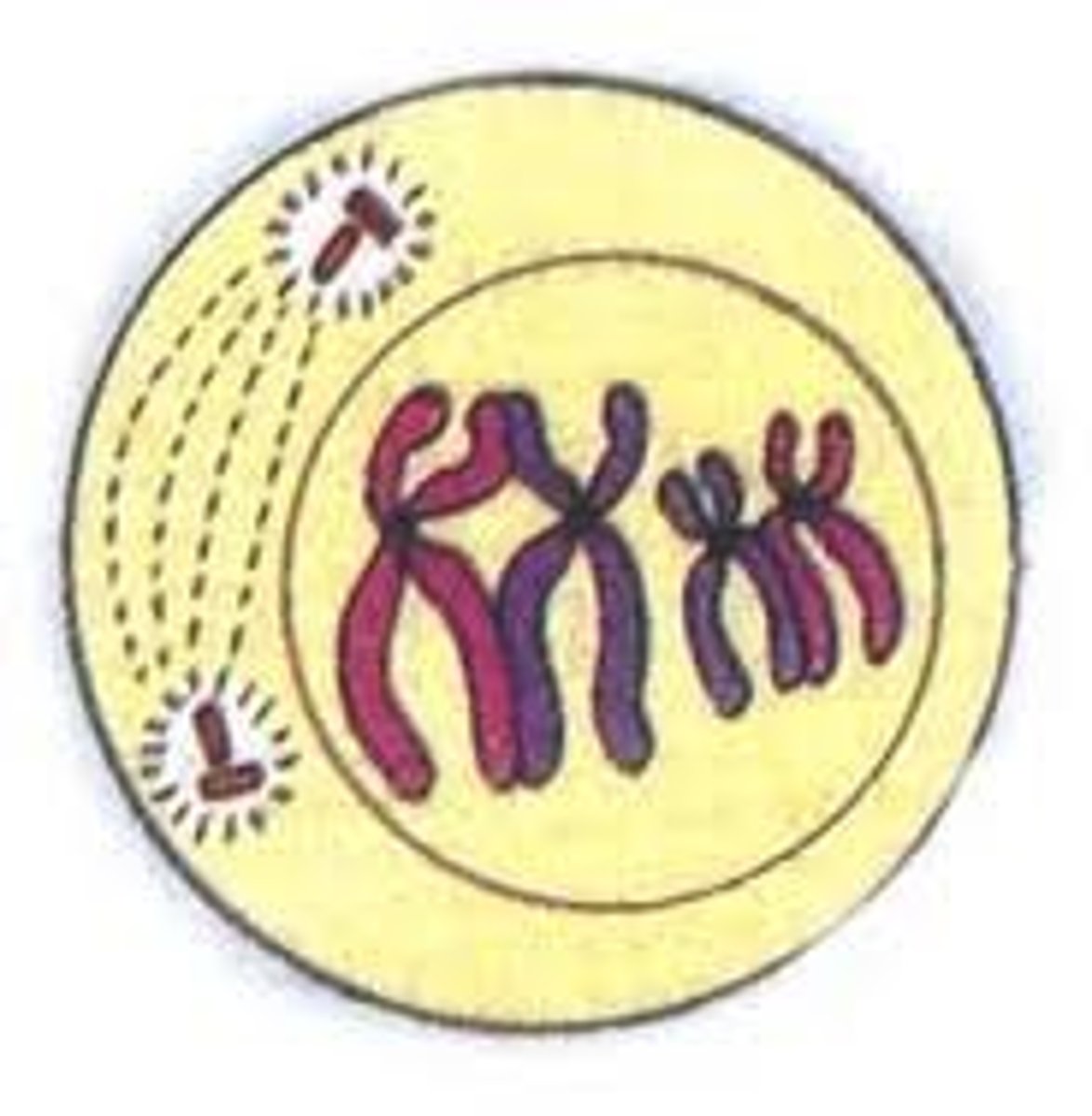
prophase
Chromosomes condense and become visible. Centrosomes begin to form the mitotic spindle.
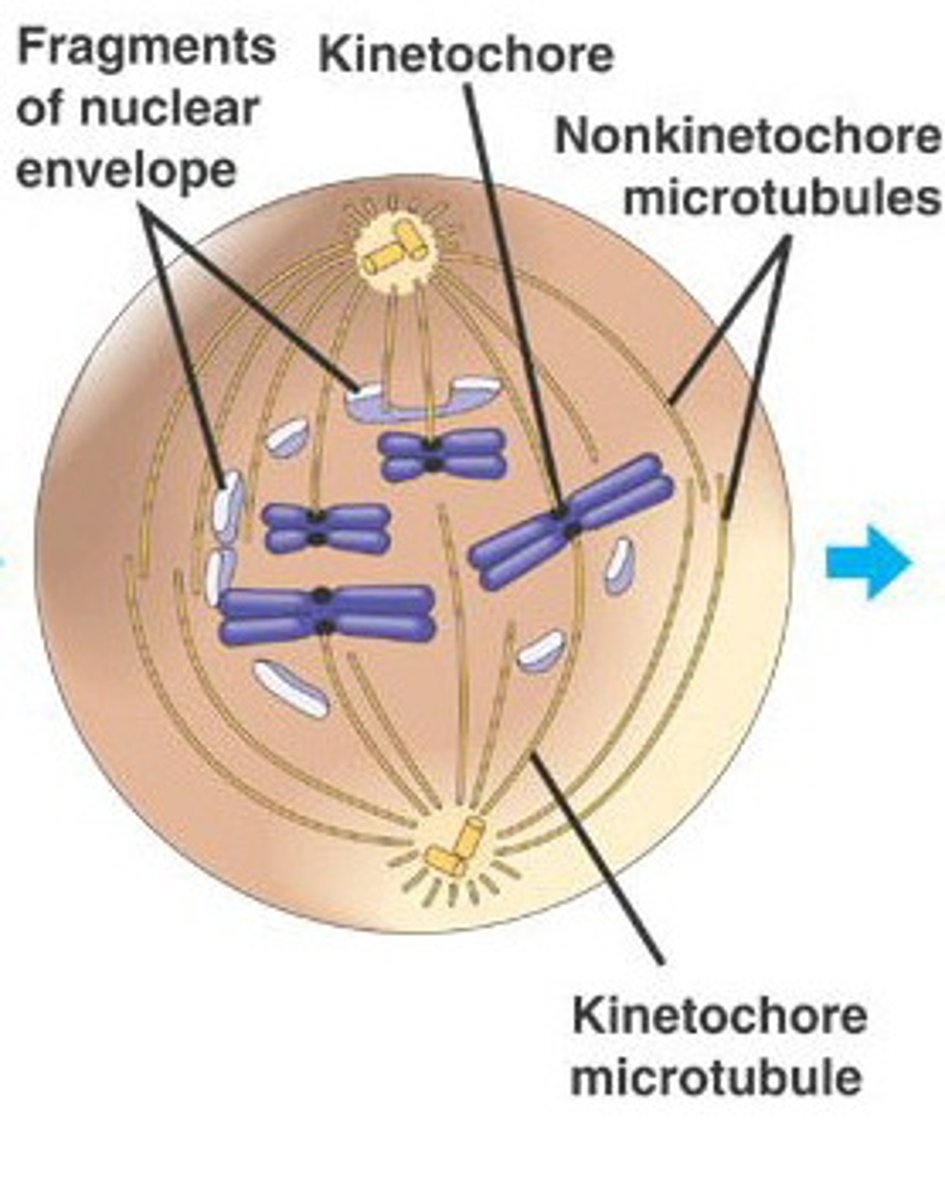
prometaphase
Microtubules of the mitotic spindle attach to chromosomes; nuclear envelope starts to break down.
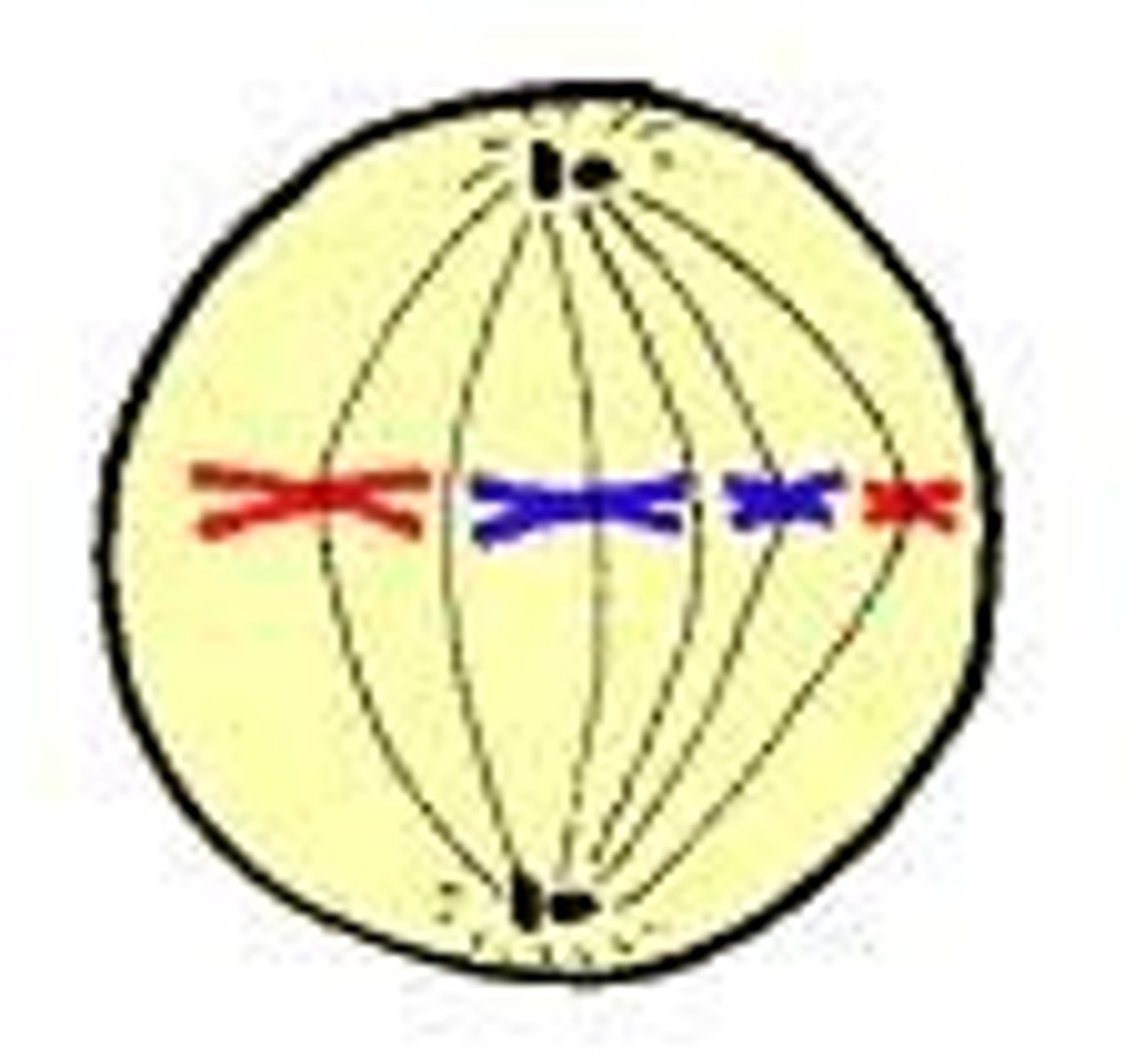
metaphase
Chromosomes line up in the center of the cell.
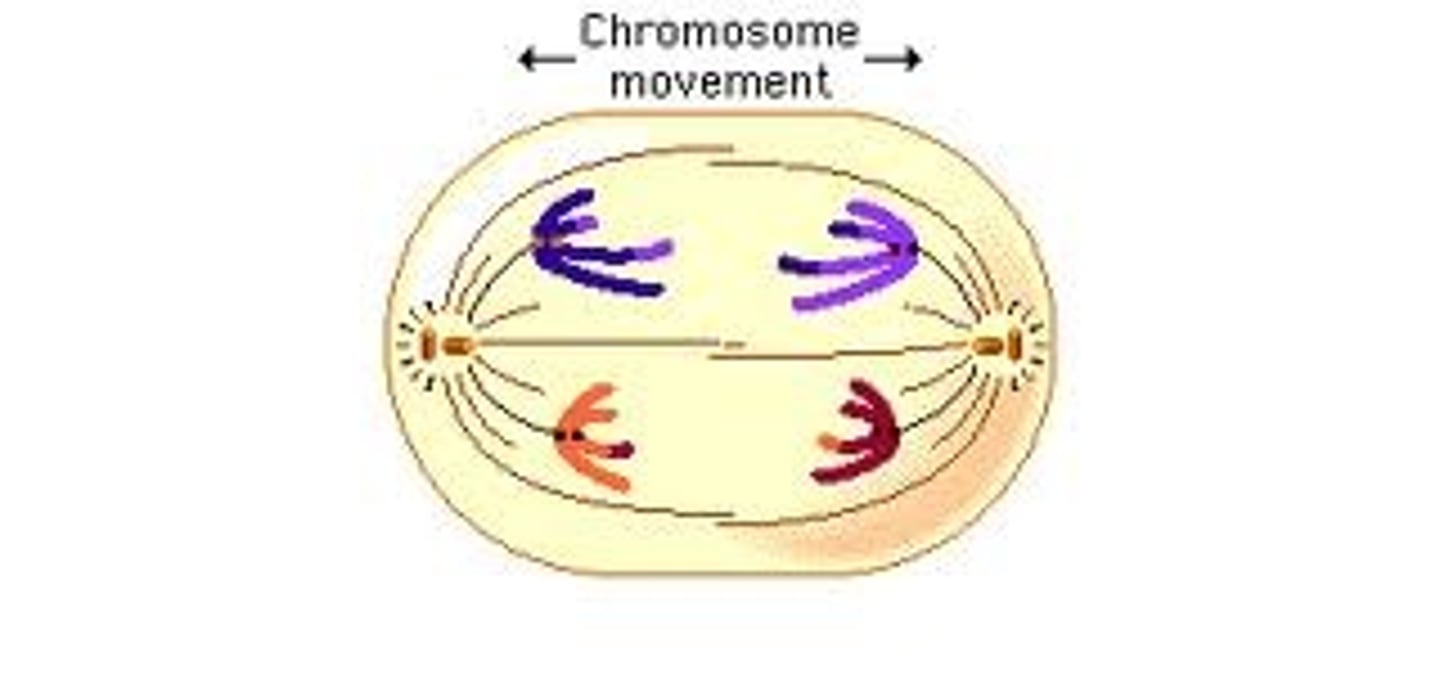
anaphase
Sister chromatids separate and travel to opposite poles.
telophase
Sister chromatids separate and travel to opposite poles. Nuclear envelope re-forms and chromosomes decondense.
Contractile ring forms and divides the cytoplasm of the cell in two.
steps of cytokinesis in animal cells
A new cell wall (in addition to a cell membrane) is constructed which divides the cell in two.
steps of cytokinesis in plant cells
s phase
The phase during interphase in which the cell copies its DNA; the S phase follows the G 1 phase but precedes the G 2 phase
g1 phase
The phase during interphase in which the cell synthesizes regulatory proteins controlling the eukaryotic cell cycle.
g2 phase
The phase during interphase after DNA has been replicated, characterized by increases in cell size and protein contents.
g0 phase
The phase in the cell cycle in which cells pause between M phase and S phase; it may last for periods ranging from days to more than a year
negative
_______________ feedback helps to maintain homeostasis
set point
Both insulin and glucagon only operate until the ___________ for blood glucose is reached.
positive
______________ feedback is self-reinforcing and amplifies responses.
amplified
In positive feedback responses are ____________.
stimulus
Both positive and negative feedback loops start with detection of a ________________.
The penguin entered the huddle to warm up when it was cold. However, the penguins huddle together so closely that they efficiently trap heat to such high levels that a penguin in the middle can get overheated. That is when the initial stimulus, being cold, is gone, and it is when the penguin leaves the huddle.
Describe the pathway that drives an emperor penguin to exit from the center of a thermoregulatory huddle.
Insulin binds to its receptor to activate a response pathway that increases the rate of glucose uptake by the cell, thus lowering the concentration of glucose in the blood and terminating the stimulus for additional secretion of insulin.
Describe a cell's responses to binding insulin, including insulin's effects on blood glucose levels and the negative feedback effects on the secretion of additional insulin.
Insulin and glucagon have opposite effects on glucose levels in the blood: insulin decreases blood glucose levels and glucagon increases blood glucose levels. Insulin, secreted by pancreatic beta cells in times of high levels of glucose, acts on its target cells to increase uptake of glucose from the blood. In contrast, glucagon, secreted by pancreatic alpha cells in times of low levels of glucose, acts on its target cells to release glucose into the blood.
Describe what is meant by the statement that insulin and glucagon are counter-regulatory hormones for the regulation of glucose levels in the blood.
The baby's head pushes against the birth canal of its mother, which is sensed by cells that cause the brain to secrete oxytocin. Binding to its receptors on the uterus, oxytocin stimulates further uterine contractions, more strongly pushing the baby's head against the birth canal, increasing oxytocin secretion, further increasing uterine contractions, and so on until delivery of the baby.
Describe the role of positive feedback in childbirth.
The first ripening apples on a tree produce small amounts of ethylene, which when received by less ripe apples causes them to ripen and produce ethylene, so a small amount of ethylene generates a large response.
Describe why ethylene's effects on peach ripening is an example of positive feedback.
mutation
Any heritable change in the genetic material, usually a change in the nucleotide sequence of a gene.
Receptor agonists
_______________________ activate signal transduction pathways and
receptor antagonists inhibit them
Endogenous ligands are produced by the body and exogenous ligands come from outside the body.
Differentiate between endogenous ligands and exogenous ligands.
agonist
A ligand that binds a receptor and leads to a response.
antagonist.
A ligand that binds to a receptor and inhibits a response.
The prolonged binding stimulates a response that is longer lasting and greater than the typical response.
What is the result if an exogenous ligand binds to the receptor more tightly than the signaling molecule does?
Agonists are ligands that activate a receptor and lead to a response in the target cell. Antagonists are ligands that inhibit a receptor and suppress a response of the target cell.
Describe the effects of agonists and antagonists on the responses of target cells.
Both albuterol and adrenaline act as ligands that bind to and activate the adrenaline receptor in the lungs, leading to a widening of the airways.
Describe how albuterol stimulates the same lung responses as adrenaline.
Coffee contains the chemical caffeine, an antagonist of adenosine receptors, preventing drowsiness that would normally take place as a result of adenosine binding its receptor.
Describe how caffeine blocks the effects of adenosine in the brain.
Mutations in the gene encoding leptin or the gene encoding the leptin receptor protein can disrupt leptin signaling, resulting in increased appetite and potentially in obesity.
Describe two different ways leptin signaling might become disrupted at the genetic level and the consequences of the disruption.
Disrupting the function of the receptor proteins will produce target cells that do not respond to the signaling molecule.
Describe why a cell might not respond to an abundance of signaling molecules.
Genetic mutations
______________ can disrupt signal transduction pathways
The sequence of bases in DNA
What determines the structure of a protein?
mutant
Mutations in DNA lead to _______________ proteins.
The signaling pathway would no longer function because the signaling molecule could never bind.
How would a cell signaling pathway be affected if a mutation changed the shape of the receptor protein?
Mutations in the leptin-signaling molecule or the leptin receptor protein
The brain stimulates appetite due to the absences of a leptin signal.
The leptin pathway can be disrupted by mutations.
a. Identify two types of mutations that can disrupt the leptin signaling pathway.
b. Describe the effect these two mutations have.
 Note
Note  Flashcards (22)