biology 2600 (ecology) - unit 13 (predation)
 Studied by 0 people
 Call with Kai
 Learn
Learn Practice Test
 Spaced Repetition
 Match
Match Flashcards
 Knowt Play
1/14

There's no tags or description
Looks like no tags are added yet.
Name | Mastery | Learn | Test | Matching | Spaced | Call with Kai |
|---|
No analytics yet
Send a link to your students to track their progress
15 Terms
Exploitation
Interaction that enhances fitness of one individual while reducing fitness of the exploited individual
Predators
Organisms that kill and consume other organisms
Parasites
Live on host tissue and reduce host fitness, but do not generally kill the host
Parasitoid
Insect larva that consumes the host
Pathogens
Induce disease
How do predators, parasites, and pathogens influence prey and host populations?
Influence the distribution, abundance, and structure of prey populations. Exploitative interactions have potential to influence prey and host populations
What is the influence of caddisfly larvae on algal and bacterial populations on which it feeds (Lamberti and Resh)?
Larvae reduce the abundance of their food supply (algal and bacterial populations)
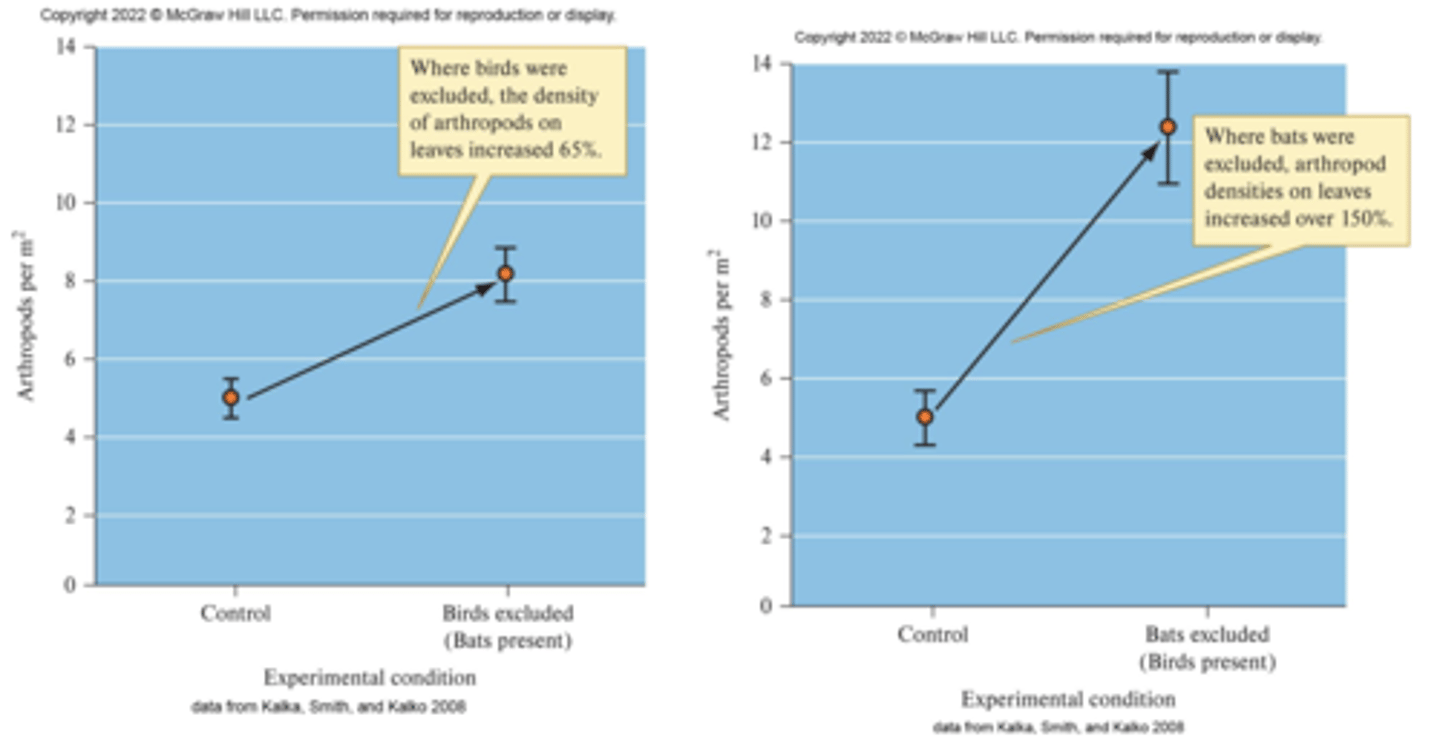
What is the influence of bird and bat (predator) exclusion on arthropod (prey) abundance (Kalka et al.)?
Compared to controls:
- Bird exclusion increased arthropods by 65%
- Bat exclusion increased arthropods by 150%
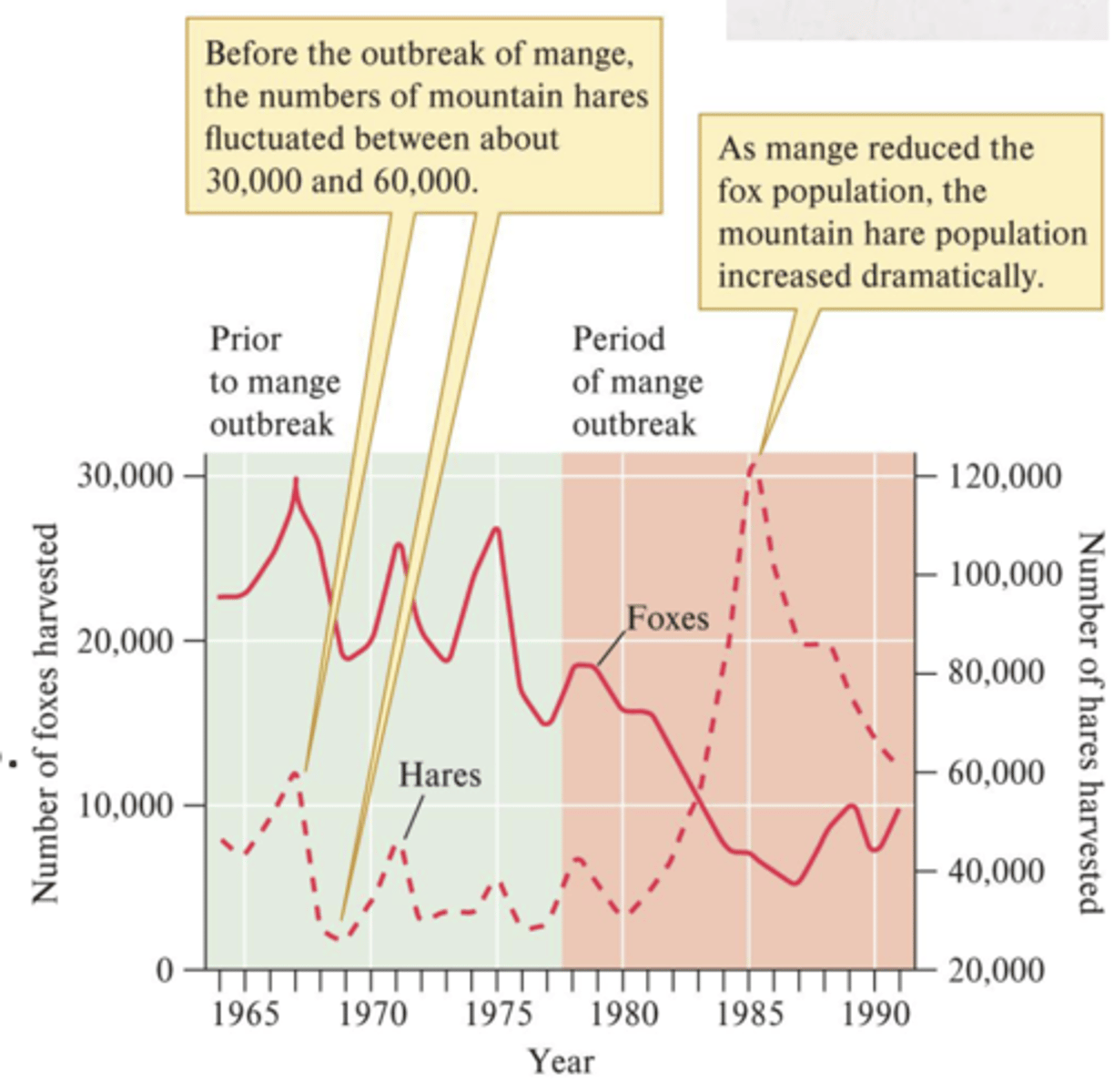
How can pathogenic parasites affect predators, which consequently affects prey (Lindstrom et al.)?
- Mange mites cause hair loss, deterioration, and death in dogs and foxes
- Fox populations declined by 70%
- As a result: the number of mountain hares, a prey species, increased 2 to 4 times
Snowshoe hares and lynxes (their predators) have well-documented 8-11 years-long population cycles (based on the records of the Hudson Bay Company fur trade outposts).
What are potential explanations for these cycles?
Elton: they are driven by variation in solar variation (the 11-year solar cycle)
Keith suggested "overpopulation" theory:
- Could apply to both hare and lynx populations
- In this theory, the lynx is somewhat affected by the hare population (starvation due to reduced food), but hare is not affected by lynx
Overpopulation Theory
1. Decimation by disease and parasitism
2. Physiological stress at high density
3. Starvation due to reduced food
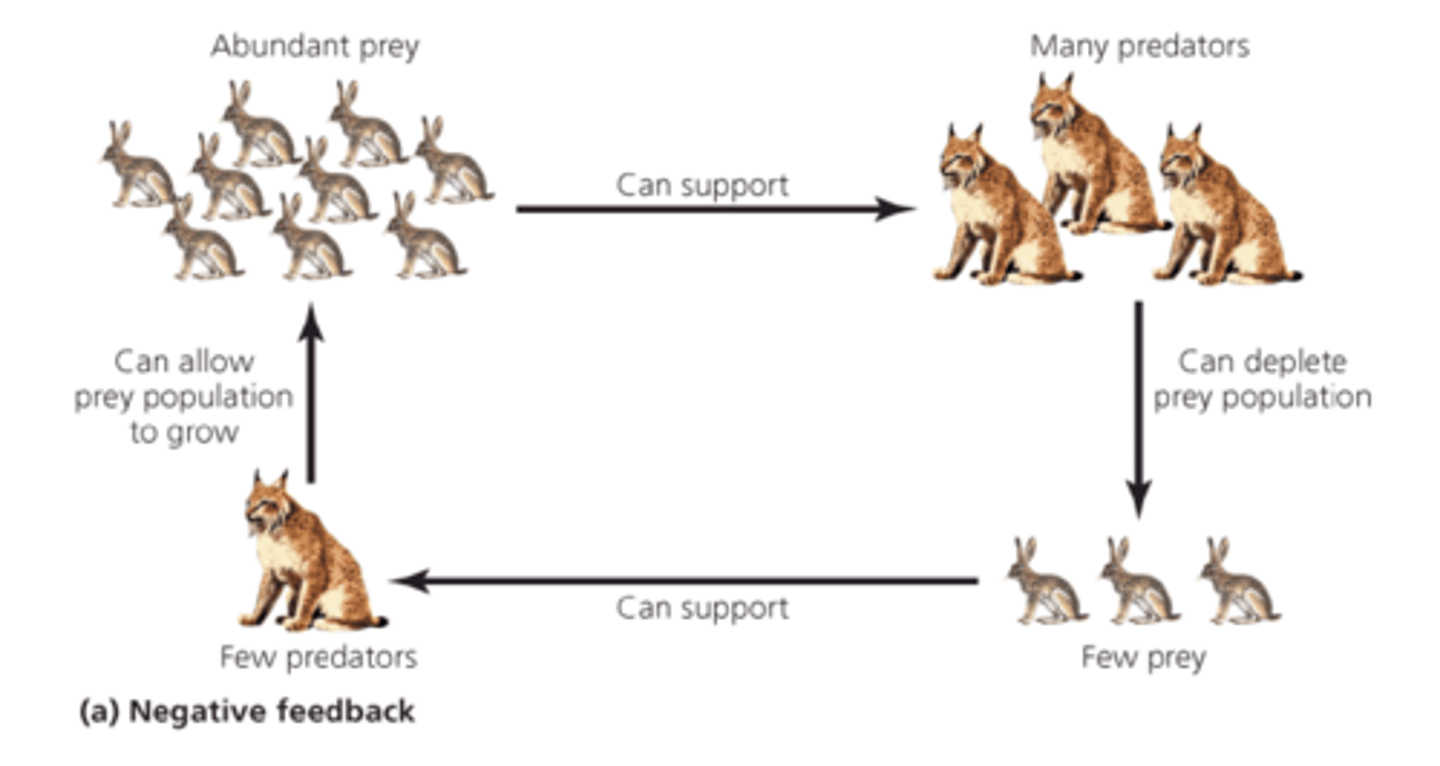
How could the population cycles of snowshoe hares and lynxes be explained by the prey-predator interaction?
Both hare and lynx population are coupled to each other
More hares = more food available to lynxes = more lynxes = bigger predation = few hares = lynxes die of starvation and/or fewer offspring = predation weaker = more hares, etc.
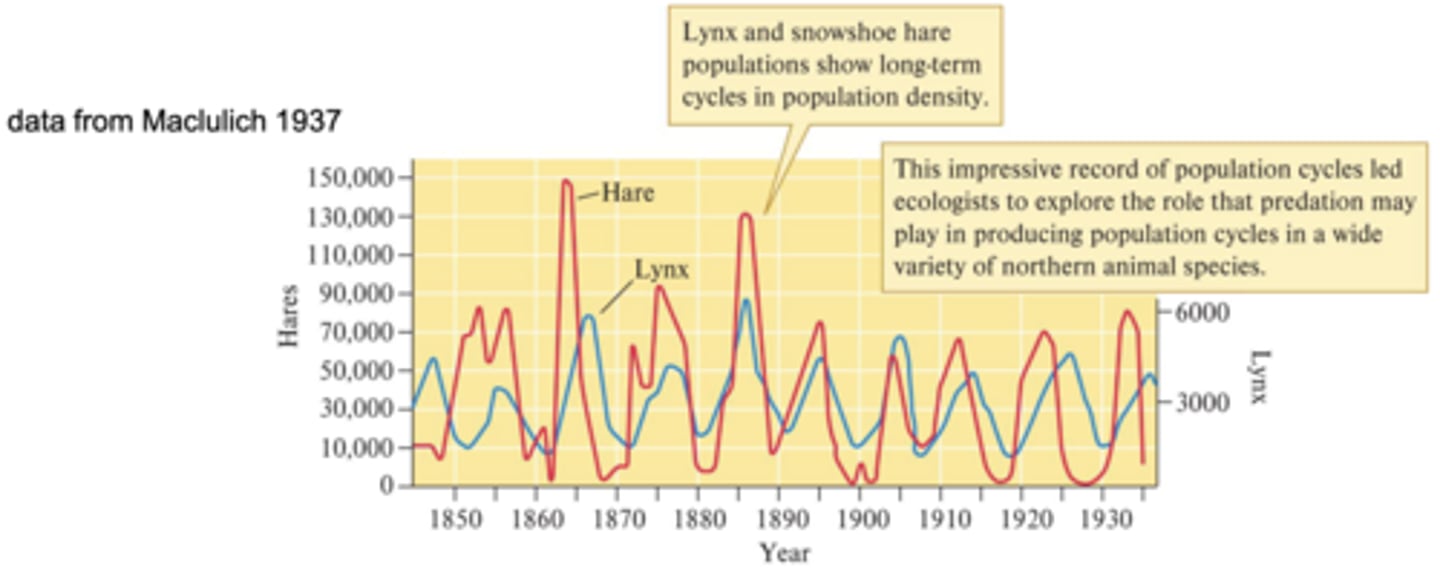
Is there evidence for prey-predator interactions explaining the population cycles of snowshoe hares and lynxes?
- Tightness of the two cycles
- And the fact that the hare peaked earlier (large initial supply of prey allows predator to thrive, reproduce, and eventually increase, then bigger predation and fewer prey)
- Thanks to such a negative feedback, a predator shouldn't drive the prey into extinction
Would predator-induced extinction still work if there were more prey and/or predator species?
A predator is less likely to drive the prey into extinction when it has alternative food sources
However, if multiple predators use overlapping hunting strategies, extinction risk increases. If predators compete with each other, extinction risk can decrease
The snowshoe hare was introduced to Newfoundland, which might have contributed to the sharp decline in our native game species. Why?
Caused a predator population boom (e.g. Canada lynx, red fox, and great horned owl), which created pressure on native game species
When the hare population becomes scarce, the now-abundant predators seek native game species as alternative prey
However, Newfoundland is still considering introducing wild turkeys!
 Note
Note  Flashcards (179)