elbow + trunk
 Call Kai
 Learn
Learn Practice Test
 Spaced Repetition
 Match
Match Flashcards
 Knowt Play
1/78

There's no tags or description
Looks like no tags are added yet.
Name | Mastery | Learn | Test | Matching | Spaced | Call with Kai |
|---|
No analytics yet
Send a link to your students to track their progress
79 Terms
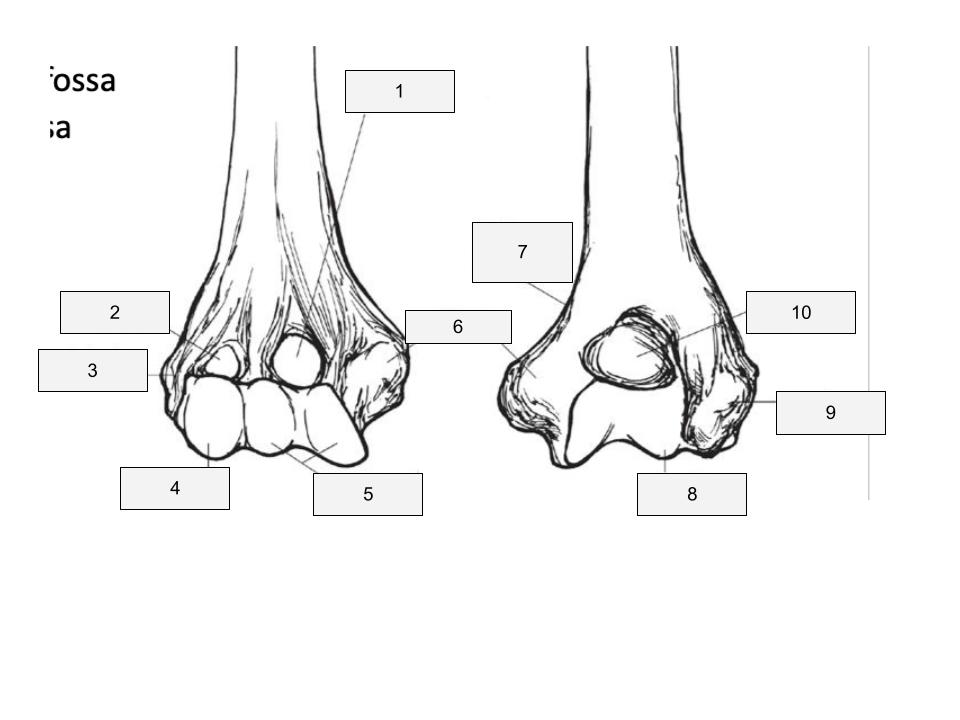
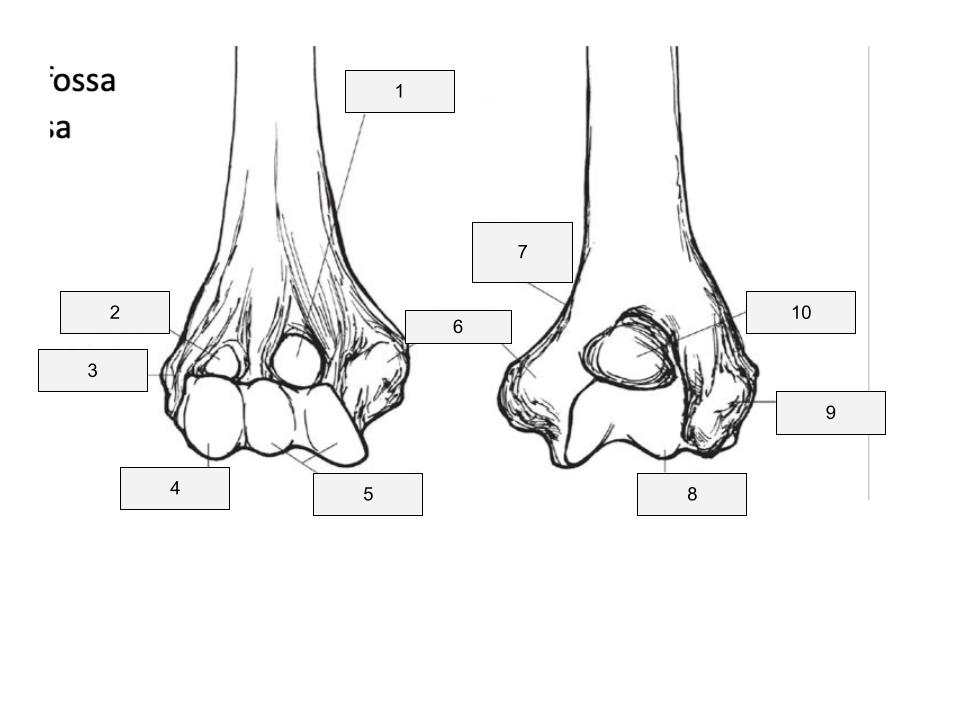
what is 1
coronoid fossa
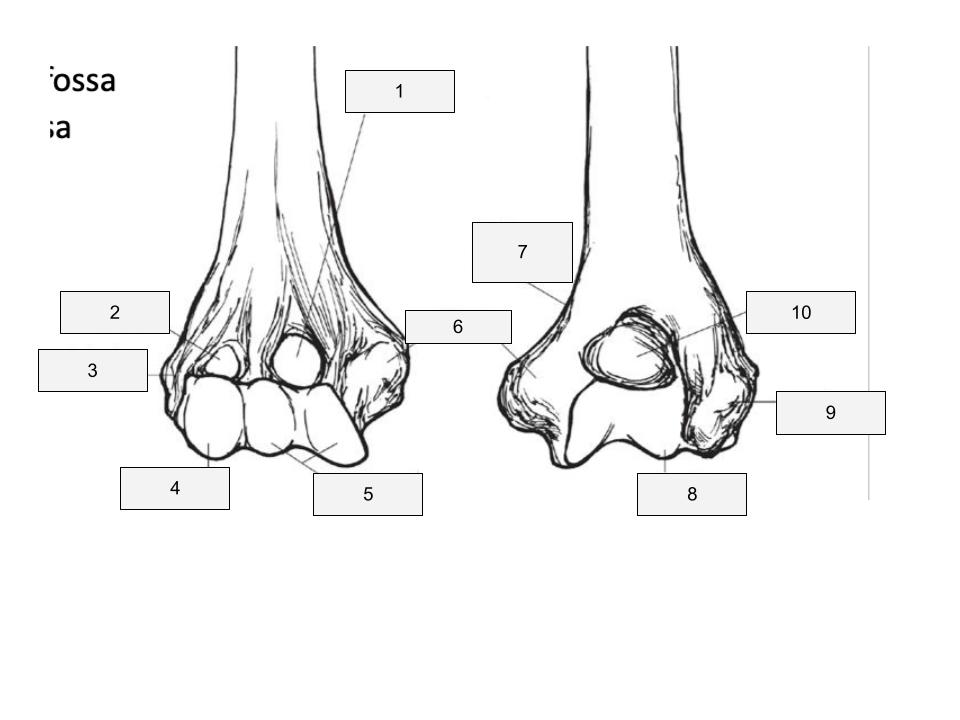
what is 2
radial fossa
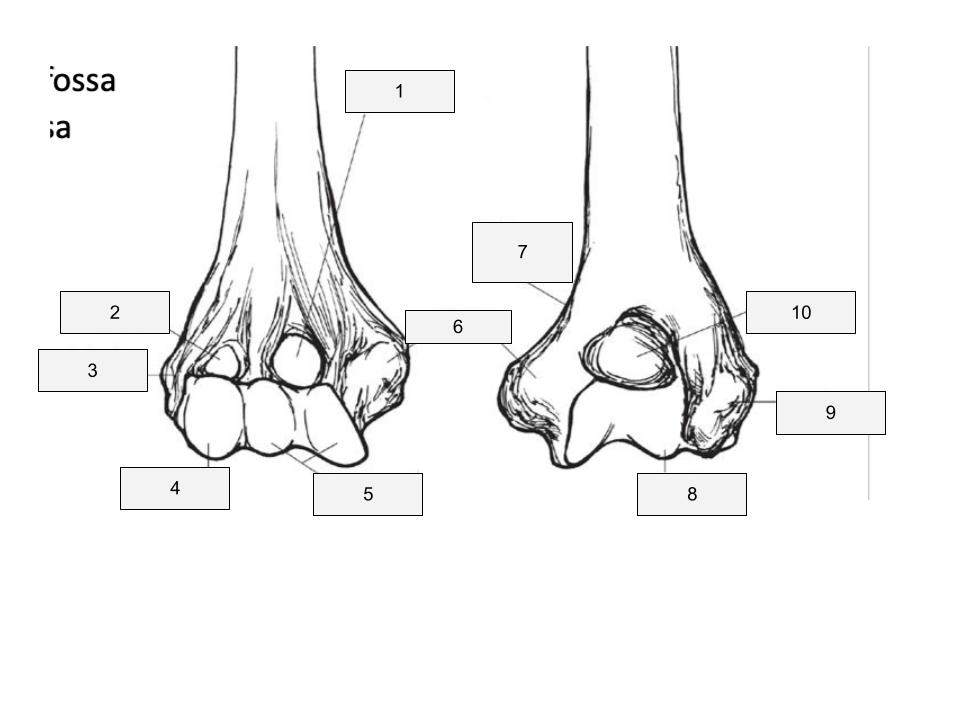
what is 3
lateral epicondyle
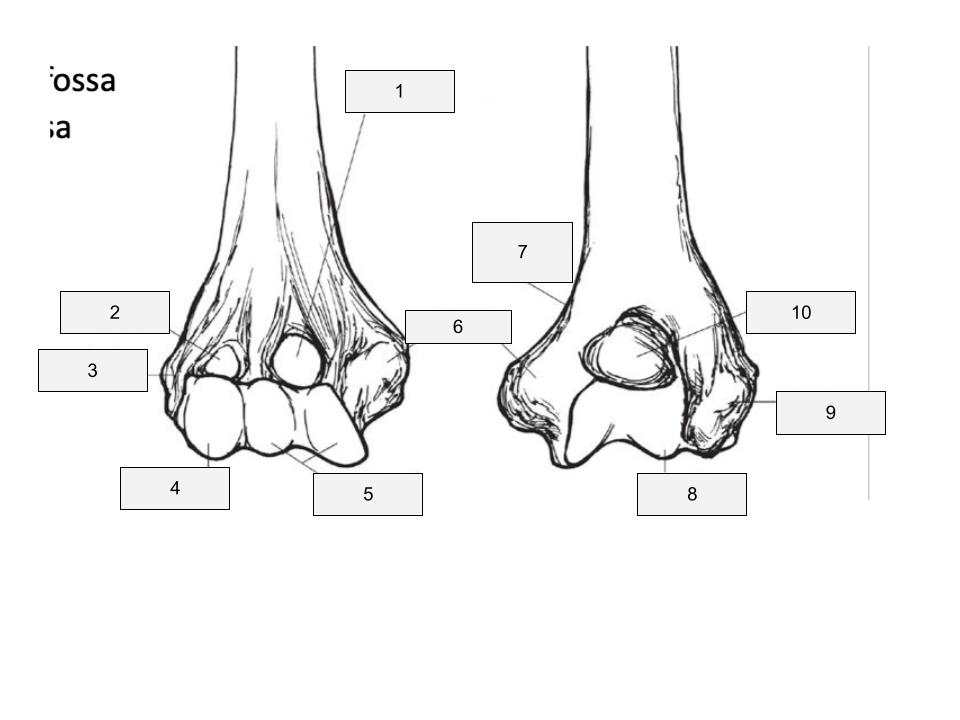
what is 4
capitulum
what is 5 - trochlea
trochlea
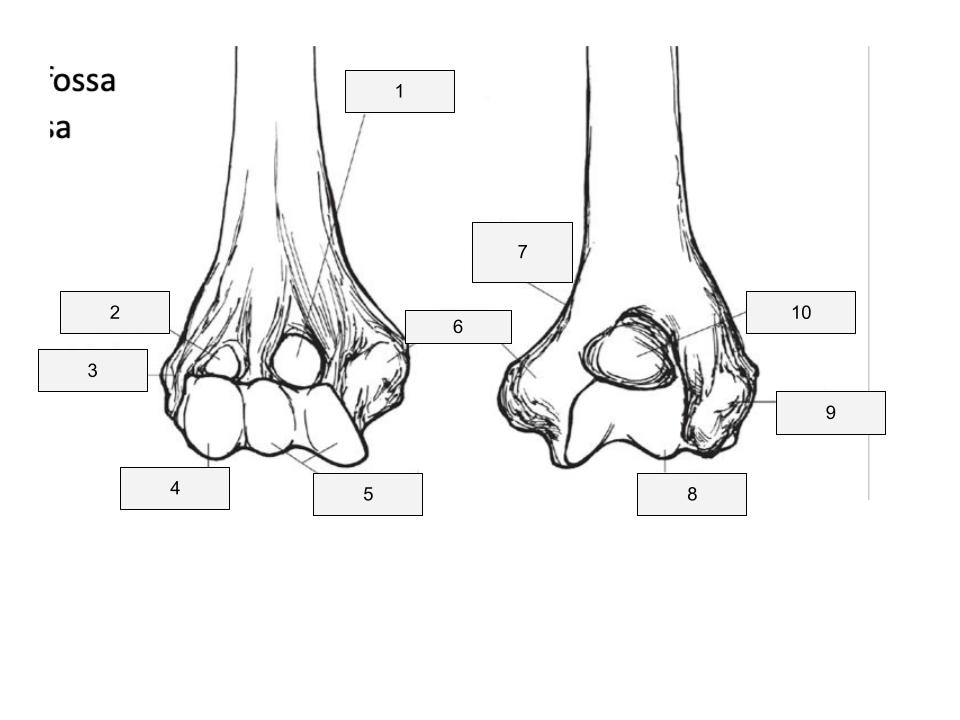
what is 6
medial epicondyle
what is 7
medial supracondylar ridge
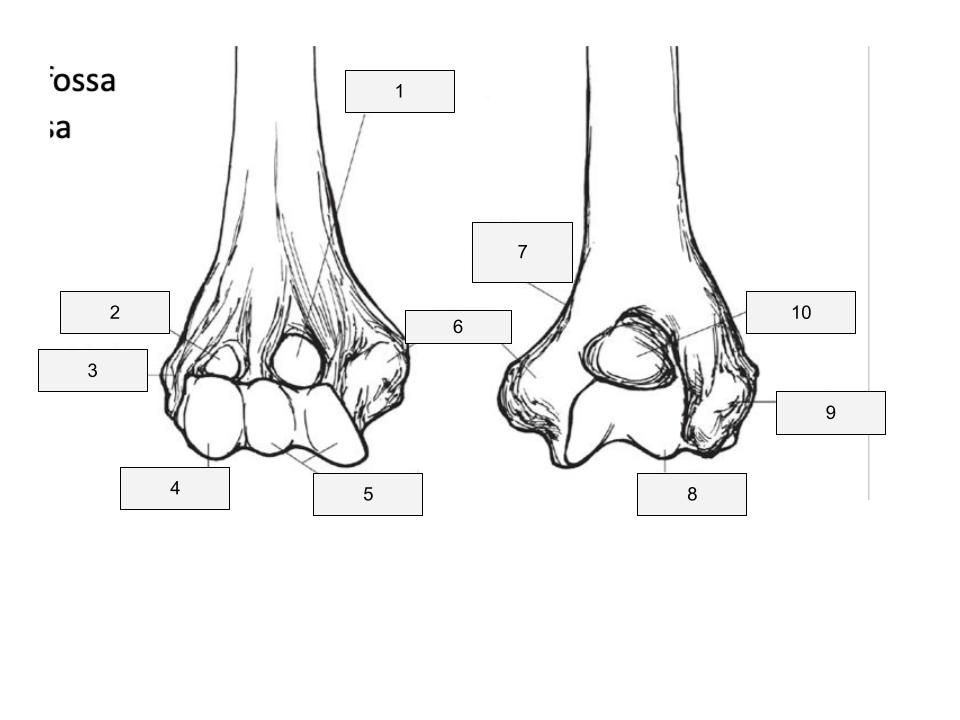
what is 8
trochlea
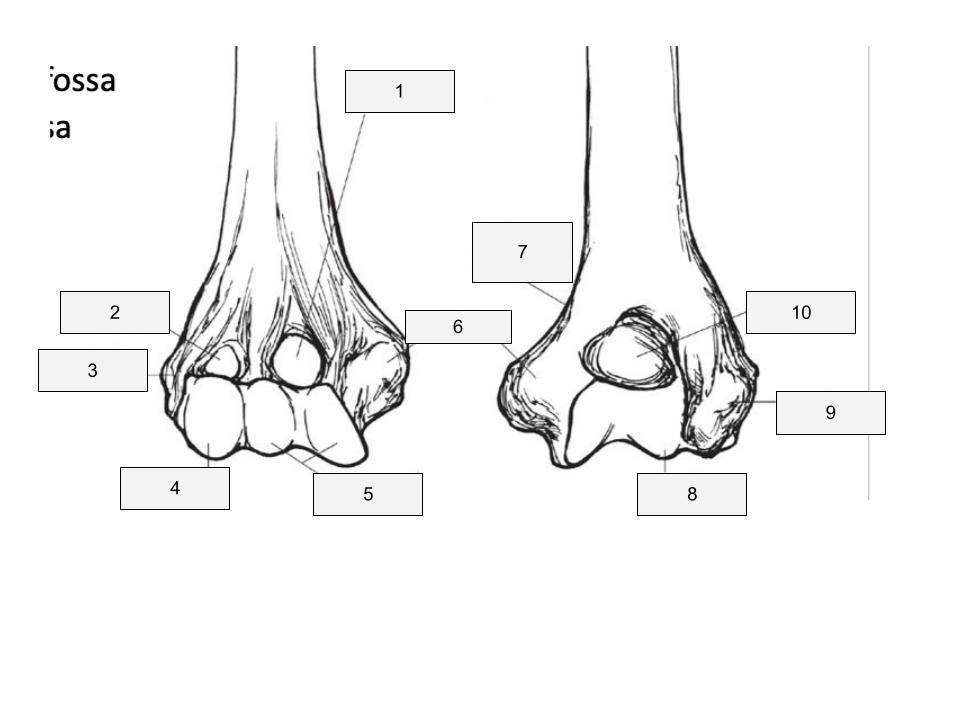
what is 9
lateral epicondyle
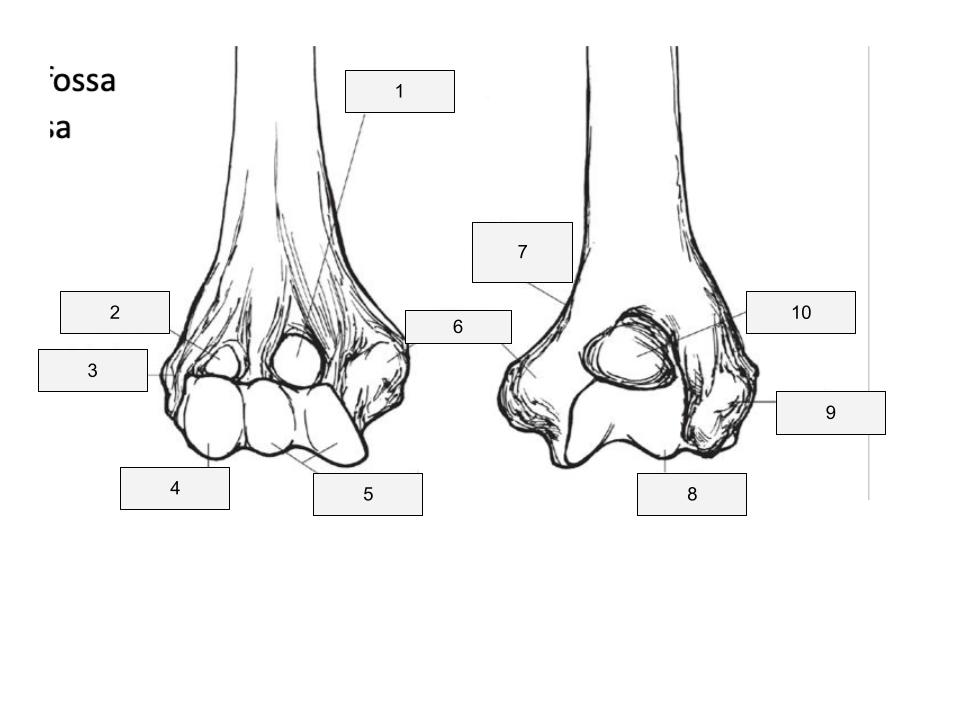
what is 10
olecranon fossa
non-articular surfaces of the distal humerus
medial epicondyle, lateral epicondyle, olecranon fossa, coronoid fossa, radial fossa
articular surfaces of the distal humerus
trochlea + capitulum
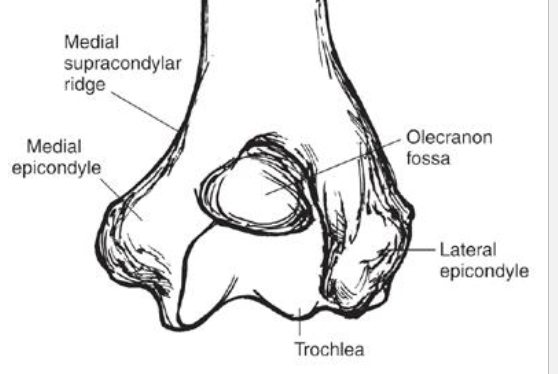
medial epicondyle of the distal humerus serves as
the attachment site for joint capsule + ulnar collateral ligament + superficial flexor for muscles of the forearm
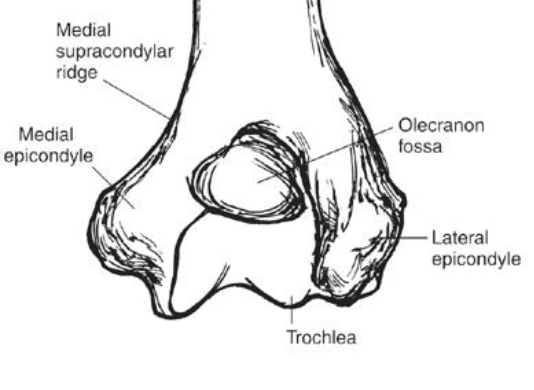
lateral epicondyle of the distal humerus serves as
the attachment site for radial collateral ligament + superficial extensor muscles of the forearm
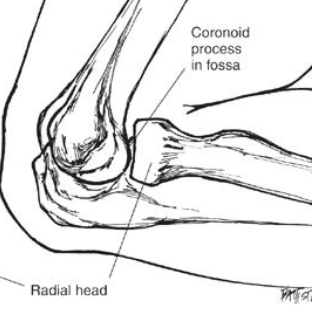
radial + coronoid fossae of the distal humerus
shallow depressions on anterior surface of distal humerus
proximal to the capitulum + trochlea, respectively
allow close approximation betw humerus + radius + ulna during maximum elbow flexion
olecranon fossa of distal humerus
deep depression on posterior surface of distal humerus
radial collateral ligament resists what
varus torques + prevents elbow adduction
ulnar collateral ligament resists what
valgus torques + prevents elbow abduction
varus force
an abnormal inward turning of a bone
adduction
valgus force
an abnormal outward turning of a bone
abduction
what is tennis elbow
inflammation, soreness, or pain on the lateral side of the upper arm near elbow
caused by microtrauma to wrist extensor muscle insertion
what is golfer’s elbow
inflammation, soreness, or pain on the medial side of upper arm near elbow
caused by repeated forcful wrist flexion + valgus torque on elbow
what is little league elbow
avulsion fracture of medial epicondylar apophysis
not due to pitch type, but due to throwing motion
what happens during biceps brachii elbow flexion
radius rolls over biceps tendon as forearm pronates
what happens during brachioradialis elbow flexion
angle of pull = vertical when forearm is neutral, effectiveness decreases as forearm pronates + supinates
what happens during brachialis elbow flexion
unaffect by forearm pronation + supination = elbow flexor goat
thoracic + pelvic vertebral curvature
concave
what is considered a primary curvature
concave
thoracic + pelvic
what is considered a secondary curvature
convex
cervical + lumbar
which direction does the thoracic spine curve
curves anteriorly
which direction does the cervical + lumbar spine curve
in the posterior direction
what do spinal curves do
enable the spine to absorb blows + shocks
why do vertebrae inc in size going down
bc they have to bear more weight
how many fused vertebrae do we have
9
what is the first cervical vertebrae
atlas
no body, spinous process, or intervertebral disc w/ C2 (axis)
what is the second cervical vertebrae
axis
antalooccipital joint consists of the
occipital condyle + superior articular surface of atlas
what kind of joint is the antalooccipital joint
a synovial joint
synovial membrane, no disc
the occipital condyloid does what
allows for flexion + extension, lateral flexion
antaloaxial joint consists of what
atlas + axis
what kind of joint is the antaloaxial joint
a synovial pivot joint
what kind of motion occurs @ the atlantoaxial joint
most cervical rotation + most mobile joint
head rotation - no
what kind of motion occurs @ the atlantooccipital joint
capital flexion + extension
nodding head yes
thoracic vertebrae joints
costovertebral
costotransverse
thoracic vertebrae rotations are
limited in extension + flexion
what joint is found articulating w/ the sacrum
sacroiliac joint
what ligament prevents spinal extension
anterior longitudinal vertebral ligament
what ligament prevents spinal flexion
posterior longitudinal vertebral ligament
what ligaments surround the spinous process
supraspinous ligament + interspinous ligament
what ligament helps maintain curvature
ligamentum flavum
what ligament is found on the back of the neck
ligamentum nuchae
what are characteristics of ligamentum nuchae
superior portion of supraspinous ligament
thick + strong
replaces supraspinal + interspinal ligament fr base of skull - C7
where are intertransverse ligaments found
@ the transverse processes going down to the next transverse process
what is kyphosis
abnormal increase in the thoracic curvature going backwards
what is lordosis
abnormal increase in lumbar curvature (secondary)
kyphosis example
hunchback of notre dame
lordosis example
nicki minaj
what is hypolordosis
= flat back
abnormally curving cervical or lumbar spine
common in old ppl + leads to posterior disc herniation
what is scoliosis
a lateral curvature
what is hyperlordosis
common mechanism of back injury/pain in younger ppl
muscular spasm + nerve impingement
how many pairs of ribs do we have
12
how many pairs of true ribs attach to the sternum
7 pairs
how many pairs of false ribs do we have
5 pairs in total
3 pairs attach indirectly to sternum
2 pairs float w/ free ends
all ribs attach where on the vertebrae
posteriorly on thoracic vertebrae
regions of the intervertebral disc
annulus fibrousus + nucleus pulposus
what is the annulus fibrosus
outer rim of dense fibrocartilage
what is the nucleus pulposus
central gelatinous pulpy substance
what happens in a herniated disc
nucleus pulposus protrudes through annulus + puts pressure on spinal nerve
how does disc herniation occur
due to flexion → posterior herniation
spinal flexion
anterior movement of spine
in cervical direction head moves toward chest
in lumbar region the thorax moves toward pelvis
spinal extension
return fr flexion/posterior movement of spine
in cervical spine, head moves away fr chest
thorax moves away fr pelvis
lateral flexion
= side bending
head moves laterally toward the shoulder + thorax moves laterally toward pelvis
reduction
return movement fr lateral flexion → neutral
spinal rotation
rotary movement of spine in horizontal plane
chin rotates fr neutral toward shoulder + thorax rotates to one side
muscles in the erector spinae group
spinalis, longissimus, iliocostalis
abdominal wall muscles attach into what
fascia around abdominal area
external intercostals do what during breathing
expand the chest volume when they contract
internal intercostals do what during breathing
decrease chest volume during contraction
diaphragm does what during breathing
contracts + flattens, increasing thoracic volume + air is inspired to equalize pressure

