Lecture 26 - The Liver ✅
 Call Kai
 Learn
Learn Practice Test
 Spaced Repetition
 Match
Match Flashcards
 Knowt Play
1/64

There's no tags or description
Looks like no tags are added yet.
Name | Mastery | Learn | Test | Matching | Spaced | Call with Kai |
|---|
No analytics yet
Send a link to your students to track their progress
65 Terms
The “metabolic bridge”
Liver
The link between nutrient absorption and nutrient regulation
The liver
Why is the liver called “The Anatomical Bridge”
Connecting digestion to circulation via the hepatic portal system
Why is the liver called “The Excretory Bridge”
Excretion of lipid-soluble waste (through bile) and urea (to kidneys)
Why is the liver called “The Regulatory Bridge”
The liver is the primary effector for metabolic hormones
Where does the liver export produced bile?
Duodenum
Largest gland in the body
Liver
Why is the liver called a gland?
Makes hormones the body needs
Porta hepatis
Gate to the liver
Number of lobules in each lobe of the liver
1000s
Carries nutrient rich blood from the intestines
Portal vein
Carries oxygenated blood from the abdominal aorta
Hepatic artery
Drains bile
Bile duct
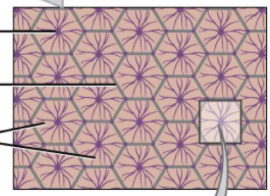
What is this?
Lobule
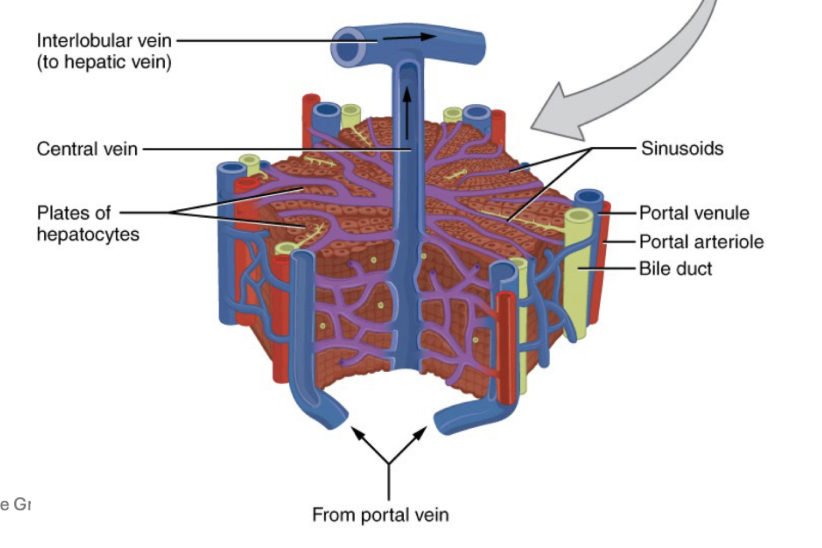
What is this?
Lobule
From what artery does the colon receive blood?
Superior and inferior mesenteric arteries
From which artery do the small intestines receive blood
Superior mesenteric arteries
Which arteries supply the pancreas?
Superior mesenteric and celiac arteries
Which artery supplies the spleen and stomach?
Celiac artery
The stomach, spleen, pancreas, small intestines, and colon all supply the liver with blood through which vein?
Portal vein
Which artery supplies the liver?
Hepatic artery
What do the hepatic veins (from the liver) supply?
Inferior vena cava
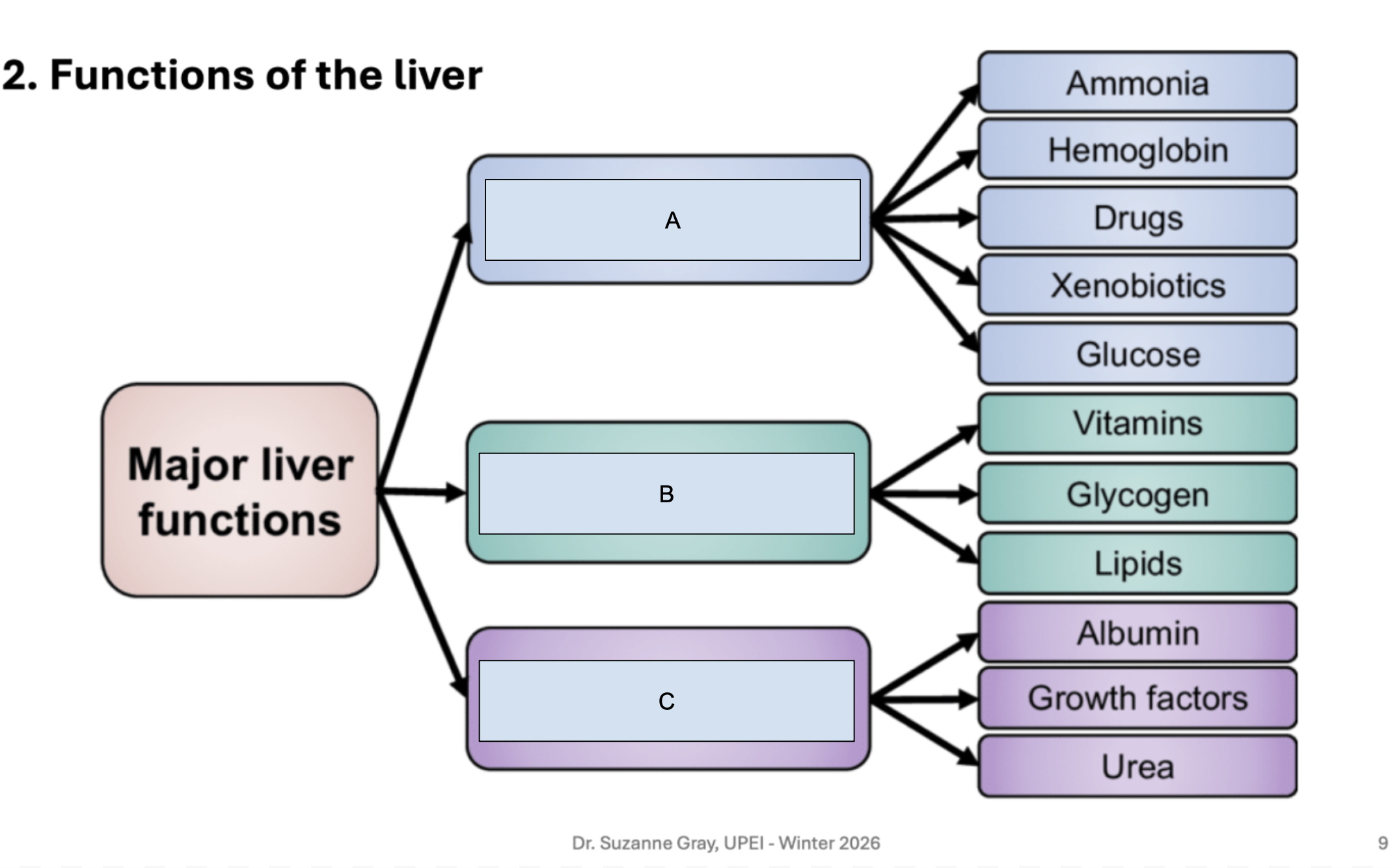
A?
Biotransformation
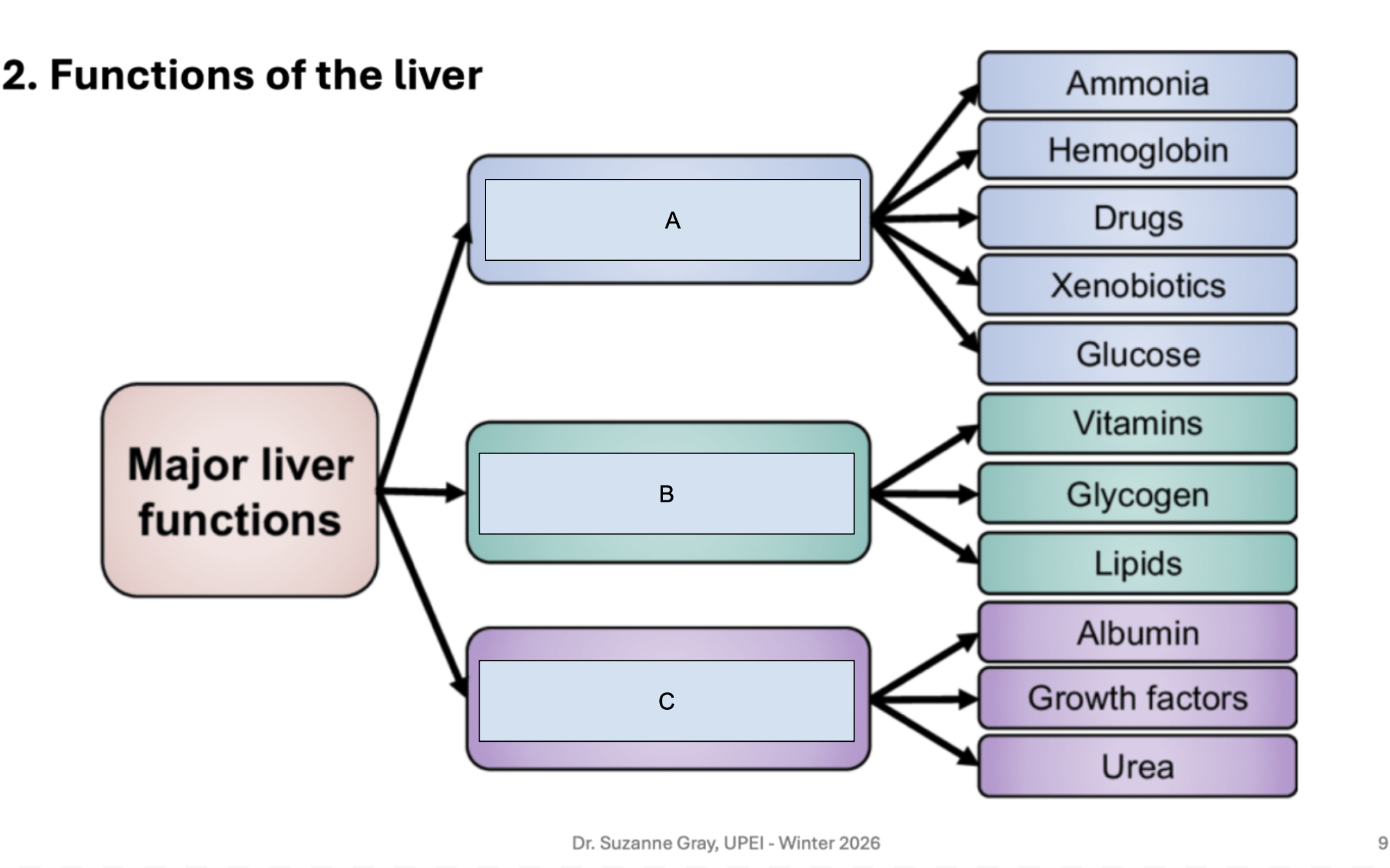
B?
Storage
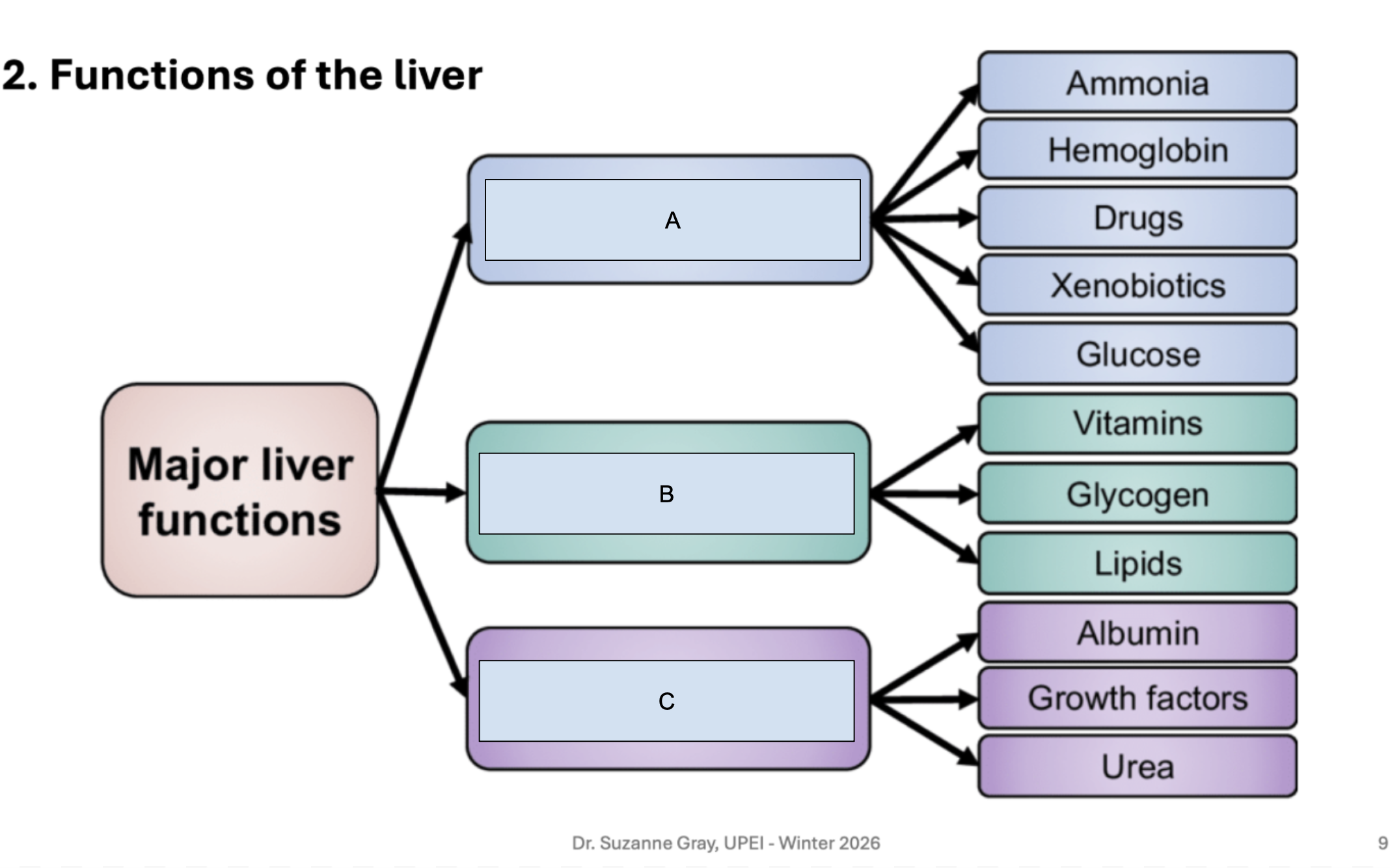
C?
Synthesis
The body’s primary metabolic hub
The liver
Converts glucose to glycogen for storage
Glycogenesis (glyco=glucose, genesis=first)
Converts glycogen to glucose for release
Glycogenolysis (lysis=release)
Creates glucose from amino acids or lipids
Gluconeogenesis (neo=new)
High blood sugar promotes the release of what hormone?
Insulin
What does the pancreas release to stimulate glycogen breakdown
Glucagon
Low blood sugar stimulates the release of what hormone?
Glucagon
What does the pancreas release to stimulate glucose uptake in tissue cells from blood?
Insulin
What does the pancreas release to stimulate glycogen formation?
Insulin
What does the liver perform as blood passes through
“Quality control”
Three forms of “quality control” performed by the liver
Plasma protein synthesis, removal of hormones/toxins, and waste conversion
What does the liver produce via plasma protein synthesis?
Albumin and clotting factors
Protein crucial for osmotic pressure
Albumin
How does the liver perform the removal of hormones/toxins:
Breaking down circulating hormones and neutralizing drugs or environmental toxins
What does the liver convert ammonia (from protein breakdown) into?
Urea
After the liver converts ammonia into urea, where is it sent back to for excretion?
The kidneys
Which organ synthesizes and secretes bile
The liver
Where is bile from the liver stored?
Gallbladder
Essential for the emulsification of lipids in the small intestine
Bile salts
Transforming large fat globules into small droplets that pancreatic lipases can actually digest
Emulsification
Where in the gallbladder is bile created?
Bile canaliculi
What cells in the gallbladder produce bile?
Hepatocytes
What vitamins and minerals are stored in the liver for the long-term?
Fat-soluble vitamins, Vitamin B12, and Minerals
Which vitamins are have long term storage in the liver?
A, D, E, and K
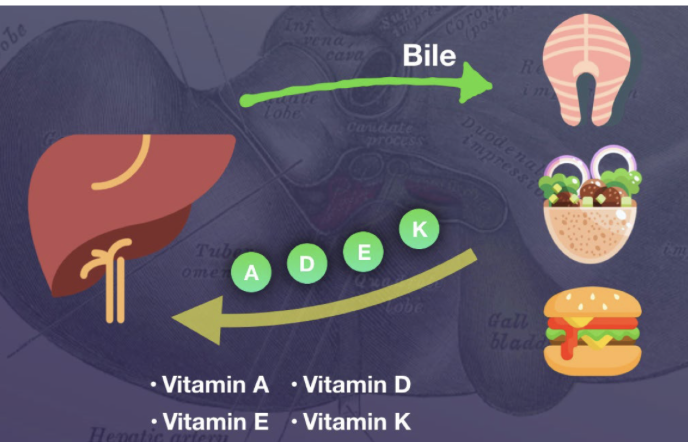
Large reserves of which vitamin are kept in the liver to support red blood cell production?
B12
What two minerals are stored for the long-term in the liver?
Iron and copper
What is iron stored as in the liver?
Ferritin
Specialized macrophages in the sinusoids are first line of defense for the blood coming from the digestive tract
Kupffer cells
Physically engulf pathogens, cell debris, and aged red blood cells before they can reach the systemic circulation
Kupffer cells
What activates kupffer cells to release cytokines & chemokines, causing inflammatory response?
Injured hepatocytes
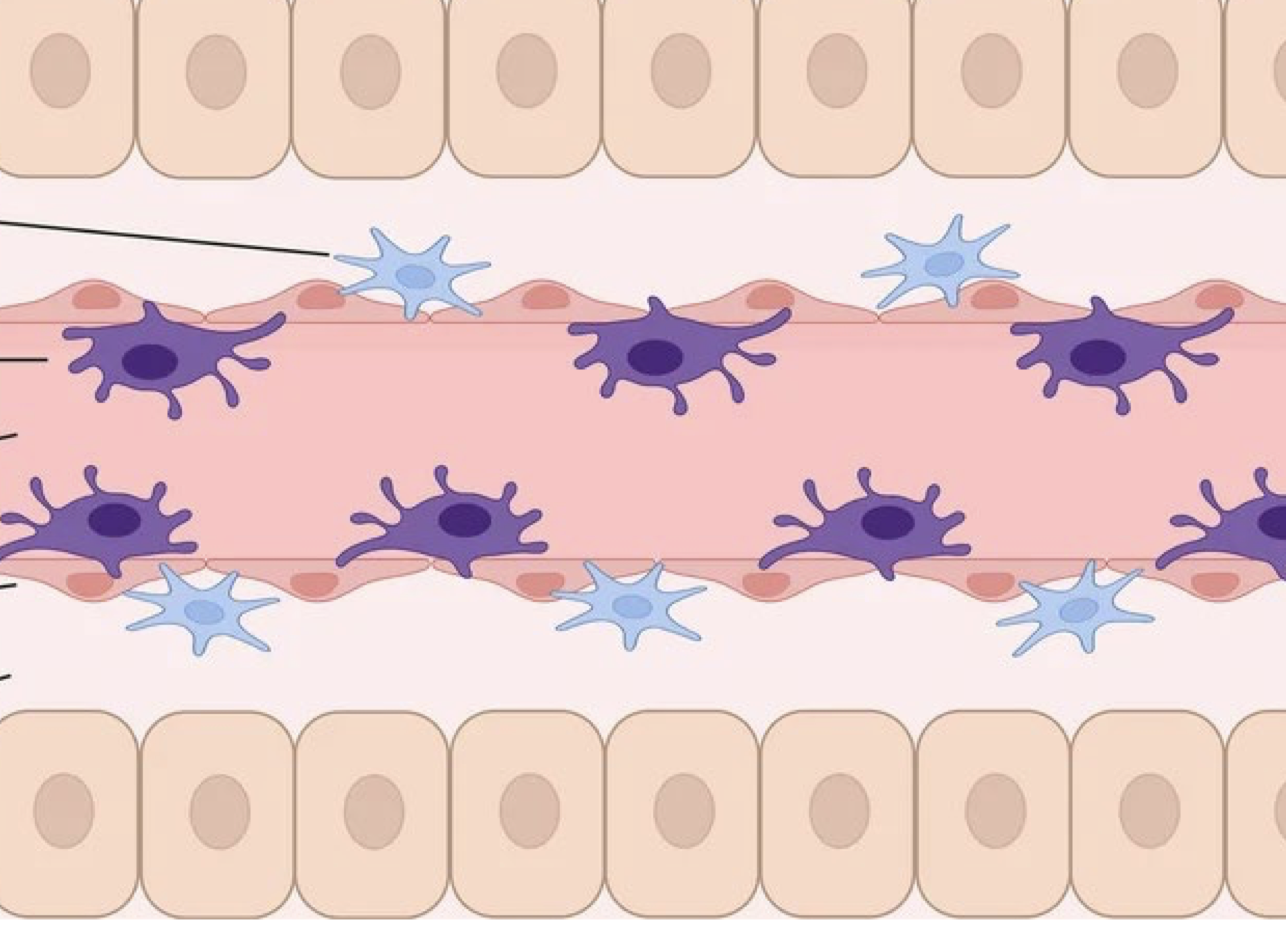
What are the purple cells?
Kupffer cells
An essential endocrine gland, producing key hormones and proteins that regulate blood pressure, clotting, and growth
Liver
A protein converted to angiotensin, acts to raise blood pressure and regulate blood volume
Angiotensinogen
A glycoprotein hormone that stimulates bone marrow cells to produce platelets from megakaryocytes (essential for blood clotting)
Thrombopoietin (TPO)
Produced in response to growth hormone, promotes cell growth, differentiation, and metabolism
Insulin-like Growth Factor 1 (IGF-1)
A peptide hormone that plays a crucial role in iron homeostasis by regulating iron absorption and utilization
Hepcidin
Angiotensinogen, thrombopoietin (TPO), insulin-like growth factor 1 (IGF-1), hepcidin are hormones produced by what organ?
Liver
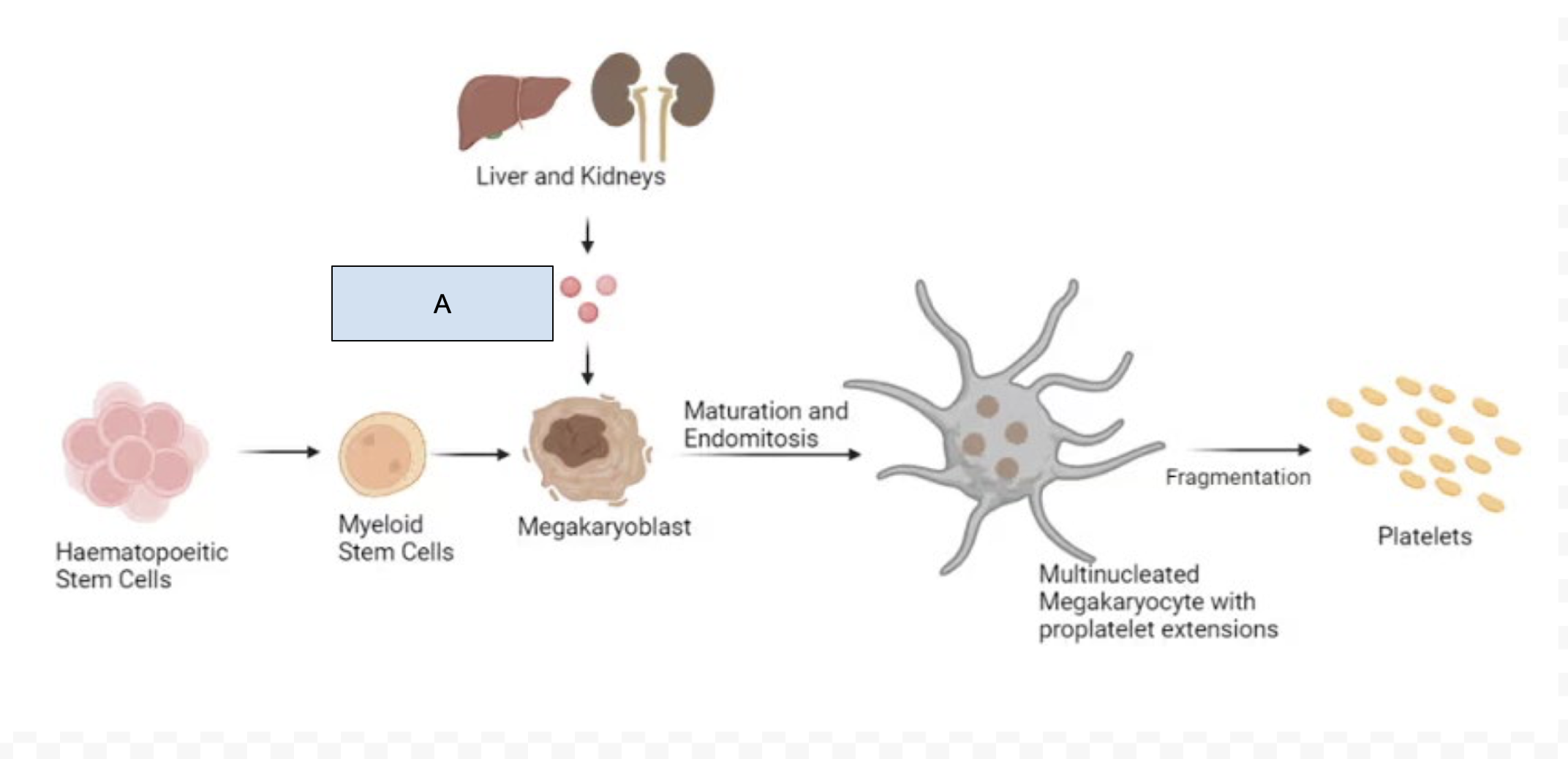
A?
Thrombopoietin
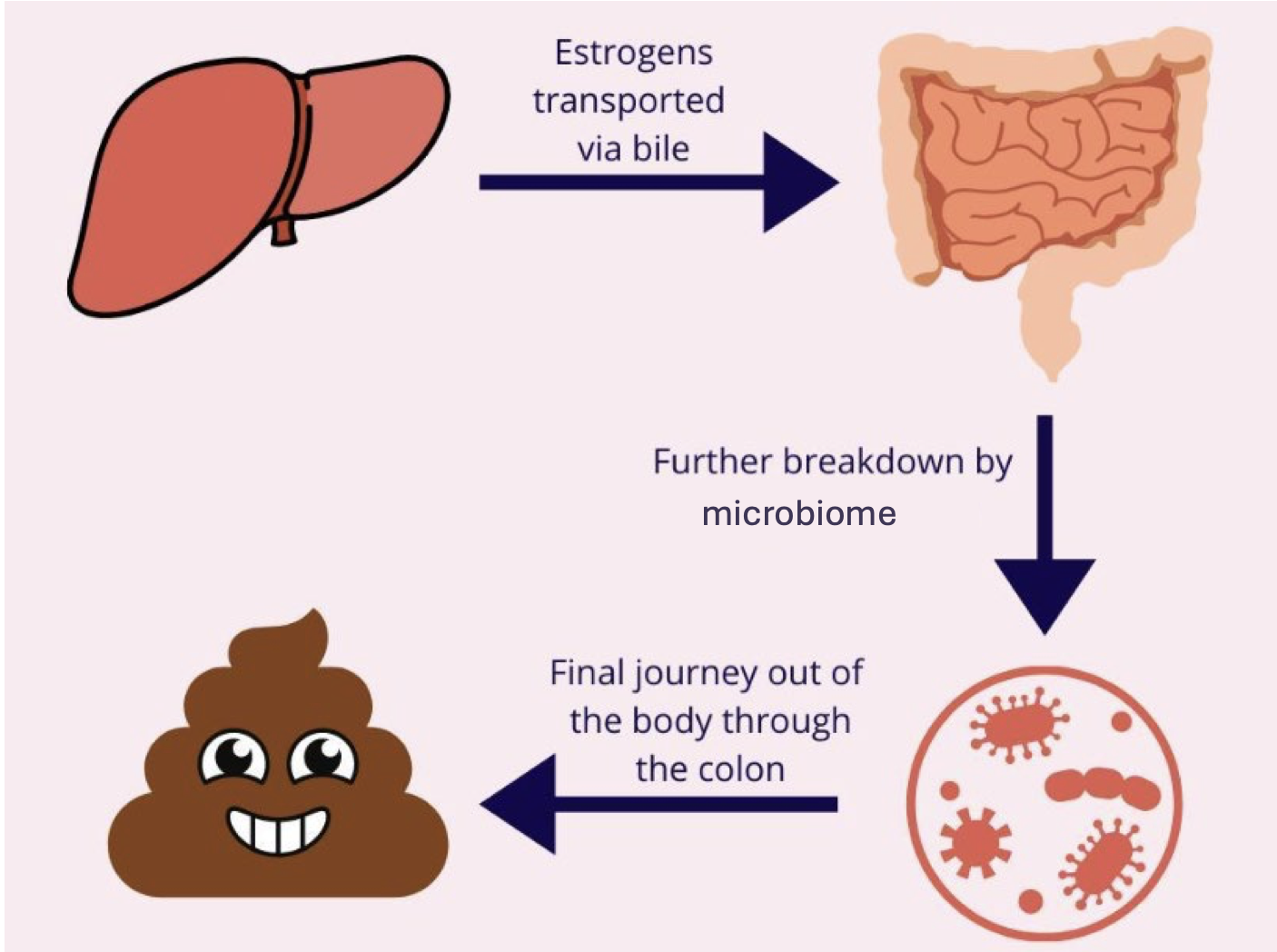
Plays a critical role in metabolizing, breaking down, and regulating levels of other hormones (e.g., estrogen, progesterone, thyroid hormone)
Liver
How does the liver transport estrogen?
Through bile