Bio-101 Exam 2!
 Call Kai
 Learn
Learn Practice Test
 Spaced Repetition
 Match
Match Flashcards
 Knowt Play
1/81

Earn XP
Description and Tags
Test is 3/30
Name | Mastery | Learn | Test | Matching | Spaced | Call with Kai |
|---|
No analytics yet
Send a link to your students to track their progress
82 Terms
The objective of cellular respiration is to ________, which makes it a(n) __________ reaction
break down glucose….catabolic
The first step in cellular respiration is _________, which is the process of splitting glucose into two molecules
glycolysis
If oxygen is present, which membranous organelle will the cell use to obtain further energy from glucose?
Mitochondrion
If oxygen is not present, most animal cells will convert pyruvate into _________.
lactic acid
If oxygen is not presnt, yeast will convert pyruvate into __________.
ethanol
If oxygen is not present, some bacteria will convert pyruvate into _______, which is how we get some food products like yogurt or sauerkraut.
lactic acid
Which process results in the most ATP production?
Electron transport chain
If the cell is using _______ for cellular respiration, its glycerol heads will start with glycolysis while the fatty acid tails will be converted to Acetyl Co-A
Lipids
The cell can use proteins for energy via aerobic cellular respiration; however, _________ is a dangerous by-product
ammonia
In addition to ATP, cellular respiration produces ____________
carbon dioxide and water
Cellular respiration equation

Aerobic Respiration Summary
break down glucose
releases CO2
lots of ATP produced
catabolic/exergonic
Aerobic Respiration:
Stage 1
Glycolysis (Anaerobic)
glucose split into 2 pyruvates
occurs in cytosol
produces 4 atp/uses 2 atp
Aerobic Respiration:
Stage 2
Krebs cycle/citric cycle (anaerobic)
occurs in mitochondria
produces 2 atp
releases CO2
Aerobic Respiration:
Stage 3
Electron transport phosphorylation (aerobic)
stepwise flow of electrons
occurs in mitochondria
oxygen is the final acceptor of electrons and hydrogen
produces 32 atp
Anaerobic respiration:
Fermentation - lactic acid
animals/bacteria
glycolysis occurs as normal
pyruvate is converted into lactate
carbon dioxide released
Anaerobic respiration:
Fermentation - alcohol
yeast
glycolysis occurs as normal
pyruvate is converted into acetaldehyde
acetaldehyde is converted into ethanol
carbon dioxide is released
Energy can be potential or kinetic. __________ is an example of potential energy, while ________ is an example of kinetic energy.
The energy stores in a chemical molecule or bond…. heat
“Energy can be neither created nor destroyed” is a part of the ______?
First Law of Thermodynamics
All biological reactions require energy. The amount of energy required to start a reaction is called ________. If there is more energy released than required, the reaction is _________. If energy is not released from the reaction, it is ________.
activation…exergonic…endergonic
Enzymes are catalysts, meaning they speed up reactions. They work by lowering the _______.
activation energy
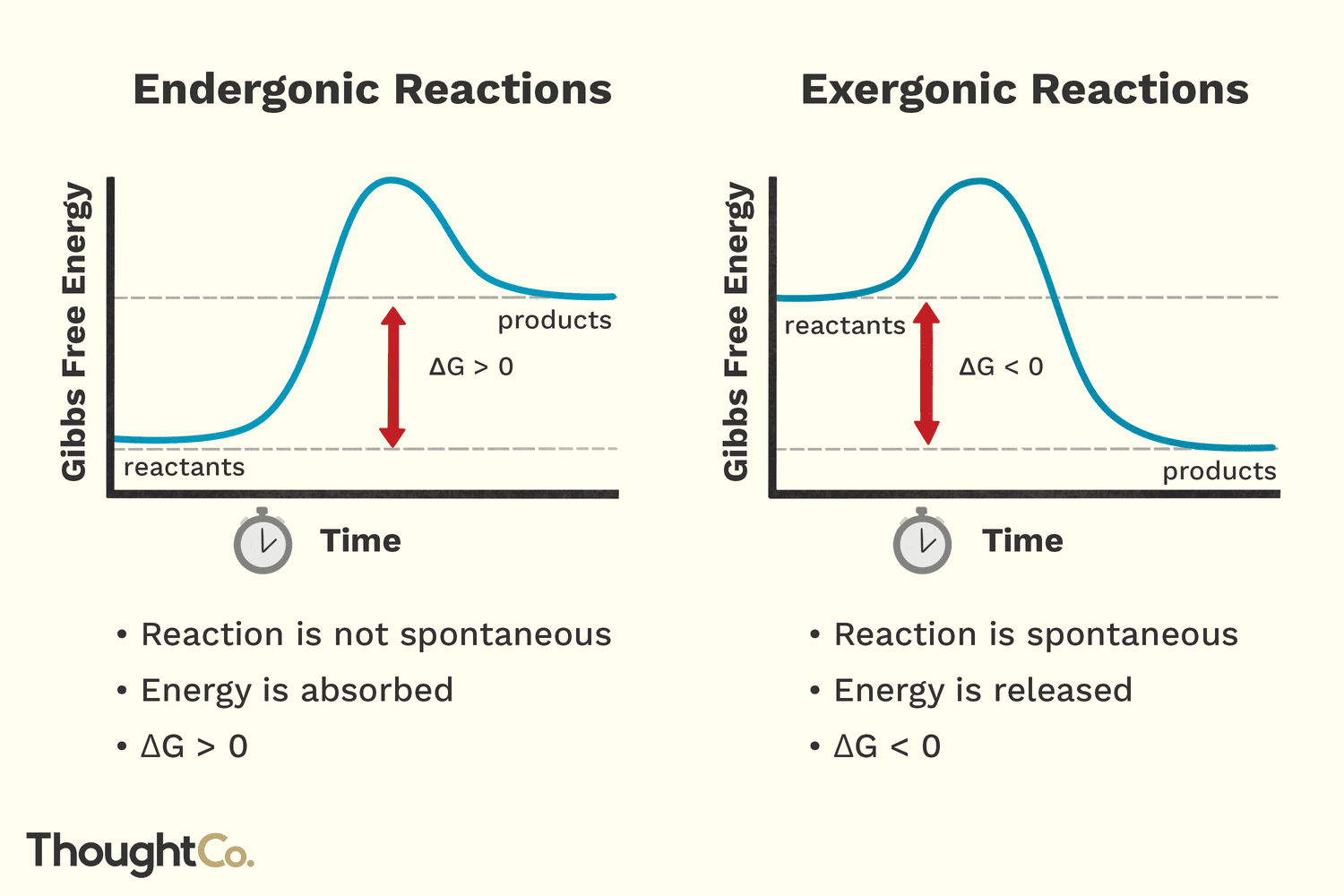
Exergonic vs. endergonic
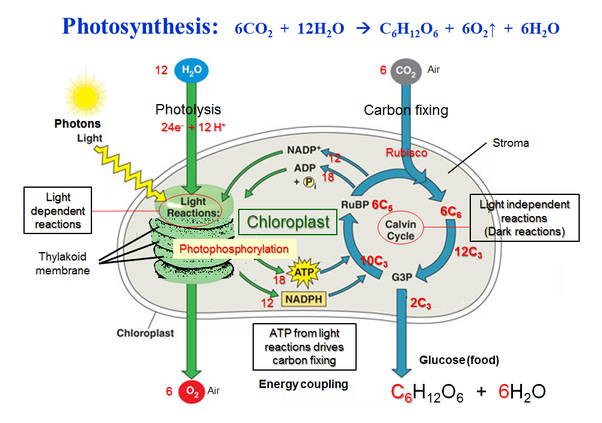
Photosynthesis diagram
Cellular respiration 4 steps
1) glycolysis
2) prep reaction
3) citric acid cycle
4) electron transport chain and chemosis
Did the germinating beans perform photosynthesis or cellular respiration?
Cellular respiration
Did spinach leaves perform photosynthesis or cellular respiration?
Photosynthesis
The two organelles that produce energy in plant and animal cells are:
chloroplast and mitochondria
In photosynthesis, which process is used to generate ATP?
light dependent reaction
What are the by-products of the Calvin cycle?
glucose and water
In cellular respiration, which step produces the majority of ATP?
Electron transport chain and chemiosis
Why must oxygen be present for the electron transport chain to function?
Oxygen accepts electrons to keep them moving through the chain
Regulates what enters and exits the cell; selective permeability
Cell membrane
Supports and protects plant cells; made of cellulose
Cell Wall
Site of photosynthesis
Chloroplast
Fluid inside the cell where organelles are suspended
Cytoplasm
Network of membranes that transport materials
lipid synthesis; protein processing
Key features: Rough version has ribosomes and makes proteins, smooth version lacks ribosomes, makes lipids, and detoxifies
Endoplasmic reticulum (E.R.)
Modifies, sorts, and packages proteins for transport
packaging and vesicle formation
Key features: stack of membrane stacks
Golgi apparatus
breaks down waste and cellular debris; apoptosis
digestion
Key features: contain digestive enzymes; involved in apoptosis
Lysosome
Controls cell activities; contains DNA; RNA synthesis
Key features: envelope, nucleolus, chromatin; double membrane
Nucleus
Produces ATP (energy) through cellular respiration
Mitochondrion
Site of protein synthesis
Ribosome
Kinetic energy
energy in motion
light
heat
electricity
mechanical
potential energy
stored energy
chemical
position
First Law of Thermodynamics
Energy can not be created nor destroyed; Energy can be transferred and transformed
Second Law of Thermodynamics
With energy transfer, entropy (randomness) increases
Metabolism
sum of all chemical reactions
Exergonic
energy out (free energy)
Endergonic
energy in (energy required)
Activation energy
Energy required to start a reaction
Enzyme
biological catalyst that speed up reactions by lowering activation energy
Examples of enzymes
Lactase (Lactose)
Amylase (Strach)
Pepsin (“Meat”)
Lock and key model: Enzyme
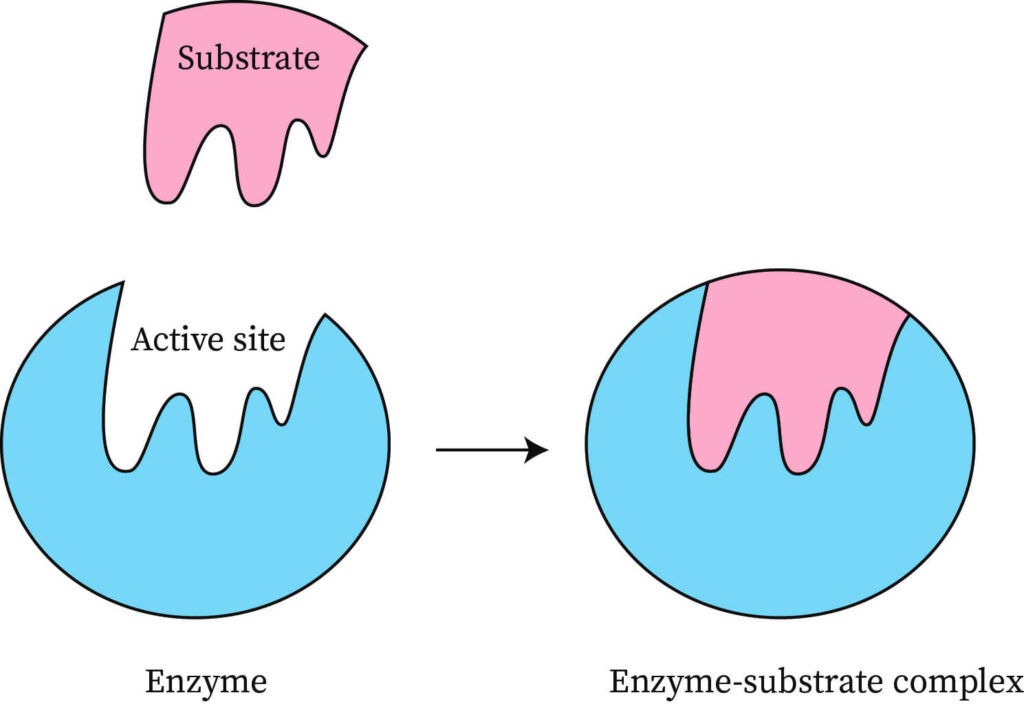
Active site
specific to certain enzymes
Endocytosis
Bringing solutions/particles into a cell via vesicles (e.g. Pinocytosis & Phagocytosis)
Exocytosis
Moving solutions or molecules out of a cell (e.g. secretions) by packaging things into vesicles that fuse with the membrane before exiting the cell
Membrane Structure and Function:
Plasma Membrane
selectively isolates the cell’s contents
regulates exchange of substances
Communication with other cells
Membrane Structure and Function:
Phospholipids
fluid-like properties; regulation
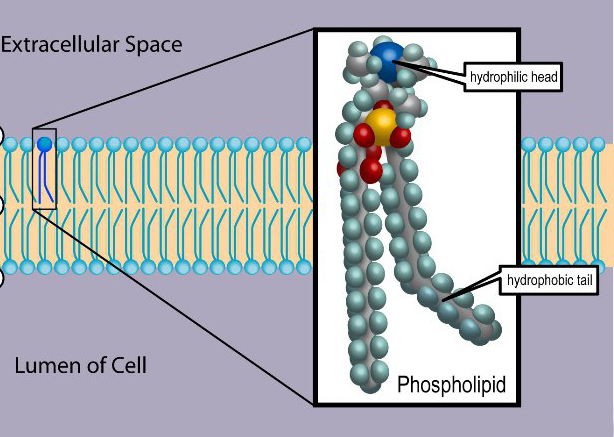
Membrane Structure and Function:
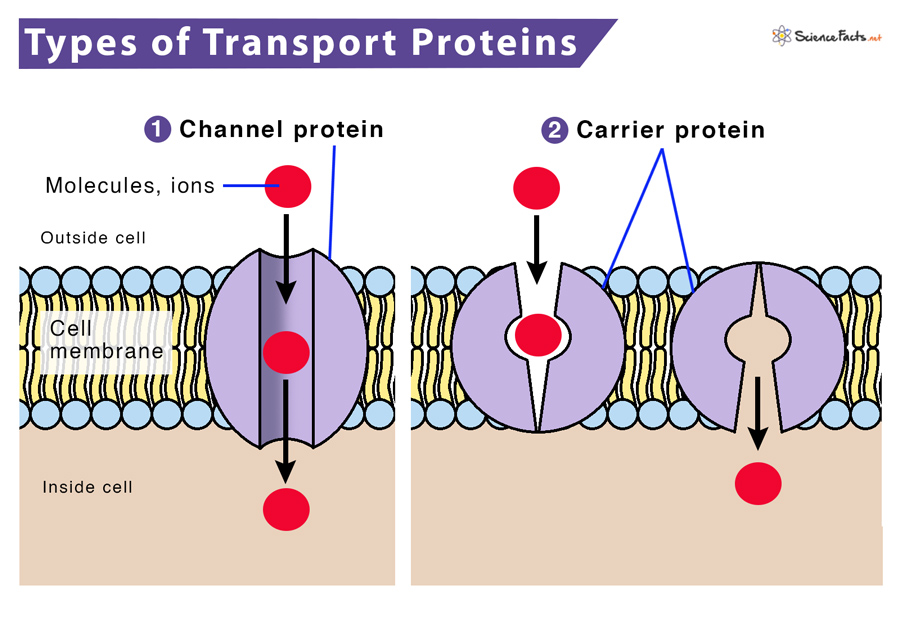
Transport proteins
moves molecules across the membrane
channel - molecules pass through
carrier - molecules helped through
Membrane Structure and Function:
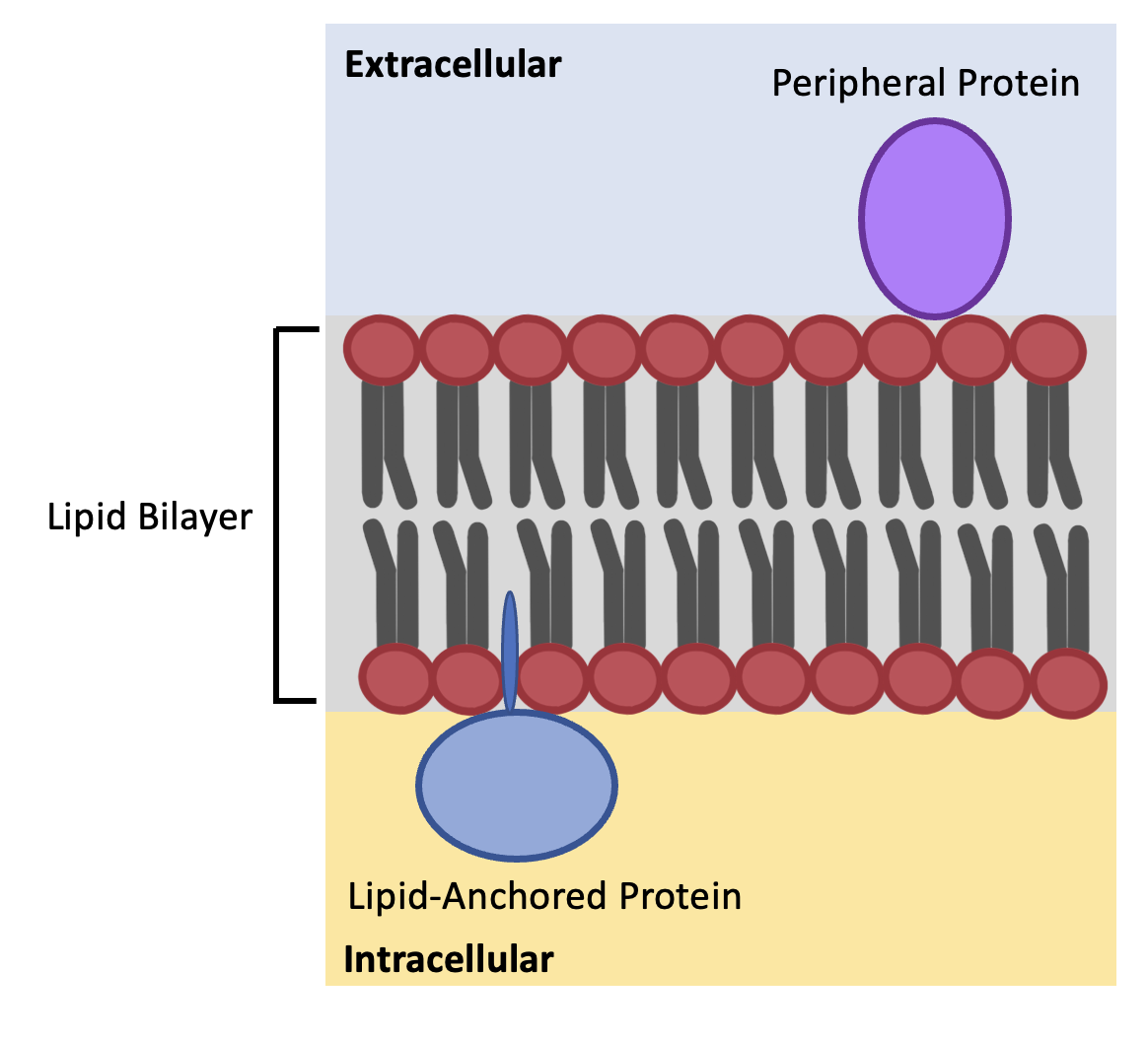
Peripheral proteins
“docking sites”; recognition
Membrane Structure and Function:
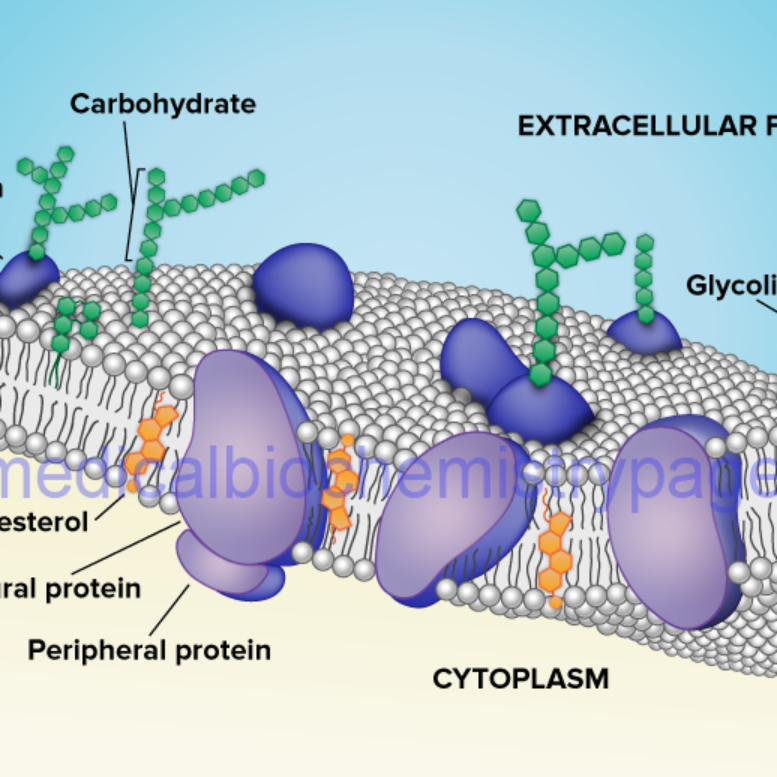
Carbohydrates
recognition
Membrane Structure and Function:
Cholesterol
stabilizes; allows flexibility

Membrane-Crossing Mechanisms:
Passive Transport
Diffusion - Movement from area of high to low concentration
Osmosis - Diffusion of water
Membrane-Crossing Mechanisms:
Energy-Required
Active transport - moving through protein, but requires energy
Endocytosis - 2 types; water is pinocytosis and food is phagocytosis
Exocytosis
Solvent
The liquid that dissolves the solute
Ex - water, fats, and oils
Solute
Solid that is dissolved in the liquid (solvent)
Ex - simple sugars, proteins/amino acids, salts
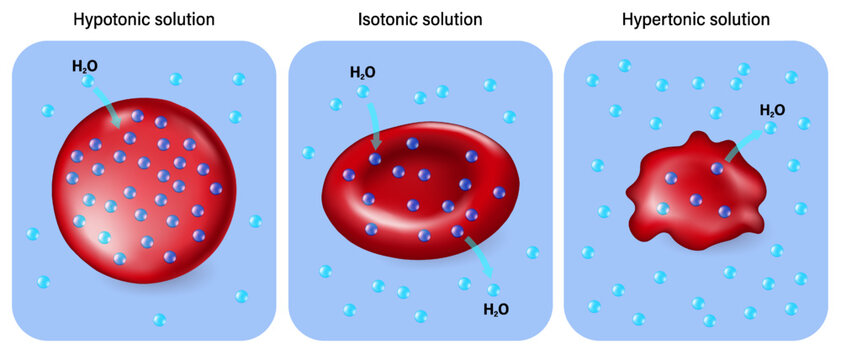
Tonicity
Amount of solute dissolved in solution
Hypertonic
More solute (solid) by comparison
Isotonic
Equal solute
Hypotonic
less solute (solid) by comparison
Tonicity diagram
Peroxisomes
Break down fatty acids and detoxify harmful byproducts
Key features: Contain oxidative enzymes; distinct from lysosomes
Vacuoles
Storage of water, ions, and waste; maintain turgor pressure in plants
Key features: Large central vacuole in plant cells; small, temporary vacuoles in animal cells
the smallest structure capable of performing all the necessary functions for life
cell
cell theory
All organisms are composed of cells.
Cells are the basic units of structure and function in organisms.
Cells come only from preexisting cells because cells are self-reproducing.
cells without a nucleus
prokaryotic
cells that have a nucleus
eukaryotic
Two of the three domains of life, the Eubacteria and Archaea, are ________ cells.
prokaryotic
Phospholipid heads are…
hydrophilic
Phospholipid tails are..
hydrophobic
The term selectively permeable means that…..
certain substances can move across the membrane while others may not
An animal cell in a _________ solution may lyse or burst open
hypotonic
An animal cell in a ___________ solution will shrivel up or crenate
hypertonic

