Comprehensive Guide to Sound Waves: Physics, Types, and Acoustic Design
 Studied by 0 people
 Call Kai
 Learn
Learn Practice Test
 Spaced Repetition
 Match
Match Flashcards
 Knowt Play
1/114

There's no tags or description
Looks like no tags are added yet.
Name | Mastery | Learn | Test | Matching | Spaced | Call with Kai |
|---|
No analytics yet
Send a link to your students to track their progress
115 Terms
Sound Transmission
Takes place through an elastic medium by means of wave motion.
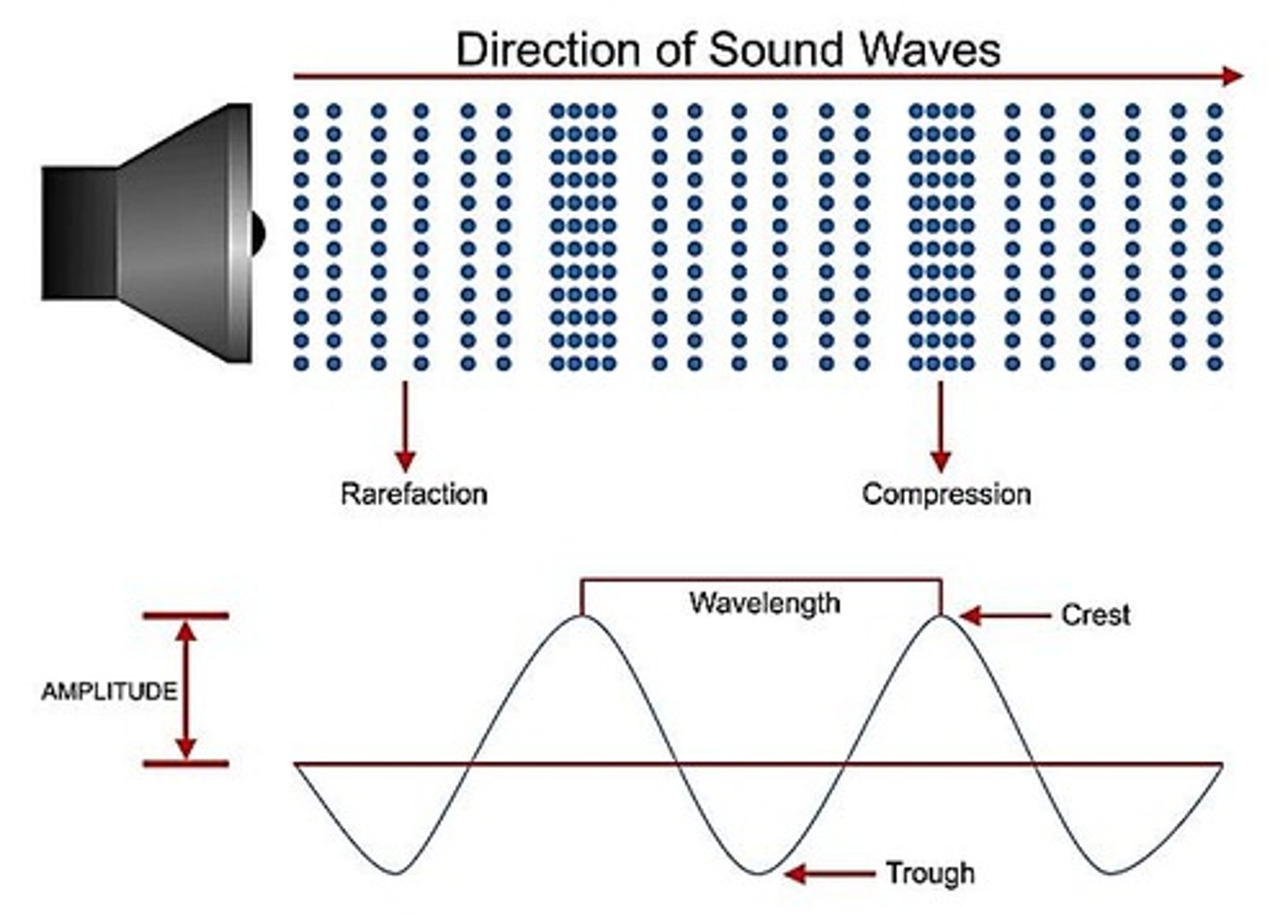
Sound
The sensation stimulated in the organs of hearing by mechanical radiant energy transmitted as longitudinal pressure waves through the air or other medium.
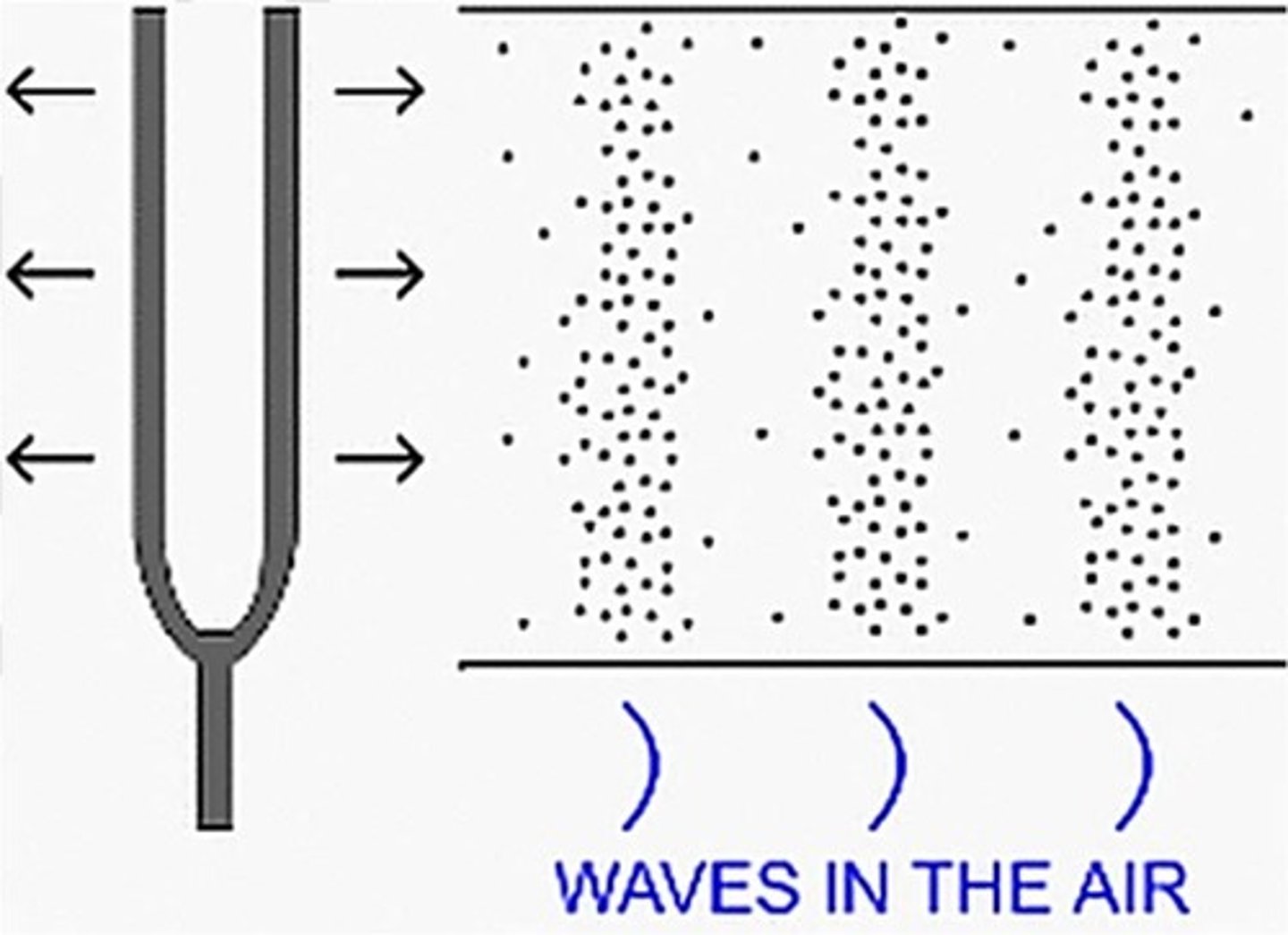
Sound in Physics
A vibration that propagates as an acoustic wave, through a transmission medium such as a gas, liquid or solid.
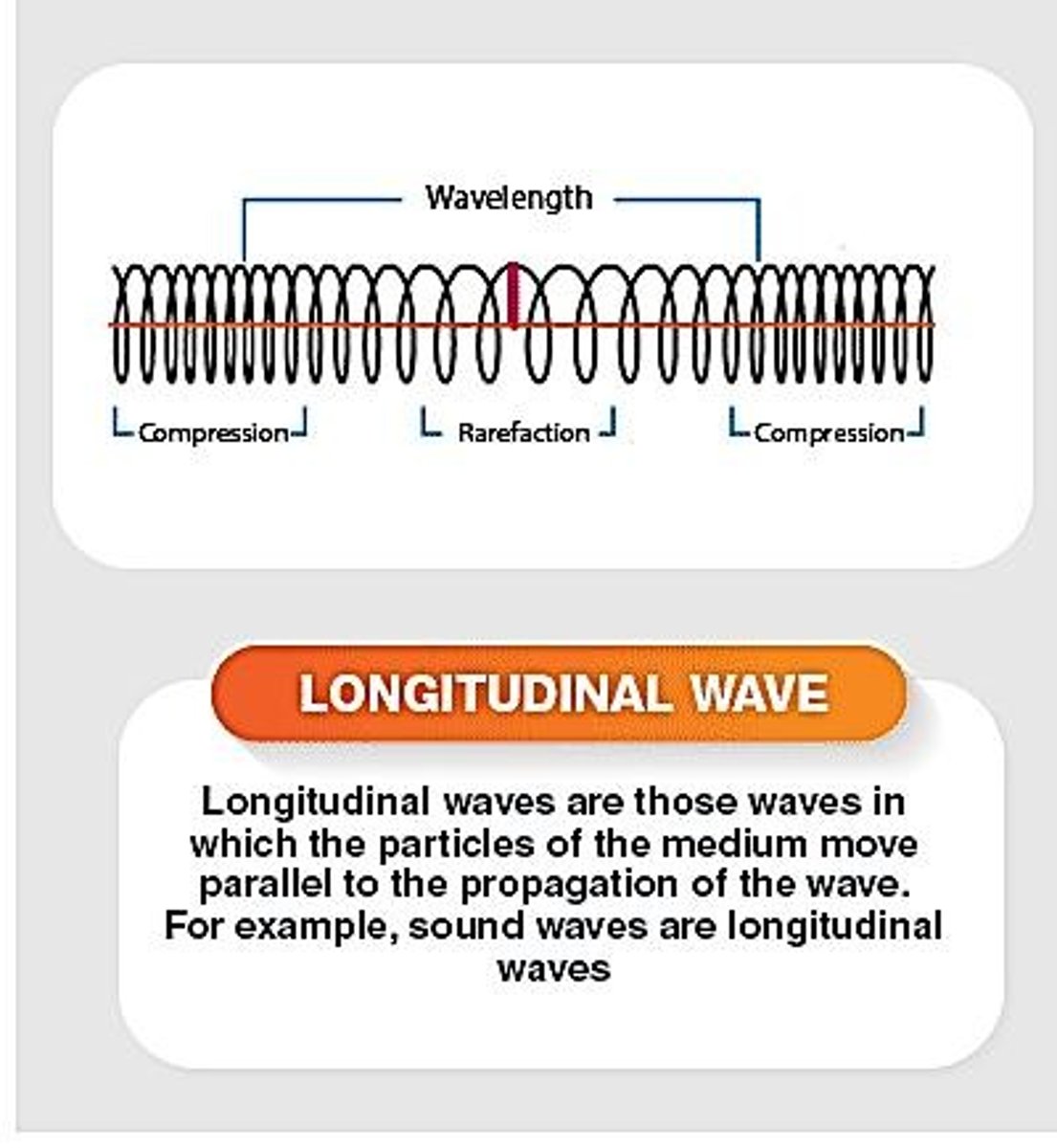
Sound in Human Physiology and Psychology
The reception of sound waves and their perception by the brain.
Sound Wave
The pattern of disturbance caused by the movement of energy traveling through a medium as it propagates away from the source of the sound.
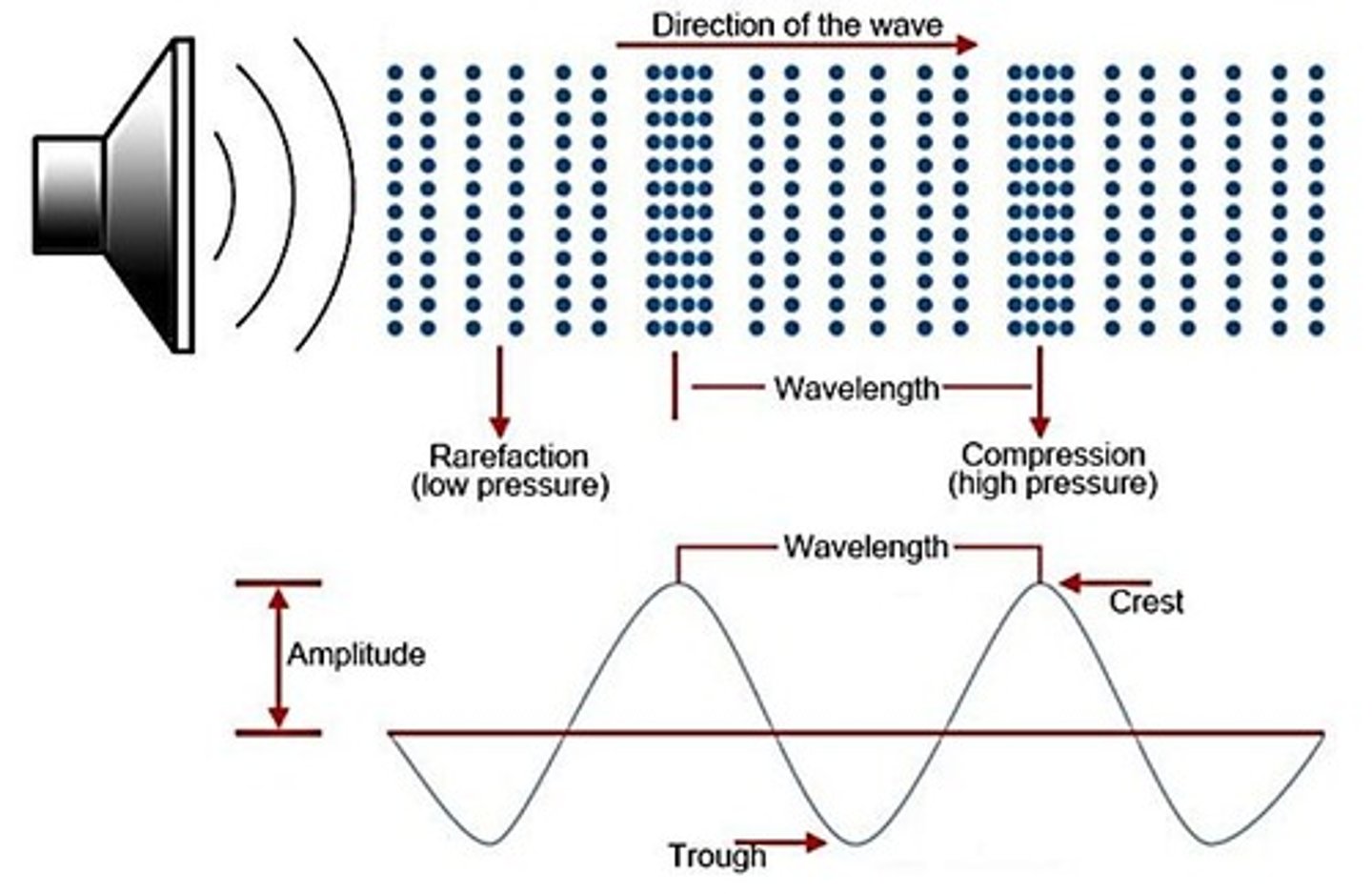
Sound Level
Intensity of sound (energy, strength, amplitude, loudness).
Frequency
Repetition of a periodic event (pitch, tone, wavelength).
Propagation
Origination of transmission of sound energy (path, elapsed time).
Sound Generation
Produced when pressure oscillations are generated in an elastic medium at rates that are detectable by a hearing medium.
Waveform
A waveform that travels in matter.
Wavelength
The distance from any one point to the next point of a corresponding phase within a sound wave.
Amplitude
The maximum deviation of a wave from its average value.
Crest
The point on the medium that exhibits the maximum amount of positive or upward displacement from the rest position.
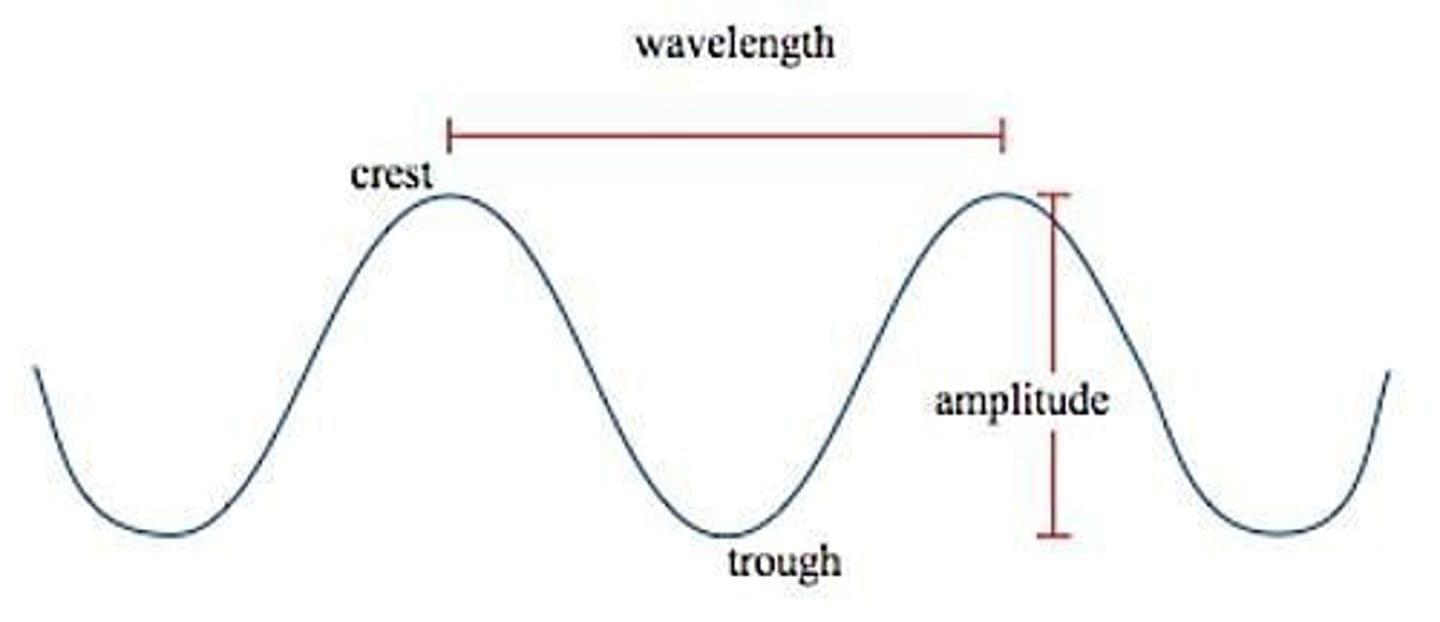
Trough
The point on the medium that exhibits the maximum amount of negative or downward displacement from the rest position.
Decibel
A unit for expressing the relative pressure or intensity of sounds on a uniform scale.
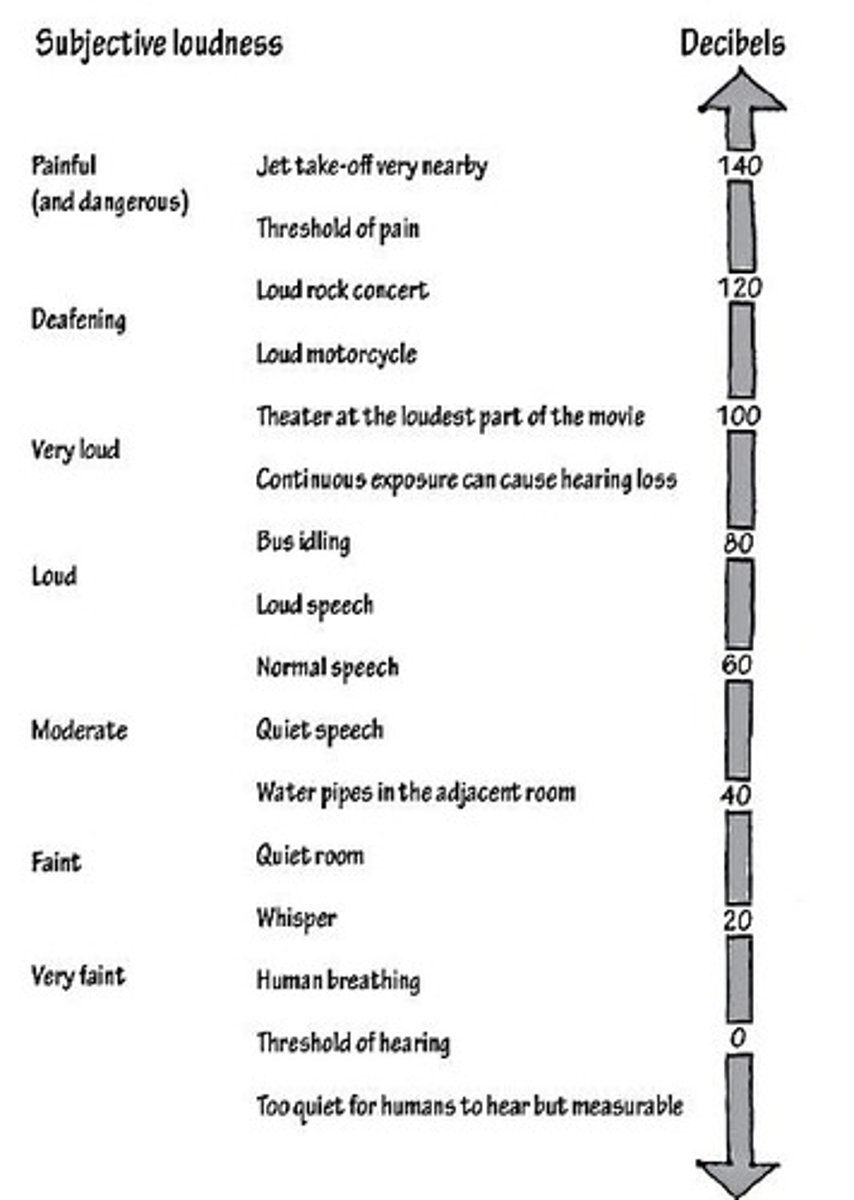
Sound Power
Describes the strength at the source.
Sound Intensity
Describes the strength of the receiver, accounting for distance, room surface sound absorption, room geometry, and other environmental effects.
Refraction
The change in the direction of waves as they pass from one medium to another.
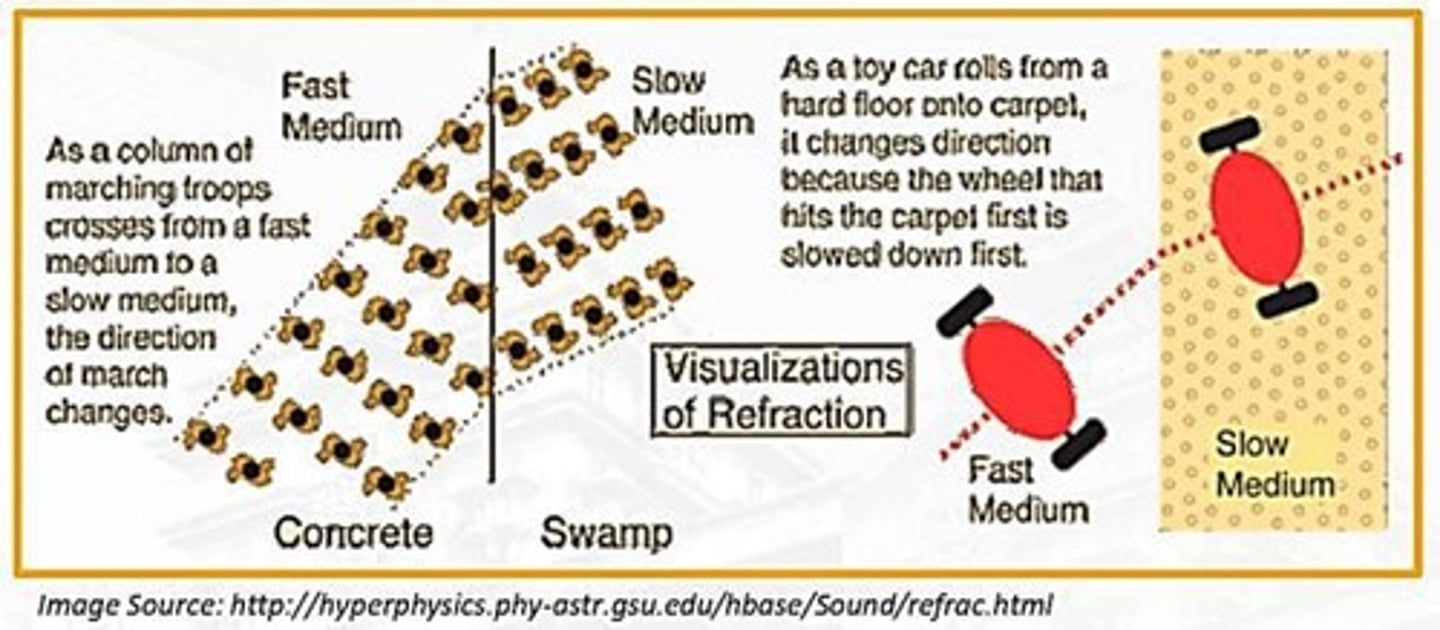
Refraction of sound waves
Most evident in situations in which the sound wave passes through a medium with gradually varying properties.
Sound Phenomenon
Similar to acoustic phenomenon, referred to as dispersion of a sound wave separating into its component frequencies as it passes through a material or a medium.
Diffusion
Refers to the reflection of sound off a surface that is not absorbed or otherwise dissipated upon contact with the convex or uneven surface.
Reflection
The process of spreading or dispersing radiated energy so that it is less direct or coherent.
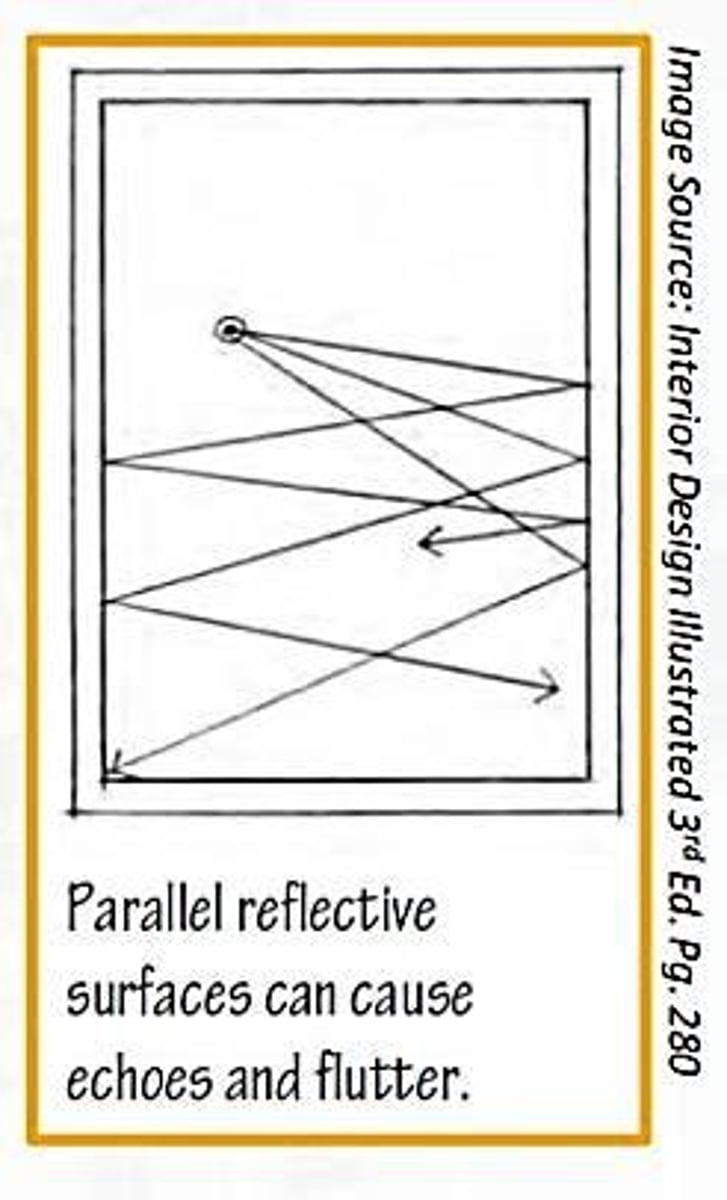
Echoes
Occur when a reflected sound wave reaches the ear more than 0.1 seconds after the original sound wave was heard.
Longitudinal Wave
The medium or the channel moves in the same direction with respect to the wave, with the displacement of the particle parallel to the direction of wave propagation.
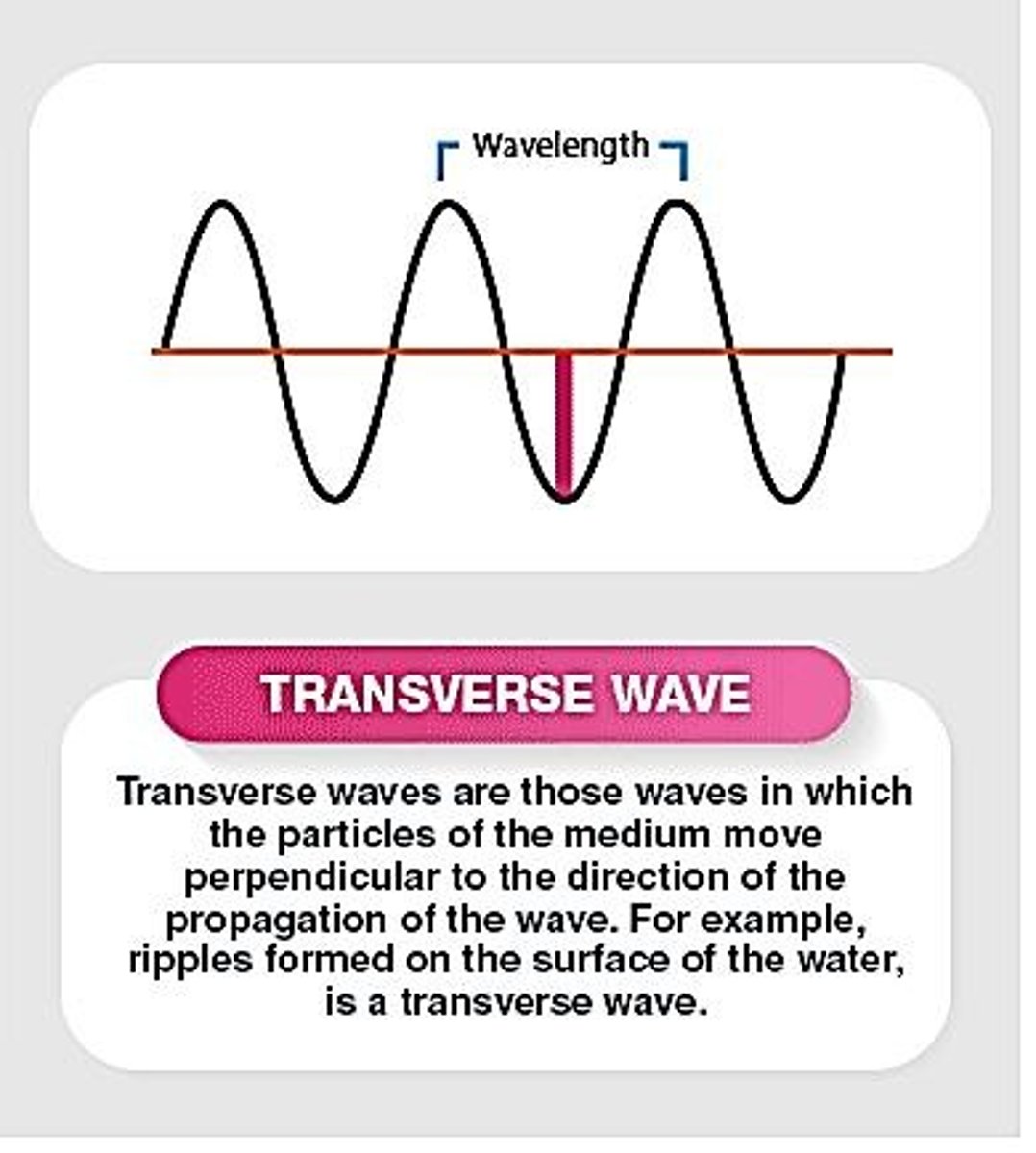
Transverse Wave
The medium or the channel moves perpendicular to the direction of the wave, with the displacement of the particle perpendicular to the direction of propagation of the wave.
Examples of Longitudinal Waves
Sound waves in the air, the primary waves of an earthquake, ultrasound, the vibration of a spring, fluctuations in a gas, tsunami waves.
Diffraction
Refers to the bending of the travel of sound caused by an obstacle in its path; being of waves around small obstacles and the spreading out of waves beyond small openings.
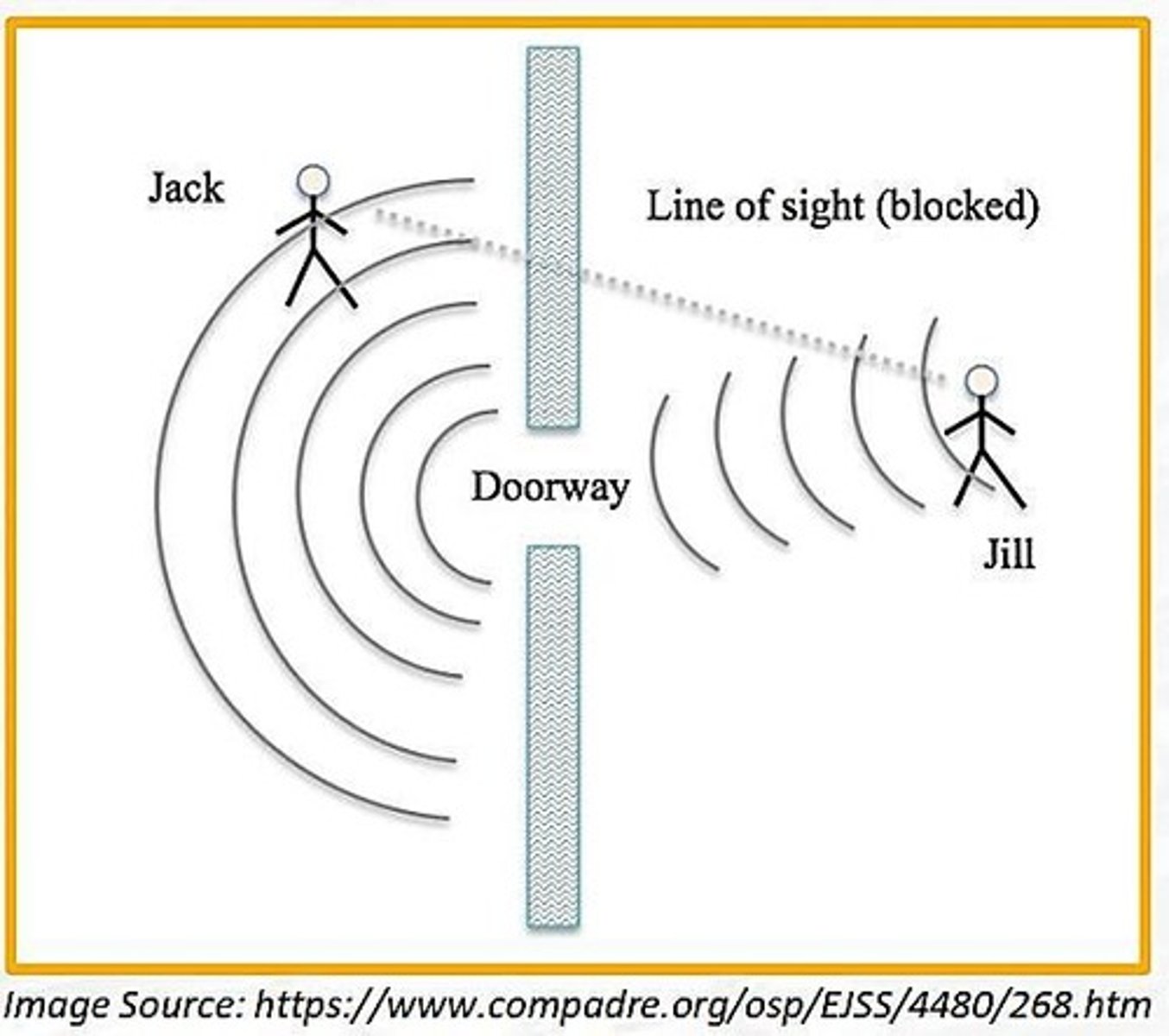
Wavelength and Diffraction
The amount of diffraction increases with increasing wavelength and decreases with decreasing wavelength.
Initial displacement of particles
For a sound wave, it is usually the vibration of the vocal chords or a guitar string that sets the first particle of air in vibrational motion.
Pitch
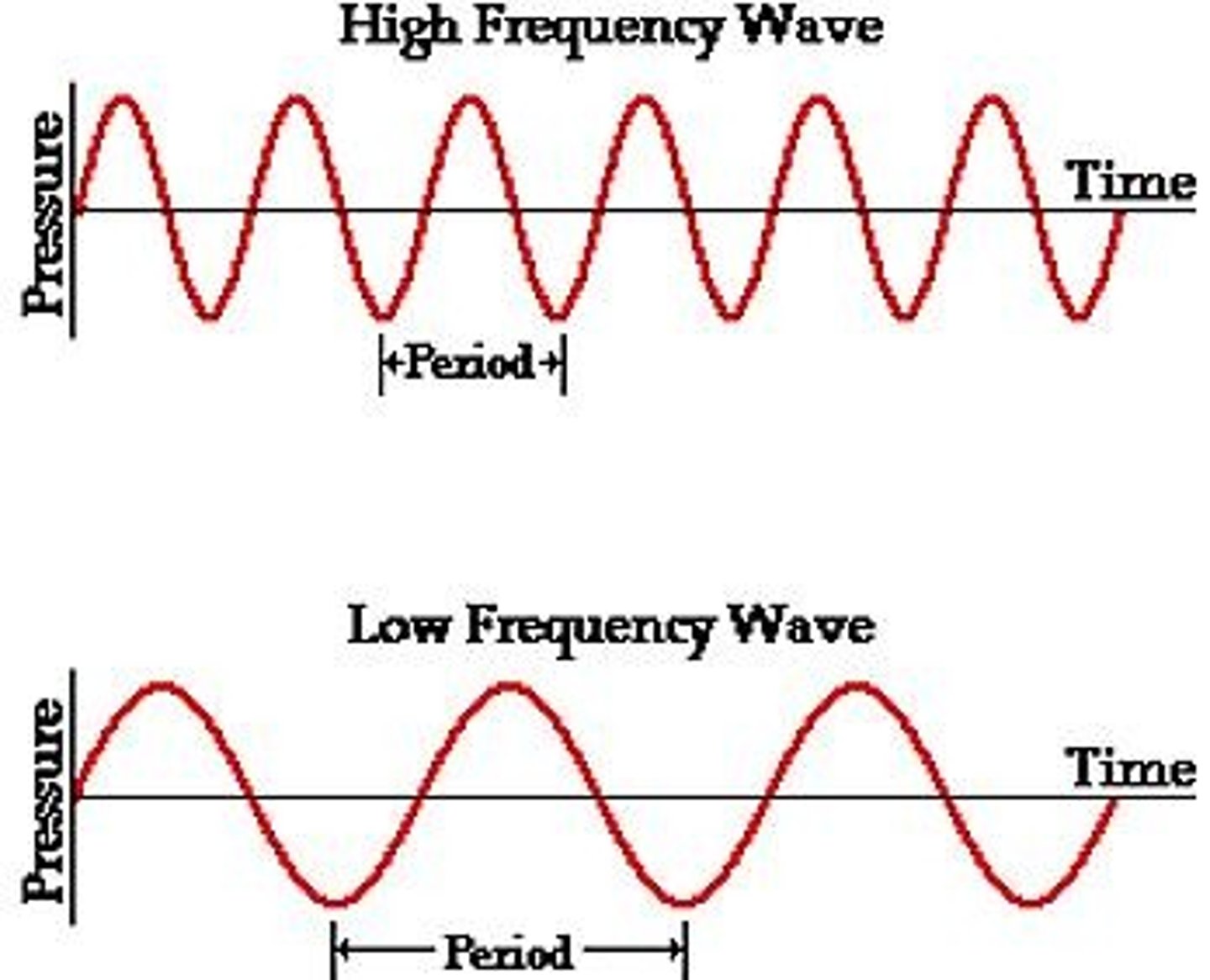
When referred to as pitch, it is the number of times per second that a sound pressure wave repeats itself.
High Frequency Sounds
Sound waves with a high frequency produce high-pitched noises.
Low Frequency Sounds
Sound waves with a low frequency produce low-pitched sounds.
Longitudinal Waves
The medium moves in the same direction of the wave.
Transverse Waves
The medium is moving perpendicular to the direction of the wave.
One Dimension Waves
Longitudinal waves act in one dimension.
Two Dimension Waves
Transverse waves act in two dimensions.
Polarization of Waves
Longitudinal waves cannot be polarized or aligned, while transverse waves can be polarized or aligned.
Medium for Longitudinal Waves
Longitudinal waves can only be produced in solid and liquid surfaces.
Medium for Transverse Waves
Transverse waves can be produced in any medium such as gas, liquid, or solid.
Components of Longitudinal Waves
Longitudinal waves are made of refractions and compressions.
Components of Transverse Waves
Transverse waves are made of troughs and crests.
High Pitch Example
A high frequency (e.g., 880 Hz) is seen as a high pitch.
Low Pitch Example
A low frequency (e.g., 55 Hz) is regarded as a low pitch.
Audible Frequency Range
Sounds with a frequency of 20 Hz to 20,000 Hz are generally audible to humans.
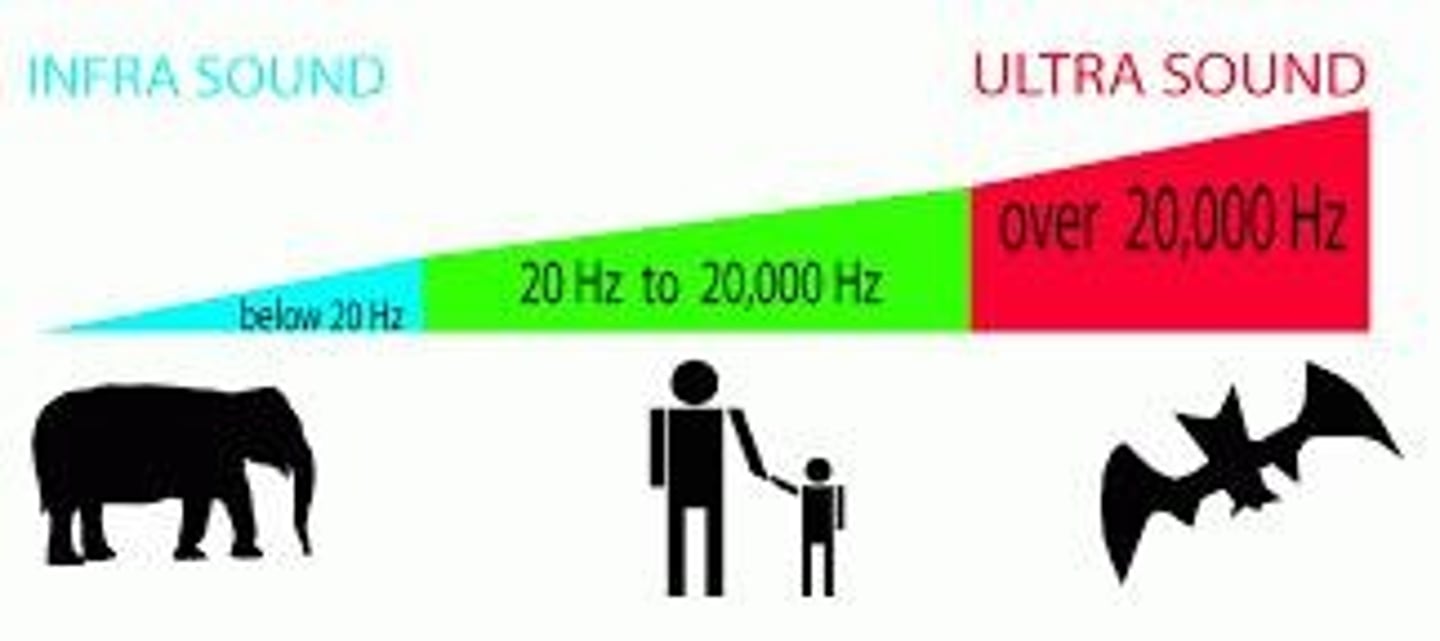
Infrasound
Infrasound refers to sounds having frequencies less than 20 hertz.
Ultrasound
Ultrasound refers to sounds with frequencies greater than 20,000 hertz.
Dogs Hearing Range
Dogs can detect sounds with frequencies of up to 50,000 Hz.
Bats Hearing Range
Bats can detect sounds with frequencies exceeding 100,000 Hz.
Determining Pitch
The pitch of sound is determined by the frequency of vibration of the sound waves that produce them.
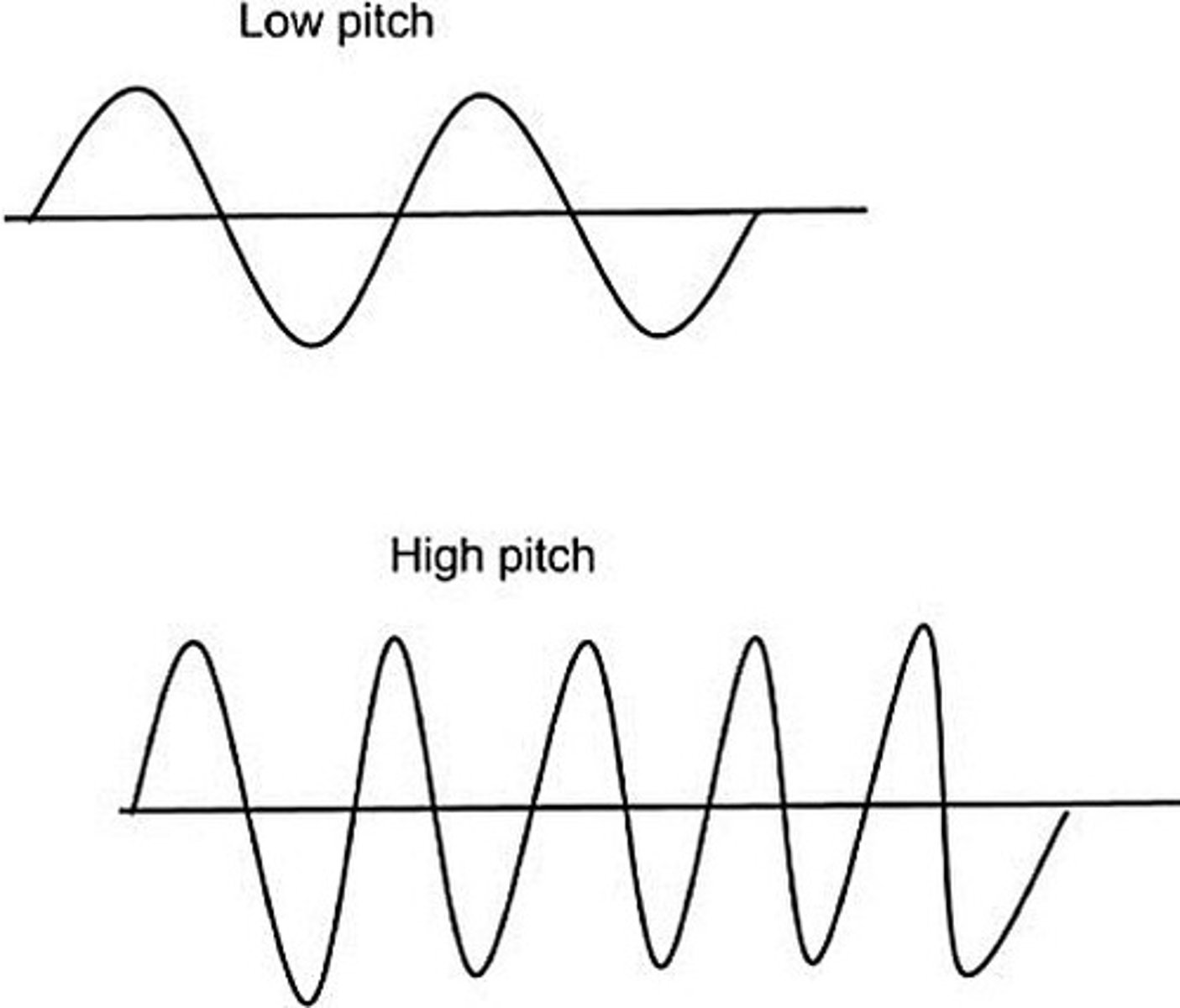
Quality of Sound
Pitch is the quality of sound that distinguishes an acute (or strident) note from a grave or flat note.
Frequency and Pitch Relationship
A higher frequency note has a higher pitch than a lower frequency note.
Harsh Sound Description
The sound is harsh and has a high pitch if the frequency of vibration is higher.
Velocity of Sound Wave Propagation
Wave velocity in common usage refers to speed, although, properly, velocity implies both speed and direction.
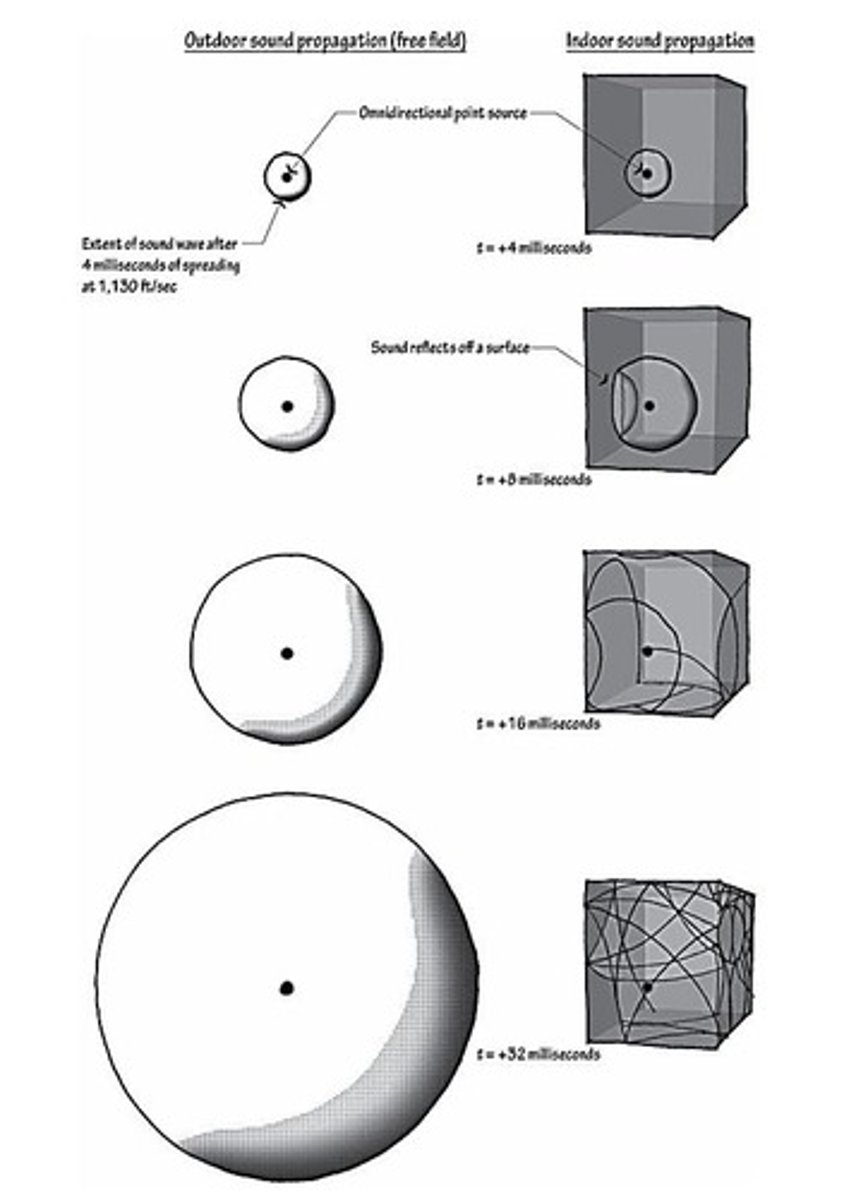
Velocity of a wave
The velocity of a wave is equal to the product of its wavelength and frequency (number of vibrations per second) and is independent of its intensity.
Sound velocity in air
Sound has a velocity of about 0.33km per second (0.2mile per second) in air.
Sound velocity in water
Sound has a velocity of 1.5km per second in water.
Sound velocity in steel
Sound has a velocity of 5km per second in steel.
Soundwave speed in air
All soundwave travel with the same speed in air regardless of their frequency.
Velocity
Velocity is the quantity that designates how fast and in what direction a point is moving.
Speed
Speed is a scalar quantity that refers to the rate of change of position of an object in any direction.
Difference between speed and velocity
Speed gives us an idea of how fast an object is moving whereas velocity not only tells us its speed but also tells us the direction the body is moving in.
Speed definition
Speed can be defined as a function of distance travelled.
Velocity definition
Velocity is a function of displacement.
Instantaneous velocity
Instantaneous velocity is the velocity of a body at any given time.
Speed characteristics
Speed is primarily a scalar quantity.
Velocity characteristics
Velocity is essentially a vector quantity.
Rate of change of distance
Speed is the rate of change of distance.
Rate of change of displacement
Velocity is the rate of change of displacement.
Speed of an object
Speed of an object moving can never be negative.
Velocity of a moving object
The velocity of a moving object can be zero.
Speed indicator
Speed is a prime indicator of the rapidity of the object.
Velocity indicator
Velocity is the prime indicator of the position as well as the rapidity of the object.
Distance covered by an object
Speed can be defined as the distance covered by an object in unit time.
Displacement of the object
Velocity can be defined as the displacement of the object in unit time.
Speed of sound
The speed of sound is the distance travelled per unit time by a sound wave as it propagates through an elastic medium.
Speed formula
speed = distance/time.
Sound Propagation
The travelling of sound from the sound source to the surrounding medium.
Average Speed of Sound
343 m/s.
Factors Affecting Speed of Sound Wave
Properties of the medium through which the wave is traveling affect the speed of sound.
Elasticity of Solid
Properties related to the tendency of a material to maintain its shape and not deform under stress; more elastic mediums allow faster sound propagation.
Density of the Medium
The greater the mass density of individual particles, the slower the wave will travel; sound travels faster in less dense materials.
Temperature
A factor that affects the speed of sound, though specific details are not provided in the note.
Vibration
The rapid to and fro movement of an object that produces sound by disturbing the equilibrium state of particles in the medium.
Elastic Modulus
The technical term for the elasticity of a material.
Sound Wave Travel in Phases
Longitudinal sound waves travel faster in solids than in liquids, and faster in liquids than in gases.
Rigid Materials
Materials characterized by strong attractions between atoms/molecules that prevent deformation under stress.
Helium vs Air
A sound wave will travel nearly three times faster in Helium than in air due to the lower mass of Helium particles.
Sound Production Example
When a tuning fork is struck against a rubber pad, vibration created in the prongs can be sensed as sound.
Guitar Strings
Produce sound when struck, demonstrating the principle of sound production through vibration.
Medium Properties
The properties of the medium, such as elasticity and density, significantly impact the speed of sound.
Longitudinal Sound Waves
Waves that travel faster in solids than in liquids and faster in liquids than in gases.
Stiff Materials
Materials that have strong particle interactions, allowing them to maintain shape and propagate sound effectively.
Inertial Property of Density
The property that has the greatest impact upon the speed of sound within a single phase of matter.
Sound Wave Response
The responsiveness of individual particles in a medium to interactions with neighboring particles affects sound wave speed.
Phase of Matter
The phase (solid, liquid, gas) has a tremendous impact on the elastic properties of the medium.
Sound Wave Propagation
Sound can propagate through compressible media such as air or water, and also through solids.
Factors affecting Speed of Sound
Speed of sound varies in different mediums and is affected by temperature, density, and elasticity of the medium through which sound waves travel.
Speed of Sound in Air at 20°C
343 m/s
Speed of Sound in Rubber
60 m/s
Speed of Sound in Lead
1,210 m/s
 Note
Note  Flashcards (84)