5-- Dental Composite Material- Biocompatibility: Vidal
 Call Kai
 Learn
Learn Practice Test
 Spaced Repetition
 Match
Match Flashcards
 Knowt Play
1/70

There's no tags or description
Looks like no tags are added yet.
Name | Mastery | Learn | Test | Matching | Spaced | Call with Kai |
|---|
No analytics yet
Send a link to your students to track their progress
71 Terms
Biocompatibility: Craig's textbook
Ability of a material to elicit an appropriate biological response in a given application in the body
Biocompatibility: Schmalz and Arenholt-bindslev
Ability of a material to perform with an appropriate host response when applied as intended
A single material may not be
biologically acceptable in all applications
Measuring Biocompatibility
In Vitro tests
Animal Tests
Usage tests or clinical trials
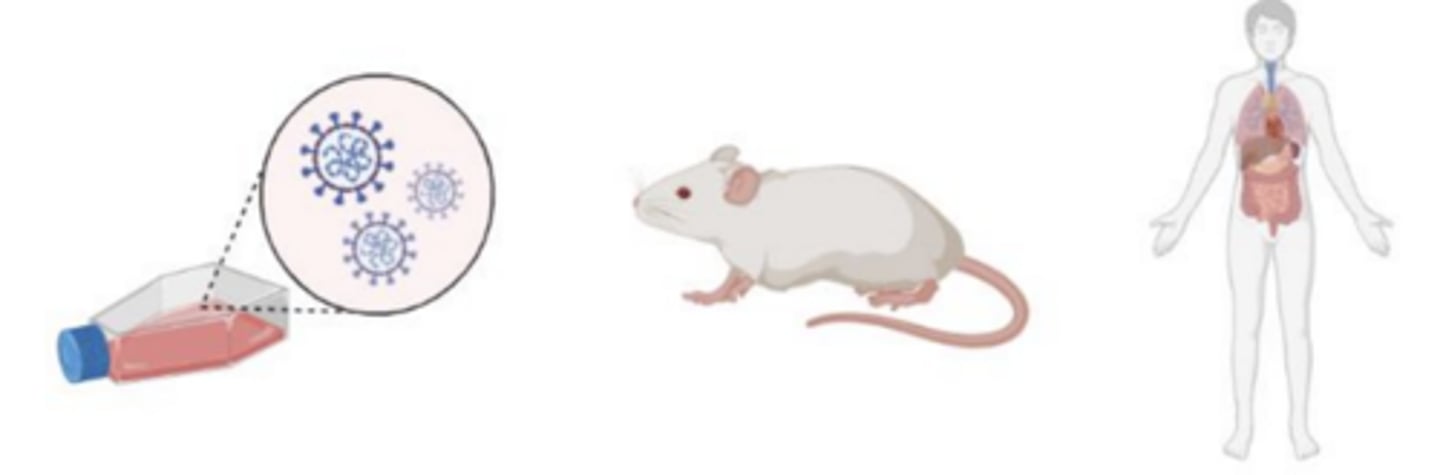
this type of test requires the placement of a material in contact with a cell, enzyme, or some other isolated biological system
In vitro
what kind of cells are used in in vitro testing
primary cells (better) and cell lines
Primary cells are taken directly from an ____/____ and clutured and grow for a ____ time
animal/tissue
limited time
do primary cells retain the characteristics of cells in vivo
yes retain many
in vivo tests are more relevant to measuring ______ of material
cytotoxicity
cell lines Have been transformed to allow them to grow _____ in culture
indefinitely
do cell lines retain in vivo characteristics
do not retain all but exhibit retained features
Examples of in vitro tests
Cell cytoxicity tests, membrane permeability tests, cell immune function test, changes in cell cycle or activation of complement systems
Mutagenesis tests: assess the effect of a biomaterial on a cell's genetic material
what is the significance of in vitro testing
to reduce the number or required animal tests
Animal tests involve
mammals (mice, rats, hamsters, guinea pigs, etc) - same complexity as humans
Material is NOT placed in the animal with regard to its final use
WHY?
Allow for the complex interactions between a material and functioning, complete biological system to occur
More comprehensive and relevant than in vitro tests
Disadvantages in animal tests
More expensive, time consuming, often involve significant ethical concerns and oversight, difficult to interpret and quantify
Example of animal tests:
Mucous membrane irritation test
Determine whether a material causes inflammation to mucous membrane or skine
Example of animal tests:
Skin sensitization
Materials are injected intradermally, followed by secondary treatment with adhesive patches containing the test substance
Example of animal tests:
Implantation test
Evaluate materials that will contact the subcutaneous tissue or bone (common for periodontal and endodontic treatment materials)
usage tests involve ____ or _____
animals (large) or humans
in usage tests, material is placed _____ to its intended clinical use
IDENTICAL
Ability to mimic the clinical use of the material in every regard, including time, location, environment, and placement techniques
when a human is used in a usage test it is called a
RCT
what is the gold standard test
usage tests
Disadvantages to usage tests
VERY expensive, time consuming, ethical/legal concerns, difficult to interpret and quantify results
Usage tests:
Dental pulp irritation tests
Materials are placed in Class V cavity preparation in intact non-carious teeth
Teeth are extracted and sectioned for microscopic examination
Necrosis and inflammation are classified according to their intensity
Usage tests:
Intraosseous implant test
Materials are inserted into the jaw of test animals
Primates, dogs, miniature pigs, guinea pigs, and rats
Tissue reaction is assessed histologically as well as the tissue in contact with the implant
Usage test:
Mucosa and gingival usage tests
Material is placed in cavity preparation with subgingival extensions
Responses are characterized according to the number of mononuclear inflammatory cells in the epithelium and adjacent connective tissues
- Difficulties: Presence of existing inflammation, rough margins of restorative materials, over- or under- contour of the restoration
Correlation among tests is ____ ____ _____
- Not always possible
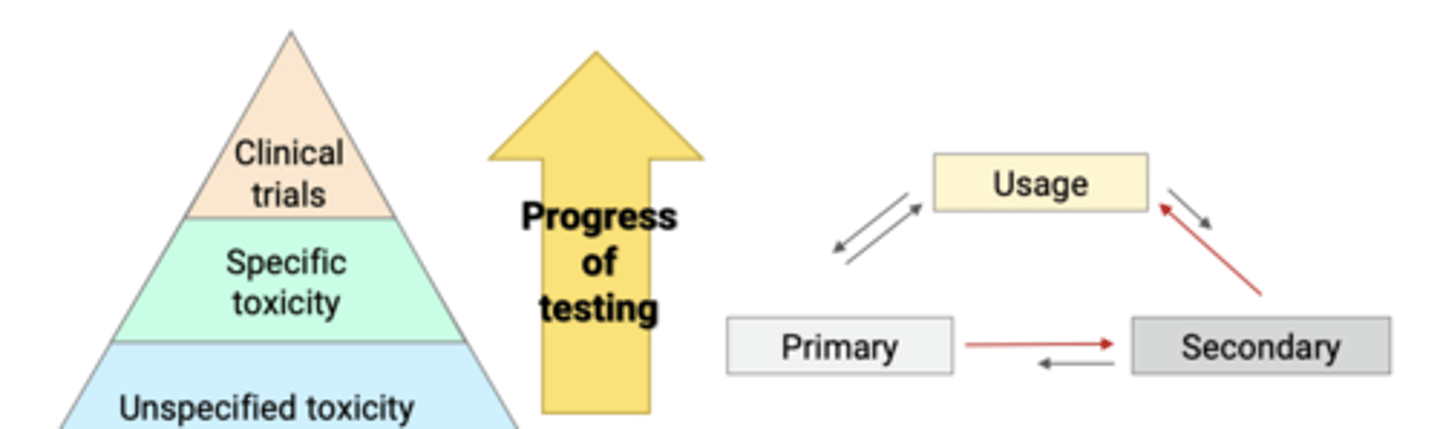
what is the most cost effective and accurate types of studies
in vitro + animal + usage
can a single test determine biocompability?
no
Biocompatibility is assessed by various _____ according to specific _____ in which a comparison with products already on the market plays an important role
experts, guidelines
there are lots of different ways to assess biocompatibility, thus evaluations may not generate ____ _____
identical results
- it is the dentists obligation to not rely on these assessments blindly but rather to question them critically
Regulatory agencies require ______ testing and provide guidance on how the tests should be performed
biocompatability
what are the 3 regulatory agencies
International organization for standardization (ISO)
the US Food and drug administration (FDA)
and the conformité Européenne (CE)
The FDA recognized human health substances as what
only two categories
- drugs or devices
Dental restorative materials are classified as
devices
Preclinical evaluation of biocompatibility of medical devices used in dentistry - Test methods for dental materials
Initial tests:
- Assess biological reaction to materials (cytotoxicity, sensation, and systemic toxicity). Some done in vitro, other in animals
Supplementary tests:
- Assess chronic toxicity, carcinogenicity, biodegradation (many in animals)
Manufatueres evaluate the device to
determine if it could cause an adverse biological response
Manufactures perform _______ ______
biocompatibility testing
The FDA reviews the testing results before authorizing the device for ______ _____
market sale
Biocompatibility of dental materials
Reactions of pulp
Reactions of other soft tissues to restorative materials
Reactions of bone and soft tissues to implant materials
Reactions of pulp
Dentin bonding/bonding agents
Resin-based materials
Amalgam and casting alloys
Glass ionomers
Liners, varnishes, and non-resin cements
Bleaching agents
Reactions of the pulp - dentin bonding agents
Smear layer is removed in etch and rinse protocol which increases dentin ______ --> acids used for etching can be _____ (etch and rinse vs self etch)
permeability
irritating to the pulp
HEMA and Bis-GMA (monomers) have cytotoxicity when applied in contact with ____, but have lees cytotxicity when a ______ barrier is present (at least 0.5 mm)
cells
dentin
HEMA can ____ through dentin via dentinal tubules and cause ____ ____
diffuse
pulpal irritation
There is a low pulpal inflammatory response when RBC is placed in cavities with at least _____ mm of remaining dentin. Reactions are diminished within weeks
0.5
when there is incomplete polymerizatinon of adhesives, resin based restorative materials release unbound _____ _____ immediately after setting and later which is _____ to the pulp and gingival cells
free monomers
cytotoxic
Reactions of pulp: Resin-based materials
Microleakage and nanoleakage at adhesive interfaces do present permeability and/or gaps leading to _____ ____ --> pulp _____
bacterial infiltration
inflammation
Good _____ _____ is key to avoid pulpal irritation, but material selection is also important
marginal sealing
restorative materials can alter ____ ____ and dentin ____
pulpal responses, repair
what is the main concern of biocompatability with resin-based materials
estrogenicity of biphenol A (BPA)
BPA can be a _______ product of some methacrylate used in resin composite and sealants, but levels of BPA release are extremely ___ (diet is the main source of BPA exposure in most countries)
degredation
low
BPA release can be minimized by proper ____ _____ the material, using rubber dam isolation, remove
light curing
which dental sealant does not contain BPA
3M Clinpro
high copper amalgam is ____, low copper amalgam that has set for 24 hours does not inhibit ____ ___
toxic
cell growth
low-copper amalgam are ____ ____, high-copper amalgam causes ___ reactions in implantation tests
well tolerated
severe
Amalgam and Casting alloys: Usage tests
______ pulpal irritation when placed in shallow cavities or in deep cavities using a line
minimal
Amalgam and Casting alloys: when used in deep cavities with no liner =
pain (thermal and electric conductivity)
Amalgam and Casting alloys: Alloys used for restorations crown and dentures may have _____ ____ on cells if released
adverse effects
Metal ions released from alloys are likely to contact the ____ and _____ tissues than the pulp (more likely to affect by the cement retaining the restoration)
gingival and mucosal
Pulp biocompatibility to Glass ionomers is attributed to the ____ nature of and ___ molecular weight of the polyacrylic acid - unable to ___ through detnin
weak, high, diffuse
Pulp biocompatibility is pretty good
Glass ionomers: usage tests
mild pulp reactions, absent after 1 month
Glass ionomers: sensitivity to pain is increased after placing GI in cervical cavities possibly related to increased _____ after conditioning the dentin
permeability
Alkaline liners are used in exposed pulps but caused _____, coagulation of hemorrhagic exudate of the superficial pulp
necrosis
not used anymore
Calcium hydroxide-based materials containing resin is ____ irritating and able to stimulate ____ ____ formation quicker than calcium hydroxide
less, dentin bridge
Common brands:
- TheraCal LC = resin-modified calcium silicate cement
- Biodentine= tricalcium silicate-based material
MTA is a ____ _____-based cement
Calcium silicate
____ ____ is the main soluble component in MTA
calcium hydroxide
MTA stimulates formation of a thick ____ _____ with no inflammatory response
dentin bridge
MTA stimulates dentin _______ through solubilization of non-collagenous proteins from the dentin
remineralization
Induces cell proliferation, migration, and differentiation to odontoblast-like cells
SUMMARY: Biocompatibility depends on the
material composition, location, and interactions with the oral cavity
SUMMARY: Diverse reactions can occur if
Material release their components and whether those components are toxic, immunogenic, or mutagenic

