ACS final
 Studied by 0 people
 Call Kai
 Learn
Learn Practice Test
 Spaced Repetition
 Match
Match Flashcards
 Knowt Play
1/246

There's no tags or description
Looks like no tags are added yet.
Name | Mastery | Learn | Test | Matching | Spaced | Call with Kai |
|---|
No analytics yet
Send a link to your students to track their progress
247 Terms
Layout of an element (mass # & atomic #)
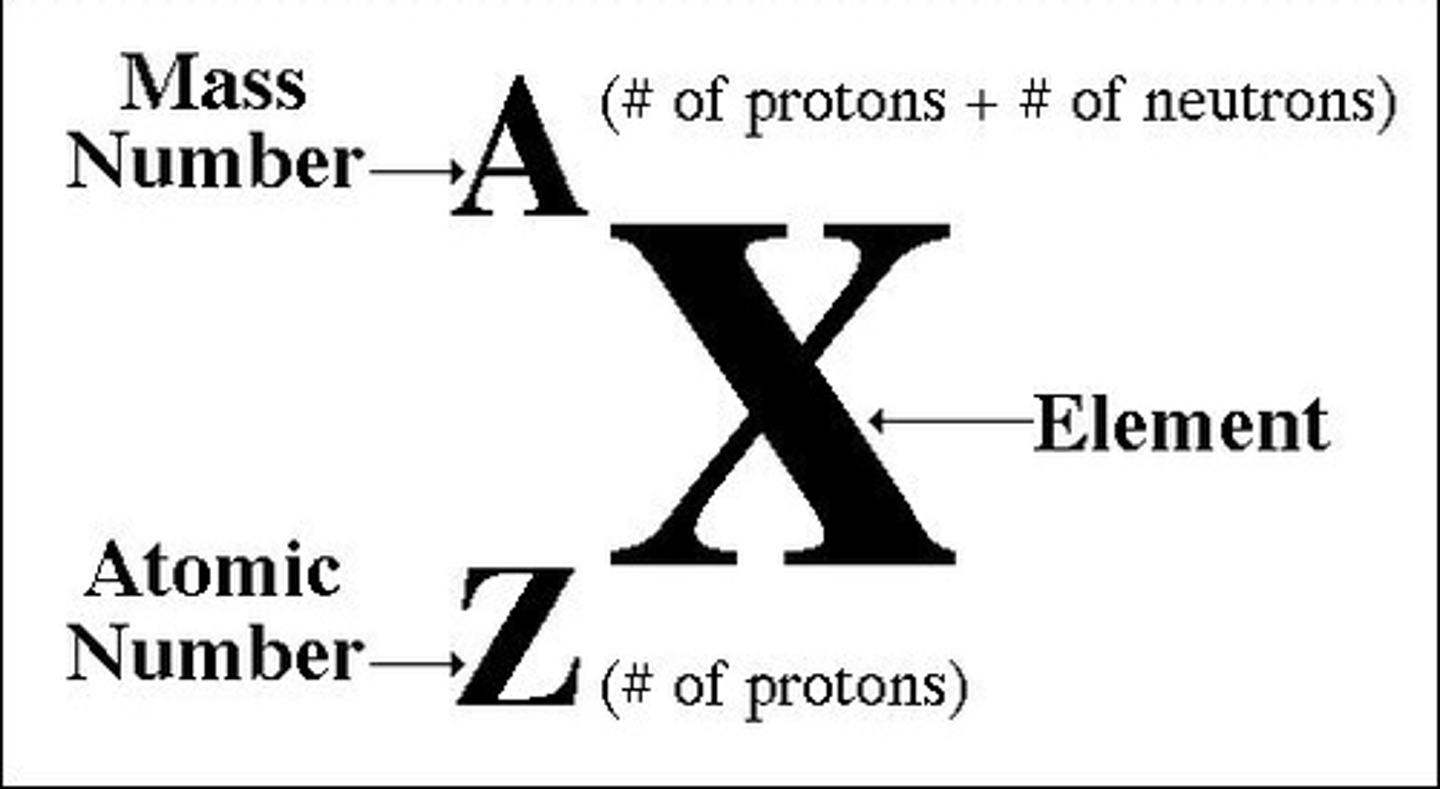
atomic number =
# of protons
mass number =
# of protons + neutrons
the number of protons in a neutral atom will equal the
# of electrons
how to find the correct number of neutrons
mass number - atomic number
Forms of the same elements that differ in amount of neutrons
isotopes
What particle, if lost from the nucleus, would NOT cause a change in the atomic number?
a neutron because it has no charge
When alpha particles were shot at a metal foil target, most passed through without deflections, while others deflected at large angles. What did this suggest to Rutherford?
that the atoms of the metal were mostly empty space, while the nucleus consisted of most of the mass which included highly condensed positive particles (which caused the deflection).
An atom has a valence shell configuration of 1s1. To which group of elements on the periodic table does it belong?
IA
alkali metals
electromagnetic spectrum
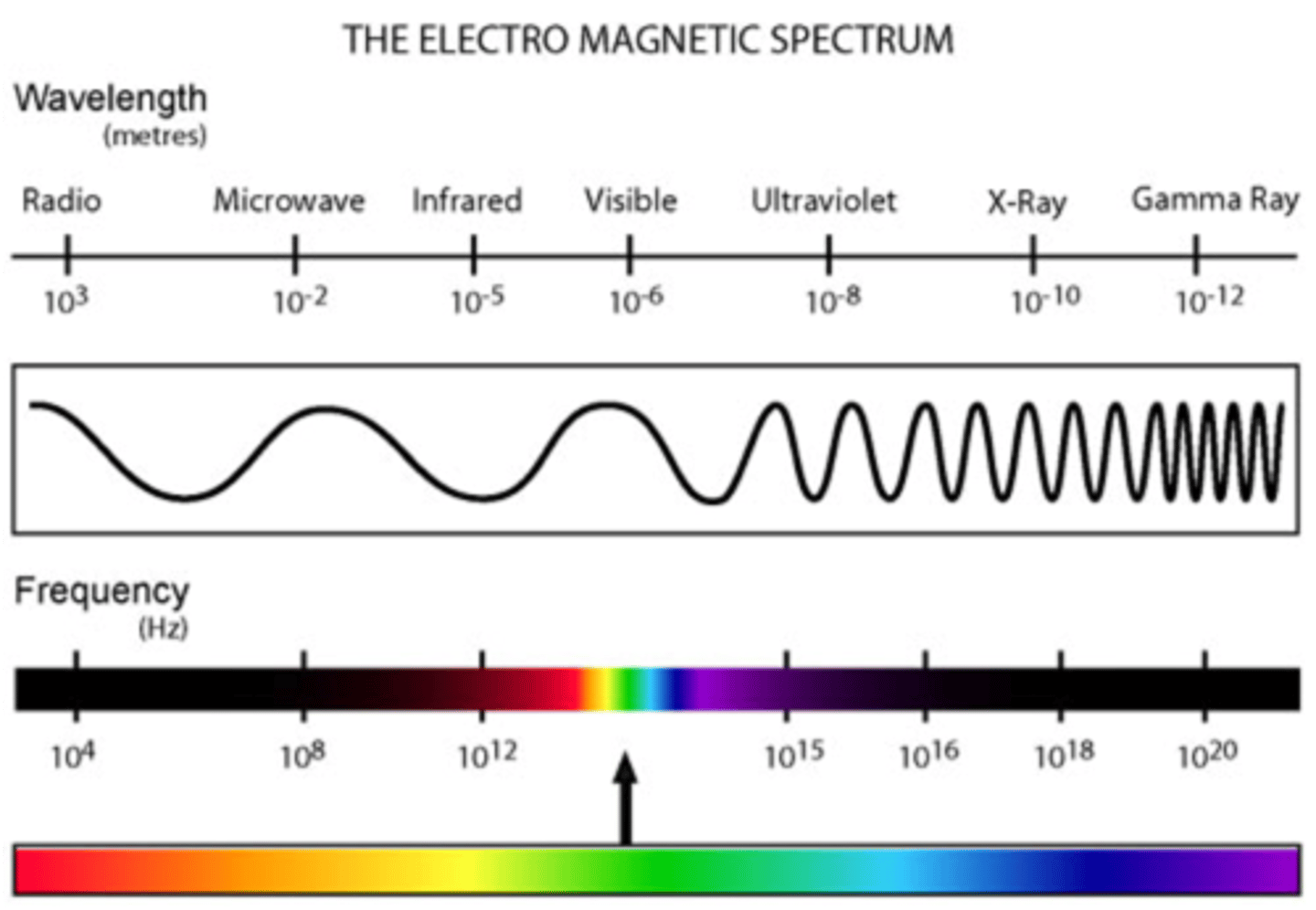
The greater the wavelength of a photon..?
the lower its frequency
The greater the frequency of a photon...?
the shorter its wavelength
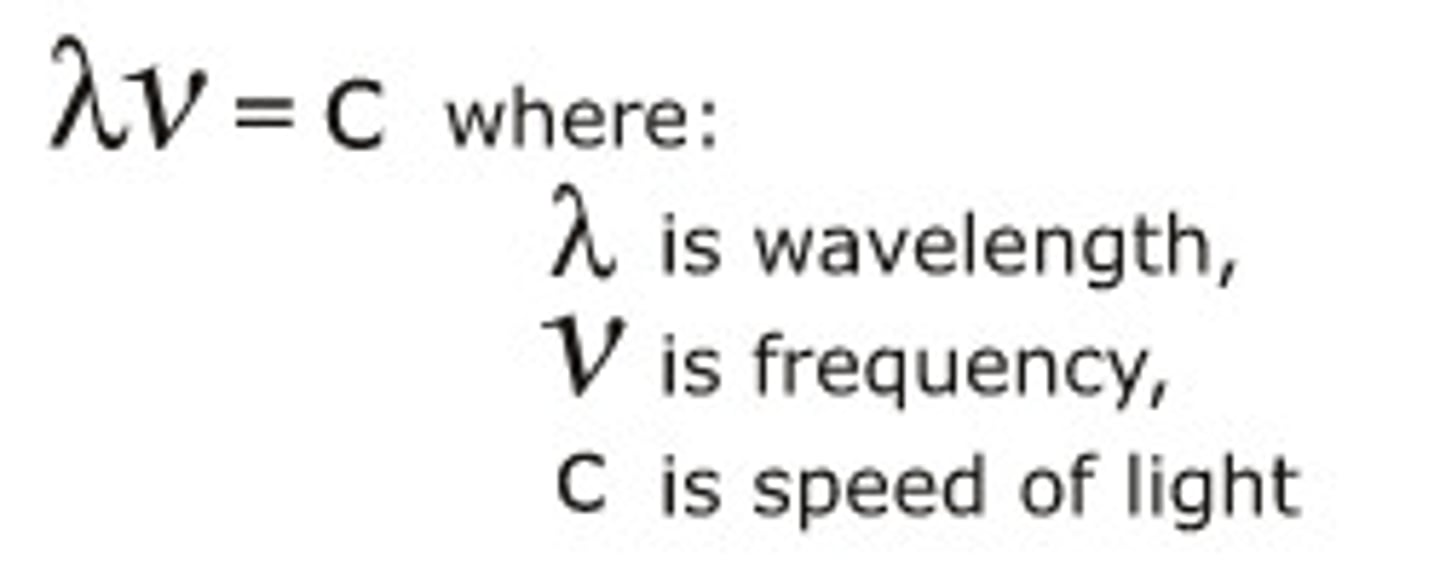
Light energy formula
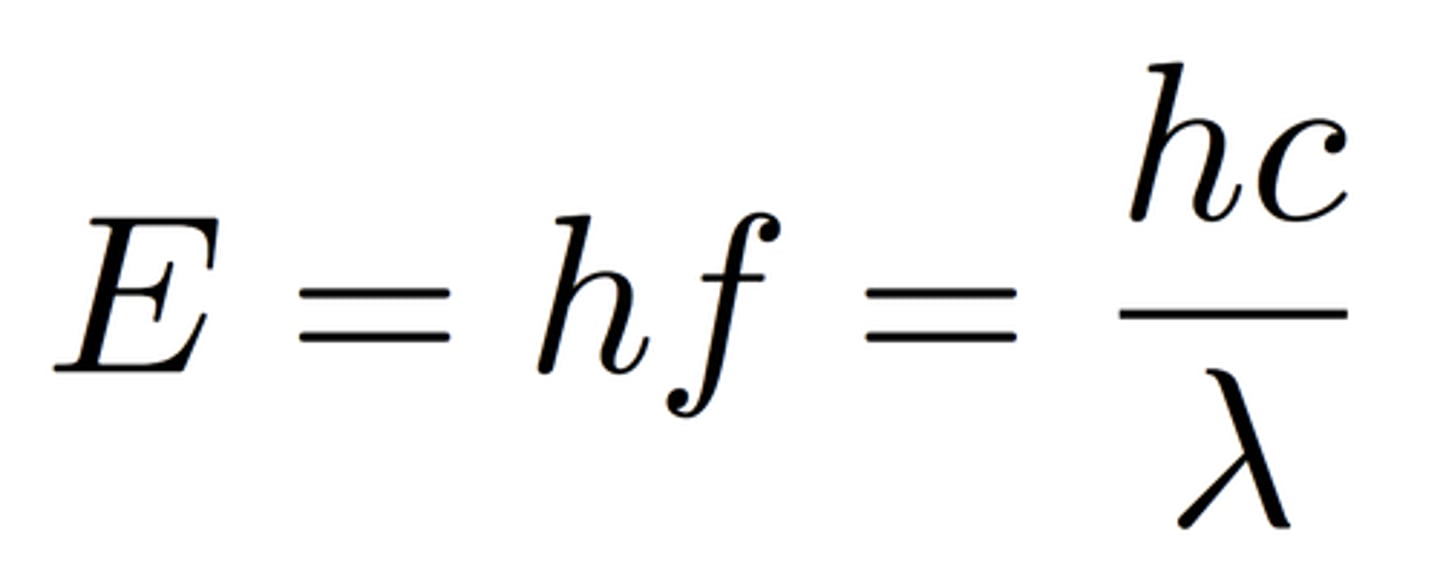
What does C in the light energy formula represent?
Give the ground-state electron configuration of an atom in the second period
1s2 2s1
Electrons configuration rule that states electrons do not pair until they have to. (put one electrons in each electron domain then pair up)
Hund's rule
An experimental phenomena associated with atoms having unpaired electrons - which states such substances are attracted to magnetic fields
Paramagnetism
Which drop in energy level results in the greatest emission of energy?
n=2 to n=1
quantum numbers
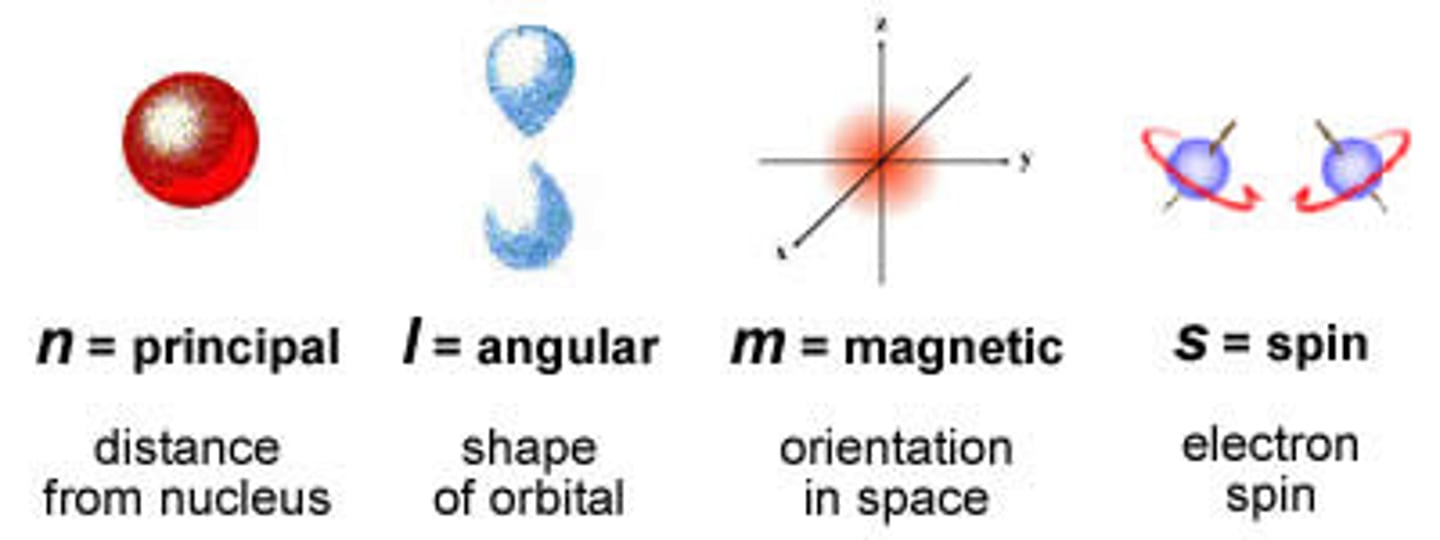
What do the 4 quantum numbers stand for?
n = energy level
l = (n-1)
ml -l to l
mn 1/2 or -1/2 (spin)
List the quantum numbers for the s, p, d, and f orbitals
s 1,0,0
p 2, 1, -1-0-1
d 3, 2, -2--1-0-1-2
f 4, 3 -3--2--1-0-1-2-3
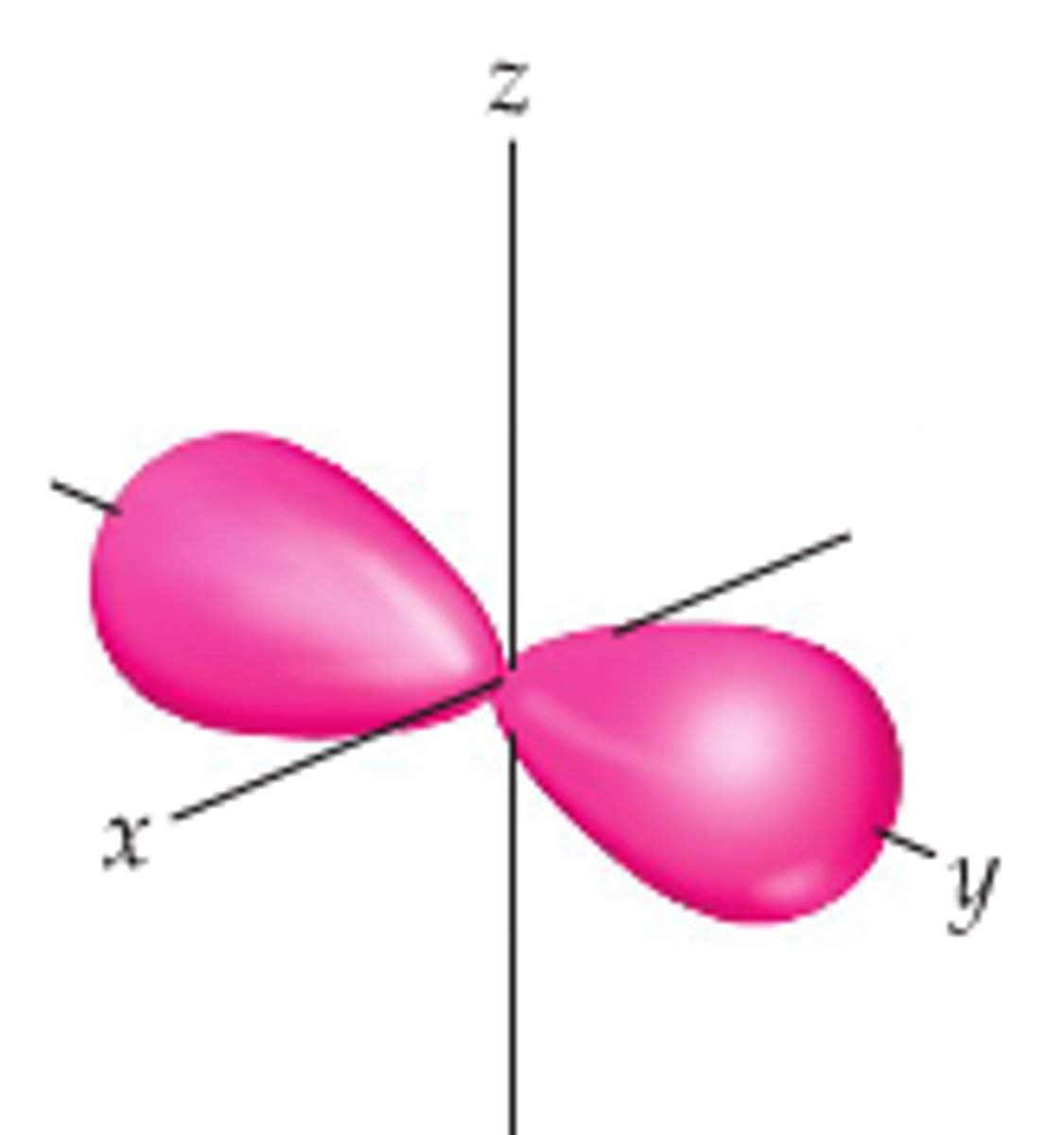
Py orbital
Which element is represented by X
Chromium
What two subatomic particles have the most mass, but occupy very little of the volume of an atom
protons and neutrons
Define Isoelectronic
Having the same amount of electrons
How does a sodium ion differ from a sodium atom?
the sodium ion has fewer electrons
two or more compounds with the same formula but a different arrangement of atoms in the molecule and different properties
isomer
two or more different physical forms in which an element can exist. Graphite, charcoal, and diamond are all ________ of carbon.
allotropes
What makes up an alpha particle?
2 protons and 2 neutrons
What did Millikan discover from his oil drop experiments?
the magnitude of the charge on an electron
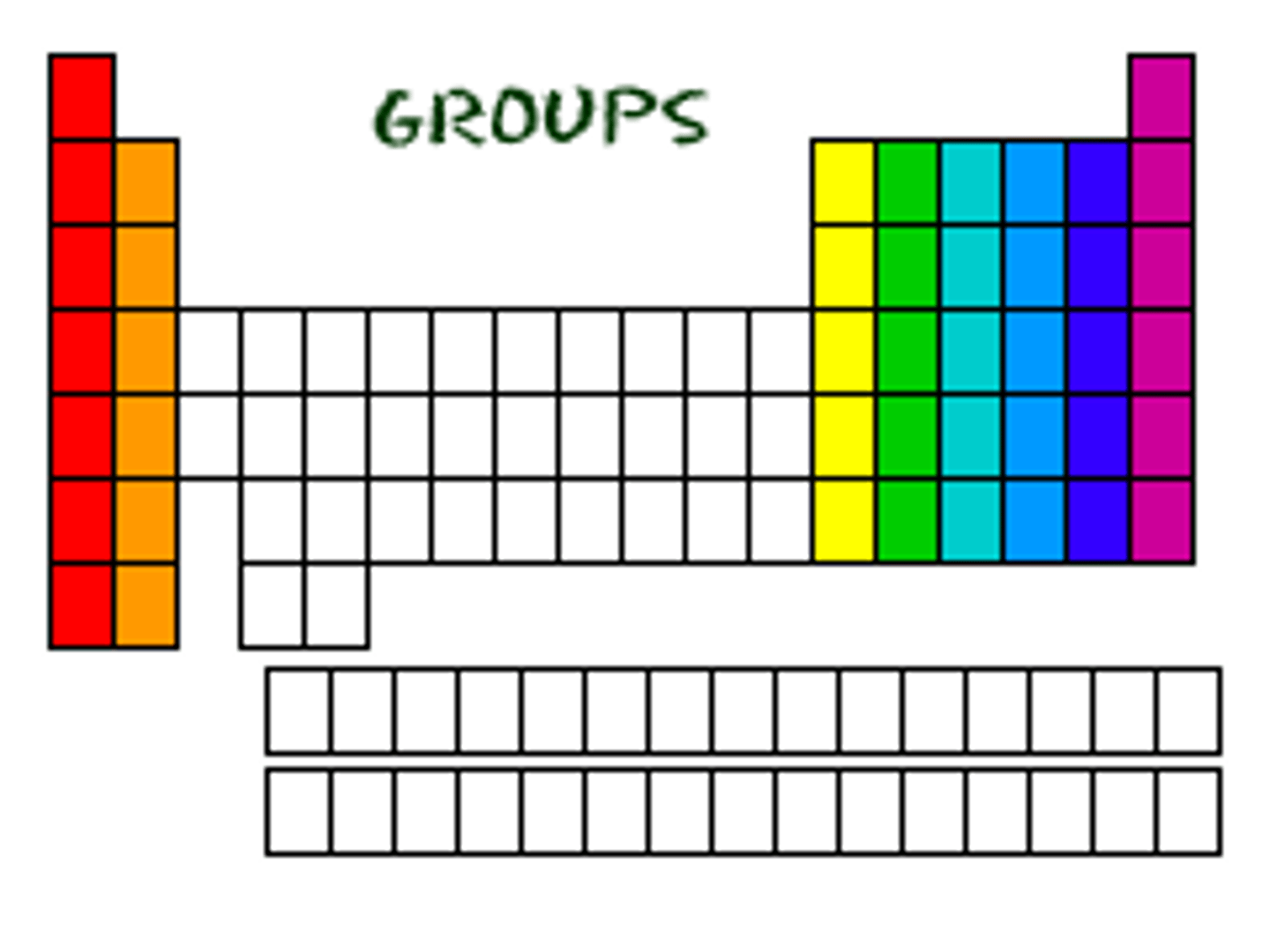
Periods vs Groups
when an atom of an electropositive atom becomes an ion it..?
becomes larger
Nearly all the mass in an atom is located _________ because both ______ & ______ are located there, and each of these particles have a mass larger than the ______
inside the nucleus
protons & neutrons
electron
Classify the following as an element, compound, or mixture. If it is a mixture, decide if it is a homogeneous or heterogeneous mixture.
1 Sugar
2 Spaghetti Sauce
3 Phosphorus
1 compound, not a mixture
2 mixture, heterogenous
3 element
Properties that do depend on the amount of matter present.
extensive
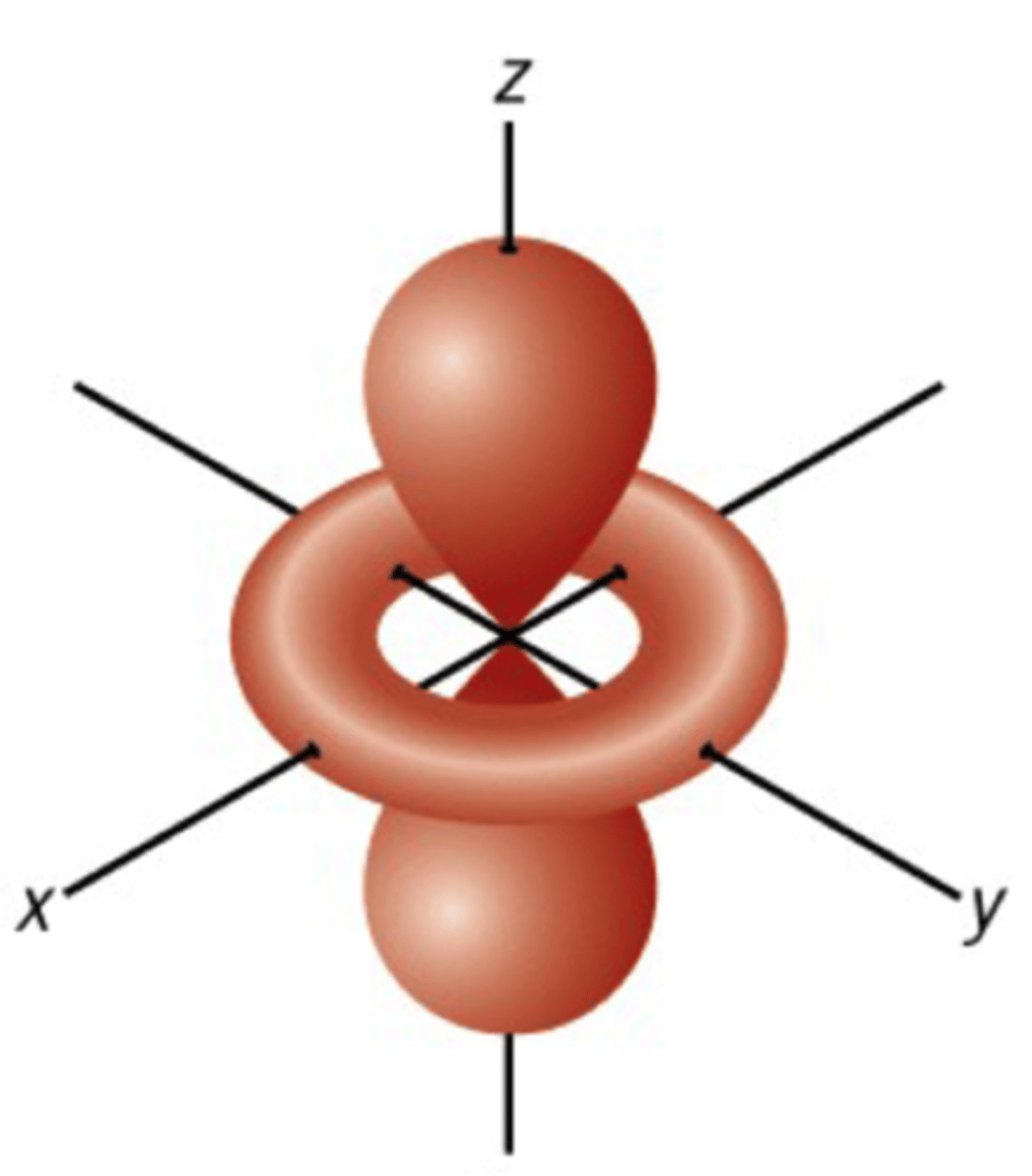
Dz^2 orbital
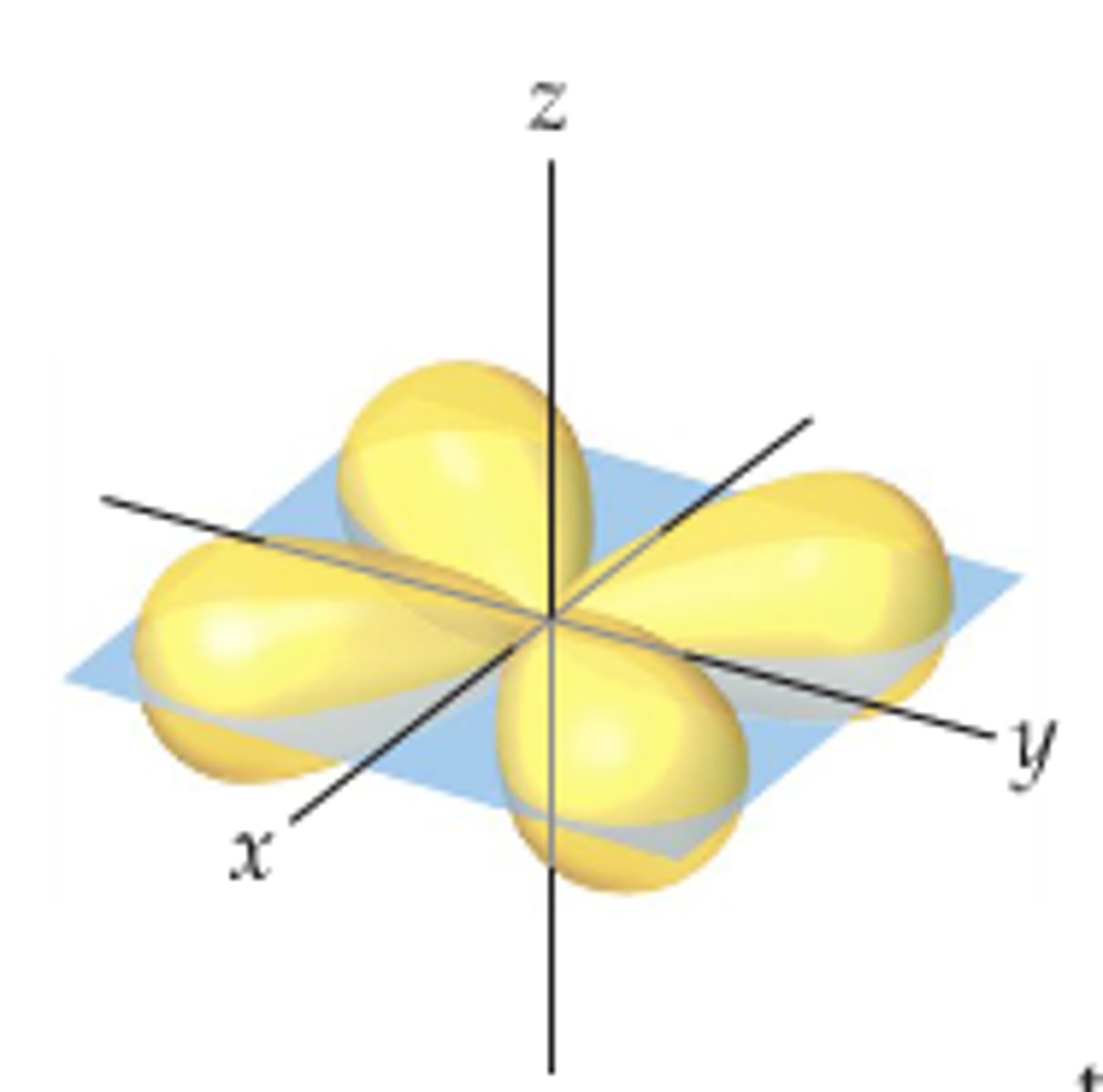
Dxy orbital
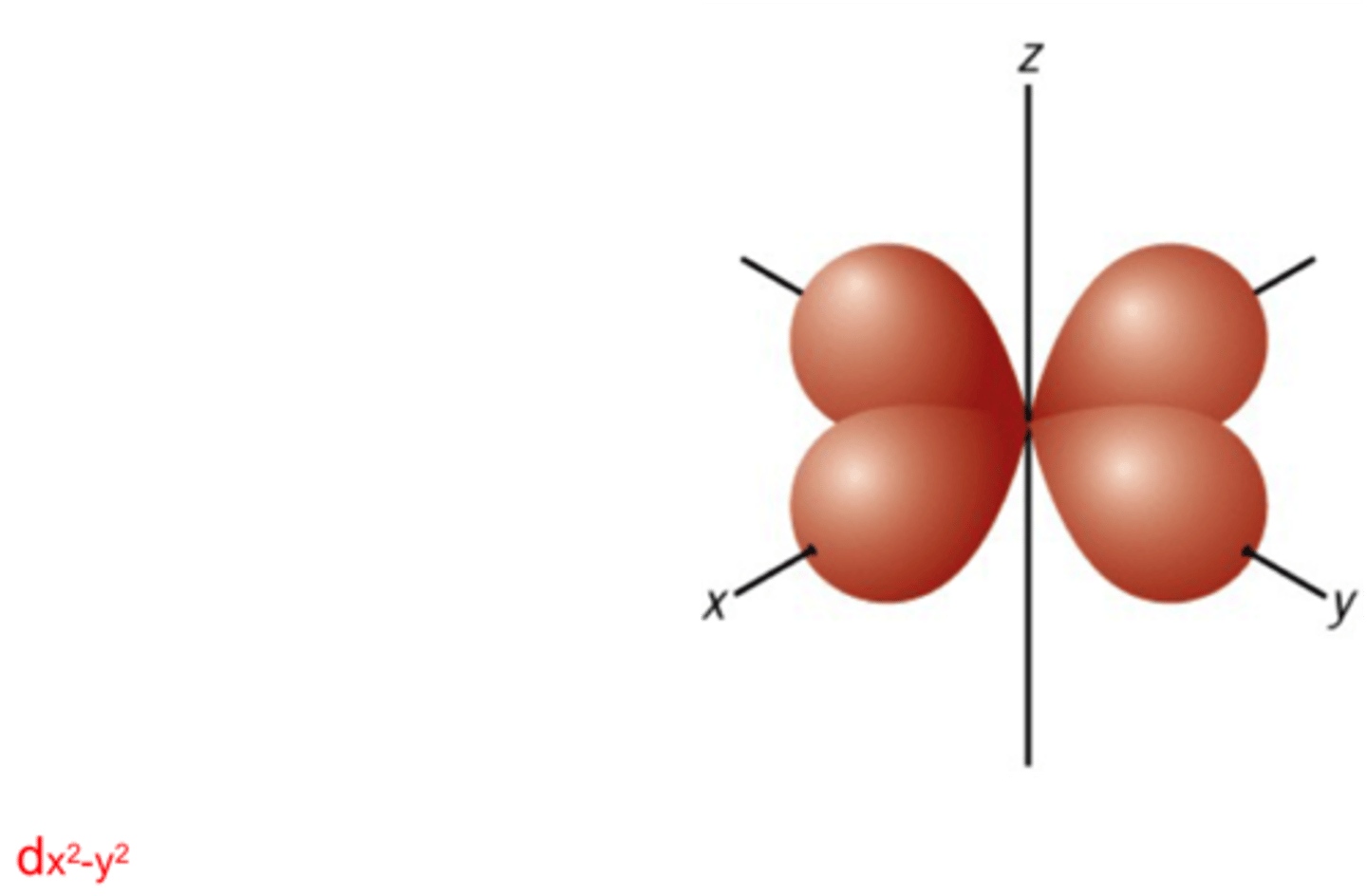
Dx^2y^2 orbital
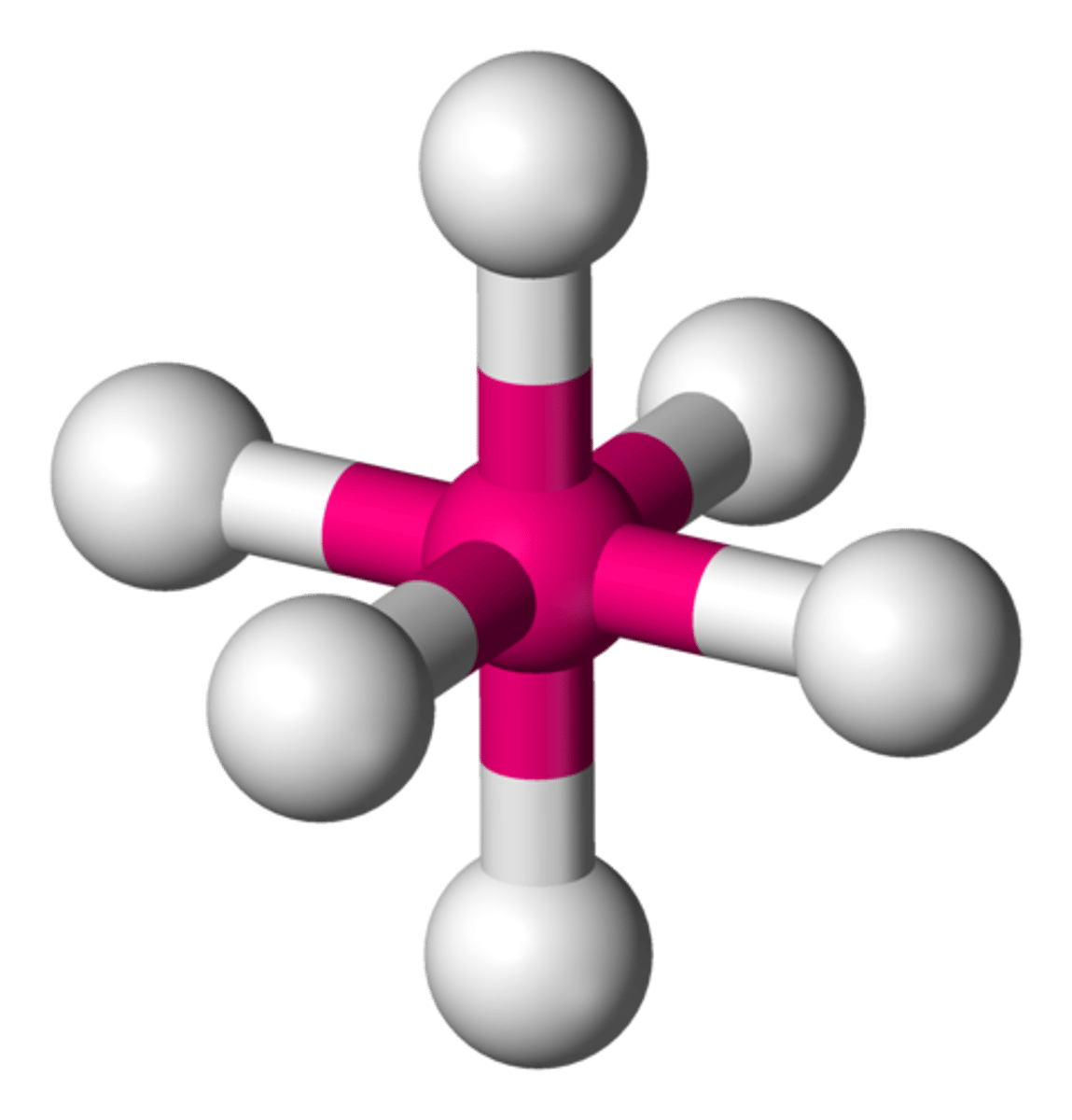
List the shape, electron domain geometry, and predicted bond angle of a molecule with 6 electron domains
Octahedral
90º
List the electron domain geometry & molecular geometry of a molecule with 4 electron domains (4 bonding 0 nonbonding)
electron domain geometry: tetrahedral
molecular geometry: tetrahedral
List the electron domain geometry & molecular geometry of a molecule with 4 electron domains (3 bonding 1 nonbonding)
electron domain geometry: tetrahedral
molecular geometry: trigonal pyramidal
ex: NH3
List the electron domain geometry & molecular geometry of a molecule with 3 electron domains (2 bonding 1nonbonding)
electron domain geometry: trigonal planar
molecular geometry: bent
List the electron domain geometry & molecular geometry of a molecule with 3 electron domains (3 bonding 0 nonbonding)
electron domain geometry: trigonal planar
molecular geometry: trigonal planar
List the electron domain geometry & molecular geometry of a molecule with 2 electron domains (2 bonding 0 nonbonding)
electron domain geometry: linear
molecular geometry: linear
List the electron domain geometry & molecular geometry of a molecule with 4 electron domains (2 bonding 2 nonbonding)
electron domain geometry: tetrahedral
molecular geometry: bent/nonlinear
ex: H2O
List the electron domain geometry & molecular geometry of a molecule with 5 electron domains (5 bonding 0 nonbonding)
electron domain geometry: trigonal bipyramidal
molecular geometry: trigonal bipyramidal
ex: PCl5
List the electron domain geometry & molecular geometry of a molecule with 6 electron domains (6 bonding 0 nonbonding)
electron domain geometry: octahedral
molecular geometry: octahedral
ex: SF6
List the electron domain geometry & molecular geometry of a molecule with 6 electron domains (5 bonding 1 nonbonding)
electron domain geometry: octahedral
molecular geometry: square pyramidal
ex: BrF5
List the electron domain geometry & molecular geometry of a molecule with 5 electron domains (2 bonding 3 nonbonding)
electron domain geometry: trigonal bipyramidal
molecular geometry: linear
ex: I3-
List the electron domain geometry & molecular geometry of a molecule with 5 electron domains (3 bonding 2 nonbonding)
electron domain geometry: trigonal bipyramidal
molecular geometry: t-shaped
ex: CIF3
List the electron domain geometry & molecular geometry of a molecule with 5 electron domains (4 bonding 1 nonbonding)
electron domain geometry: trigonal bipyramidal
molecular geometry: see saw shape
ex: SF4
List the shape, electron domain geometry, and predicted bond angle of a molecule with 5 electron domains
trigonal bipyramidal, 120º equitorial & 90º axial
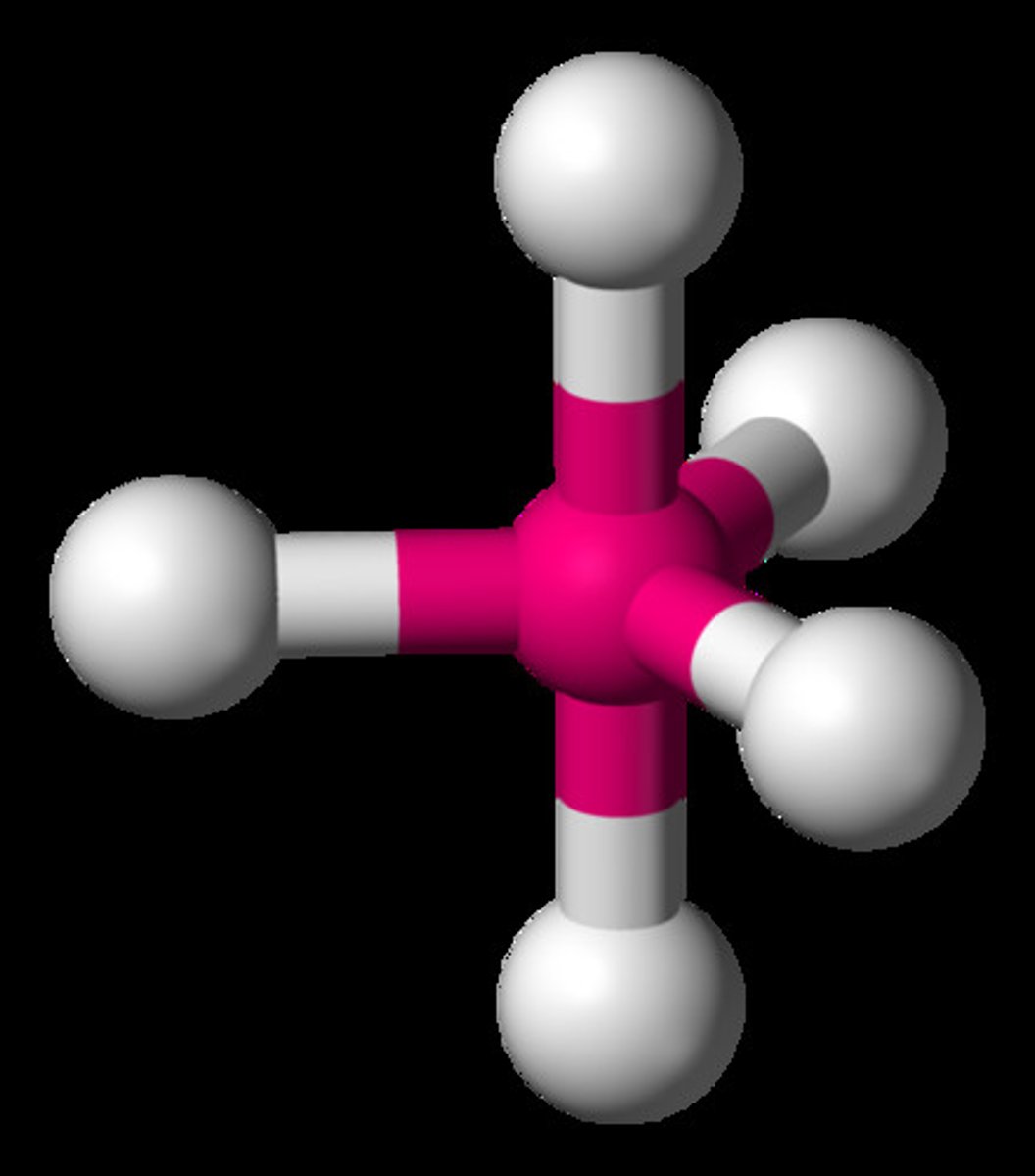
List the shape, electron domain geometry, and predicted bond angle of a molecule with 4 electron domains
tetrahedral 109.5º
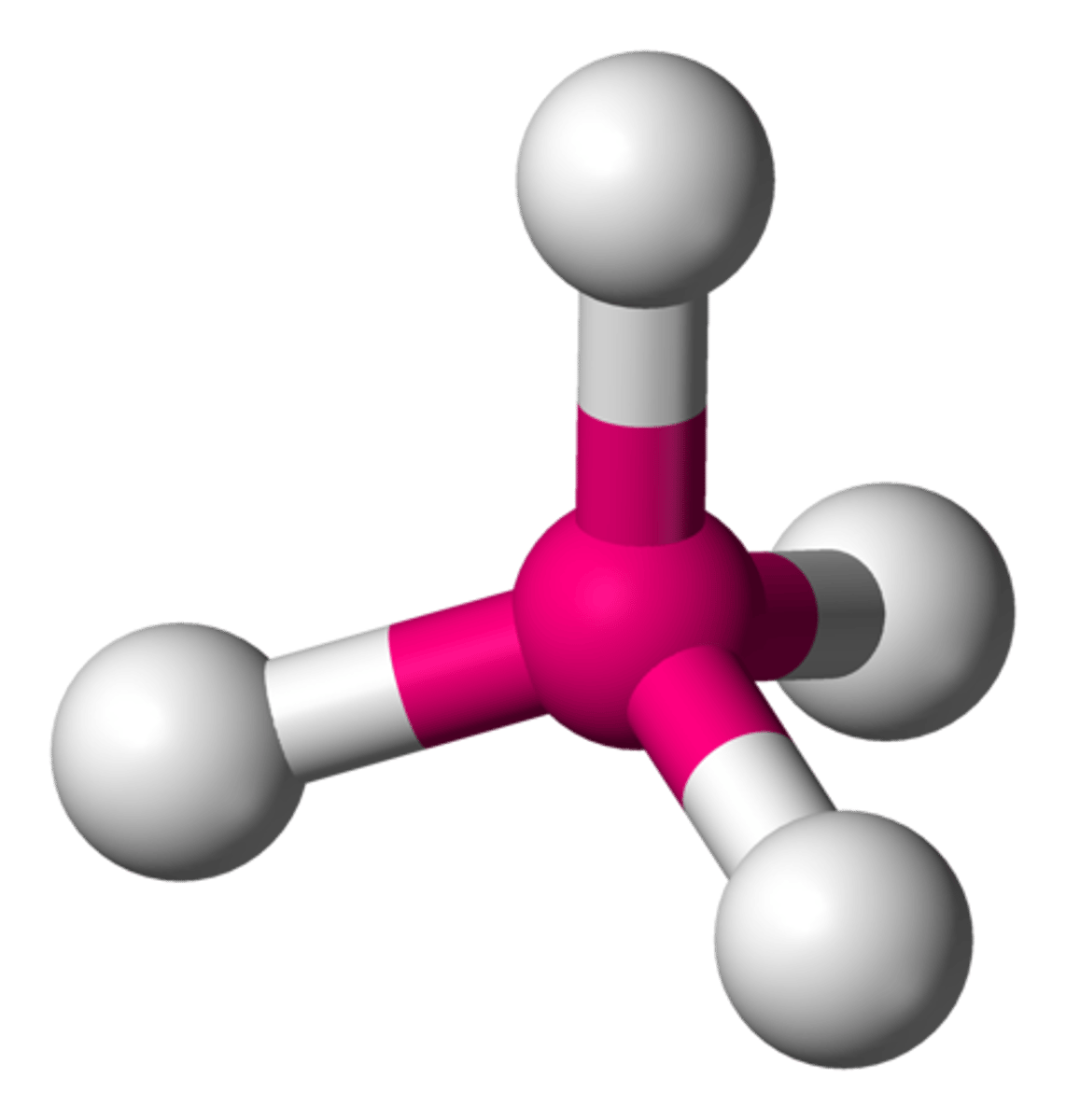
List the shape, electron domain geometry, and predicted bond angle of a molecule with 2 electron domains
linear 180º
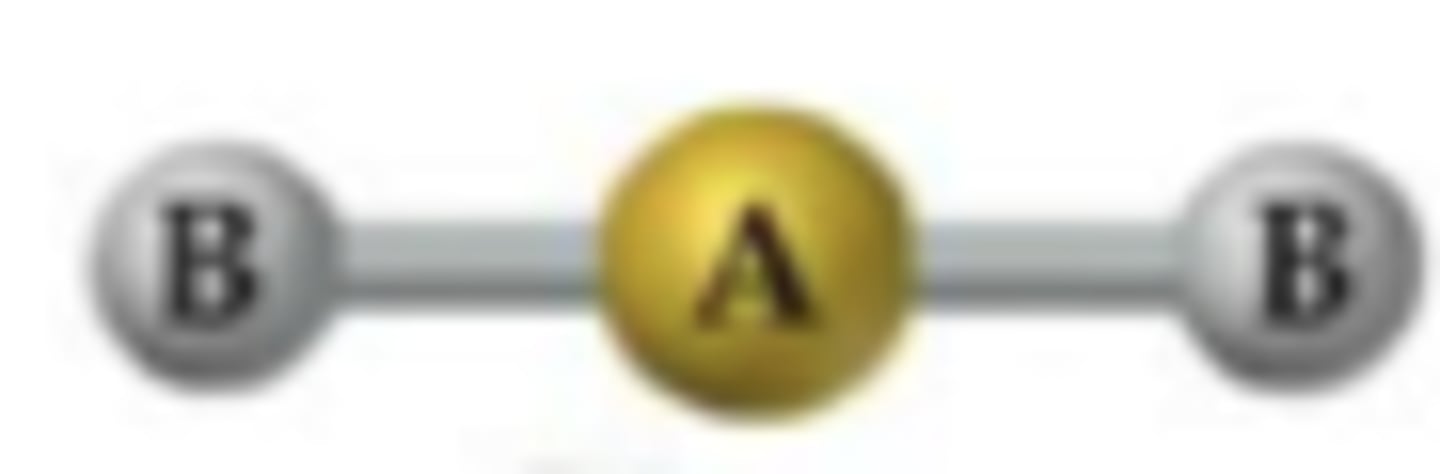
List the shape, electron domain geometry, and predicted bond angle of a molecule with 3 electron domains
trigonal planar 120º
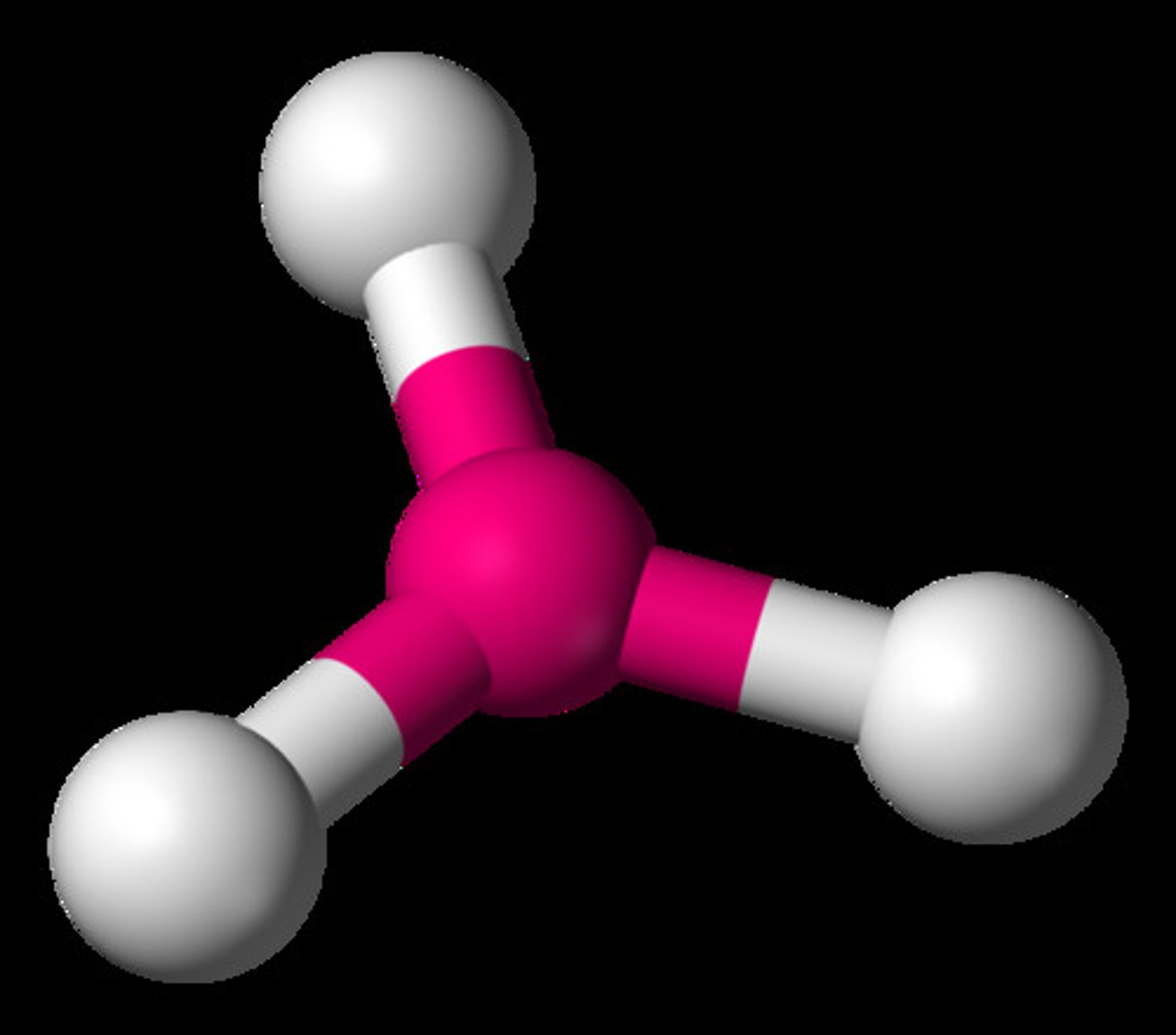
What does a nonbonding electron domain represent?
a lone PAIR of electrons
What does a bonding electron domain represent?
a bond. single or multiple
how many valence electrons does hydrogen have?
2
Identify the bond that would form between an element with a low ionization energy and an element with a high electron affinity
an ionic bond
What does it mean when an element has a low ionization energy?
It means that it can easily lose electrons
What does it mean when an element has a high electron affinity
It means that it can easily accept electrons to form negative ions
The type of bond that results when both elements contribute electrons to form a shared pair
covalent bonds
The type of bond that results when both elements contribute electrons but one element furnishes both electrons
coordinate covalent bond
High energy photons have enough energy to do what?
disrupt covalent bonds
What has to be true of a non polar molecule that has polar bonds
it must be symmetric enough so that all the dipoles cancel out
a molecule in which a concentration of positive electric charge is separated from a concentration of negative charge.
dipole
What type of compound is expected to have the largest dipole movement?
a bent compound
The boiling point of H2O, compared with other members of the series can be explained by
hydrogen bonding
How do you calculate formal charge?
(#of valence electrons) - (nonbonding electrons) - (bonding electrons / 2)
a triple bond is made up of
2 pi bonds
1 sigma bond
a double bond is made up of
1 sigma
1 pie
What is the molar volume of a gas?
22.4 L
If a 17.0g of impure Ni+ metal reacts with excess carbon monoxide, CO, forming 6.25 L of Ni(CO)4 gas under standard temperature and pressure conditions, what is the percent by mass of Ni+ in impure nickel metal sample?
What do you start the stoich equation?
6.25 L Ni(CO)4
What is the main gas law equation?
PV=nRT
(pressure x volume) =
What is the equation for Pressure?
Force/Area
Gas Law: Temperature-Volume relationship, at constant pressure. What is the constant for Charle's Law?
V/T = constant
Gas Law: Pressure-Volume relationship, at constant temperature. Boyle's Law
PV = constant
Gas Law: Pressure- Temperature relationship, at constant volume. Gay-Lusaacs' Law
P/T = constant
Temperature in Gas Law equations must be in what type of measurement? What is the conversion?
Must be in Kelvin
273.15 + C = K
P1V1 will always equal________ if temperature and particle numbers are constant
P2V2
1 atm = ? kPA?
101.325
What does R equal when dealing with meters/mol K
(m^3/mol)
8.3145
What does R equal when dealing with Liters kPA/mol K
(L/mol K)
8.3145
What does R equal when dealing with Liters atm/ mol K
.082
Solubility: NO3-
Nitrate is soluble
Solubility: C2H3O2
Methyl carbonate is soluble
Solubility of Cl- Br- I-
Soluble except in Ag2+, Pb2+, Hg2+
Solubility of SO4 2-
Sulfate is soluble except in Sr2+, Hg2+, Ba2+, Pb2+, Ca2+
Solubility of OH- and O2-
Hydroxide and Peroxide are insoluble except with alkali metals, Ca2+, Sr2+, Ba2+
Solubility of PO4 3-
Phosphate is insoluble EXCEPT with NH4+ and alkali metals
(Ammonium, and Group 1 metals)
Solubility of CO 3-
Carbonate is insoluble EXCEPT with NH4+ and alkali metals
(Ammonium, and Group 1 metals)
Solubility of SO3 2-
Sulfite is insoluble EXCEPT with NH4+ and alkali metals
(Ammonium, and Group 1 metals)
Solubility of S 2-
Sulfur is insoluble EXCEPT with NH4+, alkali metals,
(Ammonium, Group 1)
2 electron domains results in what type of hybridization?
sp
6 electron domains results in what type of hybridization?
Sp3d2
reaction in which electrons are transferred from one reactant to the other
redox reactions
Assigning Oxidation Numbers Rules (3)
1. all elements in elemental form have an oxidation # of zero
2. For a monotonic ion the oxidation number equals the charge on the ion
3. The sum of the oxidation numbers in a molecule will equal the charge on the molecule
Assigning Oxidation Number Rule Exceptions
Oxygen = -2 except in Peroxide = -1
Hydrogen = +1 when with nonmetal -1 when with metal
Halogens are -1 except when with Oxygen while Fluorine is ALWAYS -2
What does the Reducing Agent do in a redox reaction? (aka the Reductant)
gives away an electron. Becomes oxidized
What does the Oxidizing Agent do in a redox reaction?
(aka the oxidant)
gains an electron. Becomes reduced
 Note
Note  Flashcards (46)