Unit 4 - Early Medieval, Romanesque and Gothic
 Studied by 0 people
 Call Kai
 Learn
Learn Practice Test
 Spaced Repetition
 Match
Match Flashcards
1/41

There's no tags or description
Looks like no tags are added yet.
Name | Mastery | Learn | Test | Matching | Spaced | Call with Kai |
|---|
No analytics yet
Send a link to your students to track their progress
42 Terms
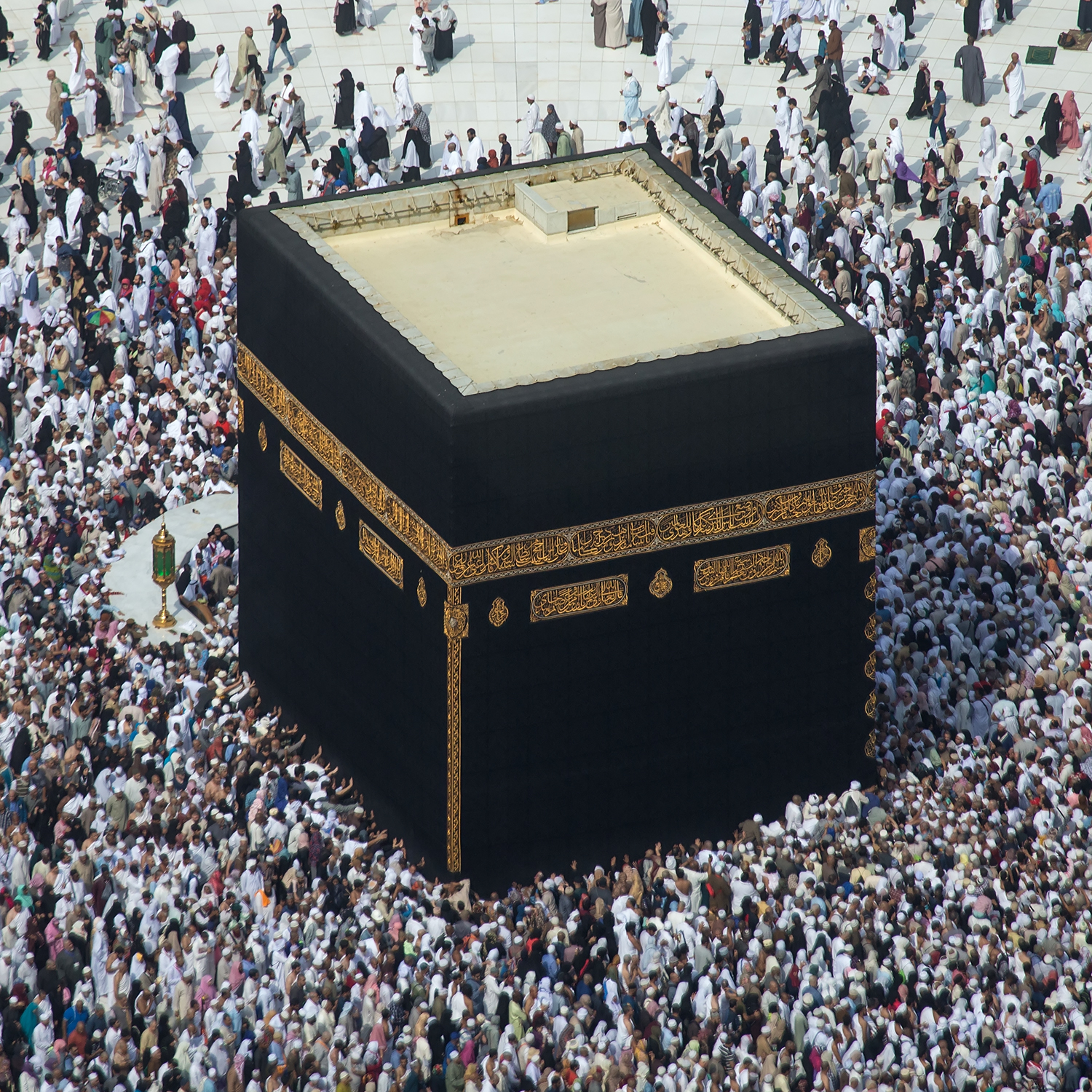
The Kaaba
holiest spot in all of Islam, holiest city (Mecca) of all of Islam
49ft tall cube with granite and brick
covered by black silk cloth (kiswa) with gold and silver thread embroidery calligraphy
in courtyard of largest Mosque (qibla wall faces Kaaba)
Mohammad preaches monotheism, flees to Medina, goes back to Mecca
rebuilds to take away pagan items
circuambulate/tawaf to touch/kiss cube
hajj - largest pilgrimage
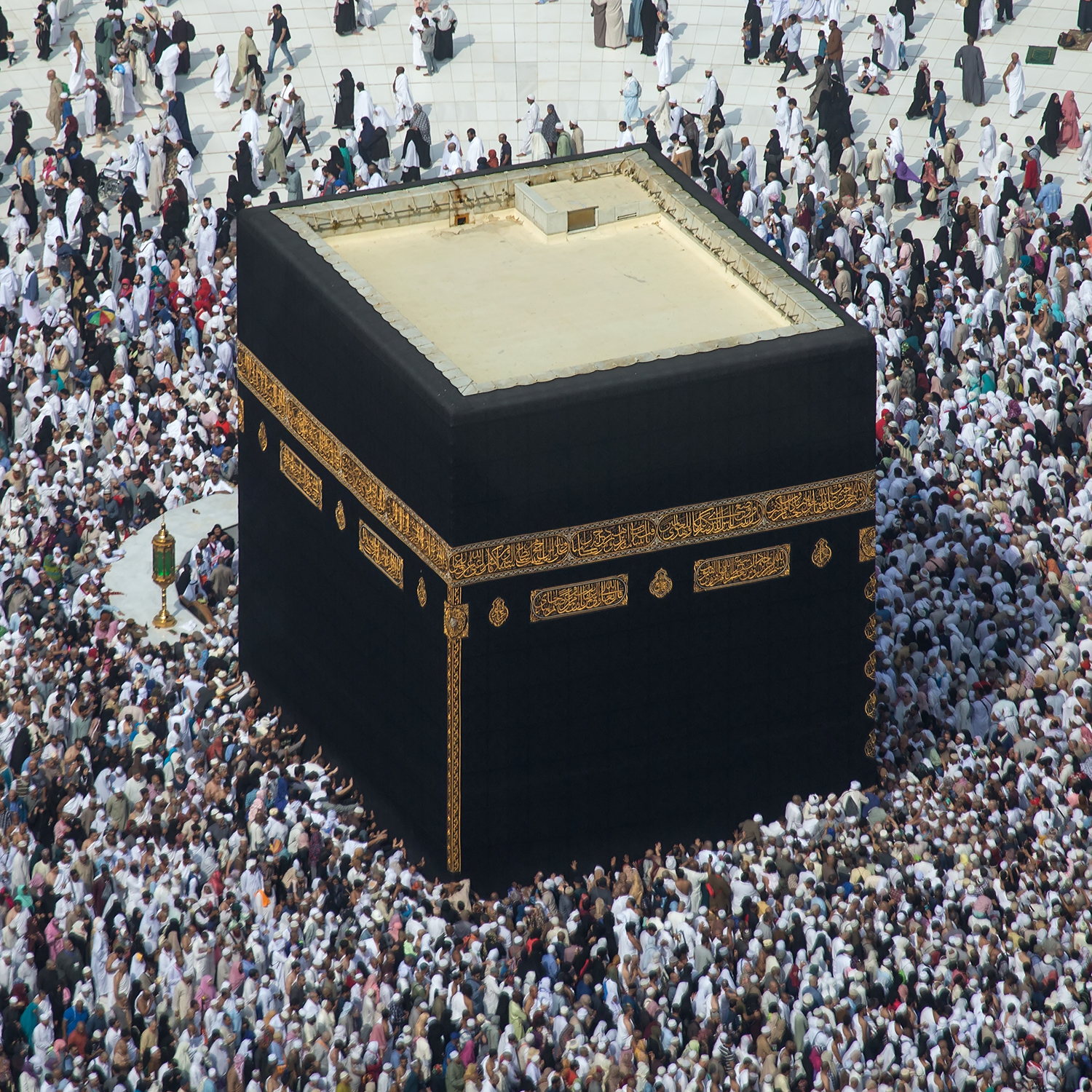
The Kaaba identifiers
The Kaaba. Mecca, Saudi Arabia. Islamic. Pre-Islamic monument. Rededicated by Muhammad in 631-632 CE. Multiple renovations. Granite masonry, covered with silk curtain and calligraphy in gold and silver-wrapped thread.
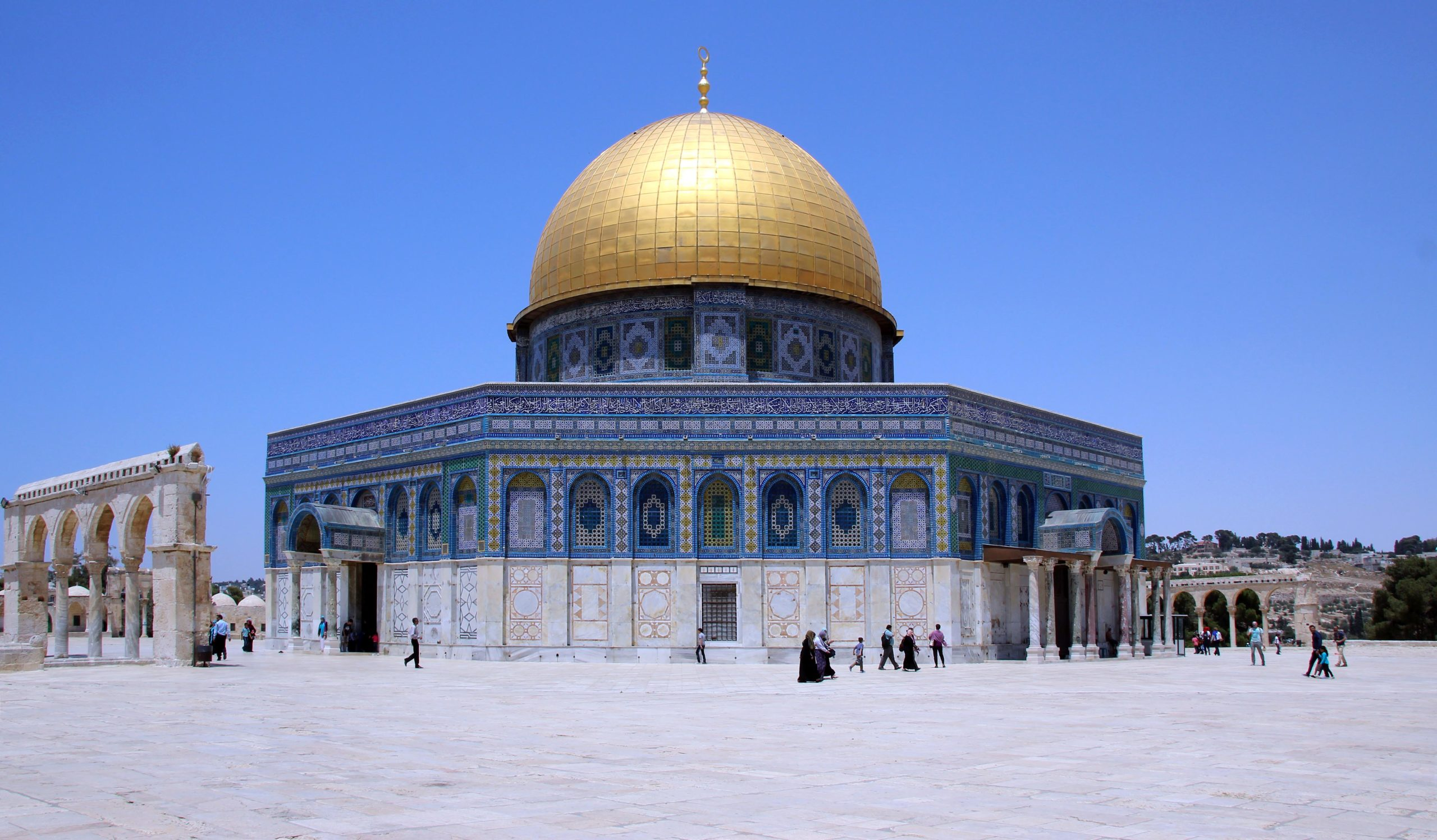
Dome of the Rock
shrine (NOT MOSQUE) —> sacred spot for all Jews (navel of earth), Christians (tomb of Adam), and Islam (Mohammad began journey)
domed octagon and two ambulatories for tawaf (like San Vitale)
gilded dome and Turkish tiles (unlike San Vitale)
arabic calligraphy (oldest)
crescent moon
sits on top of noble enclosure
four entry ways in 4 cardinal directions’
gold (influence from Byzantine) and winged crowns from persia
roman destroyed temple, muslim reclaimed christian territary
marks islamic context of jeruslem
on rock, abraham sacrifices isaac
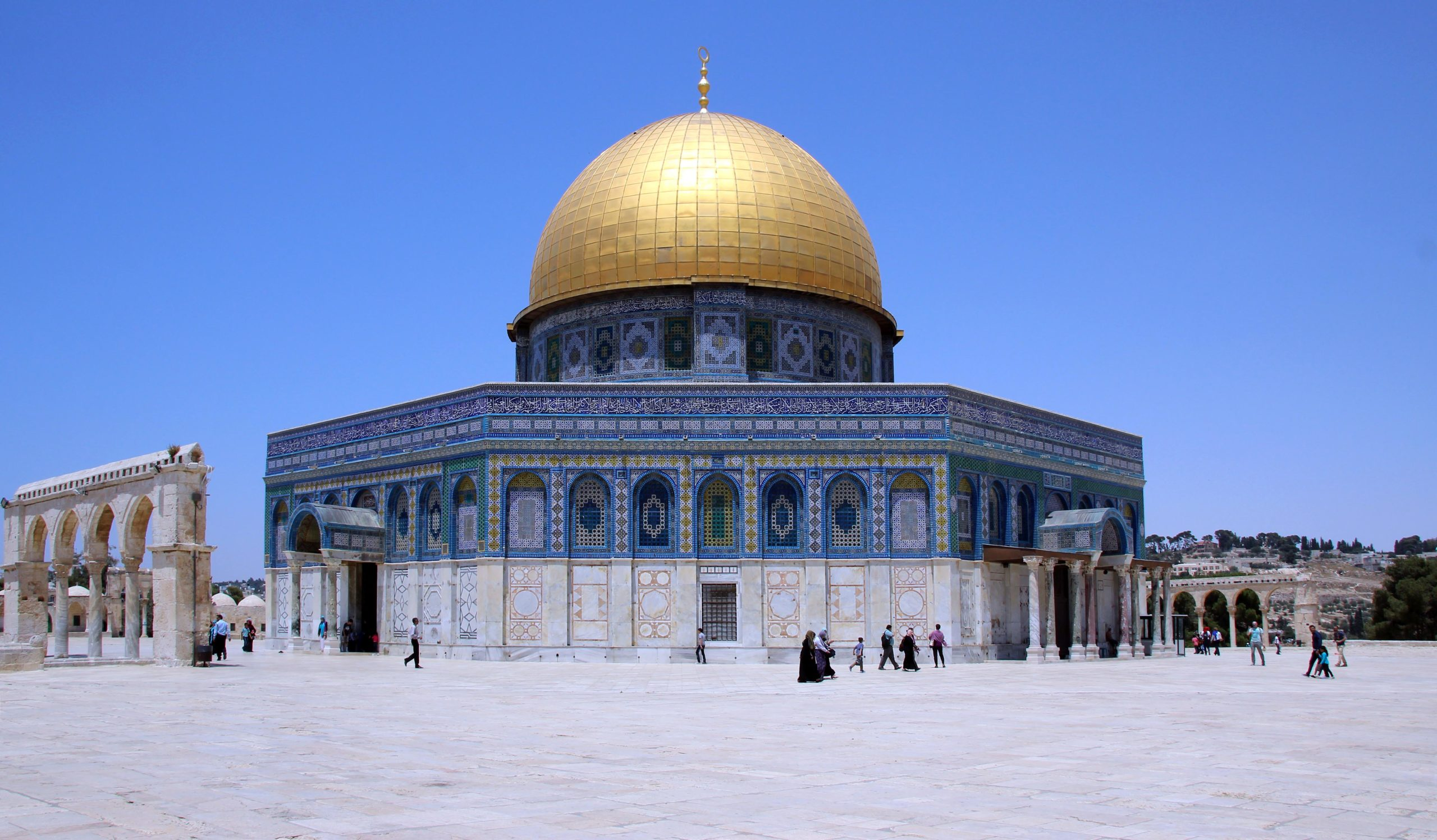
Dome of the Rock
Dome of the Rock. Jerusalem. Islamic, Umayyad. 691-692 CE, with multiple renovations. Stone masonry and wooden roof decorated with glazed ceramic tile, mosaics, and gilt aluminum and bronze dome.
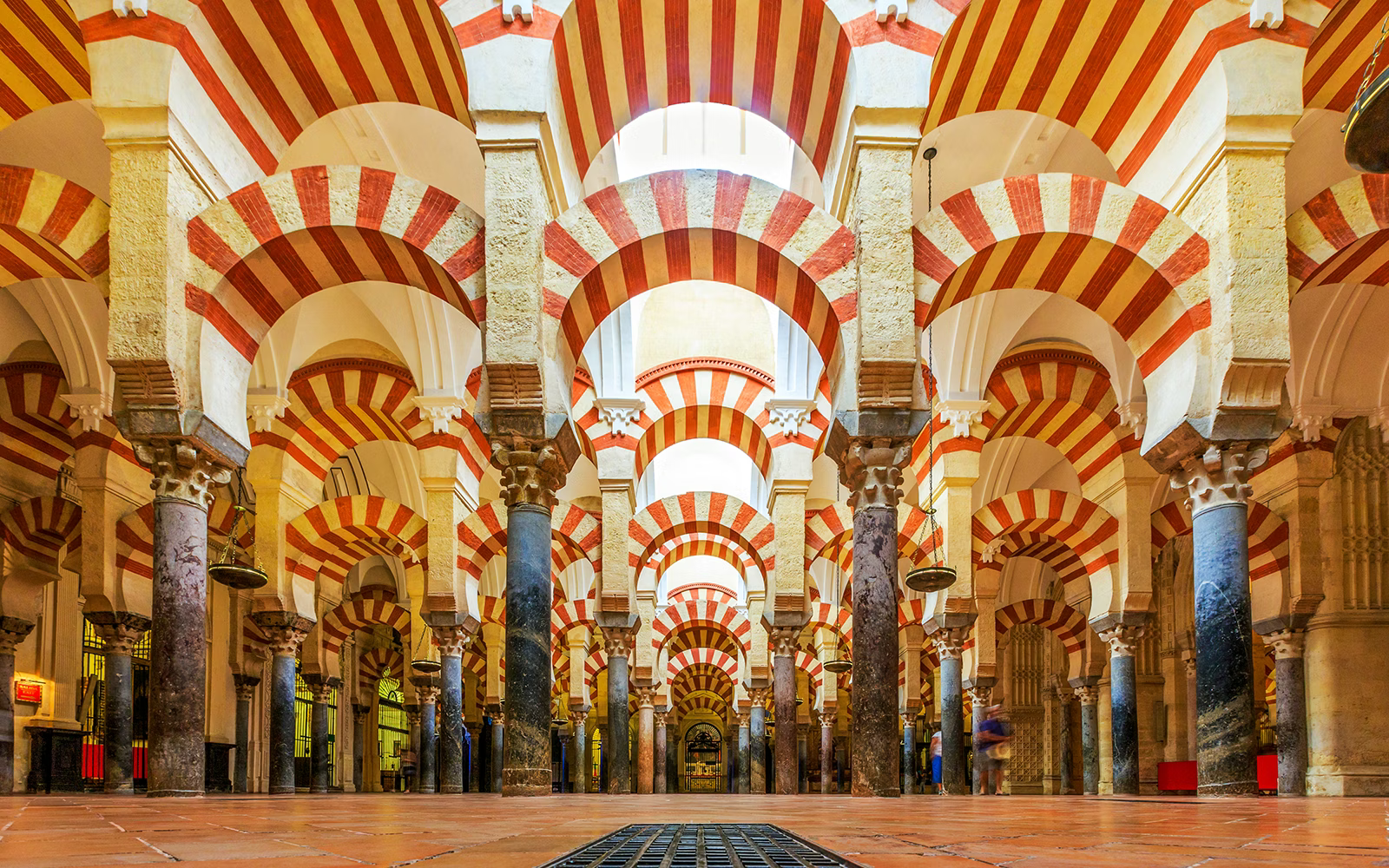
Great Mosque of Cordoba
roman temple to janice, but visagoths invaded and brought christianity; later became a mosque
damscus to cordoba as capital
filled with spolia form temple of janice
hypostyle hall, geometric patterns, alternating patterns, voussoir (wedged rock in arch) mosaics, calligraphy
lobed, horeshoe (from visagoth), double flying arch
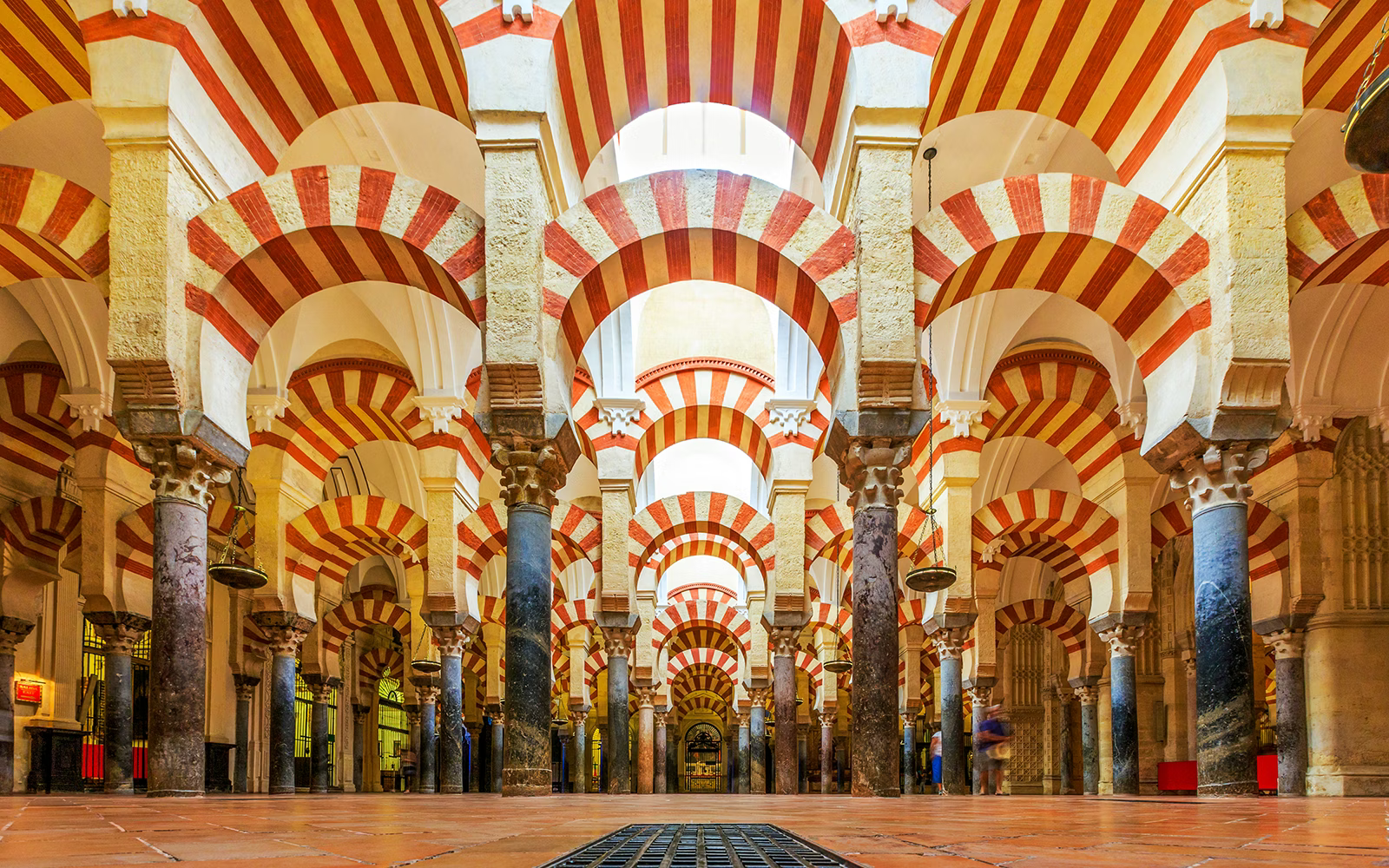
Great Mosque of Cordoba
Great Mosque. Cordoba, Spain. Umayyad. Began 785-786 CE. Stone masonry.
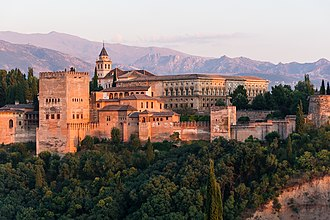
Alhambra Palace
over 1 mile of adobe walls creating mini city
3 palaces, government buildings, mosque, bathes, widows (mountains behind, city below; interior windows for women)
Nasrid Dynasty (last Islamic rule in Spain)
court of the lions (4 segmensts, cross axial plan, chahr bahgh style/islamic paradise and eternity)
secular with lions, persian influence
muqarna - decorative vaulting, repititions
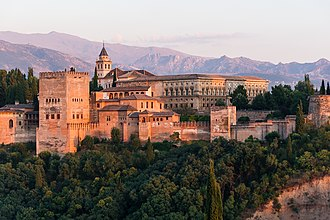
Alhambra Palace
. Granada, Spain. Nasrid Dynasty. 1354-1391 CE. Whitewashed adobe stucco, wood, tile, paint, and gilding.
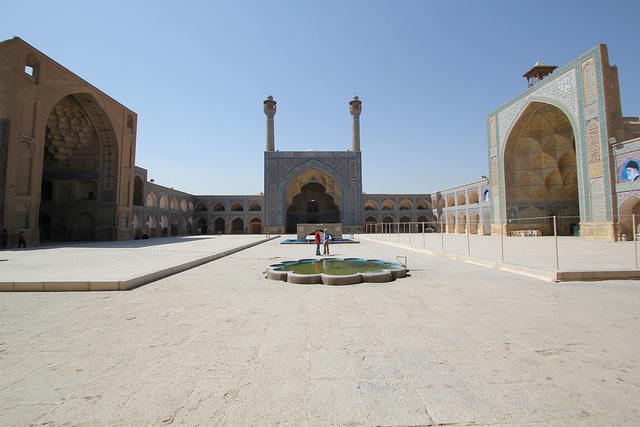
Great Mosque of Isfahan
what’s a mosque (sahn - courtyard, fountain, qibla wall, mihrab (niche) and minbar (stepped altar) in qibla wall, minaret (musin religious leader)
hypostyle halls surrounding sahn
iwan - rectanhular space, three walsls, and vaulted ceiling
two story arcades
safavid muqarnas
city center, pedestrian stop
Abbasid, Seljucks, Safavid
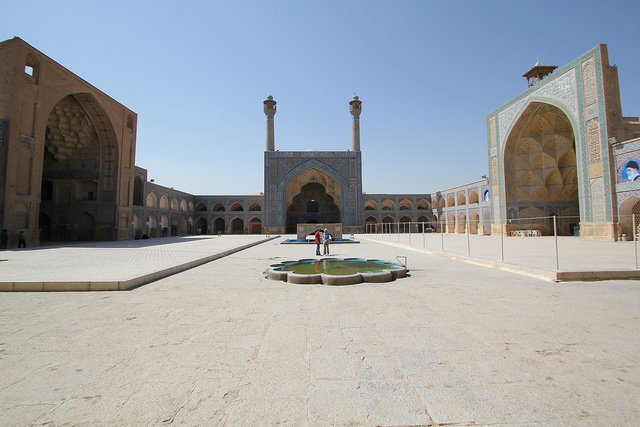
Great Mosque Isfahan (Masjid-e Jameh)
Great Mosque (Masjid-e Jameh). Isfahan, Iran. Islamic, Persian. 700 CE. Stone, brick, wood, plaster, and glazed ceramic tile.
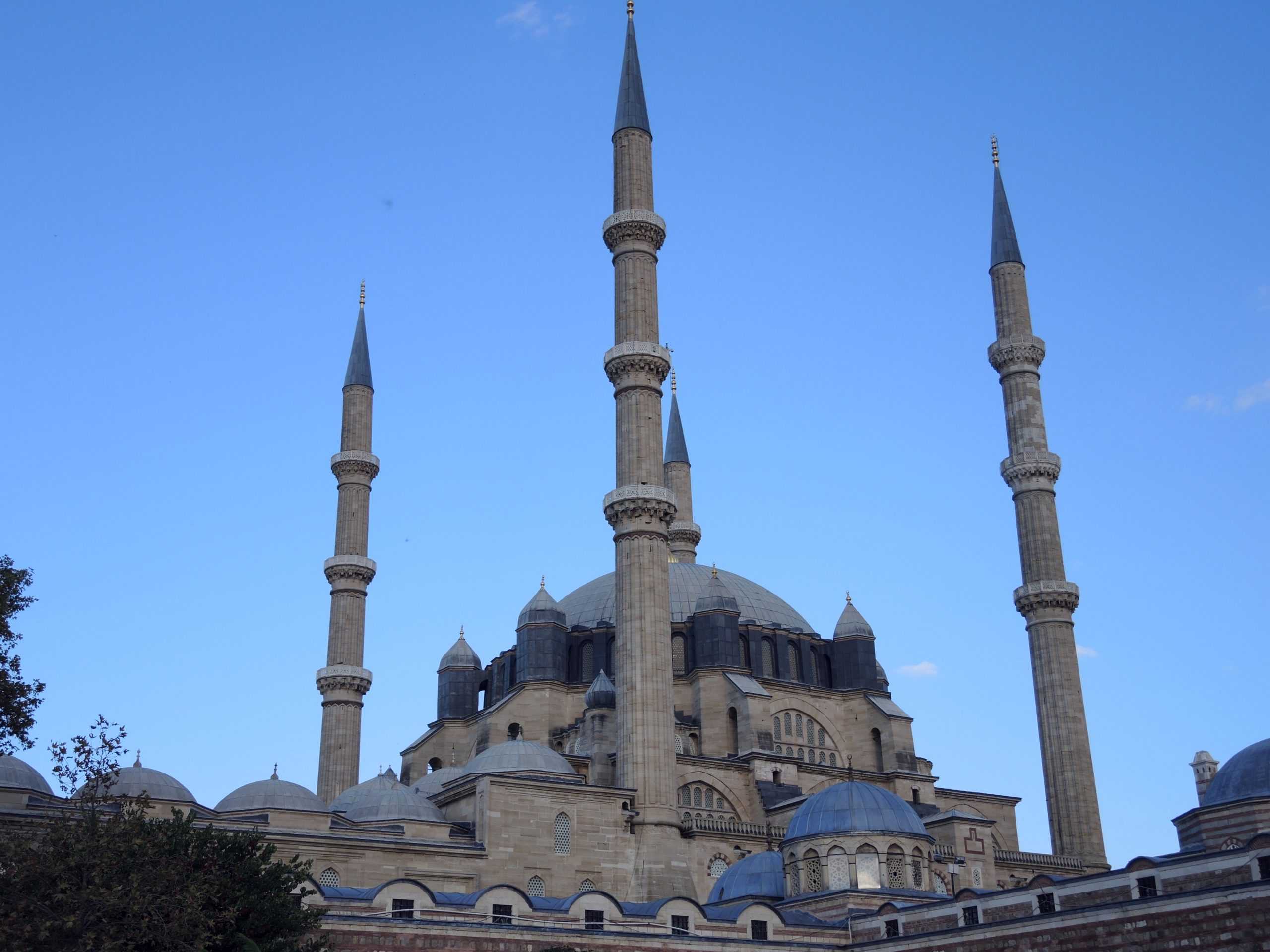
Mosque of Selim
square + dome technology
NOT Hagia Sofia
central plan NOT longitudinal
piers with buttresses
piers extend over the roof
3 bands on minaret
schools, bath, market place, hospital
tallest point at Edirne
connects piers with rounded arches and pendentives, half domes, clerestories in half dome
musin platform so prayer leader could stand
bend spandriels pendentives
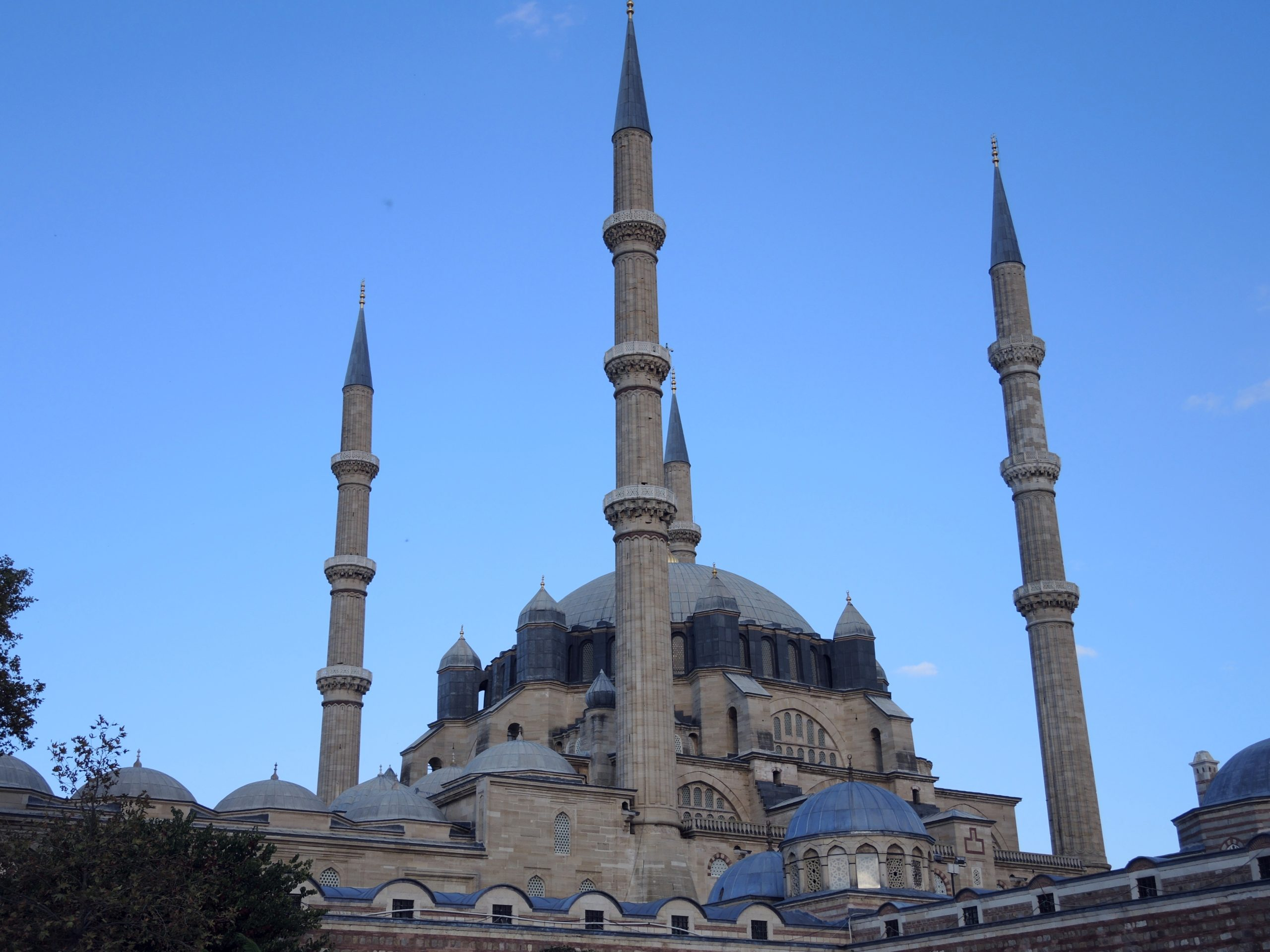
Mosque of Selim
Mosque of Selim II. Edirne, Turkey. Sinan. 1568-1575 CE. Brick and stone.
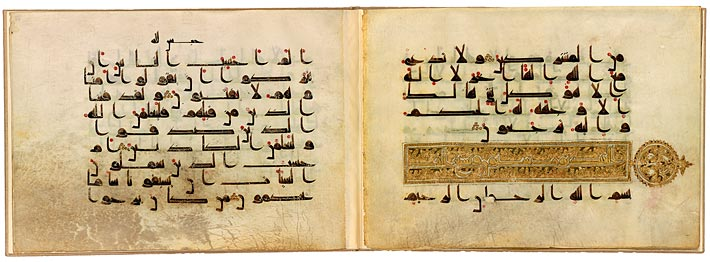
Folio from Qur’an
arabic calligriphy, kufic family
mushaf - brown main text
gold palmette, ndulating vines marking the sura - or the chapter
2:3 ratio biofolium
part if oral tradition
Abbasid
parchment
read right to left
showpiece for dignity, luxury and devotional art
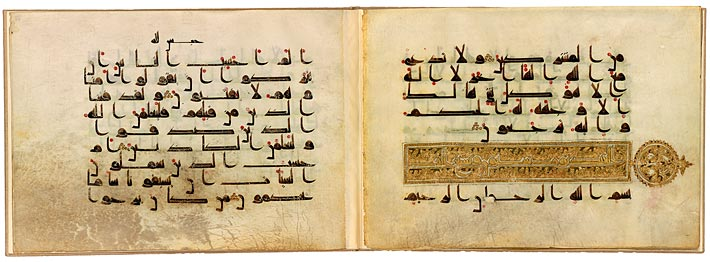
Folio from Qur'an
Folio from a Qur'an. MENA. Abbasid. Eighth to ninth century CE. Ink, color, and gold on parchment.
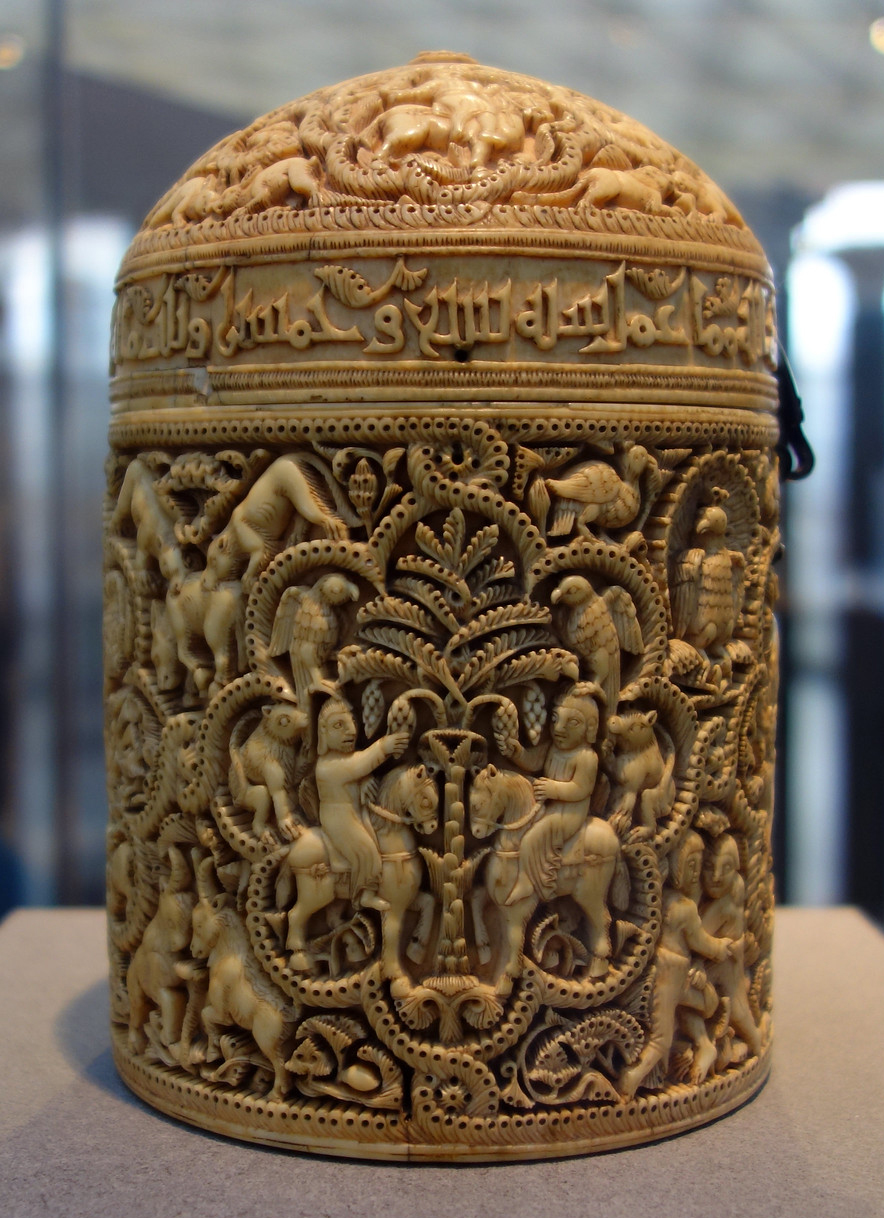
Pyxis of al-Mughira
cosmetic box (this used for perfume)
made of carved ivory
cyllinder with a domed lid (byzantine and roman influence)
kufic inscription, blessung to son al-mughira
ummayad
wrestlers, griffins, peacck, birds, goats
lobed medalion (eggs from falcon nest, lion attack bull, date palm
given to son of a Khalif
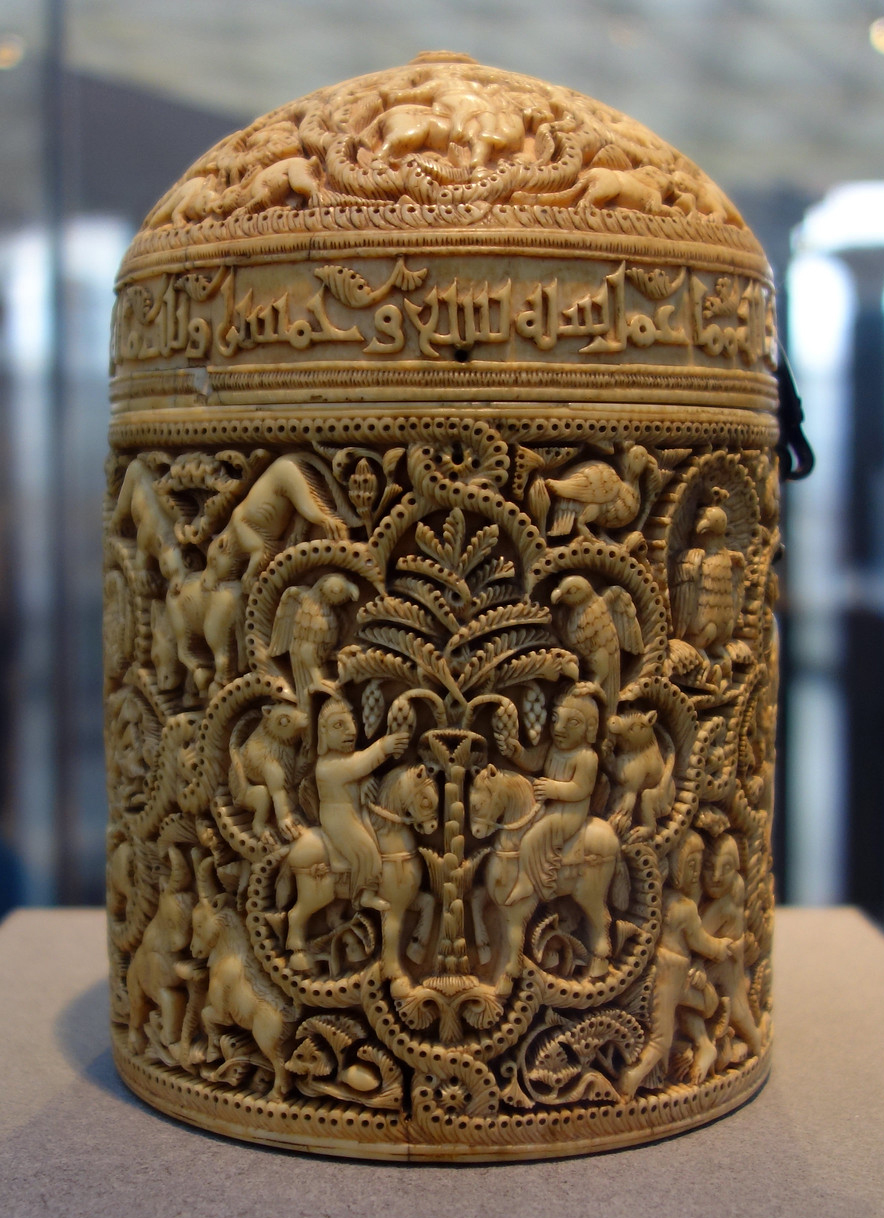
Pyxis al-Mughira
Pyxis of al-Mughira. Umayyad. 968 CE. Ivory.
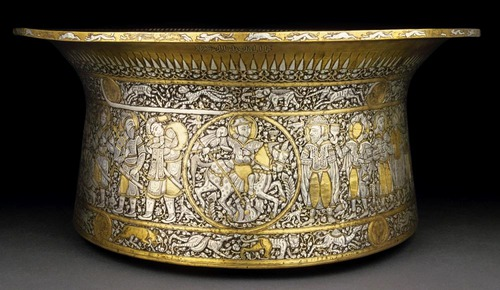
Batistere de St. Louis
brass basin inlaid with silver and gold
bottom in sea animals,
outside with randeells with people n horseback
fleur de li
banquets used in
mamluk - show silk and wealth
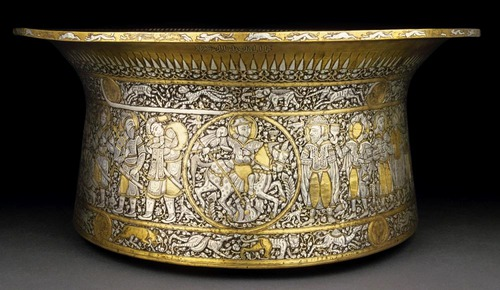
Basin (Baptistere de St. Louis)
Basin (Baptistere de St. Louis). Muhammad ibn al-Zain. 1320-1340 CE. Brass inlaid with gold and silver.
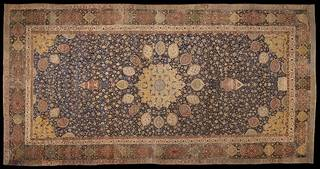
Ardabil Carpet
one of twin
weaving wool, silk for remain
dyes (pomegrantae wine and indigo)
39 million knots
center medallion
blossoms, pallmettes, lanterns
cartoosh
tomb shrine of sufi saint (safavid)
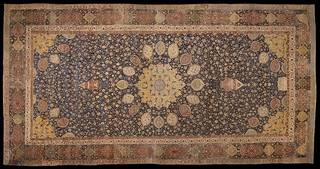
The Ardabil Carpet
The Ardabil Carpet. Maqsud of Kashan. 1539-1540 CE. Silk and wool.
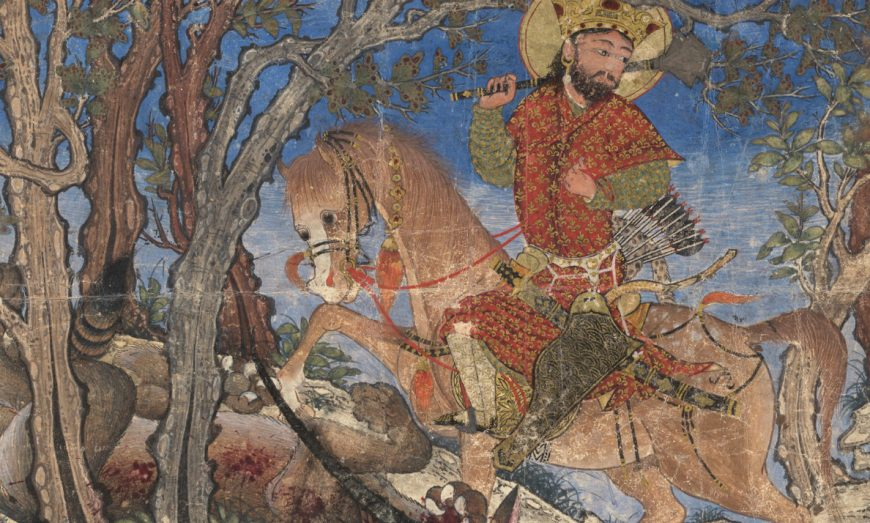
Bahram Gur fights the Karg
illuminated manuscript
neo-persia
folio from shanama (book of kings)
Persian calligraphy (pre-islamic, poetry)
decorative border. rich sumtuous clothing, chines mystical look = persian
Bahrug has slayed karg (horned wolf)
good over email
Bahram Gur large, in european clothing
persian + mongol
brough paper
ilkhanad legitimize rule
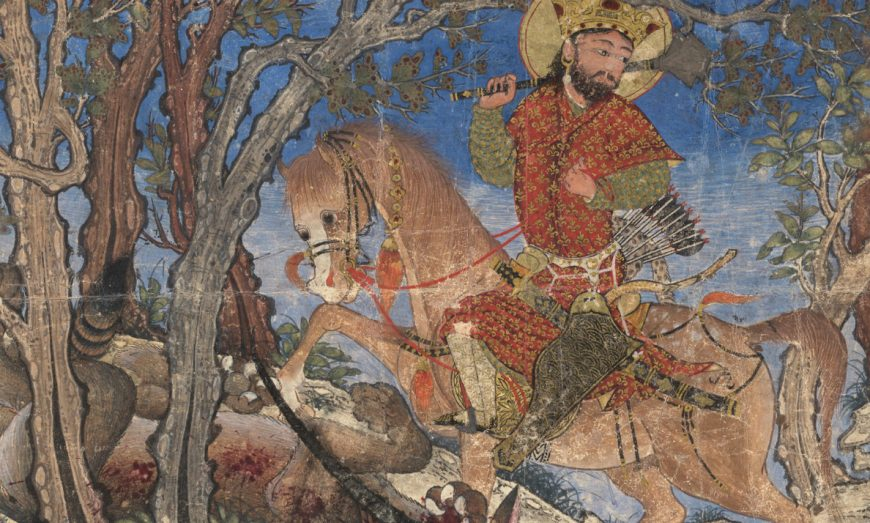
Bahram Gur Fights the Karg
Bahram Gur Fights the Karg, folio from the Great Il-Khanid Shahnama. Islamic. Persian. 1330-1340 CE. Ink and opaque watercolor, gold, and silver on paper.
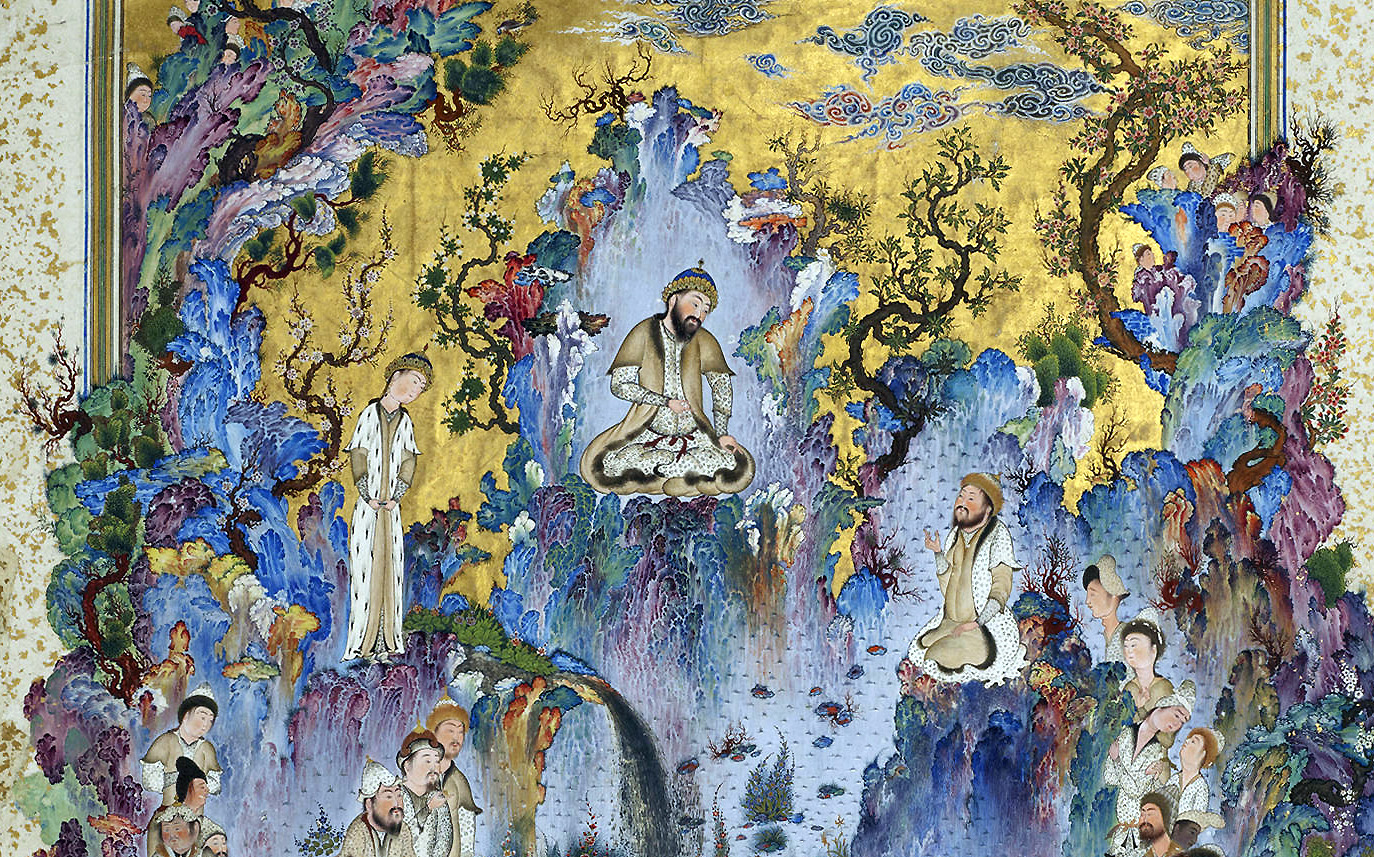
The Court of Gayumars
folio from the shanama (greatpersian)
19 in x 12 in
circular compositions, jewel tones
chines influence (narled trees)
farsi calligraphy
image breaks out of the train
human, animal at peace/harmonious within leader presence
Safavid, Sultan Mohammad
Gayumar, first King of Persia (son died, grandson
Shah Tamash establishing rule and continued reverance towards ikamid dynasty
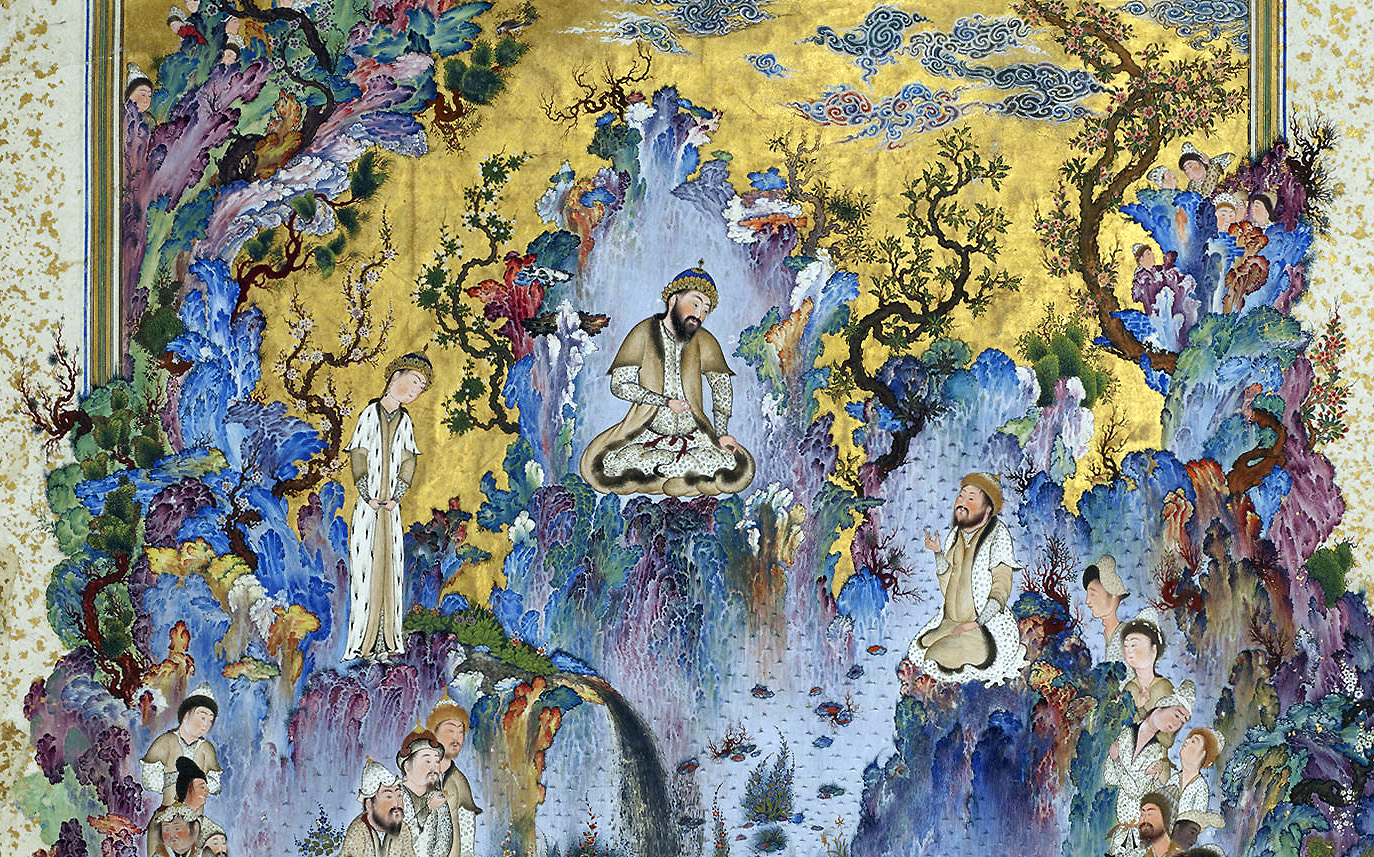
The court of Gayumars,
The court of Gayumars, folio from Shah Tahmasp's Shahnama. Sultan Muhammad. 1522-1525 CE. Ink, opaque watercolor and gold on paper.
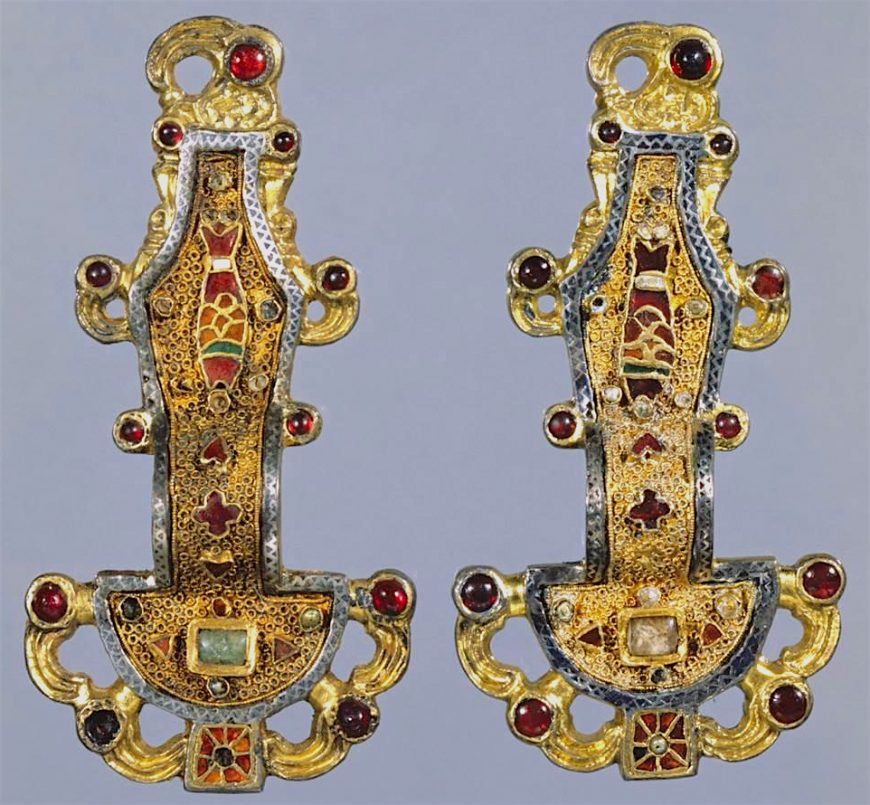
Merovingian Looped Fibula
fibula - decorative pin
three parts: body, pins, clasp
cloisonne - sauter, f
interlaced pattern, stylized animals, small and portable
Merovingian conquers Galls, Visagoths, and became most powerful group in Western Europe
eagle - migratory
rich status prestige like rolex
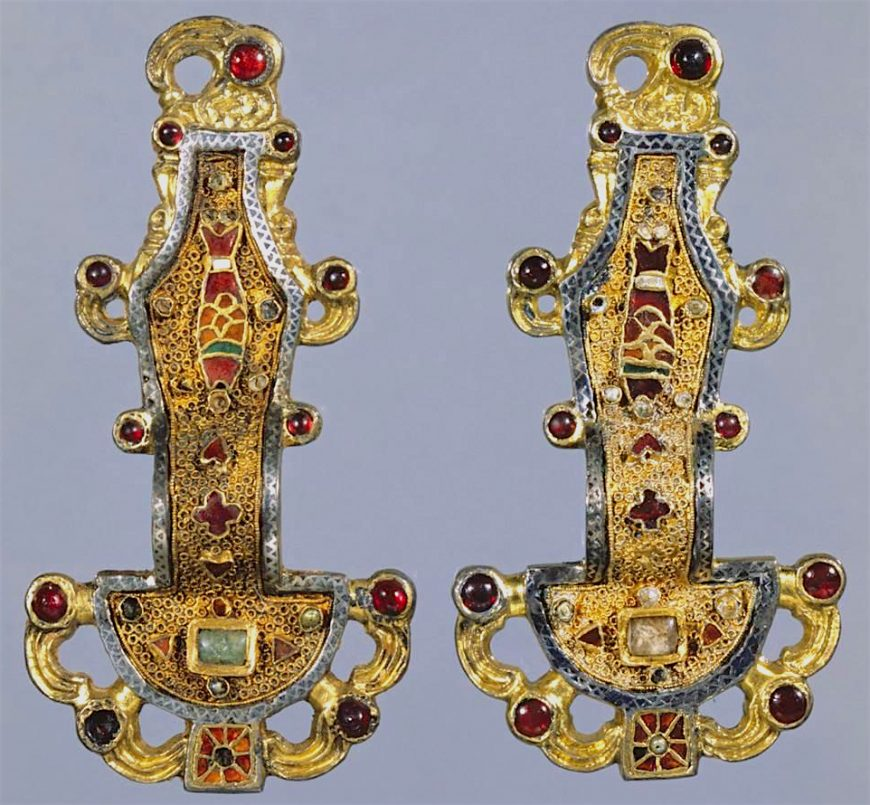
Merovingian looped fibulae
Merovingian looped fibulae. Early medieval Europe. Mid-sixth century CE. Silver gilt worked in filigree, with inlays of garnets and other stones.
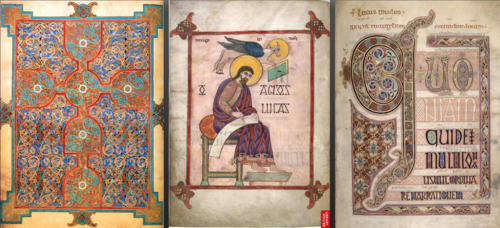
Lindisfarne Gospels: St. Matthew, cross-carpet page, St. Luke portrait page, St Luke incipit page
illuminated manuscript
from Lindisfarne monstaries
roman emoire split , western roman empire, unification of the celtoc people/hibernosaxon christianity
insular
high tide - cannot walk onto island
made by irish monks in mostaries -
vellum - over 200 calves
interlacing knots, spiral forms, minute details
incipit page - first words or letters of the gospel
highly decorated, bird imagery
niam - negative space from stippling, rosary beaded necklace style
english translation
portrait page -
winged bull - symbol of luke and sacrifice that jesus made
carpet page
page dedicated to cross
stacked wineglass page
long birdforms, steps, woven knots and lattice forms
pigment + eggwhite
sacred objects imbued with spirits
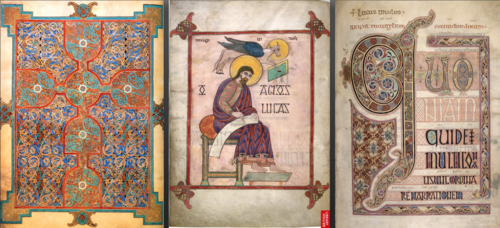
Lindisfarne Gospels: St. Matthew, cross-carpet page, St. Luke portrait page, St Luke incipit page
Lindisfarne Gospels: St. Matthew, cross-carpet page, St. Luke portrait page, St Luke incipit page. Early medieval (Hiberno Saxon) Europe. 700 CE. Illuminated manuscript (ink, pigment, and gold).
Church of Saint Foy
pilgrimage Church
route of Santiago de compesteia
young girl Foy was killed for refusing to die for Pagan
roman-esque - rounded arches, thick walls, small windows, buttresses, stone barrel vault oover the nave, cluster piers along the nave
transepts - enter sides
tympanum - half circle, last judgement piece
reliquary - silver, gold, jewel, stone
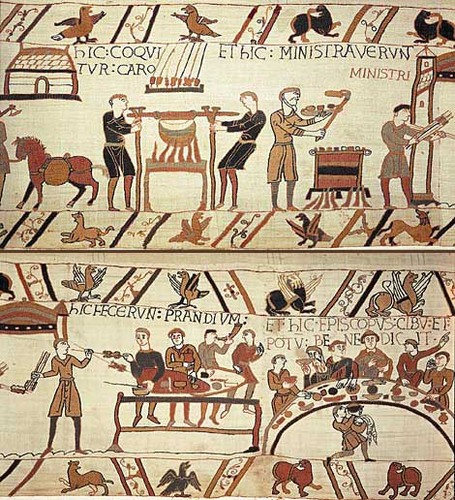
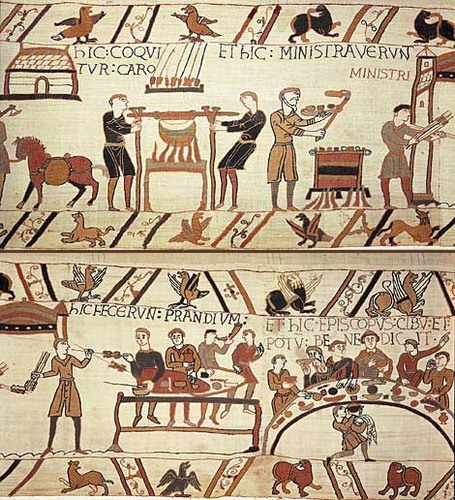
Bayeux Tapestry
embroidery (sirs on top)
2o in tall x 230 ft
tulli - latin inscriptions
8 differnet color of threads
hieratic scale
decorative borders
Norman conquest battle of hastings
Herald of Wessex. swears alleigience to Duke of Normandy (william) who says he has right to English throne; herald broke vow and took english throne
Normans brought horses and arches - william the conquerer kig of france
feasting, chicken and stick,pointing inthe direction of next scene, shields as plates
battle: horseback norman changing the english, bottom has fallen english
Bayeux Tapestry.
Bayeux Tapestry. Romanesque Europe (English or Norman). 1066-1080 CE. Embroidery on linen.
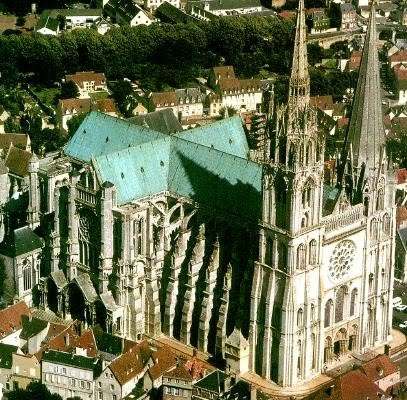
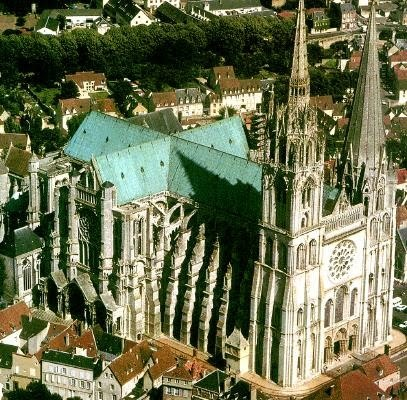
Chartres Cathedral
pilgrimage site
gothic: pointed arches, soaring towers, ribbed vaultings, groin vault nave, stained glass, flying buttresses
linen belonging to Mary inside
Carolingian Dynasty
Charlomaine unify most of Europe
Church is epicenter of city
apsidial chapels, side aisles, transepts for pilgrims (cruciform plan)
main portal: tymphanum last judgement: winged bull, winged lion, jesus reborn, jesus sitting on mary last
frieze scultures
jamb - collumn placed around doorframe (french royalty)
jamb figure elogated (romanesque)
the rose window - is a rose window using tracery technique
mary crowned, blessed, dove
Chartres Cathedral
Chartres Cathedral. Gothic Europe. Original construction 1145-1155 CE. Reconstructed 1194-1220 CE. Limestone, stained glass.
Blanche of Castille
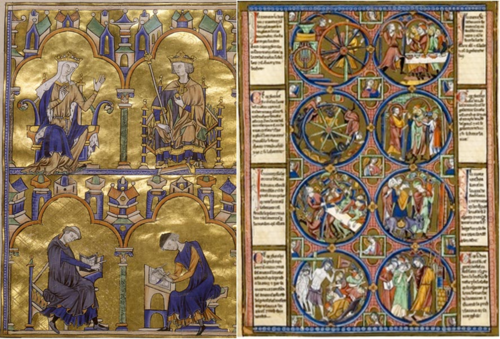
Dedication Page from Blanche of Castille
illuminated manuscript
mother teaches Louis IX until he’s king
vellum and gold leaf
tonsure headed monk capturing creation of moralised bible
medallion page
medallion page - blue, red, simple
comes from apolacpse stories
lobed arch decor → now representative of the trinity
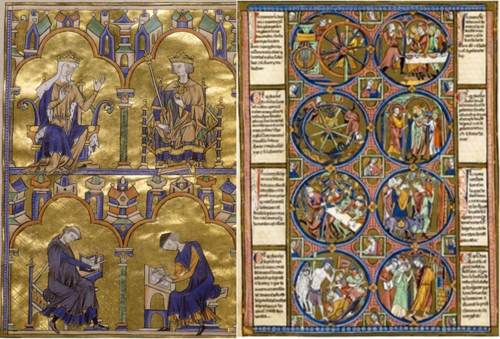
Dedication Page with Blanche of Castle and King Louis IX of France
Dedication Page with Blanche of Castle and King Louis IX of France, Scenes from the Apocolypse from Bibles moralisées. Gothic Europe. 1225-1245 CE. Illuminated manuscript.
Rottgen Pieta
pity statue
painted wood
enlarged head
jesus protruding ribs, emaciated skeleton, pustules wounds (like grapes), red streaks
chiaroscuro - drmatic use of light and dark
andachtsbilder - devotional pieces
Rottgen Pieta
Rottgen Pieta. Late medieval Europe. 1300-1325 CE. Painted wood.
Arena (Scrovegni) Chapel
barrel vault ceiling, rose stained glass, blue paint (unity)
3 registry lines, 4 panels '
diagnals lines and angels lament
Giotto is frescomaker (freco buono)
Scrovengi is famous moneylender
Arena (Scrovegni) Chapel
Arena (Scrovegni) Chapel, including Lamentation. Padua, Italy. Unknown architect. Giotto di Bondone (artist). 14th century CE. Brick and fresco.
Golden Haggadah
Golden Haggadah (The Plagues of Egypt, Scenes of Liberation, and Preparation for Passover). Late Medieval Spain. 1320 CE. Illuminated manuscript (pigment and gold leaf on vellum).
Golden Haggadah
jewish, hebrew
seder
diagonal lines created depth
used during satyr dinner and read from book, teaching tool
eaten on the eve of Jewish holiday
jews/israelites captured —> eygpts doesn’t release, and plague are sent to Egypt
Aror - wild beasts
Final plague - put blood of calf on door or first born son dies
moses parts the sea for the israelites
angalicized
al -andalus - islamci art tha ocmes out of spain
 Note
Note  Flashcards (87)