Physics of sustaianble energy 1
 Call Kai
 Learn
Learn Practice Test
 Spaced Repetition
 Match
Match Flashcards
 Knowt Play
1/116

There's no tags or description
Looks like no tags are added yet.
Name | Mastery | Learn | Test | Matching | Spaced | Call with Kai |
|---|
No analytics yet
Send a link to your students to track their progress
117 Terms
Evolution of energy converters
Human labour dominant before industrial revolution
Then animals and diffusion of winds and watermills
Then fuels
fuel wood
1840 —> coal
1915: —> oil
1930 —> natural gas
now: —> renewable energies
Transititon from one furl to another
takes 50 - 75 years
Develop production techniques
develop distribution techiniques
develop conversion techniques
Influential factors determininnng the pace of the transititon
Infrastructural development
Inertia to replace the embedded energy systems
Primary energy
Energy content of a fuel before it’s transformed
Energy
Capacity to do work
power
rate, enrgy per unit time
mechanical energy
Due to moving weights around (macroscopic forms of energy)
Potential energy: moved against gravity
Kinetic energy: when there’s movement
Thermal vs heat energy
Heat Energy: Energy transferred between two systems due to their temperature difference
Thermal Energy: Internal energy due to the microscopic potential and kinetic energy of the constituent particles such as atoms and molecules
Electrical energy
Energy associated with the movement of electric charges
Electric current
rate of flow of electric charges and is measured in amperes
Direct current
Alternating current varying periodically, at affixed frequency
Chemical energy
Energy possessed by substances due to their chemical composition and chemical structure. It’s the energy stored in the bonds of atoms and molecules
Enthalpy of formation
describes the energy balance of chemical reactions. it’s the measure of energy involved when a substance is formed from its constituent elements.
meanings of enthalpy signs
-ve:
products have less enthalpy than the reactants
heat released → exothermic reactions
products stable
+ve:
products have higher enthalpy than reactants
heat obtained → endothermic reactions
products unstable
Benefits of sustainable energies
Sustainable energy would eventually eliminate dependence on fossil fuels,, which is responsible for huge greenhouse gas emissions
Sustainable energy sources would never be depleted as they are produced naturally
During energy production from sustainable energy sources, almost no GHGs are emitted, thus contributing to the environment and public health
As the cost of sustainable energy production is decreasing rapidly, it will eventually be a more economic option for the global population
First law of thermodynamics
the internal energy of an isolated system is conserved under any thermodynamical change. A system is anything with an imaginary boundary around. Total energy in a closed system is neither lost or gained, it is only transformed.’
Secon law of thermodynamics
Entropy constantly increases in a closed system
Clean energy technologies
Solar PV
Wind
Nuclear
Electric vehicles
Heat pumps
Hydrogen
Carbon capture Utilisation and storage (CCUS) → GHG removal
AM > 1
Sunlight travels through a greater thickness of the atmosphere as the sun is lower in the sky
AM = 1
Sun directly overhead
3 components of solar radiation
direct (B)
diffused (D)
reflected (R)
Photovoltaic devices
Solar cells are photovoltaic devices which can convert sunlight to electricity in a single step. Semiconductor materials are necessary for the photovoltaic effect to happen.
3 generations of photovolatic devices
Mono and ply cristalline Si
Thin film solar cells amorphous SI, CIGS, CdTe
Solution processable, QD, DSSC, Organic, Hybrid perovskites
3 processes of pjotovlatic cell
Absorption of the incident light
Generation of the electron hole pairs
Extraction of transport of these electrons and holes to constitute the electrical current
Off grid PV system
PV systems is physically isolated from the main power grid
Generally a battery is included to balance fluctuations in the mismatch between the PV generation and the electricity demand
On grid PV system
System that can import and export electricity to the grid
Systems that only export electricity to the grid
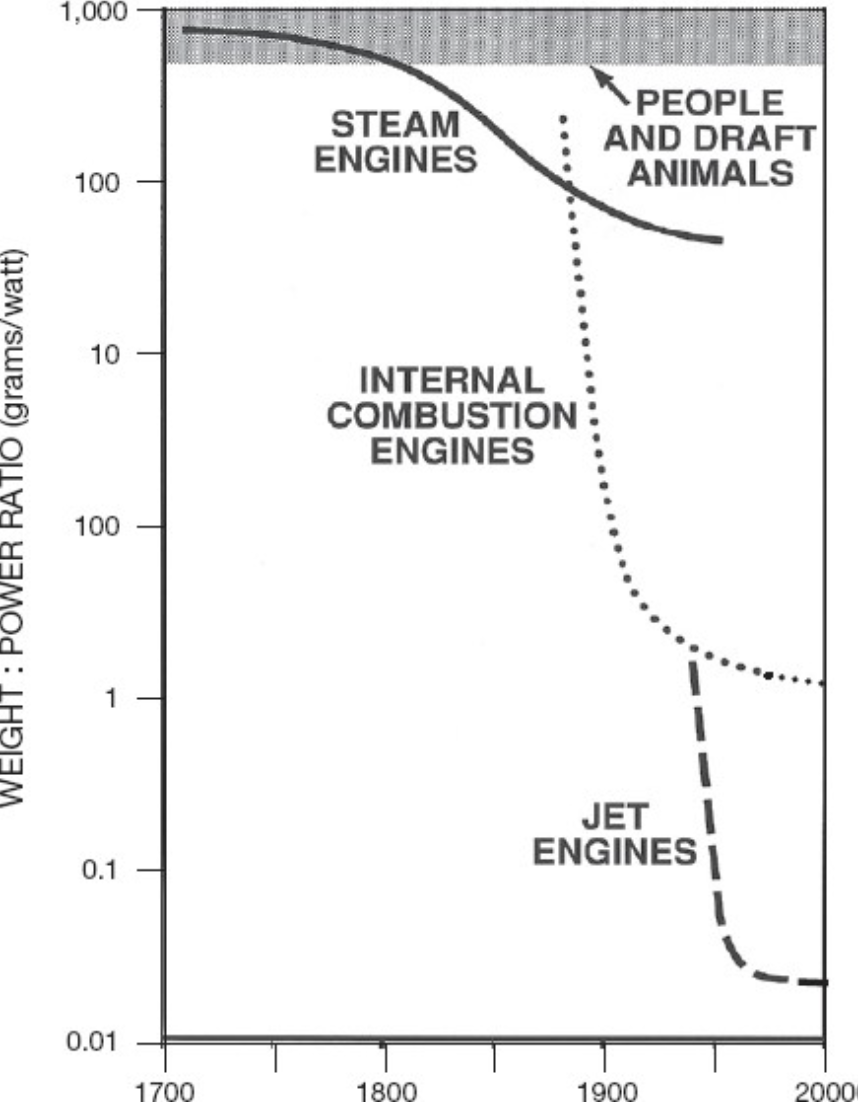
power to weight ratios
why does water have such a high Ce
This is due to their strong hydrogen bonding.
BTU
British Thermal Units (BTU) is the energy needed to raise 1 pound of water by 1 degree Fahrenheit
Calorie
Calorie is the quantity of heat needed to raise 1 gram of water by 1 degree Celsius
Earth’s energy budget
A balance between radiant energy reaching Earth from the sun, and energy that flows from earth back out to space. In order to meet this budget, energy released from Earth via evaporation, convection, and radiation must match the energy recieved. Basically radiative equilibrium - in order to keep the earth at a stable temperature
Ocean energy - what does it generate?
Thermal energy from the usn
Mechanical energy from tides and waves
Pros of ocean renewbale energy
abundant, renewable
no GHG
tidal energy is predictable
many cities have acces
local resource for islands
Cons for ocean energy
Site specific
Harsh environment
depends on weather (waves)
Environmental concerns —> wild life
competing uses (fishing, navigation…)
Need a lot of investment to exploit fully
Environmental concerns for ocean energy
Wildlife
Changes to estuary
Shoreline, and beac formation
Human uses
What are tides caused by?
Caused by the gravitational frorces from the moon and the usn and the centrifugal forces on the rotating earth
what is Tidal energy
The motion of large bodies of water can be used to turn mechanical devices to produce electricity. Tidal energy exploits the natural ebb and flow coastal tidal waters
What are the categories of tidal power?
Tidal stream genrators - kinetic enrgy of mocing water
Tidal lagoon/barrage - potential energy in differnce of heigh in tides
Dynamic tidal power - both
How is the tidal energy turned into electricty?
roatating blades around a rotor —> rotor turns the drive shaft —> turns an electric genrator
Contributions of ocean wave energy ?
potenital due to the displacement
knitic dut to water molecules in motion
Attenuators - wave energy
capture E form wave movement
movement —> hydraulic pums —> energy
Osciallatin water columns - wave enrgy
Columns partially submerged
top of structure (above water) → filled with air → forcing incoming waves to be funneled into the bottom
Flow causes the column to rise and fall with each wave → air in the top of the structure to pressurize and depressurize → connected air turbine converts air movement into electricity
Overtopping reservoir - wave energy
wave lift over a barrier wich fills a reservoir with incoming water from waves that pass over the barrier
water drained through a hydro turbine
Inverted pendulum - wave enregy
Motion of waves to move a paddle back and forth
motion of paddle → drives hydraulic pumps → electric generators
Challenges of wave enrgy converters
cost
not v efficient
need to be precisly tuned
need investment that we dont have
Ocean thermal energy converters (OTEC)
Exploits the temp differnce between war seawater and the surface and cold seawater in deeper parts to produce electricity
Components of OTEC
Working fluid: water
evaporator. increase vapor pressure
condenser
tubine
Carnot’s efficiency:
States that no heat engine can be more efficient than a carnot engine operating between the same two heat reservoirs.
Fission
Nuclear fission in the splitting of an atom after it is hit with a neutron
How does a nuclear power plant work
Nuclear power plants are similar in design to fossil fuel plants, except that nuclear fission replaces to combustion as a heat source
the heat from fission boils water and creates steam to turn a turbine
as the turbine spins,, the generator turns and produces electricity
COmponents of nuclear power plant
moderaotr: slows down the neutrons
control rods: neutron absorption material
coolant
pressure vessel
steam generator
cantainment
reator
Generation 1 nuclear pp
proof of concept, dont run anymore
Generator 2 npp
comercial reactors that are economical and relaible
Traditional active safety features
PWR, CANDU BWR AGR
Generation 3 npp
Like gen 2 but with evolutionary state of the art design improvemnts, aim for a longer operational life
Gen III + npp
Advanced gen 3, passive safety feature
Generation IV npp
Have as objectives sutainability , safety, reliability, economics and Proliferation resistance and physical protection *no stealing for weaposns)
Nuclear fusion
Occurs when 2 nuclei combine to form single nucleus, releasing massive amounts of heat with no long-lived radioactive waste
Advantages of nuclear energy
No GHG production
Efficient
Relaible
Low cost
Dsivantages of nuclear energy
Radiocative waste
Risk of nuclear accident
Nuclear proliferation concerns
Difficult to decommission
Moder wind turbines: lift trubines
Lift blades can generate more force than drag turbines
Extract more of wind’s energy
Much cheaper since need fewer blades
Horizontal wind tubines
most popular
Horizontal designs use blades similar to wings of planes
Lift is used to drive the rotor
The rotor is connected to a generator through a shaft & gears which will convert the aerodynamic force into electricity
Vertical axis wind turbines
Advantages: works with any wind direction, mechanics in the base for easy access, less stress on the tower since stabilizing wires can be used to hold the top.
Disadvantages: not self-starting, cannot be turned out of the wind for protection, high centrifugal stresses in the wings, resonant phenomena can occur and certain rotational speeds need to be avoided. Less cost effective
Suitable locations for onshore wind farms
High-altitude plains, exposed ridges, open lands, and coastal areas
Advantages of offshore farms
higher winds speeds
higher capacity factos
less turbulance
less obstrusive
more sites and bigger
Disadvantages of offshore farms
hogher contruction and mainatnace costs
more expensive to connect to grid
Types of waste
municipal solid wates
bio medical waste
industrial waste
agricultural waste
radioactive waste
E-waste
Impact of landfills
waste dumped in landfills does not genreate any added value
soli and water fcontamination ´microplastics blown into water
production of methane
Advantages of waste to energy
help to reduce dependence on fossil fuels imports
save millions of tonnes of CO2
contributes to security of energy supply
provides sustainable, local, low carbon, cost-effective and reliable energy
Thermal processing technologies for wate to energy
Incineration
Pyrolysis: thermochemical decomposition
Gasification: conversion od the carbon into a synthetic gas
Electrodes
cathode +
anode -
working of a battery
Anode oxidises → provides anode with negative charge (excess e-)
Reduction at cathode → gives it positive charge
excess e- from anode → → cathode
But for it to be complete theatre needs to be charge transport must also happen through the electrolyte.
Heat transfer mechanism
condution: Fourier’s law of heat conduction
convection: Newton’s law of cooling
Radiation: Stefan boltzman Law
Steady state heat transfer
In steady-state heat transfer, the rate of heat flow remains constant through different layers of material and different modes of heat transfer
Stack driven iniltration
due to differnce to indoor to indoor temperatures
near ceilings and floors
Wind driven infilitration
Due to pressure diferences caused by wind blowing against side of the house
near walls
BEVs electric cars
Battery electric
Pure electric
No secondary energy storage
Charged from external source
100 - 400 miles
PHEVs electric cars
Plug in hybrids
Sub clas of HEV
Charged form external source
20 - 50 miles on electricity alone
also rely on gasoline or diesel
FCEVs electric cars
fuel cell electric
Powered by hydrogen
only meit water vapor and warm air
can fuel in about 5 min
more than 300 miles
EVs electruc cars
BEVs + PHEVs
HEVs electric cars
Internal combustion engine with an electric drivetrain
400 - 600 miles
Electric generator that recharges the battery or provides additional power to the electric motor
Powert train of vehicles

Level 1 recharging of EVs stations
Standard outlet - 120V
1.4-1.9 Kw charging power
3-5 miles/h charging
Level 2 Recharging EV station
Public servie stations or installed purposely at home - 240 V
3,3 - 19.2 kw charging power
20 - 60 miles/ h charging
LEvel 3 recharging EV station
Fast charging - 400 - 800 V
50 - 350 kw charging power
60 - 200 miles in 30 minutes
Energy policy
It refers to the actions taken by a government to regulate and shape the energy sector. This include laws, regulations, and programs that affect energy production, consumption and distribution
Effects of policies
Trade offs: compormise that involves giving something up in returnt for getting smth else
Synergies: Coordination in the design of multiple policy elements to improve efficency in their implementation and achieve optimal outcomes
Unintended consequences: Unexpected side effect → negativ effect on th e problem trying to be solved
What are the differences between coal, oil, and natural gas? Compare their primary energy content.
Coal is in the solid state, oil is in liquid form and natural gas is in the gaseous form.
coal contains long and complex hydrocarbons, oil contains a mixture of medium-sized hydrocarbon chains and natural gas mainly contains small hydrocarbon gas molecules like methane.
Coal i formed from dead plants ) in swampy areas buried under high pressure and temperature. Oil and Natural gas are mainly formed from microscopic marine organisms buried under the seabed in high-pressure and temperature conditions.
The primary energy content of coal is relatively lower than that of oil and natural gas
coal emits more co2
Primary content of gas
55 Mj/kg
Primary content of coal
24 MJ/kg
Primary content of oil
44Mj/kg
Compare the UK’s (2) primary energy with the World’s primary energy (1)
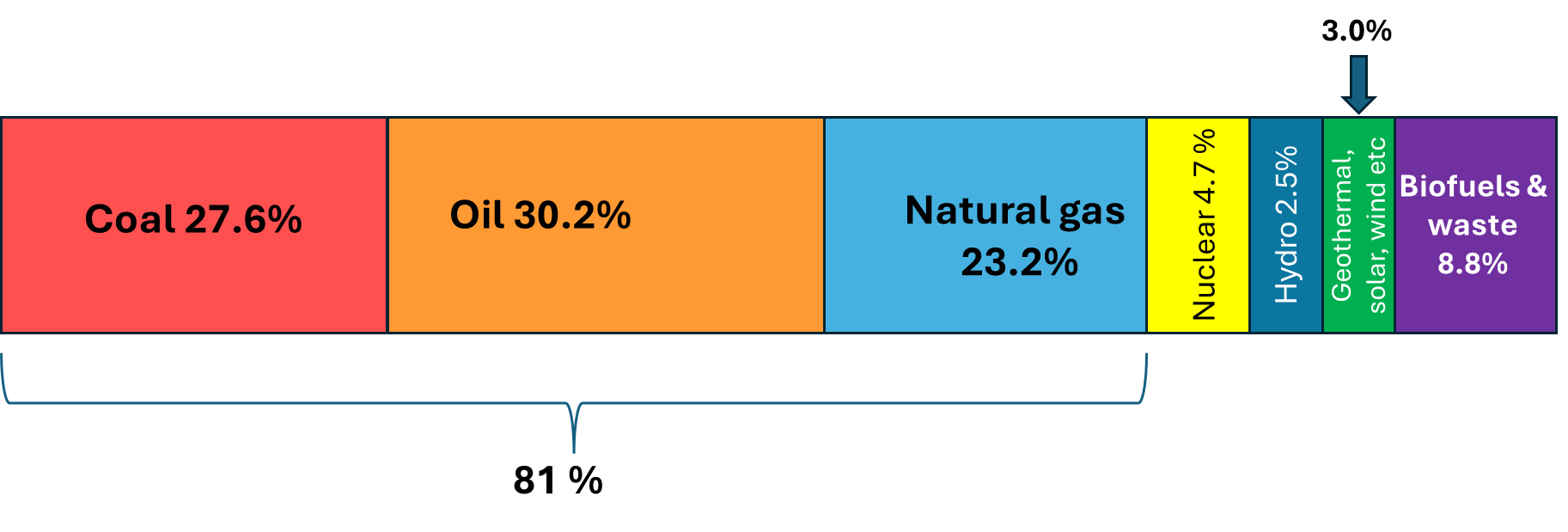
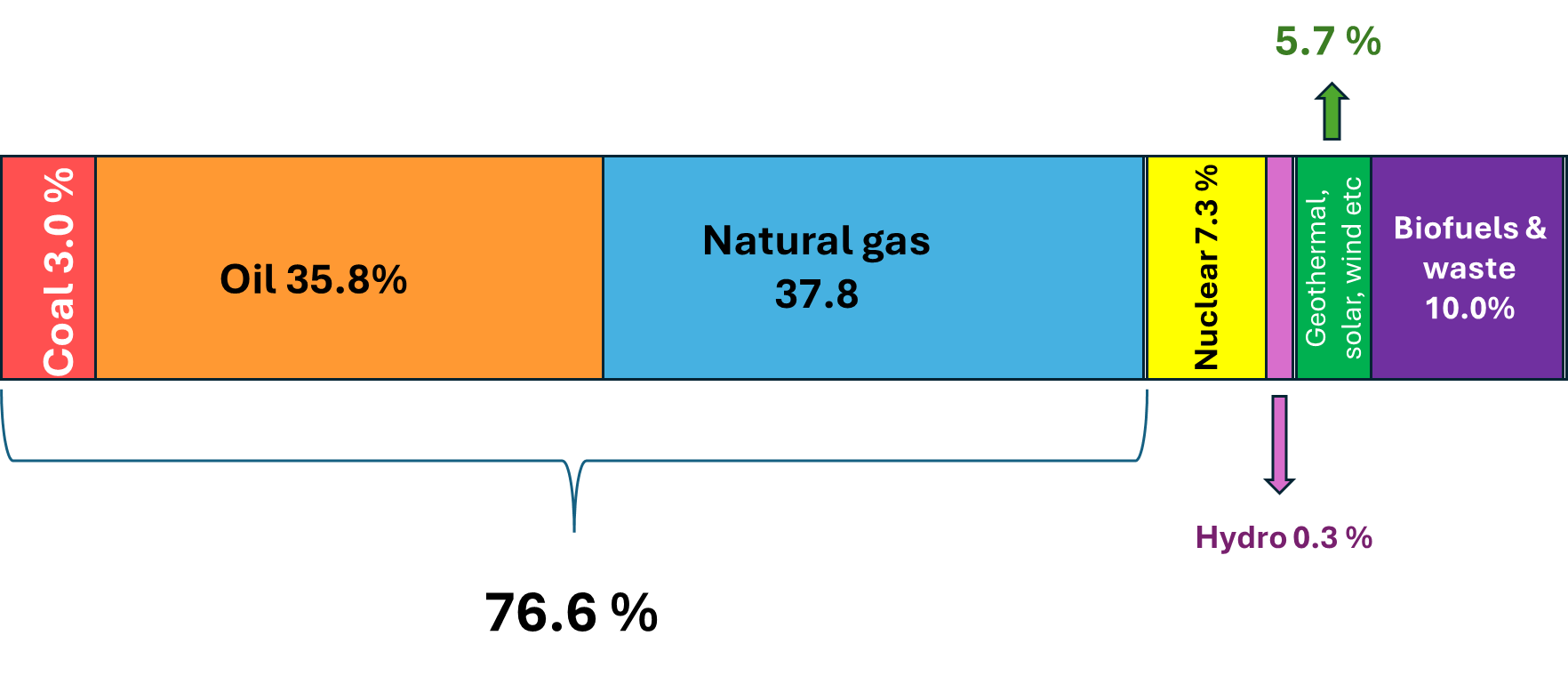
What are the three main primary energy-consuming sectors
industry
transport
residential
Is the UK now a net energy exporter or importer?
importer
Water has a relatively high specific heat capacity. How is this helpful in climate regulation and thermal energy storage?
It can be seen that water has high volumetric heat capacity and that is one reason why water is used as a thermal storage medium. Water can pack more amount (almost double) of heat than concrete for a similar volume.
co2 and methane
The amount of CO2 emitted per MJ of heat energy while burning CH4 is 49.4 g of CO2/MJ
What is meant by Earth’s energy budget?
The balance between the radiant energy that reaches Earth from the sun and the energy that flows from Earth back out to space i
natural vs anthropogenic greenhaouse effect
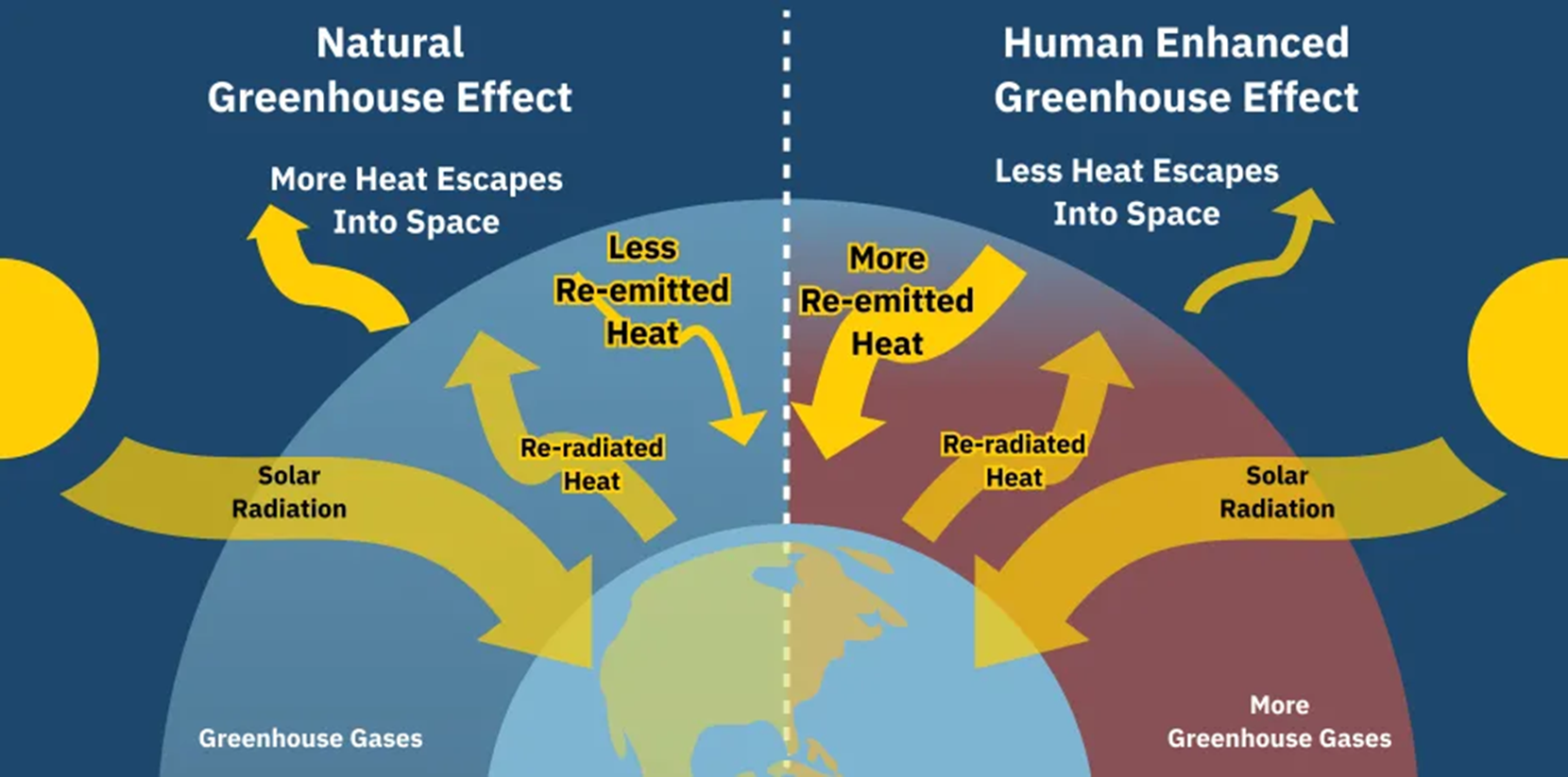
Net zero 2050 emission goal
Achieve a balance between the greenhouse gases emitted and the greenhouse gases removed from the atmosphere, effectively reaching "net zero" emissions by the year 2050
3 solar energy conversion technologies
•Photovoltaic devices (solar cells)
•Concentrated Solar Power (CSP)
•Solar thermal collectors
Max efficiency of soalr cell
The maximum theoretical efficiency of a single-junction solar cell is 33.7 % known as the Shockley-Queisser limit. The ideal bandgap for maximising the efficiency is 1.4 eV
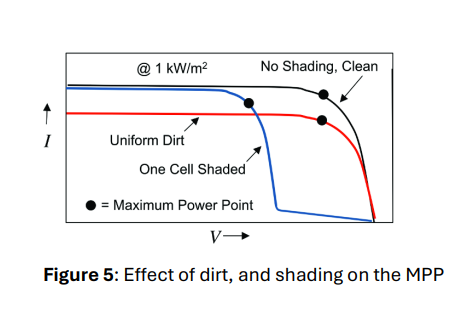
Shading effect on J V curve