bus 102 exam 2
 Call Kai
 Learn
Learn Practice Test
 Spaced Repetition
 Match
Match Flashcards
 Knowt Play
1/87

There's no tags or description
Looks like no tags are added yet.
Name | Mastery | Learn | Test | Matching | Spaced | Call with Kai |
|---|
No analytics yet
Send a link to your students to track their progress
88 Terms
sole proprietorship
the business is owned by a single individual
partnership
two or more people serve as co-owners of the business
corporation
the business is a separate legal entity
limited liability company
a hybrid with characteristics of both a corporation and partnership
business ownership options
sole proprietorship (72.4%), partnership(10.7%), corporation(16.9%), limited liability company
advantages of sole propietorships
•Ease of formation
•Retention of control
•Pride of ownership
•Retention of profits
•Possible tax advantage
disadvantages of sole proprietorships
•Limited financial resources
•Unlimited liability
•Limited ability to attract and maintain talented employees
•Heavy workload and responsibilities
•Lack of permanence
advantages of partnerships
•Ability to pool financial resources
•Ability to share responsibilities and capitalize on complementary skills
•Ease of formation
•Possible tax advantages
disadvantages of partnerships
•Unlimited liability
•Potential for disagreements
•Lack of continuity
•Difficulty in withdrawing from a partnership
advantages of corporation
•Limited liability
•Permanence
•Ease of transfer of ownership
•Ability to raise financial capital
•Ability to make use of specialized management
disadvantages of corporations
•Expense and complexity of formation and operation
•Complications when operating in multiple states
•Double taxation of earnings and additional taxes
•More paperwork and regulation and less secrecy
•Possible conflicts of interest
ownership of corporations
ownership is represented by shares of stock
stockholder
an owner of a corporation
board of directors in corpotations
•The individuals who are elected by stockholders of a corporation to represent their interests
•Establishes the corporation’s mission and sets its broad objectives
•Appoints officers, such as CEO and CFO, for day-to-day management of the corporation
corporate restructuring
acquisition and merger
acquisition
one firm buys another firm
merger
Two formerly independent business entities combine to form a new organization
types of mergers
Horizontal merger, vertical merger, and conglomerate merger
horizontal merger
definition: a combination of firms in the same industry (airlines or pharmacy)
common objectives:
•increases size and market power within the industry
•improves effeciency by eliminating duplication of facilities and personnel.
vertical merger
definition: Combination of firms that are at different stages in the production of a good or service, creating a buyer-seller relationship (IKEA)
common objective: Provides tighter integration of production and increased control over the supply of crucial inputs.
conglomerate merger
definition: A combination of firms in unrelated industries (Clorox).
common objective: Reduce risk by making the firm less vulnerable to adverse conditions in any single market.
Franchise
A licensing arrangement under which a franchisor allows franchisees to use its name, trademark, products, business methods, and other property in exchange for monetary payments and other considerations.
advantages of franchising
•Less risk
•Training and support
•Brand recognition
•Easier access to funding
disadvantages of franchising
•Costs
•Lack of control
•Negative halo effect
•Growth challenges
•Restrictions on sale
•Poor execution
reasons to launch a small business
greater financial success, independence, flexibility, challenge, survival.
entrepreneurs
People who risk their time, money, and other resources to start and manage a business
necessity entrepreneurs
They launch businesses because they believe it is their only economic option.
entrepreneurial characteristics
vision, self-reliance, energy, confidence, tolerance of uncertainty, tolerance of failure
funding options for small business
personal resources, loans, crowdfunding, angel investors and venture capital.
personal resources
friends, family and personal credit cards
loans
Sources include commercial banks, U.S. Small Business Administration (SBA), and peer-to-peer lending
crowdfunding
Process of funding ventures by raising money from a large number of investors via the internet
angel investors
Individuals who invest in start-up companies with high growth potential in exchange for a share of ownership
venture capital
Companies that invest in start-up businesses with high growth potential in exchange for a share of ownership
small business opportunities
•Market niches
•Personal customer service
•Lower overhead costs
•Technology
small business threats
•High risk of failure
•Lack of knowledge and experience
•Less money and more regulatory burden
•High health insurance costs
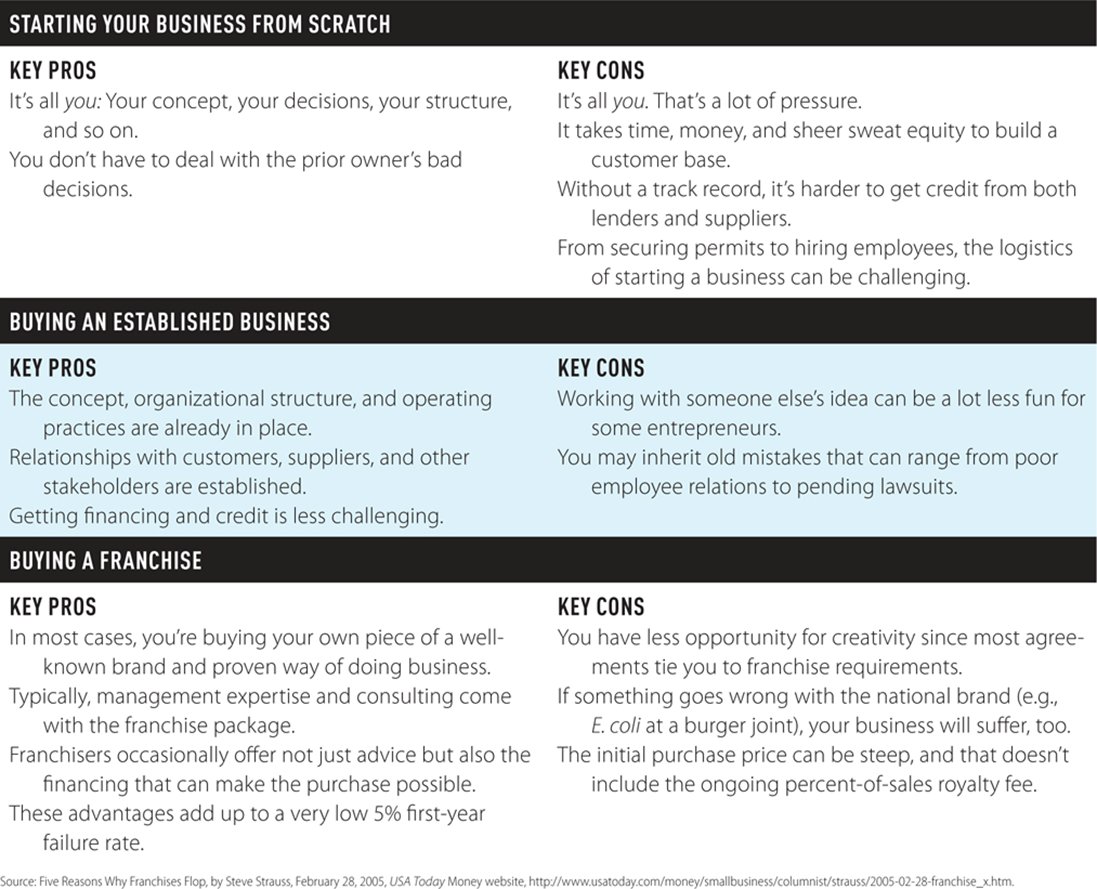
pros and cons of starting a business from scratch vs buying an established business
small business administration
•An agency of the federal government designed to maintain and strengthen the nation’s economy by aiding, counseling, assisting, and protecting the interests of small businesses
•Provides resources to small business owners
business plan
A formal document that describes a business concept, outlines core business objectives, and details strategies and timelines for achieving those objectives
business plan includes:
executive summary, descriptions of business, complete financial data and plan.
Small businesses play a vital role in the U.S. economy
• Comprise 99.9% of all U.S. businesses and 47.1% of private sector employees
• Create new jobs
• Fuel innovation
• Vitalize inner cities
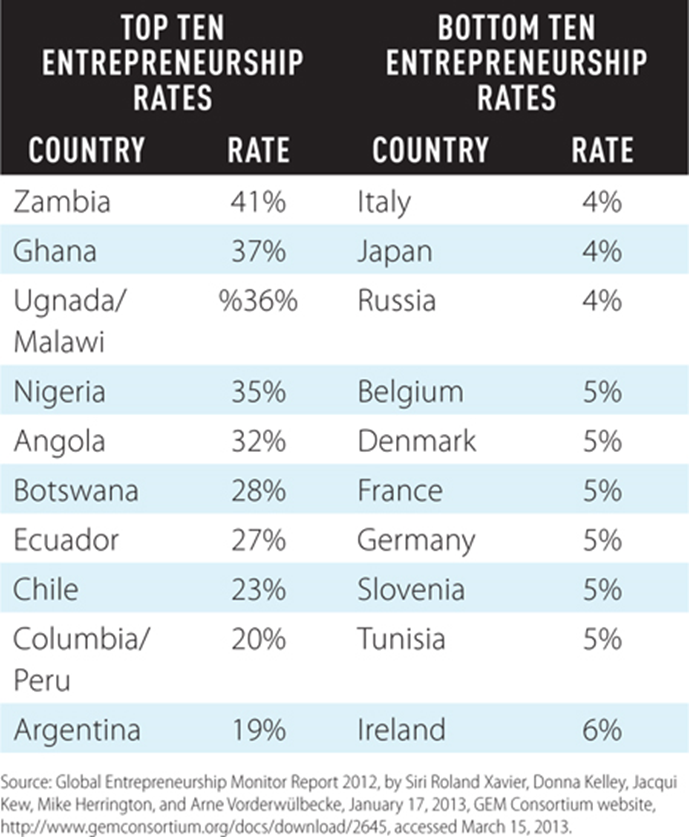
Entrepreneurship around the world
•Societies need entrepreneurs to ensure:
−New ideas actualize
−People are able to self-employ when their economy does not provide for their basic needs
•Current entrepreneurship rates vary from country to country
entrepreneurship around the world
Accounting
“language of business”
A system for recognizing, organizing, analyzing, and reporting information about the financial transactions that affect an organization.
accounting’s goal
To provide users with relevant, timely information that can help them make better economic decisions
who uses accounting?
managers, stockholders, employees, creditors, suppliers, government agencies, news media, competitors, unions.
who does accounting?
public accountants, management accountants, government accountants
public accountants
Provide services such as tax preparation, external auditing, and management consulting to clients on a fee basis
management accountants
Work within a company and provide analysis, prepare reports and financial statements, and assist managers
government accountants
Perform accounting functions for local, state, or federal government agencies
financial accounting
The branch of accounting that prepares financial statements for use by owners, creditors, suppliers, and other external stakeholders
−Stakeholders need this information to analyze the financial condition of the firm through a period of time
−Investors compare a company’s financial results to other firms in the same industry
−The major output of financial accounting—balance sheets, income statements, and cash flows—provides fundamental information about a company’s past and future financial performance
GAAP
Generally Accepted Accounting Principles
A set of accounting standards that is used in the preparation of financial statements
FASB
Financial Accounting Standards Board
The private board that establishes the generally accepted accounting principles used in the practice of financial accounting
GAAP and FASB ensures that financial statements are:
• Relevant
• Reliable
• Consistent
• Comparable
three basic financial statements:
balance sheet, income statement and statement of cash flows
financial statements
• Provide external stakeholders with a view of an organization’s financial condition
• Must appear in publicly traded companies’ annual report
• Part of companies’ quarterly and annual filings with the Securities and Exchange Commission (SEC)
Balance sheet
A financial statement that reports the financial position of a firm by identifying and reporting the value of the firm’s assets, liabilities, and owners’ equity
accounting equation
Assets = Liabilities + Owners’ Equity
assets
resources owned by a firm
liabilities
Claims that outsiders have against a firm’s assets
owners’ equity
The claims a firm’s owners have against their company’s assets (often called “stockholders’ equity” on balance sheets of corporations)
income statement
The financial statement that reports the revenues, expenses, and net income that resulted from a firm’s operations over an accounting period
revenue
Increases in a firm’s assets that result from the sale of goods, provision of services, or other activities intended to earn income
expenses
Resources that are used up as the result of business operations
net income
The difference between the revenue a firm earns and the expenses it incurs in a given time period
statement of cash flows
The financial statement that identifies a firm’s sources and uses of cash in a given accounting period
Cash flows from operating activities, investing activities, and financing activities.
Statement of retained earnings
Shows how retained earnings have changed from one accounting period to the next
stockholders’ equity statement
−Shows how net income and dividends affect retained earnings
−Shows changes in stockholders’ equity, such as changes that arise from the issuance of additional shares of stock
The independent auditor’s report: getting a stamp of approval
•Prepared after conducting an annual external audit of the financial statements
•Verifies that financial statements:
−Are prepared in accordance with generally accepted accounting principles
−Fairly present the firm’s financial condition
•Included in the annual report that a firm sends its stockholders
fine print of financial statements
•Disclose additional information about a firm’s operations, accounting practices, and special conditions
•Explain the specific accounting methods used to recognize revenue, value inventory, and depreciate fixed assets
•Disclose changes in accounting methods or any risks that a firm may face
comparative statements
•Comparative statements put the balance sheet, income statement, and statement of cash flows of two or more years side by side
−Trace what happened to key assets and liabilities through several time periods
−Show increases or decreases in revenues or expenses
horizontal analysis
Analysis of financial statements that compares account values reported on these statements through two or more years to identify changes and trends
budgeting
A management tool that explicitly shows how a firm will acquire and use the resources needed to achieve its goals over a specific time period
-Facilitates planning by requiring managers to:
• Translate goals into measurable quantities
• Identify the specific resources needed to achieve goals
advantages of budgeting
• Helps managers specify how they intend to achieve goals set during the planning process
• Encourages communication and coordination among managers and employees
• Serves as a motivational tool
• Helps managers evaluate progress and performance
Managerial (or management) accounting
The branch of accounting that provides reports and analysis to managers (internal) to help them make informed business decisions
−A firm’s performance depends on the accuracy and reliability of this information
−Management accounting systems may be a source of competitive advantage
financial capital
The funds a firm uses to acquire its assets and finance its operations
finance
•The functional area of business that is concerned with finding the best sources and uses of financial capital
•Goal of financial management is to maximize the value of the firm to its owners
socially responsible firm
A socially responsible firm has an obligation to respect the needs of all stakeholders
•Being socially responsible requires a long-term commitment to the needs of different stakeholders
fiduciary duty of financial managers
Managers should make decisions that are most consistent with the interests of ownership when conflicts arise
Risk
The degree of uncertainty regarding the outcome of a decision
Risk and return trade-off
The observation that financial opportunities that offer high rates of return are generally riskier than opportunities that offer lower rates of return
financial ratio analysis
Computing ratios that compare values of key accounts listed on a firm’s financial statements
financial leverage
The use of debt in a firm’s capital structure
id financial needs
Ratio name | Type | How it is computed |
Current | Liquidity •Measures ability to pay short-term liabilities as they come due | Current Assets/Current Liabilities |
Inventory turnover | Asset management •Measures how effectively a firm is using its assets to generate revenue | Cost of Goods Sold/Average Inventory |
Average collection period | Asset management •Measures how effectively a firm is using its assets to generate revenue | Accounts Receivable/(Annual Credit Sales/365) |
id financial needs pt 2
Ratio name | Type | How it is computed |
Debt-to-assets | Leverage •Measures the extent to which a firm relies on debt to meet its financing needs | Total Debts/Total Assets |
Return on equity | Profitability •Compares the amount of profit to some measure of resources invested | Net Income – Preferred Dividend/Average Common Stockholders Equity |
Earnings per share | Profitability •Compares the amount of profit to some measure of resources invested | Net Income – Preferred Dividend/Average Number of Common Shares Outstanding |
equity financing
acquired from owners
debt financing
acquired from lenders

