Experimental Psych
 Call Kai
 Learn
Learn Practice Test
 Spaced Repetition
 Match
Match Flashcards
 Knowt Play
1/121

There's no tags or description
Looks like no tags are added yet.
Name | Mastery | Learn | Test | Matching | Spaced | Call with Kai |
|---|
No analytics yet
Send a link to your students to track their progress
122 Terms
science
helps build explanations that are predictive and consistent
based on facts, theory, hypotheses, scientific method
verifying information
cross check
contextualize- what does the author have to gain
empiricism
the use of verifiable evidence as the basis of conclusions
collecting data systematically and using it to develop, support, or challenge a theory
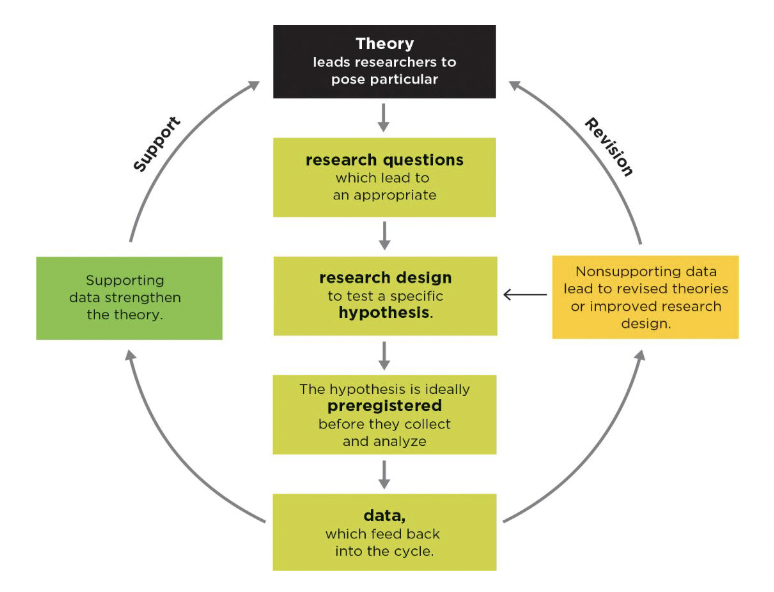
theory data cycle
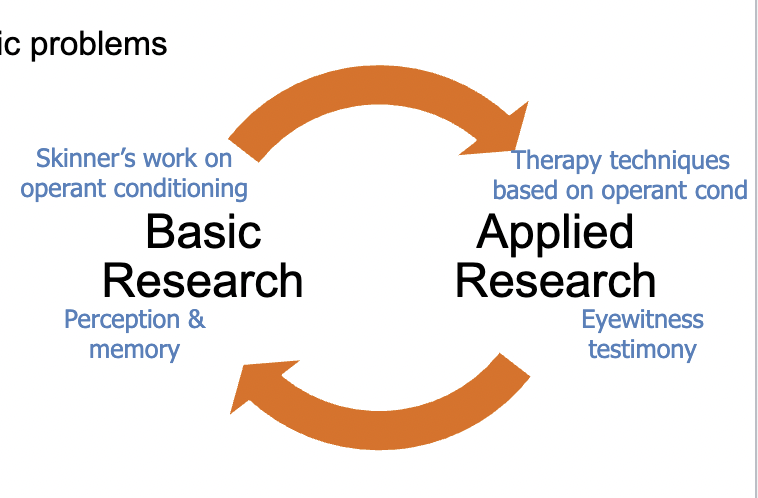
applied research
immediately applicable
basic reserach
fundamental questions
relationship between basic and applied research
cyclical
publication process
peer-review
replication ensures the finding is ‘real’
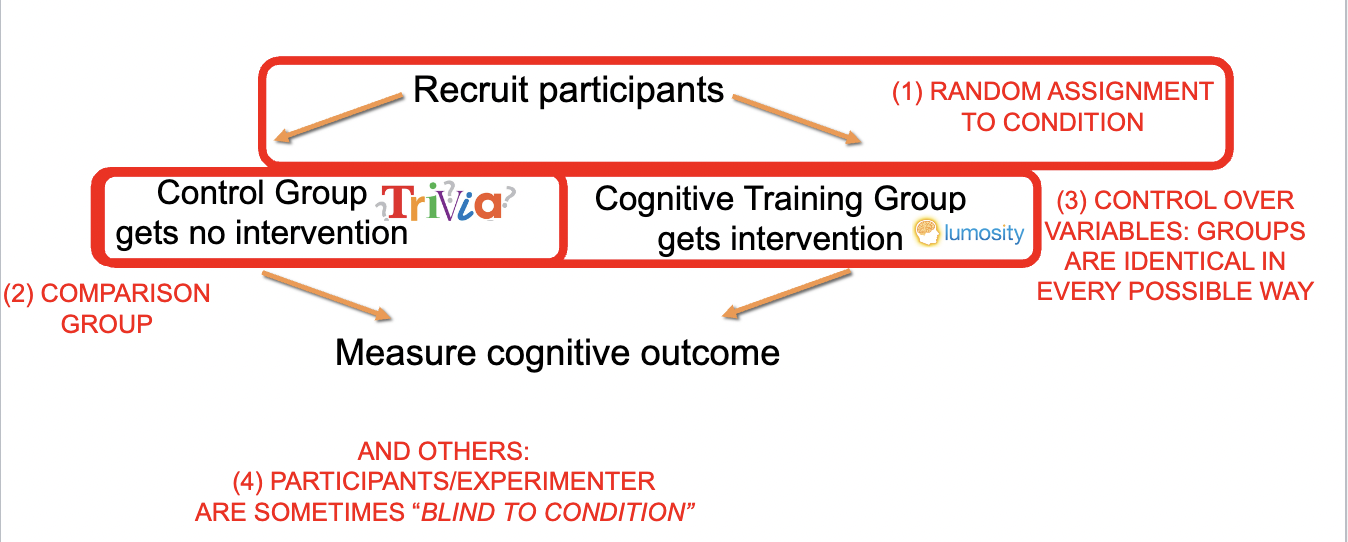
experiments
can isolate cause and effect
because manipulate IV and measure DV
can rule out potential alternative explanations for results
control variables
can show you what would have happened
comparison condition
goal- to manipulate IV so it is the only thing different between conditions, everything else is held constant
independent variable
gets manipulated, looking to cause a change
dependent variable
gets measured, looking for an effect in
special features of experiments
random assignment to condition
comparison group
control over variables- keep groups as similar as possible
(blind to condition)
theory
a systematic body of ideas about a particular topic/phenomenon
describes a relationship among variables
organizes/summarizes findings
describes, explains, predicts behavior
supported by data
falsifiable
(parsimonious)- simple
Occam’s Razor- simplest answer is usually the right one
NOT
a guess
necessarily complex
“proof”
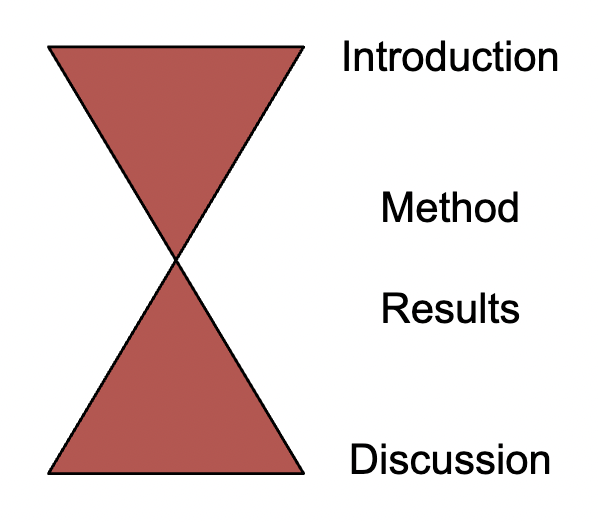
journal articles structure
referring to prior literature
Concept X (citation)
In citation, they…
abstract
brief summary of article’s content
introduction
introduces problem and explains why it is important
prior literature
end of intro- method, variables, hypothesis
method
how you conducted the study
reader should be able directly replicate study
sections: participants, materials, procedure
results
study’s numerical results: statistical tests, tables, and/or figures
discussion
summarize and explain results
describe how/if they support hypothesis
evaluate study, next steps
experience as a source, problems
no comparison group
confounds
probability- experience is not probabilistic
empirical research is…
probabilistic- describes majority of cases, uses samples >1
systematic- hold everything constant, change one thing at a time
using intuition as a source, problems
sometimes inconsistent
sometimes describe the past, not predictive
good story
availability heuristic
confirmation bias- seek disconfirming evidence!
bias blindspot
present-present bias- failing to think of what we can’t remember/see
variable
varies in a study, >= 2 levels
IV, DV
constant
could vary, but doesn’t in study
measured variables
observed and recorded as they occur naturally
manipulated variables
controlled by the experimenter
conceptual variable/construct
name for concept being studied
conceptual definition
abstract, general, theoretical definition
operational definition
concrete, a specific way to measure something
types of measures
self-report
observational or behavioral
physiological
none inherently better than another
levels of variable
nominal- categories, names
ordinal- rankings
scale
how you choose to operationalize a variable
frequency claims
one variable, measured rate or degree of that variable
association claims
2 variables are linked (correlated) typically both measured
causal claims
one variable causes change in the other, one must be manipulated
3 requirements for causal claim
covariance- did the IV seem to show a difference in the DV
temporal precedence- causal variable clearly comes first before the effect variable
internal validity- no alternate explanations for the results
similar people in each condition (random assignment)
holding everything possible constant except for IV
unsystematic variance, noise
makes it harder to find significant results but not a threat to internal validity
doesn’t vary with the IV
Murphy et al. IV and DV
IV: rate of information playback
DVs: comprehension and prediction
Murphy hypotheses: experiment 1
Participants' immediate comprehension will be preserved at faster video speeds
After a delay, increased video speeds may lead to poorer memory performance compared with normal speed
Participants will predict that both immediate and delayed retention would be minimally affected by video speed
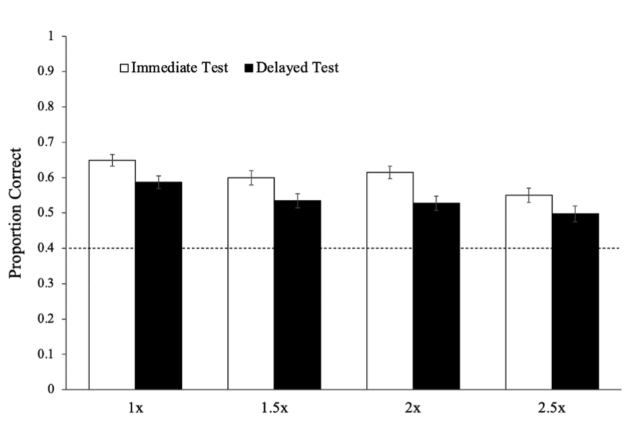
Murphy Experiment 1

Murphy Experiment 1 primary findings
Main effect of test time: immediate better than delayed.
Main effect of video speed: little effect for normal, 1.5x , and 2x speed (nonsignificant); comprehension (and therefore performance) is only impaired at 2.5x speed (significant).
Murphy Experiment 2- purpose
to take advantage of/analyze benefits of repetition without additional time spent studying
watched the videos twice in immediate succession for 2a and then for 2b did the 2x speed once and the second time immediately before the exam
a: Normal speed once vs. 2x speed twice (1x vs. 2x - 2x - test)
b: 1x vs. 2x-week delay-2x-test
Murphy Experiment 2 findings
Experiment 2a Results
-performance: 1x=2x
Experiment 2b Results- answer
-performance: 1x < 2x
Murphy experiment 3 findings
3a: slow - fast vs. fast-slow equal performance
3b: slow-week delay-fast vs. fast-week delay-slow equal performance
construct validity
quality of measures and manipulations
how good is the operationalization
how reliable are the measures
extra important for frequency claims
external validity
context of the study
to what extent can we generalize from the study
to other participants
to other settings
to other operationalizations of same conceptual variables
who we ask to be in sample
inclusion/exclusion criteria effects who we can derive inference about
where do we conduct our study
lab vs. field
balance between minimizing variance and maximizing ability to generalize
statistical validity
how well do the numbers support the claim
ex- p-values, eta²
internal validity
no alternative causal explanations for the outcome
free of confounds
random assignment
strong control over variables
balancing validities: internal vs. external validity
internal- tightly-controlled. less variability
external- different people, settings
internal validity is prioritized first, external validity explored later
quiz 2
design confound
alternative explanation in the design of the study (varies with the IV, systematic)
selection effect
participants in different conditions are different
prevention- random assignment
matched groups- usually for smaller samples
first measure participants on variable that might matter to DV
match participants in pairs of similar trait and randomly assign each to condition
manipulation check
ensure construct validity
collect more data with same participants to quantify how well manipulation worked
pilot study
ensure construct validity
smaller scale (often preliminary) study with a different group of participants completed to confirm the effectiveness of the manipulation, test DV measurement
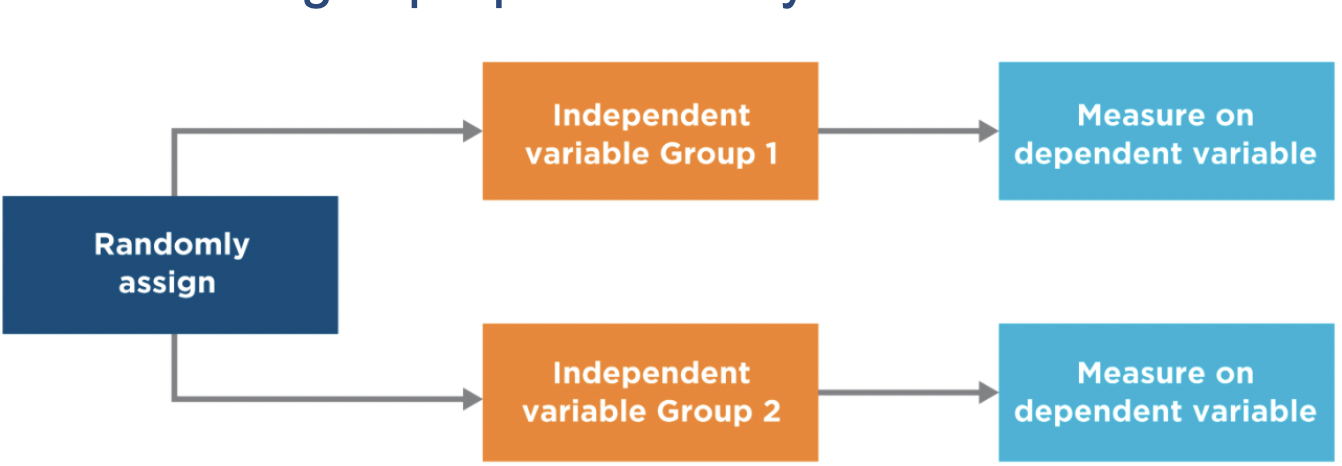
between-groups design
participants only get one level of the IV
pros- harder for participants to guess what is happening
cons- selection effects, more participants, less power
post-test only design
default
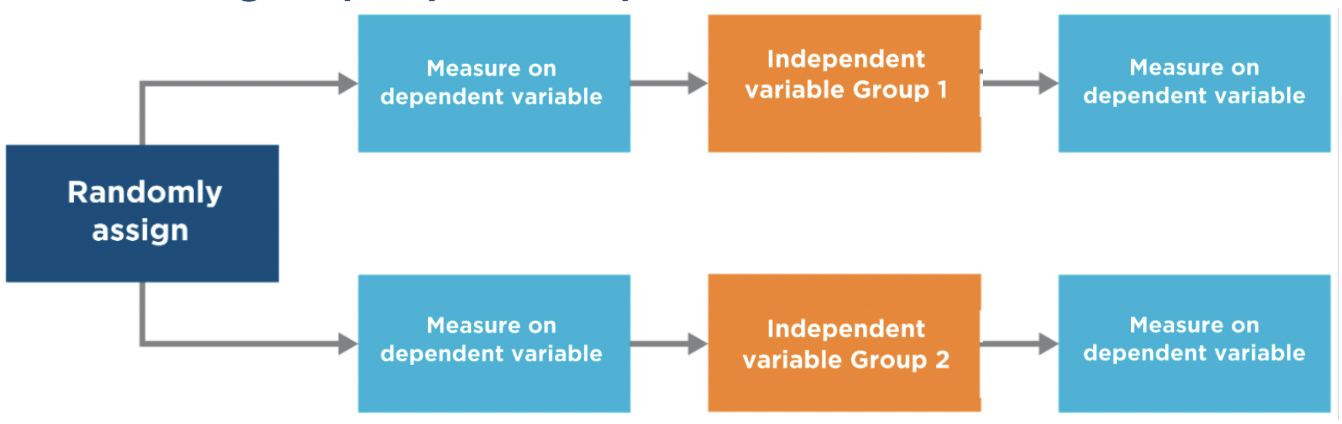
pretest/posttest design
why?
interested in change over time
check if groups are equivalent
sometimes not possible
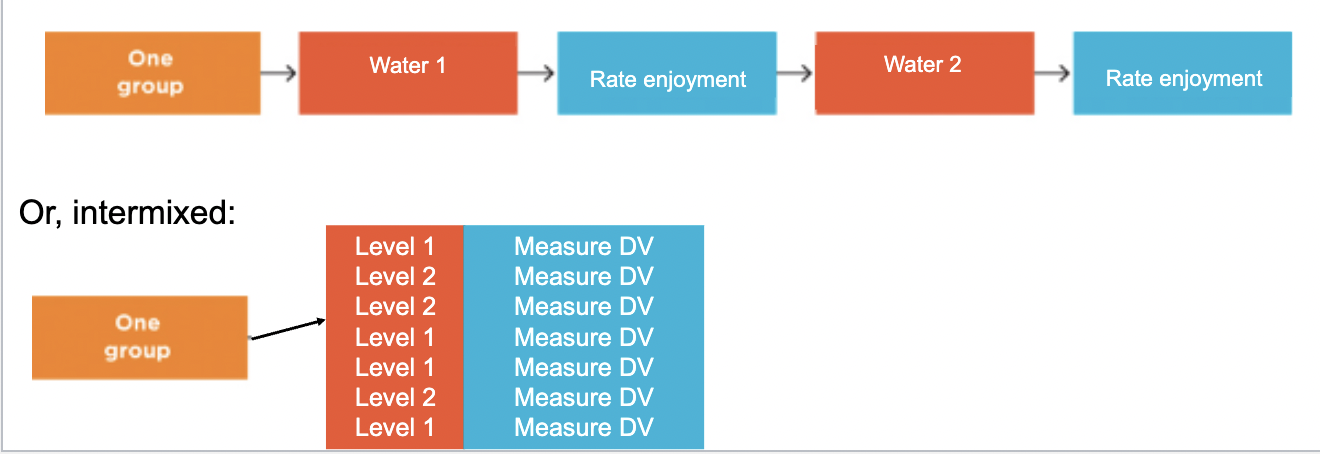
within-groups design
participants get all level of the IV
pros- participants serve as own comparison, no selection effects, fewer participants, more power (ability to detect effect if it’s really there, eliminating one source of noise)
cons- easier for participants to figure out what is being studied
order effects
issue with within-groups design
exposure to one level of IV influences reaction to other level of IV
practice effects
issue with within-groups design
participants get better at a task
fatigue effects
issue with within-groups design
participants get worse at a task
carryover effects
issue with within-groups design
occur when a participant's experience in one condition influences their performance or behavior in subsequent conditions, confounding results
counterbalancing
solution to issues with within-groups design
presenting levels of IV in different sequences (ex- AB vs BA)
full- all possible orders
partial- present only some orders
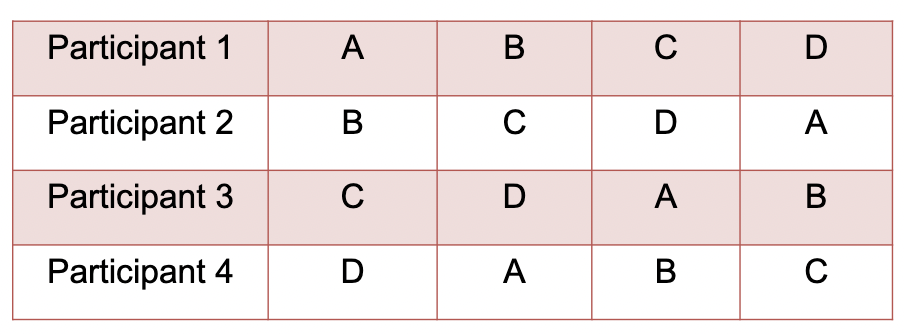
latin square- minimizes confounds, each level appears once in each order position, each level appears with nothing before and after it
but A still followed by B more often
maturation
change in behavior that emerge spontaneously over time
ex- children’s cognitive abilities naturally improve over time
prevention- use a comparison group
history
event that effects experiment that is not a part of your manipulation
prevention- comparison group
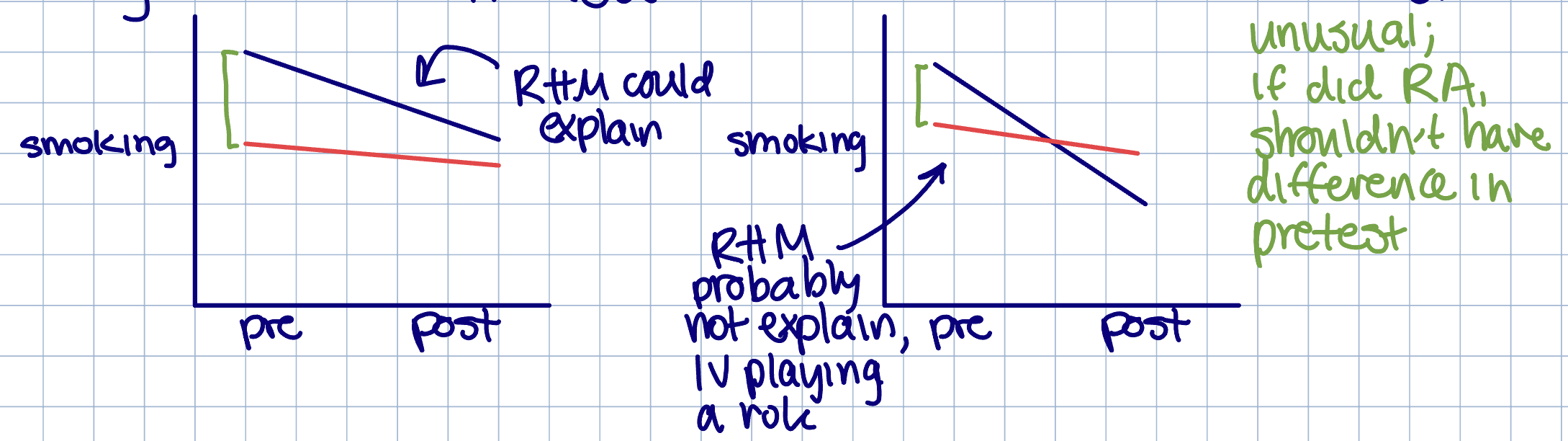
regression to the mean
extreme scores become less extreme over time
*only an issue when people are selected for being extreme
any variable measurement = true score + error
prevention- comparison group
attrition/mortality
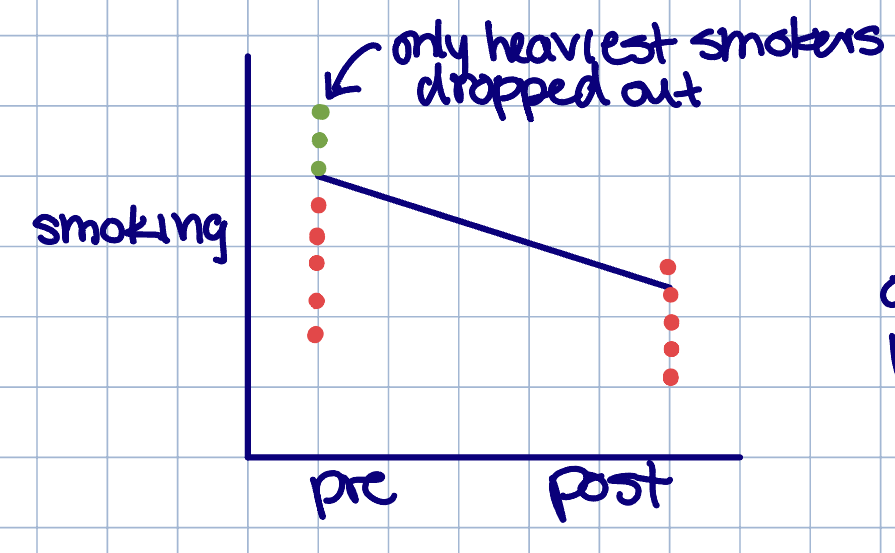
participant drop-out
even if you have 2 groups equal on a pretest, dropout can still make groups look unequal at posttest
prevention- comparison groups; exclude their data, but now potential threat to external validity
quiz 3
testing
change in participants as a result of experiencing the DV more than once
usually fatigue/boredom or practice
prevention- posttest only, comparison group
instrumentation
characteristics of the measurement change over time
measurement
observation (self or observer- more skillful, fatigued, desensitized, change standards)
tests- pre and post tests are unequal (eg- difficulty)
prevention- posttest only, comparison group
combined threats
can occur even if you have comparison group and random assignment
selection-history threat- an outside event systematically affects participants at one level of IV
selection-attrition threat- participants in one group experience more/less attrition
demand characteristic
participants figure out what study is about and change their behavior in the expected direction
prevention- run a (double)blind study, between-groups design, try to convince participant study is about something else
placebo effects
people receive treatment and improve, but only because they believe they are receiving a valid or effective treatment
prevention ex- have a true therapy, placebo therapy, and no therapy groups (helps identify the placebo effect)
interrogating null effects
what if the IV doesn’t effect the DV
t = between-condition difference / within-condition variability
F ratio = between-condition variance / within-condition variance
significance tests = between-condition variance / within-condition variance
need to maximize our ability to detect differences between our conditions
need to minimize within-condition variability (noise)
power
finding a statistically significant effect when the IV really has an effect
studies with a lot of power are more likely to detect true differences
maximizing between-group variance, beware of
weak manipulation
insensitive measures- obscures ability to see effects in DV
ceiling and floor effects- people performing too well or too poorly
design confounds
manipulation checks and pilot study can help
minimizing within-condition variability, beware of
measurement error → use reliable and precise measurements, establish construct validity, use established measures, measure more instances
individual differences → more homogenous sample, within-groups/matched-pairs design, more participants
situation noise → control experiment surroundings
increase power!
factorial design
interaction- when the effect of one IV on the DV depends on the level of the other IV
3 research questions
is there an effect of first IV?
is there an effect of second IV
is there an interaction
(need stats to answer, p < .05)
designs:
both IVs have a between-groups design
both IVs have a within-groups design
mixed design
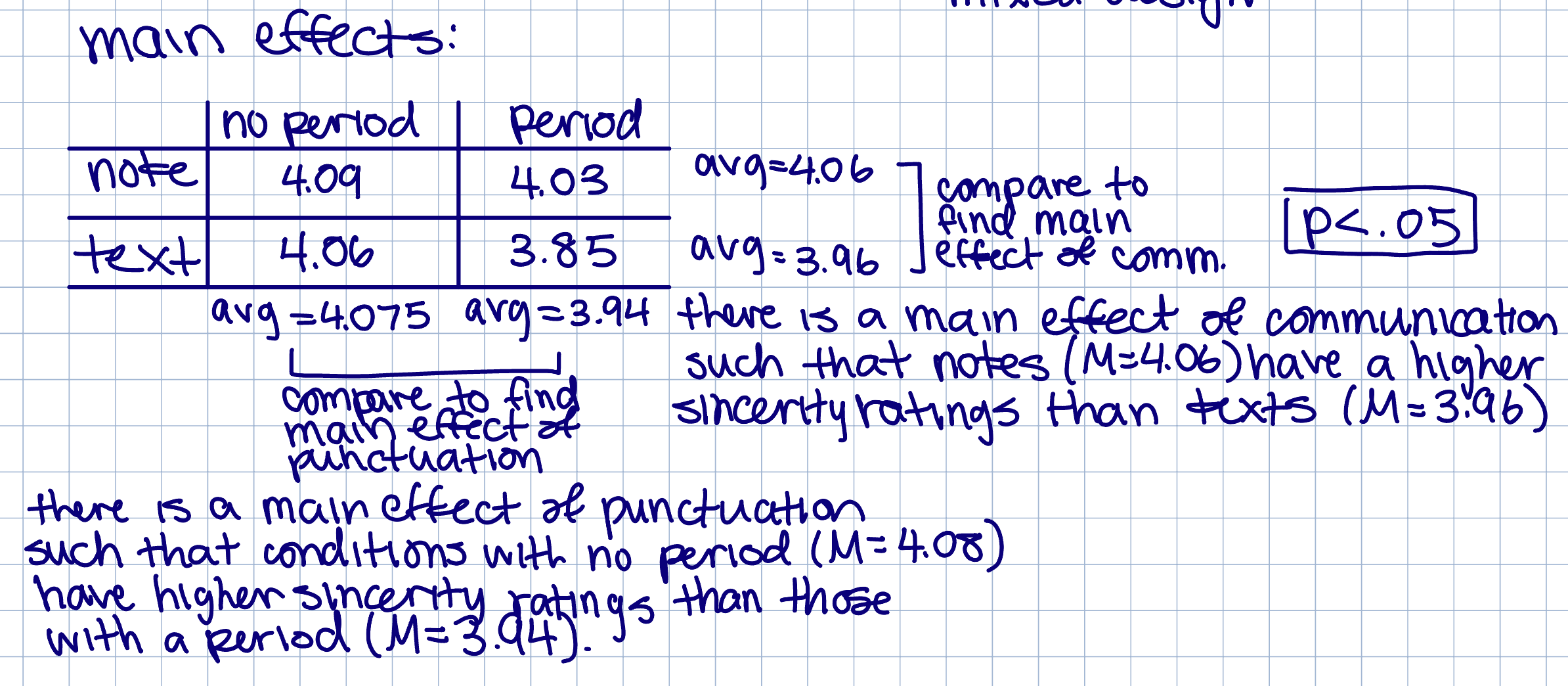
main effects
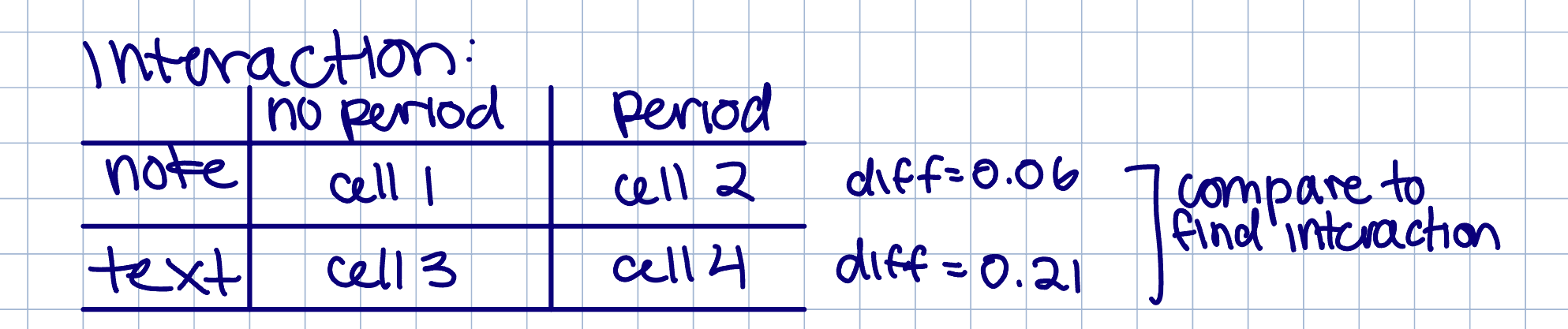
interaction
simple effect- relationship of IV1 and DV at one level of IV2
for notes, no period shows similar sincerity to period
for texts, no period shows igher sincerity than period
why do we care about interactions
factorial designs can test for
boundary conditions (limits)- under what setting is something applicable
moderator- when, for whom, and under what conditions are two variables related, “it depends”
external validity- does this effect extend to other situations/groups
can be applied to both IVS
theories- what situations theories are operating in
describe # of IVs
“one-way” “two-way” etc
describe conditions within IV
__(# of levels)___ x __(# of levels)___
number of digits = number of IVs
post hoc tests
statistical analyses conducted after an ANOVA shows significant differences among three or more group means
3 IVs
*three way interaction- when one condition of 3 IV has a two-way interaction different from other condition two-way interaction,
no interaction vs. interaction
interaction vs. different interaction
*most important to analyze
3 main effects
3 two-way interactions
quiz 4
correlation
a descriptive and inferential analysis we typically use to assess association claims
typically describe and predict how variables are naturally related in real world
coefficient r
-1 to +1, magnitude tells strength
measure of effect size
construct and external validity- association claims
construct validity- quality of measures and manipulation
sometimes the factors that make it impossible to an experiment also make construct validity high
external validity
sometimes the factors that make it impossible to an experiment also make external validity high
moderator analysis
statistical validity- association claims
effect-size
precision (CI)- contain 0, not stat sig
issues
outlier- can inflate (on trend line) or deflate (off trend line) a correlation
have larger impact on a small sample
non-linearity- curvilinear
establishing internal validity- non-experimental design
covariance- is there a correlation
*temporal precedence-
directionality problem- does method establish which variable came first in time
*internal validity-
third variable problem- is there a C variable that is associated with A and B independently
*limitations which make causal statements challenging
mediator
mechanism that explains a relationship
subjective ways to assess validity
face validity- does it accurately reflect the construct of interest
content validity- does it include all the important components of the construct
empirical ways to assess validity (self-report)
criterion validity- measure predicts real-world outcome
correlational or known-groups
convergent validity- measure should be more associated with a similar measure (can be negatively associated)
discriminant validity- measure is less associated with a dissimilar measure (not negatively associated)
test-retest reliability
first and second measurement should be similar, even when separated in time
relevant if expected to stay constant
interrater reliability
participants are rated similarly by two raters
relevant if >2 raters
internal reliability
participants give a consistent set of answers no matter how the questions have been phrased
items tapping the same theoretical variable correlate strongly with one another
AIC (average of the inter-item correlations in the whole scale) or Cronbach’s alpha (AIC accounting for # of items); usually want > .7/.8
relevant if survey/questions
surveys and polls
helpful for
facts/demographics
attitudes beliefs
behavior
open-ended questions pros and cons
pros
rich information
cons
needs to be coded
difficult to interpret
forced-choice questions, pros and cons
Likert scale (1-5) or Likert-type scale
pros
easy to process
cons
limited info
making a survey: DONTS
make leading questions
make double-barreled questions (2 questions or 2 adjectives)
make negatively worded questions
provide too few (less than 5) or too many (more than 7) options

