VR, Neurodiversity & perceptual differences
 Call Kai
 Learn
Learn Practice Test
 Spaced Repetition
 Match
Match Flashcards
 Knowt Play
1/32

Earn XP
Description and Tags
seminar 4, reading on neurodiversity, synaesthesia & aphantasia
Name | Mastery | Learn | Test | Matching | Spaced | Call with Kai |
|---|
No analytics yet
Send a link to your students to track their progress
33 Terms
VR & neurodiversity
allows us to research perceptual & cognitive processes
can explore individual differences in neurodiversity by stimulating sensory input
crucial for developing interventions
allows researchers to create controlled environments that can be tailored to explore specific cognitive processes
VR results provide deeper insights into how neurodivergent individuals perceive & process info
further research is needed to explore how VR can be used to better understand the perceptual experiences of individuals with ADHD
Visual processing & VR (University of Glasgow) (Savickaite, 2023)
Study explored how individuals w/varying levels of neurodivergent traits (Autism & ADHD) process complex visual information
P w/higher autistic traits showed more detailed but less organised visual recall on the Rey–Osterrieth Complex Figure (ROCF) task.
Those scoring high on the attention-to-detail subscale of the Autism Spectrum Quotient performed better on fine-detail tasks, suggesting this trait enhances detailed visual memory in VR settings
For ADHD traits, no significant relationship was found
may be due to ADHD impacting multiple cognitive processes
used miced method to see measure of drawing strat whil post task itnerviews offering valuable insight
VR for mixed methods research
VR can facilitate a mix of qualitative (P’s subejctive experience) & quantitative (spatial coord)
By combining methods, researchers can gain a more comprehensive understanding of individual differences in perception, ultimately informing more effective interventions and support for neurodiverse populations
Autism has difficulties with
social interactions
sensory processing
repetitive behaviour
affects 1% of UK pop
is not a deficit but a difference in perceptual experience
Autobiographical accounts
lot of the understanding about perceptual differences is from autobiographical or lab studies
Perceptual organisation
global processing - you get a gist of everything
local processing - you focus on specific elements
autistic individuals tend to have more local processing
Navon task
a way of looking into global vs local processing
VR applications in autism
most social interaction training and intervention
but concerns whether we are ateaching them to mask better
sensory aspect of perception have no been investigated
Rey Osterrieth Complex Figure (ROCF) task
common used task
a drawing task to look at global vs local processing
you are asked to draw it from memory immediately and after time
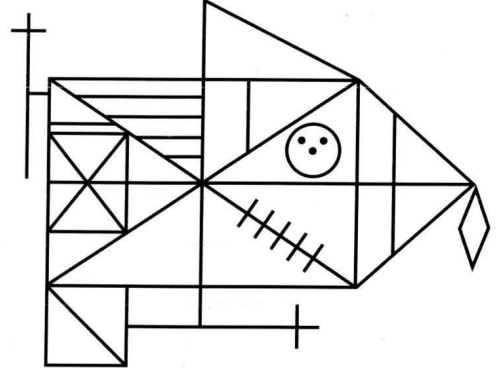
experiment 1 (University of Glasgow) (Savickaite, 2023)
Pilot/Exploratory 2d
Local & Global processing styles
ASD &ADHD*
ROCF task
found higher attention switching, communication and attention to detail was found to be sigificant in the local
GO OVER THIS PAPER
experiment 2 (University of Glasgow) (Savickaite, 2023)
VR & ROCF task
Discussion (University of Glasgow) (Savickaite, 2023)
task was suitable but no 3D so future research
Individual differences
Problems with VR itself
Too much data
had coord for looking at their process but it was limited use
started collecting qual (found how they were approaching it)
Different statistical analysis required
key take aways (Savickaite, 2023)
comparing measure to formalise 3 groups of patterns
organisational, outline or part-orientated
identified that there are limitations of ROCF stuff
Experiment 3 (University of Glasgow)
focus on chapter 7
final goal of study
provided prompts of drawing
thematic analysis
autisitic sensoru differences
masking
sharing perspective
enjoyed control of enviroment
ended up being theraputic task to get people talking
could be refined to be a therapy
Synaesthesia
stimulation in one sensory or cognitive pathway leads to involuntary experiences in a second sensory or cognitive pathway
cross-wiring of senses creates vivid, unique experiences that are both multi-sensory and consistent over time
3x higher in autistic individuals than general pop (Baron-Cohen, 2013)
why study synaesthetes in VR
VR helps simulate a world where sound has color or letters have texture
helps both researchers & non-synaesthetes appreciate the complexity of the condition
Synaesthesia & Aphantasia
neurodiverse conditions related to perceptual experience
offer unique windows into how the brain processes sensory information and forms perceptions
Aphantasia
complete absence of voluntary visual mental imagery
cannot summon images in their mind’s eye when thinking about objects, people, or scenes
often referred to as the "blind mind,"
represents the opposite end of the spectrum from those with vivid mental imagery
why study aphantasia in VR
VR allows researchers to observe how individuals without mental imagery interact with tasks typically reliant on visualization, such as drawing or object manipulation
exploring perceptual deficits
VR & Synaesthesia/Aphantasia
VR has become a powerful tool for studying these conditions
allows researchers to simulate & explore perceptual differences in ways that were not possible in traditional research setting
VR for synaesthesia (Taylor et al, 2023)
VR simulated synaesthetic cross-modal experiences like grapheme–colour associations.
created synthetic experience for both non-synaesthesis
p could navigate immersive 3D environments where they interacted w/objects and accompanying sensory experiences
Made perceptual cross overs shareable
enhancing understanding & self-expression for neurodivergent individuals
reported that it was accurate in mirroring synaestheses brains
Methods for VR & synaesthesia (Taylor et al, 2023)
standard VR tools & controllers to allow participants to explore environments where visual & auditory inputs were cross-modally linked, simulating synaesthetic experience
when P heard musical notes in the VE also saw vibrant colors corresponding to the pitch/tone of the sounds
Findings of VR & synaesthesia (Taylor et al, 2023)
found that immersive VR was effective in both replicating the synaesthetic experience & in demonstrating to non-synaesthetes richness of these perceptual experiences
Non-synaesthetic P gained greater empathy & understanding for the complexity of synaesthetic perception
Synaesthetes given opportunity to visualize their multi-sensory world allowing for comparisons between their internal experiences & the simulated VR experience.
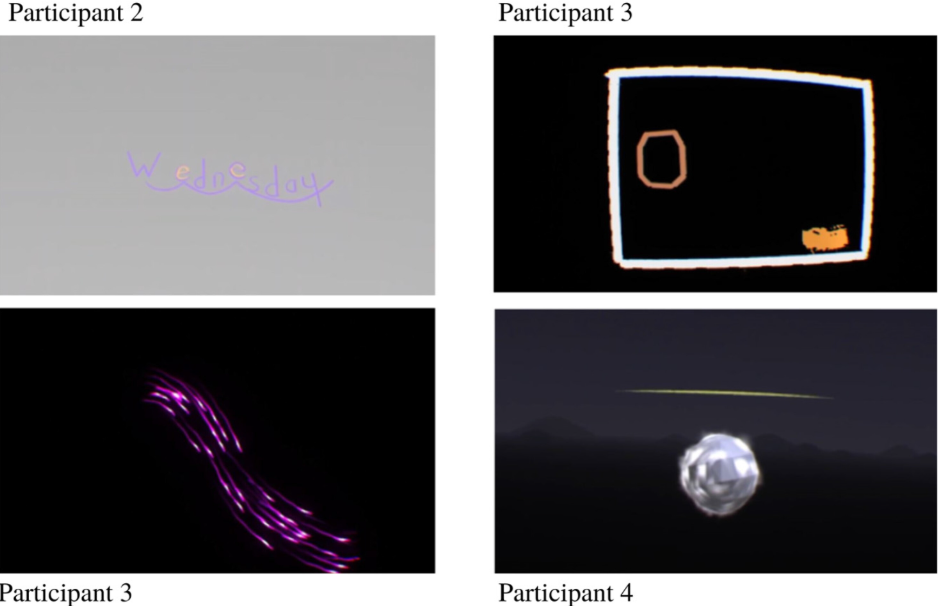
VR for Aphantasia (Li et al., 2023)
explored how VR can be used to study the perceptual world of individuals w/aphantasia
P w/aphantasia engaged in a drawing task using OpenBrush, a VR tool that allows for three-dimensional drawing
methods for VR & Aphantasia (Li et al., 2023)
4 P who were asked to complete drawing tasks within a virtual space using VR controllers & headsets
asked to draw basic shapes, familiar objects, & personal memories, tasks typically associated w/mental imagery
P provided verbal reflections on their experience, explaining how they approached the drawing tasks without aid of mental imagery
VR drawing tool study
Participants (autistic and neurotypical) draw in 3D space while behavioural data and qualitative reports are recorded
It exemplifies mixed methods—quantitative tracking plus qualitative experiential data.
Findings for VR & Aphantasia (Li et al., 2023)
p w/aphantasia relied heavily on external references or structured guidelines to complete the tasks, as they lacked the ability to internally visualize the objects
However, the immersive nature of VR allowed them to explore their drawings in ways that traditional 2D media could not.
e.g could “walk around” their drawings or view them from different angles, compensating for their inability to internally visualize the objects
This interactive nature of VR provided a novel method to engage with their environment despite the lack of visual mental imagery.
What is the main promise of VR as a therapeutic and research tool?
VR offers controlled, repeatable, &immersive environments
complex phenomena (e.g. phobic stimuli, sensory overloads, social interactions) can be precisely manipulated, measured, and experienced.
How does VR benefit research into autism and neurodiversity?
It bridges the gap between subjective experience & objective measurement by allowing direct manipulation of perceptual environments that are otherwise hard to study
VR offers a way to create experiments that are not constrained by the limitations of the physical world
allows researchers to study inner perceptual worlds of individuals w/these conditions in ways that were previously impossible
VR offers a promising avenue for future research into neurodiversity and sensory processing
The Benefits of VR in Understanding Perceptual Differences
VR provides a medium for illustrating subjective perceptual differences in a way that traditional research methods cannot
allows for the visualization of abstract or subjective sensory experiences, VR makes invisible perceptual differences visible
Findings from the studies show what difference in processing?
Autistic individuals often favour local (detail-focused) processing
neurotypicals lean toward global (whole-focused) processing.
what is meant by neuro inclusive design in VR
Designing systems that account for different sensory thresholds and preferences—offering adjustable brightness, contrast, pacing, and motion for comfort and accessibility.
issue of most VR systems
They are built around neurotypical assumptions, ignoring sensory diversity and the need for flexible, user-controlled experiences
Explore top notes

Explore top flashcards
