Theatre History III Final- LONG FORM
 Studied by 0 people
 Call Kai
 Learn
Learn Practice Test
 Spaced Repetition
 Match
Match Flashcards
 Knowt Play
 Podcast
1/92

There's no tags or description
Looks like no tags are added yet.
Name | Mastery | Learn | Test | Matching | Spaced | Call with Kai |
|---|
No analytics yet
Send a link to your students to track their progress
93 Terms
Charles Darwin
-1859
-English biologist (from england)
-Wrote On the Origin of Species: modernism, new visions of the world, theory of evolution by natural selection
- Why does he matter?: his book matters because it defines modernism
what is modernism
an umbrella movement in the late 19th and 20th centuries which gave us realism futurism and constructivism
A REACTION TO ROMANTICISM
Karl Marx
-1867
- German political scientist, philosopher, socialist (COMMUNISM)
- wrote Das Kapital: under umbrella of modernism, new visions of the world, the proletariat (workers) is exploited by capitalists who control means of production, basis for communism, talks about historical materialism (people have jobs because of economical and political circumstances, rather than being God's favorite)
- Why is he important? Modernism and historical materialism
Sigmund Freud
-1899
-Austrian neurologist, "father of modern psychology"
- wrote Interpretation of Dreams: modernism, new visions of the world, dreams are manifestations of our unconscious desires and repressed experiences/emotions
-introduces nature vs. nurture
The Big 3 of modernism
Darwin, Marx, and Freud
Filippo Tomasso Marinetti
-1909
-Italian, founder of futurism
-wrote Futurist Manifesto in Milan (not Mulan): futurism, reject the past and embrace the future by celebrating modernity, technology, and machinery, anti-realism
Qualities of Futurism (7)
-rebellion against harmony
-elimination of high culture
-celebrating originality, change, and innovation
-loathing anything old
-admiration of speed, technology, violence, motorization (cars, planes, industry), technological humanity over nature
-modern urban scenes
-embrace facism
why did futurism people die
they loved war so they went to war, and died in war (WWI)
Oskar Kokoschka
-1909
-Austrian poet and playwright
- wrote Murderer Hope of Women: expressionism
(first expressionist play- why he's important)
Osanai Kaoru
-1909
-Japanese director, actor, playwright
-Jiyu Gekijo: "free theatre," realist plays with kabuki actors, first production was a translation of John Gabriel Borkman by Ibsen
- Why he was important: Father of Shingeki
Sherman Dudley
-1911
-African American theatre performer and entrepreneur
-Colored Actors Union- first organization advocating for the rights of ethnic actors
- TOBA: Theatre Owners Booking Association-> a group of African American theatre owners who helped created the Chitlin theatre circuit
Rabindranath Tagore
-1912
-Indian playwright and poet
-wrote The Post Office: some themes include longing for freedom and death*****
- first major Indian modern playwright
Eugene O'Neill
-1920
-American realist playwright
-Emperor Jones: deals with themes of racism, power, systemic oppression, and history
Hijikata Yoshi
-1924
-Japanese theatre director
-Tsukiji Shogekigo: built after Kanto Earthquake, first building for professional theatre in Japan
Akita Ujaku
-1924
-Japanese playwright
-Skeleton's Dance: expressionist, comments on anti-Korean sentiments after 1923 Kanto earthquake and firestorm (Koreans blamed for earthquake)
Antonin Artaud
-1925
-French, founder of theatre of cruelty
-Spurt of Blood (wack.)
Kern and Hammerstein
-1927
-Kern: American composer
-Hammerstein: American lyricist/dramatist
-composed Showboat: musical play, first racial integrated musical, integration of performance elements into text (this principle would eventually start the Golden Age)
Sophie Treadwell
-1928
-American playwright and journalist
-Machinal: major expressionist style, inspired by real murder case, explores themes of women trapped in societal expectations and monotony
Franklin Delano Roosevelt (FDR)
-1932
-American president during Great Depression (BHE) and beginning of WWII
- The New Deal: created funding for the arts and funding for national theatre projects, starting the National Theatre
New Deal (6)
-1932
-FDR's plan to fix the economy
-used federal spending to jumpstart economy
-move from laissez faire to state planning
-creation of federal employment programs and the "Alphabet Administration" (lots of names for things)
-WPA: Works Progress Administration, largest New Deal agency, created public buildings and roads, also housed Federal Arts Projects (visual arts)
Rachel Crothers
-1932: same year as New Deal
-American playwright and director
-Stage Relief Fund: response to the effects of the Great Depression, private organization that provided finanical aid to unemployed actors
Langston Hughes
-1935
-African American poet and playwright, prominent during the Harlem Renaissance (mass explosion of African American Art in Harlem: jazz, music, poetry, plays)
-wrote Mulatto: deals with themes of racial prejudice against mixed-race individuals
Hallie Flanagan
-1935
-American producer, director, author
-led and set up structure of Federal Theatre Project, one theatre for the people
- budget of 46 million
3 federal theatre plays
Revolt of the Beavers, Living Newspaper plays,"Voodoo" Macbeth (Orson Wells)
Bertolt Brecht
-1939
-German playwright linked with epic theatre, epiv vs dramatic
- Anti realism
- modernist concerned with medium (how theatre connects with audience=audeince active part), connected to marxism
- wanted to know how theatre works
- HATED aristotle and catharsis
-Mother Courage: theatre as a political tool, deals with themes of war and profit
- Verfremdungseffkt (V effect): theatre both pulls you in and pushes you away
Verfremdungseffekt (5)
-v-effect
-"alienation effect" used in epic theatre
-distances spectator from play, forces critical observation
-reminds audience that they are in a theatre, theatre is a reflection of reality
-"pastness" emphasized, people's preconceived notions will prevent them from seeing your point, remove from contemporary world to compare it to present
how to make Verfremdungseffkt (V effect):
Theatrical v effect:
- half curtain
- mucisians on stage
- lighting instruments visible
- fragmentary scenrey
- harsh lighting
- explantaory placards
(no suspension of disbelief)
Rodgers and Hammerstein
-1943
-Rodgers: American composer
-Hammerstein: American lyricist/dramatist
-Oklahoma!: based on Green Grows the Lilacs by Lynn Riggs, first golden age musical, unified integration of all aspects
- where we get rise to promience of dance in MT (choreograher and director)
Agnes de Mille
-1943
-American, choreographer of Oklahoma!
-movement promotes the story, Dream Ballet in Oklahoma!
- where we get rise to promience of dance in MT: she gives us ballet in MT
Tennessee Williams
-1944
-American realist playwright
-Glass Menagerie: concern with feelings/inner desires, psychological motivations, protagonists = lost souls
- maybe gay? jk very gay.
Lee Strasberg
-1947
-American director
-created Actors Studio: founded by Elia Kazan, Cheryl Crawford, and Robert Lewis; directed by Strasberg; brings Stanislavsky's system to the US
- known for Stanislavsky (or realism) acting
Arthur Miller
-1949
-American playwright
-Death of a Salesman: strong critique of the American Dream, plays with standard realist model with flashbacks, questions the idea of a moral society
- married to Marilyn Monroe, not gay. not to be confused with tim miller.
- HUAC: brought before them on susepct of being communist, miller would not talk or throw under people under commie bus (inspired Crucible)
Jo Mielziner
-1949
-American scenic designer
-designed set for Death of a Salesman
-selective realism eliminated nonessentials for set design, realistic signifiers, abstract design elements
Rene Marquez
-1953
-Puerto Rican playwright
-La Carreta: "The Oxcart," social activist play, family of Puerto Rican farmers immigrate to US
Josef Svoboda (Jo Smo)
-1958
-Czech director and scenic designer, setting with sound and light
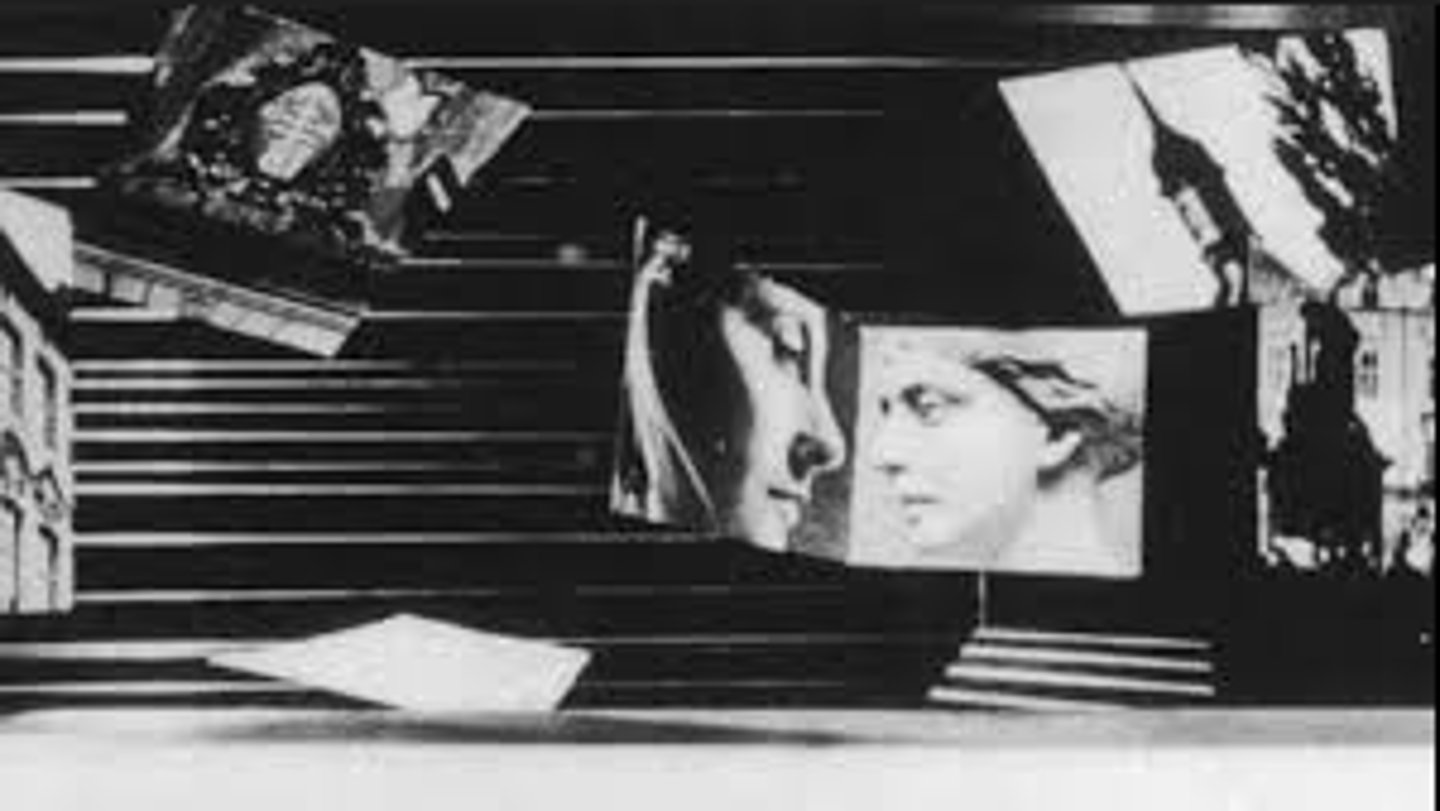
-Laterna Magika: live actors combined with still and moving pictures, 8 mobile screens, treadmills and trapdoor (use of shadows)
-Polyekran: 7 screens of varying size hung at varying distances, overcomes "visual paralysis" (set staying the same) picture attached
-kinesthetic stage rather than static stage, lots of dimension
Lorraine Hansberry
-1959
-African American playwright
-A Raisin in the Sun: deals with themes of dreams, racial discrimination, and limited opportunities
Hijikata and Ohno
-1959
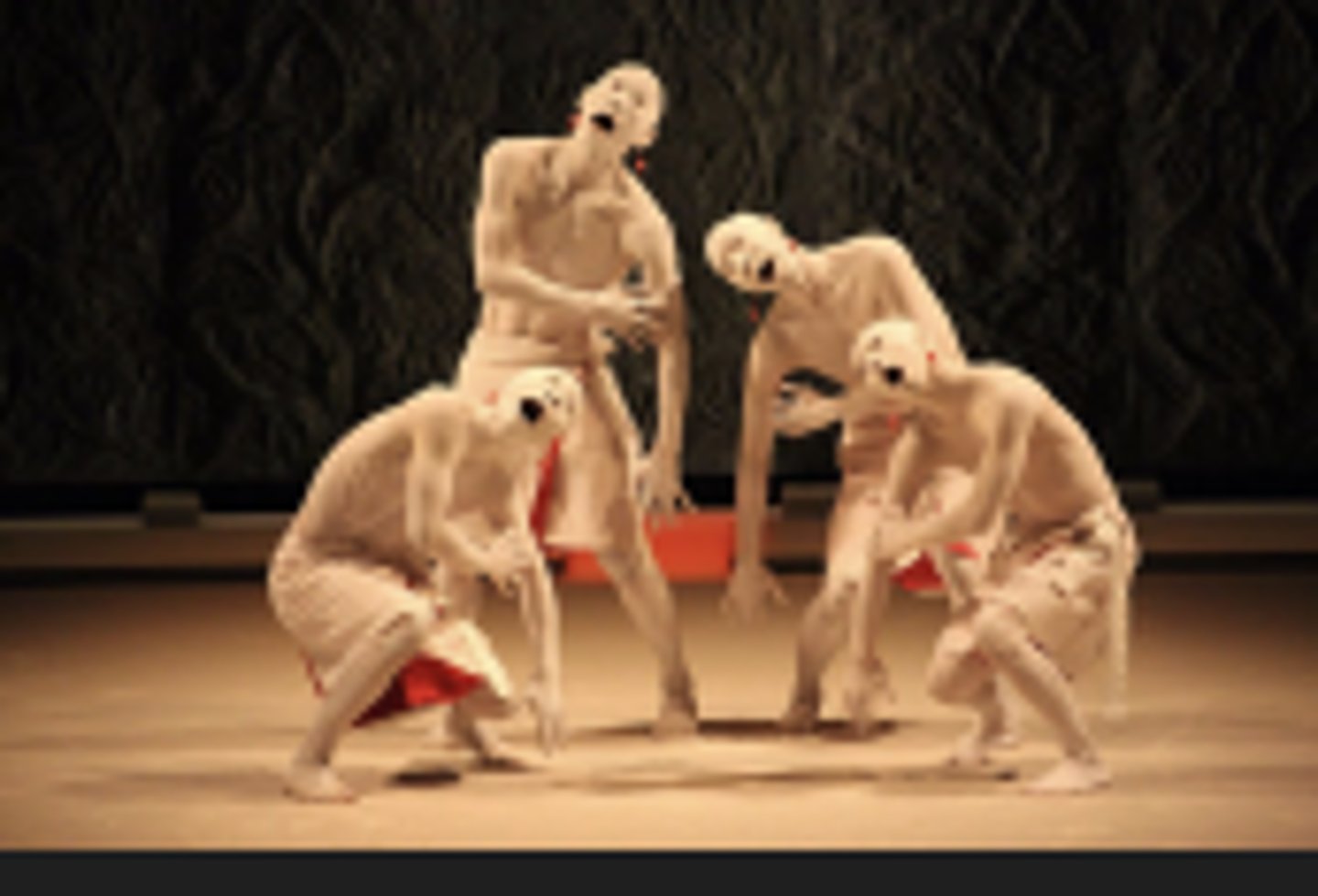
-Japanese trained dancers, founders of Butoh
-Butoh: dance form which resists definition (super cool dance with white body paint), plays with illusion of time
Hubert Ogunde
-1964
-Nigerian actor and playwright
-"Father of Nigerian Theatre," Ogunde Concert Party: first professional theatre company in Nigeria
-wrote Yoruba Ronu!: Ogunde's most famous play, calls for unity and Yoruba supremacy (Yoruba tribal part of Nigeria, multiple tribes in Nigeria)
Luis Valdez
-1965
-Mexican American playwright
-El Teatro Campesino: "The Farmer Workers' Theatre," founded during Cesar Chavez's Delano Grape Strike, short skits performed on trucks to dramatize the plight of farmer workers
Satoh Makoto
-1968
-Japanese director and playwright
-created Black Tent Theatre: performed in a black tent, rejection of trinity in modern theatre (universalistic doctrine of humanism, tragedy as its sole mode, theatre divided by a curtain), rejection of linear timeline, plays with space and iconographic characters
- part of little theatre movement
(the one where they rode out on motorcycles- playing with the idea of where the stage really was)
Allan Kaprow
-1968
-American performance artist
-"How to Make a Happening"- dissatisfaction with traditional boundaries between art and life, questions relationship between creator and consumer, attendees become part of the work
- New York: audience didn't know they were audience
THE HAPPENINGS!!!!!
The Performance Group
-1969
-founded by Ricard Schechner (yogurt freak)
-Dionysus in 69: birth canal, theatre of cruelty, six axioms of environmental theatre
Six axioms of environmental theatre
-Events takes place in transformed or found space
-All space is used for performance and audience
-Theatre is a set of related transactions
-Focus is flexible and variable, able to be effected by the environment
-All production elements speak their own language
-A text is not a starting point, goal, or necessary, text is secondary to performance
Griselda Gambaro
-1971
-Argentine playwright
-wrote Information for Foreigners: participatory theatre; mix of real, simulated, and hyperreal scenes; blurring of lines (actor/person and actor/audience), Milgram Experiment, response to the Dirty War in Argentina
- they went through different rooms in the house
Wole Soyinka
-1974
-Nigerian playwright
-Death and the King's Horseman: ritual and structure in life; mirroring of two cultures; threnody: ode, hymn, prayer, poem of mourning; the play mourns the death of Yoruban culture; Egungun: ritual dancers as vessels for ancestors' spirits
Terayama Shuji
-1975
-Japanese author and director
-founder of Tenjo Saijoki theatre
-Knock: avant garde (angura), similar to happenings
Tadashi Suzuki
-1976
-Japanese director
-Suzuki Company of Toga: creation of tension within body, connection with noh
- Suzuki stomps: not moving the rest of your body
Maria Irene Fornes
-1977
-Cuban American playwright and director
-Fefu and Her Friends: nontraditional structure, feminine vs. masculine traits, material feminism
Caryl Churchill
-1978
-British playwright
-Cloud Nine: blending of genre, no distinct comedy or tragedy, Brechtian play
Andrew Lloyd Webber
-1981
-British composer
-Cats: Movement of British musicals to Broadway
Hirata Oriza
-1994
-Japanese playwright and director
-Tokyo Notes: "Contemporary Colloquial Theatre," emphasizes colloquial Japanese language, realism that emphasizes Japanese language and style
Manjula Padmanabhan
-1997
-Indian cartoonist and author
-Harvest: globalization of consumption and multi-national corporations; deals with themes of media and ambivalence; first vs. third world
Tanya Saracho
-2016
-Mexican-American playwright
-wrote El Nogalar: adaptation of The Cherry Orchard by Chekhov, explores relationships amidst the drug wars in Mexico
Shingeki (3)
-Modern Japanese theatre based on Western models
-includes realism, expressionism, and Brechtian theatre
-goals were to elevate modern drama and develop realism for the Japanese people
Selective Realism (5)
-use of abstract design elements
-use of symbolic elements
-manipulates time and space
-memory (unreliable memory and narrators)
-questioning of modernity
Environmental Theatre
-A new way of dealing with theatre space and audience relationships
-Revolt against orthodoxy: revolt against segregation of audience, fixed and regular seating of audiences, scenery only in one part of the theatre
Postmodernism (5)
-"genre of art and literature and especially architecture in reaction against principles and practices of established modernism"
-POMO is everything modernism isn't
-autonomy/value of the local
-denial of master narrative
-shifting authoritative landscape
Qualities of modernism (8)
-rational
-science
-utopian
-elitist
-centered
-objective
-linear
-constructed
Qualities of postmoderism (8)
-irrational
-suspicion
-dystopian
-populist
-dispersed
-relative
-nonlinear
-deconstructed
Angura/Shogekijo (3)
-"underground" theatre
-avant garde theatre movement
-reaction to shingeki
- belief in revoltuion of theatre
- change consciouness of audience
- total and far reaching
- transformation of space
- hierarchal relations among theatre producers
- privildge of actor's body
- connection with indigenous theatre tradition
- started with anti vietnam and lots of student protests
- interest in history and national identity
Theatre of Cruelty (4)
-experience = truth
-main goal is to affect/disturb the audience, genuine reactions/emotions
-audience is not passive
-break with traditional Western theatre
4 uses of cruelty
- a metaphor the essence of the human expericne: basically everything has no point
- force spectator into action (aka cruelty as theatre)
- as disciplne
- as philosophically
Feminism (3)
-a range of movements to establish and achieve equal rights for women
-3 waves
-3 forms of feminist theatre: Liberal 1895 (wants to work within existing power structures), Radical 1960s (destroy the structure that already exists), and Materialist 1990s (looks at history and economics as the driving factor)
what started each wave of feminism?
1st: Seneca Falls Convention and women;s suffrage movement
2nd: men coming back from war and wanting to work
3rd: fighitng for continuation of equal rights including LGBTQ rights, lots of men on board, resisted 2nd wave all women want same thing
Golden Age Musical (5)
-1943-about 1967
-all elements further story
-songs expected to entertain and forward plot, diegetic (exists within the world, ex. Sweet Polly Plunkett) vs. nondiegetic (exists outside of the world/furthers plot, ex. My Friends)
-directors and choreographers take larger roles
-musicals start exploring social themes more than entertainment
Blue Blouses
-communists use theatre for propaganda
-theatre troupes sent to factories, military, collective farms
Federal Theatre Project (6)
-creation of "national theatre" in America
-five regional centers
-developed regional playwrights
-creation of play and research bureau
-publishes Federal Theatre magazine
-all forms of theatre produced
NEA Four
-Holly Hughes, Karen Finley, John Fleck, Tim Miller <3
-National Endowment for the Arts
-protested pulling funding based on content of their work, specifically LGBTQ+ themes (lowkey cancelled for being gay)
Futurism
- loathing of anything old
- elimination of high culture AKA muesums and libraires
- celebrating orginality, change, and innovationn
- words in freedom (parole in liberty- latin)
Likes: technology and motorization
- art critques are useless
- embraces fascism
Examples of futurist plays (2)
-There is No Dog (Jortner's favorite) by Fransico Canguillo
Expressionism (3)
-presents the world solely from a subjective perspective
-express meaning or emotional experience instead of physical reality
-world distorted for emotional effect
World War I
1914-1918
World War II
1939-1945
Korean War
1950-1953
Cold War
1947-1991
Russian Revolution
1917-1923
Rise and Fall of the Soviet Union
formed in 1917
dissolved in 1991
Bombings of Hiroshima and Nagasaki
August 1945
Vietnam War
1955-1975
Qualities of expressionist theatre (4)
-most employ episodic structure
-action seen through perspective of a hero
-struggle against mainstream values/authority
-society often viewed as mechanical
Arthur Arents
Main author for living newspapers
Living Newspapers (4)
-explores major social, economic, and political problems
-centered on American issues
-dialogue from speeches/newspaper stories
-melodramatic sequences
Only form of theatre approved by the Soviet Union in 1934
Social Realism
Meyerhold
-Russian theatre director
-formalist, critic of communism
-"disappears" in 1940
Significance of modernist thinkers
They broke down the philosophy of preordination, rational scientific reasoning for human behavior
3 Forms of German Expressionist Theatre
-Geist: ghost, abstract form that is completely spiritual
-Schrei: scream, highest point of raw human emotion
-Ich: I or Ego, a character's struggle against the world, character is either most or least grotesque
Shogeki playwrights (3)
-Satoh Makoto
-Terayama Shuji
-Kara Juro
Post colonialism
literature that deals with the colonial experience from the POV of the oppressed
performance art
a contested concept "what is art"
performance sunsual conceit
the essential elements are the performer and the audeince but the audience can also be the performer
EX: concerts, religion, every day life, coming of age ceremonies
the antihesis of theatricla orthodoxy
(this includes the 1960s happenings)
what is performance art's essential elements
art which incorrpates a live element
art which cannot be comodified
art which is witness by the audience
Carol Schneenann
did the Interior Scroll Play
Marina Abramovic
Play Rhythm 0, where the audeicne could do anything ot her
now go look at teching history topics
 Note
Note  Flashcards (25)