Lecture 1a: Introduction to display ads
 Studied by 0 people
 Call Kai
 Learn
Learn Practice Test
 Spaced Repetition
 Match
Match Flashcards
 Knowt Play
1/20

There's no tags or description
Looks like no tags are added yet.
Name | Mastery | Learn | Test | Matching | Spaced | Call with Kai |
|---|
No analytics yet
Send a link to your students to track their progress
21 Terms
How does digital support the marketing journey
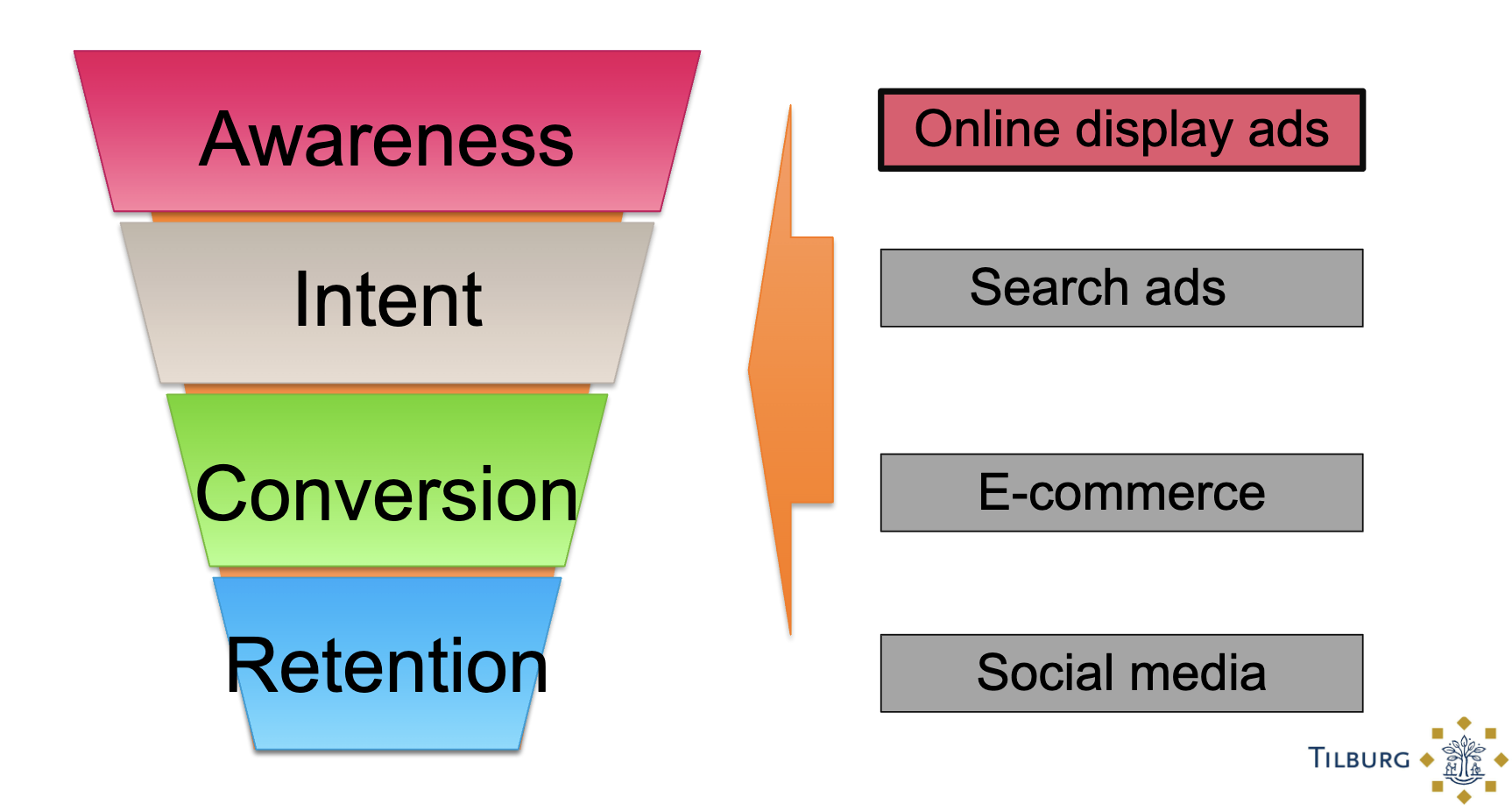
Learning goals
▪ Learn the relative size of the online advertising industry and
It’s different channels
▪ Understand the online display ad industry: How are online
Ads bought and sold?
▪ Examine the possible dimensions of online targeting
▪ The immediacy of buying and targeting ads makes online advertising immediate and unique
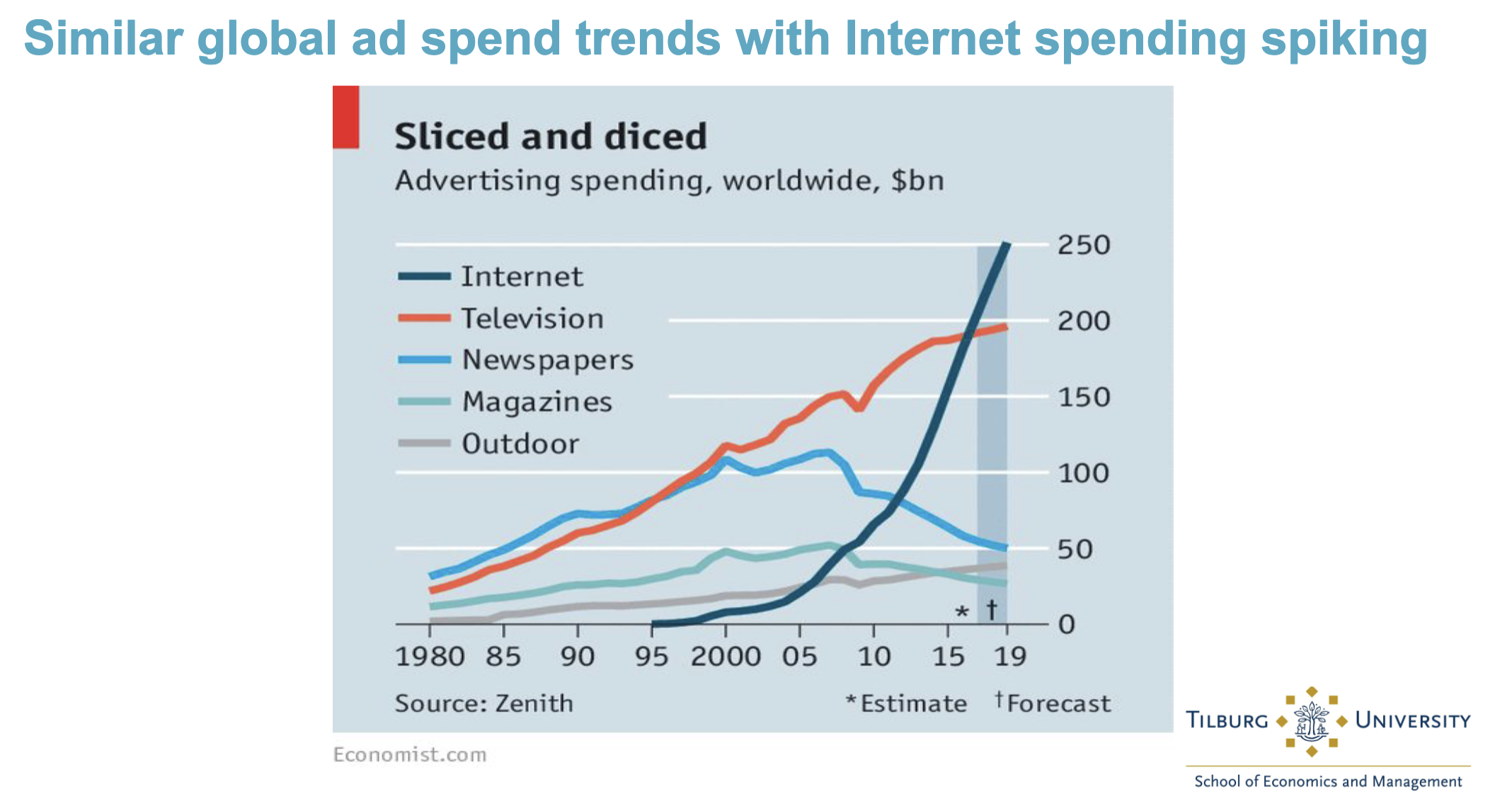
US Advertising Expenditures by Media
▪Digital is largest ad spending channel & overtook TV in 2016
▪Within digital, online display ads (54.6%) is the largest channel, followed by search (41.6%)
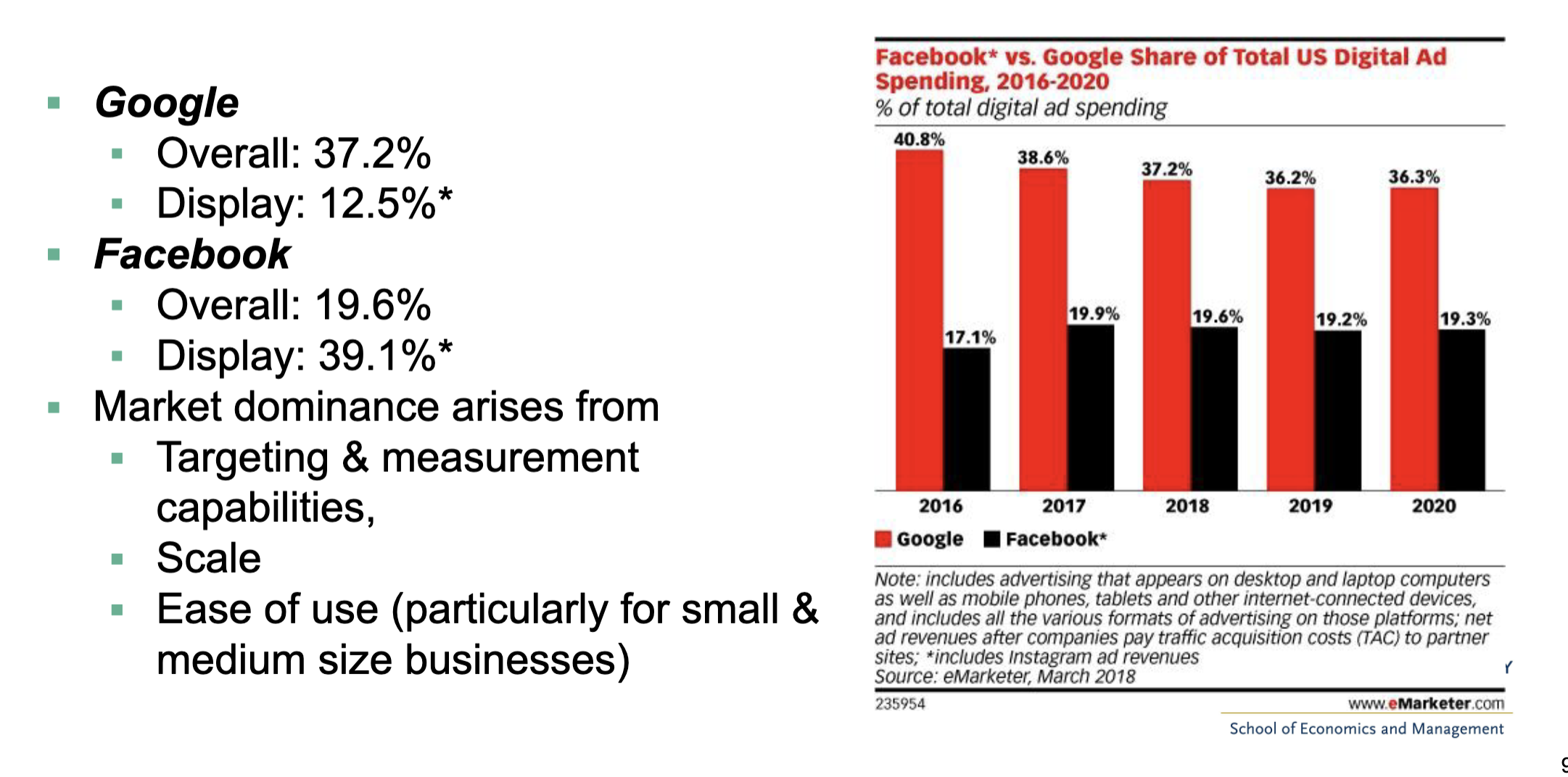
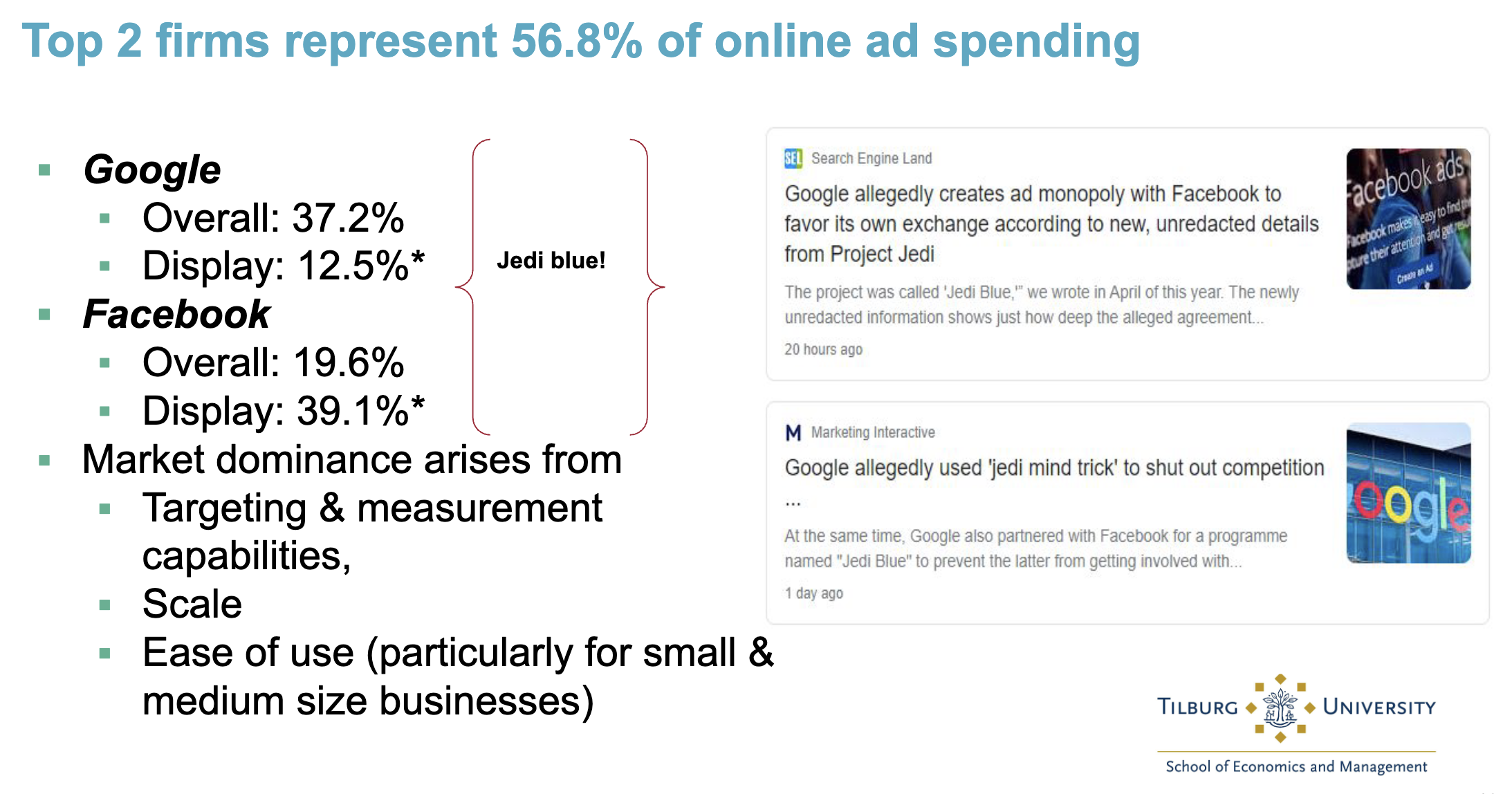
▪Google & Facebook represent about half of all US spending
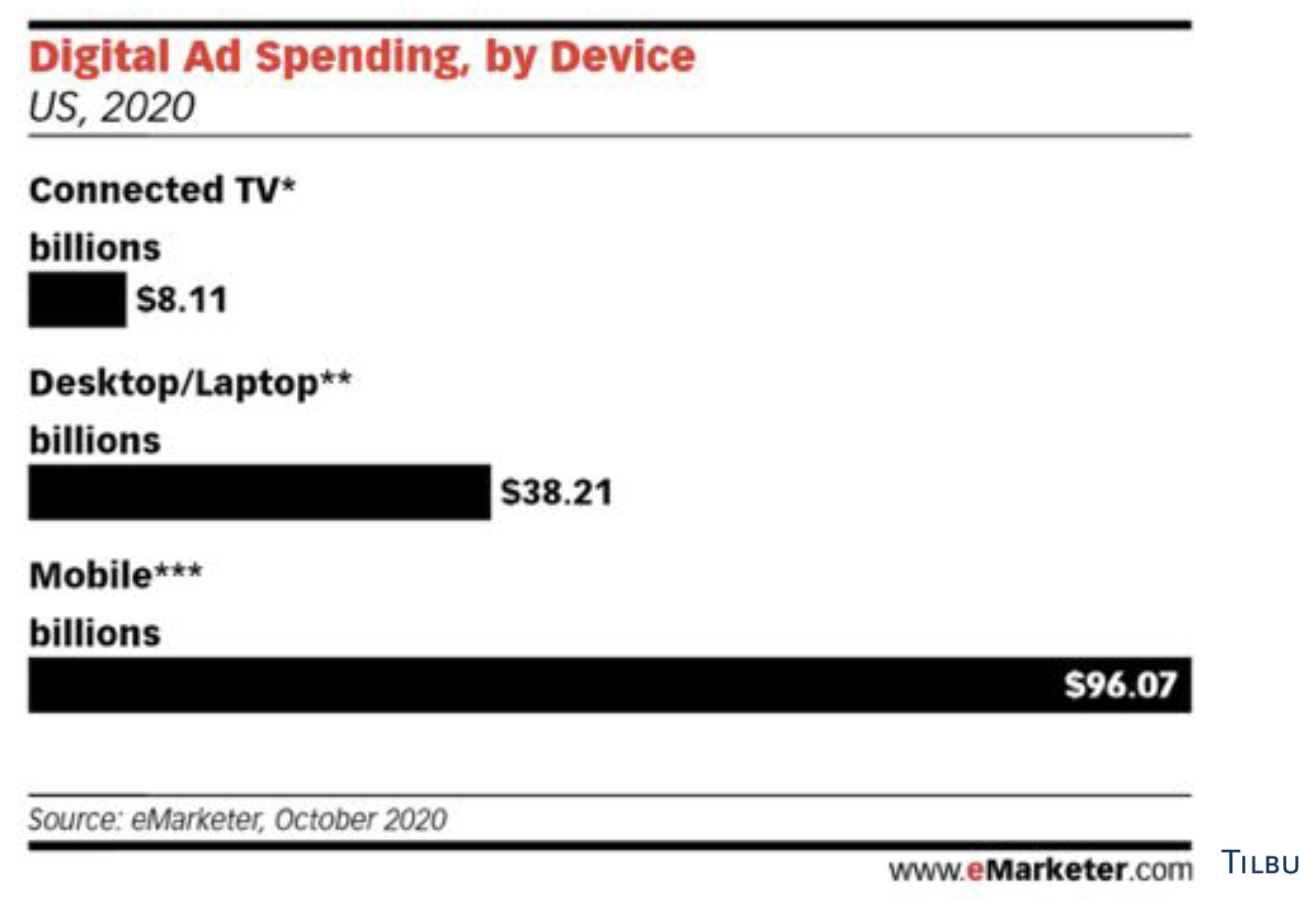
Digital ad spending by device
Mobile dominates digital, CTV growing fast
Top 2 firms represent 56.8% of online ad spending
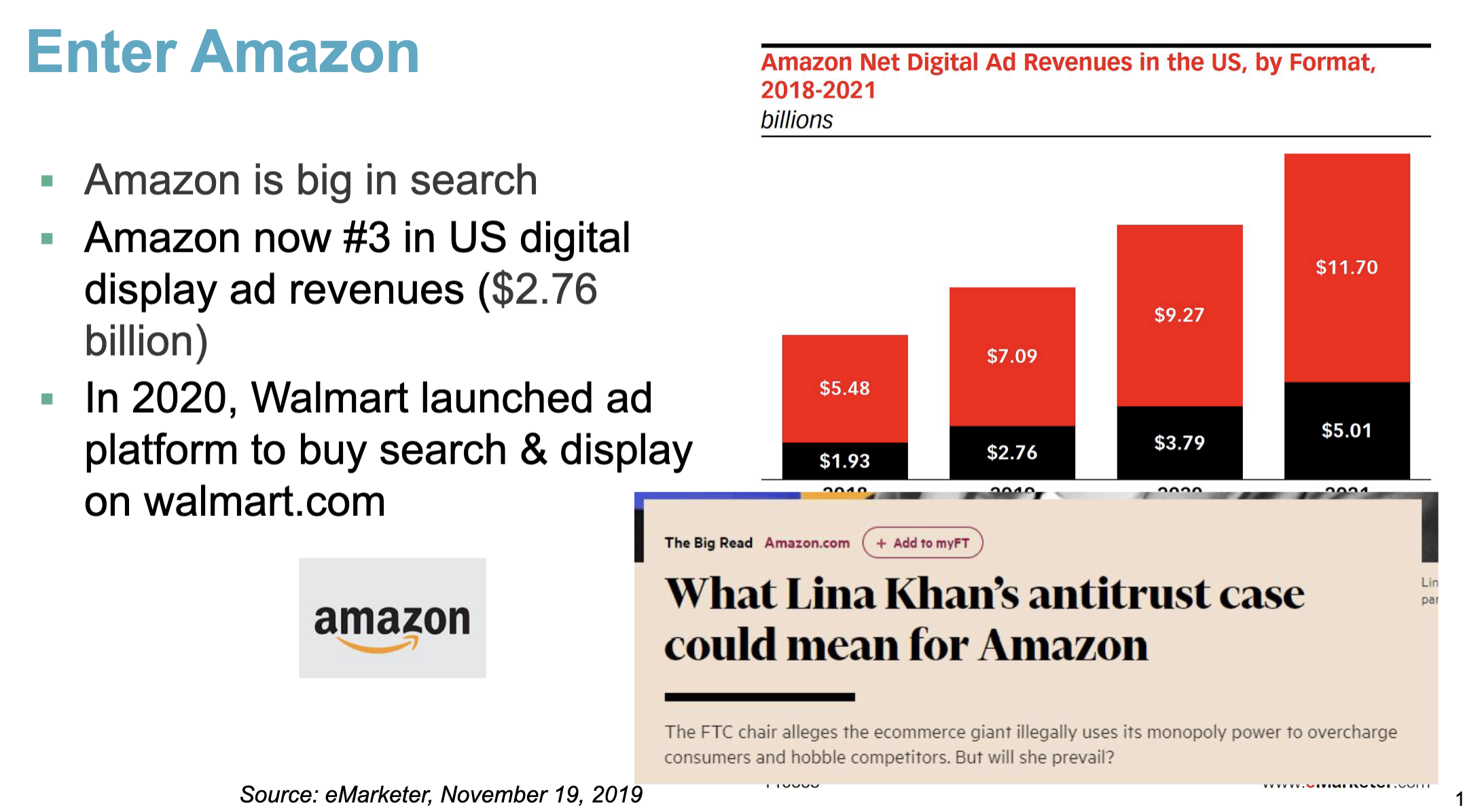
Who is the third?
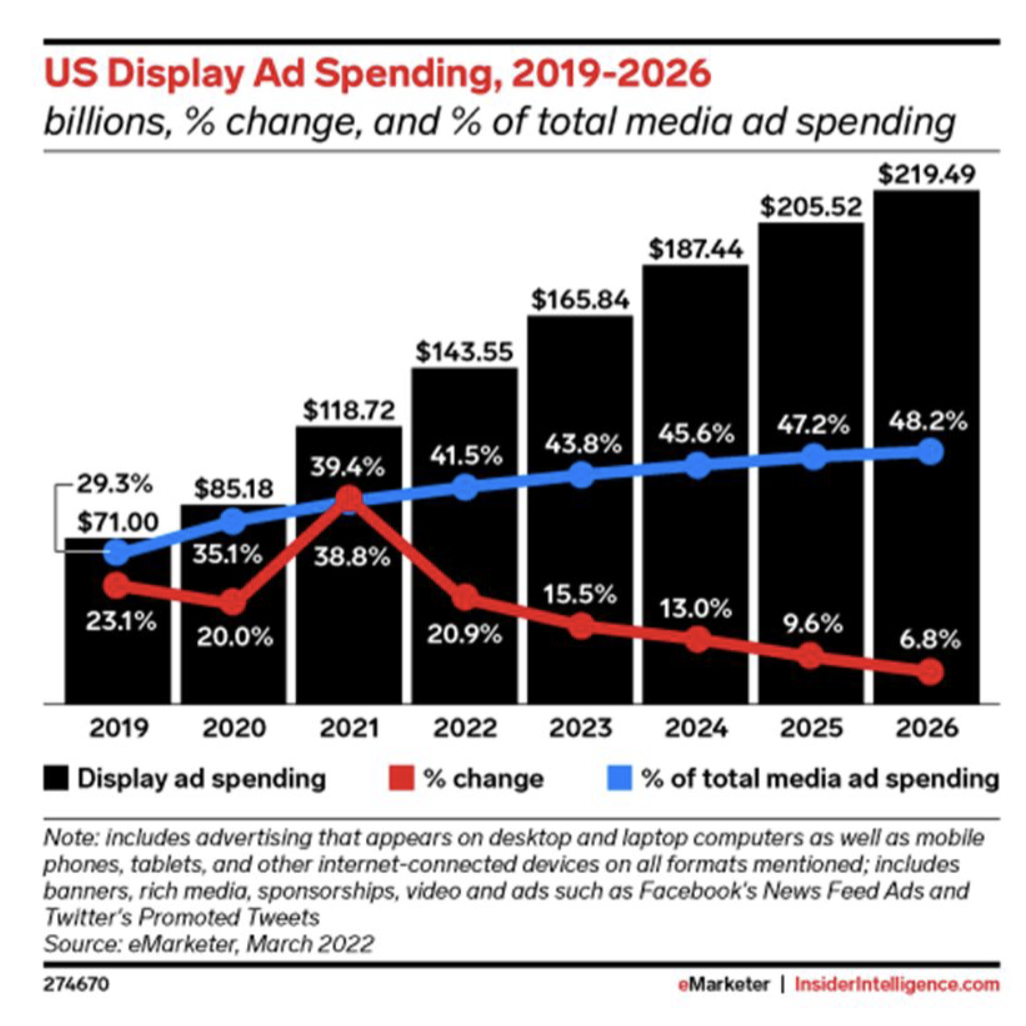
Despite COVID hit, digital ad spend continues to grow rapidly
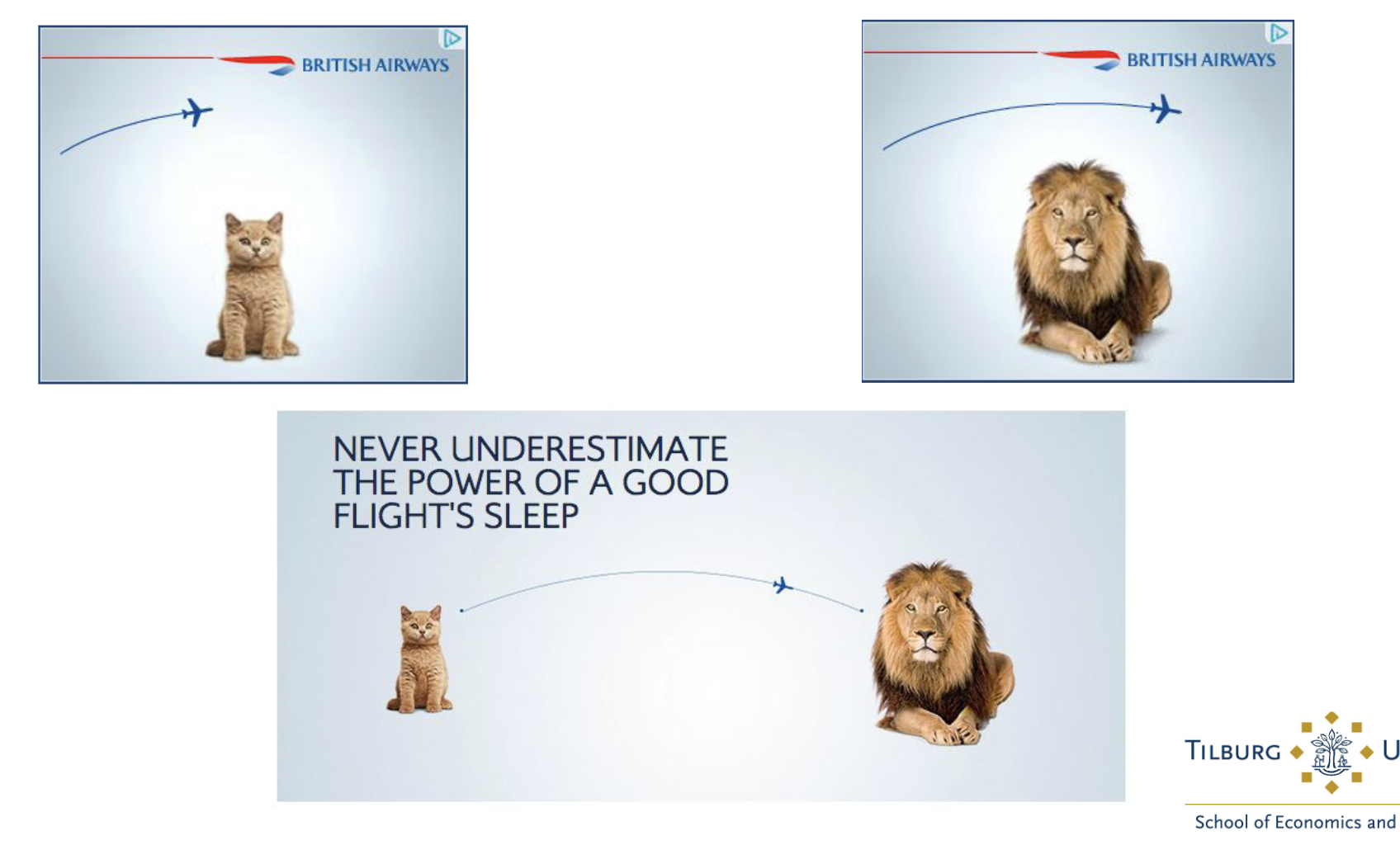
Some examples of online display ads
Beyond banner ads
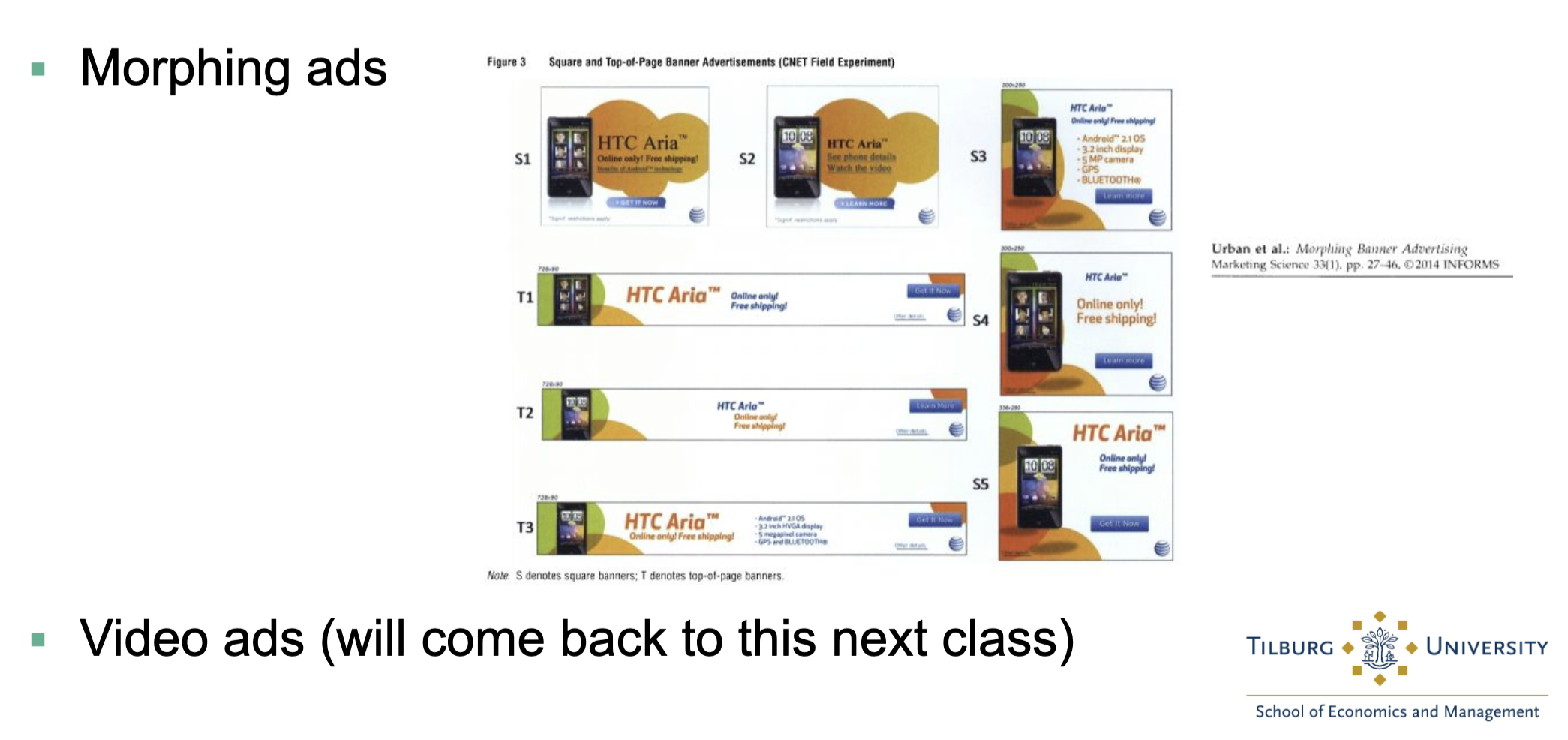
What is an ad impression?
An impression is a single ad on a single page loaded by a single user at one time
Basic idea of pay models
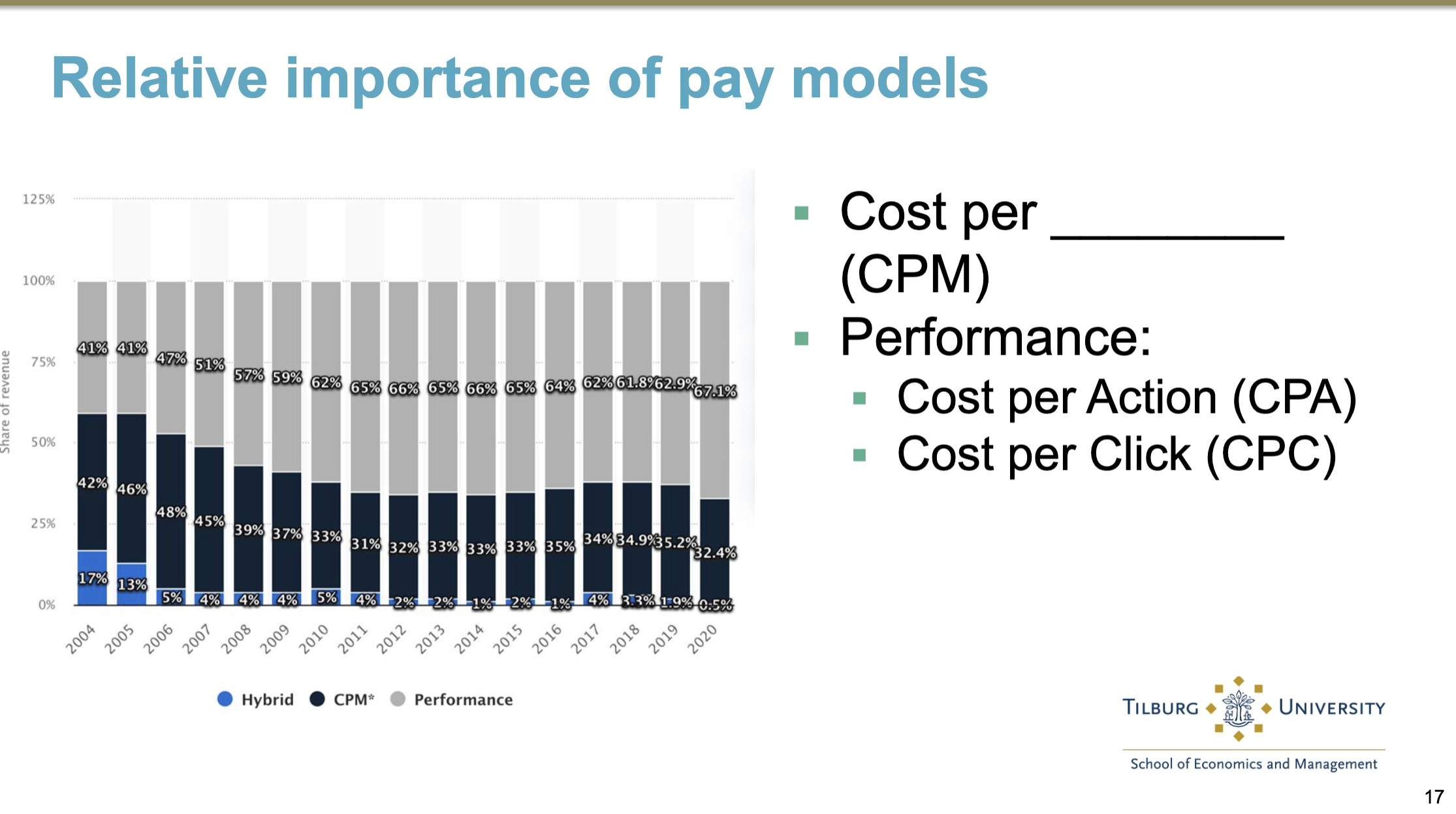
The slide shows how different online advertising payment models have changed in importance over time (from 2004 to 2020).
It compares three types of models:
1. CPM – Cost per ______ (usually “Cost per Mille”)
CPM stands for Cost per 1,000 impressions
(“Mille” = thousand in Latin).Advertisers pay based on how many times their ad is shown, not whether people click it.
2. Performance-based models
These include:
CPA (Cost per Action) – paying only when the user completes a specific action (e.g., signup, purchase).
CPC (Cost per Click) – paying when someone clicks on the ad.
3. Hybrid models
A mix of CPM and performance-based components.
What the chart shows
The stacked bar chart on the left displays the share of revenue coming from each model type over time.
Interpreting it:
Light gray: Performance-based (grows significantly over time)
Dark gray/black: CPM (generally declines over time)
Blue: Hybrid (becomes very small after 2010)
Main trend
In 2004–2006, CPM was still common.
Over time, performance-based models dominate—advertisers increasingly prefer paying for clicks or actions instead of impressions.
Overall message
The slide communicates that online advertising has shifted strongly toward performance-based pricing, where advertisers pay for measurable user actions (CPA, CPC) rather than just views (CPM).
Some facts about display ads
▪ Typical user is served 1,707 banner ads
per month (ComScore)
▪ Half cost between $0.10 and $0.80 CPM
(Turn)
▪ Click-through rates are .1% (DoubleClick)
▪ Up to 50% of clicks on mobile banner ads
are accidental (GoldSpot Media)
▪ Social media has changed these numbers
→

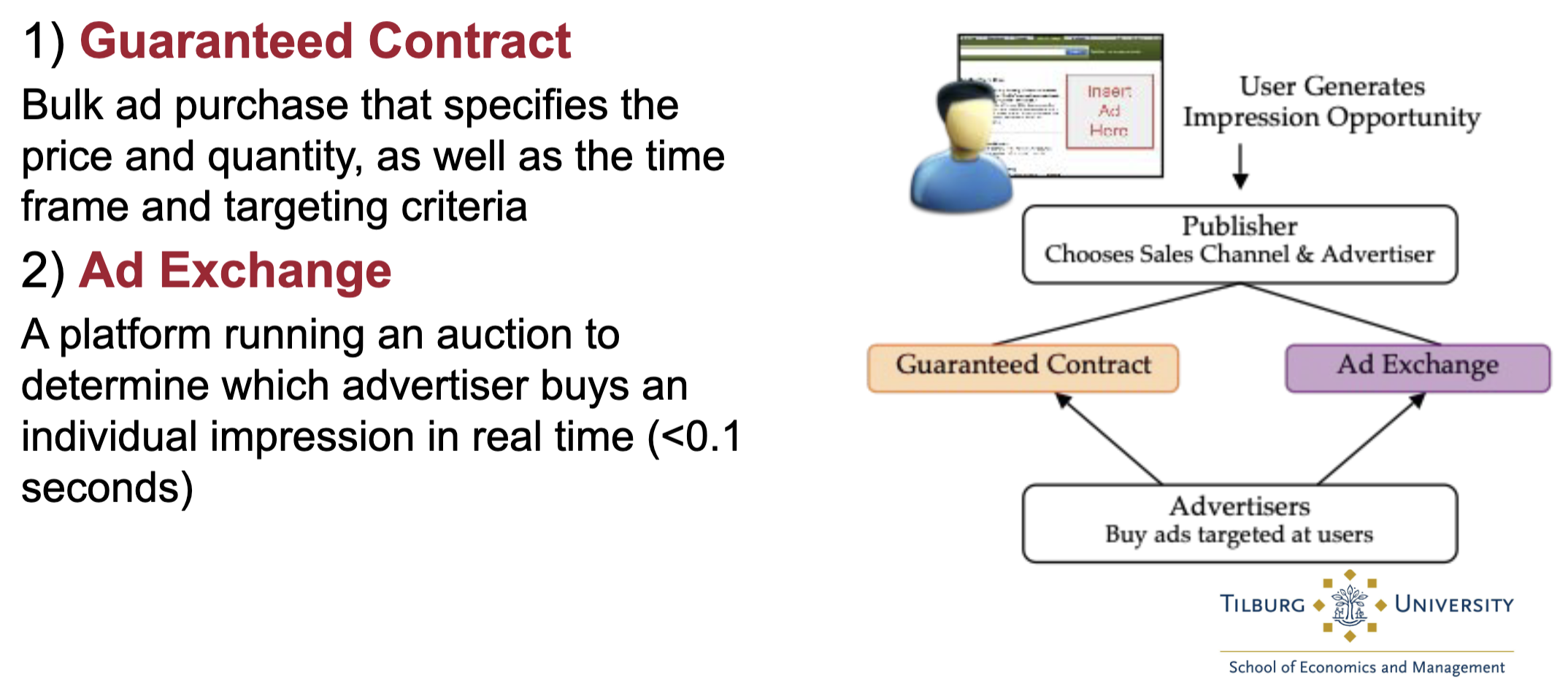
Banner ads are sold in one of two ways

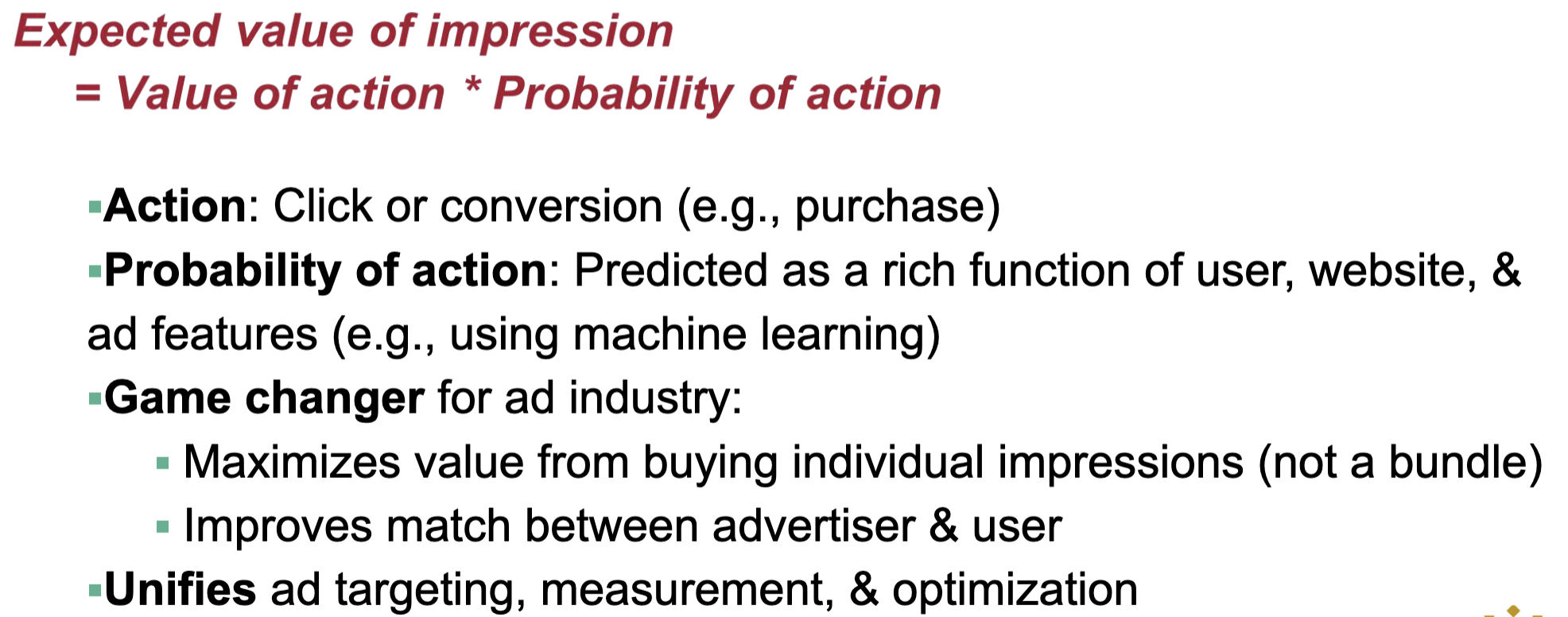
Digital advertising’s “holy grail”
Targeting Online
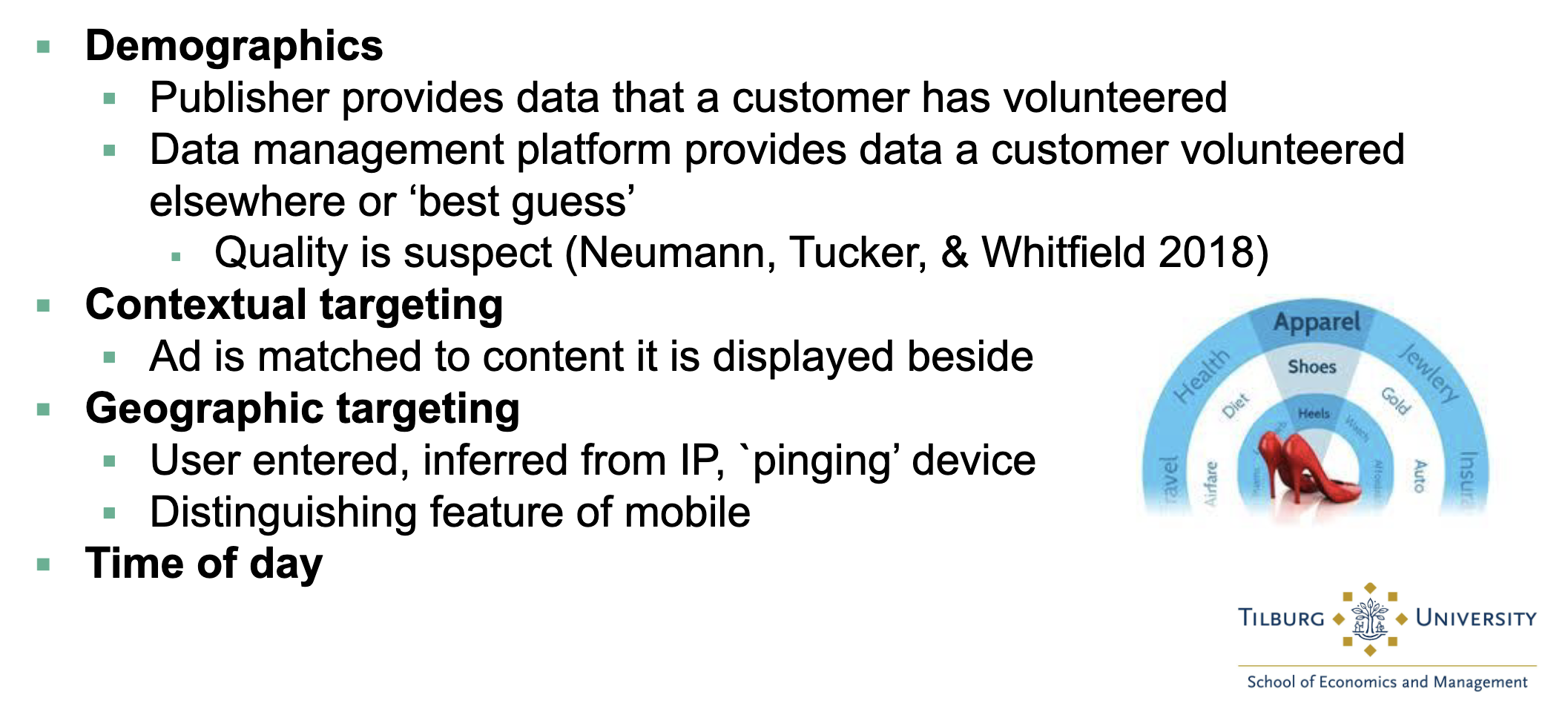
Targeting options (1/3)
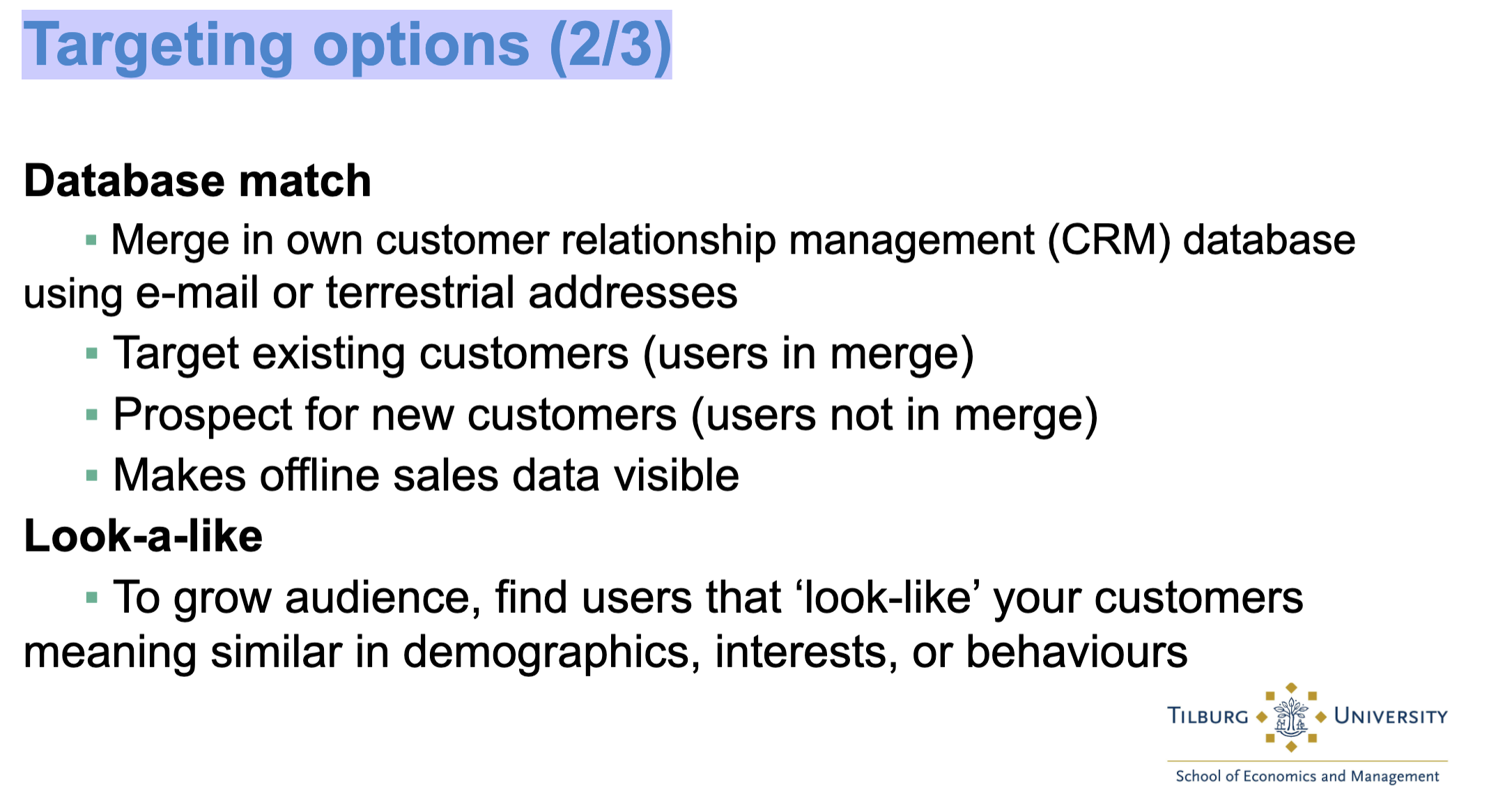
Targeting options (2/3)
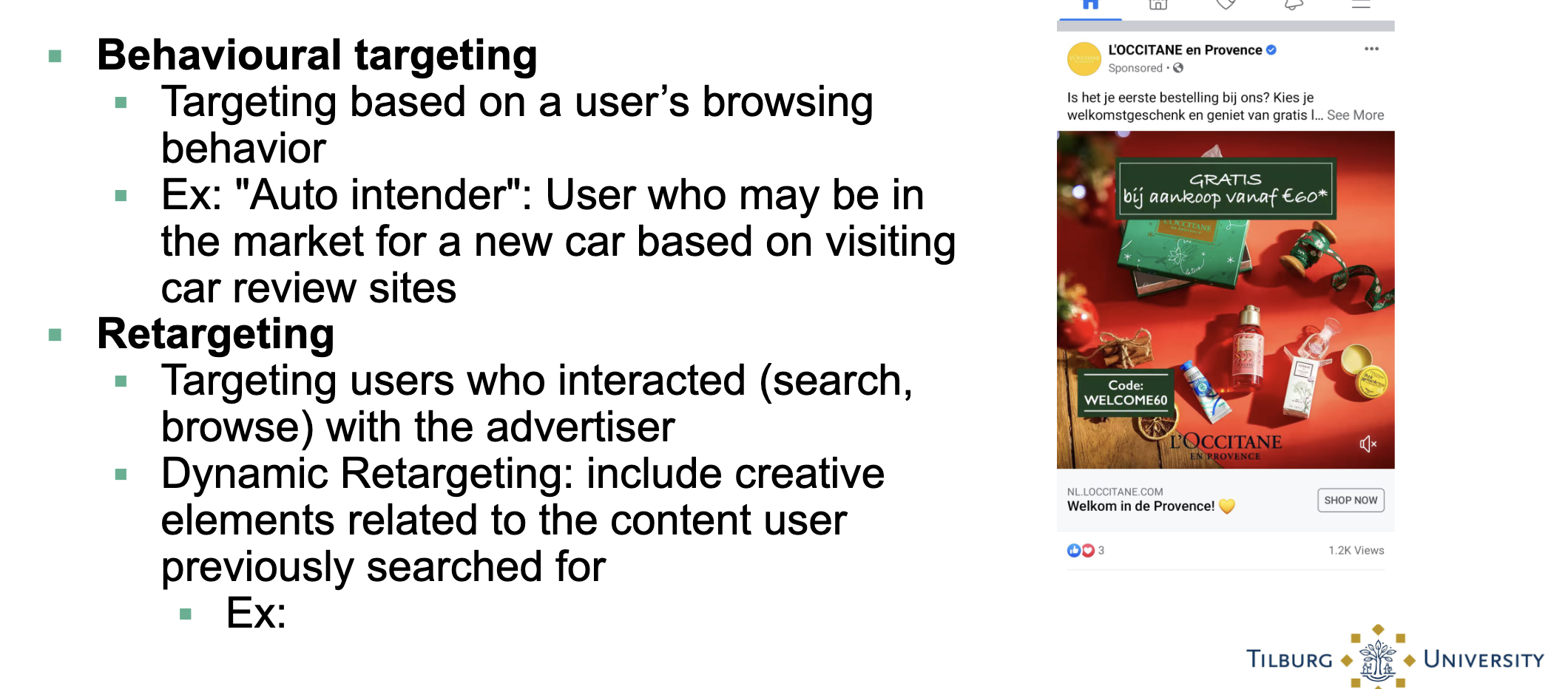
Targeting options (3/3)
Example: LinkedIn targeting
AI powered ad targeting
Takeaways
 Note
Note  Flashcards (33)