Lecture 43: Endocardial, Valvular, Epicardial/Pericardial Diseases
 Call Kai
 Learn
Learn Practice Test
 Spaced Repetition
 Match
Match Flashcards
 Knowt Play
1/41

There's no tags or description
Looks like no tags are added yet.
Name | Mastery | Learn | Test | Matching | Spaced | Call with Kai | Chat |
|---|
No analytics yet
Send a link to your students to track their progress
42 Terms
what is the function of the heart valves?
to separate different chambers so during contraction there is time for ventricular filling
hematocysts and lymphocysts occur most commonly in
ruminants
hemaotcysts and lymphocysts
benign blood or lymph filled cysts
can rupture and regress on their own
not associated with functional abnormalities
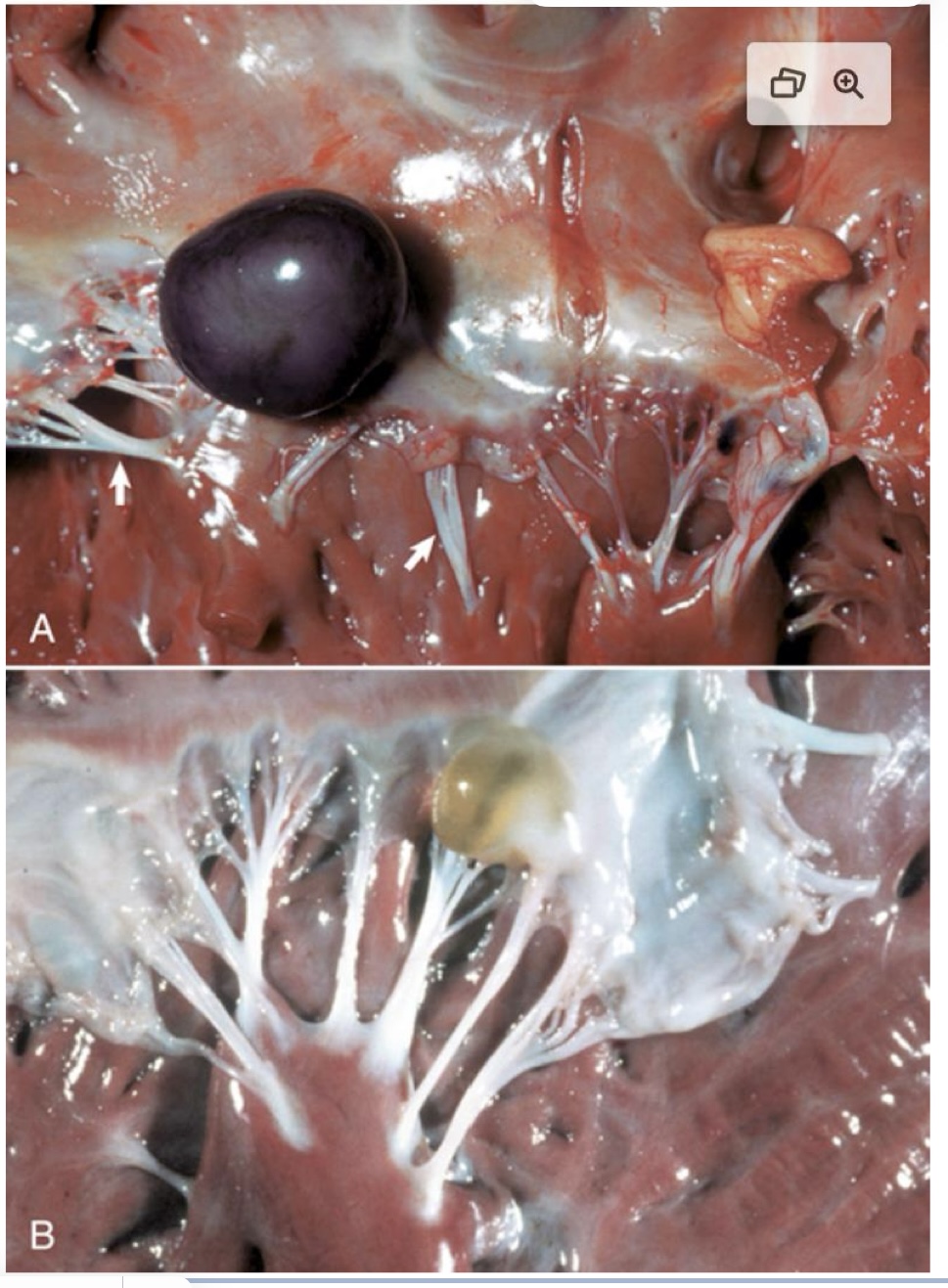
what are these pictures showing?
hematocysts and lymphocysts
endocardial mineralization
variably sized coalescing, gritty white plaques associated with the endocardium of valve leaflets
what are causes of endocardial mineralization?
vitamin D (rodenticides, plants)
granulomatous disease (Johne’s, fungal disease)
uremia
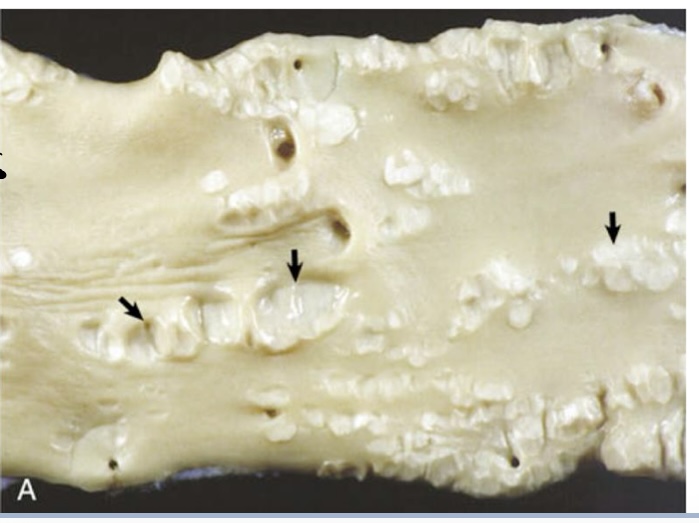
what are the arrows showing?
endocardial mineralization
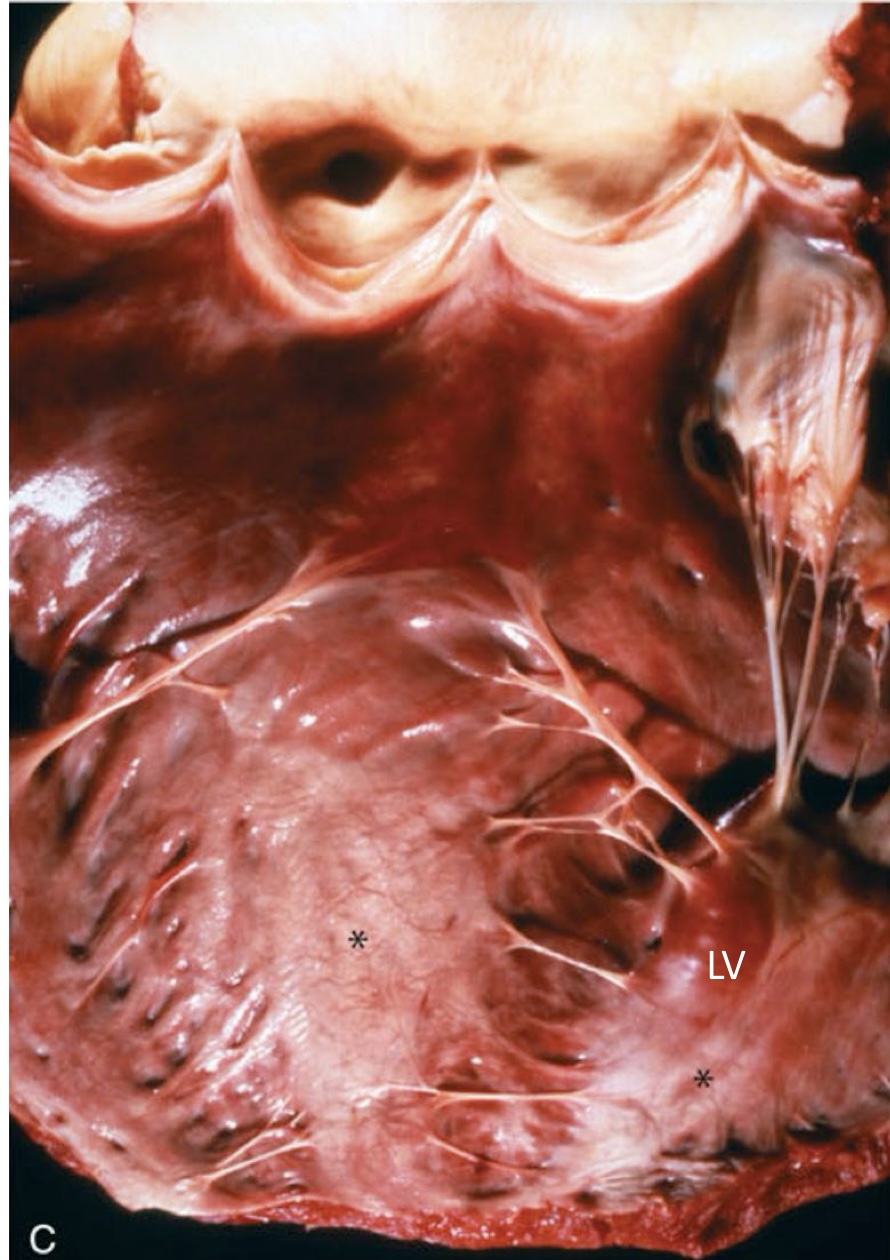
what is the asterisk showing?
endocardial mineralization
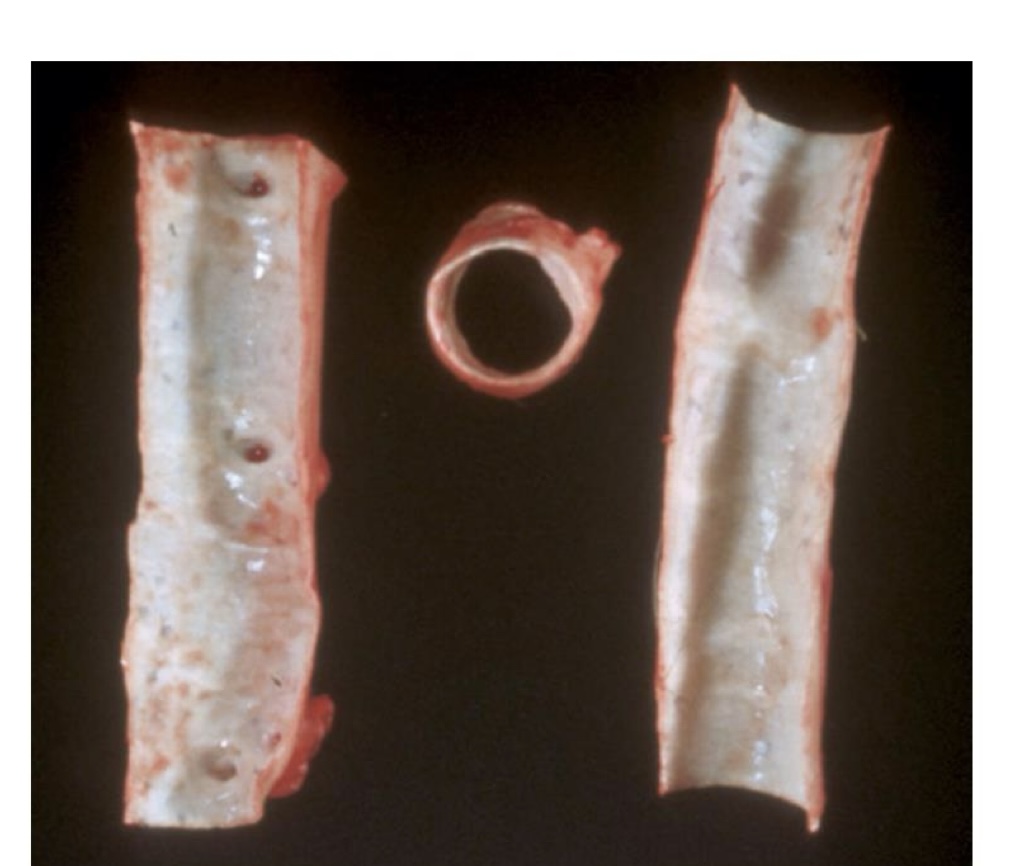
what is this?
endocardial mineralization → calcification in the tunica intima and media
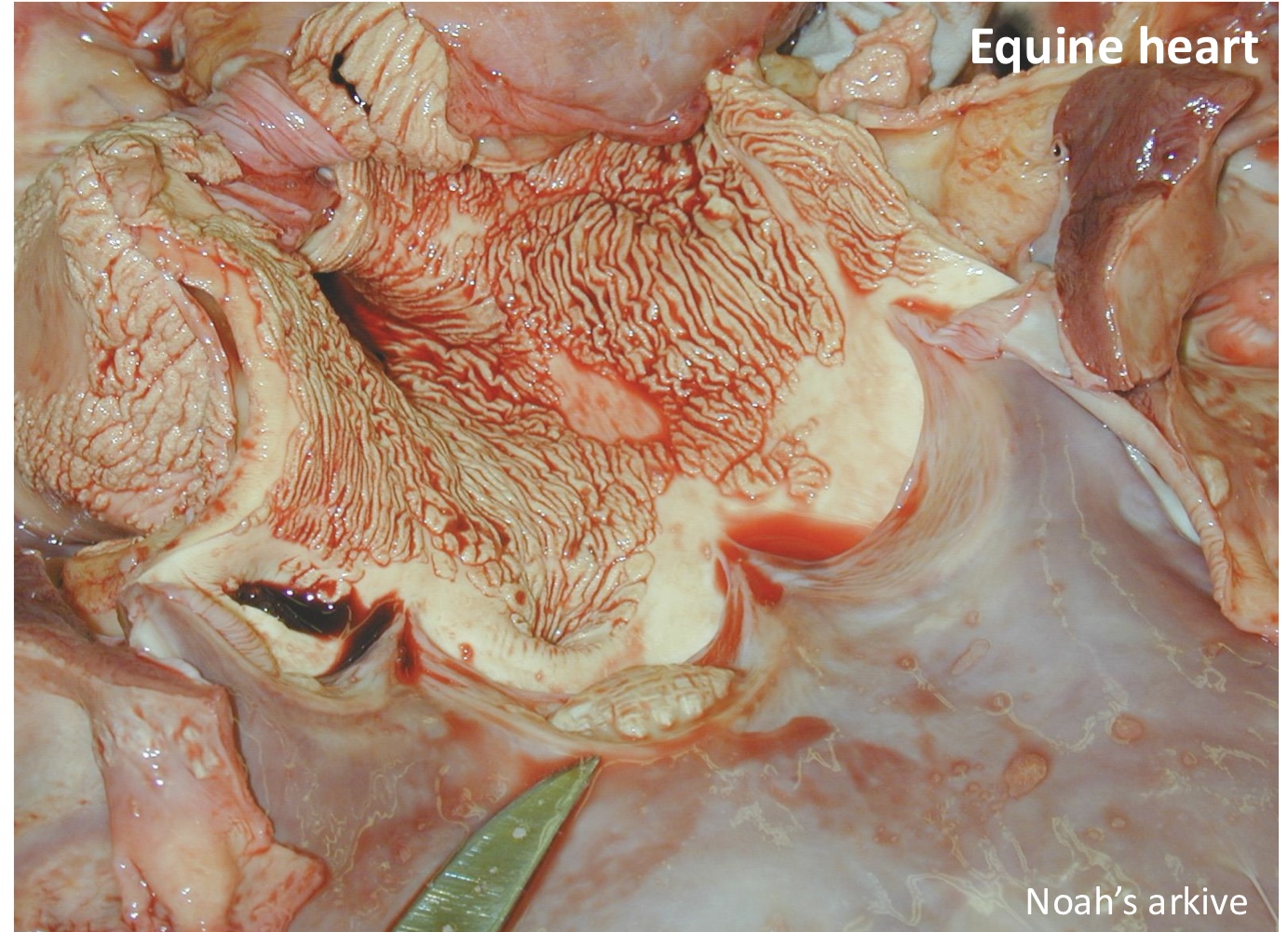
what is this a picture of?
endocardial mineralization → vitamin D toxicosis, streaking lesions due to blood flow
what causes ulcerative endocarditis?
uremia
ulcerative endocarditis
caused by uremia
typically in dogs
left atrium > right atrium
how do lesions of ulcerative endocarditis occur?
injury to the endothelium → healing by fibrosis ± mineralization and chronically dilated atria
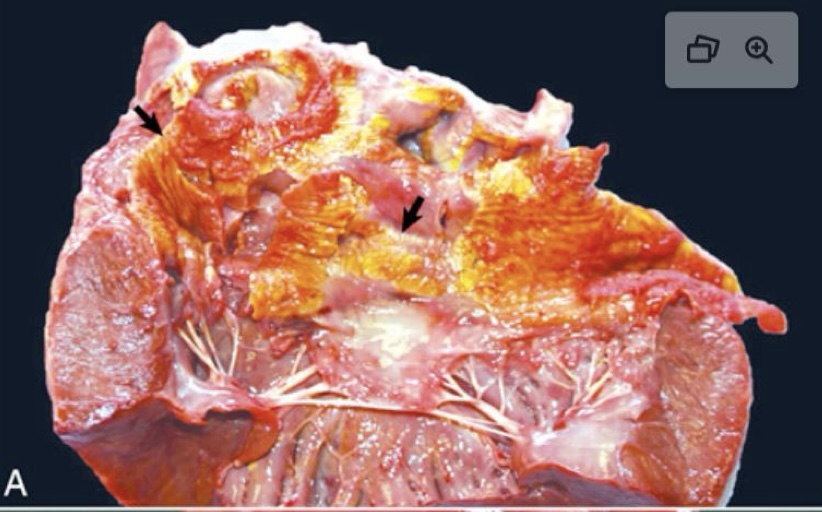
what is this showing?
ulcerative endocarditis → whitish-yellow areas of endocardial mineralization forming plaques that extend to the leaflets
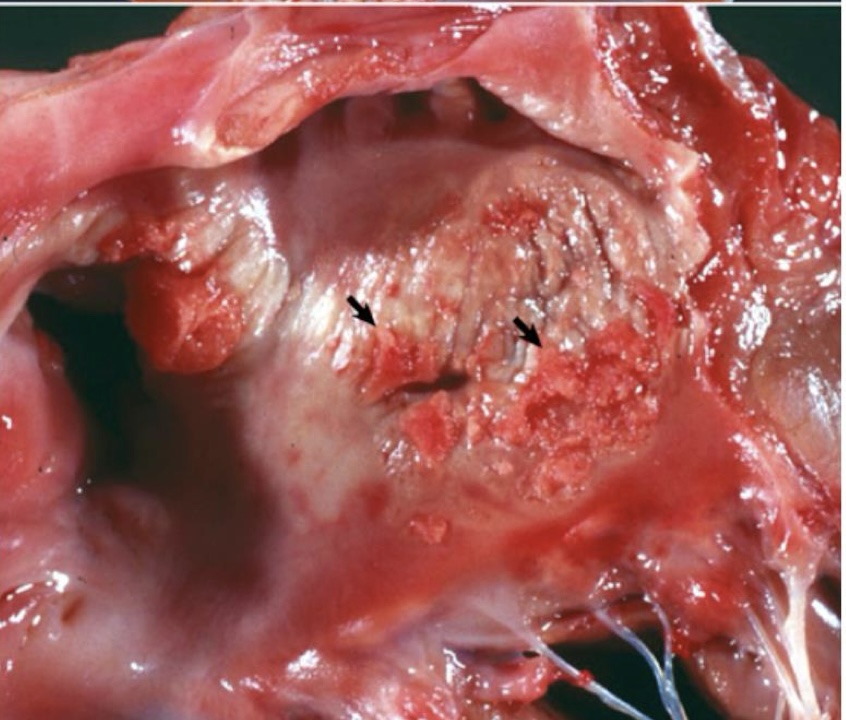
what is this showing?
ulcerative endocarditis → white-red, thick, wrinkled area of endocarditis, mineralization, and fibrous tissue caused by uremia
vegetative valvular endocarditis is a result of
chronic bacterial infections
vegetative valvular endocarditis typically occurs in the
mitral valve
vegetative valvular endocarditis
large, adhered, tan to mottled red, irregular and rough, friable vegetations (nodules) associated with the heart valves
pieces will break off forming emboli and shower other tissues
if vegetative valvular endocarditis forms emboli on the left side, then it will shower the
kidneys
if vegetative valvular endocarditis forms emboli on the right side, then it will shower the
lungs
what is VVE a result of in horses?
jugular vein thromboses from catherization
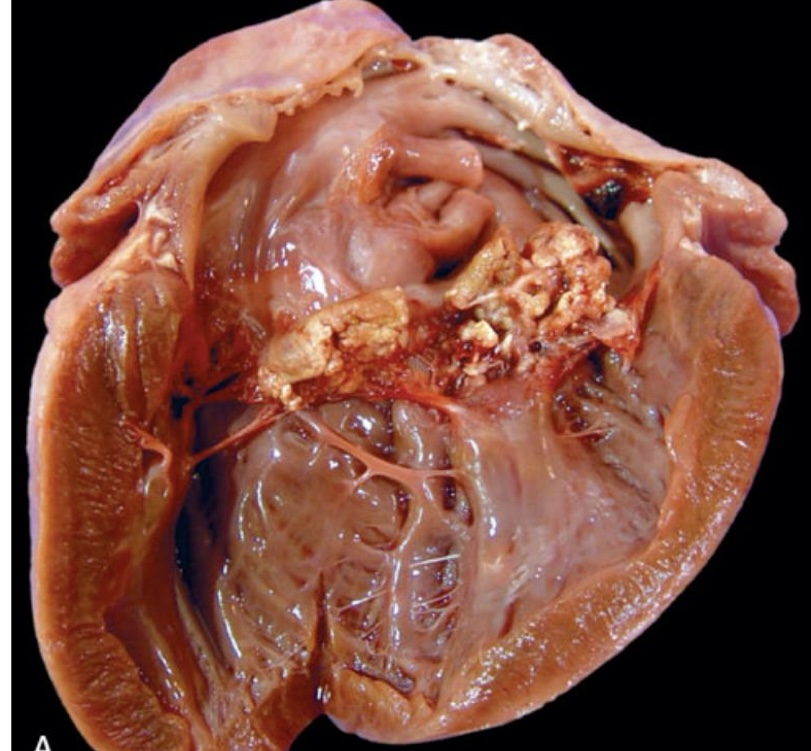
what is this?
vegetative valvular endocarditis
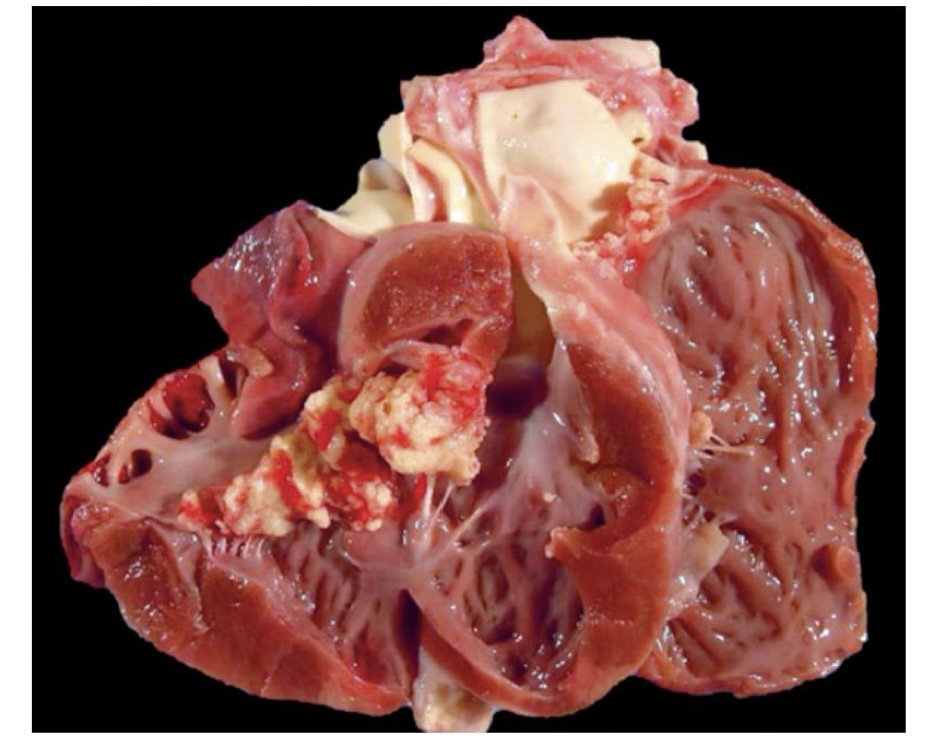
what is this?
vegetative valvular endocarditis → friable yellow material adhering to left AV valve
valvular endocardiosis
degenerative condition
common in middle aged to older dogs
males
mitral valve
smooth raised off white to coalescing nodular thickenings associated with the AV valve leaflets often associated with contraction of the valve leaflet
leaky valves from valvular endocardiosis can result in
DCM
what breed is the poster child for valvular endocardiosis?
cavalier king charles spaniel
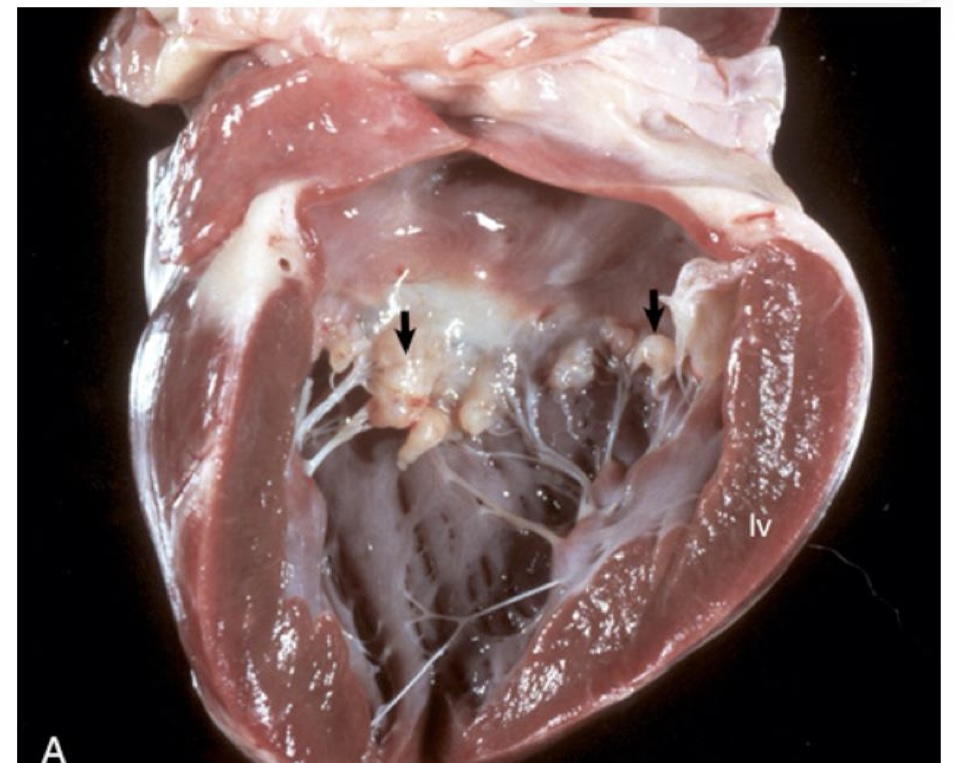
what is this showing?
valvular endocardiosis → cusps of mitral valve are thickened by white, smooth nodules
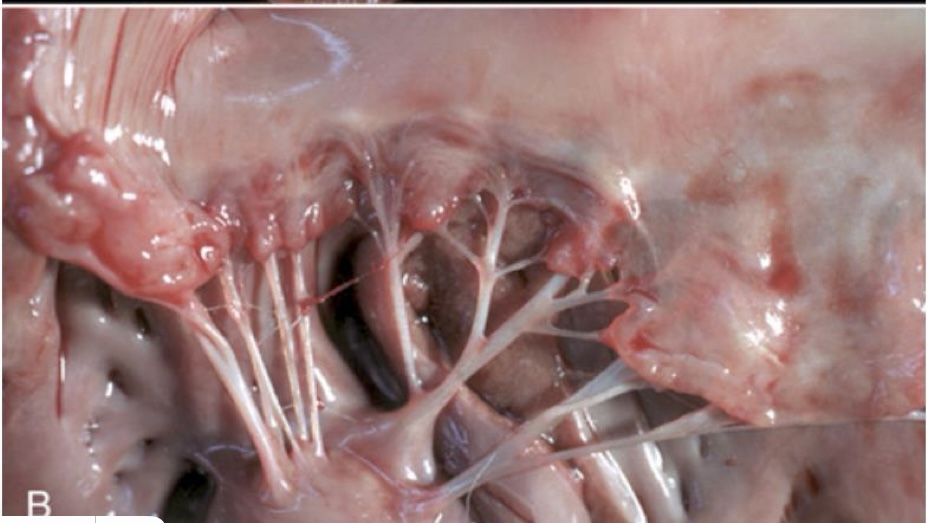
what is this showing?
valvular endocardiosis →smooth and shiny surface of the valve and nodules
fibrinous to fibrinosuppurative pericarditis is a result of
bacterial septicemia
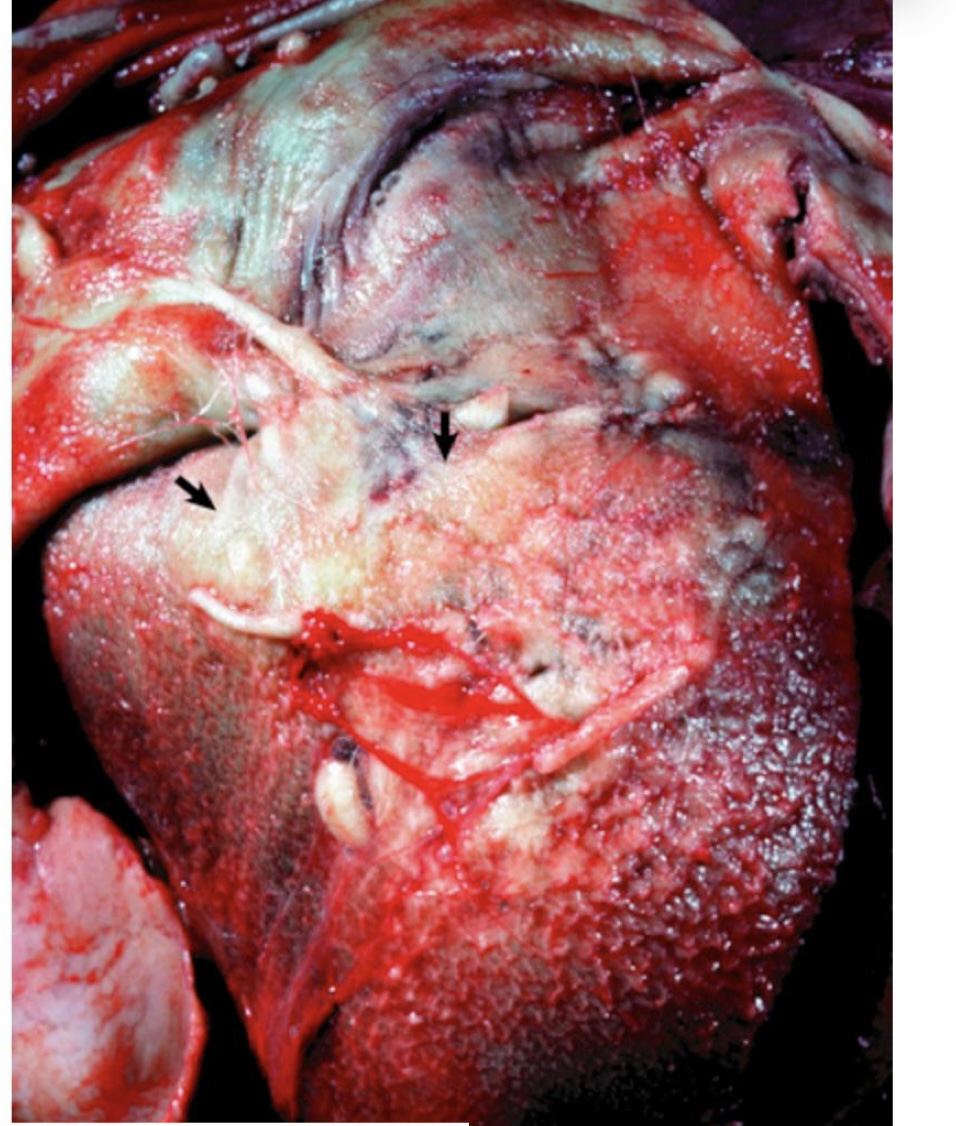
what is this picture showing?
fibrinous pericarditis → epicardium is covered by a thick, yellow layer of fibrin and ventrally by granulation tissue
clostridium chauveoi (black leg) can cause
fibrinous pericarditis
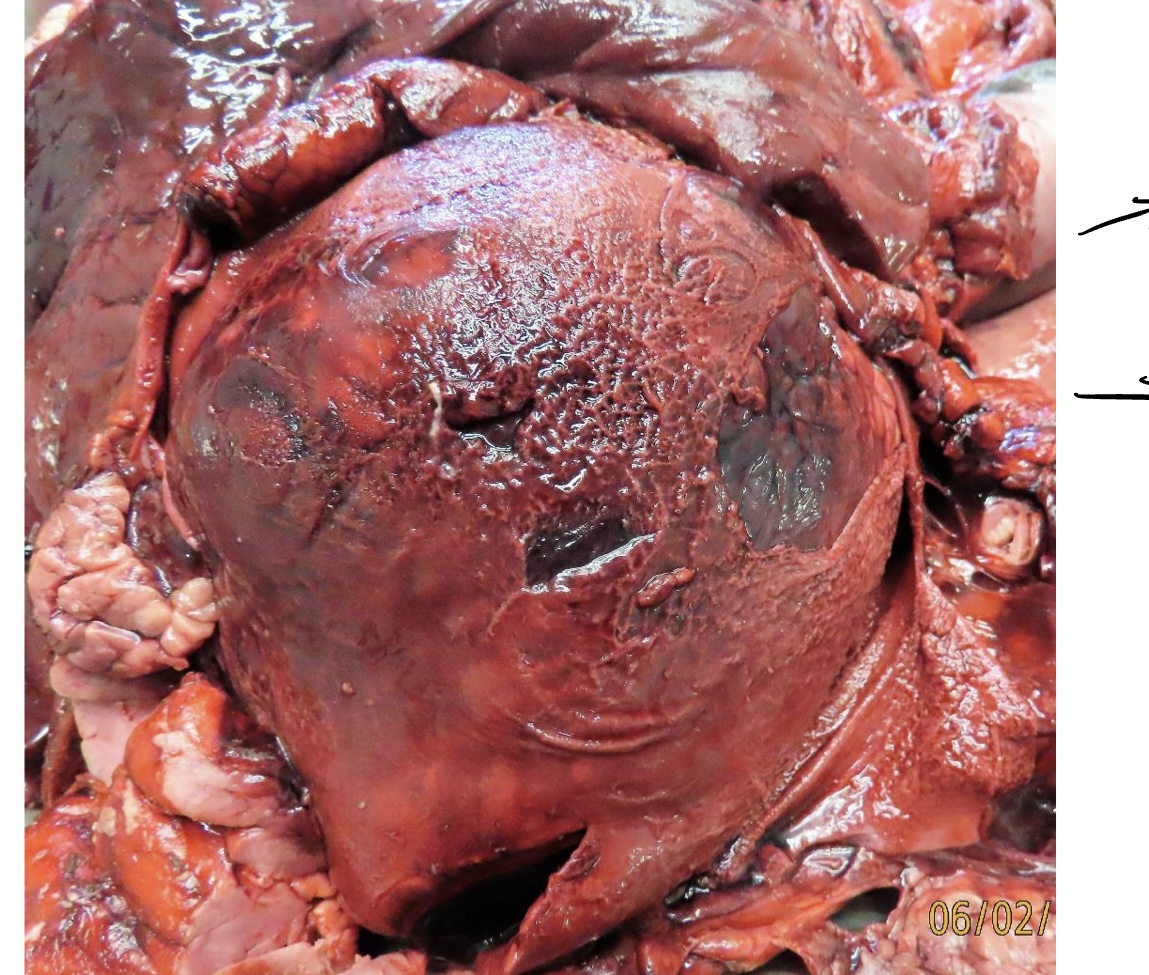
what is this?
fibrinous pericarditis → black leg infection, web-like material is fibrin
what does Glasser’s disease cause?
polyserositis → causes inflammation and fibrin deposition on serosal surfaces due to underlying mechanism of bacteria
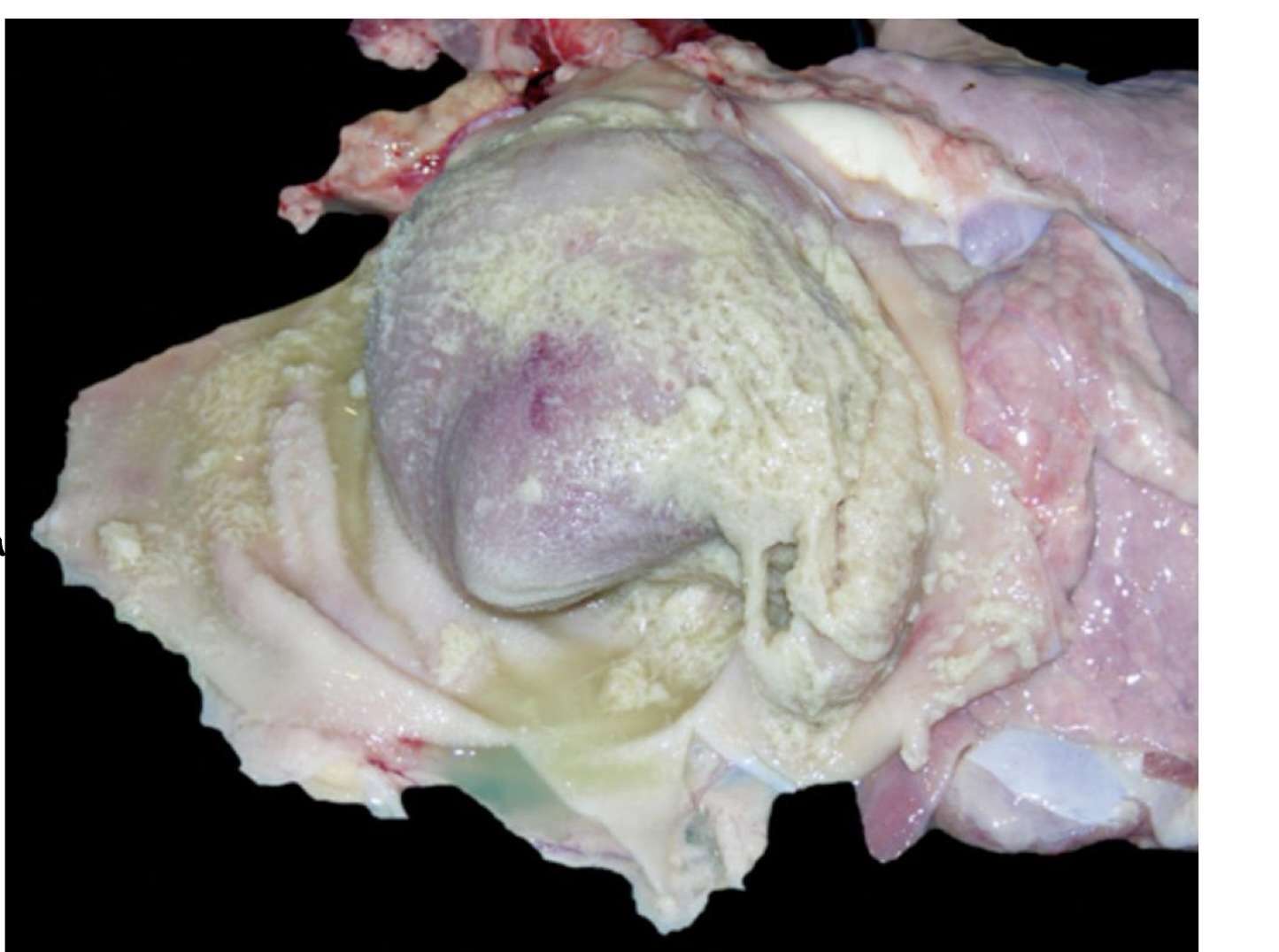
what is this showing?
fibrinous pericarditis → glasser’s disease
traumatic reticulopericarditis (hardware disease) can cause
dense layer of fibrin with scar tissue underneath
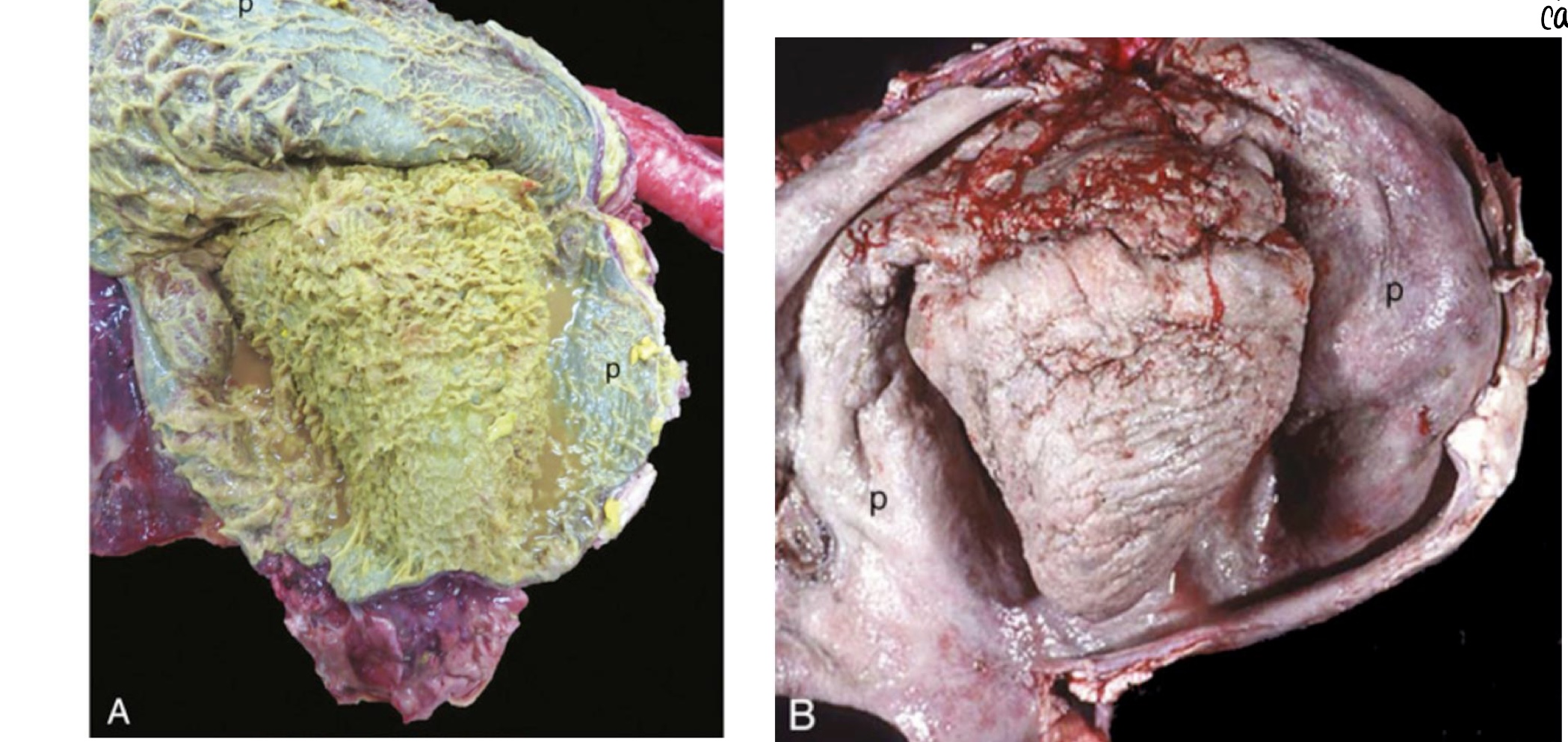
what are these pictures showing?
traumatic reticulopericarditis (hardware disease)
visceral gout
deposits of uric acid
common in avian and reptilian species
causes of visceral gout
dehydration
± renal disease
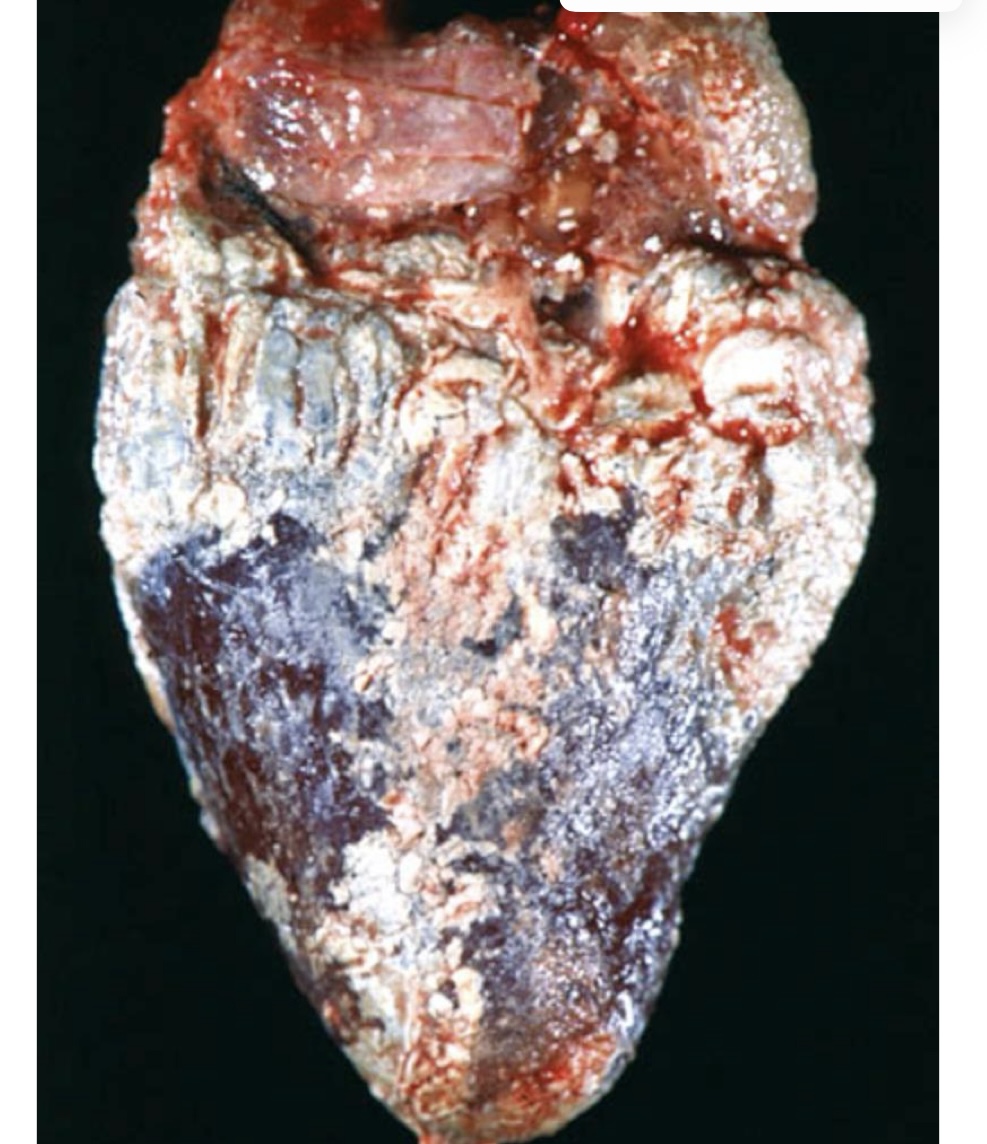
what is this?
visceral gout → white urate deposits are present on the epicardial surface
causes of epicardial mineralization
vitamin E/selenium deficiency (extension of myocardial mineralization)
vitamin D toxicosis
hereditary (mice and hamsters)
spontaneous (rats and guinea pigs)
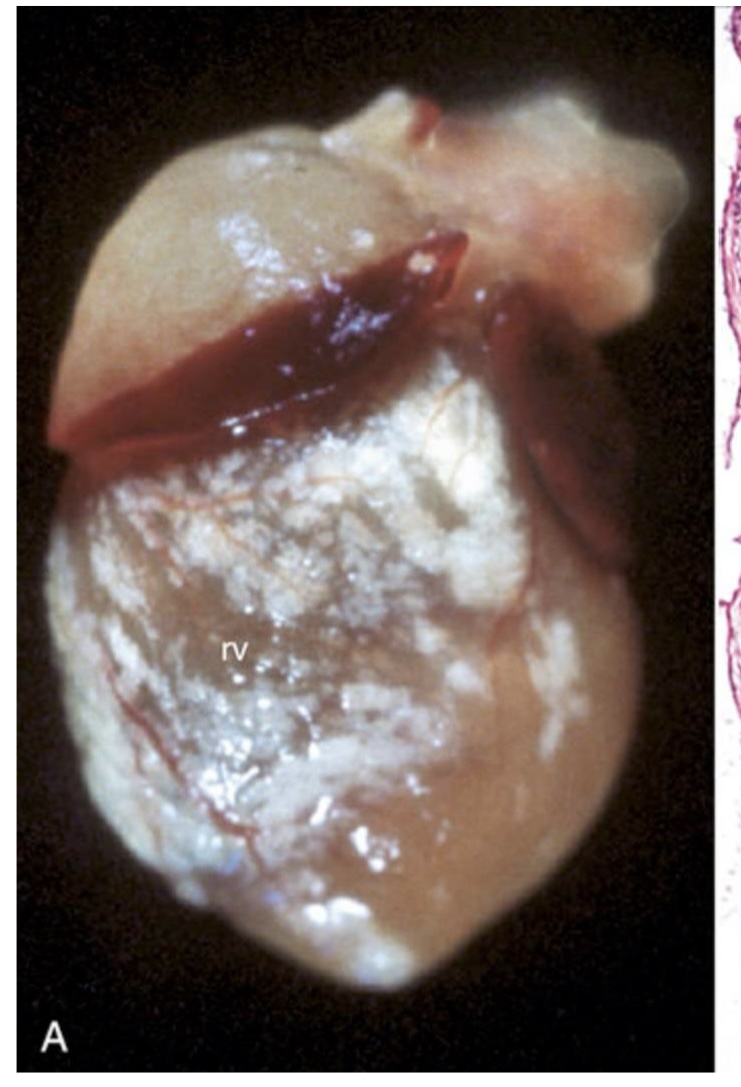
what is this showing?
epicardial mineralization → white deposits over the right ventricle
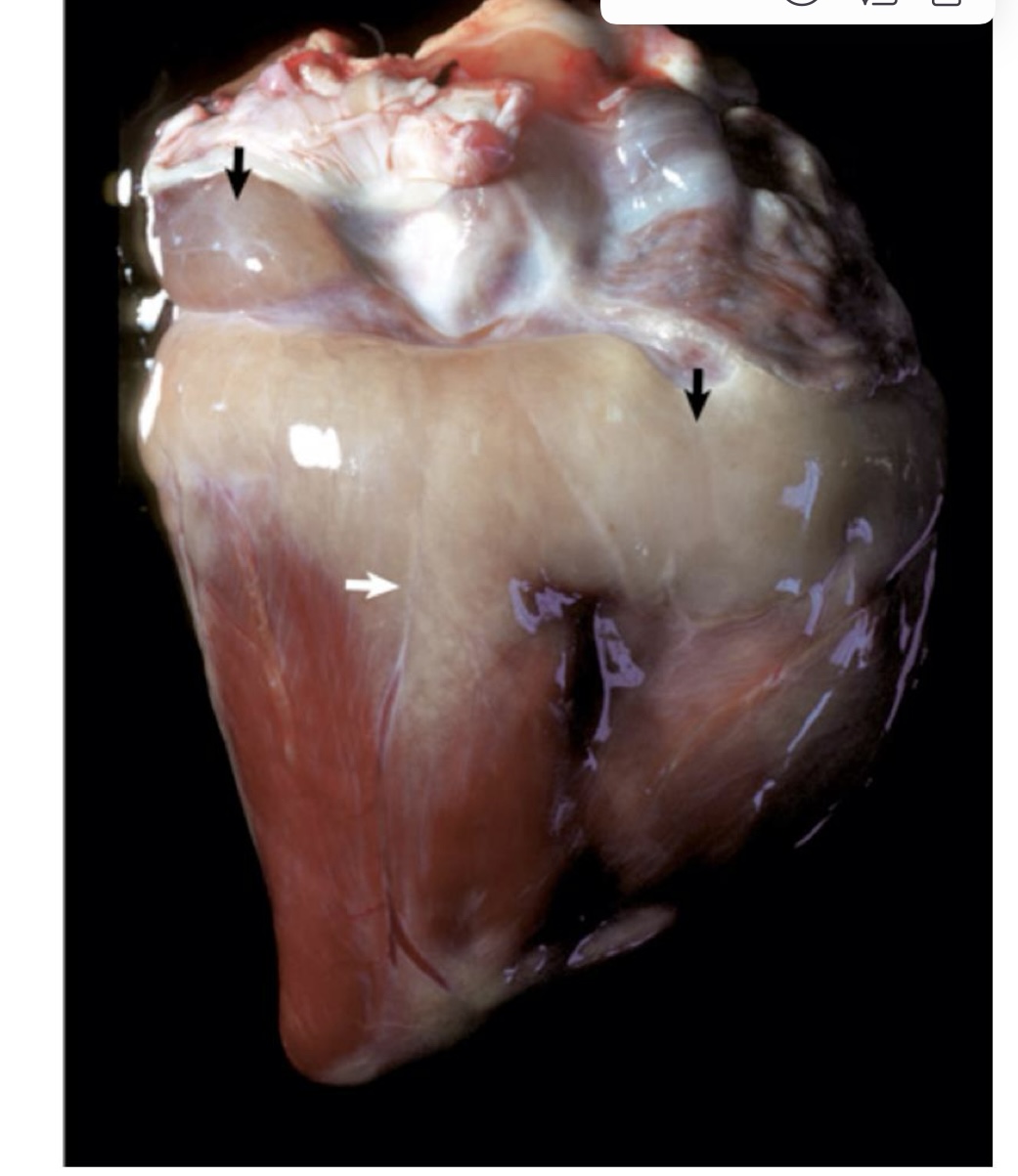
what is this?
serous atrophy of fat (gelatinous transformation of fat) → occurs in emaciated or cachexic states