optics
 Call Kai
 Learn
Learn Practice Test
 Spaced Repetition
 Match
Match Flashcards
 Knowt Play
1/52

There's no tags or description
Looks like no tags are added yet.
Name | Mastery | Learn | Test | Matching | Spaced | Call with Kai |
|---|
No analytics yet
Send a link to your students to track their progress
53 Terms
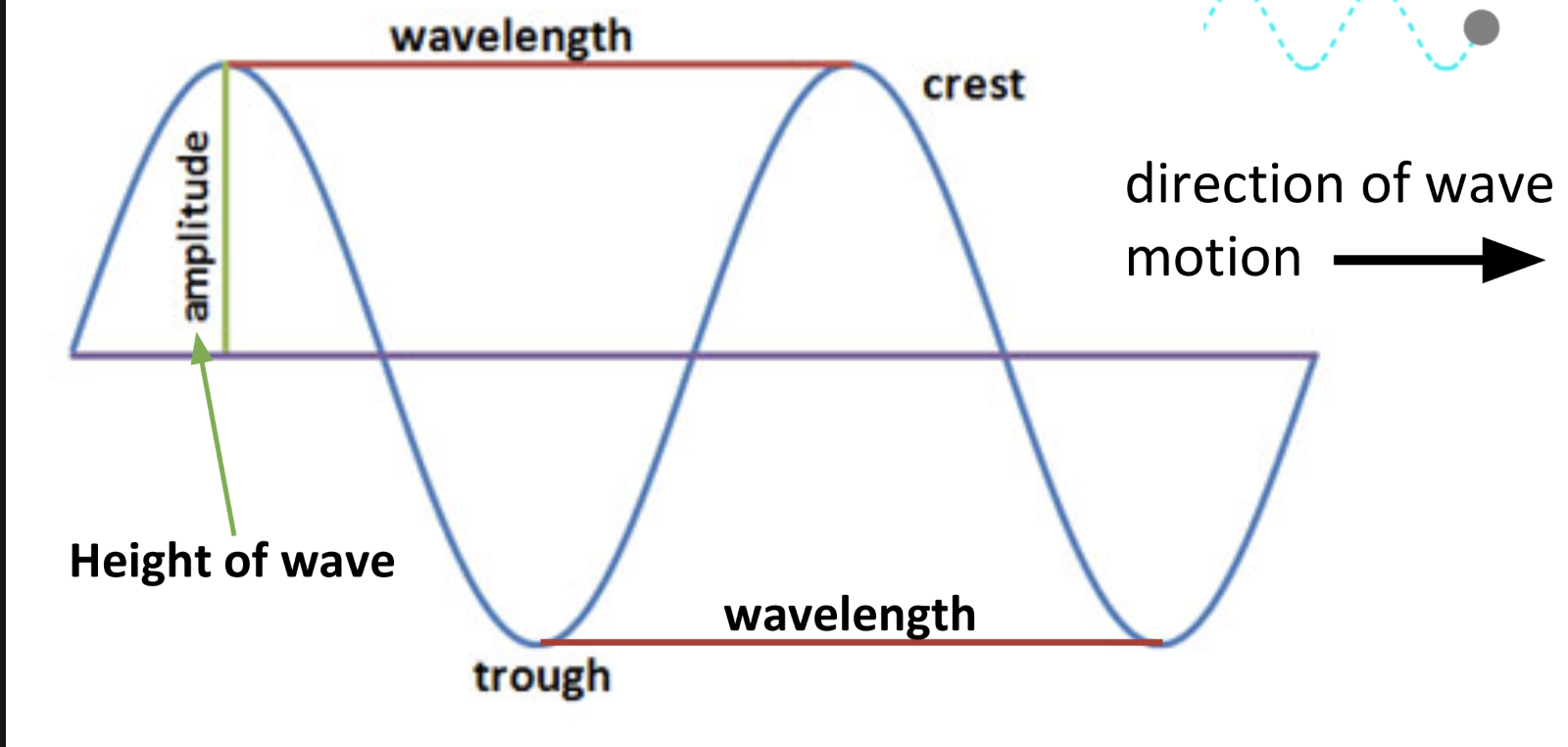
define light? (1)
form of energy that travels in waves
wavelength distance from one crest/trough to the next
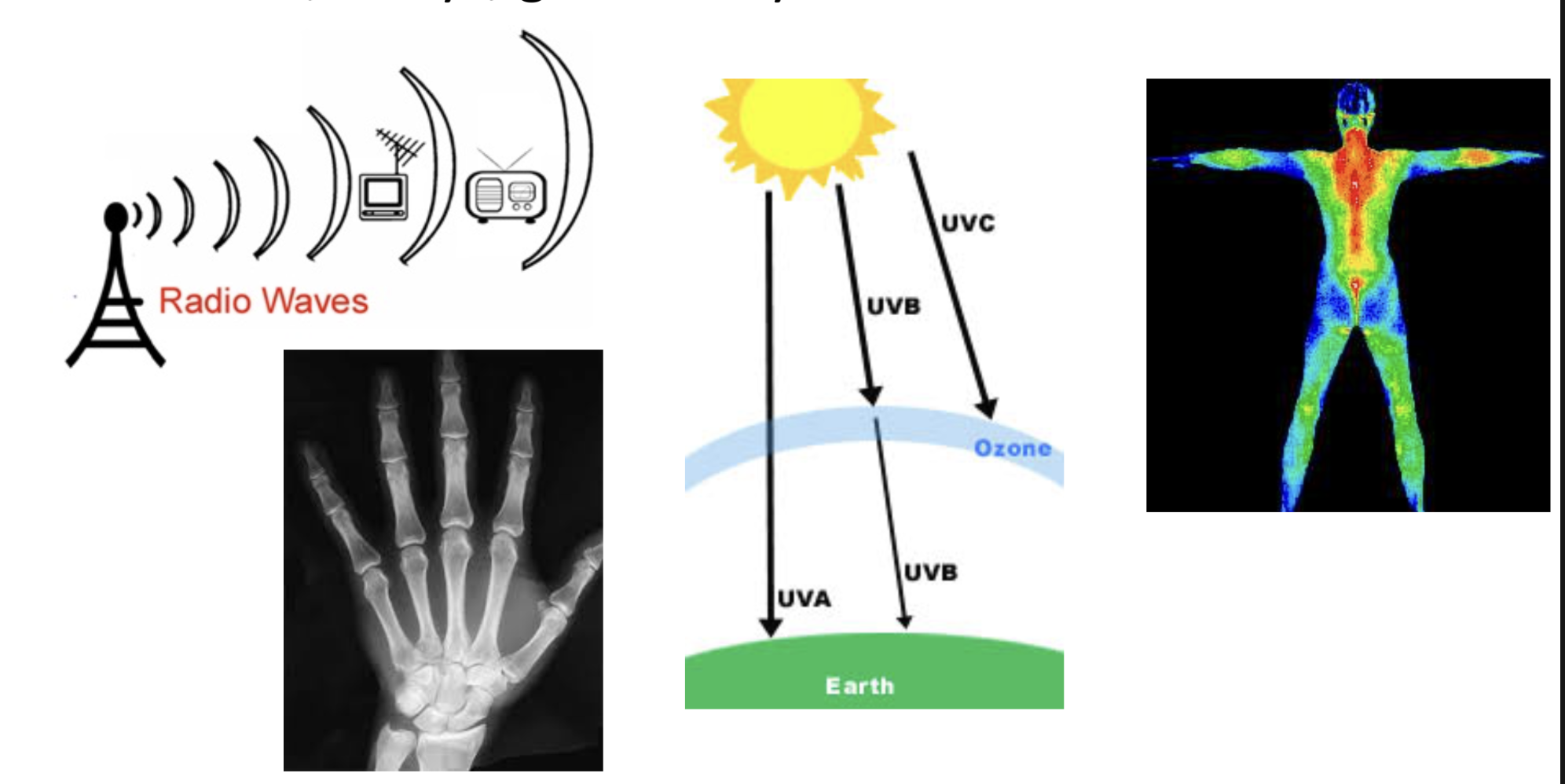
types of electromagnetic waves? (1)
radiowaves, microwaves, infrared radiation, visible light, UV radiation, X-rays, gamma rays
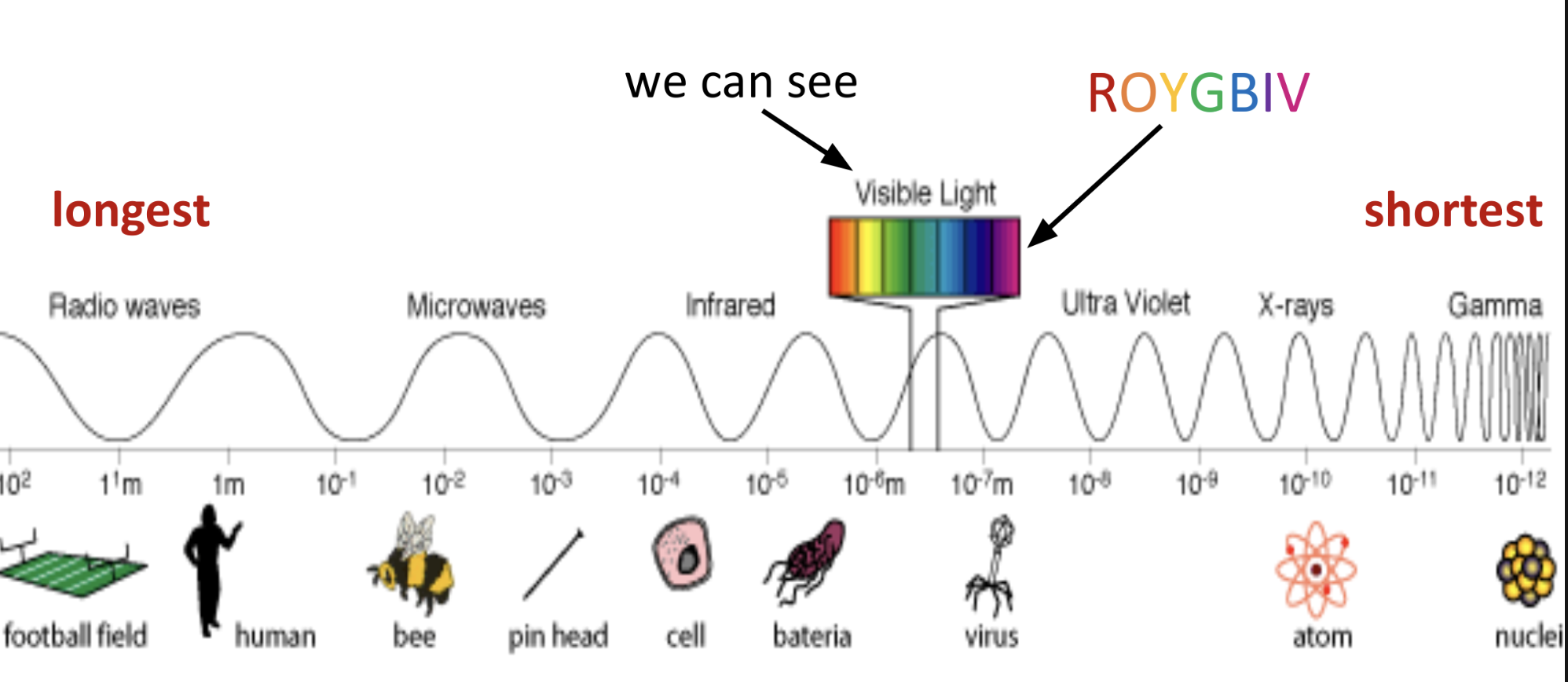
electromagnetic spectrum? (1)
a representation of the types of electromagnetic waves arranged according to wavelength
only waves that we can see are visible light (roygbiv)
luminous vs non-luminous objects? (1)
luminous objects emit their own light (ex. sun, fireflies), while non-luminous objects do not (the moon)
types of light? (1)
sun
incandescence
luminescence
fluorescence
phosphorescence
chemiluminescence
bioluminescence
electroluminescence
explain light from incandescence? (1)
light emitted from a material due to the hot nature of the material (ex. incandescent light bulb *not energy efficient as energy is wasted through the production of heat)
what is light from luminescence? (1)
light from an object that is not heated
explain fluorescence? (1)
when an object absorbs uv light and releases the energy as visible light (ex. fluorescent light bulbs, highlighters)
explain phosphorescence? (1)
phosphors absorb high-energy light and release visible light at lower energy (ex. glow in the dark)
explain chemiluminescence? (1)
chemical reaction that results in the production of light (ex. glow sticks)
explain bioluminescence? (1)
the same as chemiluminescence, but it only occurs in a living organism (ex. fireflies, jellyfish)
explain electroluminescence? (1)
an LED (light-emitting diode) is made from semi-conductor materials
light is emitted in the form of a photon (electrons absorb energy/get excited and release that energy when they return to their ground state)
colour of the light responds to the energy of the photon
interaction of light with matter? (2)
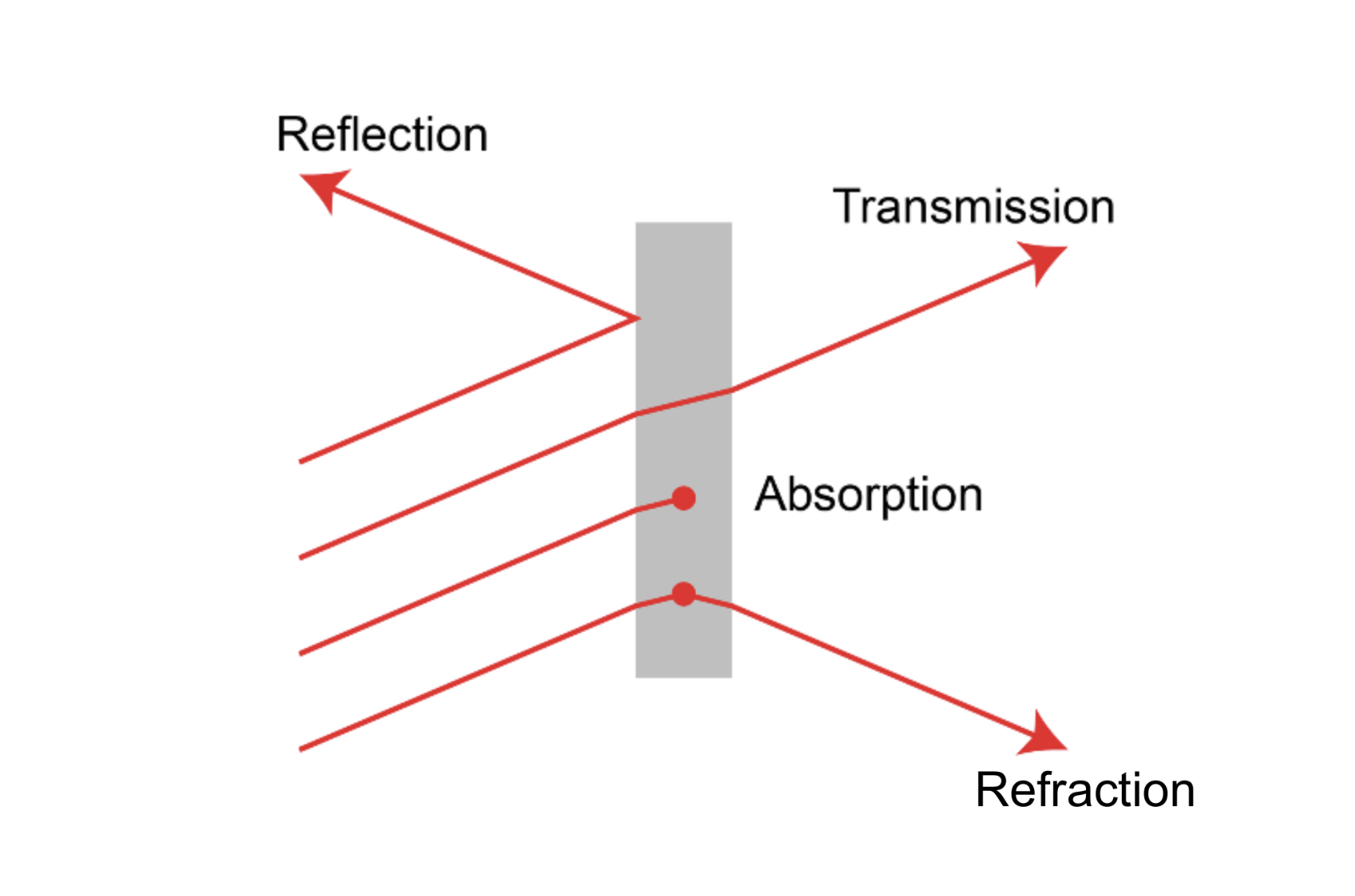
ray and medium (plural - media)? (2)
arrow that shows the direction in which light is traveling
substance through which light travels (solid, liquid, gas)
specular vs diffuse reflection? (2)
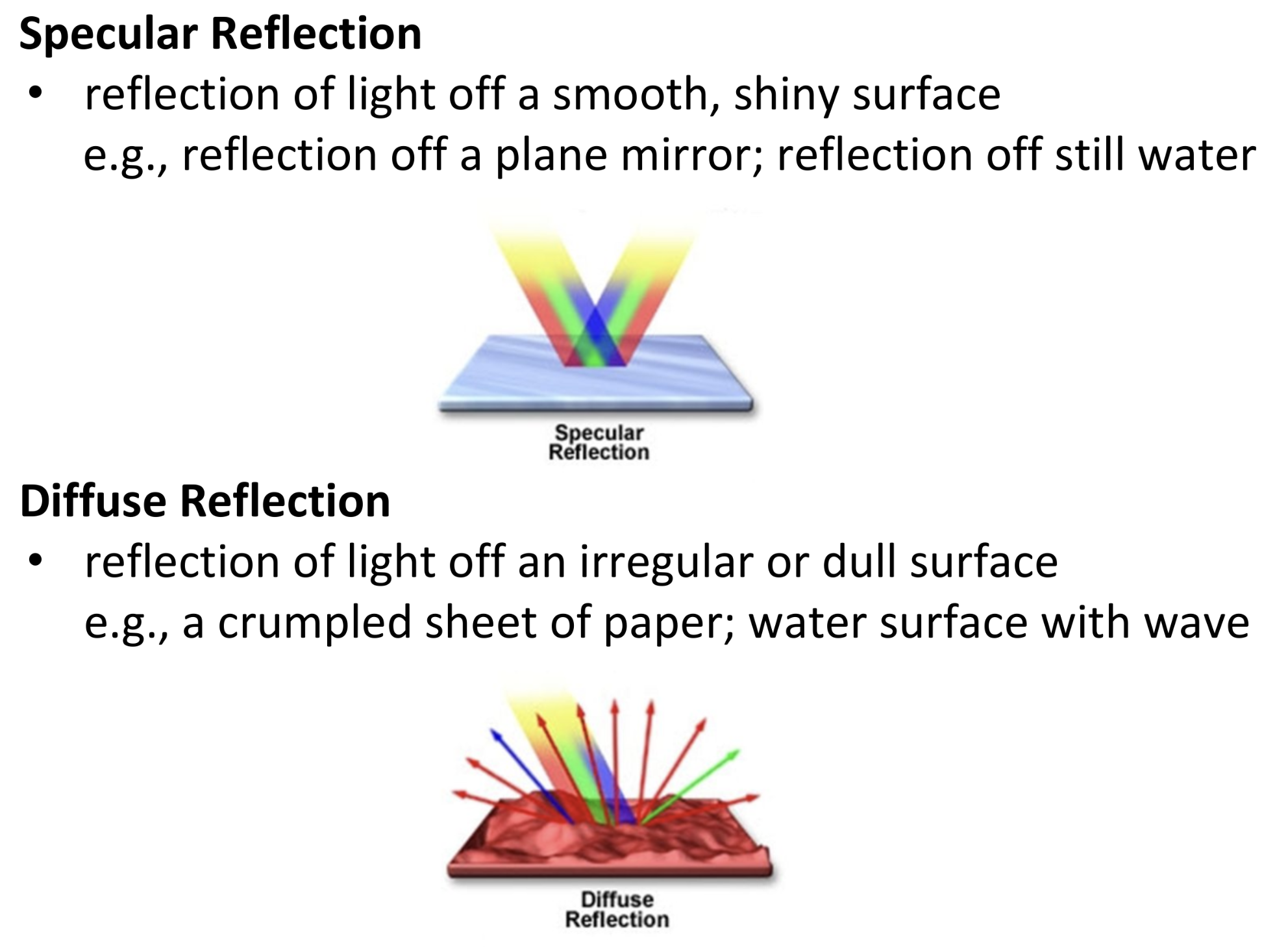
what happens when white light hits a black surface? (2)
it absorbs the light, and it turns it into heat energy
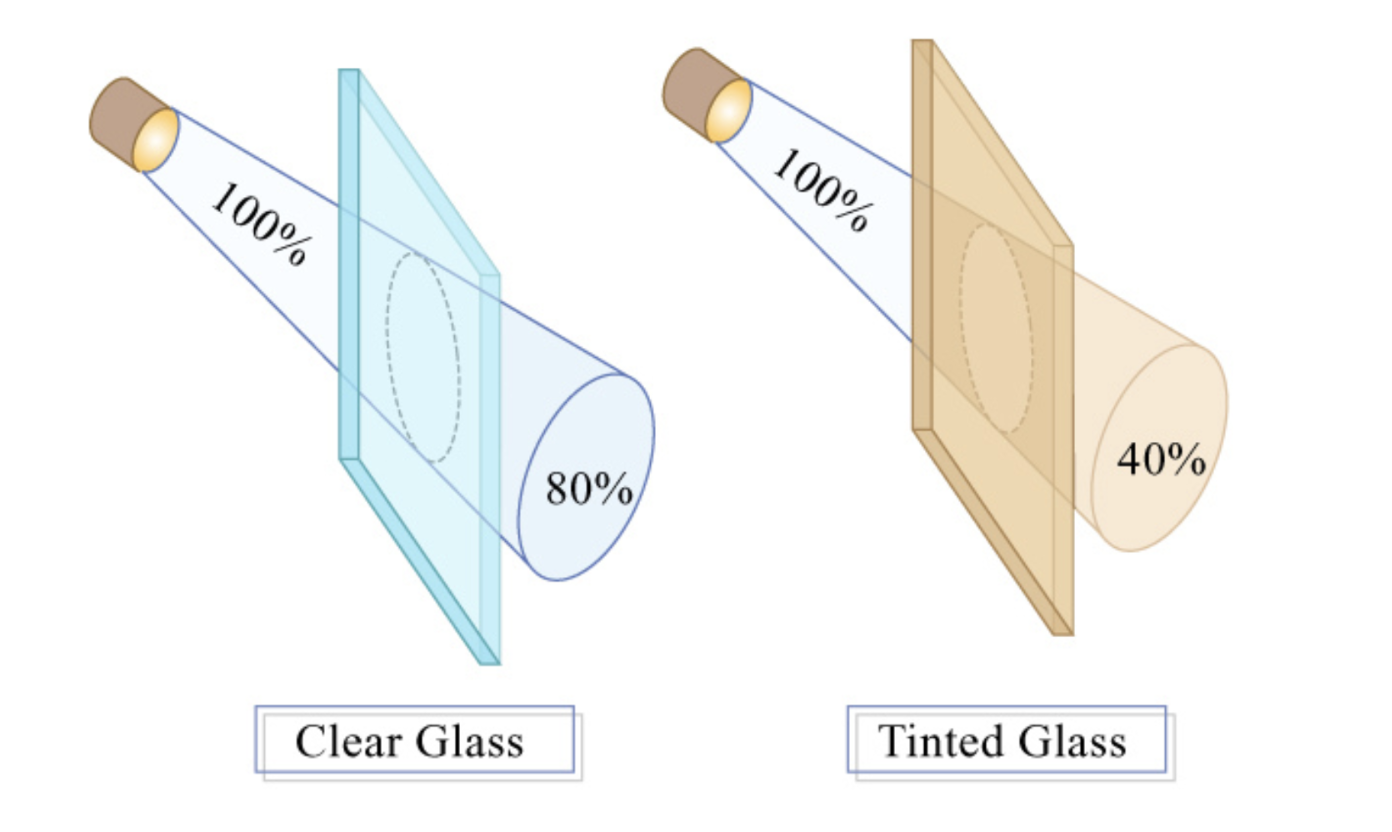
transmission? (2)
when light travels through an object and continues travelling after exiting
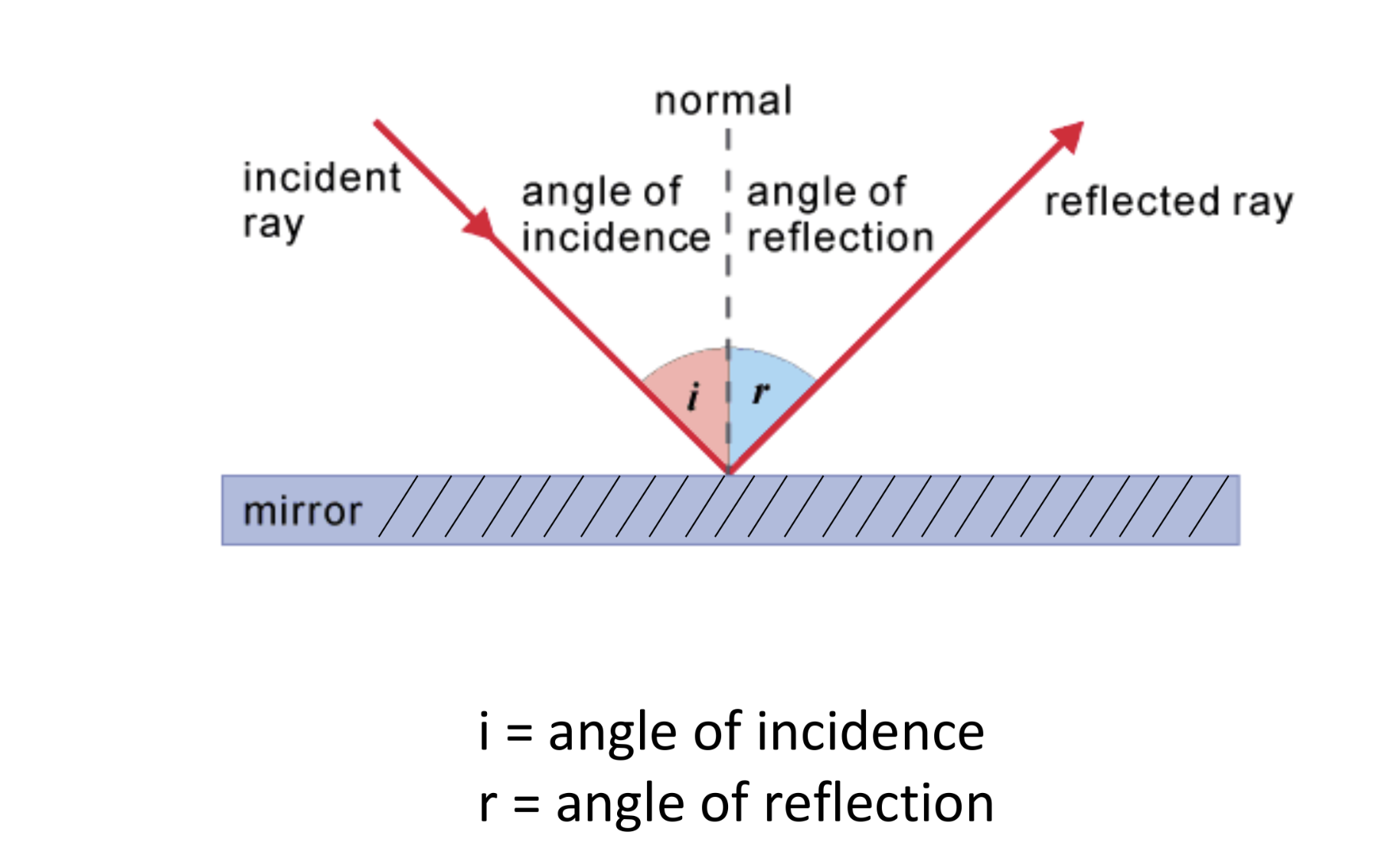
ray diagram? (2)
incident ray of light that travels from a light source towards a surface
normal perpendicular line to a surface where a ray of light hits the surface
angle of incidence (i) angle between incident and normal ray
reflected ray of light that starts at point of contact
angle of reflection (r) angle between normal and reflected ray
laws of reflection? (2)
incident, normal, and reflected rays lay on same plane
angle of reflection is equal to angle of incidence
salt acronym? (3)
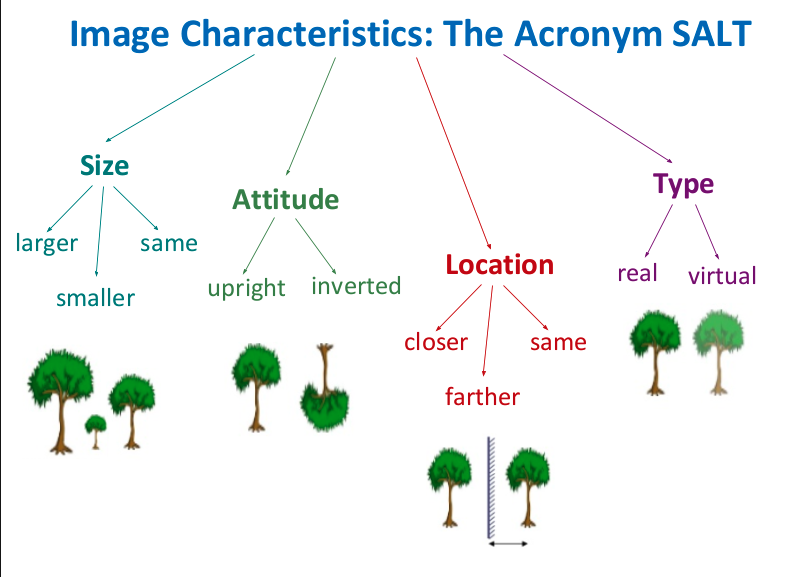
image characteristics for a plane mirror? (3)
same size, upright, same distance behind mirror, virtual image
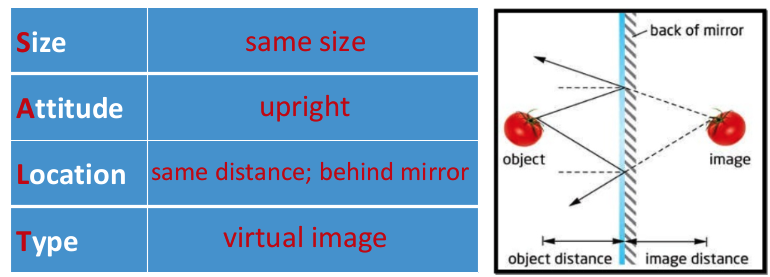
concave mirror? (4)
a converging mirror; a mirror whose reflective part is on the “caved in” part
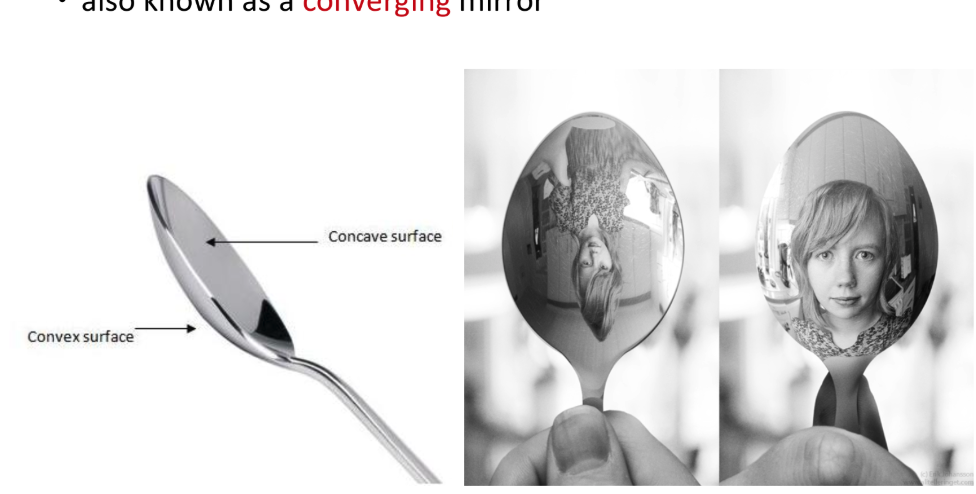
focal point? (4)
the point at which reflected/parallel rays converge
principal axis + center of curvature + vertex? (4)
straight line that passes through the center of the mirror
the center of the sphere that the mirror fits
the point that the principal axis meets the mirror
difference between concave and convex mirrors? (5)
focal point and center of curvature are located behind the mirror
what happens when light travels through a medium? (6)
light bends
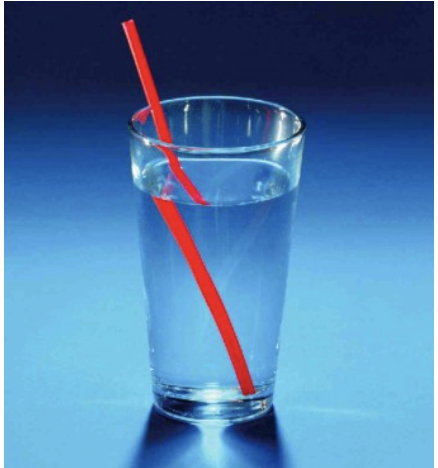
refraction? (6)
bending/change in direction of light when it travels between mediums
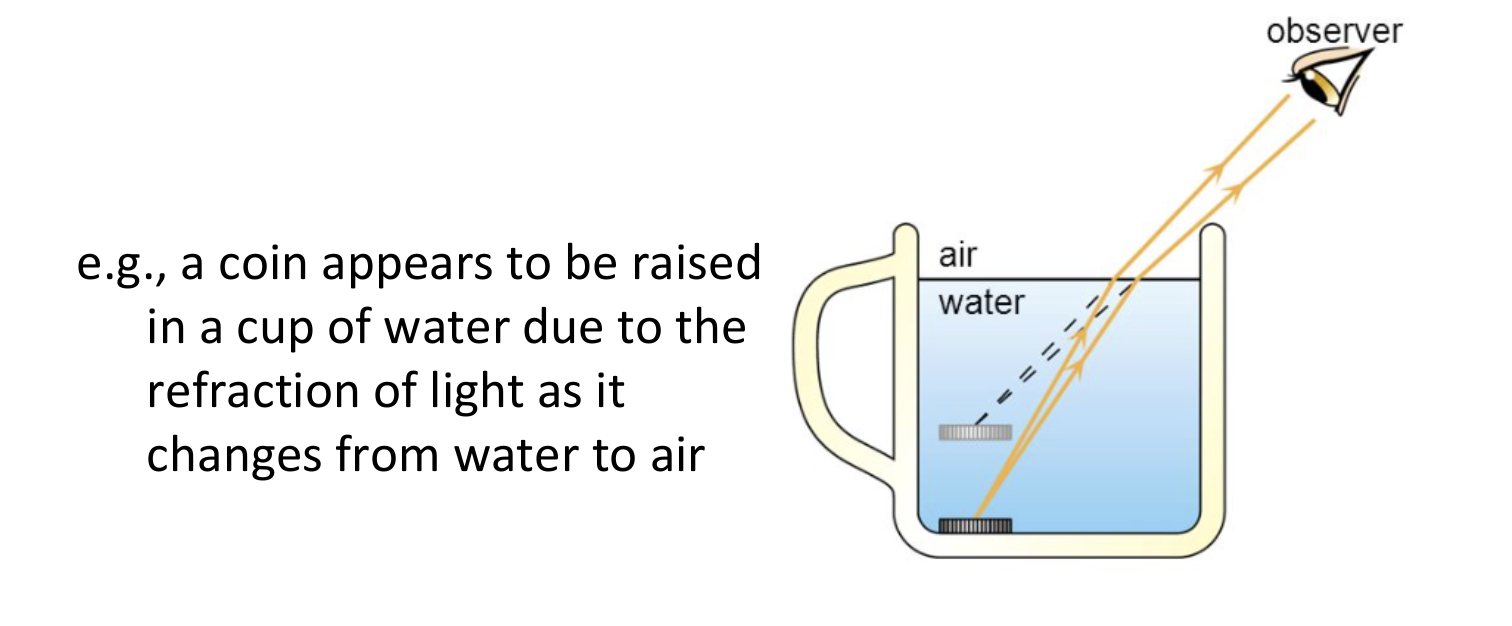
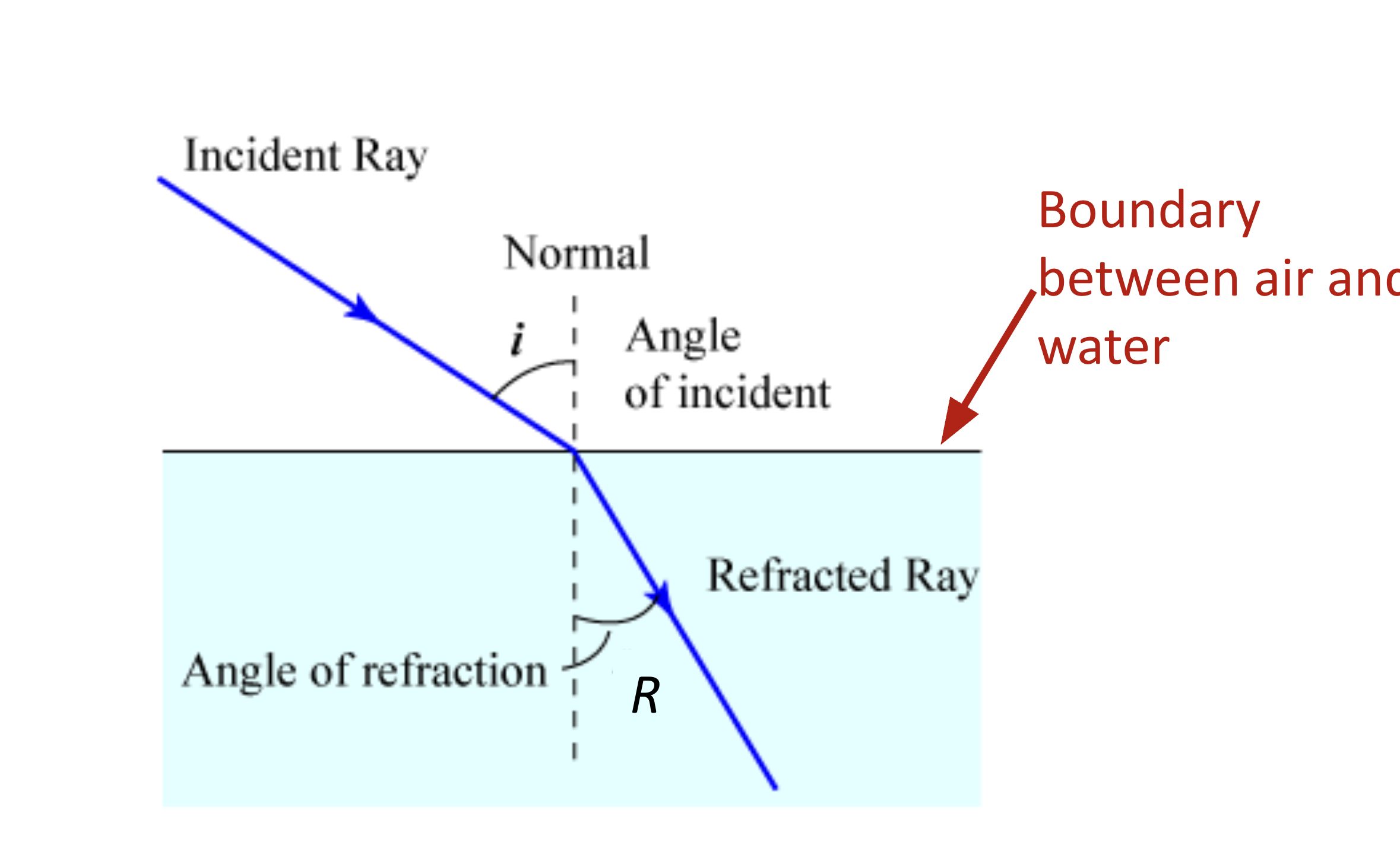
refracted ray? (6)
ray that travels through the second medium
angle of refraction, R? (6)
remember to capitalize and differentiate from r, reflection
the angle between the refracted ray and the normal
rules for refraction? (6)
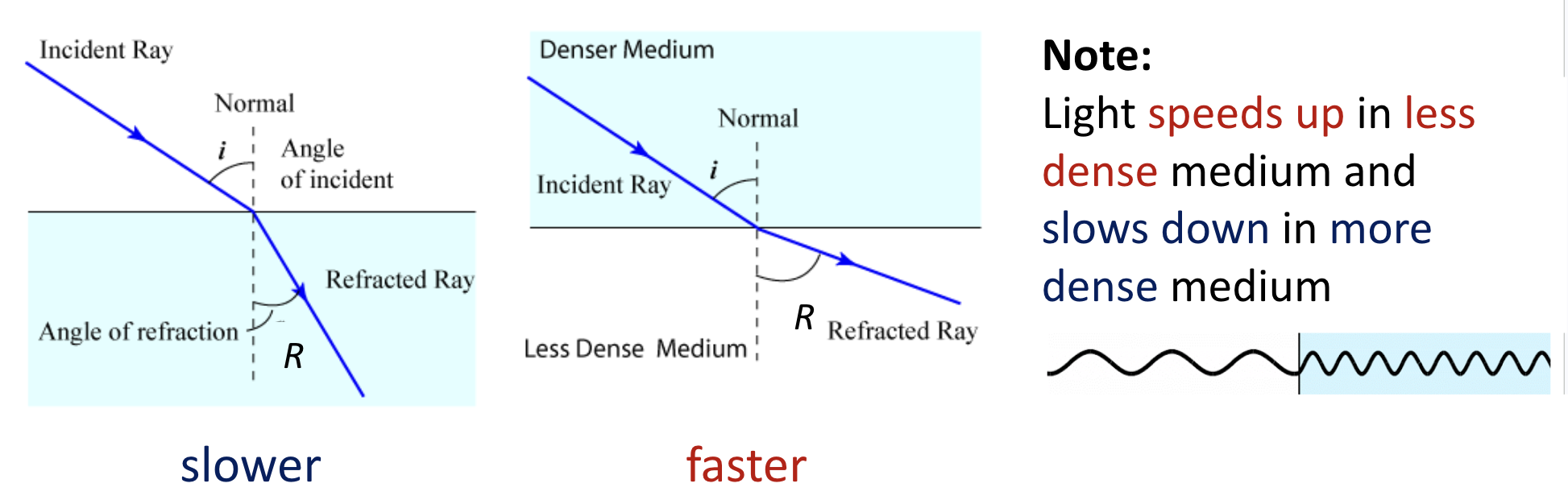
incident ray and reflected ray are on opposite sides of the line that separates the two media
when the speed of a light ray slows down in the second medium, light bends towards the normal
vice versa when it speeds up, it bends away
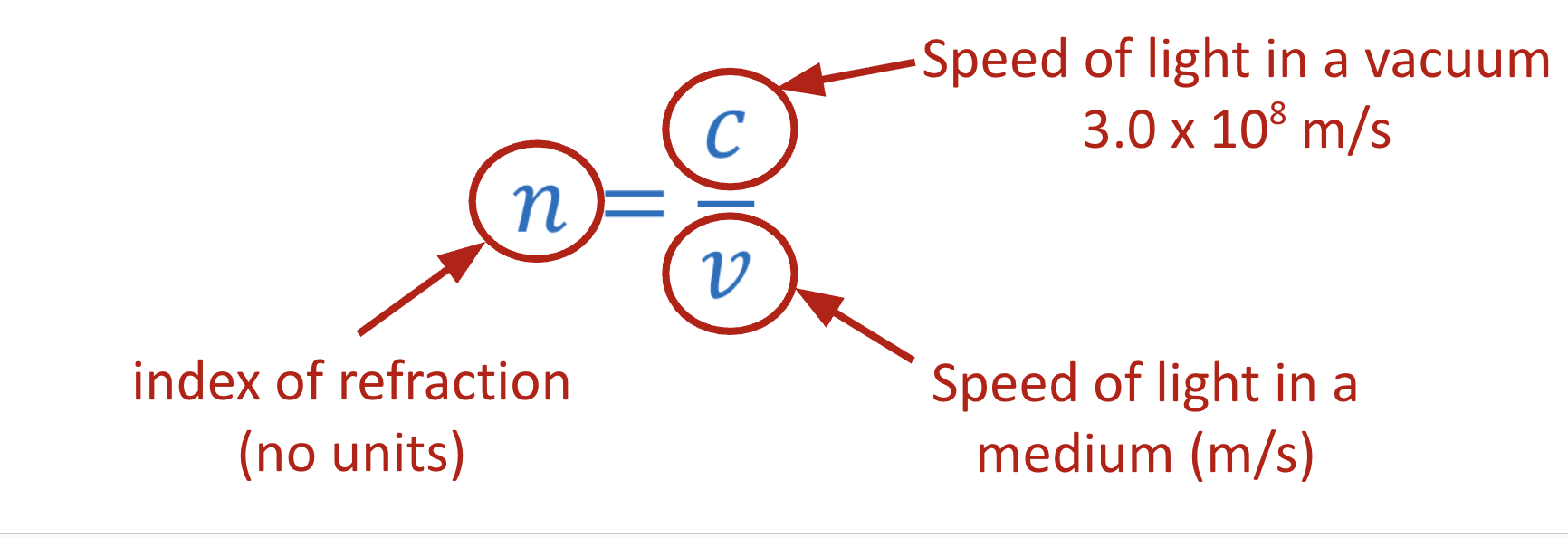
index of refraction (n)? (6)
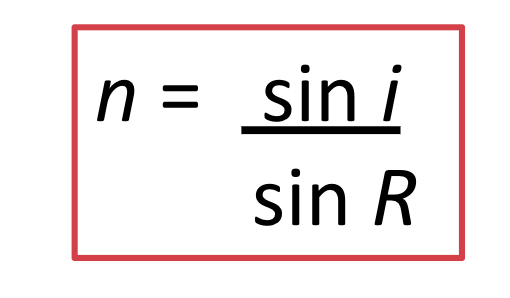
the amount by which a transparent medium decreases the speed of light— the larger the value is, the more light is decreased by
(must be in degree mode when using sines)
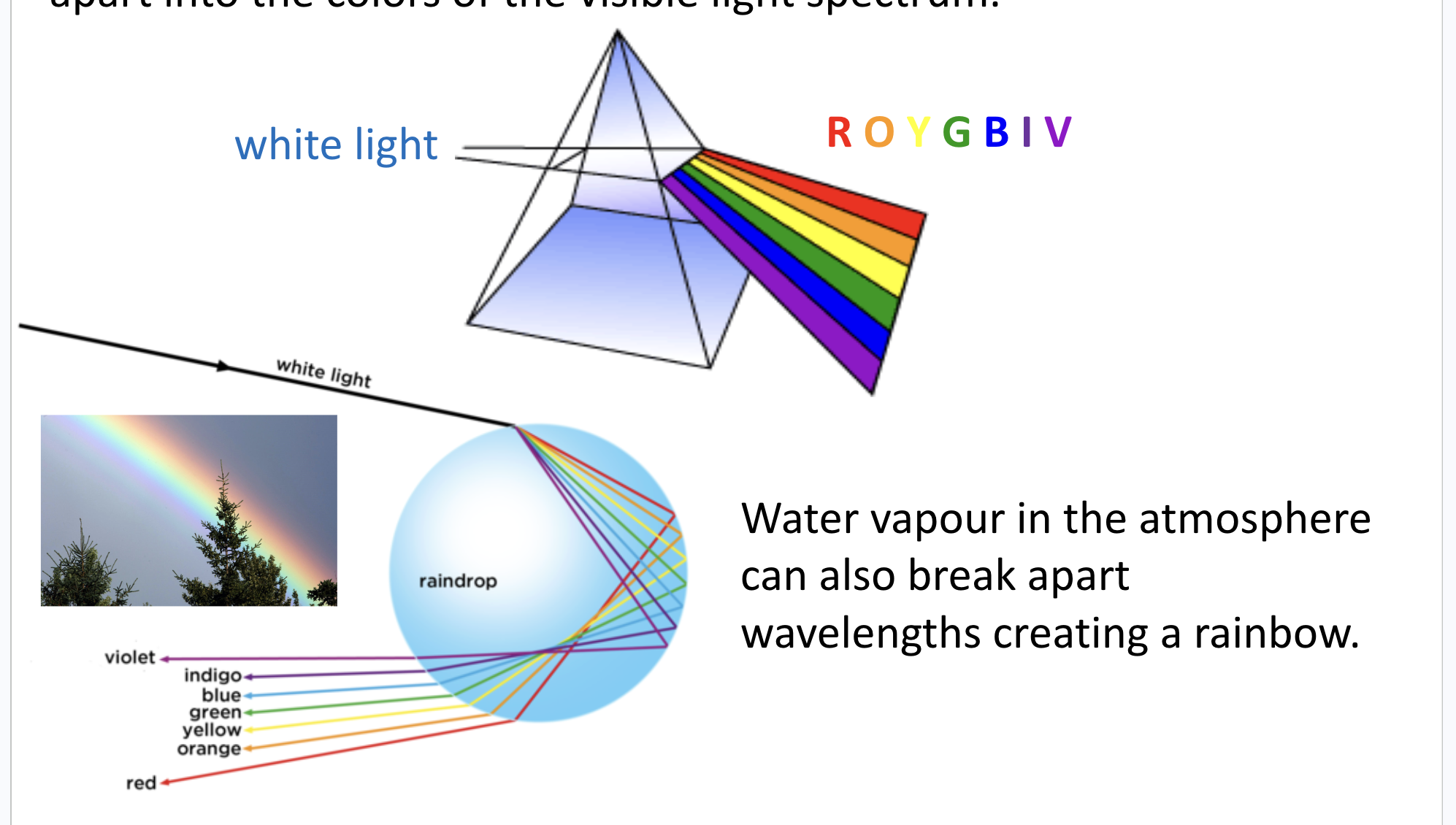
dispersion? (6)
when white light shines through a prism, it is broken into the colours of the visible light spectrum (water vapour in the atmosphere can also break apart wavelengths creating a rainbow")
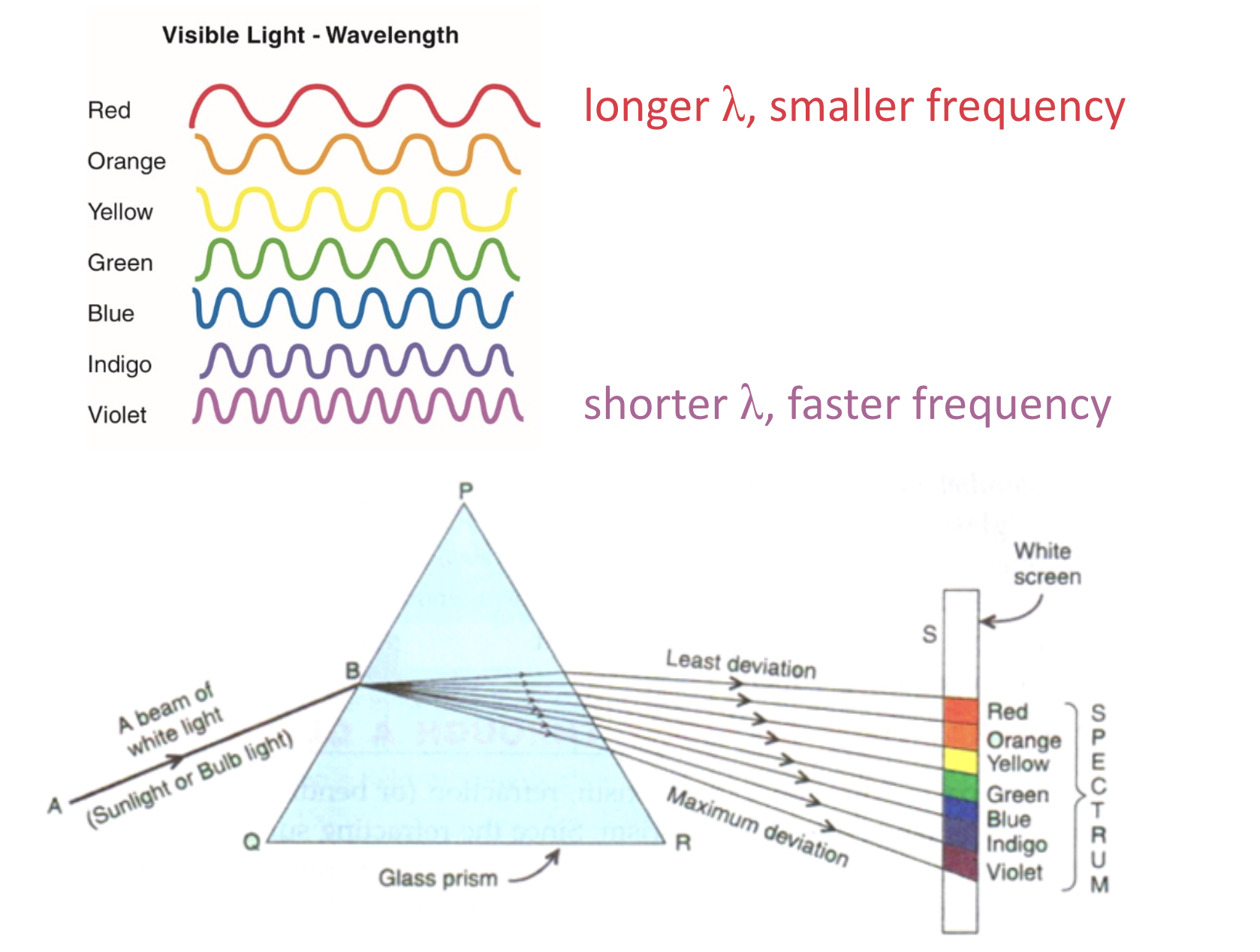
why is the amount of refraction different for each colour? (6)
each colour of light travels at a slightly different frequency in any medium
partial reflection? (7)
when light rays reach a boundary between two media (ex. air and water), some light is refracted and some is reflected (ex. when looking through a window, you can see what’s on the other side, as well as your reflection)
are refraction and reflection equal? (7)
no, it depends on the angle
a large angle of incidence of light entering water results in nearly all of the water reflecting
as the angle of incidence gets smaller, more of the light refracts and less reflects
what happens when the angle of incidence increases? (7)
the angle of refraction increases more rapidly, becoming wider than the angle of incidence
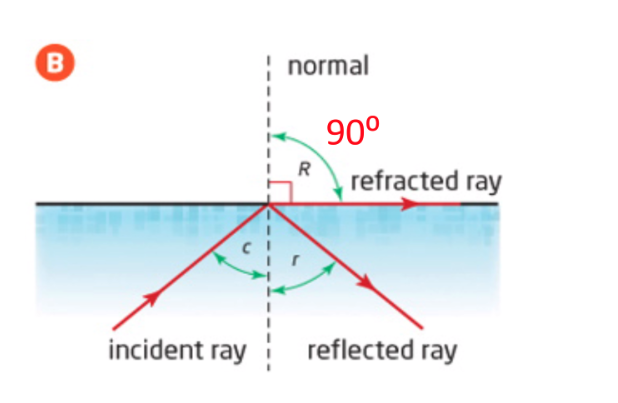
what happens when the angle of incidence causes the angle of refraction to reach 90 degrees? (7)
it lies against the boundary between the two mediums (no light produced in the second one)
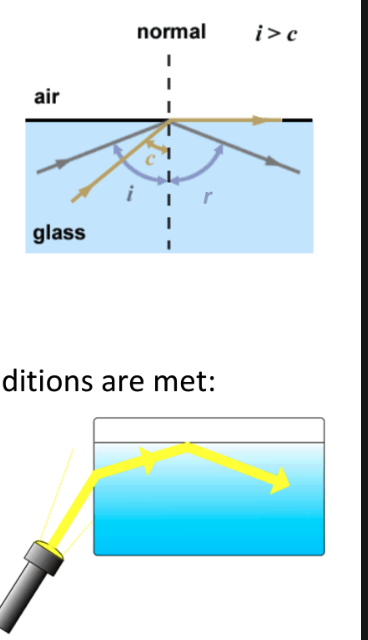
the angle of incidence that produces a refracted ray of 90 degrees is called the critical angle, c
what happens if the angle of incidence is increased past the critical angle? (7)
it will no longer refract into the second medium, rather it will reflect back into the initial one (the refracted ray will disappear and only the reflected one will be visible)
also known as total internal reflection
uses of TIR in our world today? (7)
fibre optics, endoscopy,
two conditions for total internal reflection to occur? (7)
light is travelling slower in the first medium than the second
angle of incidence is larger than the critical angle
apparent depth? (7.5)
the depth that an object appears to be at due to refraction in a medium (remember the coin and muffin experiment)
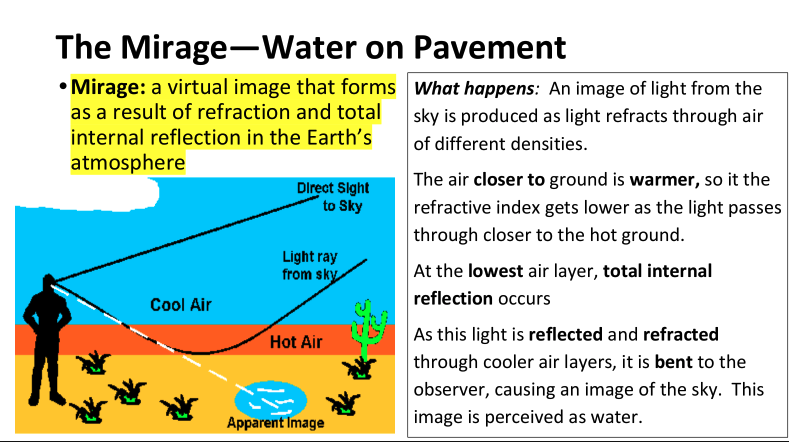
mirage? (7.5)
virtual image that forms as a result of refraction and TIR in earth’s atmosphere
why do images appear to shimmer? (7.5)
light is being refracted as it passes through layers of different temperatures
surface air is warmer than air at higher layers, so light travels faster (warm air is less dense)
as rays go from colder to warmer layers, the ray will bend further away from the normal, resulting in TIR
results in multiple images being perceived
explain rainbows? (7.5)
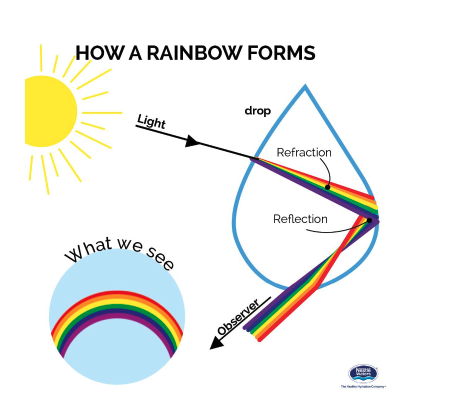
refraction of sunlight and TIR within water droplets result in rainbows
as light enters a raindrop, it disperses (each colour in the visible light spectrum travels at difference speeds— violet is the slowest and red is the fastest)
when light hits the other side of the raindrop, refraction and TIR occur and the reflected light disperses when it exits the raindrop
refracted light is what the eye sees as the rainbow (sun must be behind eye for this to occur)
two types of lenses? (8)
converging lenses
convex
thickest in the middle and thinnest at the end
diverging lenses
concave
thinnest in the middle and thickest at the edge
info about converging lenses? (8)
all light rays refract when they enter and leave a lens
converging ones make parallel light rays come together
a converging lens will magnify the object/make things look larger
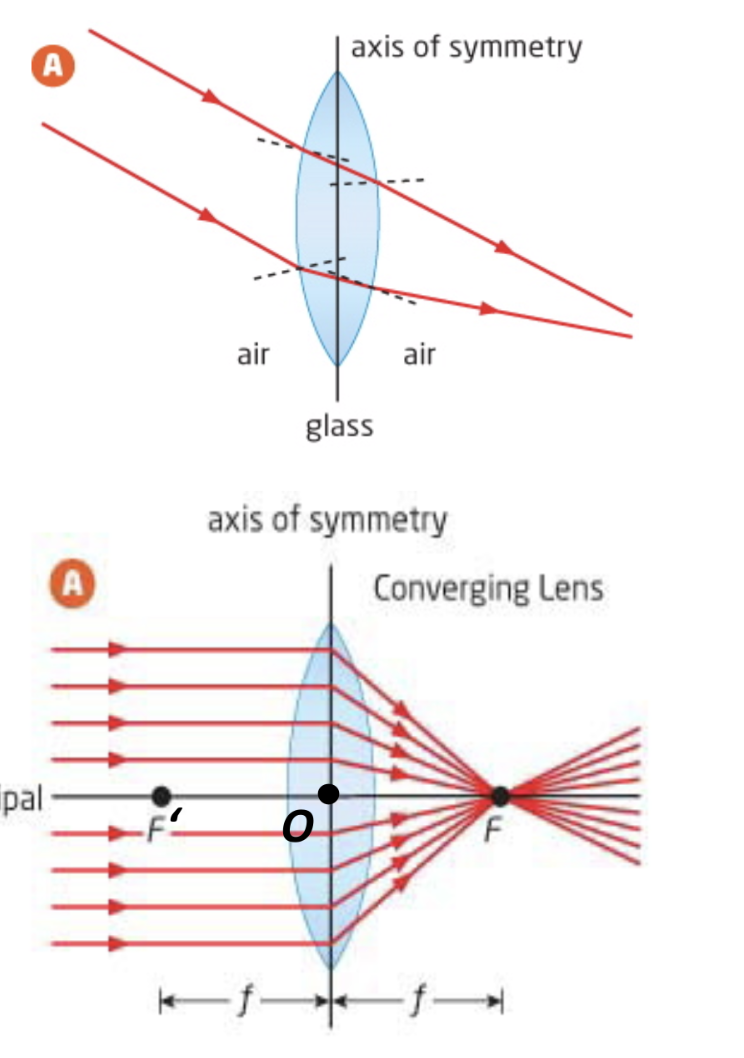
primary (F) vs secondary (F’) focal point? (8)
point on the principal axis where the lights converge (opposite side of incident rays)
opposite side of focal point
equally spaced from optical centre
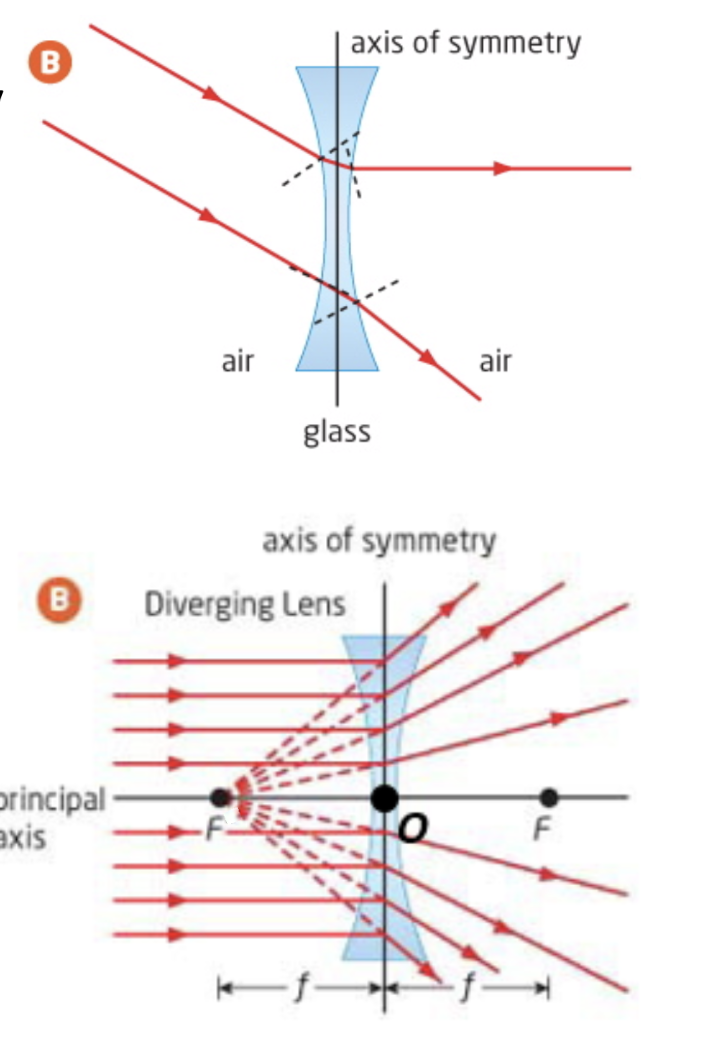
info about diverging rays? (8)
all light rays refract when they enter and leave a lens
diverging lenses make parallel rays move apart
primary focal point (F) is on the same side as the incident rays
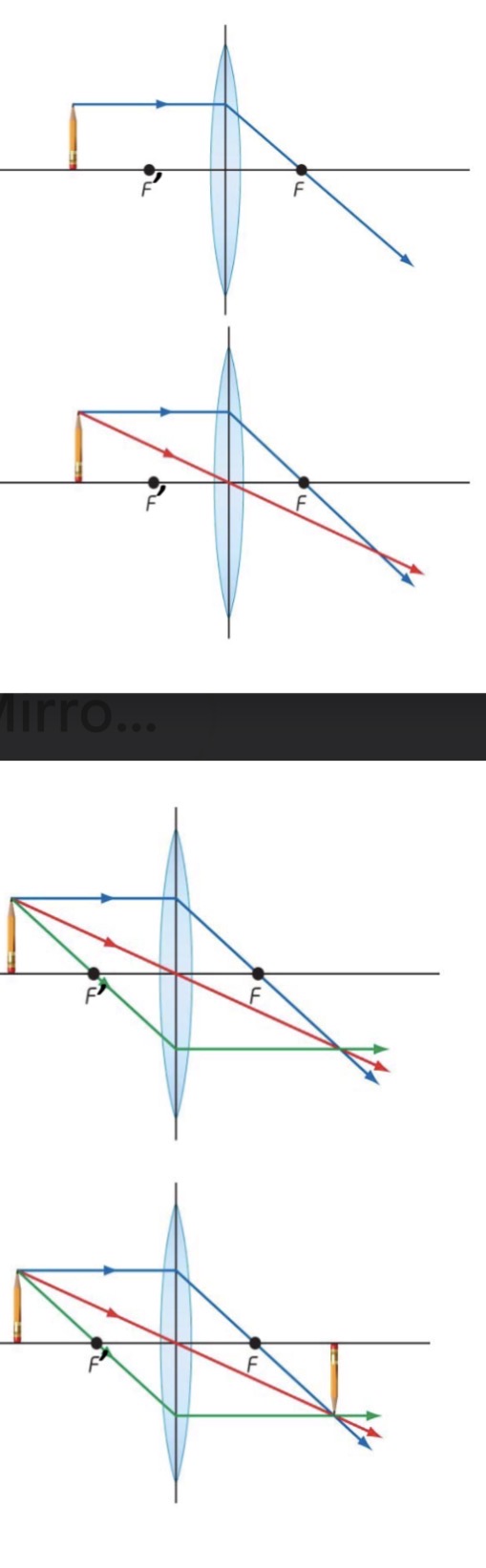
how to draw ray diagrams with converging lenses? (9)
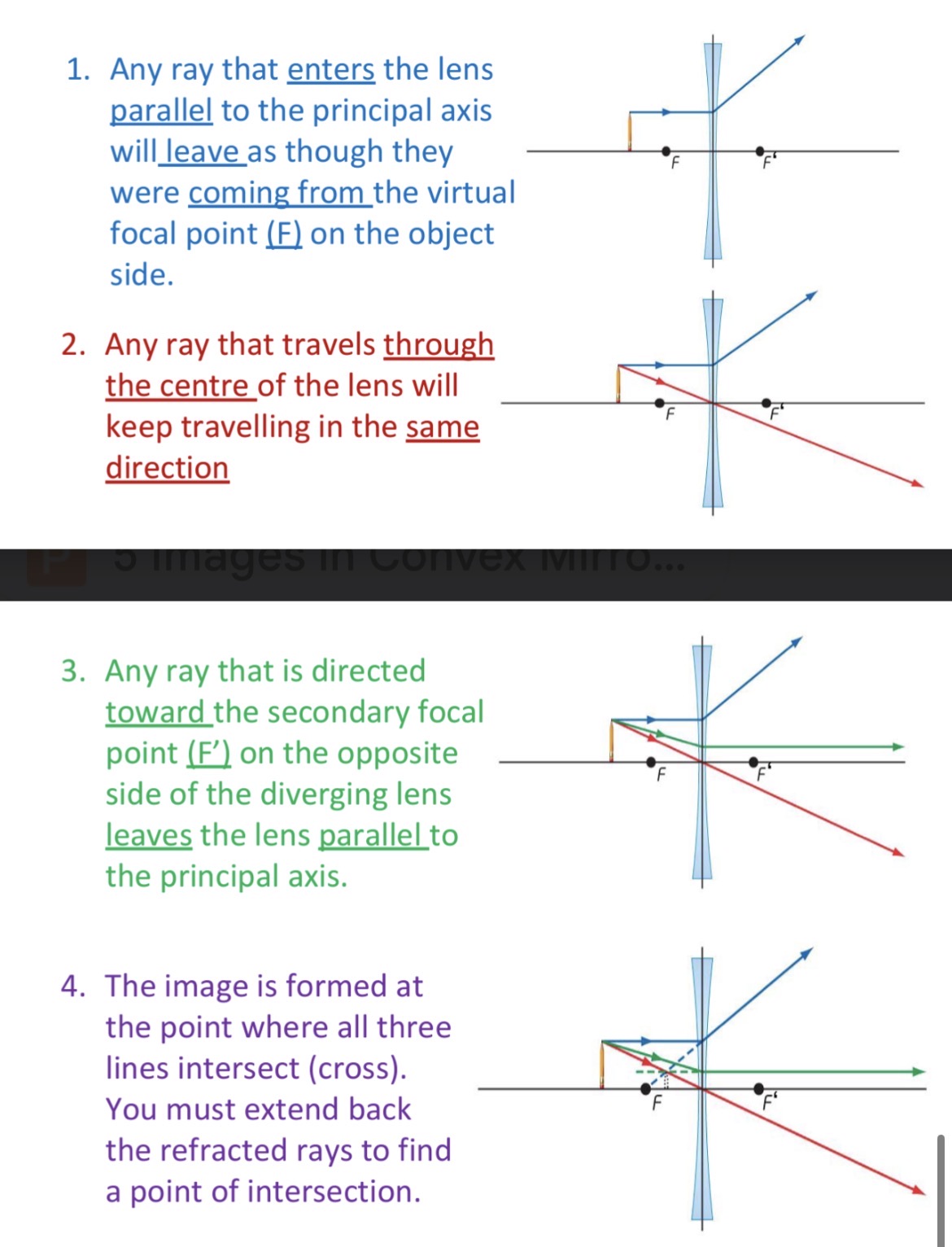
rules for drawing ray diagrams in diverging lenses? (9)
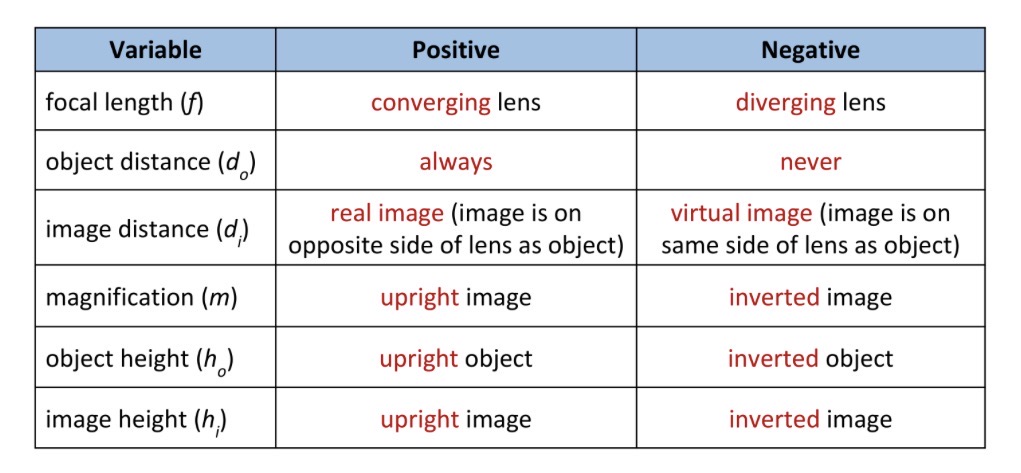
thin lens equation? (10)
allows you to predict location / position of an image formed by a lens
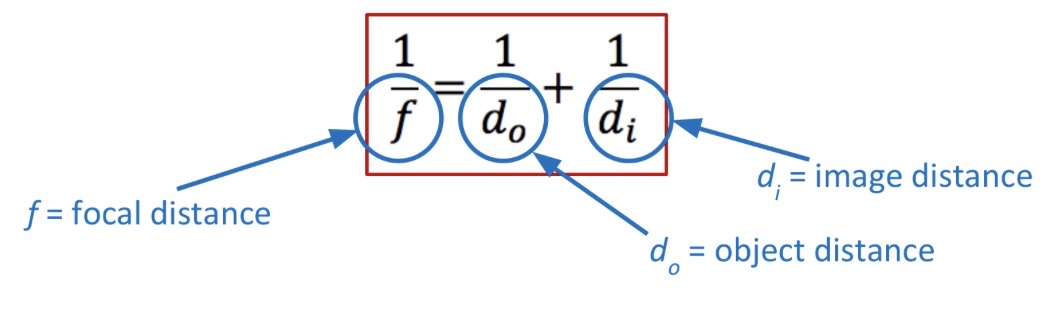
magnification equation? (10)
allows you to predict size of an image formed by a lens
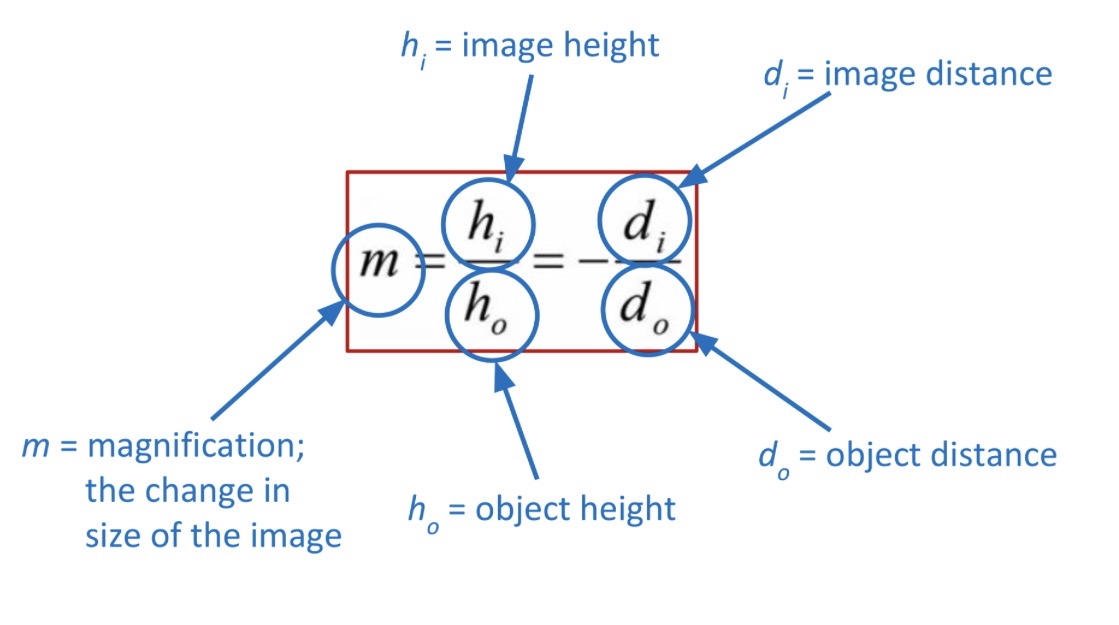
rules with converging and diverging lenses? (10)