Anatomical Terms, Planes, & Movements
 Studied by 1 person
 Call Kai
 Learn
Learn Practice Test
 Spaced Repetition
 Match
Match Flashcards
 Knowt Play
1/78

There's no tags or description
Looks like no tags are added yet.
Name | Mastery | Learn | Test | Matching | Spaced | Call with Kai |
|---|
No analytics yet
Send a link to your students to track their progress
79 Terms
the position all anatomy is described in reference to
anatomical position
the 7 characteristics of anatomical position
standing upright
facing forward
each arm hanging on either side of the body
palms facing forward
legs parallel
feet flat on floor
feet facing forward
the 3 anatomical planes
frontal (coronal)
sagittal
transverse (horizontal, axial)
the 3 anatomical axes
sagittal
frontal (coronal)
longitudinal (vertical)
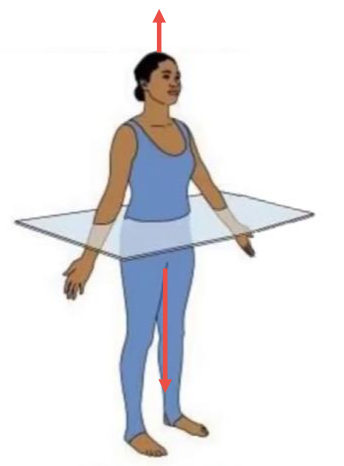
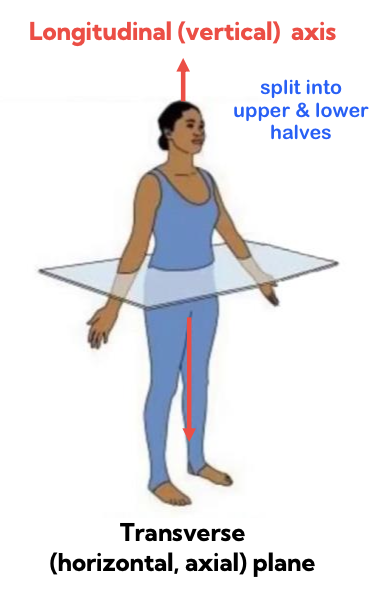
plane & axis
transverse plane
longitudinal axis
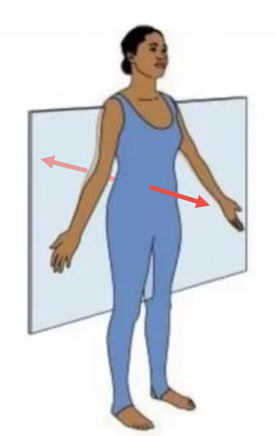
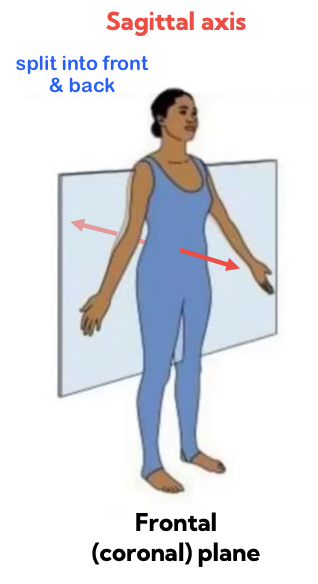
plane & axis
frontal plane
sagittal axis
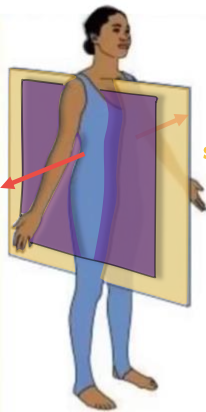
plane, subplanes, & axis
sagittal plane
median sagittal plane (yellow)
parasagittal plane (purple)
frontal axis
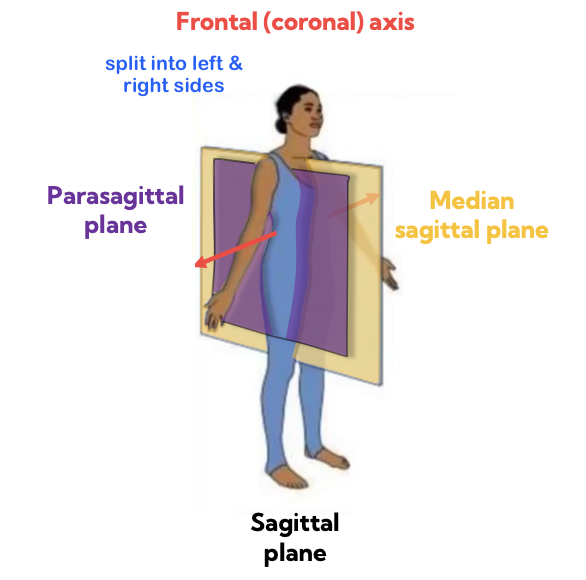
median sagittal plane location
in the middle of the body
parasagittal plane location
off to the side
the plane is always ___ to the axis
perpendicular
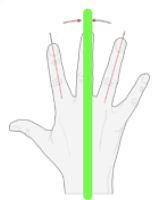
plane
median (sagittal) plane of the hand
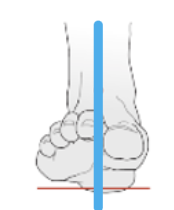
plane
median (sagittal) plane of the foot
3 anatomical sections
longitudinal
transverse
oblique
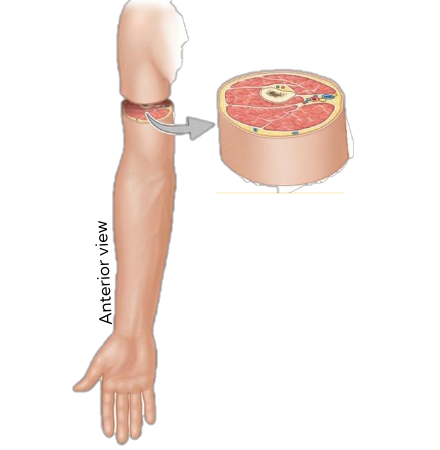
section
transverse
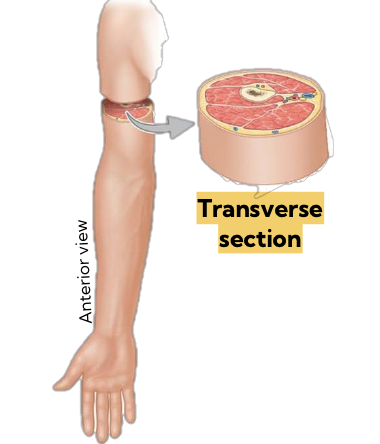

section
oblique
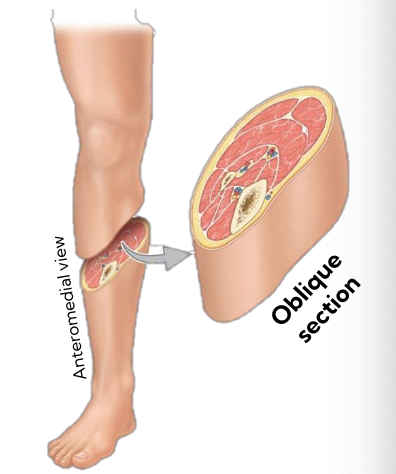
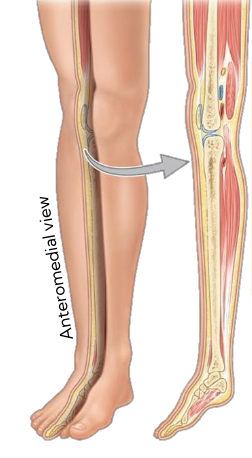
section & plane
longitudinal section
sagittal plane
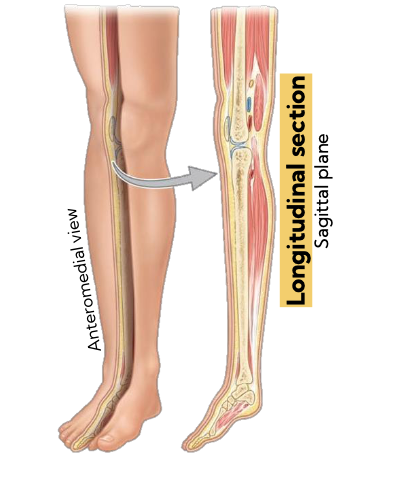
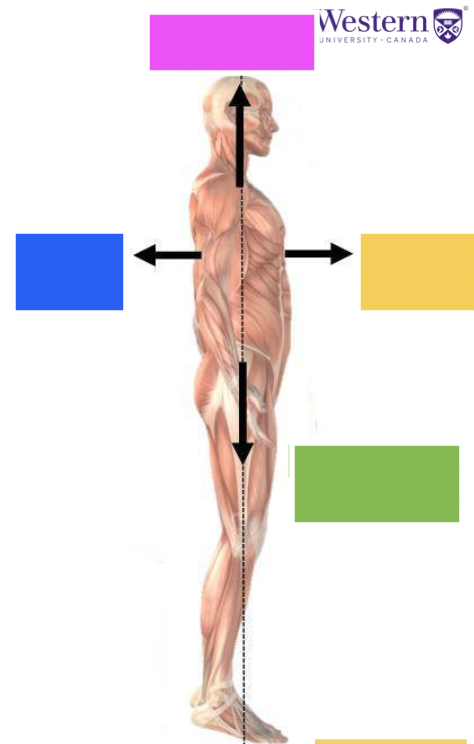
name the 4 directional anatomical terms
pink- superior (cranial/rostral)
yellow- anterior (ventral)
green- inferior (caudal)
blue-posterior (dorsal)

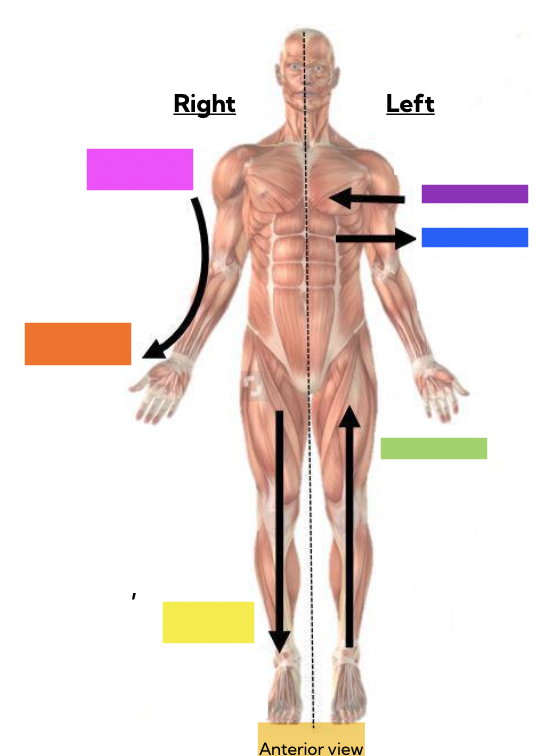
name the 6 major locational anatomical terms
pink- proximal (upper body)
orange-distal (upper body)
yellow- distal (lower body)
green- proximal (lower body)
blue- lateral
purple- medial
proximal (upper body) meaning
close to the trunk
distal (upper body) meaning
farther from the trunk
distal (lower body) meaning
down toward the feet
proximal (lower body) meaning
up toward the hip
lateral meaning
moving away from the midline
medial meaning
moving toward the midline
superficial vs deep
superficial- closer to surface
internal vs external
external- on outside
central vs peripheral
central- core
peripheral- leaving/exiting
bilateral vs unilateral
bilateral- on both sides
ipsilateral vs contralateral
ipsilateral- same side
contralateral- opposite sides
palmer vs dorsal
palmer- hands facing anterior
plantar vs dorsal
plantar- bottom of the foot
basal vs apical
basal- base
apical- at the tip top (think pyramid)
cavities definition
spaces within the body bound by important landmark structures & containing vital organs
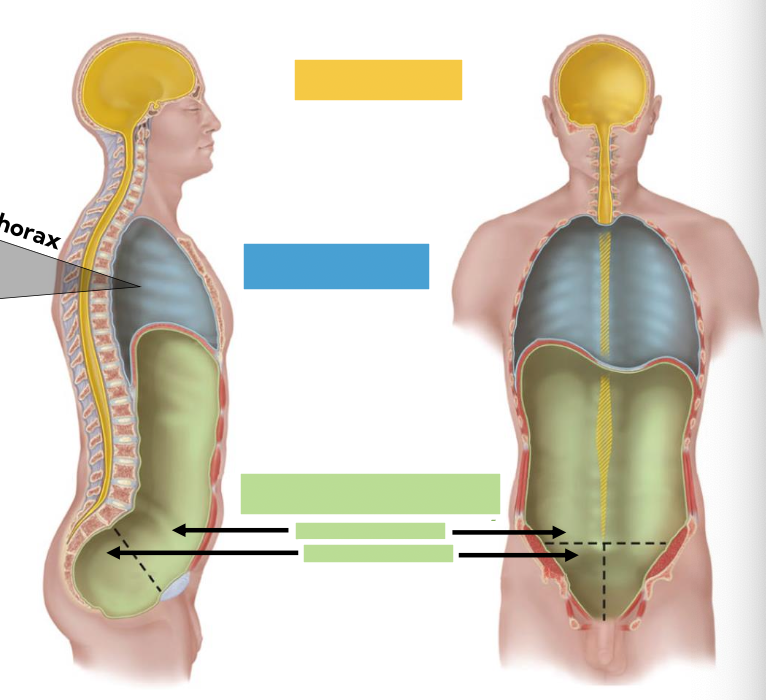
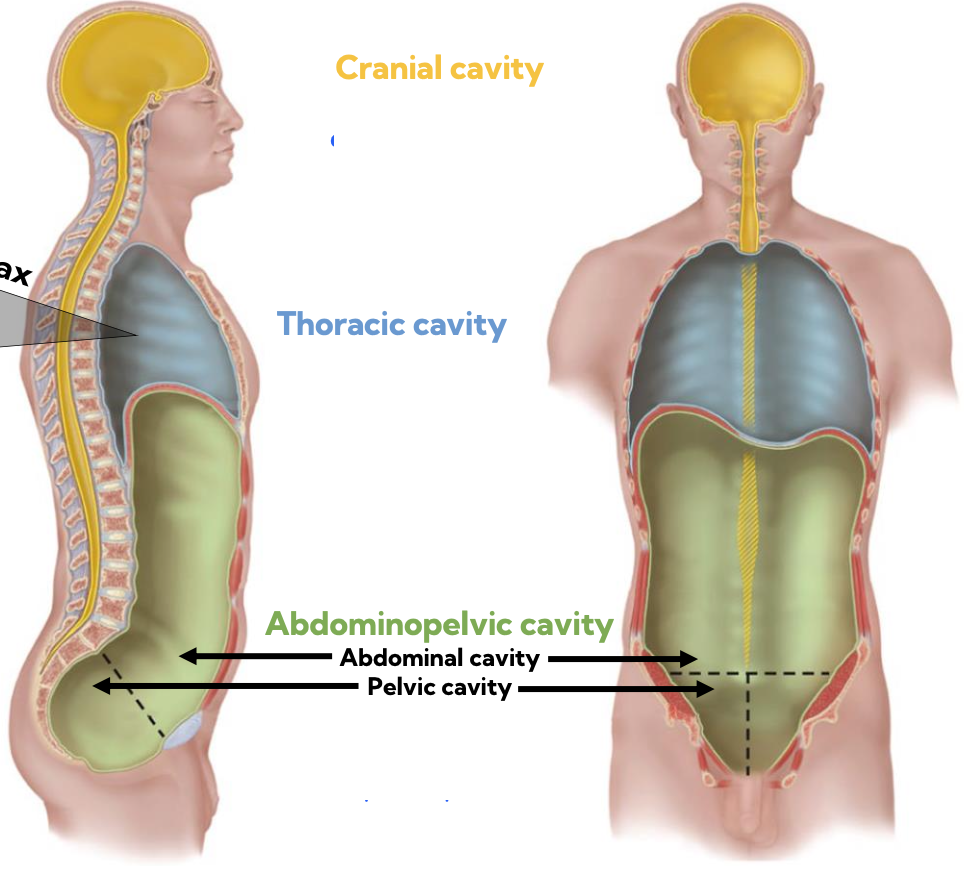
name the 3 cavities & their sub-cavities
yellow- cranial
blue- thoracic
green- abdominopelvic
green sub-cavities- abdominal & pelvic
cranial- 2 main associations
brain
CNS
what is the cranial cavity continuous with
spinal canal
thoracic cavity 2 main associations
chest
anything contained in ribs
abdominopelvic cavity 2 main associations
abdominal- digestive organs
pelvic- pelvis
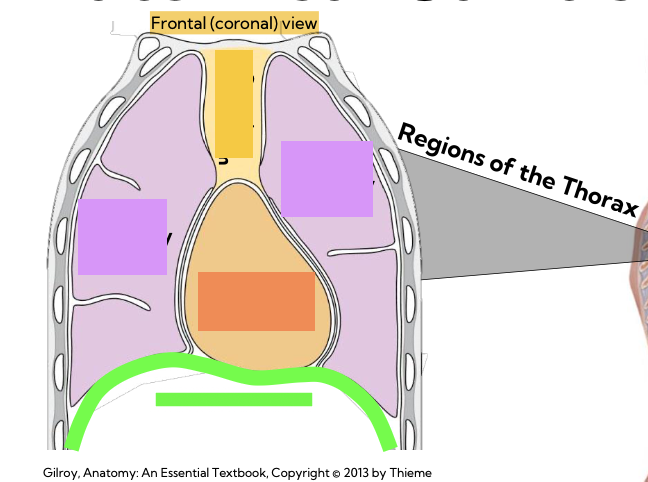
name the 5 regions of the thorax
yellow- superior mediastinum
orange- inferior mediastinum
purple- right & left pulmonary space
green- diaphragm
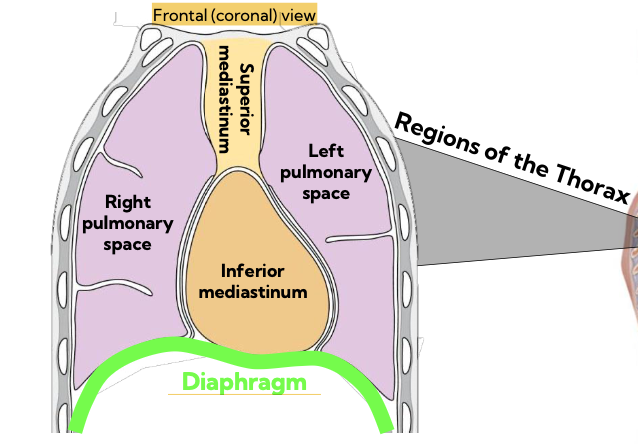
pulmonary meaning
breathing, lungs
diaphragm role
closes the inferior thoracic aperture
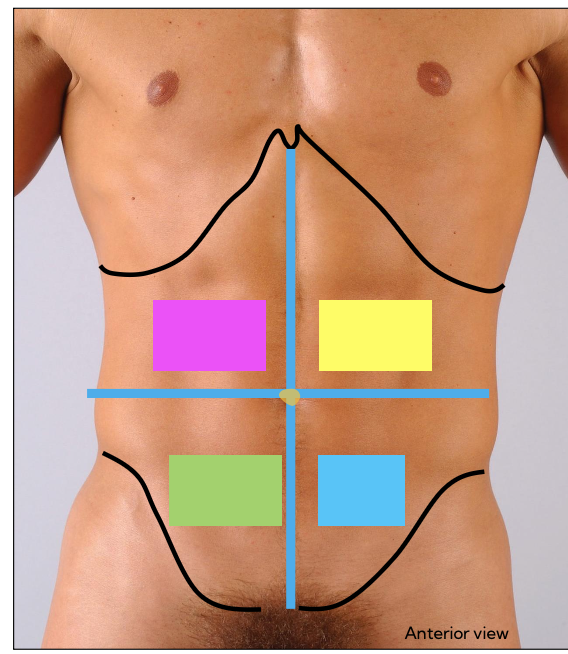
name the 4 quadrants of the abdomen & their 2 borders
pink- upper right
yellow- upper left
green- lower right
blue- lower right
upper border- costal margin
lower border- Inguinal ‘ligaments’
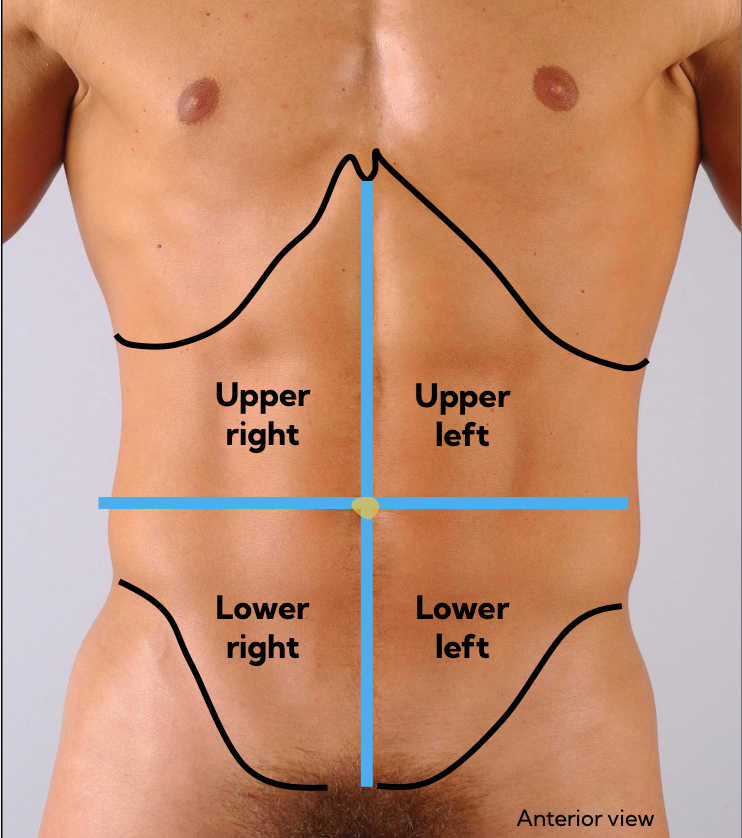
found in upper right (2)
liver, gallbladder
found in upper left (2)
stomach, spleen
found in lower right (2)
descending & sigmoid colon
found in lower left (2)
appendix, ascending colon
costal margin definer
inferior border of the ribs
Inguinal ‘ligaments’ definers
hip bone to pubic bone
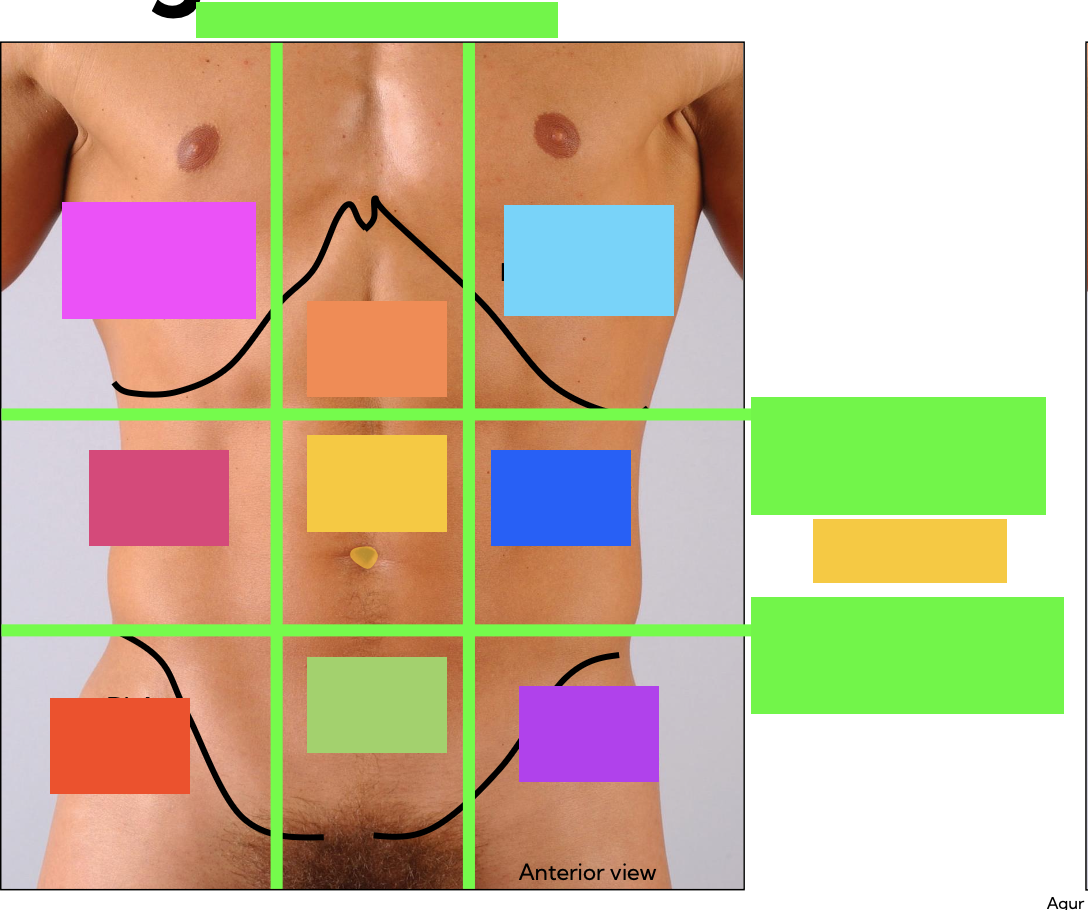
name the 9 regions of the abdomen, and the 3 sectioning lines
magenta- right hypochondriac region
pink- right lumbar region
red- right inguinal region
orange- epigastric region
yellow- umbilical region & umbilicus
green- pubic region
cyan- left hypochondriac region
blue- left lumbar region
purple- left inguinal region
vertical lines- midclavicular lines
horizontal line 1- subcostal (transpyloric) line (L1)
horizontal line 2- transtubercular line (5)
‘gastric’ meaning
stomach
‘chrondia’ meaning
cartilage
‘lumbar’ meaning
lower back
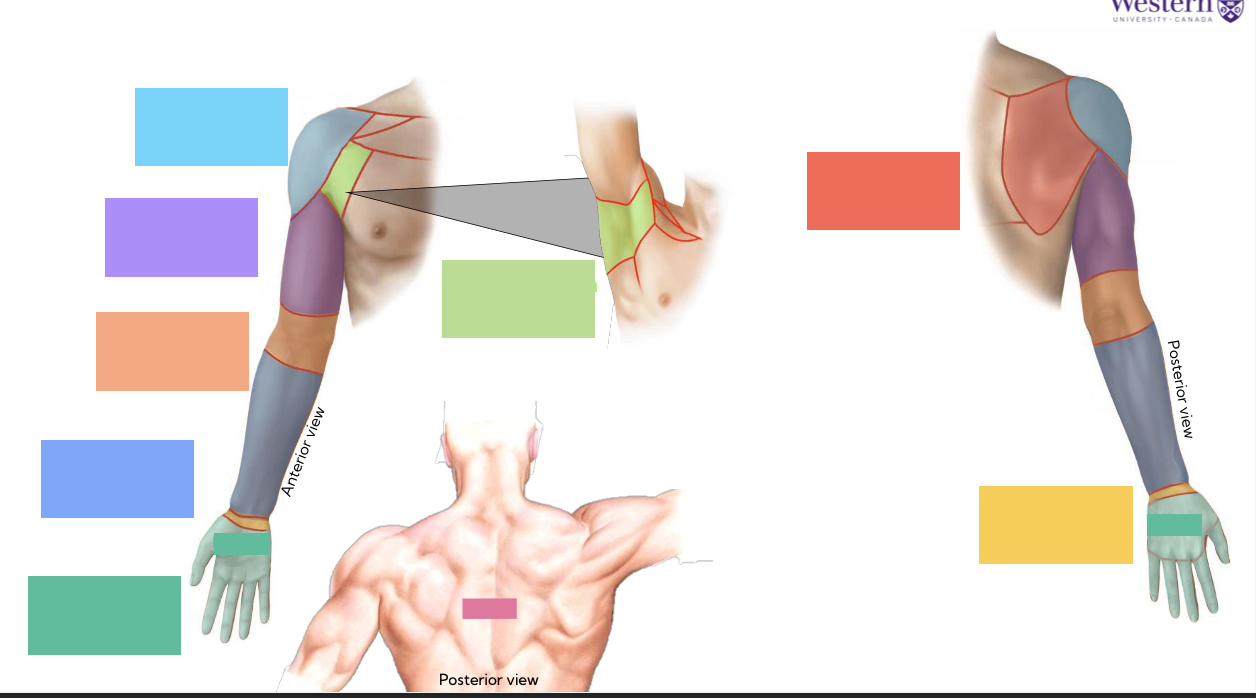
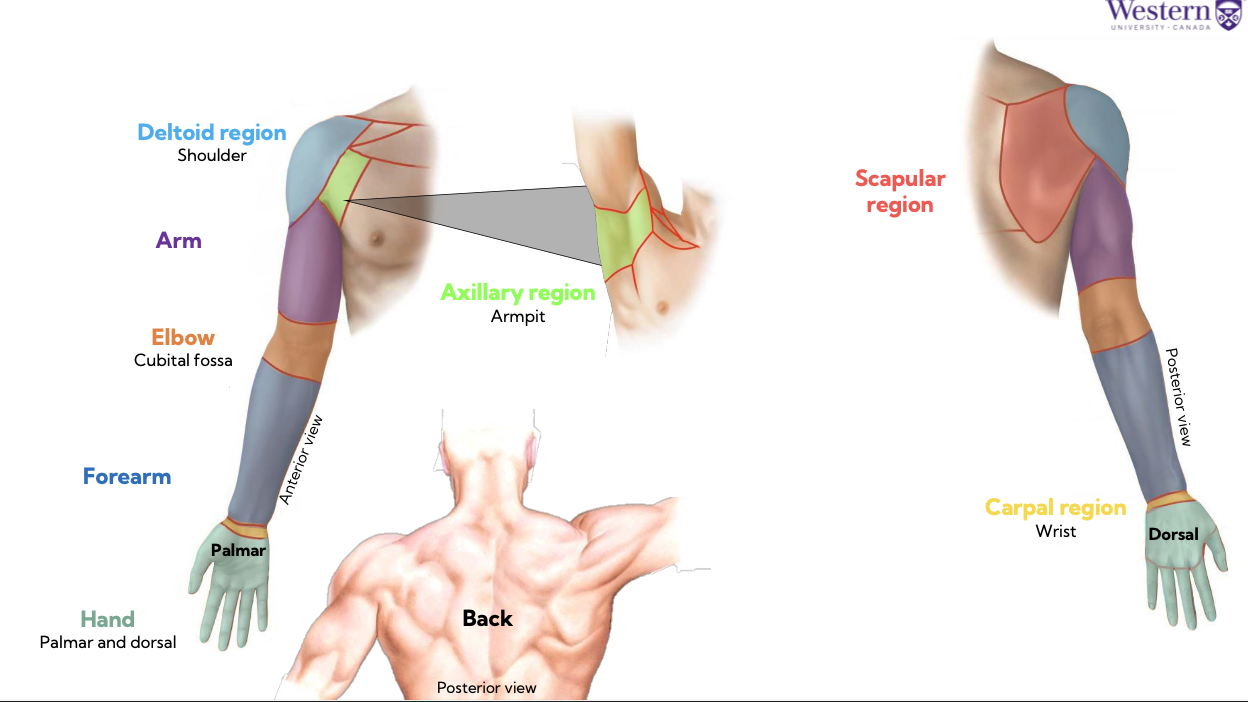
name the 9 regions of the upper limb ( & common names)
cyan- deltoid region (shoulder)
purple- arm
orange- elbow
blue- forearm
teal- hand (palmer & dorsal)
green- axillary region (armpit)
red- scapular region
yellow- carpal region (wrist)
name for hollow of the elbow
cubital fossa
back muscle group name
apendicular muscles
anatomical name for fingers
digits
what type of movements do upper limb muscles perform
complex movements
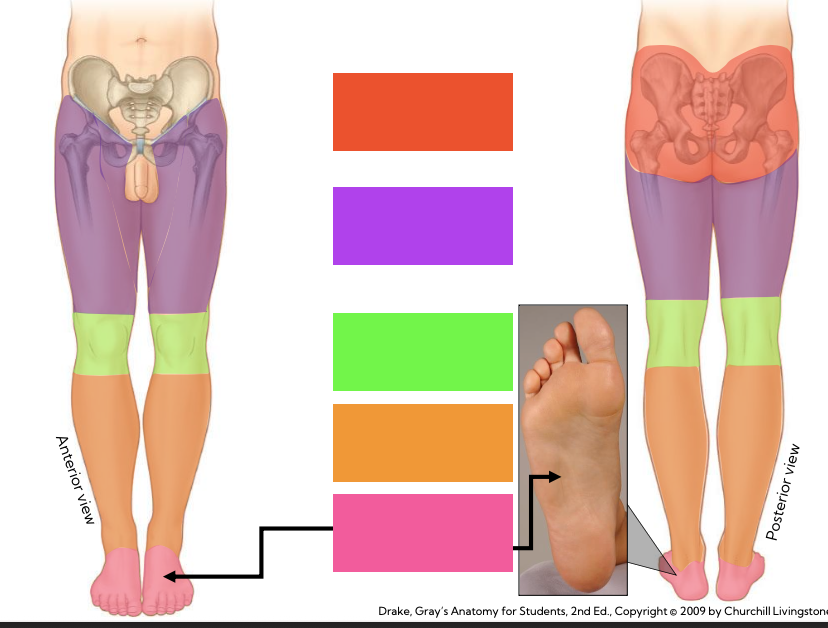
name the 5 regions of the upper limb ( & common names)
red- gluteal region (hip)
purple- thigh
green- knee
orange- leg (including ankle)
pink foot (dorsal & plantar surfaces)
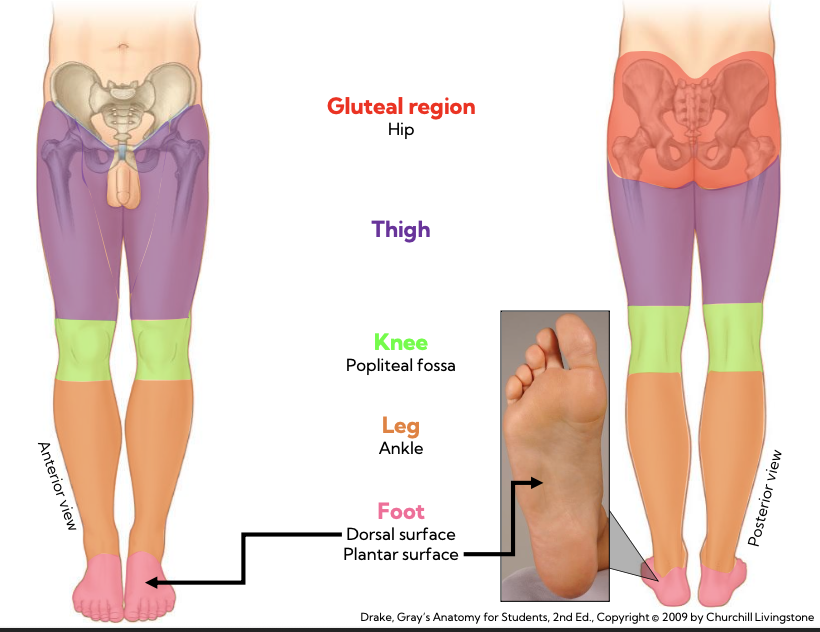
name for the hollow of the knee
popliteal fossa
what type of movements do lower limb muscles perform (2)
weight bearing & lower limb movements
what are the 4 categories of frontal plane movements
lateral flexion
abduction & adduction
version & inversion
scapular movements
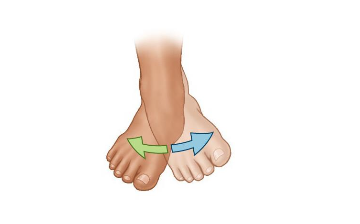
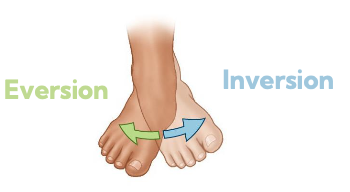
identify the frontal plane movement
eversion (green) / inversion (blue)
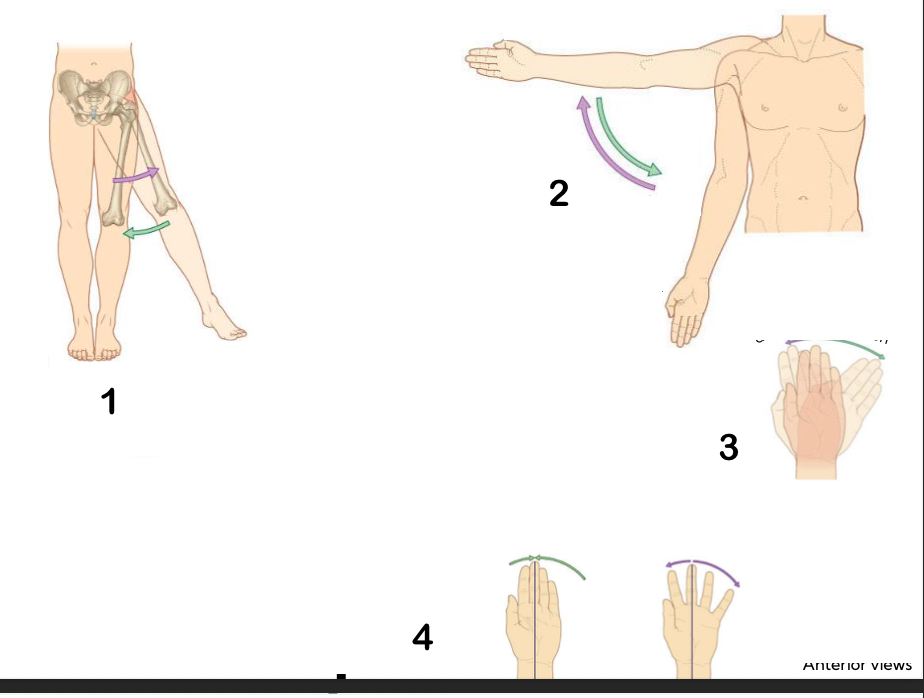
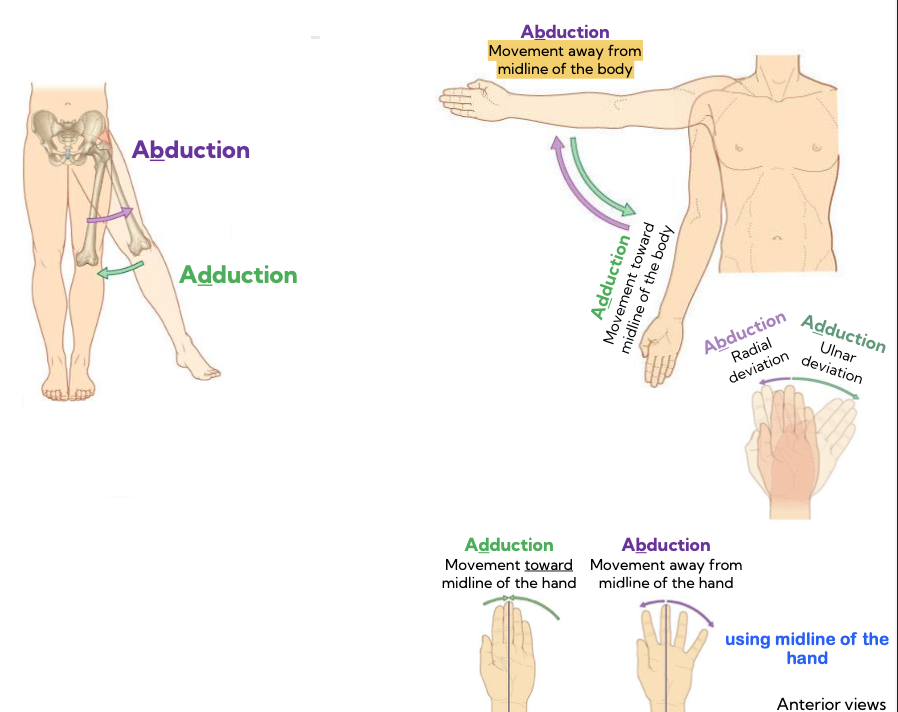
identify the frontal plane movement, and the reference point for each image
abduction/adduction
1 & 2- away from (abduction) or toward (adduction) midline of body
3- radial deviation (abduction) & ulnar deviation (adduction)
4- away from (abduction) or toward (adduction) midline of hand
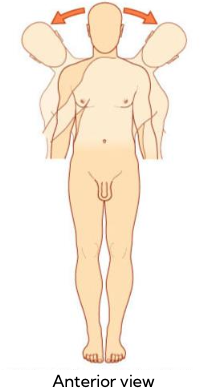
identify the frontal plane movement
lateral flexion
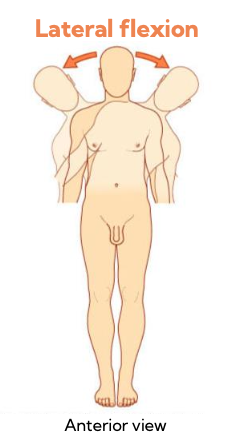

identify the frontal plane movement
scapular movements
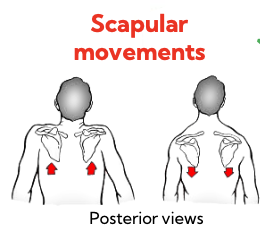
all movements in the frontal plane occur about which axis
sagittal axis
what is the category of sagittal plane movements
extension/flexion
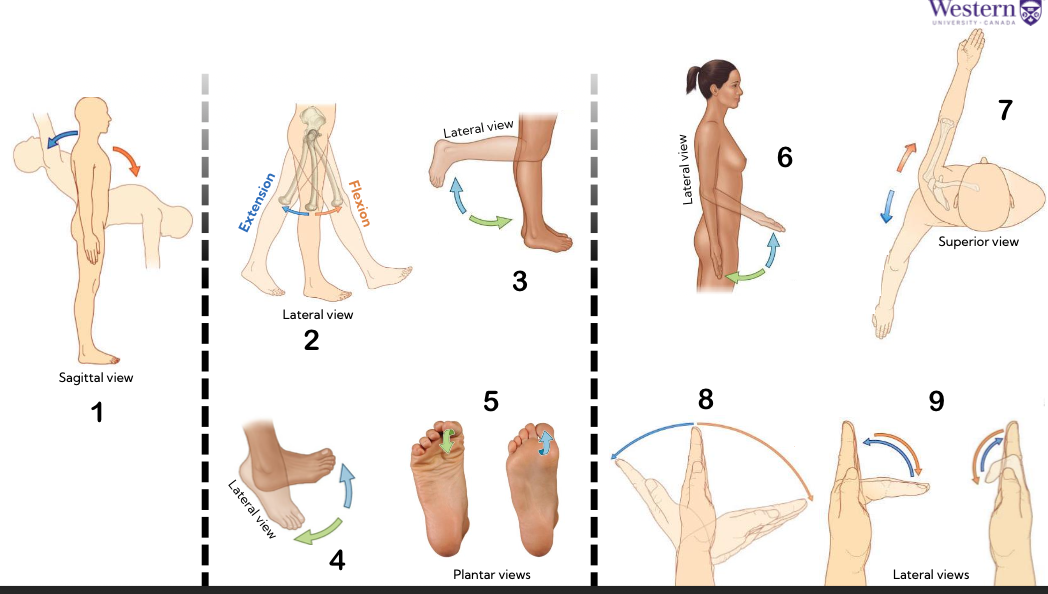
for each number, identify which sagittal plane movement the coloured arrow corresponds to
1- orange = flexion, blue = extension
2- orange = flexion, blue = extension
3- blue = flexion (bending knee back), green = extension
4- blue = dorsiflexion, green = plantarflexion
5- blue = extension, green = flexion
6- blue = flexion (bending elbow in), green = extension
7- orange = flexion, blue = extension
8- orange = flexion, blue = extension
9- orange = flexion, blue = extension
all movements in the sagittal plane occur about which axis?
frontal axis
what are the 4 categories of frontal plane movements
rotation
abduction/adduction
protraction/retraction
supination/pronation
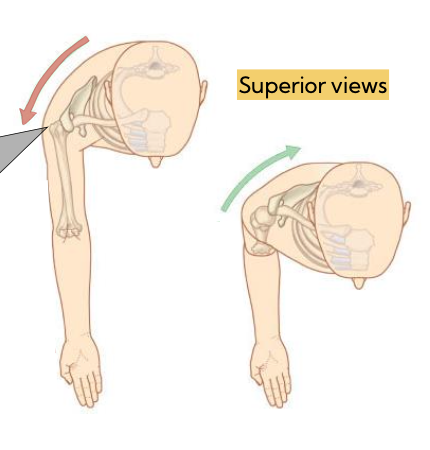
identify the transverse plane movement
red- protraction
green- retraction
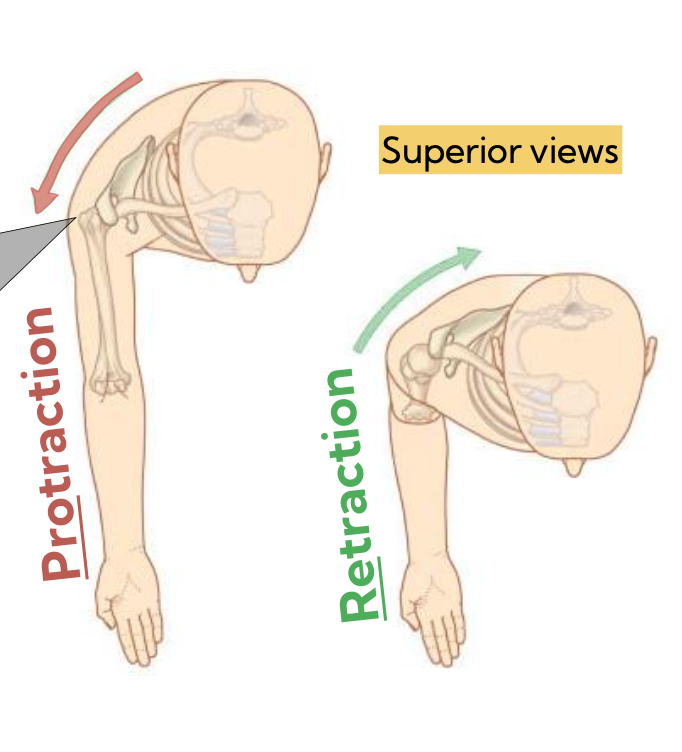
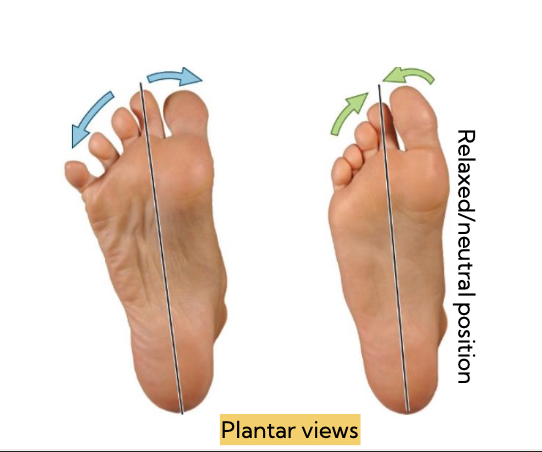
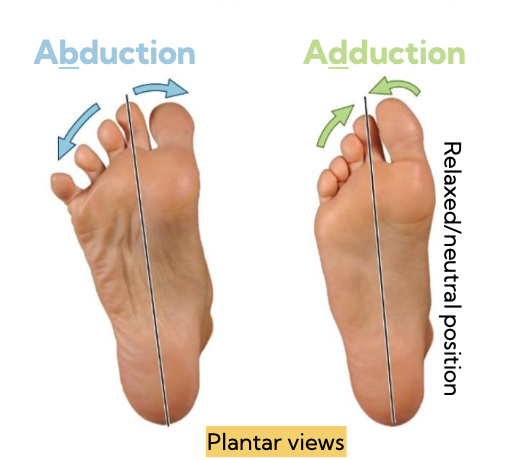
identify the transverse plane movement
blue- abduction
green- adduction
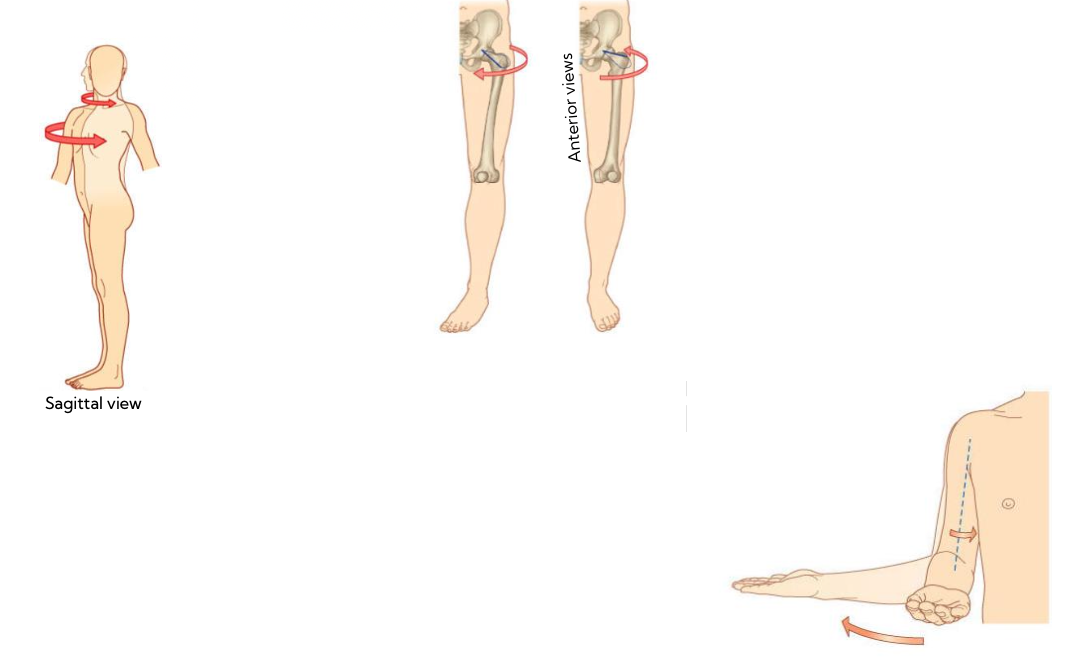
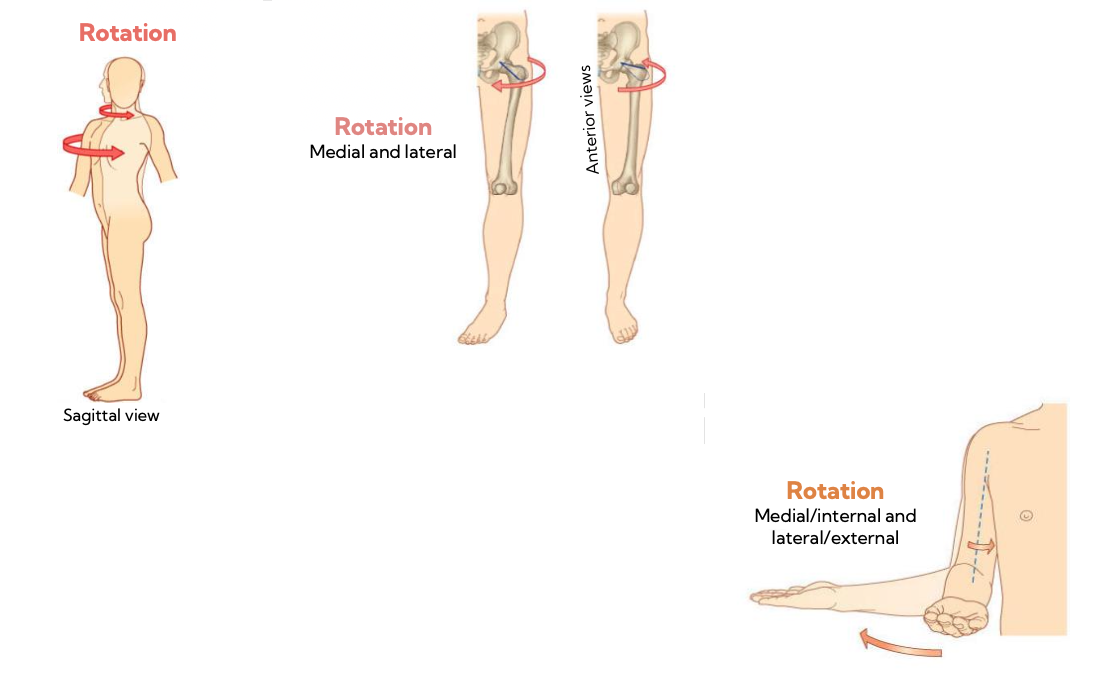
identify the transverse plane movement, & what types ar being shown (if applicable)
rotation ( medial & lateral for any showing 2 rotations)
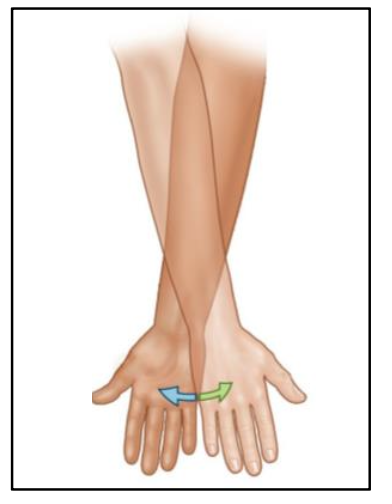
identify the transverse plane movement
blue- supination
green- pronation
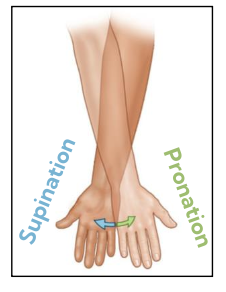
all movements in the transverse plane occur about which axis
longitudinal axis
what is compound motion
using several muscle groups & movements collaboratively to produce movement
what are the 2 categories of compound movements
circumduction
reposition/opposition
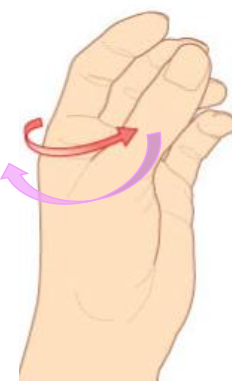
identify the compound movement
pink- reposition
red- opposition
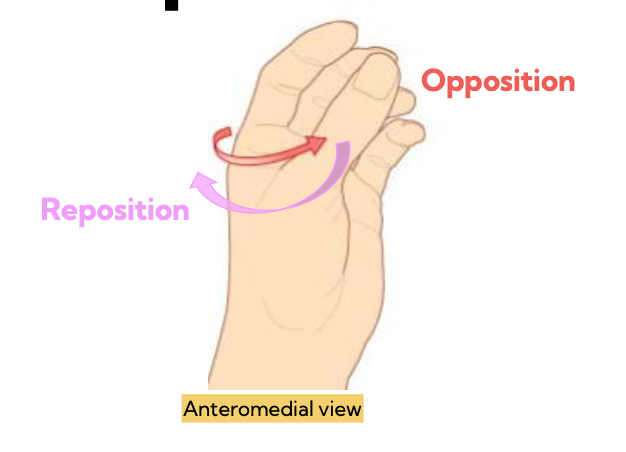
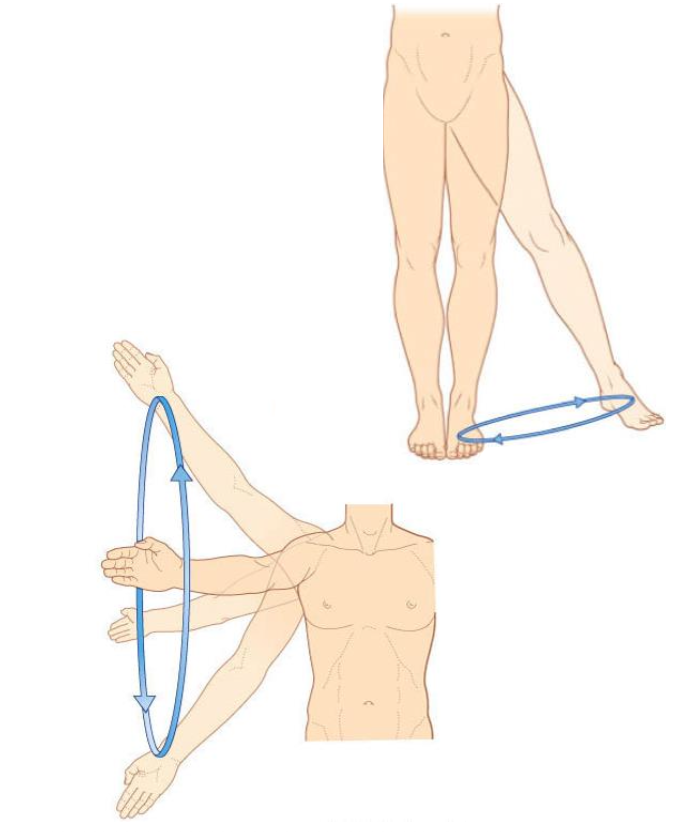
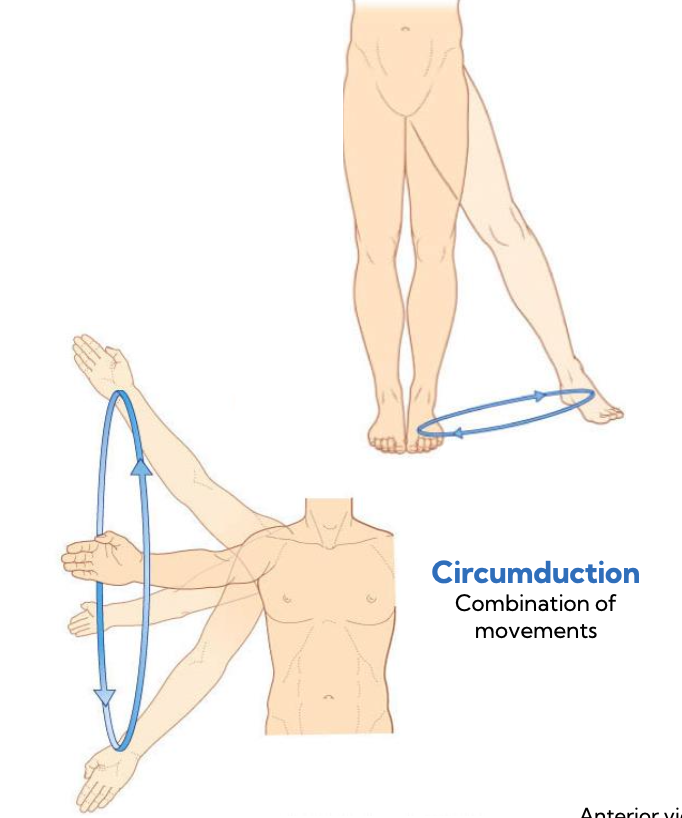
identify the compound movement
circumduction
 Note
Note  Flashcards (20)