11. The rise of tetrapods
 Call Kai
 Learn
Learn Practice Test
 Spaced Repetition
 Match
Match Flashcards
 Knowt Play
1/61

There's no tags or description
Looks like no tags are added yet.
Name | Mastery | Learn | Test | Matching | Spaced | Call with Kai |
|---|
No analytics yet
Send a link to your students to track their progress
62 Terms
Life on land provided what?
Opportunites for early animal colonists
Higher O2 and new resources of food allowed for animals to thrive
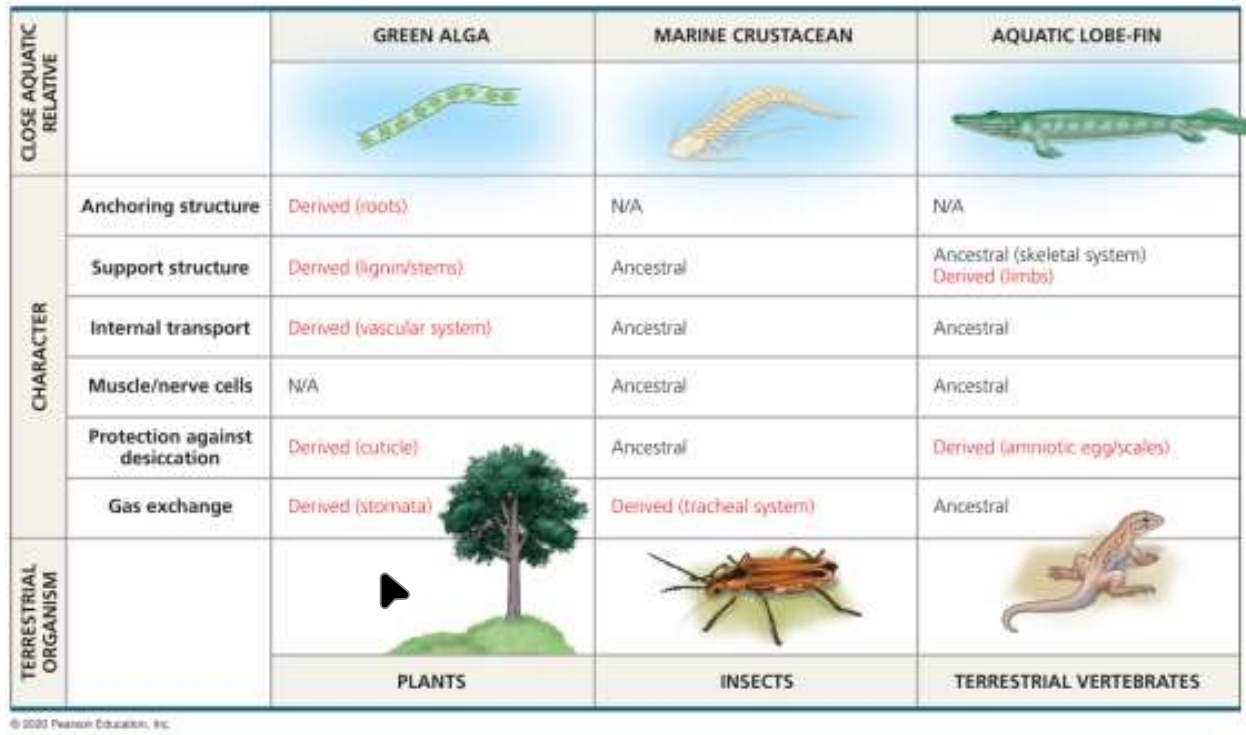
Green Algae Characteristics & Terrestrial organism
Anchoring Structure - derived (roots)
Support Structure - Derived (stems)
Internal transport - Derived (vascular systems)
Muscle/nerve cells - N/A
Protection against desiccation - derived (cuticle)
Gas exchange - derived (stomata)
Terrestial Organism - Plants
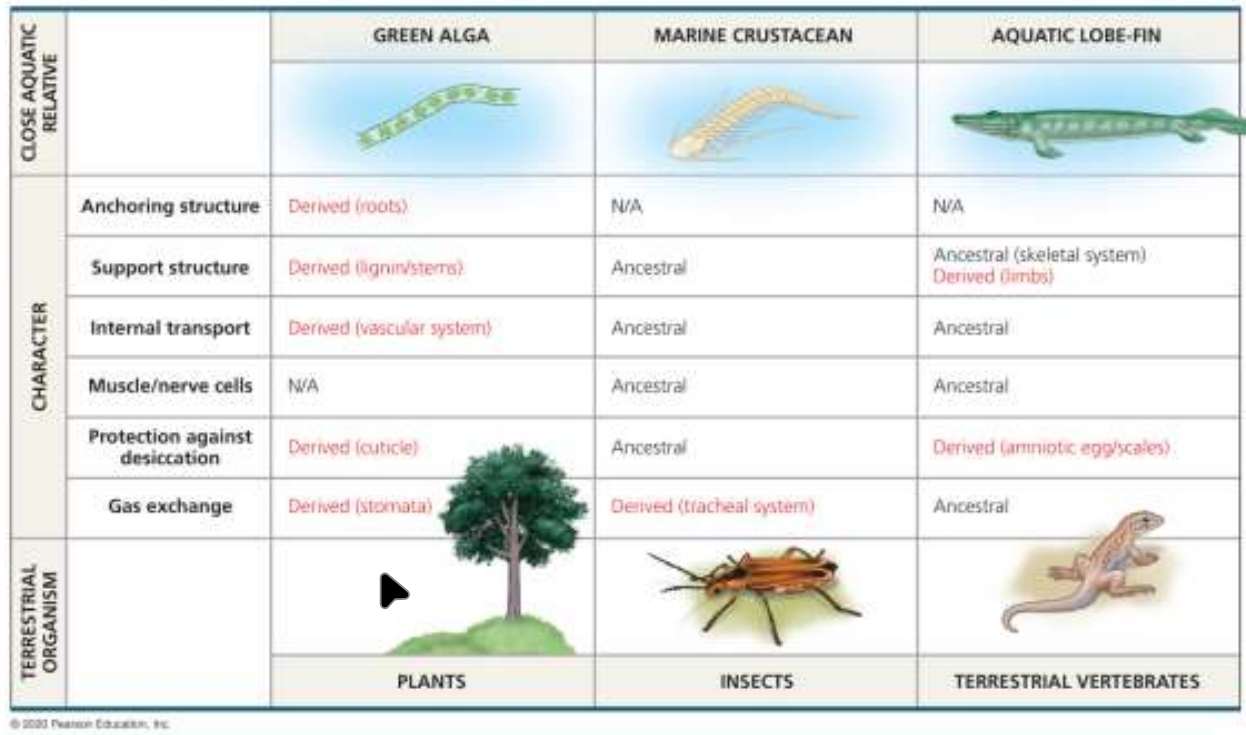
Marine Crustaceans Characteristics & Terrestial Organism
Anchoring Structure - N/A
Support Structure - Ancestral
Internal transport - Ancestral
Muscle/nerve cells - Ancestral
Protection against desiccation - Ancestral
Gas exchange - Derived (tracheal system)
Terrestial Organism - Insects
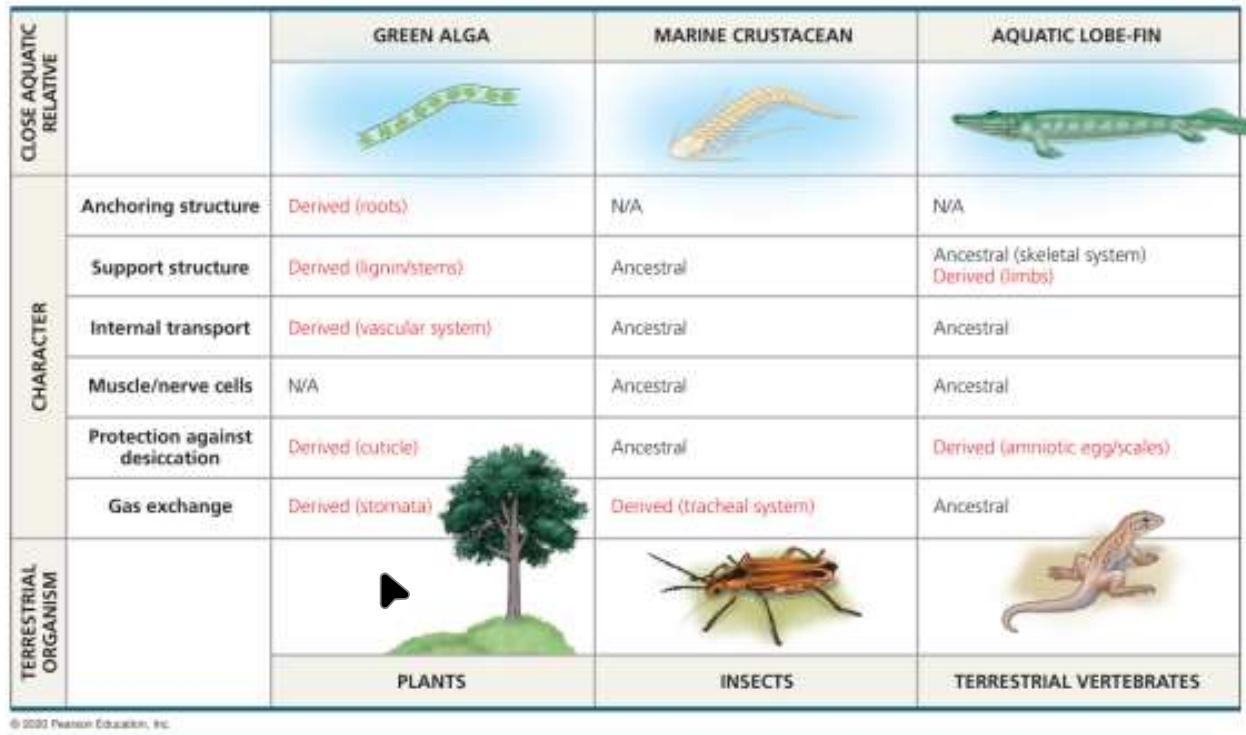
Aquatic lobe-fin Characteristics & Terrestial Organism
Anchoring Structure - N/A
Support Structure - Ancestral (Skeletal system) & Derived (limbs)
Internal transport - Ancestral
Muscle/nerve cells - Ancestral
Protection against desiccation - derived (Amniotic egg/scales)
Gas exchange - Ancestral
Terrestial Organism - Terrestrial vertebrates
what challenges where there on land?
Scarec water
Temperature Fluctuations
No support against gravity
What were the first animals to colonize land?
The arthropods
about 450mya
Millipedes, centipedes, spiders and wingless insects by 410mya
Vertebrates by 365mya
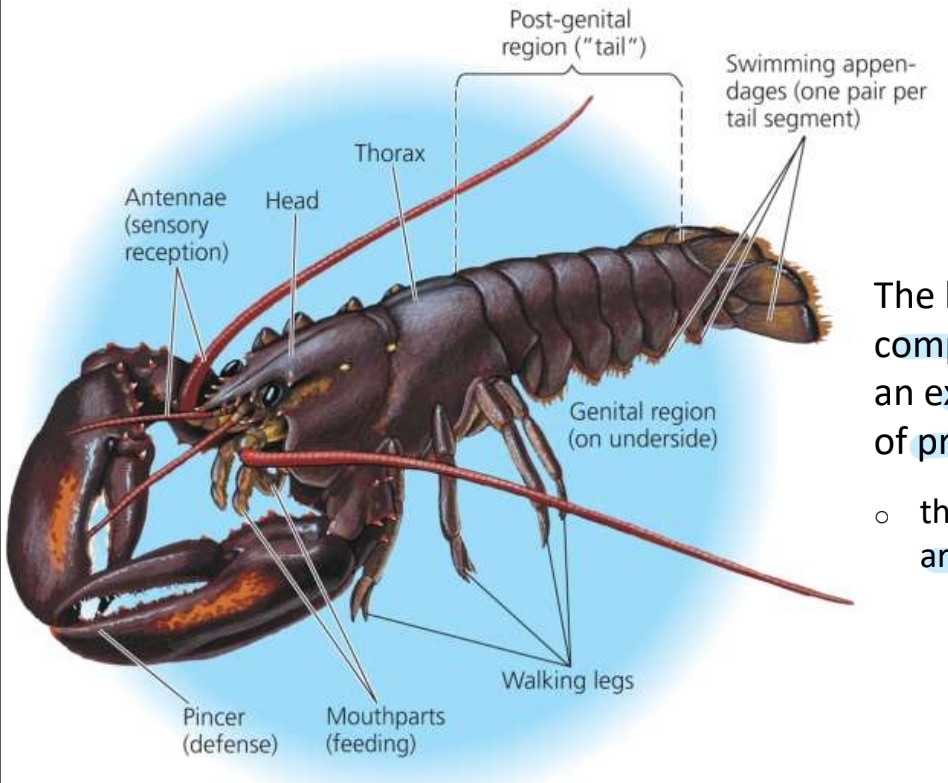
Characteristics of arthropods
They have appendages for walking, feeding, sensory reception, reproducion and defense
Their appendages are jointed and come in pairs
Athropods body are completely covered in a cuticle (exoskeleton) which is built from layers of protein and chitin
this helped them colonize land
Aquatic arthropods
they have gills for gas exchange
Terrestial arthropods
they have specialized gas exchange structures
e.g. insects have tracheal systems w/ branched air ducts
How old does the oldest insect fossils date back to?
~415 mya, Devonian
When did the explosion of insect diversity occur?
Carboniferous and Permian periods
Flight in insects
Flight has helped insect excape predators, find food, mates, and disperse to new habitats
Usually done by the use of wings
wings are extensions of the cuticle, so insect do not have to sacrifice walking legs for flight
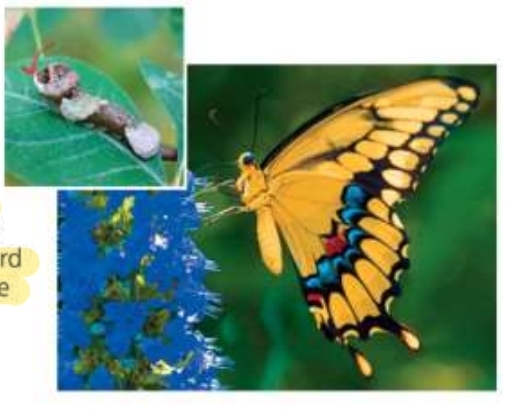
Lepidopterans
includes moths and butterflies
these undergo complete metamorphisis
the larval stage, a caterpillar, is specialized for eating and growing
these resembles bird dropping so they do not get eaten
The adult stage is specialized for dispersal and reproduction
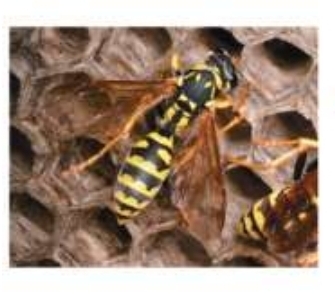
Hymenopterans
includes ants, bees, and wasps
They undergo complete metamorphosis and are highly social insects
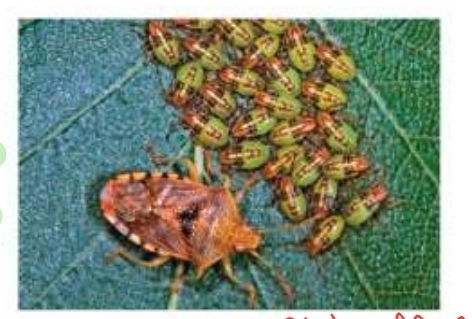
Hemipterans
includes stink bugs, bed bugs, and so-called other tru bugs
they have piercing mouthparts and undergo complete metamorphosis
the young resemble the adults just smaller and lack wings
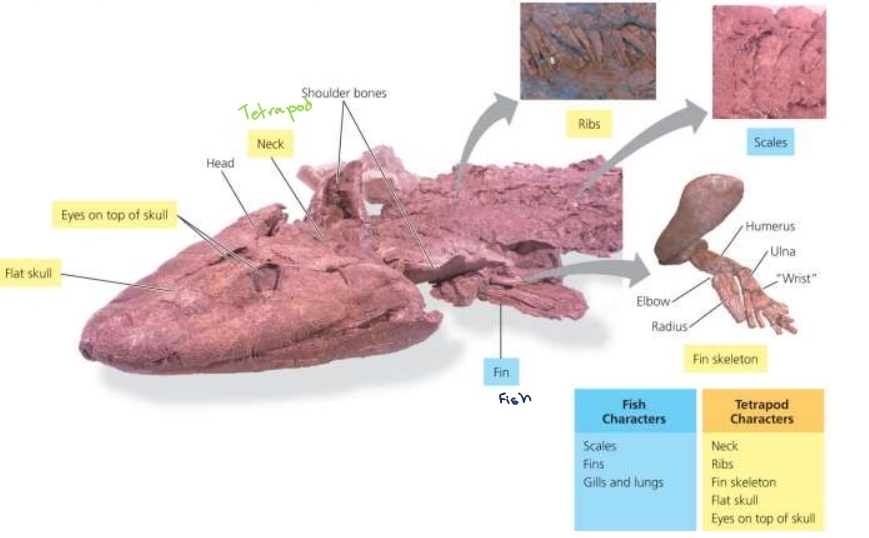
What kinds of fish occured during to the DEVONIAN
Lobefins fishes
they lived in the coastal wetlands
in one lineage the fins became prograssively more limb-like while the rest of the body retained adaptations for aquatic life
e.g. tiktaalik provides new insights into early tetrepod evolution
3 Clades of amphibians
Clade Urodela - Salamanders
Clade Anura - Frogs and toads
Clade Apoda - Caecilians
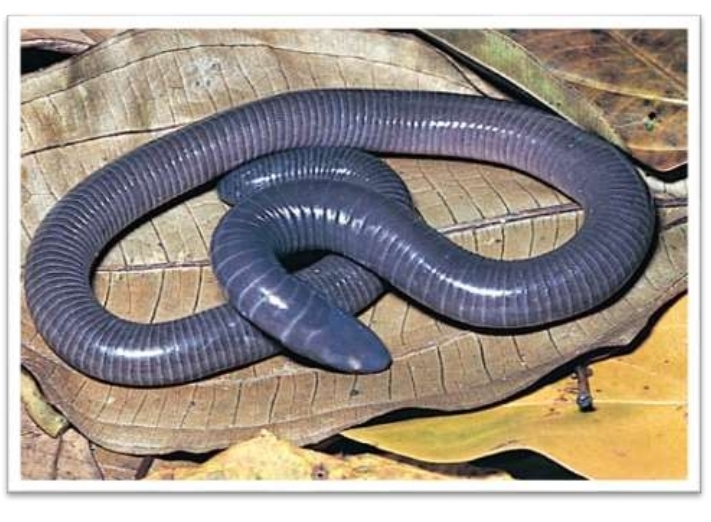
Caecilians - Apodans
The caecilians are legless and resemble worms
however they have a backbone
they inhabit moist soils in tropical habitats
some do matriphagy - which is when the embryos eat the mother's skin that she regrown
Amphibian definition
means both ways of life
which refers to the metamorphosis of an aquatic larva into a terrestrial adult
they have moist skin and complements the lungs in gas exchange
fertilization is external in most species & the eggs require moist environment
Amniotes definition
a groud of tetrapods whose living members are reptiles, birds and mammals
Amniote derived characteristic
the derived characteristic of amniotes is the amniotic egg
it contains membranes that protect the embryo
the extraembryonic membranes are:
amnion
chorion
yolk sac
allantois
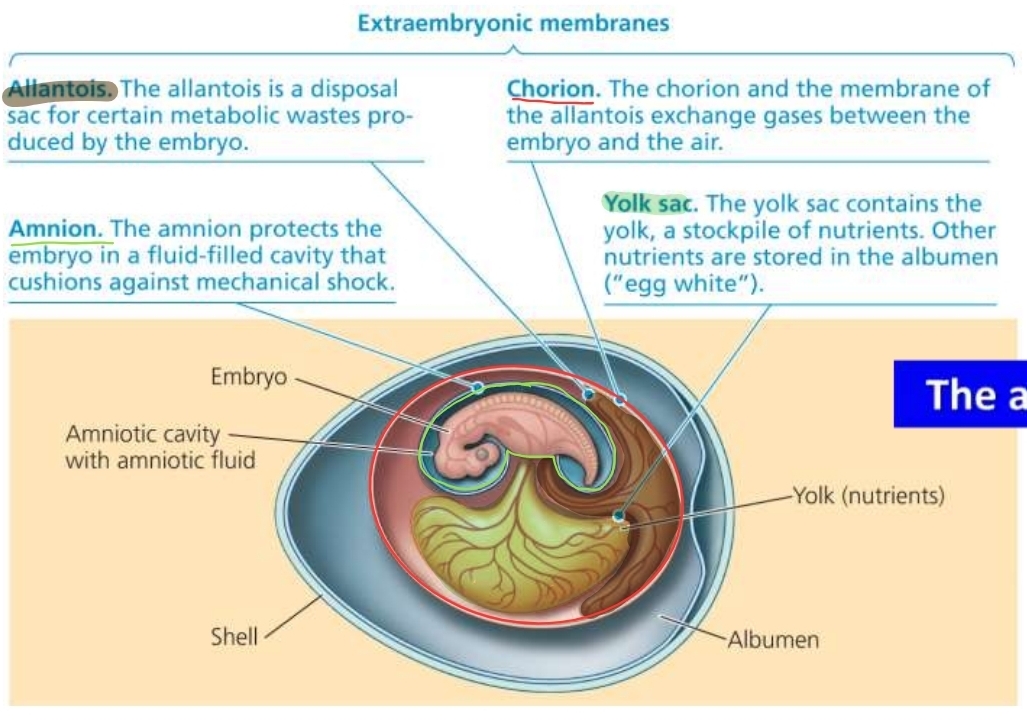
Amnion membrane
The amnion protects the embry in a fluid filled cavity that cushions against mechanical shock
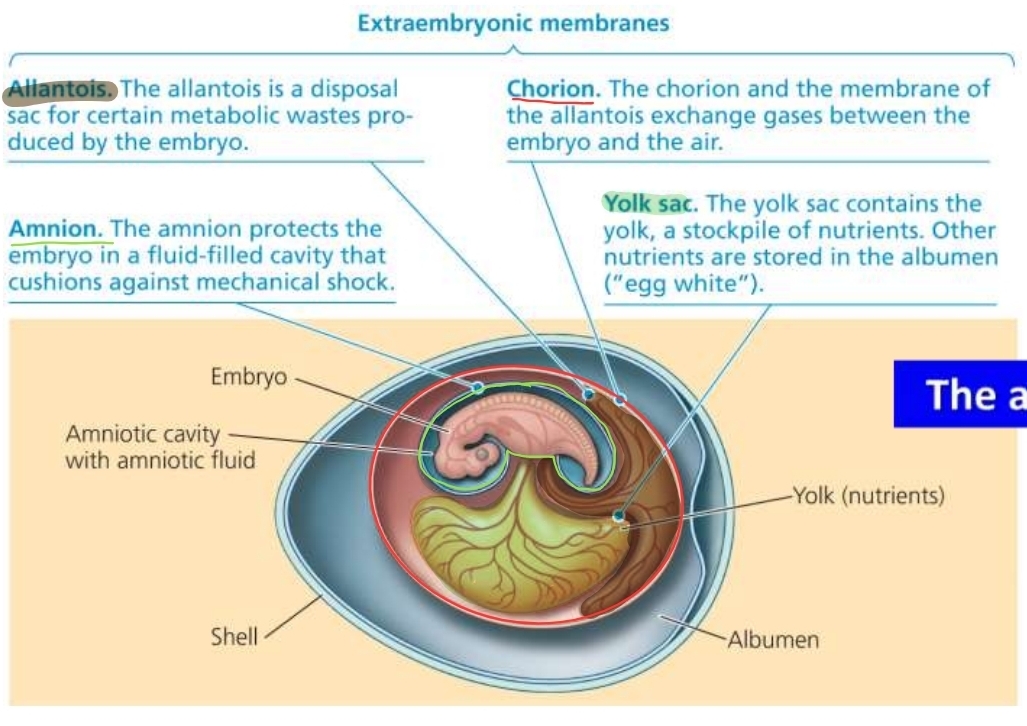
Allantois membrane
the allantois is a disposal sac for certain metabolic wastes produced by the embryo
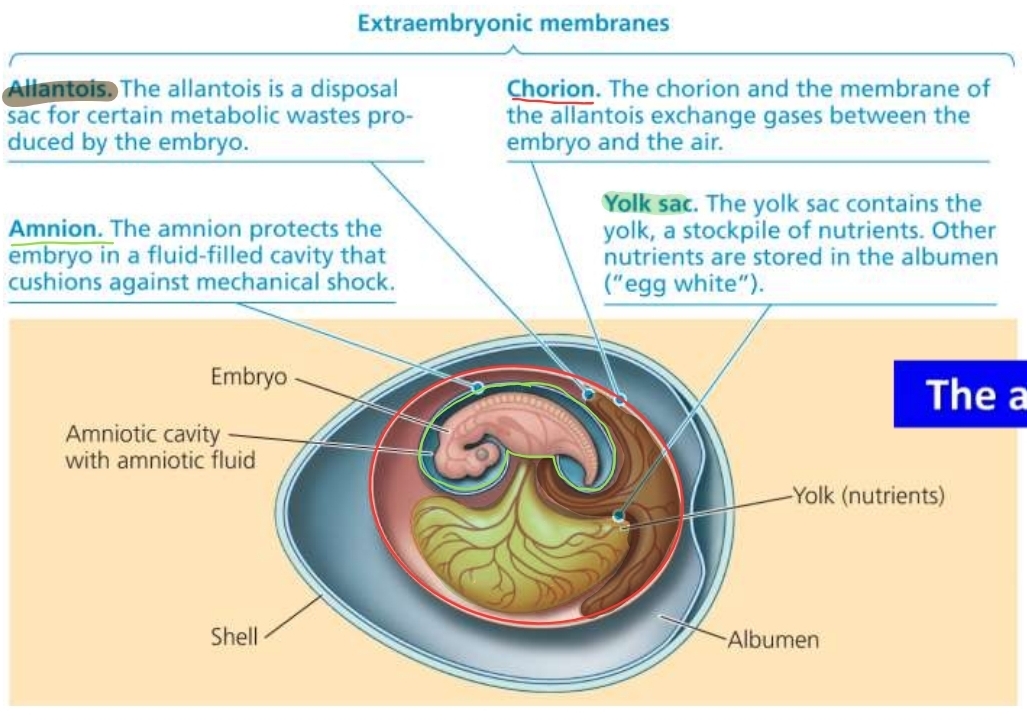
Chorion membrane
The chorion membrane exchanges gases with the allantois membrane between the embryo and the air
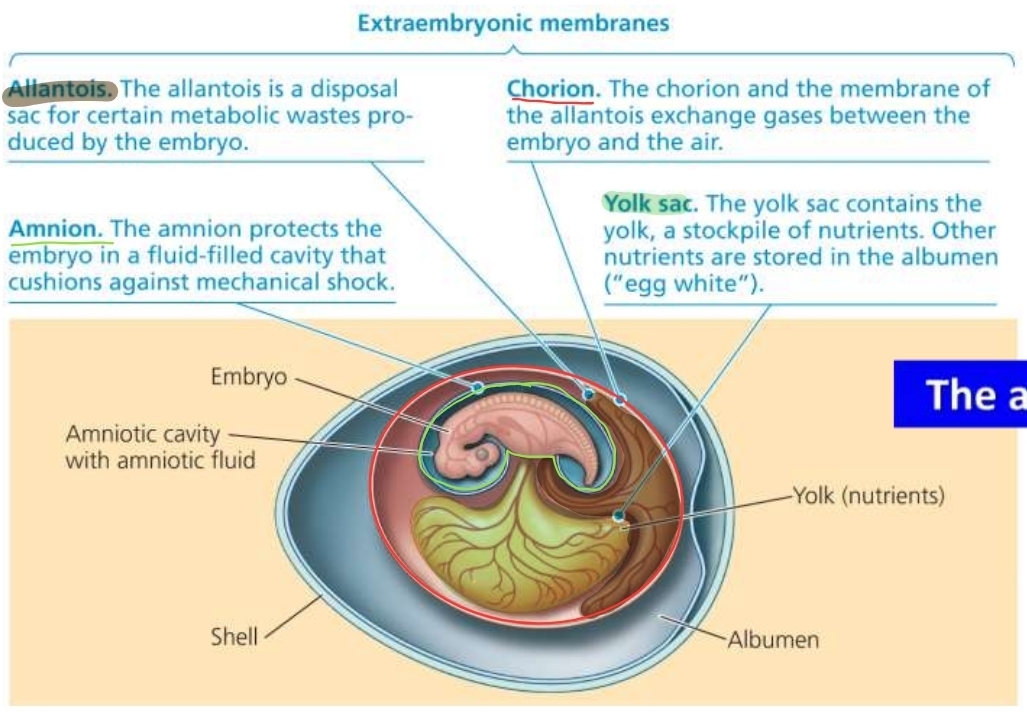
Yolk sac
The yolk sac contains the yolk, a stockpile of nutrients. other nutrients are stored in the albumen, also known a egg white.
Amniote terrestrial adaptations
the terrestrial adaptation amniotes are:
relatively impermeable skin
the ability to use the rib cage to ventilate the lungs
what was the origin and radiation of amniotes
the most recent ancestor of living amphibians and amniotes lived about 350 mya
early amniotes resembled small lizards with sharp teeth, which is a sign they were predators
Clade Reptiles
this clade includes the tuataras, lizards, snakes, turtles, crocodilians, birds, and the extinct dinosaurs.
key features are scales which create a waterproof barrier
they lay shelled eggs on land
The origin and evolutionary radiation of reptiles
The oldest reptilian fossils date from the late Carboniferous, 310mya
Ectothermic vs Endothermic
Reptiles are ectothermic
which means they have to absorb external heat as the main source of body heat
e.g. sunbathing
Birds are endothermic
this means they are capable of keepthing the body warm through metabolism
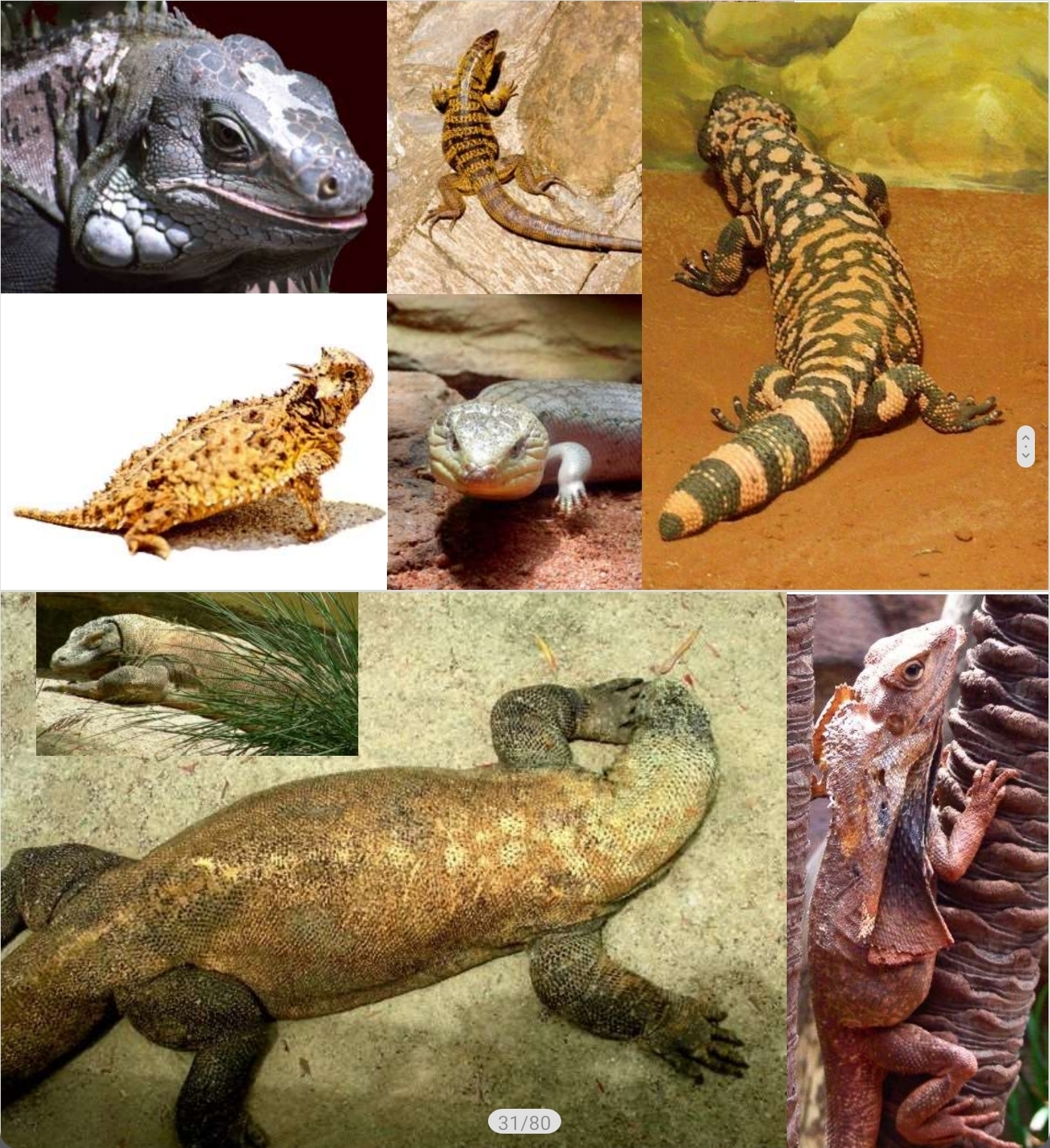
What is the two surviving lineage of lepidosaurs
The two surviving lineages of the lepidosaurs is the:
tuatara
this is a species of lizard-like reptile
these have a third (parietal) eye
squamates
includes lizards and snakes
they are the mose numerous and diverse reptiles
snakes are legless liposaurs that evolved from lizards
Turtles and tortoises
Turtles are the most distinctive group of reptiles alive today
all tutles have a boxlike shell amde of upper & lower shields that are fused to the vertebrae, clavicles and ribs
some turtles have adapted to deserts and others live entirely in ponds and rivers
Alligators and crocodiles
Crocodilians (alligators and crocodiles) belong to an archosaur lineage that dates back to the late Triassic
has more than 2 dozen species
Birds
Birds are archosaurs
however every feature of their reptilian anatomy has undergone modification in their adaptation to flight
has about 10000 species
Derived characters of Birds
Many of their characters are adaptations to facilitate flight
the major adaptation in the wings is the keratin feather
others include lack of a urinary bladder, females have one ovary, small gonads and loss of teeth
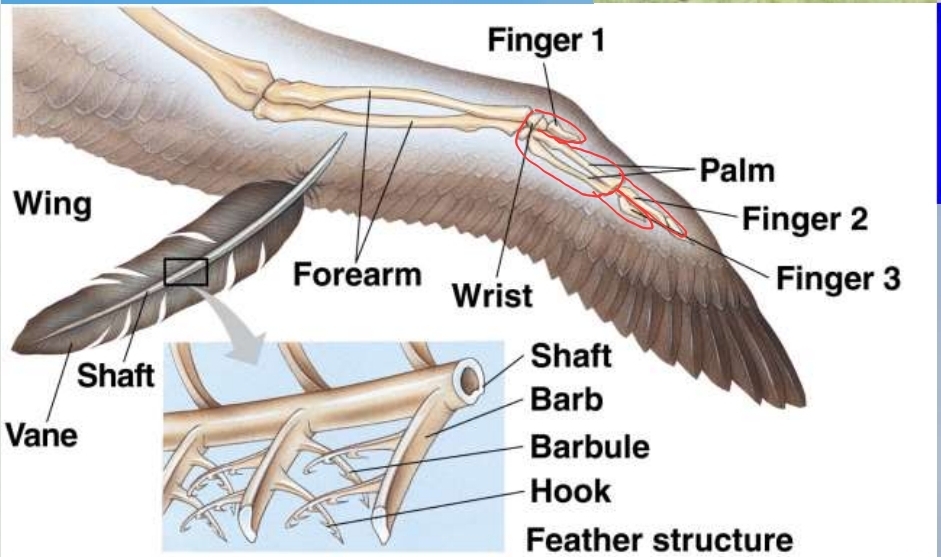
What does a feather consist of?
A feather consists of a central air-filled shaft from which radiate the vanes
the vanes are made up of barbs with small branches called barbules
How does flight help birds?
Flight enchances hunting, scavenging, escape from terrestrial predators and migration
flight requires a great expenditure of energy, acute vision and fine muscle control
The origin of birds
Birds probably descended from small therapods, which is a group of carnivorous dinosaurs
by 150mya feathered therapods had evolved into bired
Archaeopteryx remains the oldest bird known (150 mya) though another recently described fossil named Xiaotingia is to be a bird-liked featehred dinosaur (155 mya)
What are mammals?
They are amniotes that have hair a produce milk via mammary glands
Derived characteristics of mammals
Mammary glands that produce milk
Differentiated teeth
Efficient repsiratory and circulatory systems
Relatively large brain
Hair
Early evolution of mammals
Mammals and reptiles are sister groups
meaning they came from a common ancestor
they have been separated for more than 300 mil. years
Mammals evolved from synapsids in the later Triassic period
Non-mammalian synapsids lacked hair and laid eggs
What were the 3 living lineages of mammals that emerged in the EARLY CRETACEOUS
Monotremes
Marsupials
Eutherians
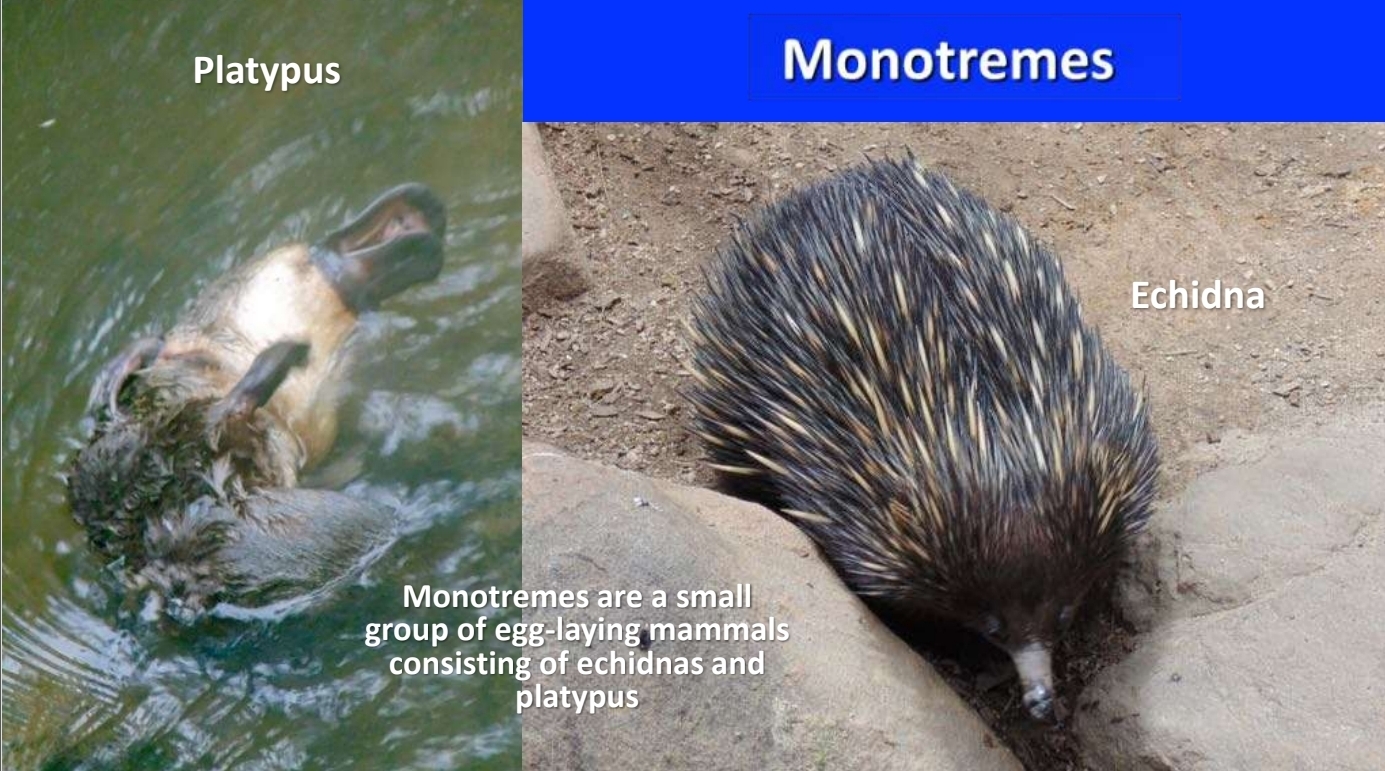
monotremes
Includes the platypus and 4 species of spiny anteaters, totalling 5 species of monotremes
they are only found in Austrailia and New Guinea
Monotremes have hair and produce milk through their skins
meaning they lack nipples
They are the only mammals that lay eggs (inset)
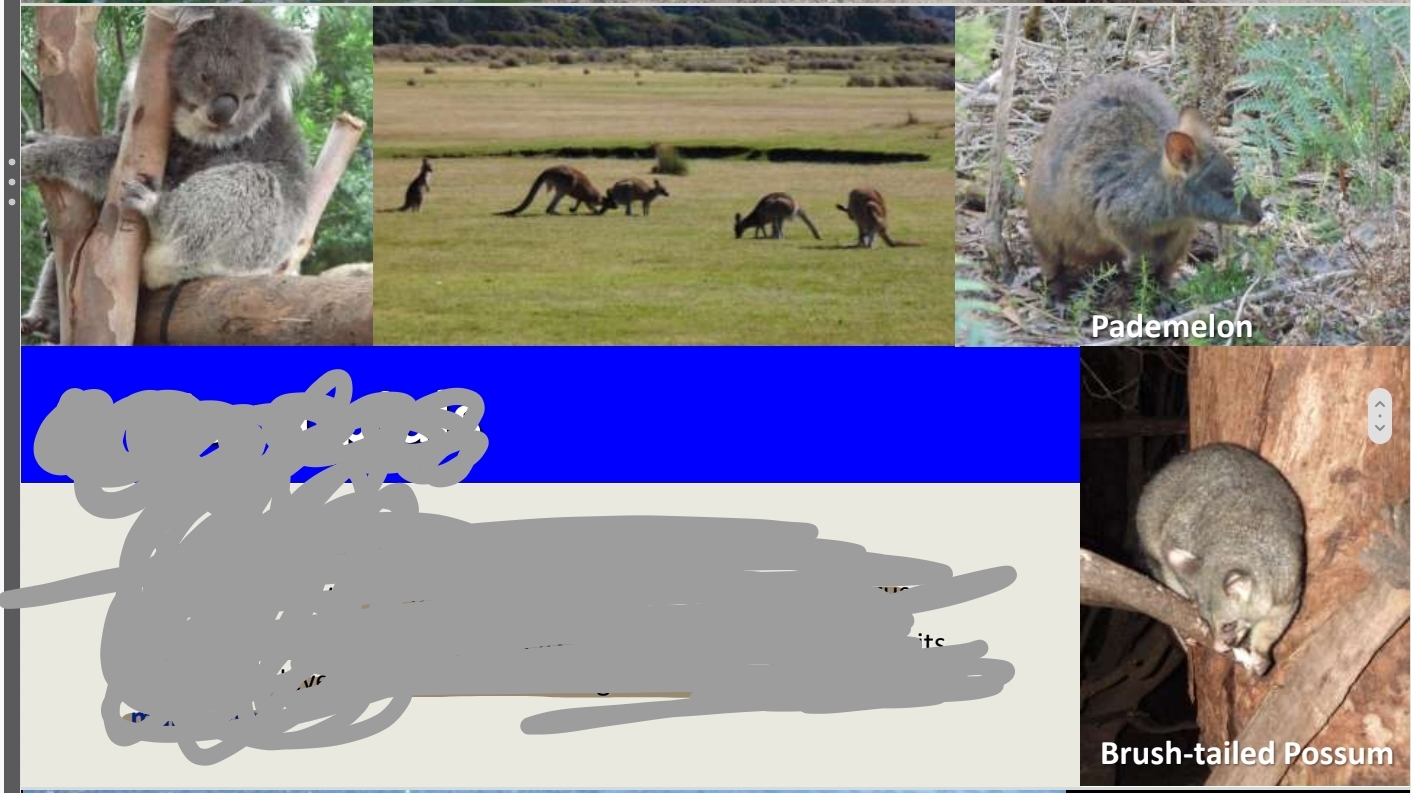
Marsupials
Includes kangaroos, opossums and koalas
Marsupials have 324 species
they have nipples that provide milk and give birth to live young
however offspring the offspring are born early in their development
the emebryo develops in a placenta in the uterus
then they finish their growth while nursing from a nipple in their mother's pouch called a marsupium
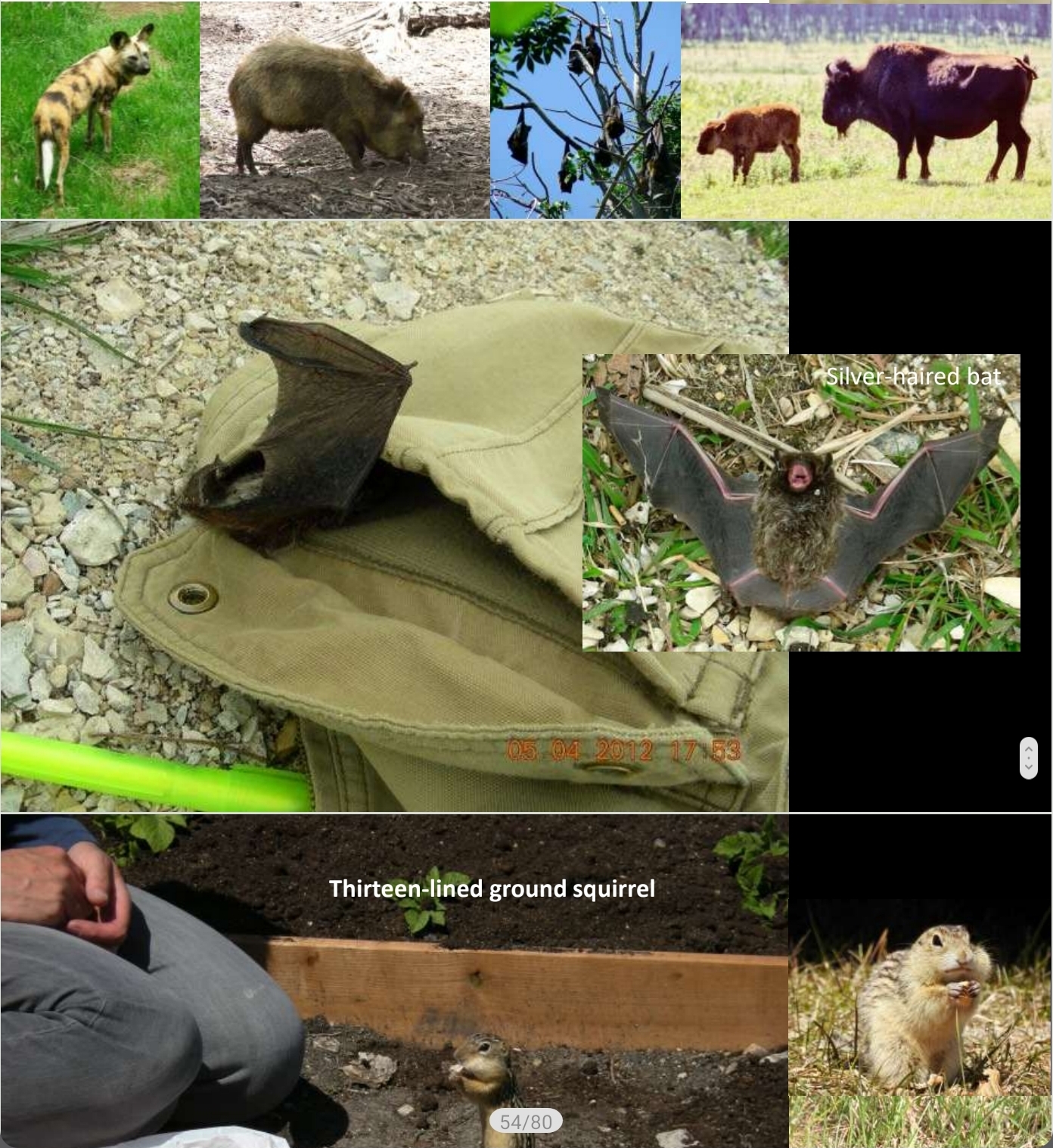
Eutherians
Includes primates, whales, rodents and many others
has the most mammals with 5010 species
EUtherians have a longer pregnancy than marsupials and have a more complex placenta
a placenta is a structure which nutrients diffuse into the embryo from the mother's blood
Young eutherians complete their embryonic development in the uterus joined to the mother by the placenta
Order Primates
Includes lemurs, tarsires, monkeys and apes
humans are members of the ape group
earliest primates were tree dwellers
Derived characters of Primates
Most primates have hands and feet adapted for grasping
Monkeys and apes have an opposable thumb
A large brain and short jaws
Forward-looking eyes close together on the face which provides depth perception
Complex social behaviour & parental care
Early human ancestors
Humans diverged from other apes about 6-7 million years ago in Miocene
Hominins are more closely related to humans than to chimpanzees
The old hominin fossils are Sahelanthropus tchadensis which lived 6.5 mya
Hominin evolution
Early hominins had a small brain but probably walked upright
Ardiphithecus ramidus (4.4 mya) was bipedal but had a brain of only 325 cm³ in volume, much smaller than Homo sapiens (1300 cm³)
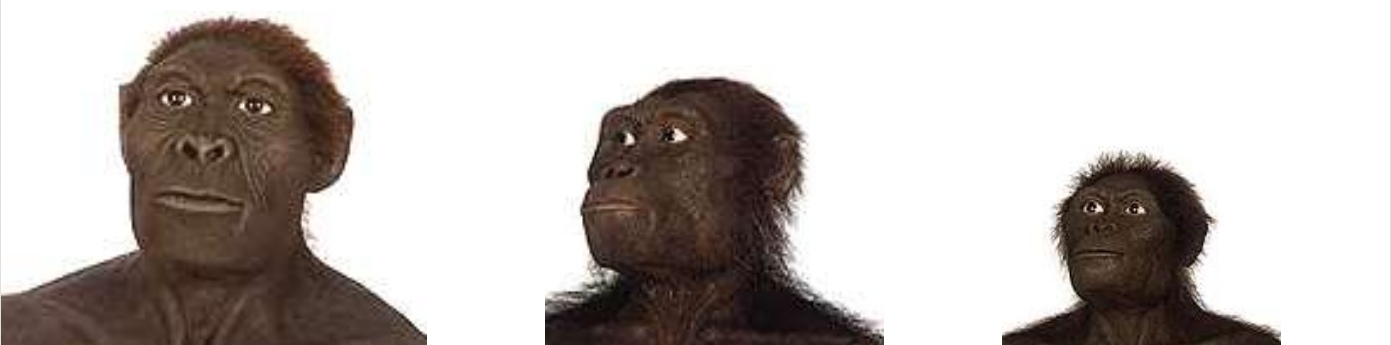
Australopiths
These are a paraphyletic assemblage of hominins living between 4 and 2 mya
some species walked fully erect
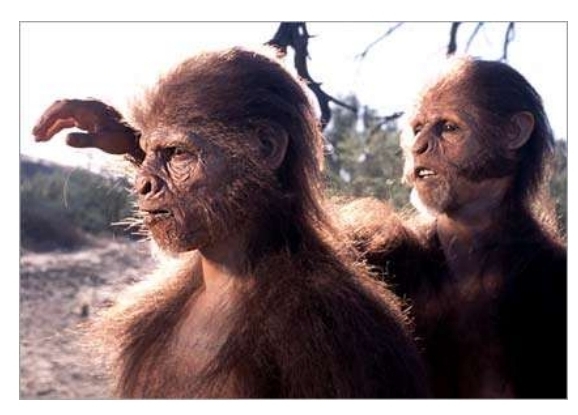
Early Homo
The earliest fossils placed in our genus Homo are those of Homo habilis ranging in age from 2.4-1.6 mil. years
brain 675 cm³
Stone tools have been found with this species which lead to it's name “handy man”
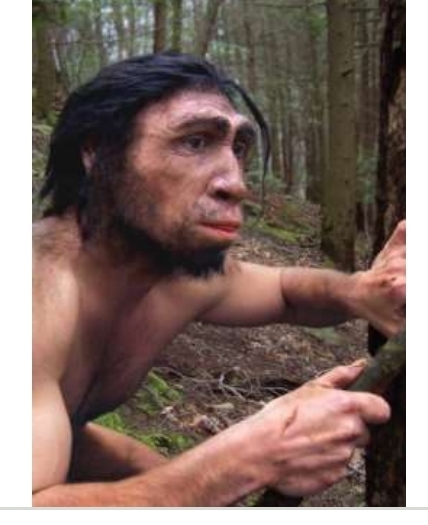
Homo erectus
Homo erectus left Africa by 1.8 mya
it was the first hominin to leave Africa
it became extinct 50000 to 200000 years ago
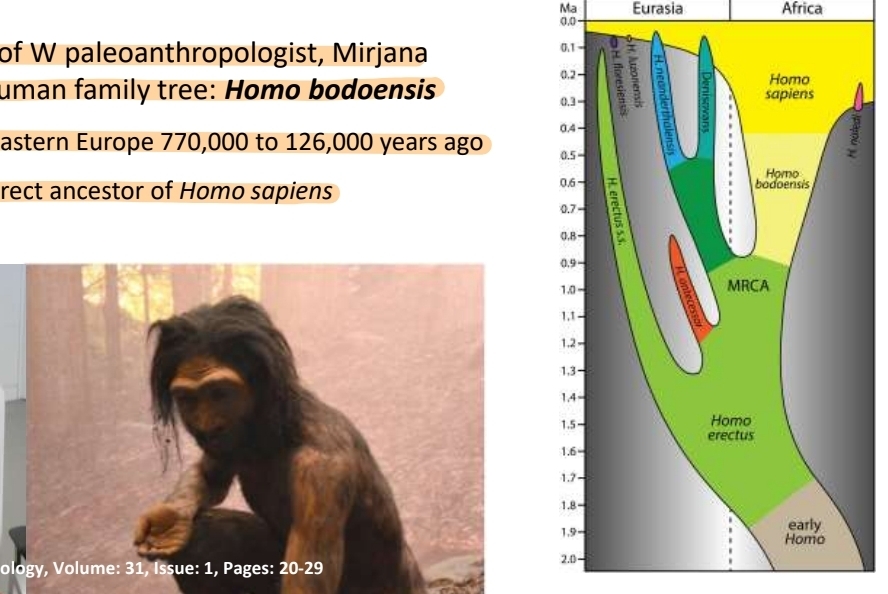
Homo Bodoensis
In 2021 a team lead by a UofW paleoanthropologist, Mirjana Roksandic added Homo bodensis to the Hominin family tree
Homo bodoensis lived in Africa and south eastern Europe 770000 to 126000 years ago
They suggest it was the direct ancestor of Homo sapiens
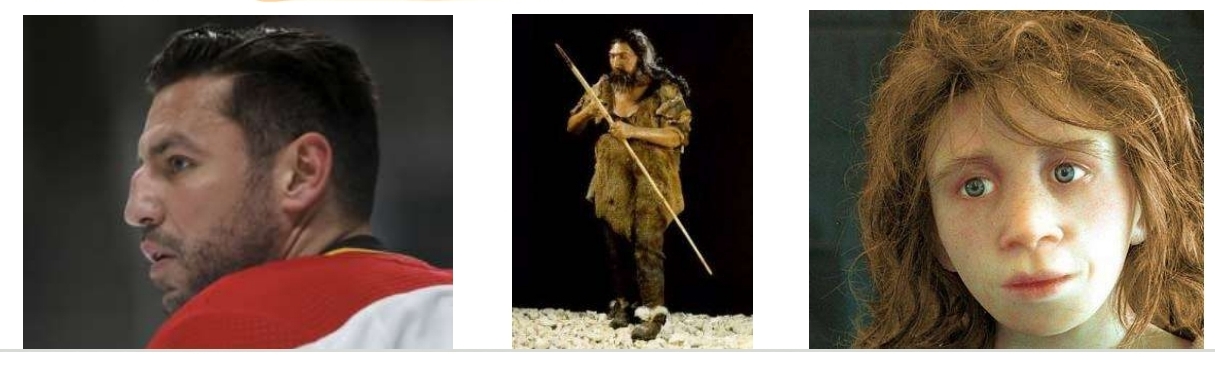
Neanderthals
also known as Homo neanderthalensis lived in Europe and the Near East from 200000 to 28000 years ago
They were thick- boned with a larger brain than Homo sapiens
They buried their dead, made hunting tools and interbred with Homo sapiens
Homo sapiens
Our species appeared in Africa by 195000 years ago, maybe even earlier
All living humans are descended from these african ancestors
Oldest fossils outside Africa are from Middle East and date back 115000 years ago
The spread beyond Africa in one or more waves
They reached Austrailia 50000-70000 years ago
Humans first arrived in the New World sometime before 15000 years ago
Ecological effects of animals: Marine Ecosystems
In marine ecosystems have an abundance of cyanobacteria decreased in the early Cambrian
this decrease may have been caused by the activities of crustaceans and other animals with suspension feeding mouthparts
causes algae to require more light for photosynthesis than do cyanobacteria
this caused an increase in cyanobacteria abundance and moved to deeper water
Ecological effects of animals: Terrestrial ecosystems
Before animals joined plants and fungi onshore, terrestrial ecosystems had a simple structure
Producers (early plants) harnessed energy from the sun and drew nutrients from the soil
while decomposers (fungi & bacteria) returned nutrients to the soil
by 410 mya animals had transformed these ecosytems
Plants were eaten by herbivores
Herbivores were then eaten predators
Detritivores consumed organic debris
An example of ecological effects of animals
Lesser snow geese breed in marshlands alongside Hudson Bay
The geese feed on grasses and other marsh plants
At low population numbers, lesser snow geese improve the growth of marsh plants because the defecate every few minutes
At high numbers the geese can destroy the marsh which causes a wipe out in the vegetation
So what did the rise of animals cause?
The rise of animals set in motion a series of profound evolutionary changes such as,
The origin of mobile, heterotrophic animals with a complete digestive tract drove some species to extinction
and initiated ongoing arms races between bilaterian predators and prey
This drive sinteractions between species
What does interactions species cause?
Two species that interact can exert selective pressures on each other
this is called reciprocal selection
essentially a characteristic of a certain species can influence the evolution of another species that interacts with it
e.g. Madagascar orchid secretes nector near the base of a long floral tube which influenced the development of a long tongue in a moth
Human impacts on evolution
Humans make changes to the environment which can alter the selective pressures faced by many species
which should not be surprising by evolutionary responses
e.g. harvested populations
Human impacts on evolution: Harvesting populations
Harvesting older and larger fish has been shown to reduce the age and size at maturity in a number of species including the Atlantic cod
This is due to the way fisheries fish them with nets
this caused the Atlantic cod to have a decrease in larger fish which meant evolution began selecting for smaller fish to avoid being caught in the net
the age at sexual maturity has declined over time which meant they mature at a smaller size
Explore top notes

