AP Art History Unit 1: Global Prehistory
 Studied by 3 people
 Call with Kai
 Learn
Learn Practice Test
 Spaced Repetition
 Match
Match Flashcards
 Knowt Play
1/16

There's no tags or description
Looks like no tags are added yet.
Name | Mastery | Learn | Test | Matching | Spaced | Call with Kai |
|---|
No study sessions yet.
17 Terms
Apollo 11 stones
-era: 25,000 BCE
-from Namibia, Africa (Africa: where human civilization is believed to have begun then radiated outwards)
-made from: charcoal on stone, portable
-unidentifiable animal in image, portrayed on side which allows us to see main parts of animal & simplest way to draw it
-artist's purpose of portrayal on side view: show us this animal and its main parts
-MAJOR THEME: portrayal of survival-related things during this era (i.e. animals, rituals to induce hunting/animals to come, women who continue civilization thru birth, etc.)

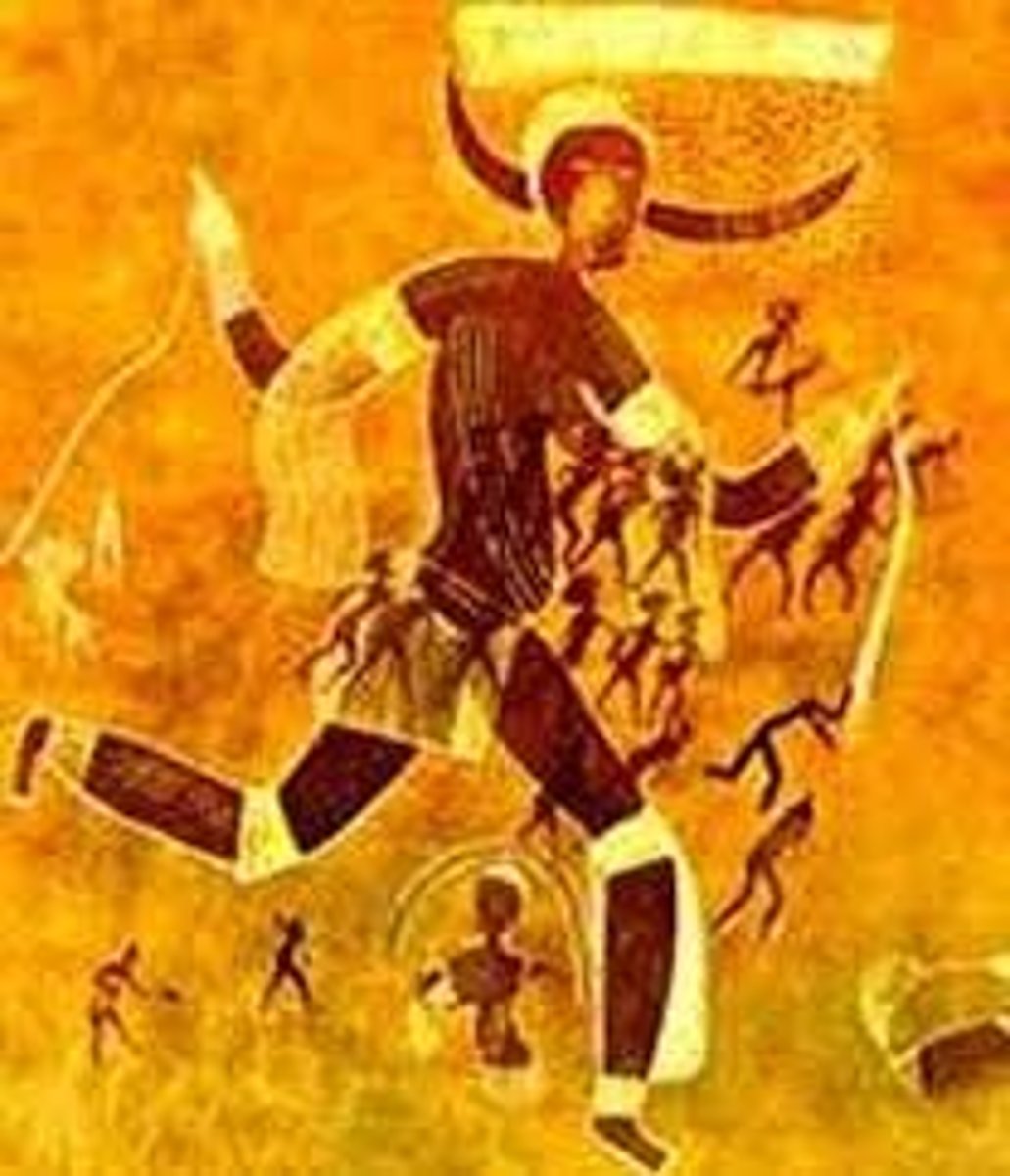
Running Horned Woman
-era: 6000-4000 BCE
-from: Tassili n' Ajjer, Algeria (Africa)
-made from: pigment (likely ochre) on rock (a cave painting)
-from Sahara range of Africa, Tassili n’ Ajjer
-Saharans spent most of time herding animals (hunting had to move into herding: gathering limited animal supply together)
-art: powerful female, larger than people in background (but may be because Running Horned Woman painted over previous, unrelated painting involving these proportionally smaller people), body painted with horns (likely involved in ritual with purpose of bringing animals to these people)
^ indicates importance of survival to these people
-her horns are painted frontal, while her body is painted profile view: mixed perspective/twisted perspective to show all the important parts of the woman
-not a very typical depiction of woman during this time: she doesn't have big breasts/hips/belly: not trying to emphasize fertility here
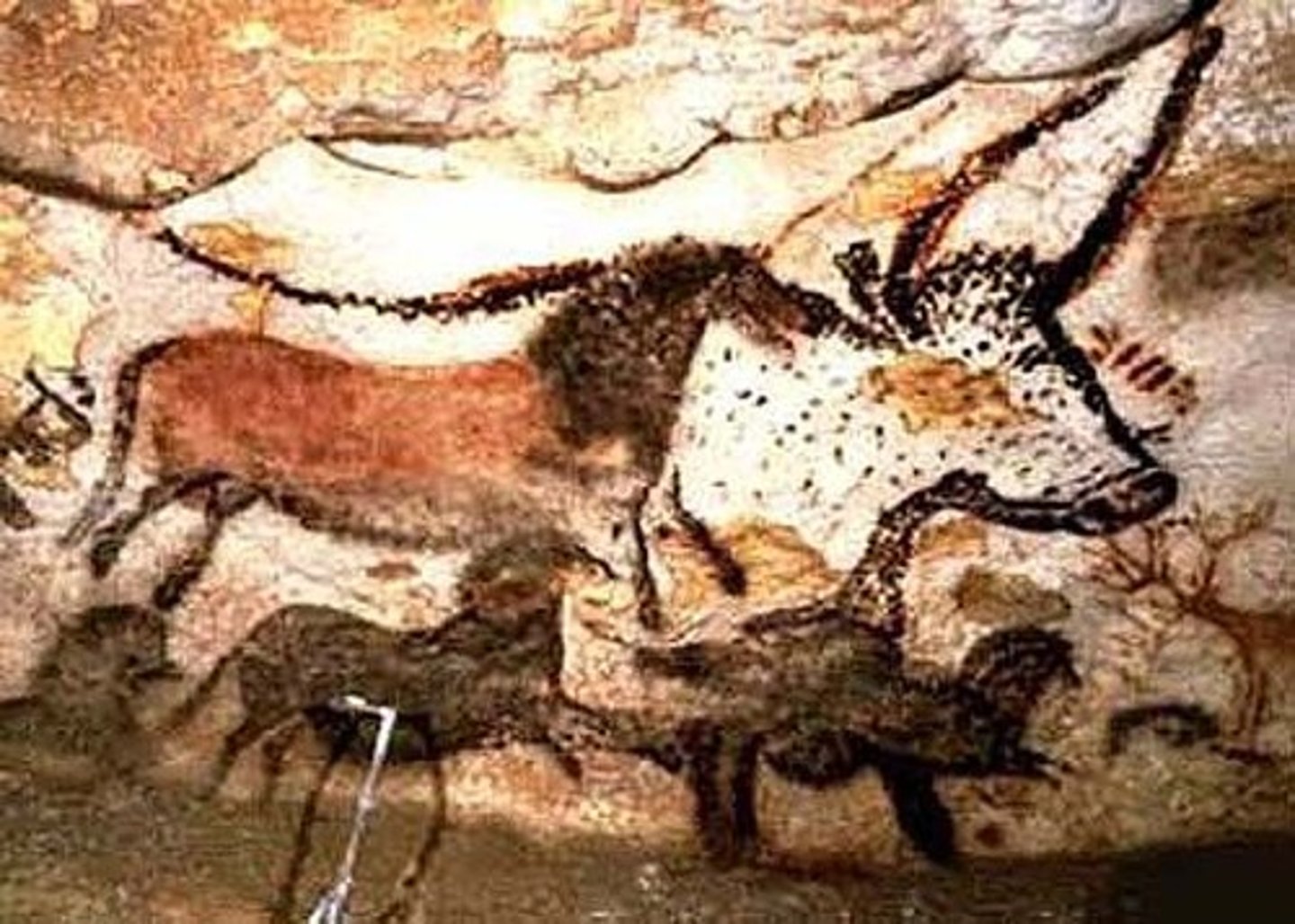
Great Hall of the Bulls
-era: 15,000 BCE
-from: Lauscaux, France (Paleolithic Europe)
-made from: charcoal, local pigments, and brushed/blown with tube
-animals, either shaded or outlined (probably painted during diff periods of time, unrelated), not too frozen, animals are animated and in motion
-like Apollo 11 stones, trying to give as full a picture of the animal as possible (i.e. show eyes and horns not from side, but frontal view so it's obvious that the animal has eyes, even if this is anatomically incorrect--mixed perspective): goal: show all component parts of the animal
-very famous caves/prehistoric art
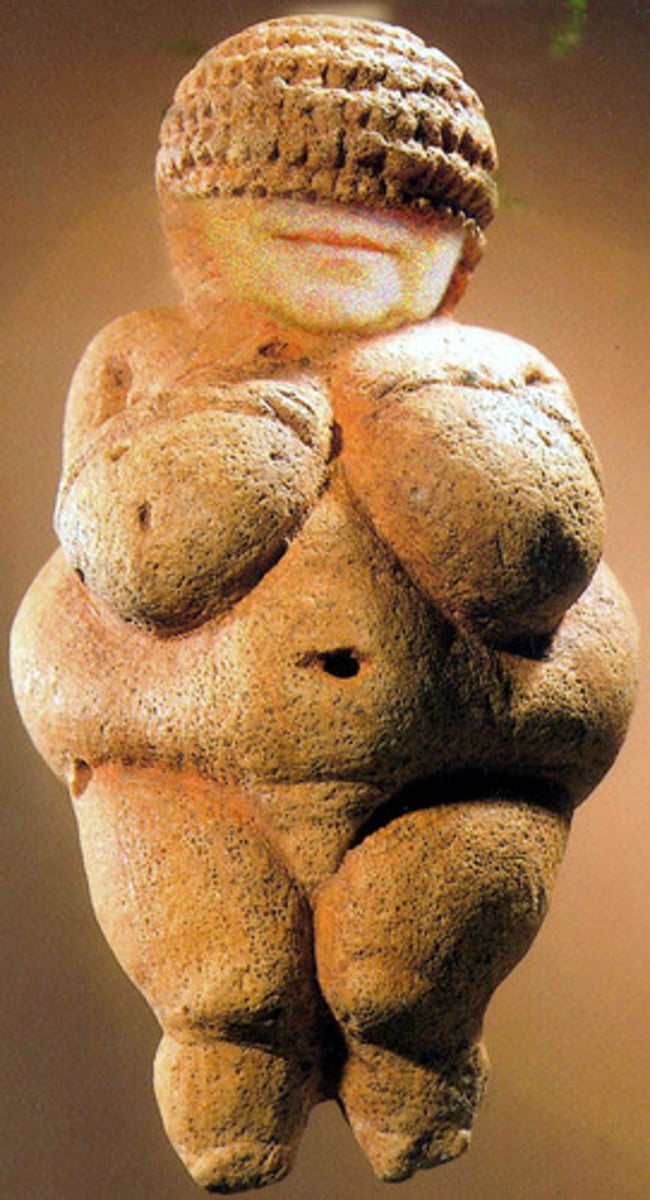
Venus of Willendorf
-era: 25,000 BC
-from: Vienna, Austria
-made from: limestone and red ochre, small: about 4 in tall
-at this time, if women painted, usually nude/partially nude (but people of this time were believed to be clothed)
-woman here is nude: to accentuate her femininity and emphasize her assets to society (her fertility: big breasts, big hips, etc.)
^ deliberate exaggeration of her figure to emphasize her womanhood (not a specific person, goddess- believed these peoples didn't have gods/goddesses anyway)
-example of common theme of survival in prehistoric art
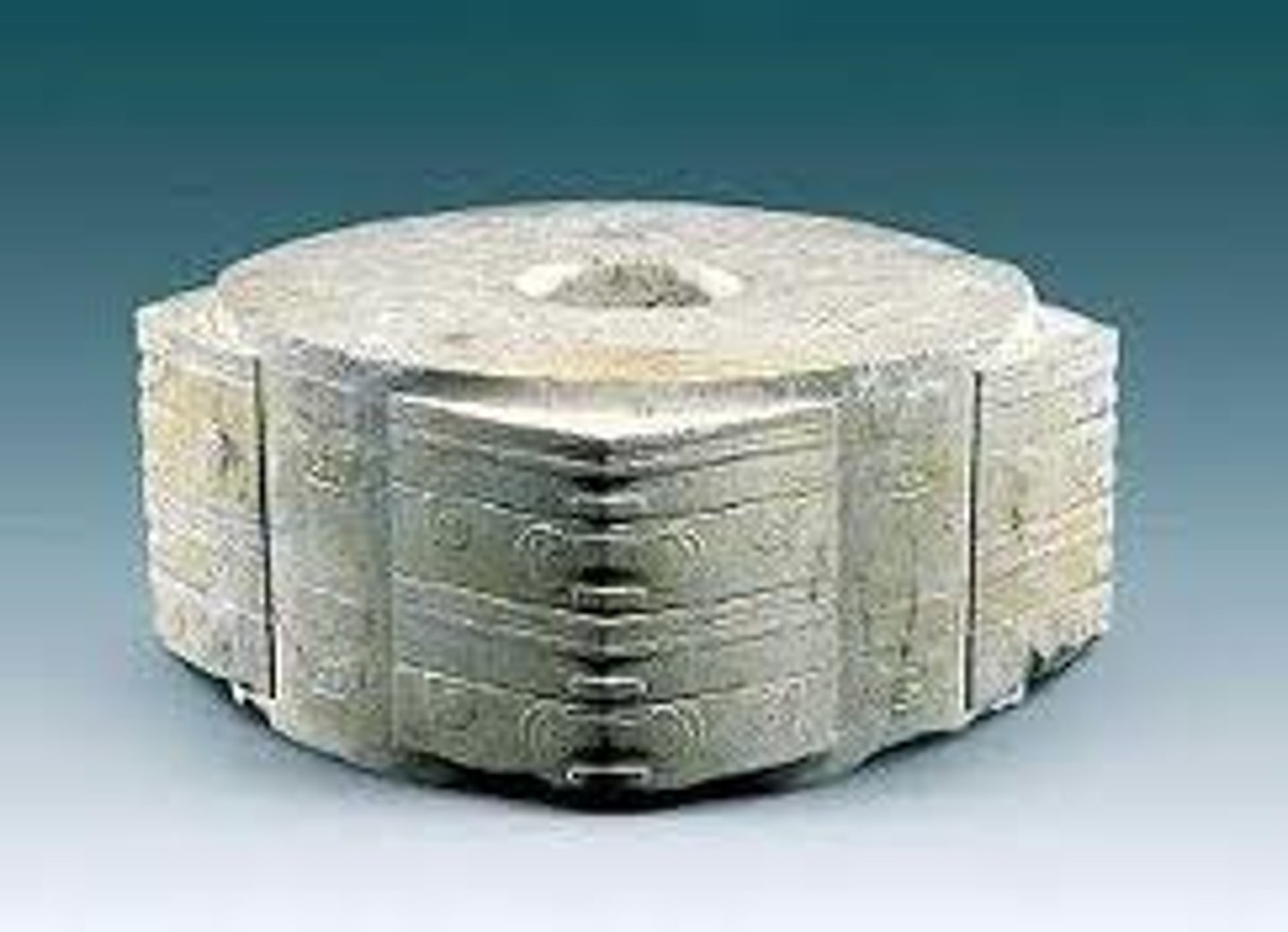
Jade cong
-era: 3,300-2,200 BCE, originated in Neolithic era
-from: Liangzhu, China
made from: carved jade, hard to carve
-shaped as a rectangular block with a cylindrical tube encased inside of it
-found near burial sites (near a person's head, buried on a mound...so possibly also an important person)- indicates cong's importance
-purpose: believed in shape to symbolize universe (circle: heaven, square: Earth, central hollow axis: connects Earth and the heavens)
-carved with animals in low relief (animals often had important involvement in burial rituals in some way)
- seem to be stylized faces in circles
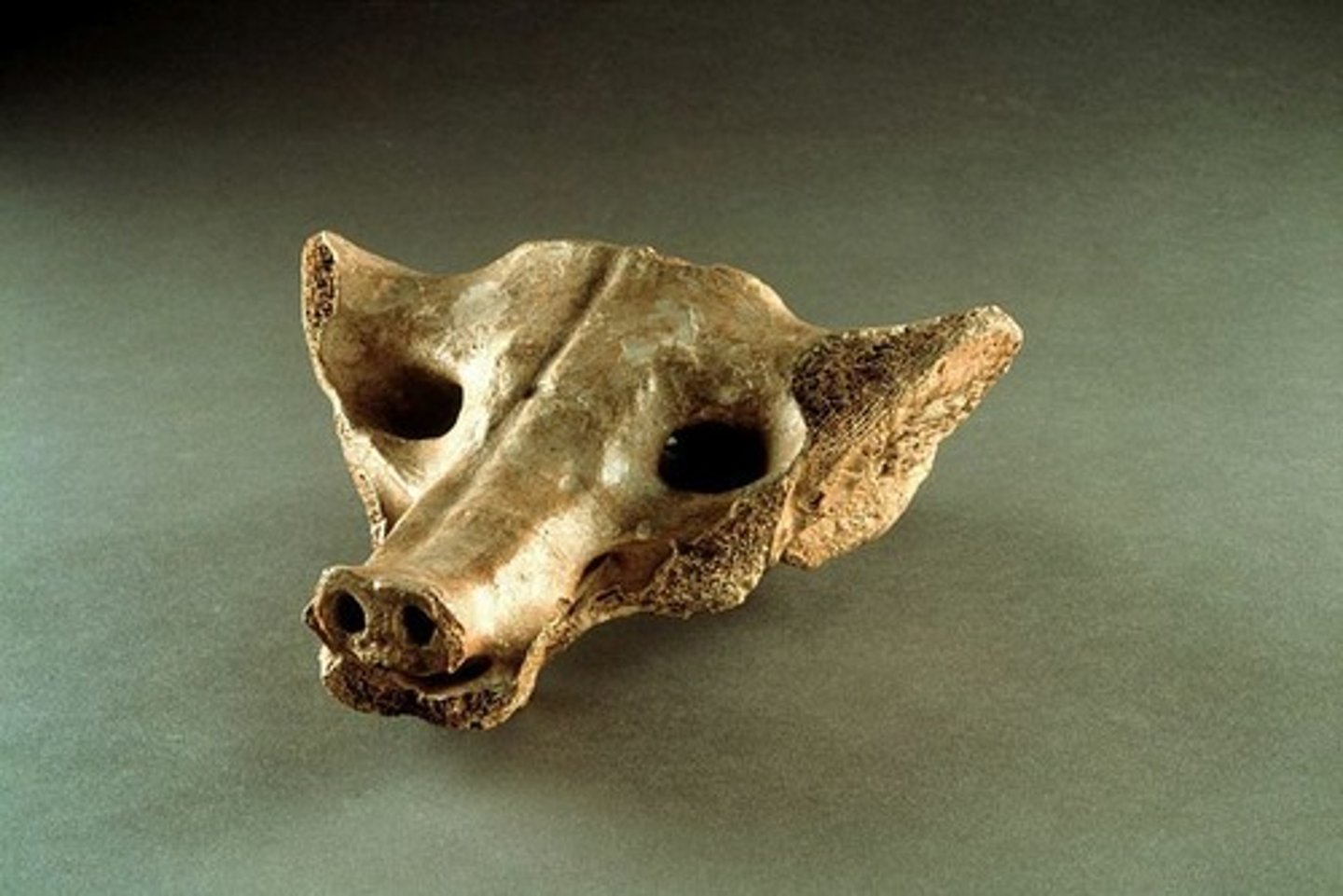
Camelid sacrum in the shape of a canine
-era: 14,000-7,000 BCE
-from: Tequixquiac, central Mexico
-made from: camelid's sacrum bone
-land bridge to get from North America to Asia (this bridge: Bering Strait)
^people who populated North America, their sculptures made from animal bones or (later), clay with subjects of usually animals or humans involved in ritual, fertile females, etc - all major themes of prehistoric art
-made by these nomadic Bering Strait-crossing people
-carved to look like a canine, believed was used as a mask in ceremony
-carved using subtractive technique: subtracts parts of original stone to create desired shape (i.e. ice or marble sculptures), opposite: additive technique
-also carved using other features naturally found in bone (i.e. dog's eyes didn't need to be carved out, holes naturally there in bone)
-bones b/c these people were hunter-gatherers, easy access
-dogs domesticated at this point too
-purpose: believed was used as a mask in ceremony or could be associated with repro b/c sacrum is very close to the pelvis/reproductive area: ritual use)
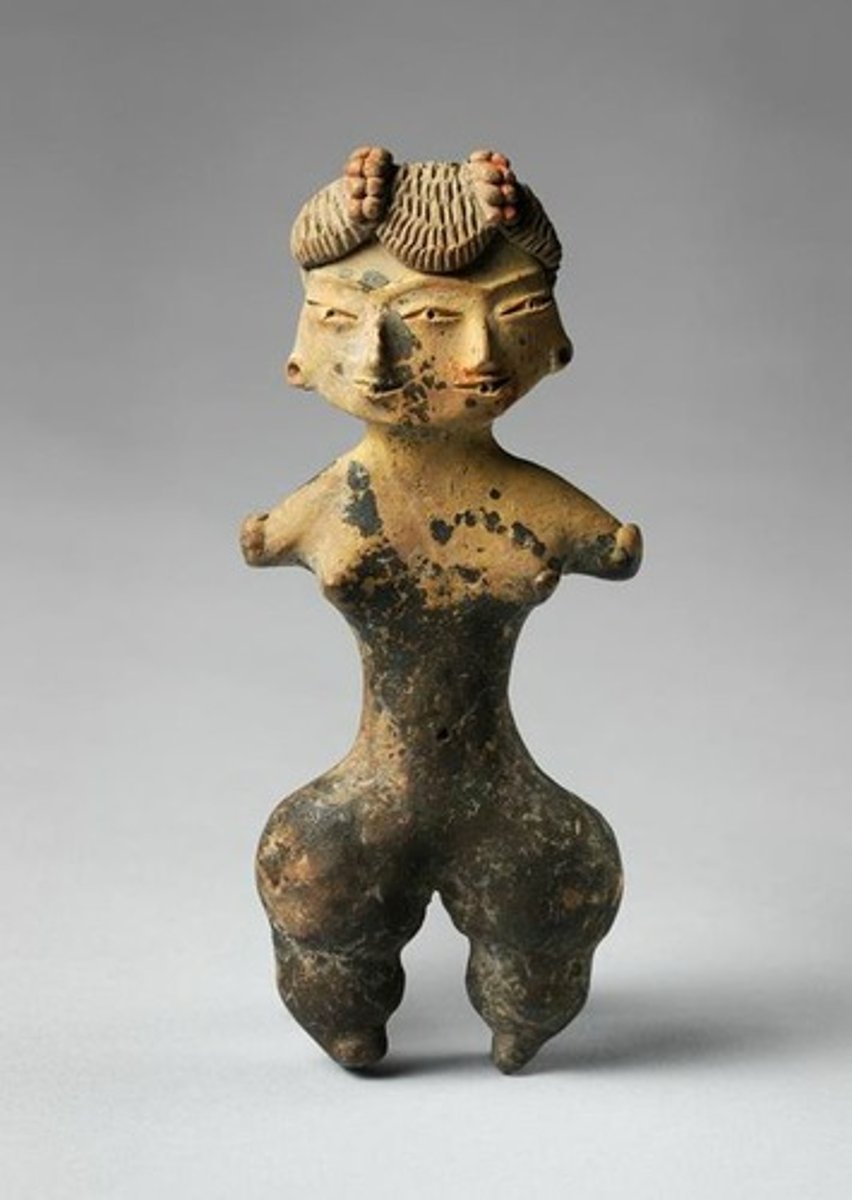
Tlatilco female figurine
-era: 1,200-900 BCE
-made from ceramic: clay that hardens when baked
-from: central Mexico, site of Tlatilco
- at this time, people begun planting crops (beans, maize, squash, etc.: important staple crops back then, often first thing farmed for settlers)
^ not as dependent of herding/hunting, so different types of art arise
-settlements occuring: life becomes more settled so people have time to do ceramics (make mugs, figurines like those, figurines are often found at burial sites)
-woman: emphasizing large thighs but very small waist, has two faces, one body, 2 legs, 2 arms, chest
^two faces share middle eye: 3 eyes, 2 noses, 2 ears, 2 mouths
-two figures blended into one, sometimes conjured in dreams, not something traceable to Earth, believed of the supernatural, spiritual realm
- funerary ware
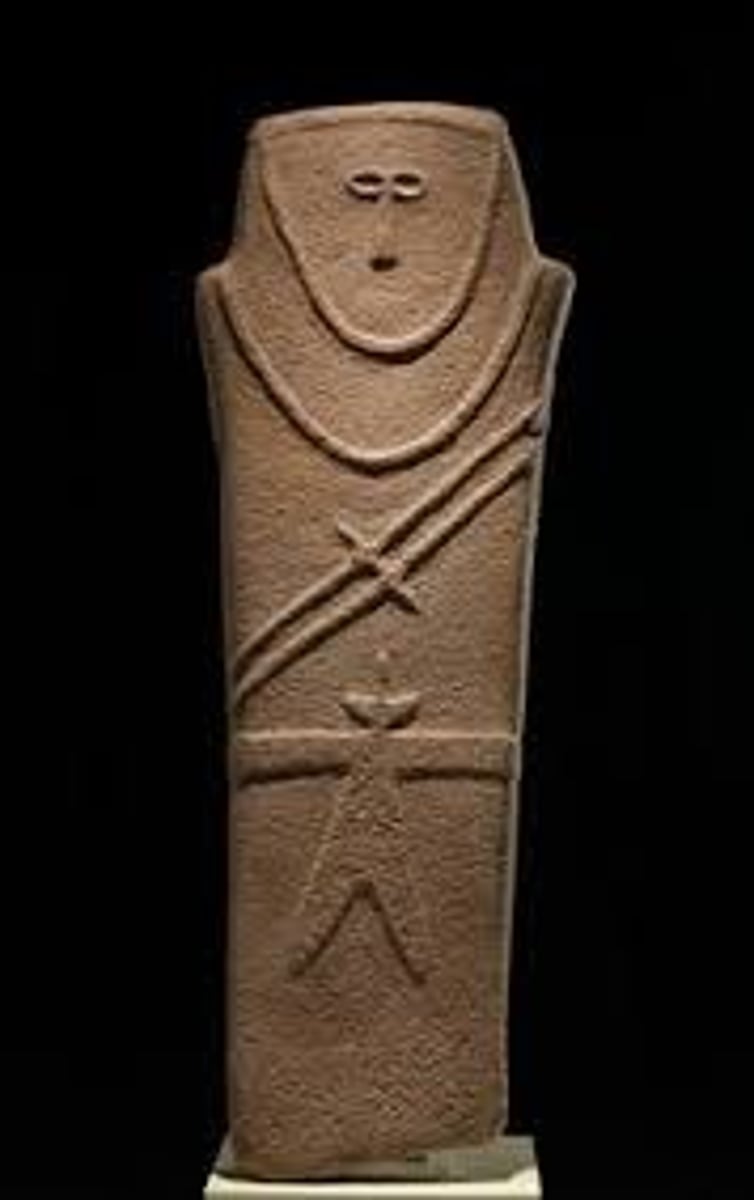
Anthropomorphic stele
-era: 3000 BCE
-from: Arabian Peninsula, Saudi Arabia
-made from: sandstone, carved in relief (no writing: people weren't writing yet)
- a stele: any upright stone slab
-anthropomorphic: anything with a human shape
-in Islam: no depiction of idols, so this shows thi was before the Islamic religion/time
-looks like a human, but with little info from artist to know to know it is (missing shape of body, arms, etc), still obvious
-example of usage of geometric stylization: reducing something down to an often geometric repeated patterns (i.e. eyes in stele)
-stele: possible clothing/shoulders, strap around body believed to be belt with two-bladed dagger, likely a warrior figure
^stele: very simple but still conveys a message
-purpose: believed to have funerary purpose/grave marker
-Arabian Peninsula at tie: incense in some ways as monopoly (mhyr, frankincense): gives rise to global trade and eventually will create well-established global trade routes
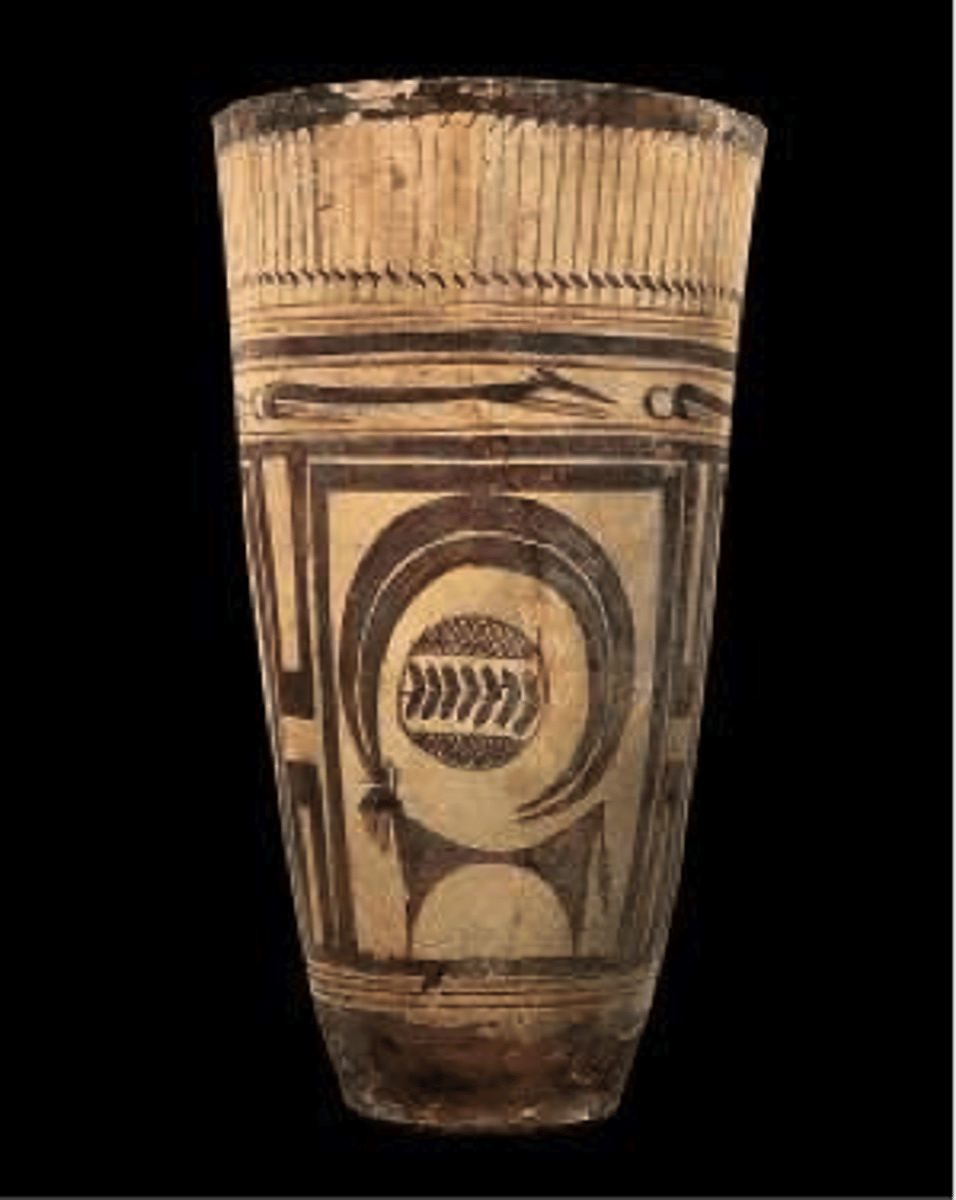
beaker with ibex motifs
-era: 4,200-3,500 BC, the cusp of the Neolithic Era
-from: Susa, Iran
-made from: painted terra cotta: yellowish pale clay
-beaker: any type of container without handles
-slow, early pottery wheel likely used to create these beakers: 8,000 of them found in Iran
-ibexes: drawn with prominent horns, examples of geometric stylization (reduced to geometric shape throughout: many circles, triangles, etc)
-upper part of vase: look closely, long-necked birds: looks from afar like a series of lines though, reduced to their geometric shape
-dogs painted emphasized rounded quality of beaker
- funerary ware, buried with dead
Prehistory
-defined as time before written records
Paleolithic
-Old Stone Age, 30,000 BCE to 10,000 BCE
Mesolithic
-Middle Stone Age, ~10,000 BCE to 8,000 BCE
Neolithic
-New Stone Age, 8,000 BCE–3,000 BCE
Relief
-carve around an object to create designs that stick out/elevated from background
-low relief (basically flat) to high relief (very 3-D), higher the relief, more dimensional/ creates more of a shadow
Anthropomorphic
-any type of object in human form
Stele
-any upright stone slab (vertical), usually covered with inscriptions or relief
- used sometimes for burial purposes or commemorative purposes
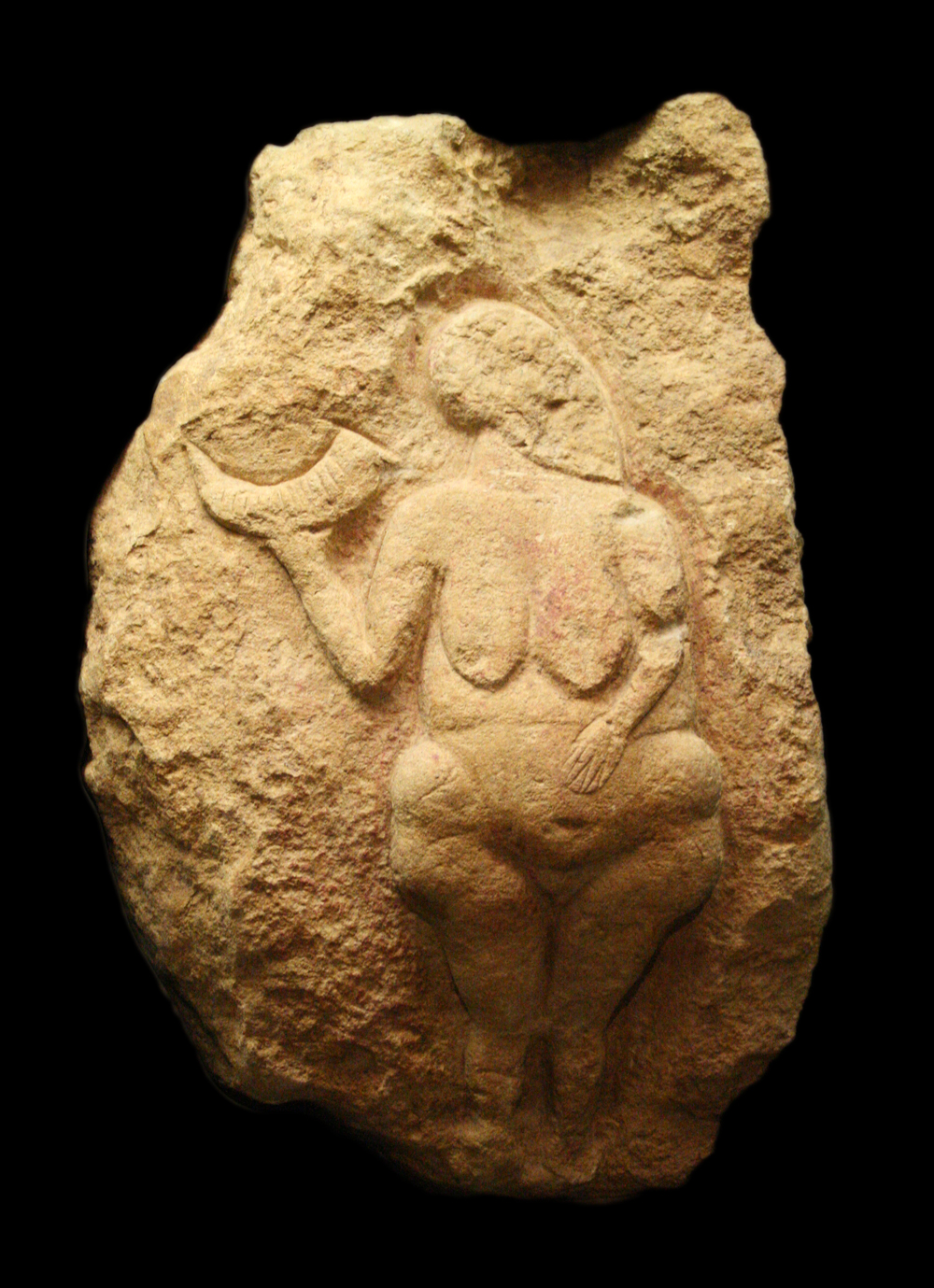
venus of laussel
era: c 23,000 BCE, found: laussel, france, size: 18”, medium: limestone and red ochre, style: bas relief, may be talisman for fertility
 Note
Note  Flashcards (72)