exam one: neurogenic communication disorders
 Studied by 0 people
 Call Kai
 Learn
Learn Practice Test
 Spaced Repetition
 Match
Match Flashcards
 Knowt Play
1/87

Earn XP
Description and Tags
these flashcards cover essential terms, definitions, and concepts related to neurogenic communication disorders and their underlying neurological principles.
Name | Mastery | Learn | Test | Matching | Spaced | Call with Kai |
|---|
No analytics yet
Send a link to your students to track their progress
88 Terms
neurogenic communication disorder
a problem with communication behavior due to damage to the brain or other parts of the nervous system
examples of neurogenic communication disorders
the aphasias (broca’s, wernicke’s), dysarthria, apraxia of speech, right hemisphere disorders, dementia, tbi
settings for neurogenic communication disorders in speech-language pathology
skilled nursing facilities, acute care, rehab facilities, outpatient rehab, home health, hospice, children's hospitals, and schools
importance of understanding neurogenic disorders outside of the clinical setting
neurogenic communication disorders appear in settings outside of the clinical setting, so SLPs must be able to recognize and treat these disorders
the brain is the source for all human behavior
speech
one vehicle for representing language; a motor behavior that involves respiration, phonation, and articulation to produce sounds
language
how we code what we know, including semantics, pragmatics, syntax, phonology, and morphology
cognition
everything we know, experience, and think
subcategories of cognition
attention, orientation, memory, organization, reasoning, judgment, executive functions
gross divisions of language
receptive and expressive
decline in cognition with healthy aging
selective attention, divided attention for complex tasks, short-term memory, episodic memory, declarative memory, working memory
retained cognition in healthy aging
orientation, sustained attention, divided attention for basic tasks, long-term memory, procedural memory, executive functions
decline in language with aging
processing of verbal language, reading comprehension, word finding
retained language in healthy aging
comprehension, functional verbal language processing, and reading
evidence-based practice
combines current research, clinical expertise, and expert opinion to improve service quality
difference between therapy and treatment
therapy refers to working with patients directly, treatment includes all elements of therapy
why clinicians rather than therapists?
reflects full scope of practice including diagnosis, assessment, and treatment of disorders
parts of a neuron
dendrite, soma, and axon
signals enter through the dendrite and exit through the end bouton, which is a part of the axon
importance of neurons
transmit and process information vital for bodily functions like perception and movement
major divisions of nervous system
central nervous system (cns) and peripheral nervous system (pns)
cns structures
cerebral cortex, cerebellum, subcortex, basal ganglia, brainstem, spinal cord
pns structures
cranial and spinal nerves
FINAL COMMON PATHWAY
function of the subcortex and its four structures
responsible for functions beneath awareness; regulates heartbeat, breathing, and sleep
four structures: brainstem, cerebellum, thalamus, and basal ganglia
gyri and sulci
ridges (gyri) and valleys (sulci) of the cerebral cortex that increase brain surface area
function of myelin
axons are insulated to allow fast conduction of electrical impulses
longitudinal fissure
separates the left and right cerebral hemispheres
communication between hemispheres
through receiving information from the corpus callosum (commissural fibers)
right hemisphere function
governs spatial awareness, interprets nonverbal cues, processes emotional expression, music, and imagery, and houses the ability to interpret nonlinguistic signals
left hemisphere function
primarily responsible for expressive and receptive language
cerebral lobes
frontal (executive), parietal (sensory), temporal (auditory), occipital (vision), and insular
brain stem sections
midbrain: auditory and visual reflex, houses the substantia nigra
pons: attaches cerebellum to rest of the cns - bridge
medulla: respiration, phonation, heartbeat, and blood pressure, many motor fibers decussate here to the other side of the body
cerebellum function
coordinates fine movement and integrates sensory information
more neurons that in the cerebellum structurally
ORCHESTRA CONDUCTOR OF ALL OF OUR MOVEMENT
function of thalamus
acts as a sensory relay station; all of the functions besides olfactory go the the thalamus
basal ganglia function
initiates movement, maintains muscle tone, and inhibits extraneous movements
dopamine is important here
limbic system
collection of structures involved in motivation, emotion, and memory.
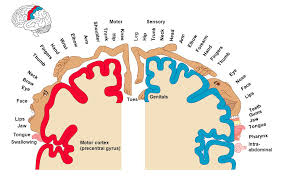
motor homunculus
map representing brain areas responsible for motor functions - voluntary movement
important areas: hands, face, and tongue
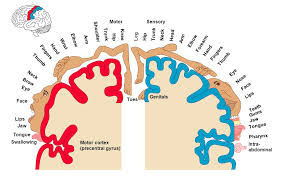
sensory homunculus
map representing brain areas responsible for sensory input - touch and proprioception
important areas: face, lips, tongue, hands
blood supply to brain
internal carotid arteries and vertebral arteries that are supplied from the aorta and included in the circle of willis
spinal cord anatomy
starts at the medulla, transmitting sensory and motor information
cranial vs spinal nerves
cranial nerves (twelve) innervate within the head/neck, are located in the midbrain (I-IV), pons (V-VIII), and medulla (IX – XII); spinal nerves (thirty-one pairs) control trunk/limbs, located within the grey matter of the spinal cord
most important cranial nerve for speech (imo)
hypoglossal nerve (XII), controls tongue movement and has sensory and motor components
six important cranial nerves for speech
V, VII, IX, X, XI, XII
idiopathic etiologies
cause is unknown or obscure
ischemic vs hemorrhagic stroke
ischemic strokes block blood flow; hemorrhagic strokes involve bleeding
types of ischemic strokes
thrombotic (blockage), embolic (lodging), and transient ischemic attack (temporary)
types of hemorrhagic stroke
subarachnoid (above brain surface) and intracerebral (within brain)
aneurysm (the silent killer)
abnormal blood vessel dilation; can cause fatal internal bleeding
BEFAST
balance, eyes, face, arm, speech, time; helps recognize stroke symptoms
diaschisis
a sudden loss or change of function in a portion of the brain connected to a distant brain area
impact in time after a stroke
8-16 seconds: may result in loss of consciousness
20-25 seconds: changes to electrical activity in neurons
3-5 minutes: may result in irreversible damage
most strokes are
ischemic
communication
understanding, speaking, writing, conversation, and social interaction
number one cause of neurogenic communication disorders
stroke
autonomic nervous system
the structure within the pns that functions to maintain our heart and lungs
keeps us alive!
the final common pathway is the
pns
how long can we survive without any oxygen to the brain?
six-eight minutes
anoxia
complete loss of oxygen to a cell
hypoxia
partial loss of oxygen to a cell
SPOTS within orientation
self, place, others, time, situation
right hemisphere function - ted talk
thinks in pictures and uses senses
left hemisphere function - ted talk
thinks in language
thinks linearly and methodically
pragmatics
the system that combines the language components in functional and socially appropriate communication
neuroplasticity
the ability of our neurons to learn, change, and acquire new functions
the three sections of the brain
cerebrum, cerebellum, and brainstem (very heirarchical)
corpus callosum
highway between two lobes
frontal lobe
attention, planning decision making, movement, speech
parietal lobe
processes sensory information, including touch, temperature, pain, and pressure
spatial awareness
occipital lobe
vision
temporal lobe
hearing, memory processing, emotion, smell
insular lobe
integration hub for sensory, emotional, autonomic, and cognitive processes, including pain perception, taste, social emotions, and self-awareness
has important neurons for speech
brain stem
important for human survival
has neurons related to heart rate and breathing
limbic system
controls and regulates emotions
gray matter
cell body, unmyelinated fibers
white matter
axons covered in myelin
aphasia
acquired language disorder of neurogenic origin
non-fluent aphasia
halting speech with relatively intact comprehension
fluent aphasia
disturbed language comprehension with relatively intact speech
conduction aphasia
reduced ability to repeat what is heard with intact expressive and receptive language
global aphasia
significant loss of receptive and expressive language
substantia nigra
where the brain produces a neurotransmitter known as dopamine
the brain makes up ___ percent of body weight, but uses ____ percent of oxygen
two, twenty
chronic neurogenic communication disorders
alzheimers, dementia, parkinson’s
acute neurogenic communication disorders
aphasia, dysarthria, apraxia of speech
symptom
a characteristic or a feature that a patient reports to you that has changed from their normal daily function - hallmark feature of a disorder
sign
what the patient presents with that the clinician will evaluate and examine
attention
the ability to stay focused on something once you notice it and turn your attention to it
how might communication be compromised if a person’s cognition is not intact?
communication can be compromised because they may have difficulty understanding information, organizing their thoughts, remembering words, or expressing ideas clearly
working memory vs. short-term memory
stm: temporarily stores information for a short time
wm: holding + working with information
what structures of the cerebellum attach it to the pons and the cns
cerebellar peduncles
 Note
Note  Flashcards (21)