Biochem Exam 3: Lecture 17: TCA and Electron Transport Chain
 Call Kai
 Learn
Learn Practice Test
 Spaced Repetition
 Match
Match Flashcards
 Knowt Play
1/23

There's no tags or description
Looks like no tags are added yet.
Name | Mastery | Learn | Test | Matching | Spaced | Call with Kai | Chat |
|---|
No analytics yet
Send a link to your students to track their progress
24 Terms
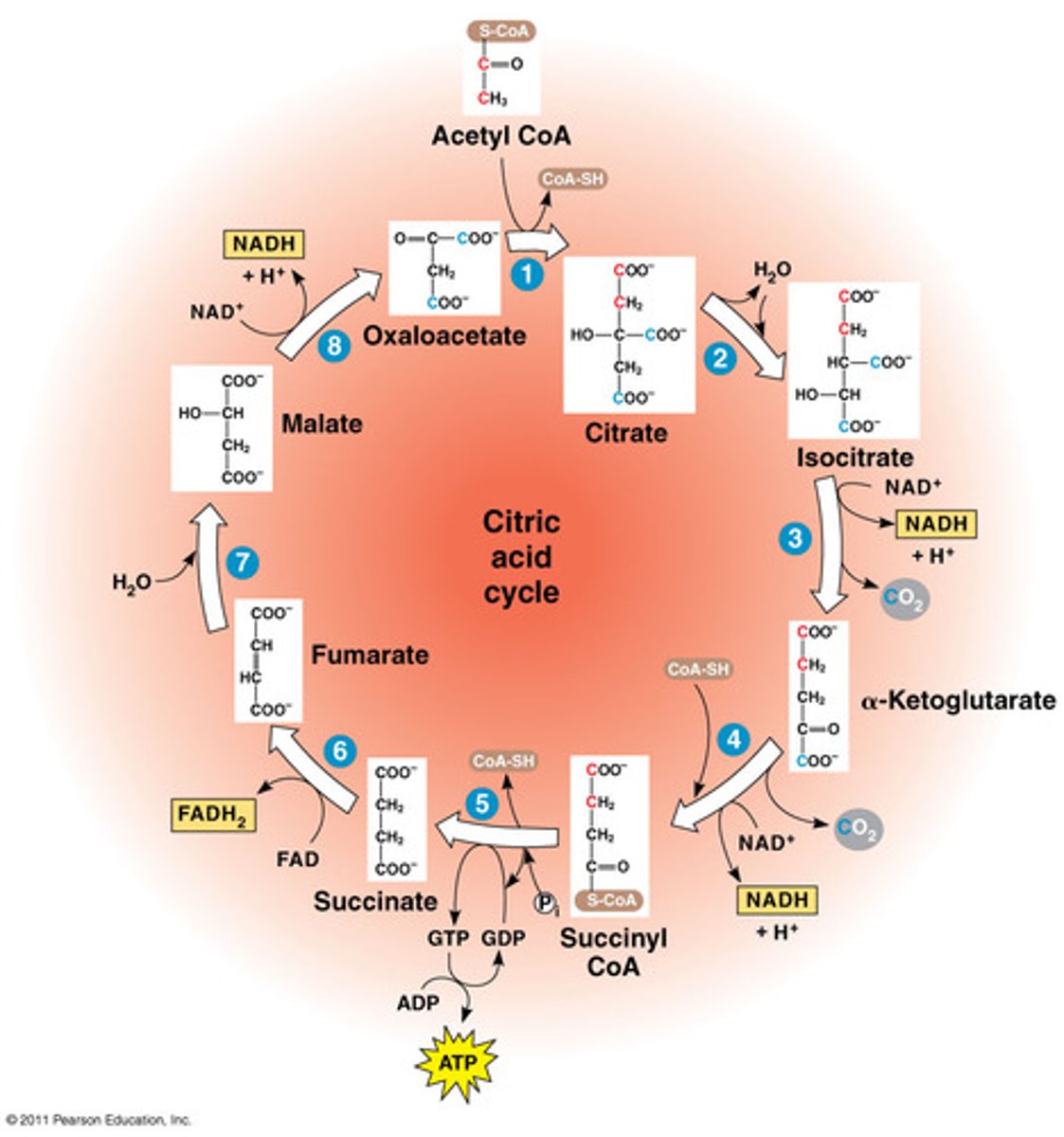
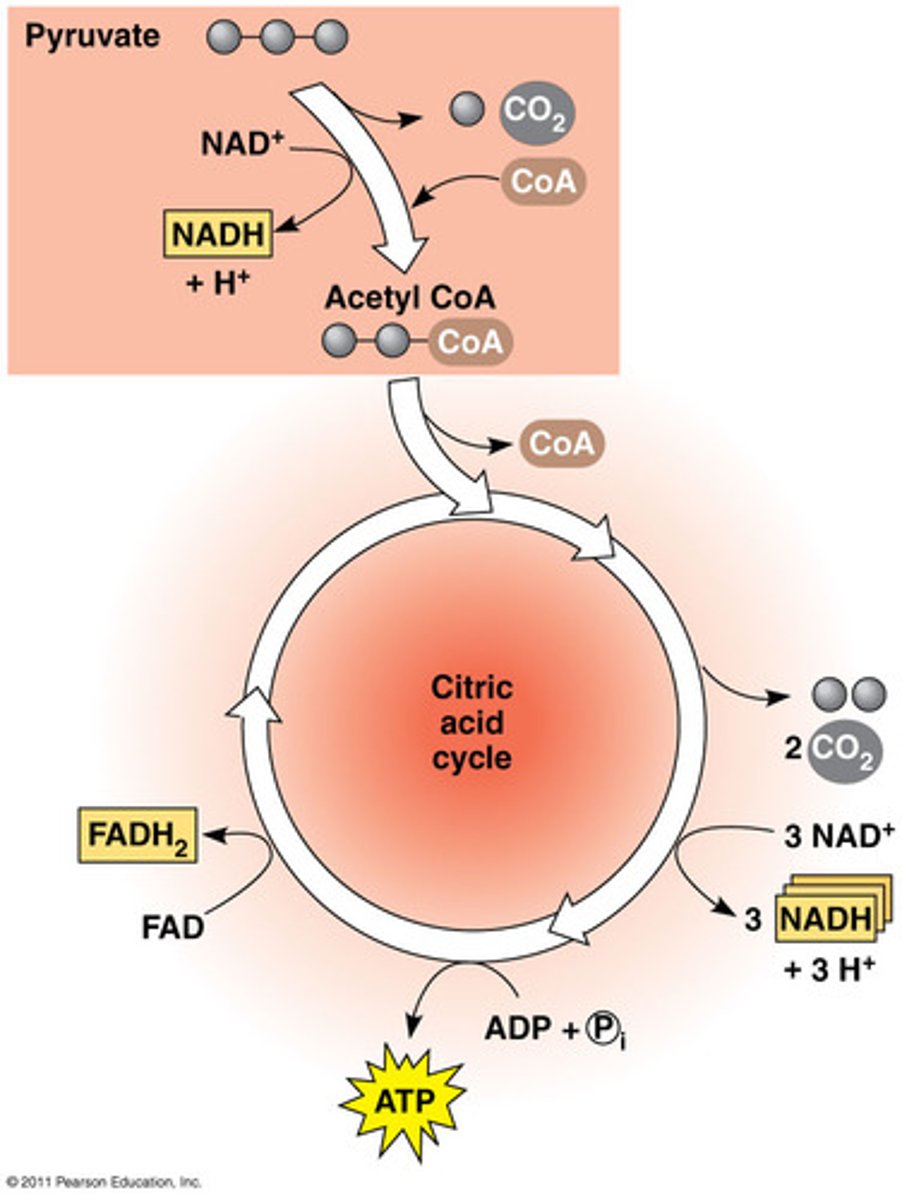
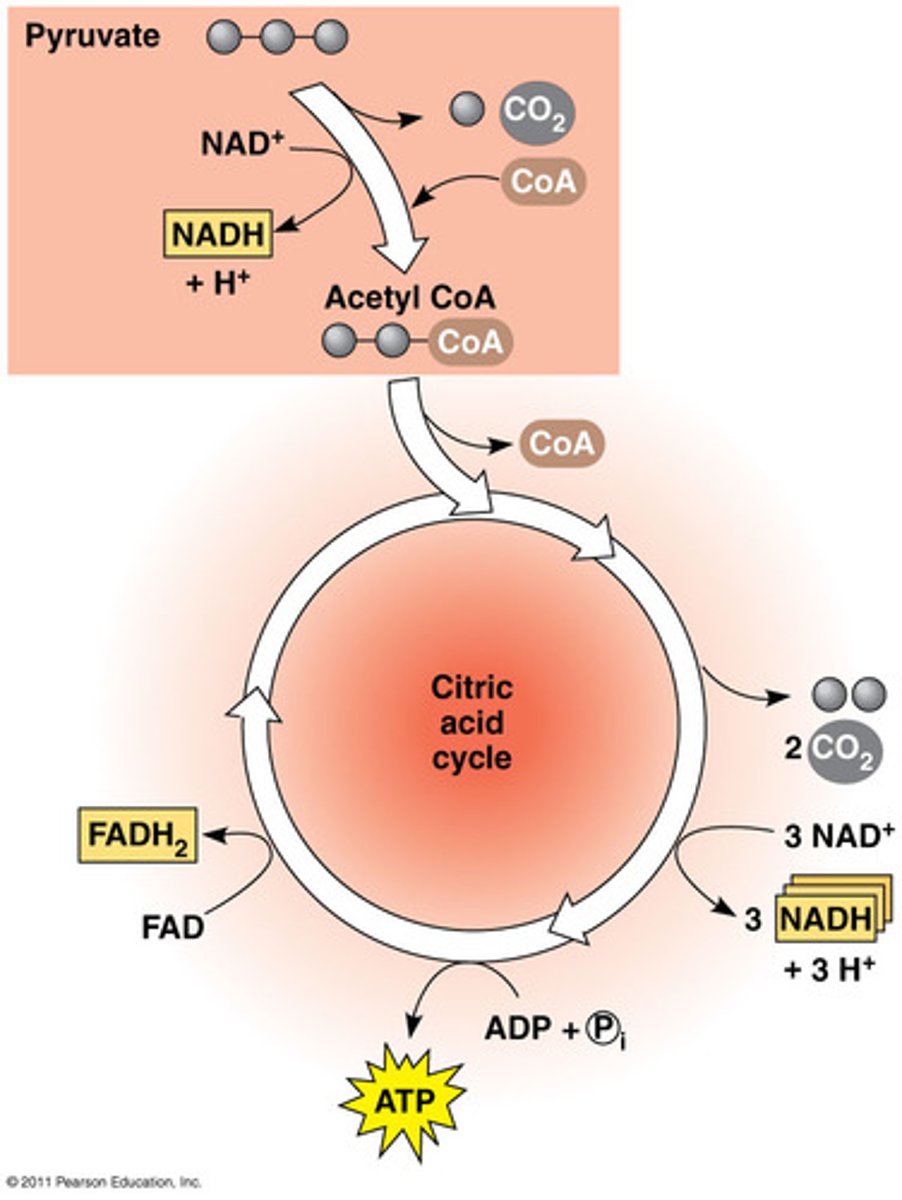
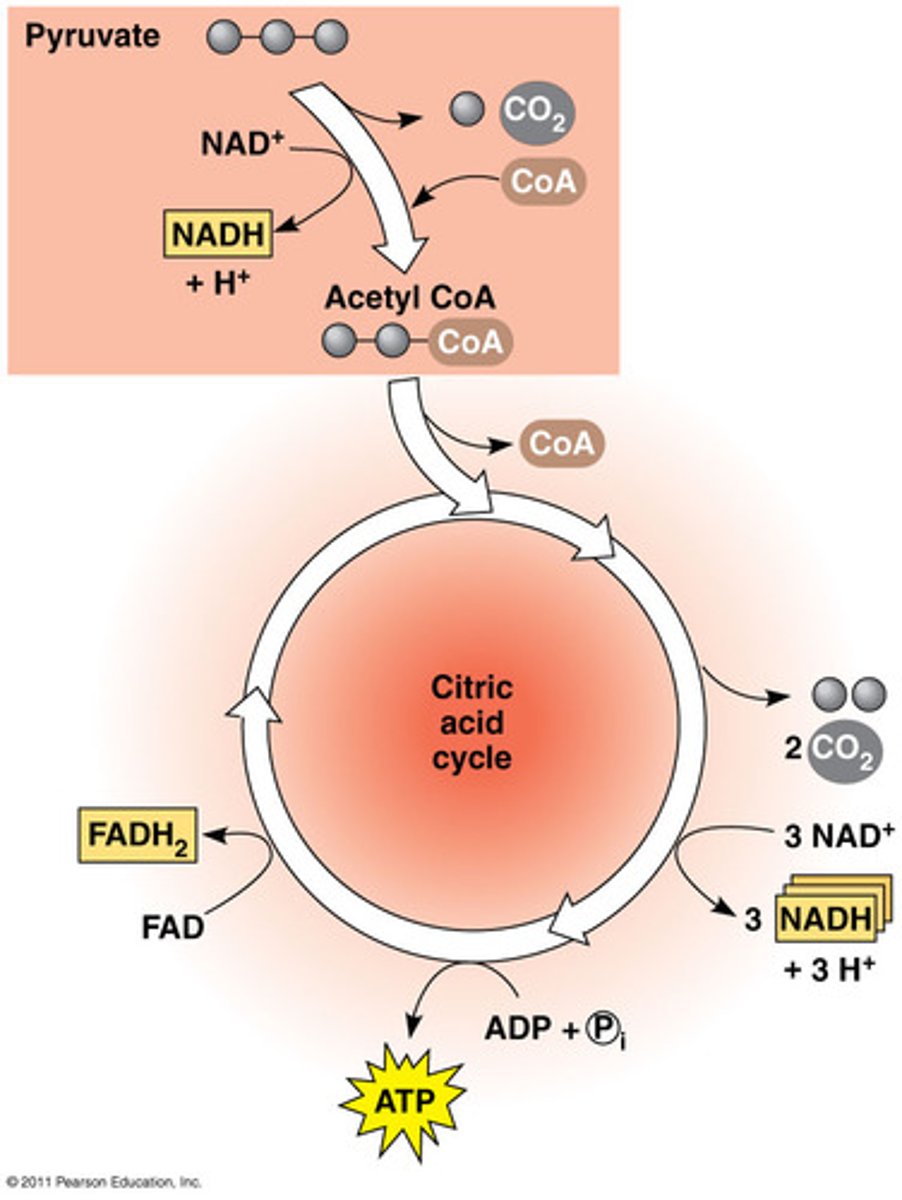
What is the purpose of the TCA cycle?
Purpose: release energy stored in the two carbon (acetyl) group via an aerobic pathway
- How does it accomplish this task? Oxidizes two carbon unit to CO 2 & produces reduced co-enzymes
What is the purpose of the electron transport chain?
Oxidative Phosphorylation (make ATP)
- Electron transport chain couples oxidation of NADH & FADH2 with the phosphorylation of ADP
- This is where your body produces the highest amount to chemical energy (ATP)
Which steps in TCA cycle produce reduced coenzymes?
steps 3 (NAD+-->NADH) ,4 (NAD+--->NADH),6 (FAD--> FADH2), and 8 (NAD+--->NADH)
Which steps in TCA cycle produce ATP?
Step 5 (as GTP)
Which steps in TCA cycle produce CO 2?
steps 3 and 4
How is pyruvate dehydrogenase inhibited? Activated?
Allosteric
(-) negatively regulated by high energy molecules (Acetyl-CoA, ATP & NADH)
(+) positively regulated by low energy molecules (NAD+, AMP & CoA-SH)
2. Covalent Modification - phosphorylation (inactive)
Pyruvate Dehydrogenase Complex
Complex is not a single enzyme
Which steps of the TCA cycle are regulated?
Steps 1, 3, and 4
- allosterically regulated
how is step 1 of the TCA cycle regulated?
citrate synthase (lyase)
(-) inhibited by high energy molecules: succinyl-SCoA, NADH, ATP
how step 3 of the TCA cycle is regulated
isocitrate dehydrogenase complex (oxidoreductases)
(-): ATP, NADH
(+): activated by low energy molecules: ADP, NAD+
how step 4 of the TCA cycle is regulated
alpha-ketoglutarate dehydrogenase complex (oxidoreductase)
(-): NADH, succinyl-SCoA
(+): AMP
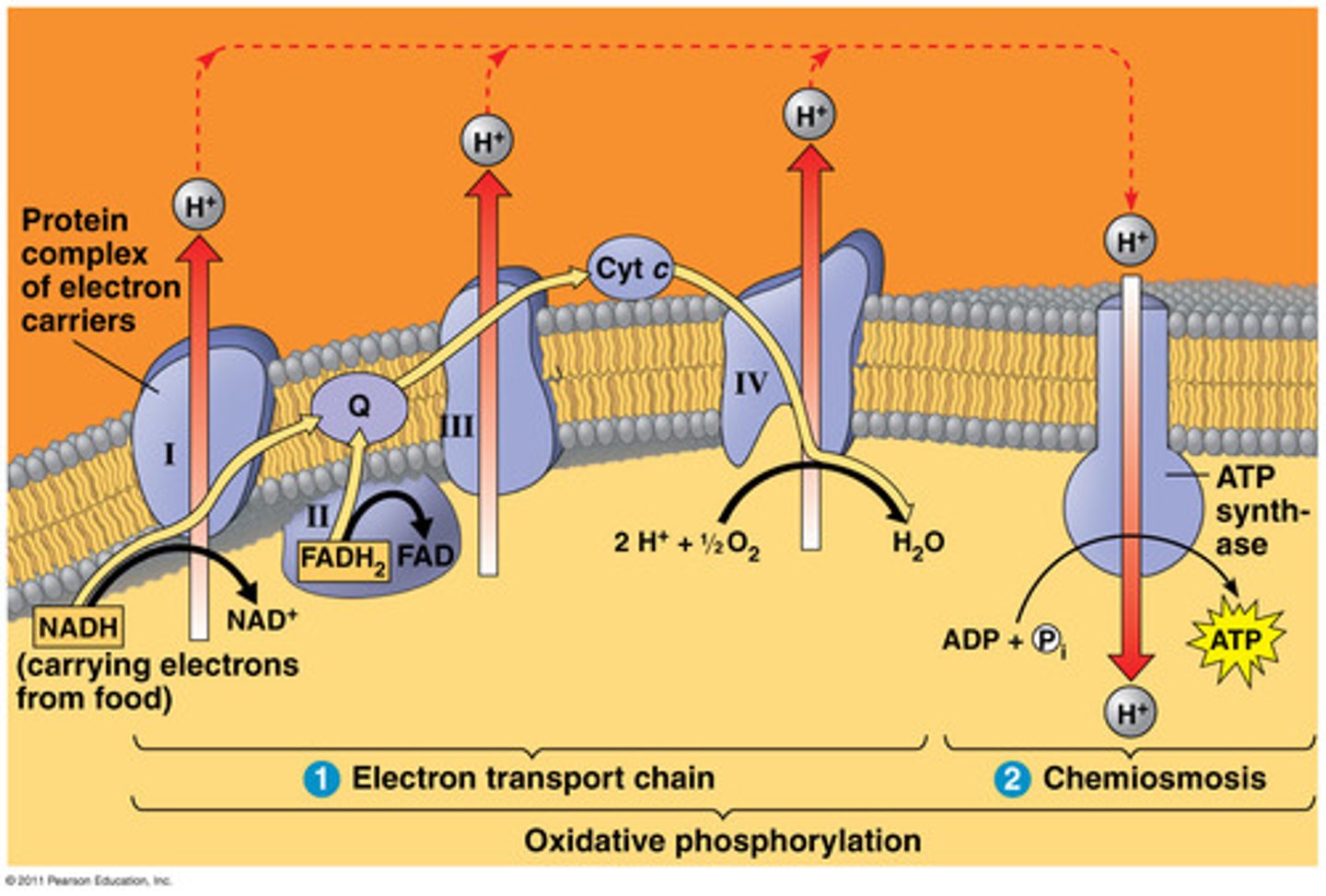
substrates and products of complex 1 of ETC
substrates: NADH
products: NAD+, H+ pumped up into intermembrane space
substrates and products of complex 2 of ETC
substrate: FADH2
product: FAD
substrates and products of complex 4 of ETC
substrates: O2, H+
Products: H2O, H+ pumped into intermembrane space
substrates and products of ATP synthase
substrates: adenosine diphosphate (ADP), inorganic phosphate ((Pi) - HOPO3^2-) and protons (H+)
products: atp
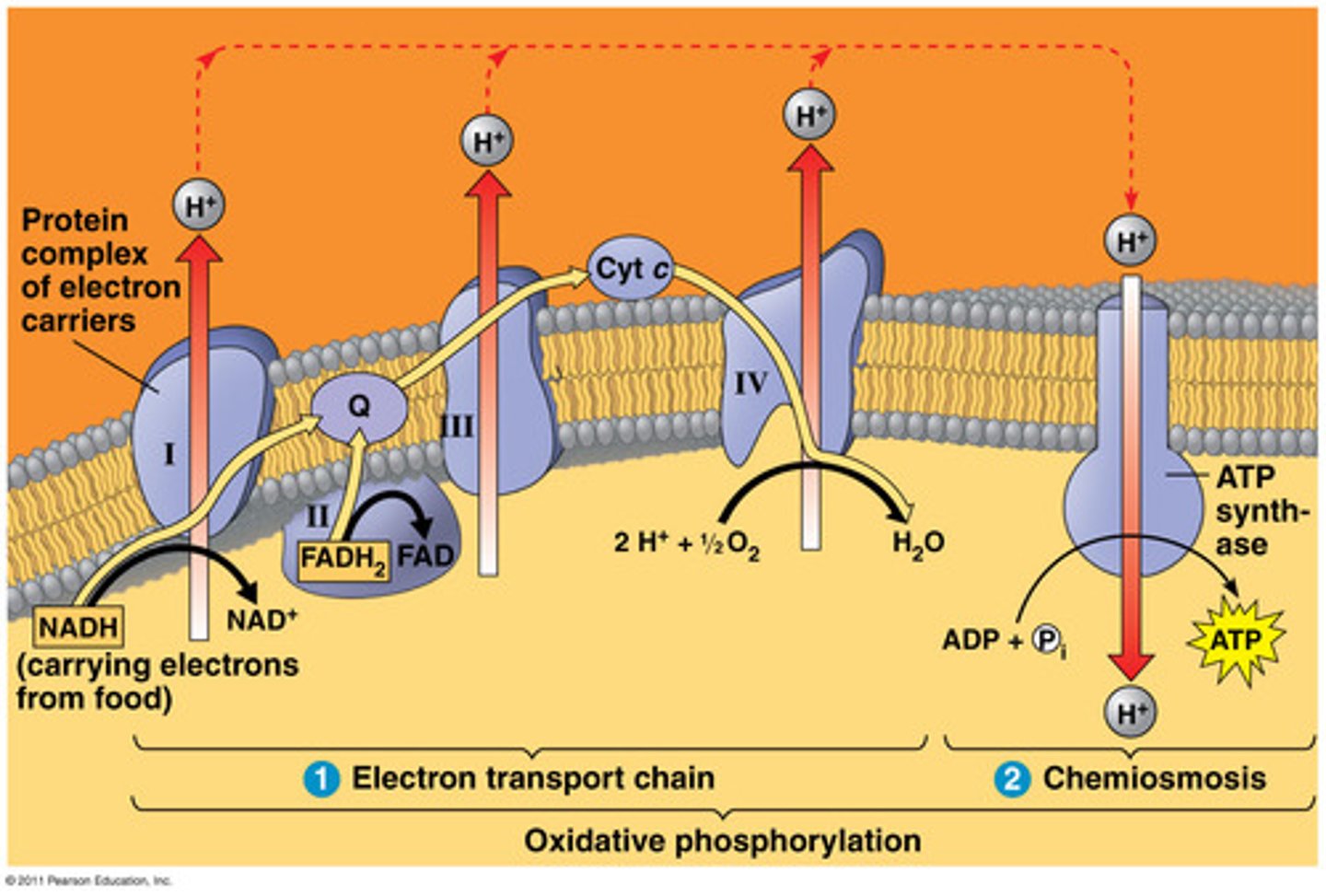
how ATP synthase works
The ATP Synthase does not require chemical energy to produce ATP.
Energy for ATP production is derived from the flow of protons through the ATP synthase much like a flowing river turns a water wheel
Electron transport chain summary: Memorize
NADH/H + and FADH 2 (complex 2) enter the e- transport chain at complexes I and II, respectively to be oxidized for use in catabolic pathways (ie TCA cycle, glycolysis & Fatty Acid oxidation).
Electrons are passed from weaker to increasingly stronger oxidizing agents.
The energy released from this process is used to pump H + ions from the matrix into the intermembrane space through complexes I, III & IV.
- The H + concentration difference between the matrix and intermembrane space creates a potential energy difference, i.e., storage of energy.
- Maintenance of the membrane potential is crucial to the formation of ATP
- Since H + ions can return to the matrix only by passing through the ATP synthase complex, the energy released during this passage is used to synthesize ATP from ADP
- In the last step of the chain, electrons combine with oxygen that we breathe and H + ions from the surroundings to produce water.
Complex 2 is peripheral protein (NOT A PROTON PUMP)
What chemicals specifically get oxidized and what gets phosphorylated in the ETC?
NADH and FADH 2 are oxidized, donating electrons to the electron transport chain, while ADP is phosphorylated to ATP
How does this oxidation result in energy production?
the electron transport chain uses the energy released from the oxidation of NADH and FADH2 to pump protons (𝐻+) across the inner mitochondrial membrane, creating a gradient. This gradient then provides the energy for ATP synthase to phosphorylate ADP into ATP
What are the links between the TCA cycle and electron transport chain?
The main link is that the TCA cycle produces high-energy electron carriers, NADH and FADH2, which are then used by the electron transport chain (ETC) to generate ATP. The ETC reoxidizes these carriers, using the released electrons to pump protons across a membrane, creating a gradient that drives ATP synthesis through oxidative phosphorylation. (where oxygen is used to change ADP to ATP)
Why are NADH and FADH2 considered high energy molecules?
they carry high-energy electrons from the breakdown of food to the electron transport chain, where the energy is used to generate ATP. They are "reduced" during metabolic processes, meaning they have gained electrons and hydrogen atoms (H+)
- b/c they produce more ATP
What is the Net energy generated from the oxidation of glucose through the electron transport Chain?
38 ATP
● Where does the TCA cycle take place in the cell?
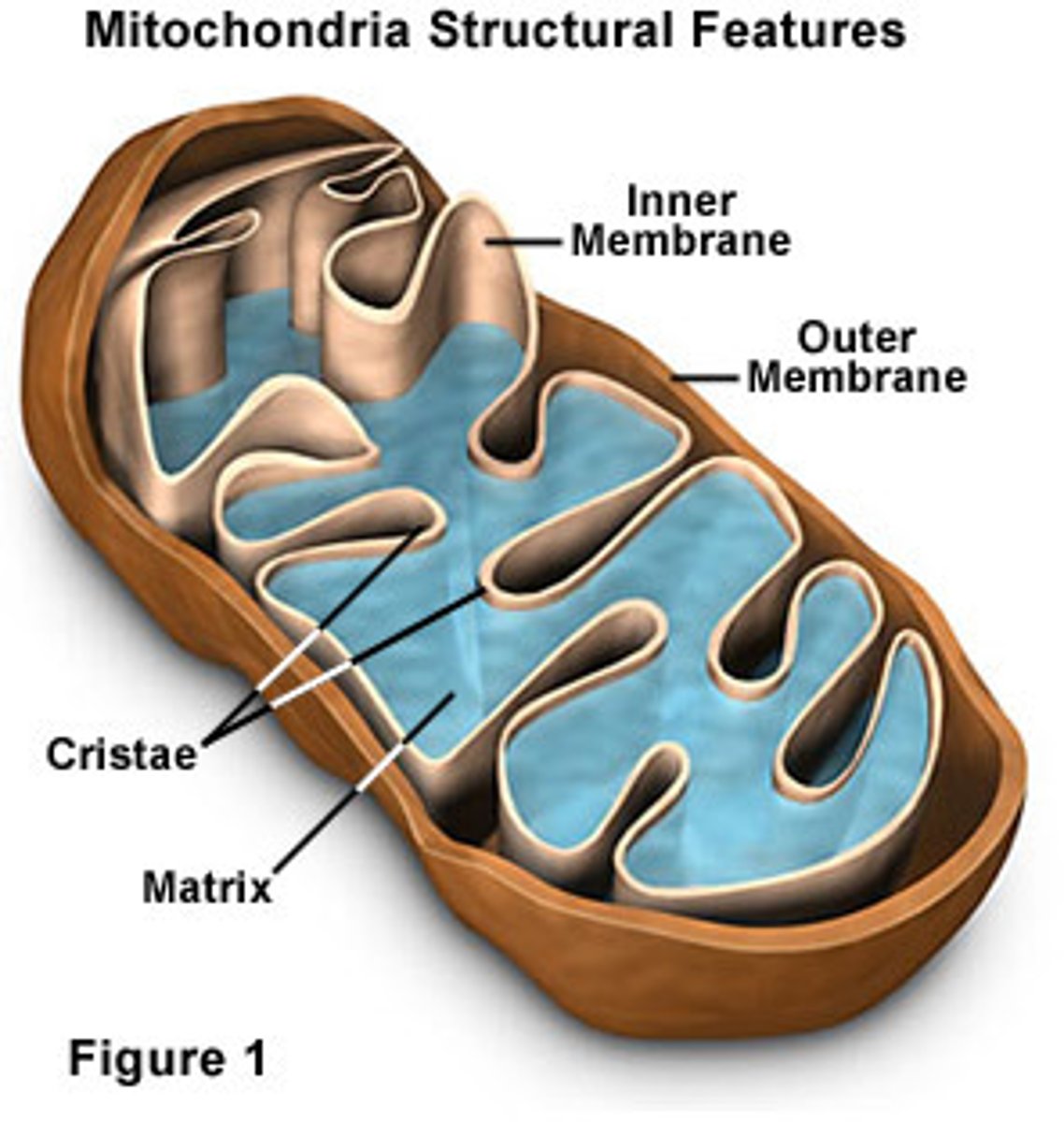
mitochondrial matrix

Why is the maintenance of the membrane potential crucial to ATP formation?
keeping membrane potential allows ATP synthase to pump H+ back into the mitochondrial matrix to make ATP
- the electrochemical gradient, stores energy created by the electron transport chain to power both the synthesis of ATP and the import of necessary molecules like ADP and phosphate into the mitochondrial matrix.