DBB: 13 Marijuana and cannabinoids
 Call Kai
 Learn
Learn Practice Test
 Spaced Repetition
 Match
Match Flashcards
 Knowt Play
1/41

There's no tags or description
Looks like no tags are added yet.
Name | Mastery | Learn | Test | Matching | Spaced | Call with Kai |
|---|
No analytics yet
Send a link to your students to track their progress
42 Terms
what is hemp
cannabis satvia - non-psychoactive form
earlier cultivated non-food plants 8000BC
grown for its tough natural fibres (e.g. rope, sails, bags)
what ‘species’ of marijuana is there
cannabis satvia
cannabis indica
what part of the plant is smoked - where does most of the THC come from
the flowering hemp (dried flowering tops, leaves, stem)
cannabinoids highly concentrated in the flowering tops of female plant buds
how many types of cannabinoids are there what’s the most important one
about 70
Δ9-tetrahydrocannabinol - aka THC
what is the importance of CBD
dampens the THC effects
how can potency be increased
by prevention of pollination and seed production by female plants → energy diverted to production of sticky resin
how do different strains within theses species differ
in terms of smell, taste, type of high
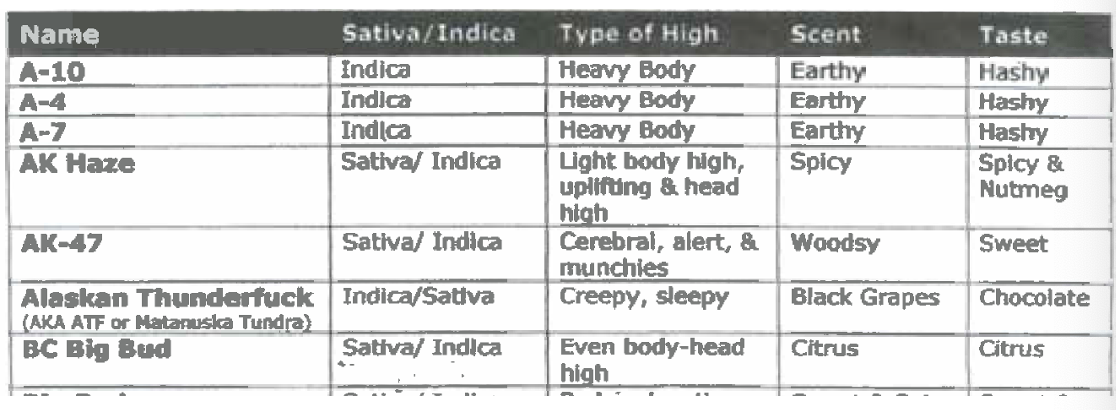
how come THC content has increased over the years - what does this mean
new cultivation methods, growers selectively breed - make it stronger
high THC = increased risk of dependence, psychosis
what are 2 other cannabis derivatives
hashish-dired resin - from fine outgrowths from top of female plant (aka trichomes) which are pressed into blocks contains high THC
hash oil-solvent - extraction from hashish - high in THC 10-30%
what are the typical 3 routes of administration
smoking - most common, typically in cigarettes (only 20-40% of THC is absorbed)
vaporising - inhalation of vapour at high temperatures, heat hash oil on tinfoil (less irritating)
eating - dissolve in oils contained in food (slow but strong effect)
history of cannabis (3 time frames)
medical/religious use since 1000s of years ago
mid 1800s: western interest
early 20th century: marijuana use brought in via Mexican and west Indian immigrants
examples of places which show world wide increase
decriminalised in Amsterdam
more USA states legalising/decriminalising (public figures admitting cannabis use)
what does medical marijuana help with (4)
treatment for glaucoma (increased intraocular pressure)
antiemetic (reduce nausea/vomiting)
anticonvulsant
enhance appetite (e.g. in AIDS patients)s mei
what about the UK
have ‘sativex’ spray containing THC and CBD which can be prescribed for multiple sclerosis
how effective is medical marijuana
debate about it - obviously comes with side effects like psychosis
what are the 2 main cannabinoid receptors and where are they found
CB1 (main one) - in brain, density high in basal ganglia, hippocampus, cerebellum - areas associated with working memory, spatial memory, motor coordination
CB2 - primarily found in the immune system, glia - more in the periphery
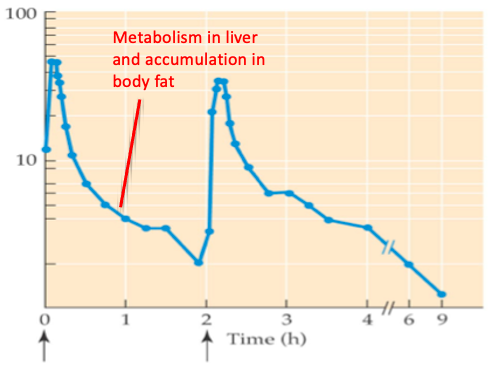
how quickly does THC reach the brain through inhalation - why
within minutes - since cannabinoids are highly lipid-soluble
it distributes to body fat stores - hence rapid decrease in peak concentration
how long after use can a drug test still detect cannabis
longer than 2 weeks later
in chronic users it would be longer, maybe months
where does THC metabolise
in the liver, with multiple pathways
??
on 3 levels of intoxication, what are the effects
buzz: slight lightheaded feeling, tingling in extremities
high: euphoria and exhilaration
stoned (higher doses): floating sensations, slowing of time, enhanced visual and auditory perception
come-down
what about physiological effects
increased heart Arte, blood flow to skin (warm sensation)
appetite stimulation
red eyes (because blood flow is increasing)
what about undesirable effects
psychotic symptoms: depersonalisation, agitation, paranoia (replicate schizophrenia symptoms)
anxiety (dependent on set and settings)
impaired judgement, reaction time
motor impairment, impaired memory recall
name one difference and one similarity in THC experimental animals
cannabinoids are readily discriminated as different to other abused drugs (e.g. rats know it isn’t cocaine
but THC does enhance accumbens dopamine release
what do animals prefer high or low doses of THC
low doses of usually produce CPP and are self-administered (← in monkeys)
high doses produce CPA (conditioned place aversion) and are not self administered (← in monkeys)
what about IV self-adminstration
unreliable in rats
what about vapour self-administration (simulating smoking) STUDY
rats nose poked for THC or CBD enriched plant extracts puffs
findings:
rats reliably self-administer THC, but not CBD vapour
THC, but not CBD, is rewarding in animals - but can only be seen when modelled like how humans take it (i.e vapour/smoking)
what’s an example of a synthetic cannabinoids (3)
WIN55212
full agonist at CB1 and CB2 receptor
different structure to THC (‘milder’ effects)
rats self-administer WIN55212, THC is unreliable (maybe because it is milder)
what is rimonabant
referred to as an ‘antagonist’ - more like an inverse agonist at CB1 receptor
reduced subjective effects of marijuana
3 reasons why the CB1 receptor is important for reward
rimonabant blocks self-administration of THC, and synthetic CB1 agonists are themselves self-administered (at low doses)
rimonabant also decreases self-administration of alcohol, opioids, cocaine etc. - so generally CB1 receptors needed for reward
CB1 knockout mice seem less sensitive to rewards - whether drugs or natural rewards such as food (and show correspondingly less NAc dopamine release)
why do we have these CB1 receptors to begin with
because we have cannabinoid compounds in our brain - endocannabinoids
what do we know about cannabinoids so far (3 things)
structures unrelated to THC
most have little selectivity for CB1 Vs CB2
too lipid-soluble to be stored in vesicles (synthesised as needed)
2 examples of natural cannabinoids
anandamide (AEA) - partial agonist at CB1 and CB2 (similar affinity as THC for CB1)
2-AG present - present in higher brain concentrations than AEA, full CB1 and CB2 agonist
what is the function of endocannabinoids
important regulators of synaptic transmission for both excitatory and inhibitory synapse
what’s the process
typically synthesised in the post-synaptic side of the synapse at the cell membrane
see as retrograde messengers to alter the physiology of the presynaptic terminal
released when necessary, uptake mechanism still not clear
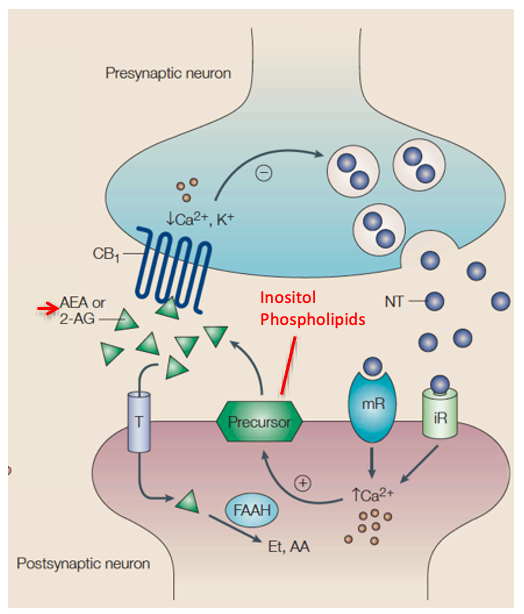
give an example (easier explanation)
phospholipid is converted into the endocannabinoid → binds to CB1 (inhibitory) → sends signals that slow down the release of transmitters
like when you’re stoned you chill, slow down - so does neural transmission
endocannabinoids slow down transmission - so does THC
what role does endocannabinoid function play (with examples)
hunger, feeding, social play
rimonabant reduces feeding
accumbens injections of AEA increase feeding and pleasurable reactions for sucrose (tongue protrusion = pleasurable reaction)
amygdala injections of AEA hydrolysis inhibitor URB587 increase social play in young rats
effects of repeated cannabis administration
tolerance - but mixed evidence for the ‘high’
many heavy users do not consume escalating doses
but lab studies have shown tolerance
examples of tolerance for behavioural effects and pharmacological tolerance
effects of THC in animals induced in few days (analgesia, motor inhibition)
reduction of CB1R following repeated THC treatment - less activity, less binding in the striatum, hippocampus, cerebellum
what are the effects of repeated or heavy cannabis use
acute effects - impaired inhibition, working memory, verbal fluency
residual and long term effects typically normal/mixed findings for all executive functions
only one is decision making and risk taking is impaired at residual and long term effects
what are some withdrawal symptoms
irritability, anxiety, decreased appetite, aggressive
precipitated withdrawal seen in animals with high doses (e.g. paw tremor - similar to opiates)
what about dependence - what are the risks
impaired control over cannabis use and difficulty stopping
risk about 10% - increases to 50% if daily use (higher than heroin, nicotine, cocaine)
what is the risk for psychosis
6-8% of schizophenia could be prevented if cannabis use removed from young adults and adolescents
cannabis use execerbates psychotic symptoms in those already experience them

