AP HUG - Unit 5 (Agricultural and Rural Land Use Patterns and Processes)
 Call Kai
 Learn
Learn Practice Test
 Spaced Repetition
 Match
Match Flashcards
 Knowt Play
1/70

There's no tags or description
Looks like no tags are added yet.
Name | Mastery | Learn | Test | Matching | Spaced | Call with Kai |
|---|
No analytics yet
Send a link to your students to track their progress
71 Terms
Agriculture
The purposeful planting of crops or raising of livestock (cattle, sheep, goats, pigs, chickens, etc.) for human sustenance.
Climate
The pattern of temperature and precipitation in an area over a 6-year period.
Weather
The day to day atmospheric conditions in a place.
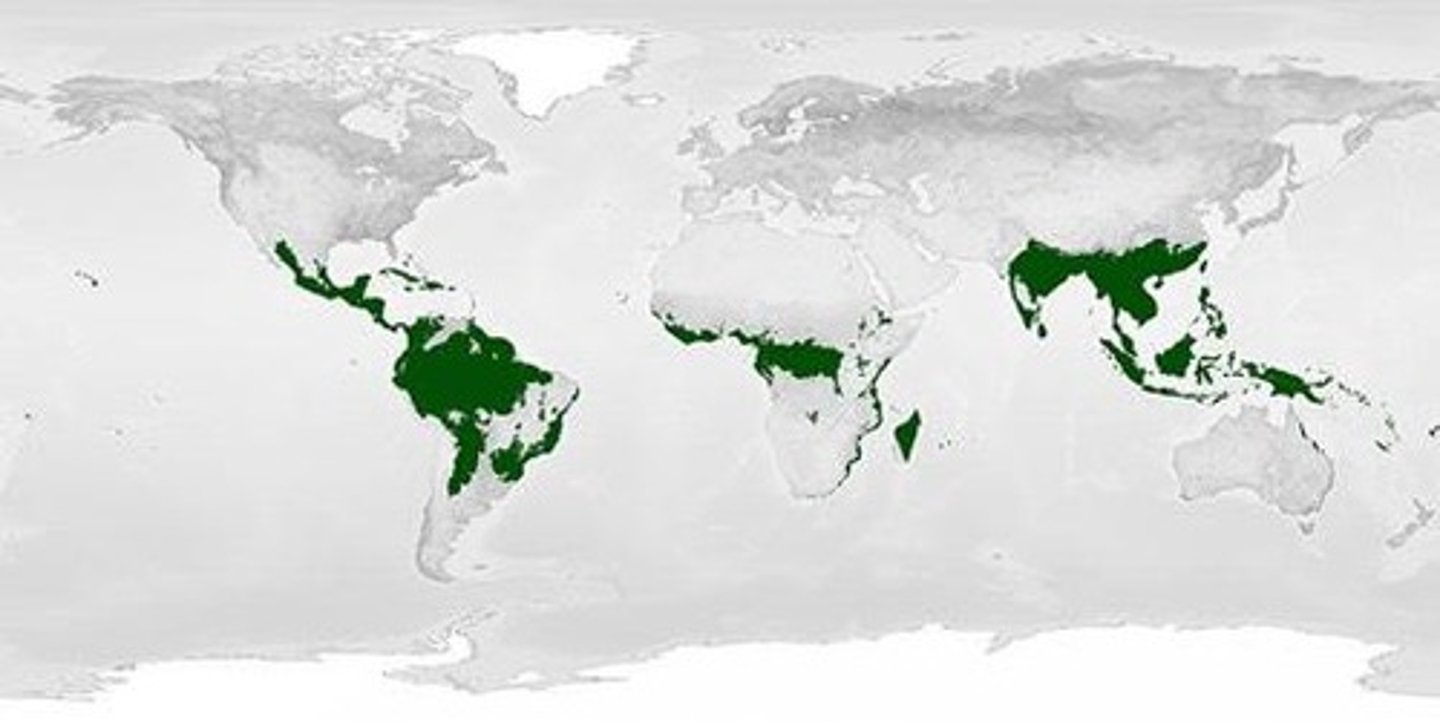
Tropical Climate Zones
Climate zones that cluster about 20 degrees north and south of the equator and have a year round temperature of about 80 degrees fahrenheit.
-Crops grown: rice, sugarcane, tobacco
Dry Climate Zones
Climate zones that receive very little precipitation and are not good for growing crops.
-Opposite of tropical climate zones.
-Perfect place for livestock grazing.
Moderate/Mediterranean Climate Zones
The most comfortable climate zones to live in.
-Crops that need very mild temperatures such as grapes and olives grow well in these climates.
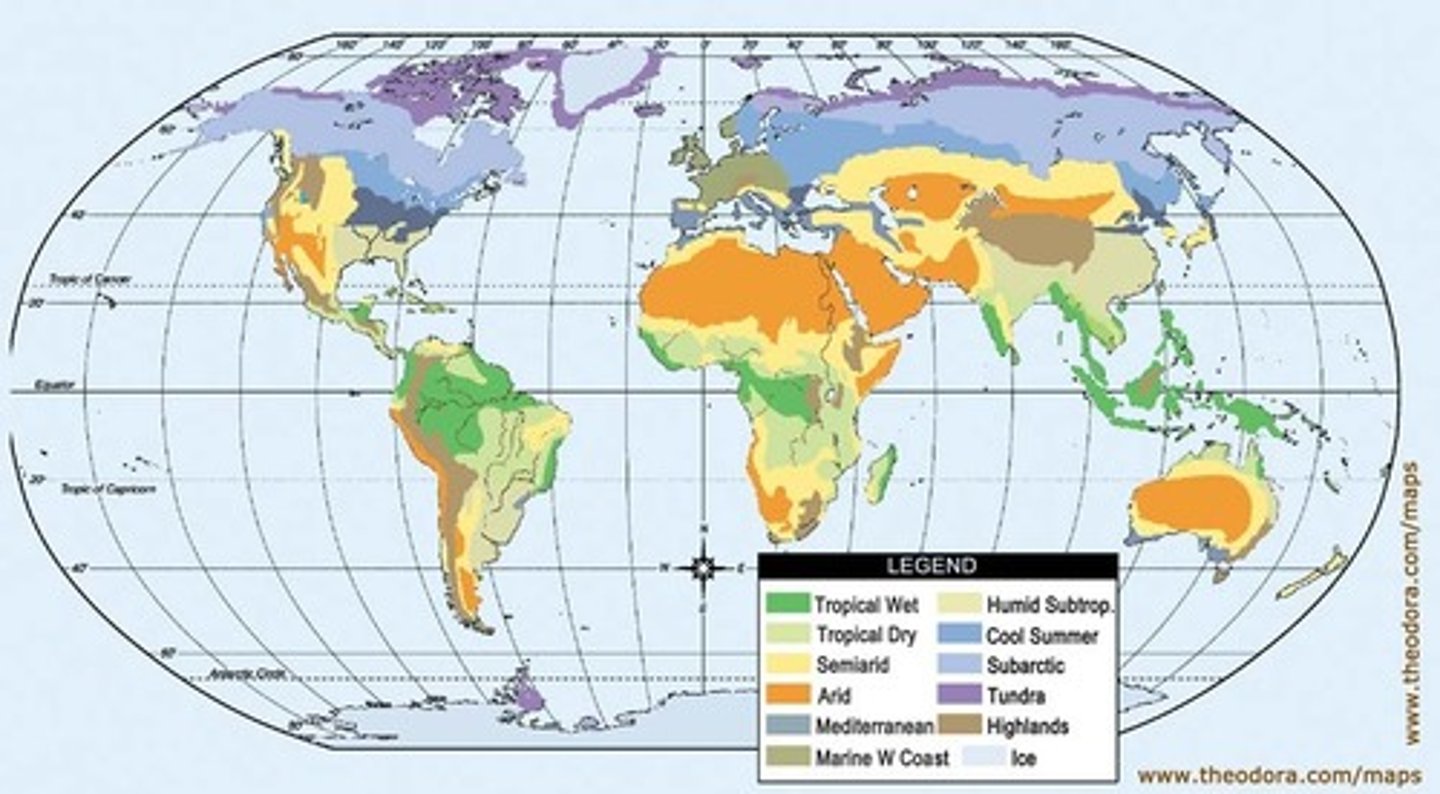
Continental Climate Zones
Climate zones that vary in temperature, but most have colder winters, longer-lasting snow, and shorter growing seasons.
-Most are cold and exist in the northern regions of the world.
-Ideal for short growing season crops.
Environmental Possibilism
The idea that human beings are smart enough to come up with innovative solutions to solve any problems put in front of them, including those having to do with food production or climate obstacles.
Intensive Agriculture
A type of agriculture that takes a lot of "intense" labor and money to plant and harvest the crop, or raise the livestock.
-Usually these farms are operating in areas where they have to manipulate the land in some way to adjust for a climate factor.
Examples:
1. Plantation agriculture (monocropping)
2. Mixed crop/livestock agriculture
3. Market gardening
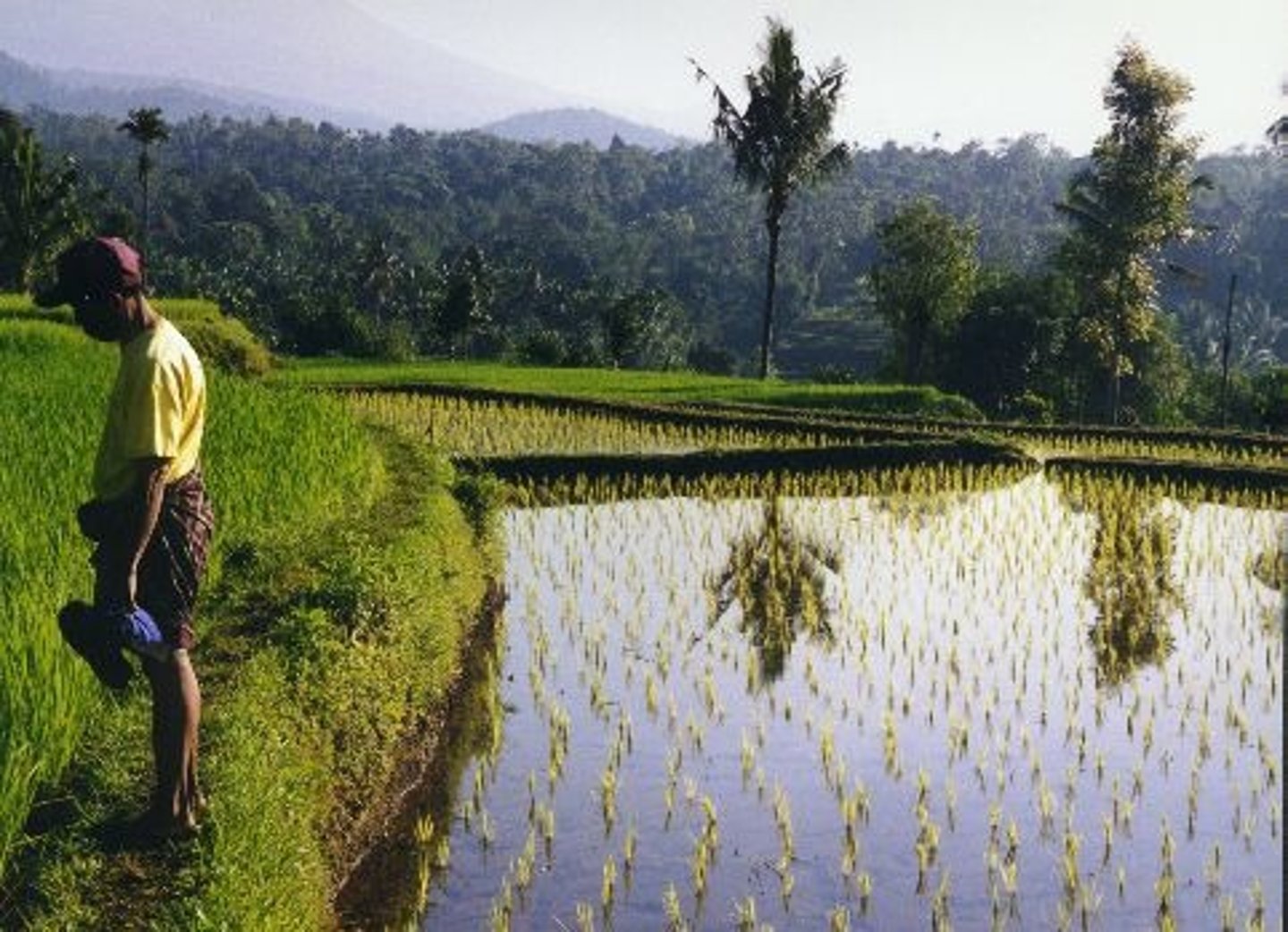
4. Paddy rice agriculture (rice grown in flooded fields)
5. Livestock fattening
6. Dairy farming
Feed Lots
A type of intensive agriculture that uses confined spaces for cattle to graze in to become fat.
Pros:
-Efficient meat production, high output, controlled diet...
Cons:
-Pollution, animal cruelty, disease spreads fast...
Dairying
A type of intensive agriculture that focuses on the production of milk and milk based products such as cheese and yogurt.
Extensive Agriculture
A type of farming that requires less labor because the land is not being manipulated to fit a certain crop, or animal.
-Farmers are working with the natural elements of the land and climate to produce food.
Examples:
1. Shifting cultivation/slash-and-burn/swidden agriculture
2. Nomadic herding
3. Livestock ranching/pastoralism
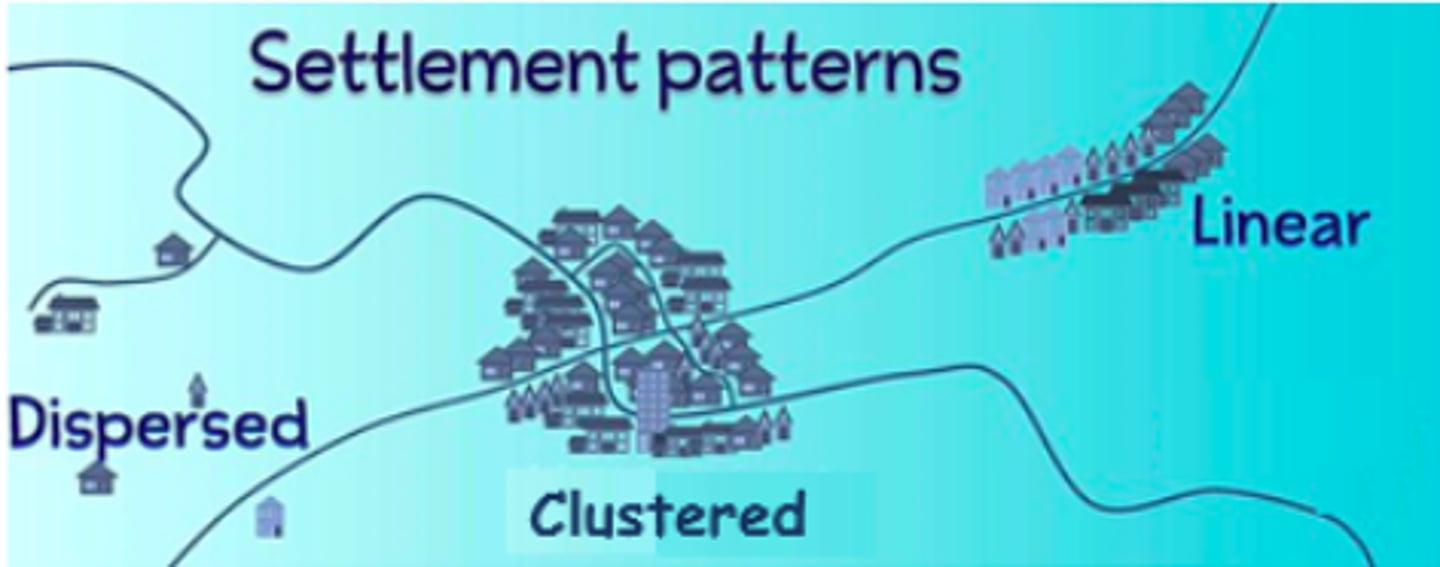
Settlement Patterns
The ways in which people organize themselves on the land:
1. Clustered
2. Dispersed
3. Linear
Farm Village
Small villages where farmers live in tightly bunched together homes.
Survey Methods
The methods used by surveyors to lay out property lines as a new territory gets settled.
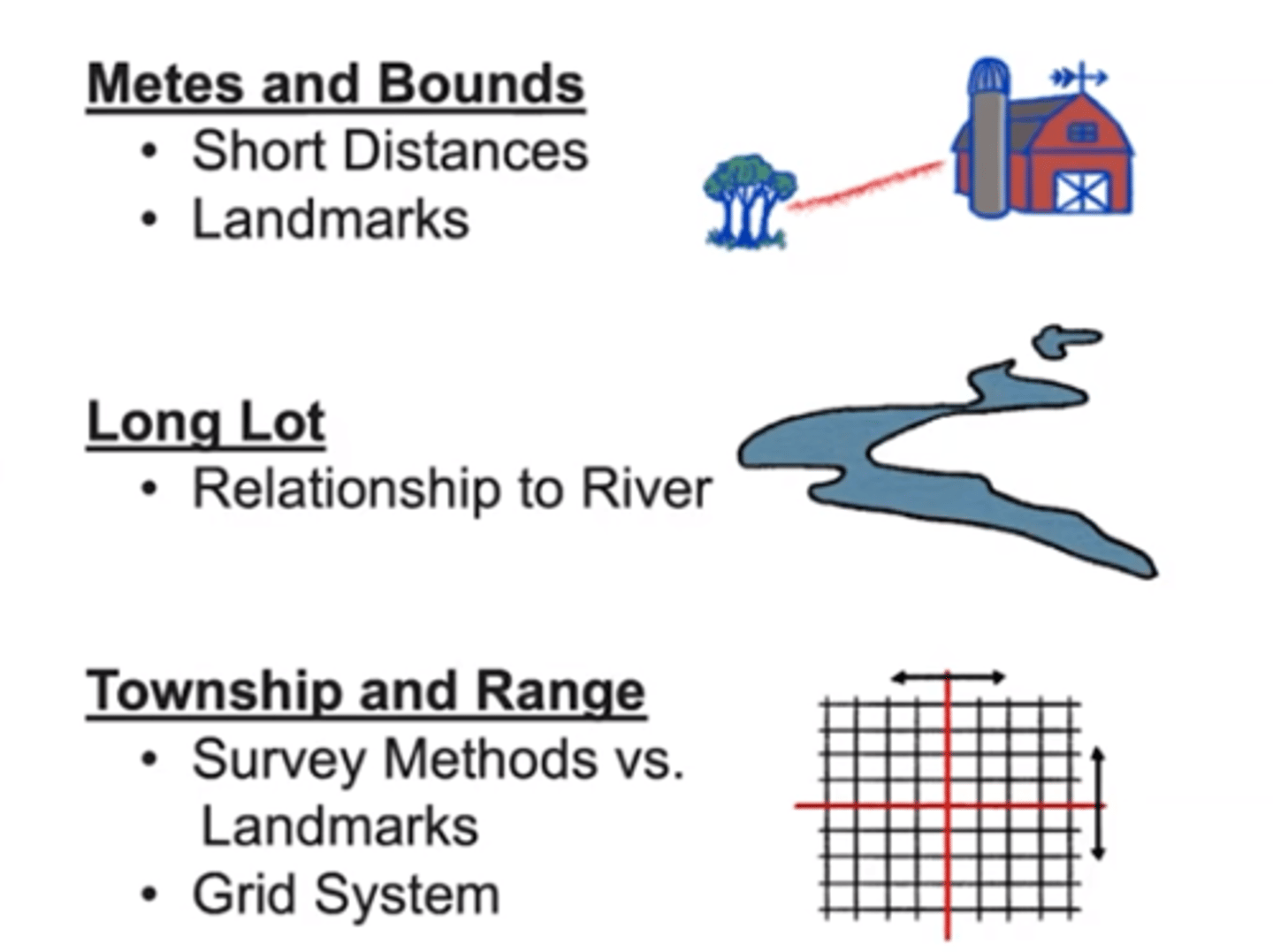
Metes and Bounds
One of the early forms of surveying land that used natural features such as trees, boulders, hills, streams to delineate property or even state boundaries.
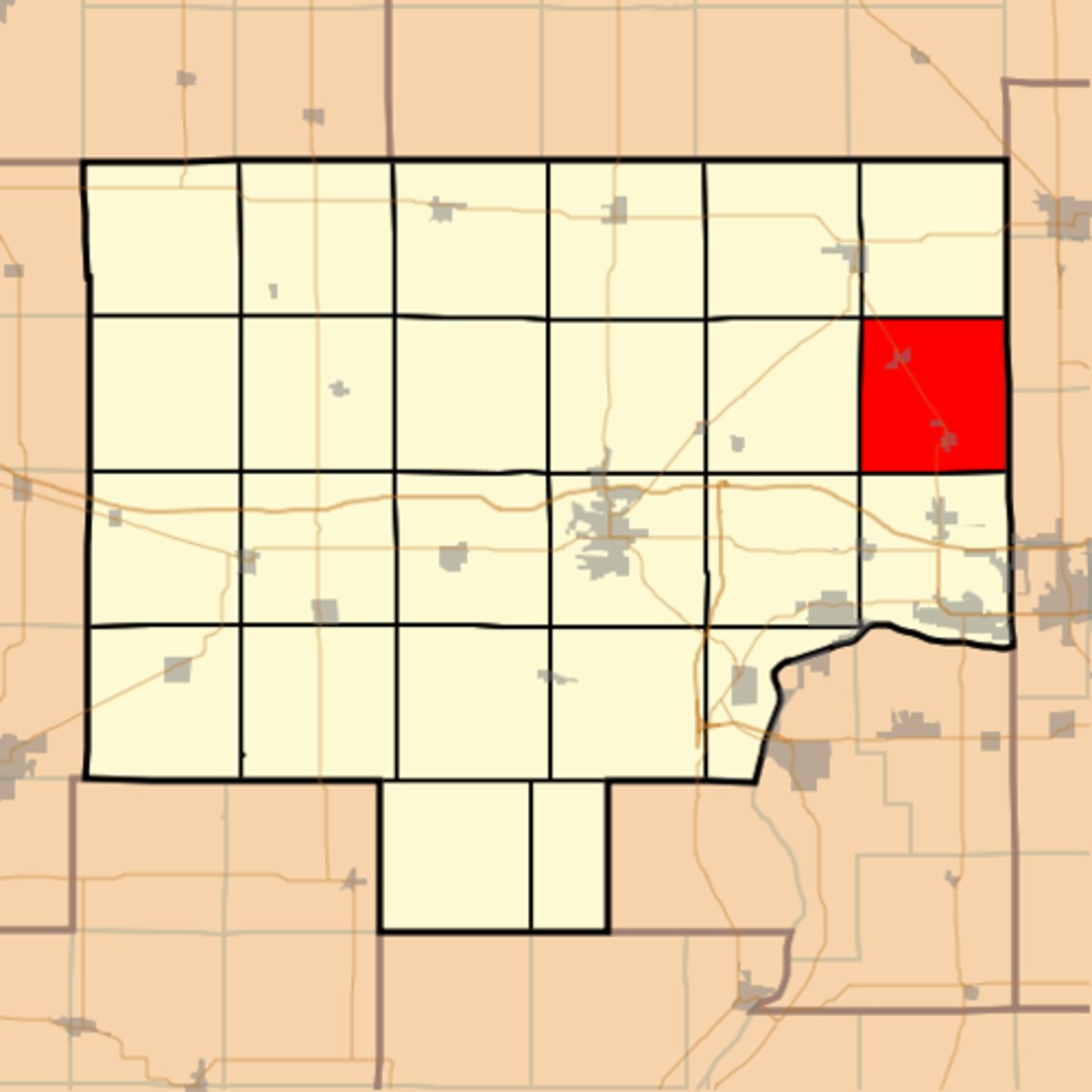
Township and Range
Type of surveying (established by the U.S. Land Ordinance of 1785) that was based on Thomas Jefferson's idea of creating a grid or square shaped townships across the United States.
-Uses squares.
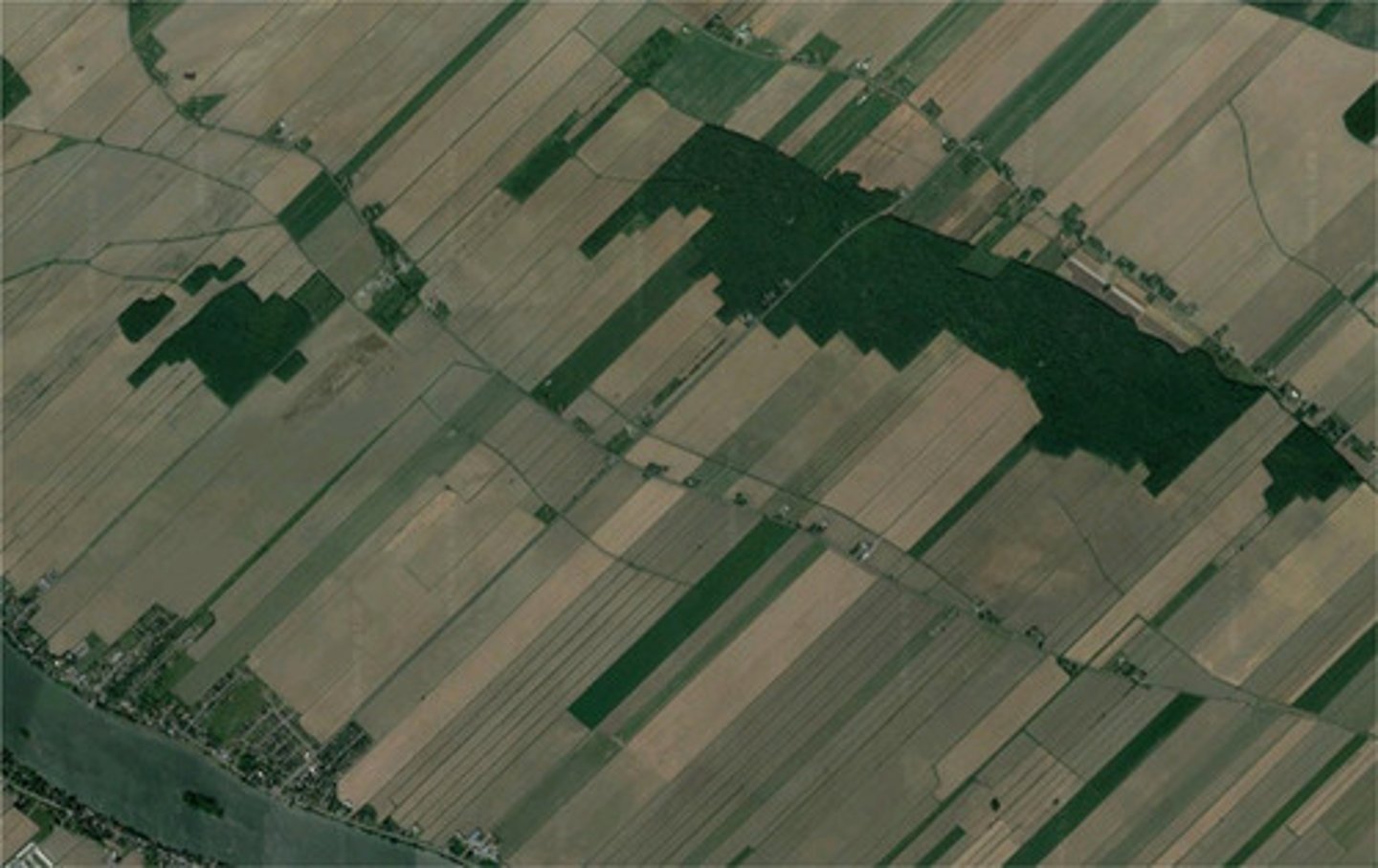
Long-Lot Method
A surveying method that uses a system of rectangles to divide the land, creating a linear settlement pattern.
-The short sides of the rectangular properties come up to rivers or roads, allowing more property owners to have access to essential watering or transportation systems in the area.
Domestication
The long-term process through which humans selectively breed, protect and care for unique plants and animals taken from wild populations to create genetically distinct species known as domesticates.
Animal Husbandry
Taking care of farm animals by breeding them in a way that strengthens their genetics, as well as feeding to keep them healthy and sheltering them to keep them safe.
Hunting and Gathering
A subsistence strategy in which people rely on gathering wild plants and hunting wild animals for food, rather than practicing agriculture or animal domestication.
Teosinte
A type of wild maize that is the ancestor of corn.
Mesoamerica
The ancient civilizations of Mexico and Central America.
Hearth
Origin center where the practice of plant domestication developed.
Fertile Crescent
A crescent-shaped region in the Middle East, spanning modern-day Iraq, Syria, Lebanon, Palestine, Israel and Jordan, together with the northern region of Kuwait, the southeastern region of Turkey and the western portion of Iran.
-Believed to be the very first region where settled farming emerged around 8,000 years ago as people started the process of clearing land for planting and modification of natural vegetation to grow newly domesticated plants as crops.
Indus River Valley
A hearth of plant and animal domestication that signaled the historical transition from humans being a nomadic species to being a settled species.
-Flows from the highland of Tibet and continues along the border of Pakistan and India and into the Arabian Sea.
Columbian Exchange
The widespread transfer of plants, animals, people, diseases, and cultural practices between the Americas, Europe, Africa, and Asia following the voyages of Christopher Columbus and other explorers.
Silk Road
An ancient network of trade routes that connected East Asia with the Middle East, Europe, and parts of Africa.
-While commonly associated with the exchange of luxury goods like silk and spices, it also played a crucial role in the diffusion of agricultural products, practices, and technologies.
Mechanization
Refers to the transition from human labor to machine power on farms or in factories.
Mechanical Reaper
A machine that was pulled by horses and cut and bundled grain automatically, allowing farmers to harvest grain on a massive scale and produce more food by planting larger fields.
Seed Drill
A machine pulled by a horse, donkey, or oxen, that would plow the field and drop seeds exactly into their plowed areas, which led to an even distribution of seed and less seed waste.
Agrichemicals
(Invented during the Second Agricultural Revolution) Chemical compounds made from petroleum and natural gas used in agriculture.
-E.g., Synthetic fertilizer
Synthetic Fertilizers
Fertilizer packed with high concentrations of nitrogen, potassium, and phosphorus, and greatly increase crop yields.
Pesticides
Chemicals that are applied to growing plants to keep pests away.
Biotechnology
A form of technology that uses living organisms, usually genes, to modify products, to make or modify plants and animals, or to develop other microorganisms for specific purposes.
Green Revolution
The third agricultural revolution where biotechnology emerged, creating new pesticides, fertilizers, and GMOs that significantly increased crop yield.
Positives:
-High crop yield
-More food production
-Less famine
-Supports growing populations
Negatives:
-Heavy chemical use
-Ground pollution
-Water pollution
-Benefits the wealthy
Subsistence Farming
Farming done on a small scale to feed the farmer's family, rather than to make a large profit.
Commercial Farming
Farming that is done on a large scale for profit.
Bid-Rent Theory
Theory that explains that land value and demand decrease as distance from the Central Business District (CBD) increases, with the highest prices near the center due to high accessibility and competition.
Monocropping
An agricultural method in which commercial farmers specialize in one crop.
Consequences:
-Soil depletion
-Vulnerable to pests
-Fragile economy
-Dependence on exports
-If peripheral country, creates cycle of poverty and exploitation.
Plantation
A large farm in tropical and subtropical climates that specializes in the production of one or two crops for sale, usually to a more developed country.
Mixed Crop/Livestock Agriculture
Type of commercial farming in which farmers grow two or more crops, often alongside raising livestock, on the same land.
-Sub-type of INTENSIVE agriculture
Market Farming Gardening
Farming that focuses on growing high-value perishable crops such as fruits, vegetables, and flowers for sale in local or regional markets.
-Sub-type of INTENSIVE agriculture
Nomadic Herding
The raising of livestock for food by moving herds from place to place to find pasture and water.
-Sub-type of EXTENSIVE agriculture
Livestock Ranching/Pastoralism
The raising of domesticated animals for the production of meat and other byproducts such as leather and wool.
-Sub-type of EXTENSIVE agriculture
Transhumance
A type of pastoralism (raising animals) where herders and their livestock move seasonally between two fixed places, following a regular pattern.
-E.g., Moving animals to the mountains in the summer when it's cooler and grass is plentiful, and then back down to the valleys or lowlands in the winter where it's warmer.
Commodity Chain
A series of business connections that begin with the purchase of a seed by the farmer, and end with a consumer buying the product at a grocery store or market.
Agribusiness
The term that encompasses the business side of agriculture.
Pros:
-More variety, efficient, lower prices...
Cons:
-Hurts local farms, dependance on imports, corporate control, environmental harm...
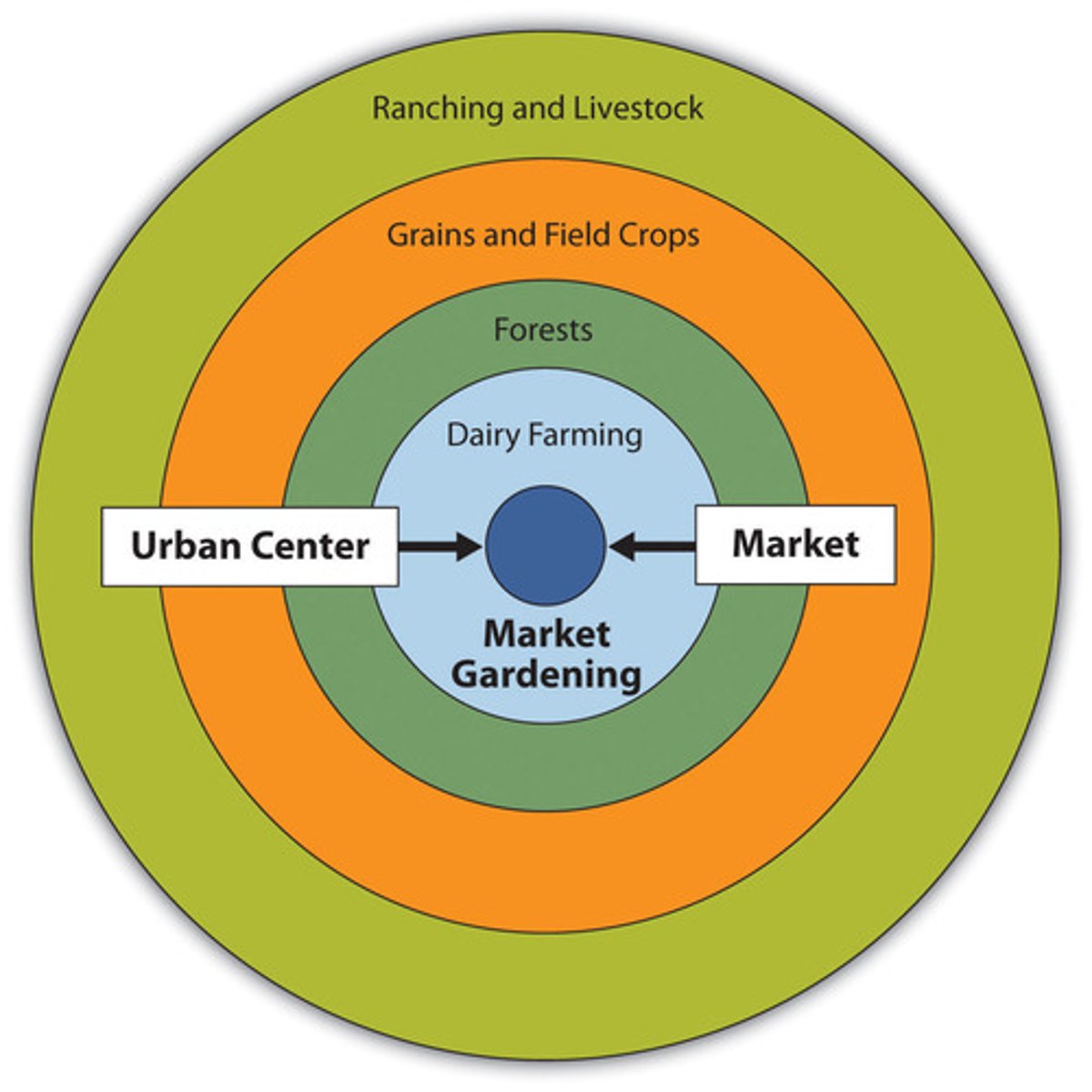
Von Thunen Model
A model that shows how farmers decide what crops to grow based on distance from the market. According to this model, perishable or high-cost-to-transport items (like dairy and fresh vegetables) are grown closer to the city, while less perishable and cheaper-to-transport goods (like grains or livestock) are located farther out.
Globalization
The increasing connection and integration of countries through trade, communication, and transportation.
Interdependent
When countries rely on each other for goods, services, and resources.
Commodity Dependence
When a country relies heavily on exporting one or a few raw materials.
Dangers of Commodity Dependence
-Price fluctuations
-Economic instability
-Over dependence on foreign markets
Genetically Modified Organisms (GMOs)
A living organism, including crops and livestock, that is created through genetic engineering.
Reasons for Creating GMOs
-Pest-resistant crops (alternative to sprayed pesticides)
-Higher crop yields
-Drought tolerance
-Longer shelf life
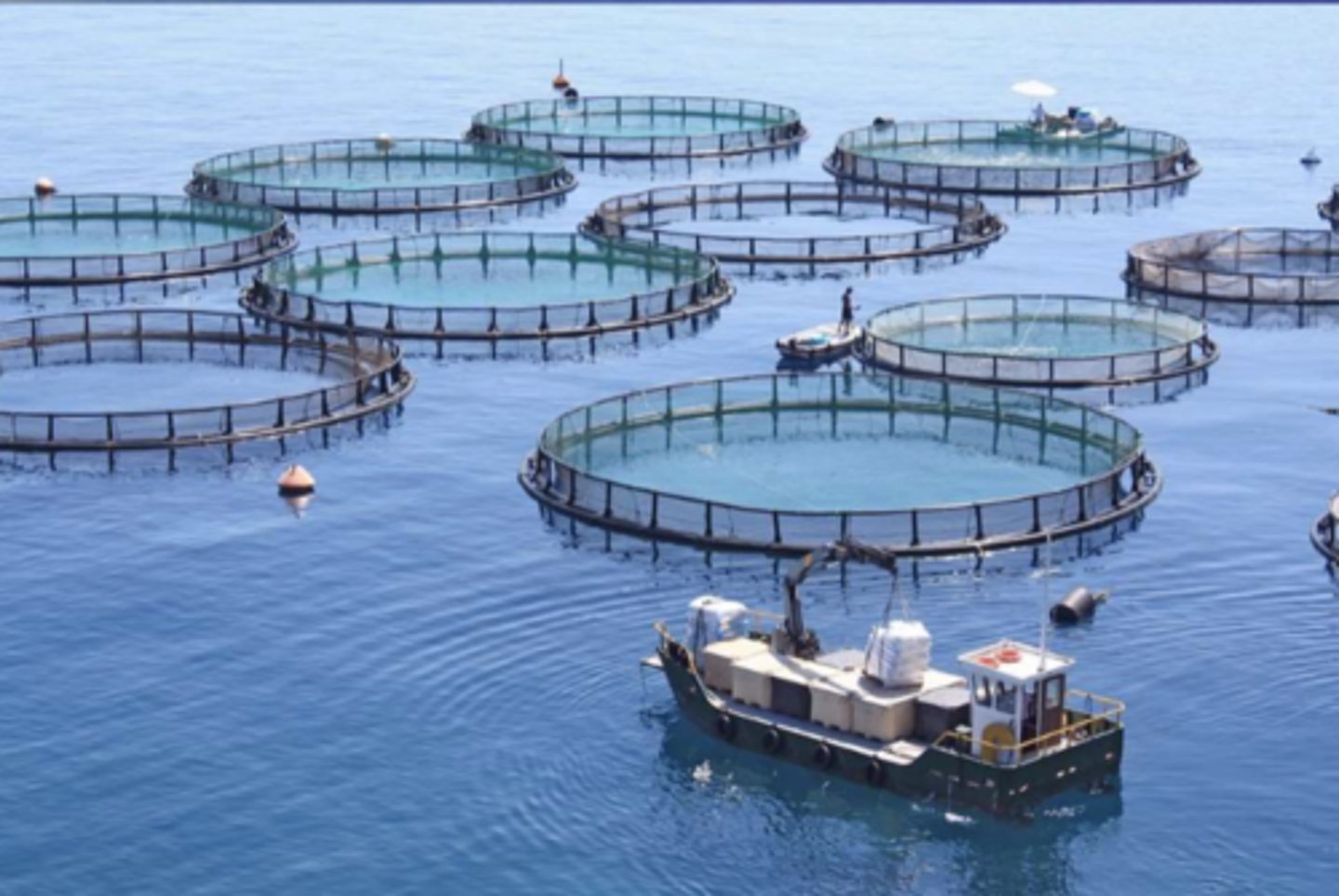
Aquaculture/Mariculture
The harvesting of organisms that live in water under very controlled conditions.
-E.g., Fish farms, shrimp farms, oyster farming, salmon pens...
Urban Farming
The practice of growing fruits and vegetables on small plots or shared community gardens within the confines of a city.
Community Supported Agriculture (CSA)
Direct relationship between the farmer and local community through a subscription program. Citizens order food directly from the farmer.
Farmers Markets
Farmers set up stalls at outdoor markets to sell their produce to community members.
Organic Farming
The production of crops without the use of synthetic inputs like pesticides, genetically modified fertilizers, or genetically modified seeds.
Slow Food Movement
People's resistance to the fast food industry's mass production of unhealthy, genetically modified food.
Fair Trade Certification
Certification program that supports farmers getting a fair price for their products and farm employees getting a fair wage for their labor. When the product has the certification on it, consumers know that the item has been produced in a fair and humane manner.
Locavore
People who make an effort to only eat food generated at local farms.
Benefits of the locavore movement:
-Less transportation pollution
-Fresher food
-Supports local farms
-Lower carbon footprint
Food Deserts
Areas with limited access to affordable and nutritious food.
Food Security/Insecurity
Whether or not a family has access to enough food.
Norman Borlaug
Father of the Green Revolution
Desertification
Degradation of land, especially in semiarid areas, primarily because of human actions like excessive crop planting, animal grazing, and tree cutting.
Shifting Cultivation/Slash and Burn/Swidden
The process of clearing large plots of forest in order to farm on it.
Destruction caused:
-Deforestation
-Soil loses nutrients after a few harvests
-Risk of desertification
-Destruction of habitat
-Smoke creates air pollution
Government Subsidies
Payments from the government to farmers that help lower costs, protect incomes, and keep food prices stable.
Vertical Integration (Agribusiness)
When a single agribusiness controls multiple steps of the agricultural commodity chain—from production to processing to distribution.
-This integration creates a seamless supply chain, increases efficiency, and reduces reliance on external suppliers.
Horizontal Integration (Agribusiness)
When a company acquires or merges with other companies at the same level in the agricultural supply chain, usually to increase market share and reduce competition.

