4.1.7.3 - Government policies to alleviate poverty and to influence the distribution of income and wealth
 Call Kai
 Learn
Learn Practice Test
 Spaced Repetition
 Match
Match Flashcards
 Knowt Play
1/19

There's no tags or description
Looks like no tags are added yet.
Name | Mastery | Learn | Test | Matching | Spaced | Call with Kai |
|---|
No analytics yet
Send a link to your students to track their progress
20 Terms
Types of Policies to Influence Distribution of Wealth/Income to alleviate Poverty
Redistributing Income using Tax System
Redistributing Income using Benefits System
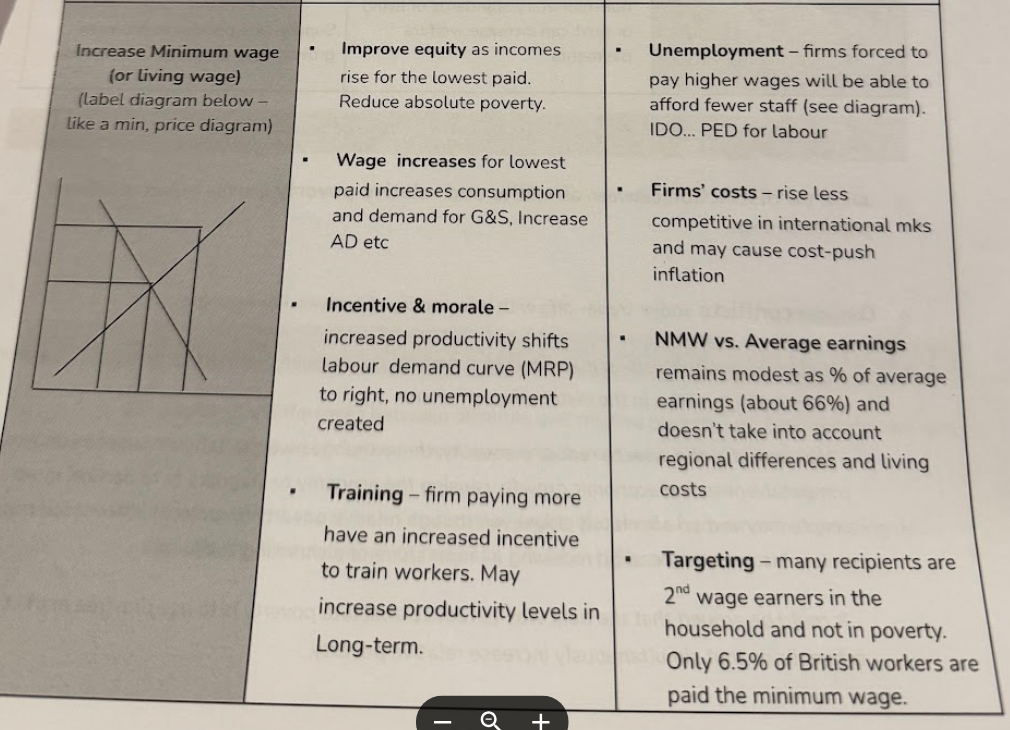
Increasing the National Minimum Wage
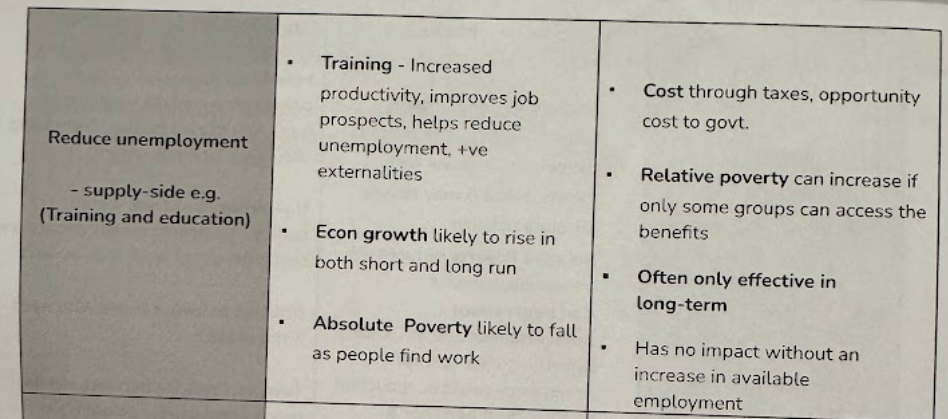
Reduce Unemployment
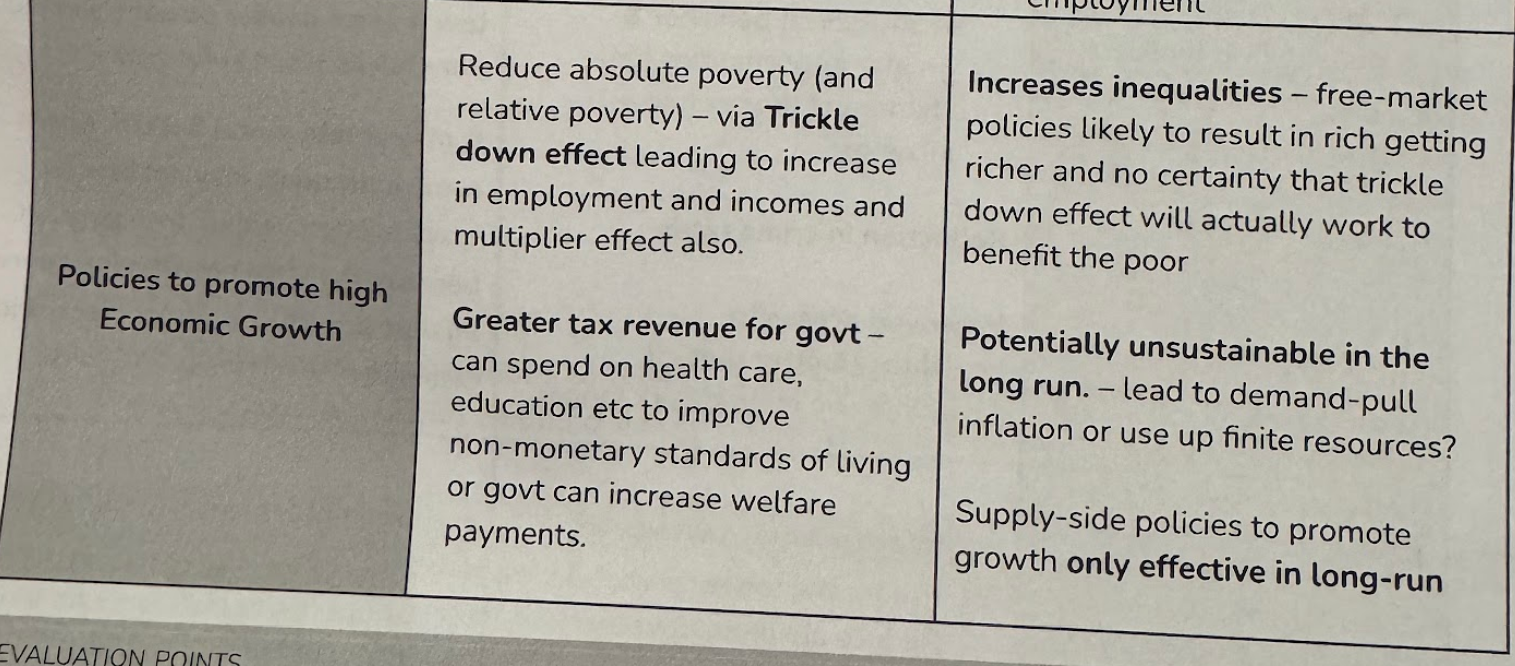
Boost Economic Growth
Redistributing Income using Benefits System
Government can increase level of welfare benefits → lifts people out of poverty & reduces inequality
Cash Benefits:
Given to those on low or 0 original income
Means-tested benefits (universal credit, job-seekers allowance, pension credit)
Universal benefits (child benefit, bus passes for pensioners)
Benefits in Kind:
Non-cash benefits - services provided free or heavily discounted at the point of consumption
e.g. free/subsidised healthcare, education)
Redistributing Income using Tax System
Government can make taxes more progressive → lifts people out of poverty & reduces inequality
Direct Taxes:
Progressive tax directly on income earned
No tax on £0 - £12,570
20% on £12,571 - £50,270
40% on £50,271 - £125,140
45% on £125,140+
Indirect Taxes:
Tax levied on the sale of goods & services
Regressive because proportion of tax paid as a % of income decreases at higher income levels
e.g. VAT, tobacco duty, sugar tax, alcohol duty
Diagram Summary of Redistribution of Income using Tax & Benefits System
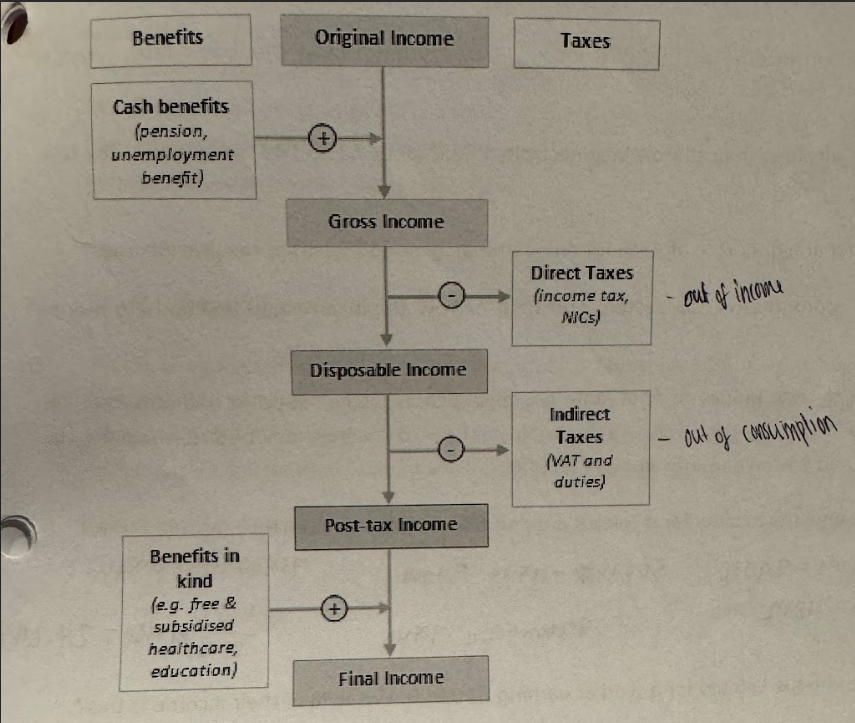
Progressive Taxation =
A tax in which the tax rate increases as the taxable amount increases.
UK Progressive Tax System (numbers)
No tax on £0 - £12,570
20% on £12,571 - £50,270
40% on £50,271 - £125,140
45% on £125,140+
Means-tested Benefits =
The ability to claim benefits depends on the person's income
Universal Benefits =
Benefits claimable of right and not dependent on a person’s income
different to universal credit
Poverty Trap =
When there is no incentive for someone who is on low rates of pay to look for work or work longer hours because the combined loss of benefits and need to pay income tax would result in them being worse off.
Unemployment Trap =
When there is no incentive for someone who is on unemployed to look for work or work longer hours because the combined loss of benefits and need to pay income tax would result in them being worse off.
Fiscal Drag =
Occurs in a progressive tax system when the government fails to raise tax thresholds in line with inflation.
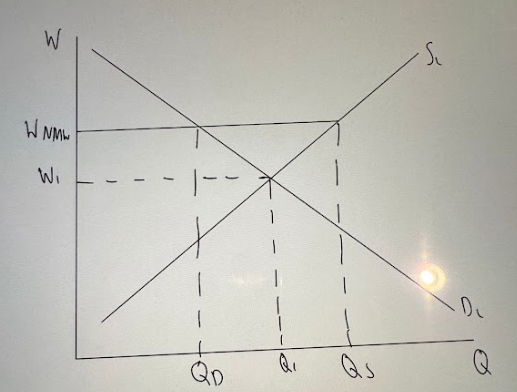
Increasing the National Minimum Wage
Minimum Wage aims to:
Remove in-work poverty
Reduce the disincentive effects of the poverty/unemployment trap
Policies to Reduce Unemployment
Government can increase spending on policies to reduce u/e → lifts people out of poverty
Supply-side Policies:
Reduce occupational immobility (e.g. introduce apprenticeship schemes)
Reduce geographical immobility (e.g. invest in new house-building programme)
Education and training
Policies to Boost Economic Growth
Gov can use policies to boost EG (fiscal, monetary, ssis) → Increases total income in society → Increased DD4L → Increases employment & income
Advantages & Disadvantages of Using Tax System
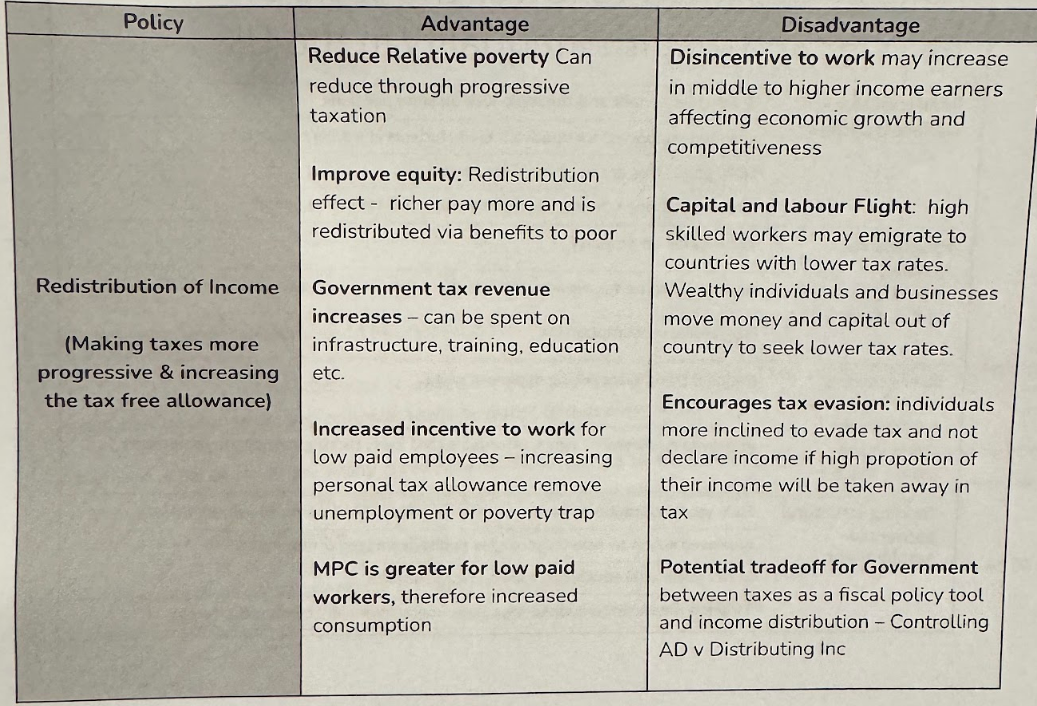
Advantages & Disadvantages of Using Benefits System
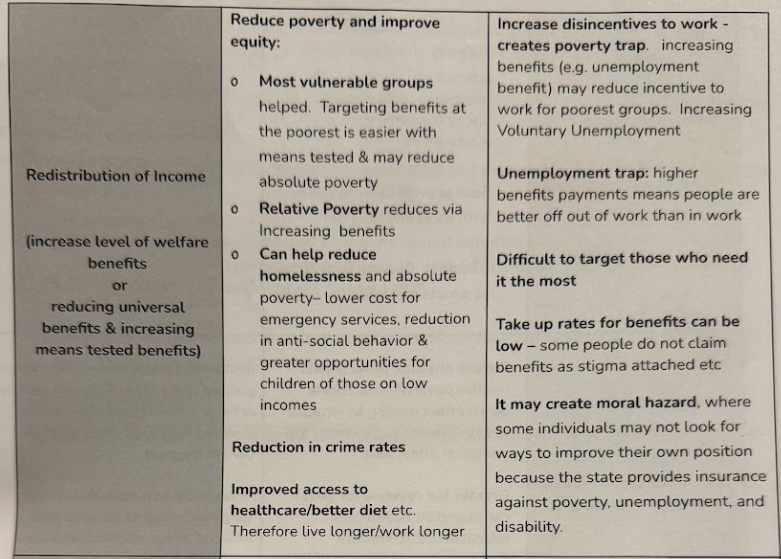
Advantages & Disadvantages of Increasing NMW
Advantages & Disadvantages of Reducing Unemployment
Advantages & Disadvantages of Boosting EG
Evaluating (IDO’s) use of Policies to Influence Distribution of Wealth/Income to alleviate Poverty
Know whether need to tackle Absolute or Relative poverty
Fairness requires value judgement
Gov failure - unintended consequences (e.g. abuse of system)

