APEX Kidney RE Questions
 Call Kai
 Learn
Learn Practice Test
 Spaced Repetition
 Match
Match Flashcards
 Knowt Play
1/22

There's no tags or description
Looks like no tags are added yet.
Name | Mastery | Learn | Test | Matching | Spaced | Call with Kai |
|---|
No analytics yet
Send a link to your students to track their progress
23 Terms
Arginine vasopressin increases GFR by causing
A. dilation of afferent arteriole
B. dilation of the efferent arteriole
C. constriction of afferent arteriole
D. Constriction of efferent arteriole
D. Constriction of efferent arteriole
Etiologies of intrarenal azotemia include 3
A. nephrolithiasis
B. interstitial nephritis
C. ureteral clot
D. ATN
E. bladder carcinoma
F. Vasculitis
B. interstitial nephritis
D. ATN
F. Vasculitis
calculate GFR for this female patient
Age 40
Weight= 80 kg
Serum crt= 0.9
105
0.85 x [(140-age) x weight kg)/ crt x 72)
0.85 x [140-40) x 80/ 0.9 × 72= 105
Match each substance with primary site of production
Angiotensinogen; aldosterone; AG II; AG I
Liver; systemic circulation; lung; zona glomerulosa
Angiotensinogen= liver
aldosterone= zona glomerulosa
AG II= lung
AG I= systemic circulation
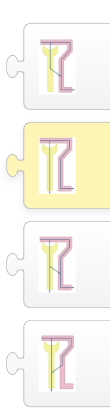
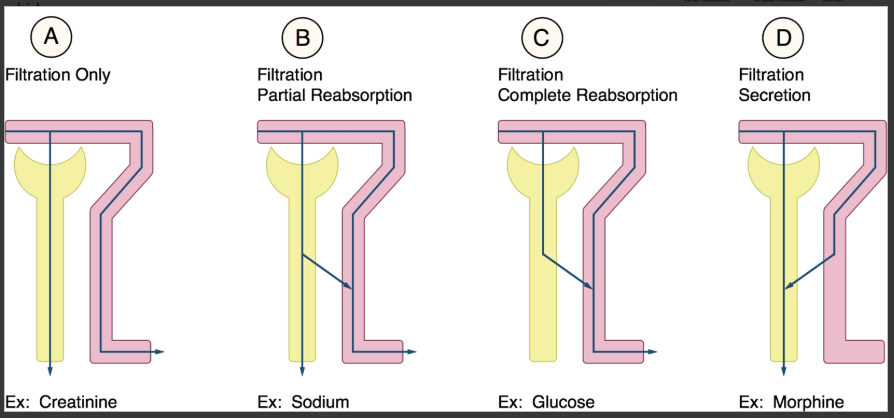
Match each substanace with the way its handled in the kdiney
Crt, morphine, Na, glucose
Identify the theoretical concerns that accompany the admin of sevo to the patient with renal dysfunction 2
A. Fluoride
B. compound A
C. Carbon monoxide
D. Trifluoroacetic acid
A. Fluoride
B. compound A
What is teh best method of renal protection following major muscle trauam
A. acidity urine
B. Norepi
C. NAC
D. mannitol
D. mannitol
Identify the lab tests to reflect the concentrating ability of the kidney 2
A. BUN
B. Crt Clearance
C. Urine sp gravity
D. fraction excretion of sodium
C. Urine sp gravity
D. fraction excretion of sodium
Identify most potent stimulators of adh secretion
A. hyperNa
B. Hypona
c. hypervolemia
D. Hypovolemia
A. hyperNa
D. Hypovolemia
choose best drug to treat mild pain in the patient with GFR of 25ml/min
A. ketorolac
B. codeine
C. celecoxib
D. tylenol
D. tylenol
What substance are produced by kidney
A. renin
B. AGII
C. erythropoietin
D. ADH
A. renin
C. erythropoietin
When antagonizing roc in ESRD PT, dose of neostigmine should be
A. increased by 25%
B. increased by 50%
C. decreased by 50%
D. same
D. same
Which of the following are causes of prerenal azotemia 3
A. aminoglycoside toxicity
B. bladder carcinoma
C. aortic artery clamping
D. abdominal compartment syndrome
E. glomerulonephritis
F. CHF
C. aortic artery clamping
D. abdominal compartment syndrome
F. CHF
Which factors increase rate of compound A production with sevo admin 2
A. low FGF
B. DECREASED CO2 production
C. cold soda lime
D. high inspired sevo concentration
A. low FGF
D. high inspired sevo concentration
A crt clearance of 70ml/min suggest
A. normal
B. mild renal dysfunction
C. moderate renal dysfunction
D. severe renal dysfunction
B. mild renal dysfunction
Nor mal GFR IS
A. 125ML/MIN
B. 275ML/MIN
C. 450ML/MIN
D. 650ML/MIN
A. 125ML/MIN
Which of the following are increased in the serum of the patient with reanl osteodystrophy 2
A. Calcium
B. PTH
C. Calcitriol
D. phosphate
B. PTH
D. phosphate
What is the best way to prevent contrast induced nephrotoxicity?
A. mannitol
B. NAC
C. NS bolus
D. Fenoldopam
C. NS bolus
A BUN/ crt ratio of 30;1 most likely suggests 2
A. Dehydration
B. ATN
C. Upper GI bleeding
D. interstitial nephritis
A. Dehydration
C. Upper GI bleeding
Using AKI network model for kidney injury, match each stage of ATI with clinical finding
Stage 1, 2 and 3
UOP <0.5ml/kg/hr x 12 hours; crt 50% over baseline; crt>4mg/dl
Stage 1= crt 50% over baseline
Stage 2= UOP <0.5ml/kg/hr x 12 hours
Stage 3= crt>4mg/dl
A pt with ESRD is scheduled for fem-fem bypass. which of the following lab values is most llikely to be anbormal 2
A. bleeding time
B. HGB
C. plt count
D. PT/PTT
A. bleeding time
B. HGB
calculate GFR for this male pt
age=60
weight=70kg
crt 2
39
140-60 × 70/ (2× 72)==39
which change increases GFR
A. Increased resistance at afferent arteriole
B. decreased RBF
C. constriction of efferent arteriole
D. increased plasma osmotic pressure
C. constriction of efferent arteriole
Explore top notes

