L3 - B cell and antibody
 Call Kai
 Learn
Learn Practice Test
 Spaced Repetition
 Match
Match Flashcards
 Knowt Play
1/14

There's no tags or description
Looks like no tags are added yet.
Name | Mastery | Learn | Test | Matching | Spaced | Call with Kai |
|---|
No analytics yet
Send a link to your students to track their progress
15 Terms
History of adaptive immunity
Ehrlich theory → each cell has differnet recptors (side chains ) that recognise toxins, when toxin entres and binds to side chain , cell makes more of that recleptor and relases it into blood that then goes to attack toxin
Burnetts theory → each cell only expresses 1 recptor type if recpotor binds to correct antigen then get clonal explansion to produces antibody - this is theory we use today
main goal of adaptive immunity
to be able to respond to all types of pathogens
Antibody structure
it is a dimer made up of 2 polypeptides heavy and light chain joined by covalent bond
variable region at top
constant region from mid to bottom - helps anchor Ab to cell when acting like B cell receptor
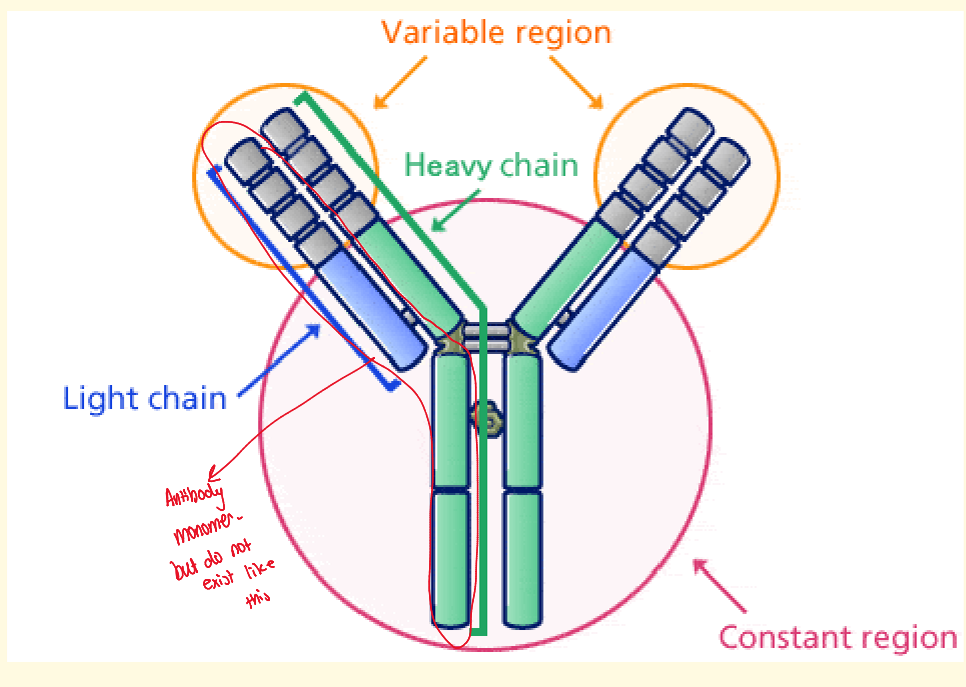
Ribbon representation of antibody
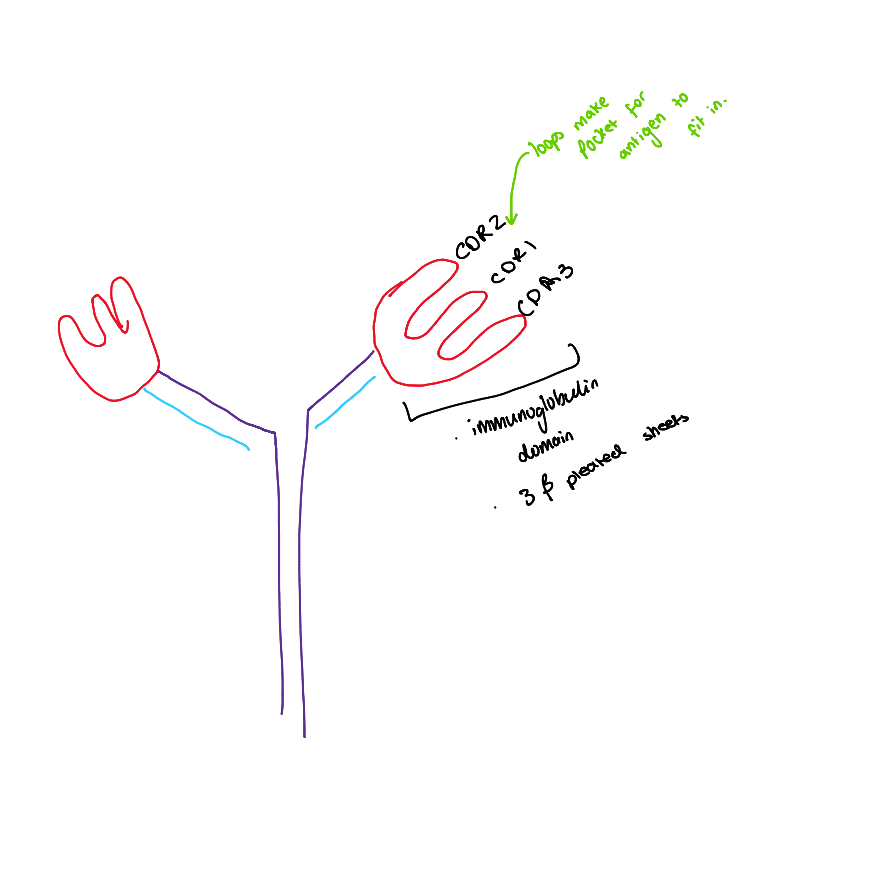
Each variable region is made up of 3 folded Beta pleated sheets known as the Immunoglobulin (Ig) domains
As have 2 variable region have 2 Ig domains and so 6 loops together
each of the 3 loops are called Complementary determining region; CDR1, CDR2, CDR3 → determine antibody matches antigen
what bonds are between antigen and antibody
non covalent bonds
VDW, hydrophobic, hydrogen, electrostatic
How do we make so mnay antibodies when only limited genes
Due to VDJ recombination
happens in B cell developement in bone marrow causes majority of diversity
once b cells exposed to pathogen get further diversity through maturation response
Immunoglobulin gene loci
Heavy chain - 1
V genes = variable regions
D genes = diversity genes
J genes = joining genes
Light chain -2 possibilities - can be lamda or kappa
V genes
J genes
these genes involved in variable region of antibody
how does this recombination happen in heavy chain
happens on DNA level in bone marrow
First pick which D and J genes want and remove any unwanted ones
then pick which V gene they want
then form a continouse reading frame
then picks first constant region to add delta 1
non reversible process
what happens on light chain recombination
same thing happnes
no D genes so V and J regions just come together
enzymes involved in VDJ combination
RAG-1 and RAG-2 recognise recombinat signal sequenses RSS
RSS are located of either side of each VDJ gene
when enzyme joins these does it impricisely - not really a strong joing - helps increase diversity
what does the imprecise joining cause:
1- Deletion
removal of nuclotides by endonucleases during recombination
could be left with removed a codon (so change AA sequence) or could end up with frame shift - so end up with non functional antibody and then cell will die
2- Addition
additional amino acids added in by TdT (terminal deoxynucleotidyl tarsferase)
binds to 3’ OH groups that have been open by by endonucleases and adds back base pairs
These processes happen at random so even if have same VDJ sequnce could still end up with different antibody
what happens if Heavy and light chains dont want to part with each otehr
so usually kappa chain is first to pair with H chian - if dont want to pair up (as dont match up/ non complementary to each other mayeb due to deletion) B cell will try and save Ab by pairing up with lamda chain if this works then have fucntional Ab if not then have non functional Ab then get destroyed/deleted by bone marrow
what is somatic hypermutation
happens after B cell encounters pathogen NOT IN BONE MARROW
happens in germinal center in lymph nodes
this is unique to B cells does not happen in T cells
How does B cells go from binding pathgen to making natibody
pathogen antigen binds to receptor
B cell internizes certain proetin from virus/ bacteria
Constat region is really small on B cell so needs to rectruit other proetins to help to do this - Ig B and Ig A
once antigen has gone inside B cell it chops it up and presents it for T cell this process alows B cells to then secreate its antibody
What are B cells called when secreate antibodies
Plasma blast or plasma cell
non reversible cannot go back to being B cell

