Module 2 Quiz | Information Security ITEC 3300
 Call Kai
 Learn
Learn Practice Test
 Spaced Repetition
 Match
Match Flashcards
 Knowt Play
1/109

Earn XP
Name | Mastery | Learn | Test | Matching | Spaced | Call with Kai |
|---|
No analytics yet
Send a link to your students to track their progress
110 Terms
Red Team
a pen testing team that scans for vulnerabilities and then exploits them
Bug Bounty
monetary rewards given for uncovering a software vulnerability.
They allow organizations to identify/remediate vulnerabilities before the public is aware of it, reducing the spread and intensity of the abuse
Penetration Testing
a type of test that attempts to exploit vulnerabilities just as a threat actor would
White Team
a pen testing team that enforces the rules of the pen testing
Purple Team
a pen testing team that provides real time feedback between the Red and Blue teams to enhance the testing
Blue Team
a pen testing team that monitors for the Red Team attacks and shores up defenses as necessary
Gray Box
a pen testing level in which the testers are given LIMITED knowledge of the network and some elevated privileges
Black Box
a pen testing level in which the testers have NO KNOWLEDGE of the network and no special privileges.
This is the most accurate simulation of what a real threat actor would do.
White Box
a pen testing level in which testers are given FULL KNOWLEDGE of the network and the source code of the applications
Rules of Engagement
limitations or parameters in a pen test. without them, a pen test can easily veer off course
Cleanup
returning all systems back to normal following a penetration test
Footprinting
gathering information from outside the organization
War Driving
searching for wireless signals from an automobile or on foot while using a portable computing device
Persistence
a process in which a load balancer creates a link between an endpoint and a specific network server for the duration of the session.
Refers to the maintenance of access for a prolong period of time without being identified.
War Flying
similar to war driving, an efficient means of discovering Wi-Fi signal using drones
Drones
An unmanned aerial vehicle (UAV) without a human pilot on board to control its flight.
Passive Reconnaissance
searching online for publicly accessible information. the tester does not engage or interact with the system.
What does UAV stand for?
unmanned aerial vehicle
Open Source Intelligence (OSINT)
publicly accessible information
Privilege Escalation
moving to more advanced resources that are normally protected from an application user
Lateral Movement
gradually moving through/gaining access a network looking for additional systems threat actors can access from their elevated position
Pivoting
refers to attacking or taking control of a system through another compromised system.
The compromised system is often a trusted system that belongs to the same network.
Vulnerability Scan
A frequent and ongoing process, often automated, that continuously identifies vulnerabilities and monitors cybersecurity progress.
Non-Credentialed Scan
a vulnerability scan that provides no authentication information to the tester
Credentialed Scan
A scan where valid authentication credentials (usernames and passwords) are supplied to the vulnerability scanner to mimic the work of a threat actor who possesses these credentials
Intrusive Scan
A vulnerability scan that attempts to employ any vulnerabilities which it finds, much like a threat actor would
Configuration Review
An examination of the software settings for a vulnerability scan
Non-intrusive Scan
a vulnerability scan that doesn’t attempt to exploit the vulnerability and instead only records that it was discovered
Log
a record of events that occur
False Negative
failure to raise an alarm when there is a problem
Common Vulnerabilities and Exposures (CVE)
a tool that identifies vulnerabilities in operating systems and application software
Common Vulnerability Scoring System (CVSS)
a numeric rating system of the impact of a vulnerability
False Positive
raising an alarm when there’s no problem
Log Reviews
the analysis of log data
User Behavior Analysis
looking at the normal behavior of users and how they interact with systems to create a picture of typical activity
Sentiment Analysis
the process of computationally identifying and categorizing opinions in order to determine the writer’s attitude towards a particular topic
Security Information and Event Management (SIEM)
a tool that consolidates real time security monitoring and management of security information with analysis and reporting of security events.
Security Orchestration, Automation, and Response (SOAR)
a tool designed to help security teams manage and respond to the very high number of security warnings by combining comprehensive data gathering/analytics in order to automate incident response
Maneuvering
conducting unusual behavior when threat hunting
Threat Feeds
cybersecurity data feeds that provide information on the latest threats
Fusion Center
a formal repository of information from enterprises and the government used to share information on the latest attacks
Threat Hunting
proactively searching for cyber threats that thus far have gone undetected in a network
Framework
a series of documented processes used to define policies and procedures for implementation and management of security controls in an enterprise environment
ISO 27002
a “code of practice” for information security management within an organization and contains 114 different control recommendations
NIST Risk Management Framework (RMF)
a guidance document designed to help organizations assess and manage risks to their information and systems
ISO 27001
a standard that provides requirements for an information security management system (ISMS)
NIST Cybersecurity Framework (CSF)
a measuring stick against which companies can compare their cybersecurity practices relative tot he threats they face
ISO 27701
an extension to ISO 27001 and is a framework for managing privacy controls to reduce the risk of privacy breaches
ISO 31000
a standard that contains controls for managing and controlling risk
SSAE SOC 2 Type II
a standard for reports on internal controls report that reviews how a company safeguards customer data and how well those controls are operating
SSAE SOC 2 Type III
a standard for reports on internal controls that can be freely distributed
Center for Internet Security (CIS)
a nonprofit community-driven organization that publishes a set of prioritized security controls which provide a framework for organizations to improve their overall cybersecurity posture
Reference Architecture
an authoritative source of information / a document that outlines recommended ways to integrate IT products and services to create a secure solution
Cloud Controls Matrix
a specialized framework for cloud-specific security controls
Cloud Security Alliance (CSA)
an organization whose goal is to define and raise awareness of best practices to help secure cloud computing environments
Regulations
standards typically developed by established professional organizations or government agencies using the expertise of seasoned security professionals
Payment Card Industry Data Security Standard (PCI DSS)
a compliance standard to provide a minimum degree of security for handling customer card information
Benchmark/Secure Configuration Guides
guidelines for configuring a device or software usually distributed by hardware manufacturers and software developers
European Union General Data Protection Directive (GDPR)
a regulation regarding data protection and privacy in the European Union and the European Economic Area (EEA)
Standard
a document approved through consensus by a recognized standardization body
Platform/Vendor-Specific Guides
guidelines that only apply to specific products
Adversary Tactics, Techniques, and Procedures (TTP)
a database of the behavior of threat actors and how they orchestrate and manage attacks
Requests for Comments (RFCs)
documents that are authored by technology bodies employing specialists, engineers, and scientists who are experts in those areas
Vulnerability Feeds
cybersecurity data feeds include that provide information on the latest vulnerabilities
What are the four A’s?
Availability
Authentication
Authorization
Accountability
Availability
defined by FISMA as ensuring reliable access to and use of information upon demand by an authorized person
Authentication
the process of verifying identity of user, process, or device
(think of this as your drivers license)
Authorization
the process of giving someone the ability to access a resource
Accountability
the property of being able to TRACE activities on a system to individuals who may be held responsible for their actions
Anti-Accountability
Logs erased
Ethics ignored
No enforcements
No training
Cybercrime
defined as a crime where a computer is the object of the crime/is used as the tool to commit the offense
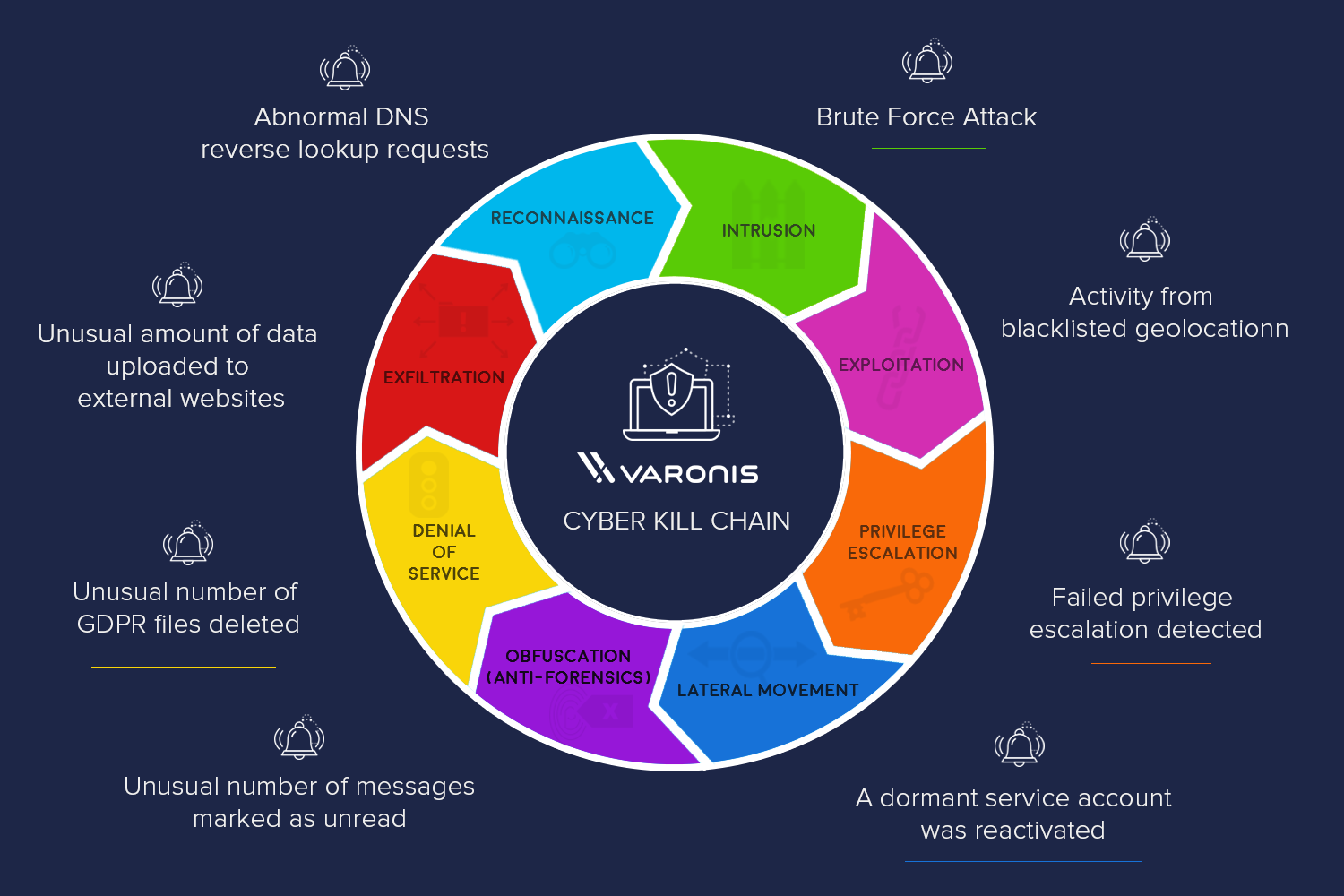
Cyber Kill Chain
a model outlining the various phases of common cyber hackers
Zerodium
a company that buys bug information and sells it to government organizations who need specific and tailored solutions to defend against zero-day attacks
Threat Management
securing an organization from attacks. the goal is to take the appropriate steps needed to minimize hostile cyber actions.
Kali Linux
a linux distribution that is a popular penetration testing tool
Creep
an expansion beyond the initial set of the pen tests limitations
Can a penetration test occur without a planning stage?
No pen test should occur without a detailed planning phase
Deep Vulnerabilities
vulnerabilities that are found in penetration testing that are only exposed through actual attacks that use the mindset of a threat actor
Should an organization without a solid cybersecurity defense conduct a penetration test as a first step?
No. A general scan should first be conducted to reveal and address surface vulnerabilities. After that, a more thorough pen test can be performed
Internal Security Personnel
employees who already work within an organization
Advantages of using Internal Security Personnel to conduct a pen test
little to no additional cost
tests can be conducted more quickly
in house pen tests can be used to enhance employee training and raise security awareness
Disadvantages of Internal Security Personnel
inside knowledge
lack of expertise
reluctance to reveal
External Pen Tester Consultants
contracting external third-party pen testing consultants, usually hired by a company that focuses on pen testing.
Advantages of External Consultants
expertise
credentials
experience
focus
Disadvantages of External Consultants
a contractor would learn about an organizations network and receive extremely sensitive information about them
knowledge gained could be sold to a competitor by an unscrupulous employee of the third-party contractor
Advantages of Crowdsourced Pen Testing
faster testing
ability to rotate teams
option of conducting multiple tests simultaneously
Timing Phase
phase of rules of engagement where the timing parameter is set, determining the date and time that testing will occur and if the testing will occur during active business hours
Scope
element of rules of engagement that determines WHAT should be tested and defines the relevant boundaries (targets and environments)
Coalfire
a penetration testing company that had two contractors arrested because they failed to properly communicate that a pen test was occurring
Authorization
the receipt of prior written approval to conduct the pen test. a formal document MUST be signed by all parties before a pen test begins
Exploitation
part of the scope that asks how MUCH pen testers can view and whether or not vulnerabilities found should be exploited or just disclosed
Initiation
organizations must be notified that the pen testing process has begun. DO NOT proceed with pen test without notifying organization
Incident Response
if a pen tester can complete the initial vulnerability assessment without triggering the organizations incident response mechanism, then a critical gap in security has been identified.
Status
provide periodic updates to the organization management instead of waiting until the test is complete.
Emergency
if the pen tester uncovers a critical vulnerability it should be immediately reported to the organizations management while the pen test is paused
Cleanup
following the exploitation of the systems, the pen tester must ensure that everything related to the pen test has been REMOVED
Reporting
once a pen test is complete, a report should be generated to document its objectives, methods used, and results. divided into two parts, executive and technical summary
Executive Summary
a summary designed for a less technical audience–namely those who are in charge of oversight and strategic vision of the security program
Identify overall risk and a breakdown of vulnerabilities exploited
Technical Summary
the second part of the report that is technical in nature and written for security professionals.
Enumeration
performing port scans and resource identification methods

