Chapter 7

0.0(0)
studied byStudied by 0 people
call kaiCall Kai
learnLearn
examPractice Test
spaced repetitionSpaced Repetition
heart puzzleMatch
flashcardsFlashcards
GameKnowt Play
Card Sorting

1/15

encourage image

There's no tags or description

Looks like no tags are added yet.

Last updated 10:39 PM on 8/12/25
Name
Mastery
Learn
Test
Matching
Spaced
Call with Kai

No analytics yet

Send a link to your students to track their progress

16 Terms

1
New cards

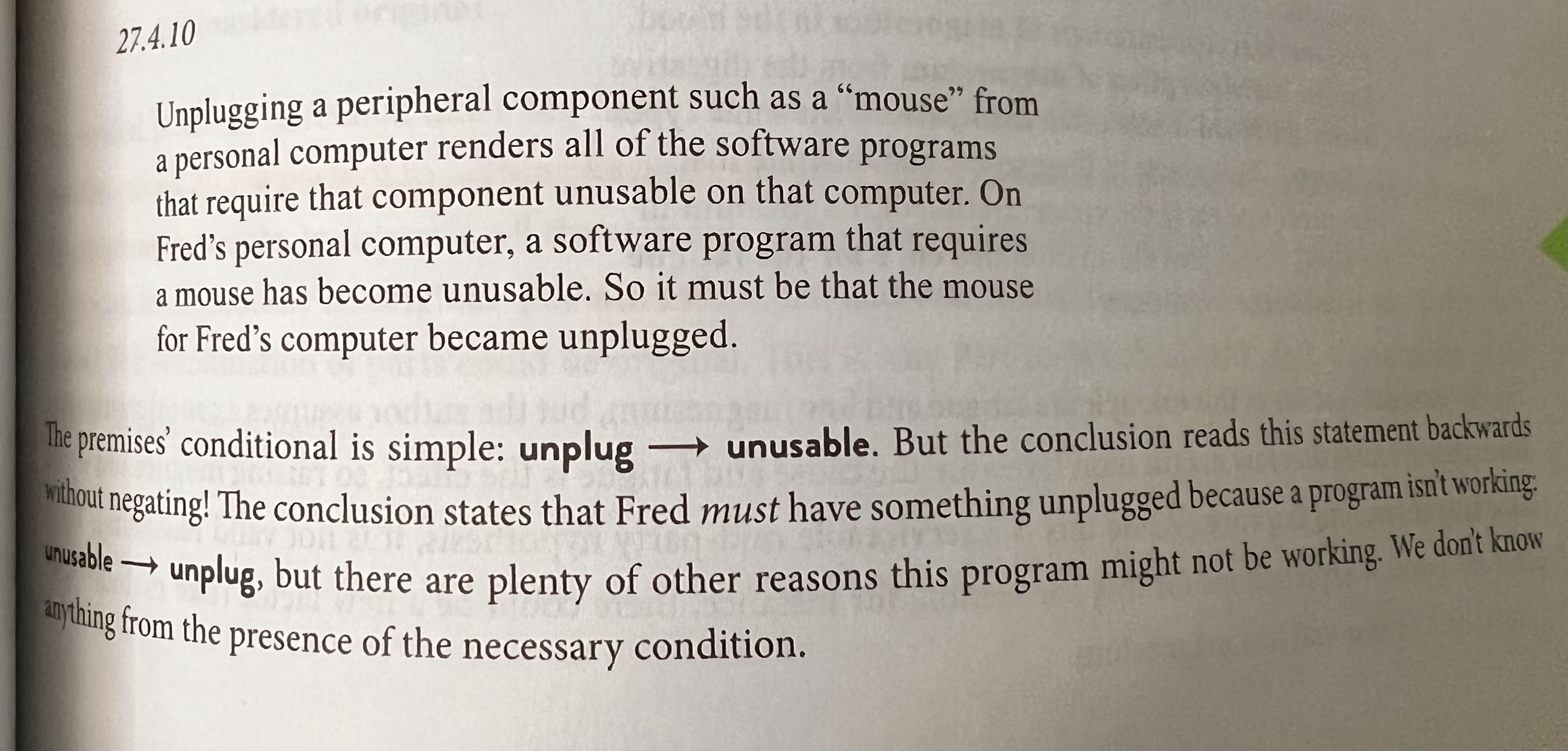
Bad conditional Reasoning

Loophole- What if we actually have to follow the rules of conditional reasoning?

There are conditional premises, 2. Crazy person concludes something by reading the conditional premises backwards or crazy person concludes something by negating the conditional premises and negating it forwards.
<p>Loophole- What if we actually have to follow the rules of conditional reasoning?</p><p>There are conditional premises, 2. Crazy person concludes something by reading the conditional premises backwards or crazy person concludes something by negating the conditional premises and negating it forwards. </p>
2
New cards

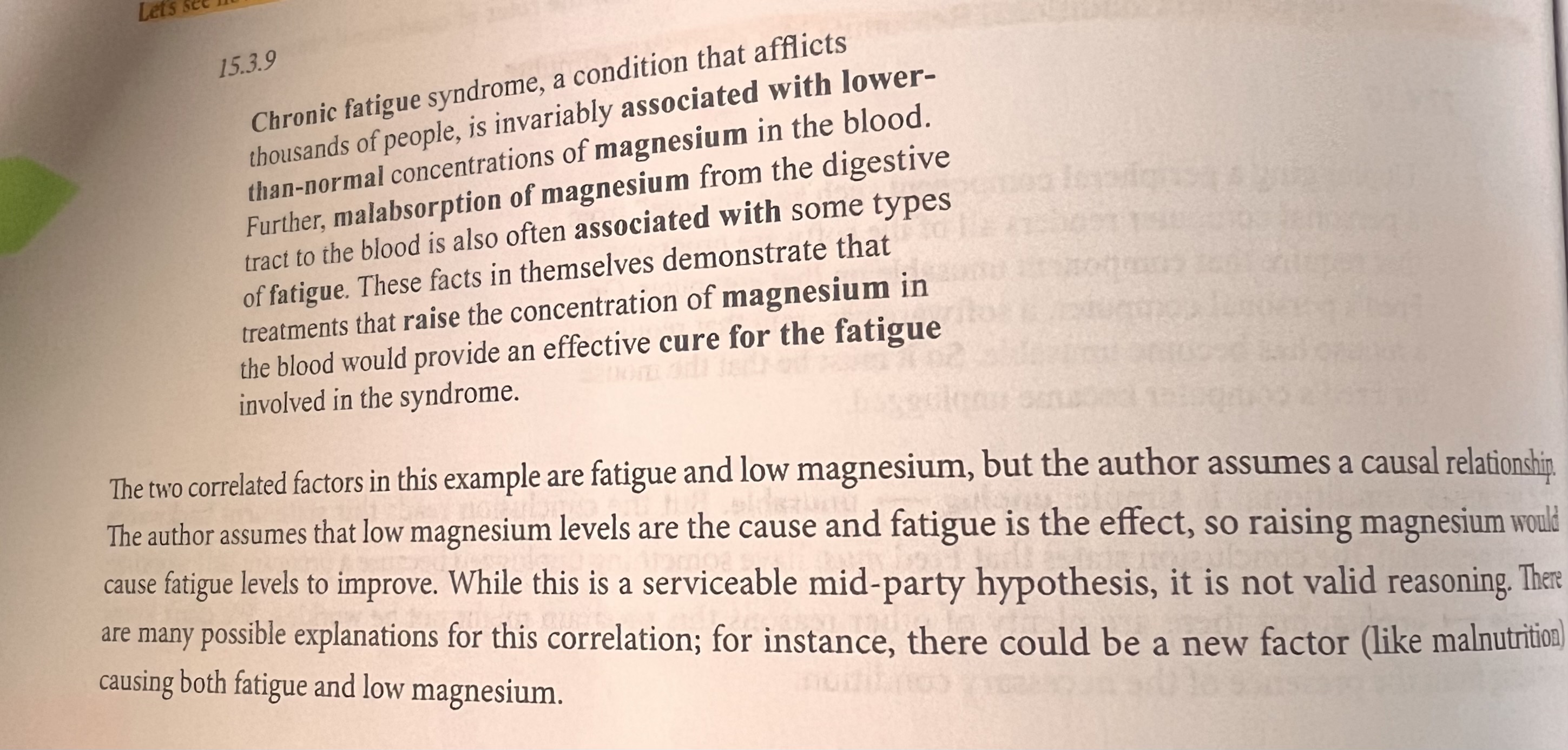
Bad Causal reasoning

Loophole- What if one of the Omitted options is the case?

  1. Crazy person sees that two things are correlated. 2. Crazy person concludes that one of those things is causing the other.
<p><strong>Loophole- What if one of the Omitted options is the case?</strong></p><ol><li><p>Crazy person sees that two things are correlated. 2. Crazy person concludes that one of those things is causing the other. </p></li></ol><p></p>
3
New cards

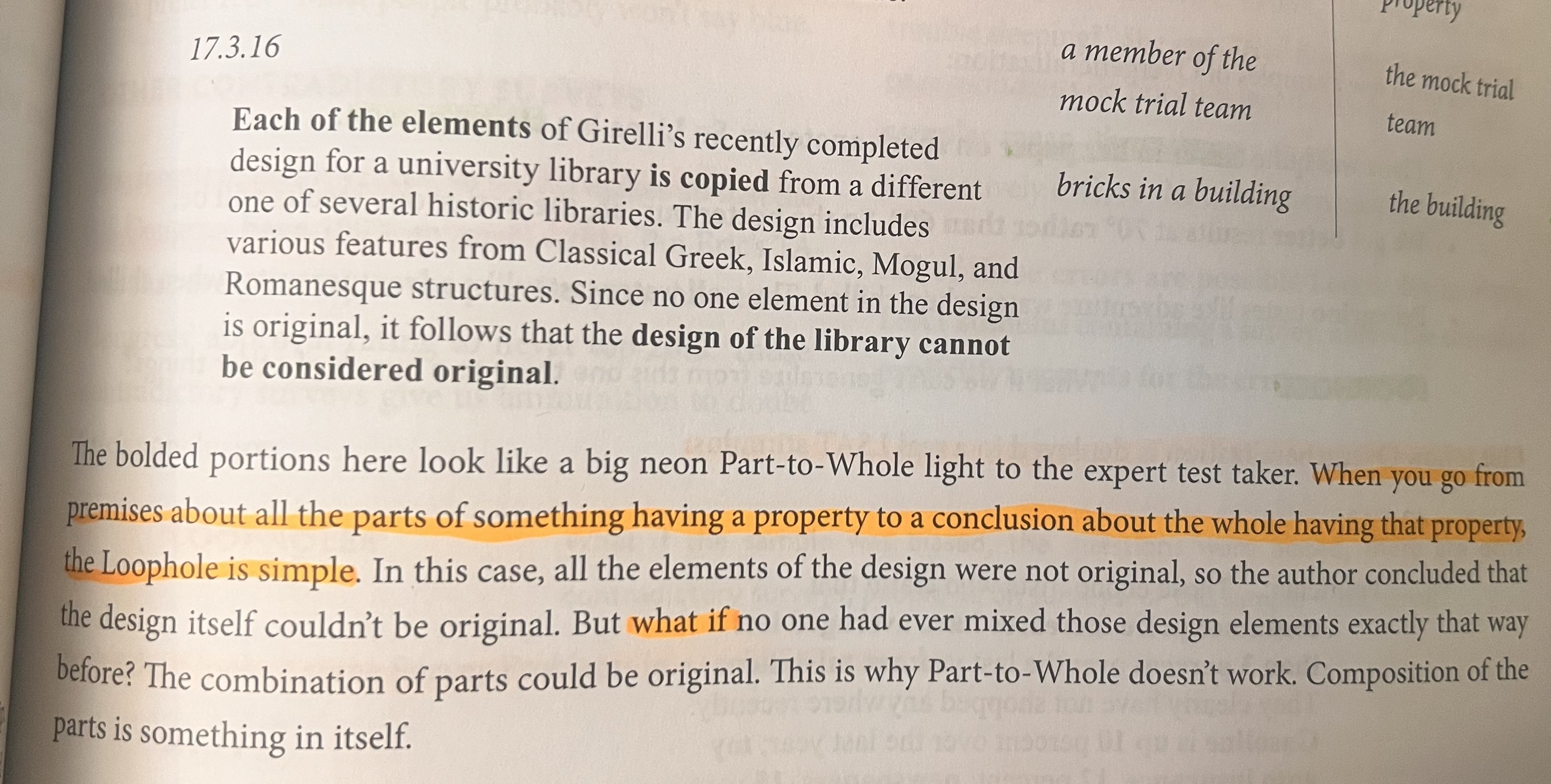
Whole-to-Part & Part-to-Whole

Loophole- What if wholes don’t necessarily equal parts?

  1. crazy person says a member of a category has property. 2. Crazy person concludes that the category itself also has that property OR 1. Crazy person says a category has a property. 2. Crazy person concludes that a member of that category also has that property.
<p>Loophole- What if wholes don’t necessarily equal parts?</p><ol><li><p>crazy person says a member of a category has property. 2. Crazy person concludes that the category itself also has that property OR 1. Crazy person says a category has a property. 2. Crazy person concludes that a member of that category also has that property. </p></li></ol><p></p>
4
New cards

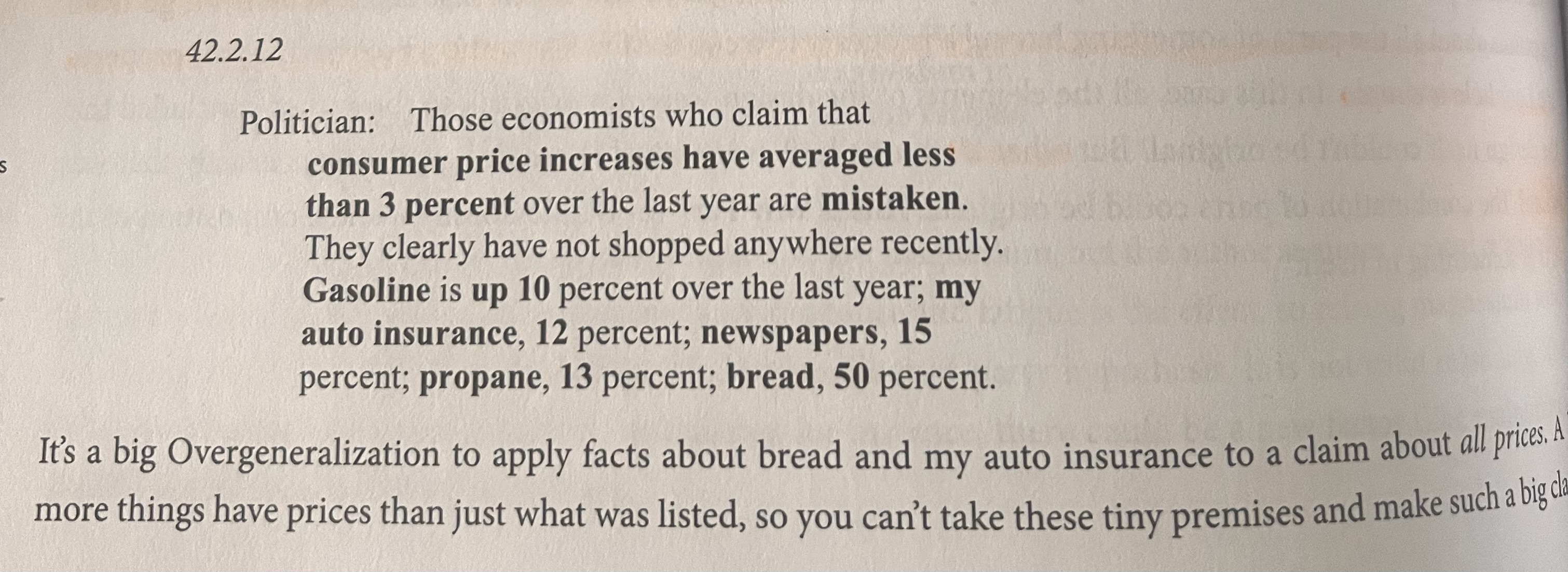
Overgeneralization

Loophole- What if we can’t generalize from this one thing to a bunch of other things?

  1. Crazy person talks about something having a property. 2. Crazy person concludes that a bunch of other things also have that property.
<p>Loophole- What if we can’t generalize from this one thing to a bunch of other things?</p><ol><li><p>Crazy person talks about something having a property. 2. Crazy person concludes that a bunch of other things also have that property. </p></li></ol><p></p>
5
New cards

Survey problems

Loophole- What if the sample and the questions were biased, there are other contradictory surveys, people lie on surveys, or the sample is too small?

  1. There’s a survey. 2. Crazy person concludes things based on the survey. 3. There are all kinds of silent things wrong with the survey.
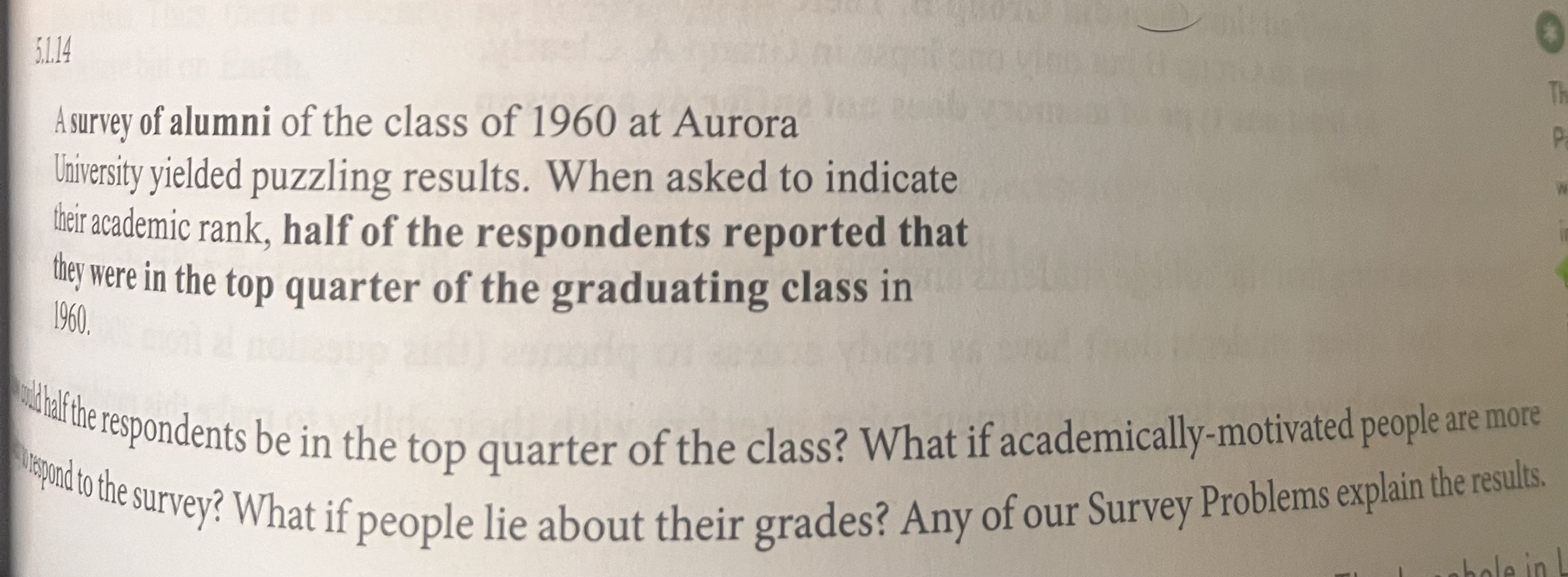
<p>Loophole- What if the sample and the questions were biased, there are other contradictory surveys, people lie on surveys, or the sample is too small?</p><ol><li><p>There’s a survey. 2. Crazy person concludes things based on the survey. 3. There are all kinds of silent things wrong with the survey. </p></li></ol><p></p>
6
New cards

False Starts

Researchers always assume that the two groups are same in all aspects except the ones called out as part of the study.

Loophole- What if the two groups were different in a key respect?

  1. Theres a study with two groups

  2. Crazy researcher assumes the two groups are the same in all aspects except those pointed out as part of the study.

  3. Researcher concludes that the differences in the study results are due to the one key difference the study is focusing on.
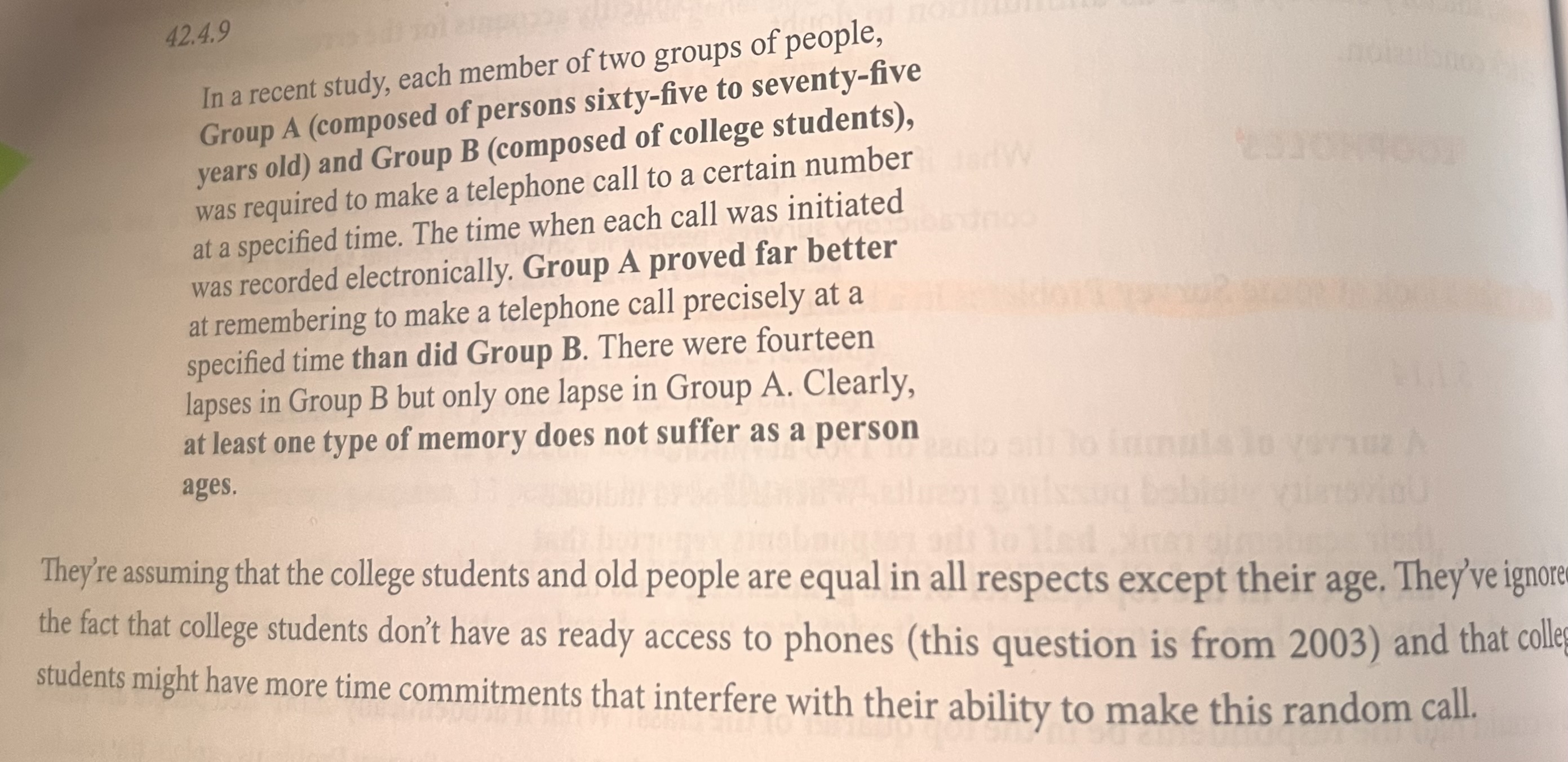
<p>Researchers always assume that the two groups are same in all aspects except the ones called out as part of the study. </p><p>Loophole- What if the two groups were different in a key respect?</p><ol><li><p>Theres a study with two groups </p></li><li><p>Crazy researcher assumes the two groups are the same in all aspects except those pointed out as part of the study.</p></li><li><p> Researcher concludes that the differences in the study results are due to the one key difference the study is focusing on. </p></li></ol><p></p>
7
New cards

Possibility Not equal to certainty

Loophole- What of lack of evidence is not evidence of lacking?

or What if proof of evidence is not evidence of proof?
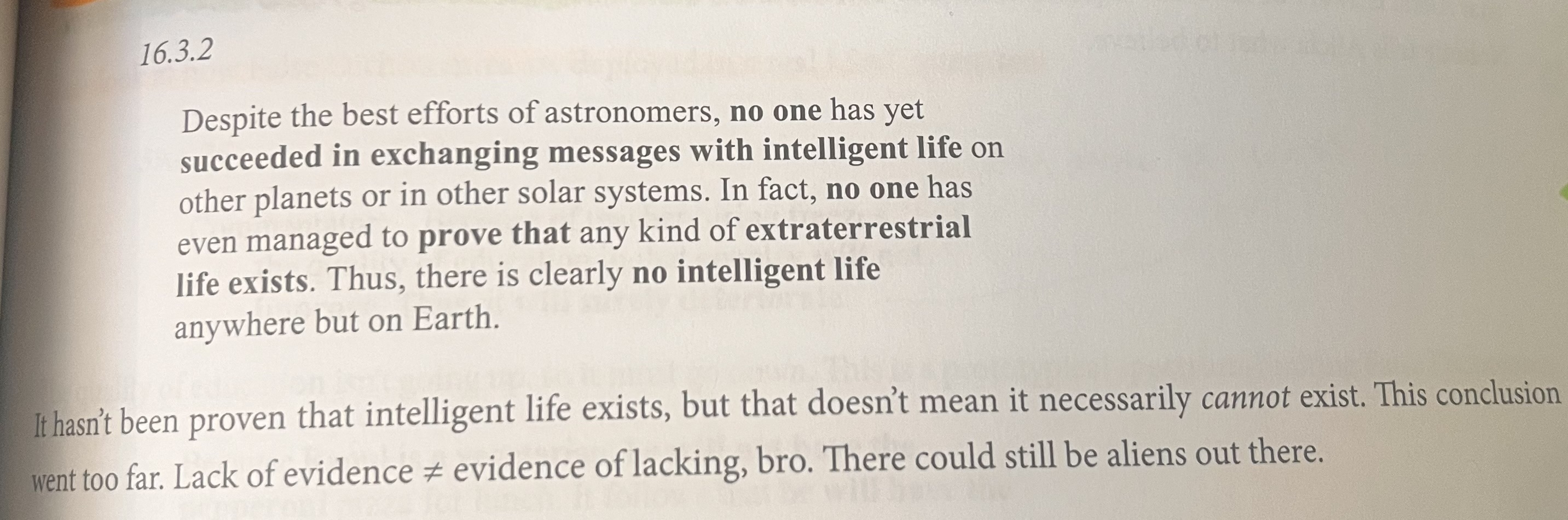
<p>Loophole- What of lack of evidence is not evidence of lacking?</p><p>or What if proof of evidence is not evidence of proof?</p><p></p>
8
New cards

Implication

Tell people what they believe.

Loophole- What if the person in question isn’t aware of what their belief implies?

  1. Blair has a belief.

  2. Crazy person mentions a factual implication of that belief.

  3. Crazy person claims that Blair believes the implications of the belief.
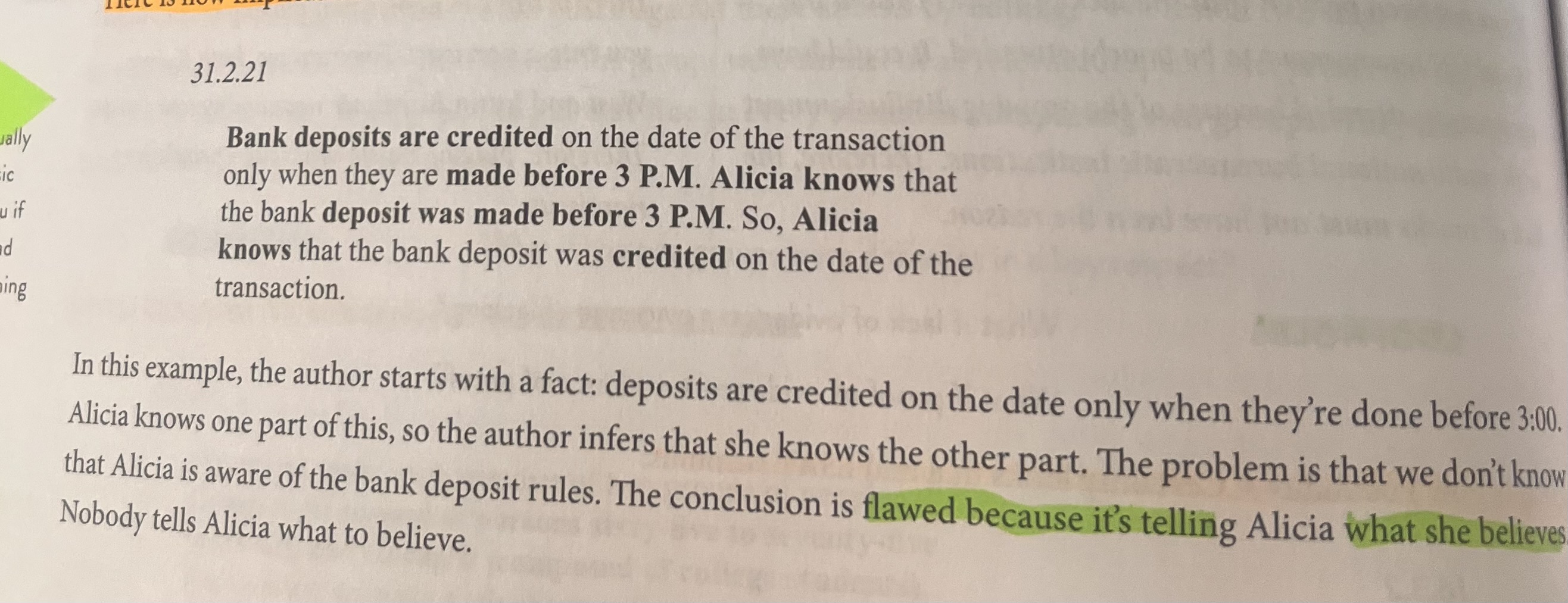
<p>Tell people what they believe. </p><p>Loophole- What if the person in question isn’t aware of what their belief implies?</p><ol><li><p>Blair has a belief.</p></li><li><p>Crazy person mentions a factual implication of that belief. </p></li><li><p>Crazy person claims that Blair believes the implications of the belief. </p></li></ol><p></p>
9
New cards

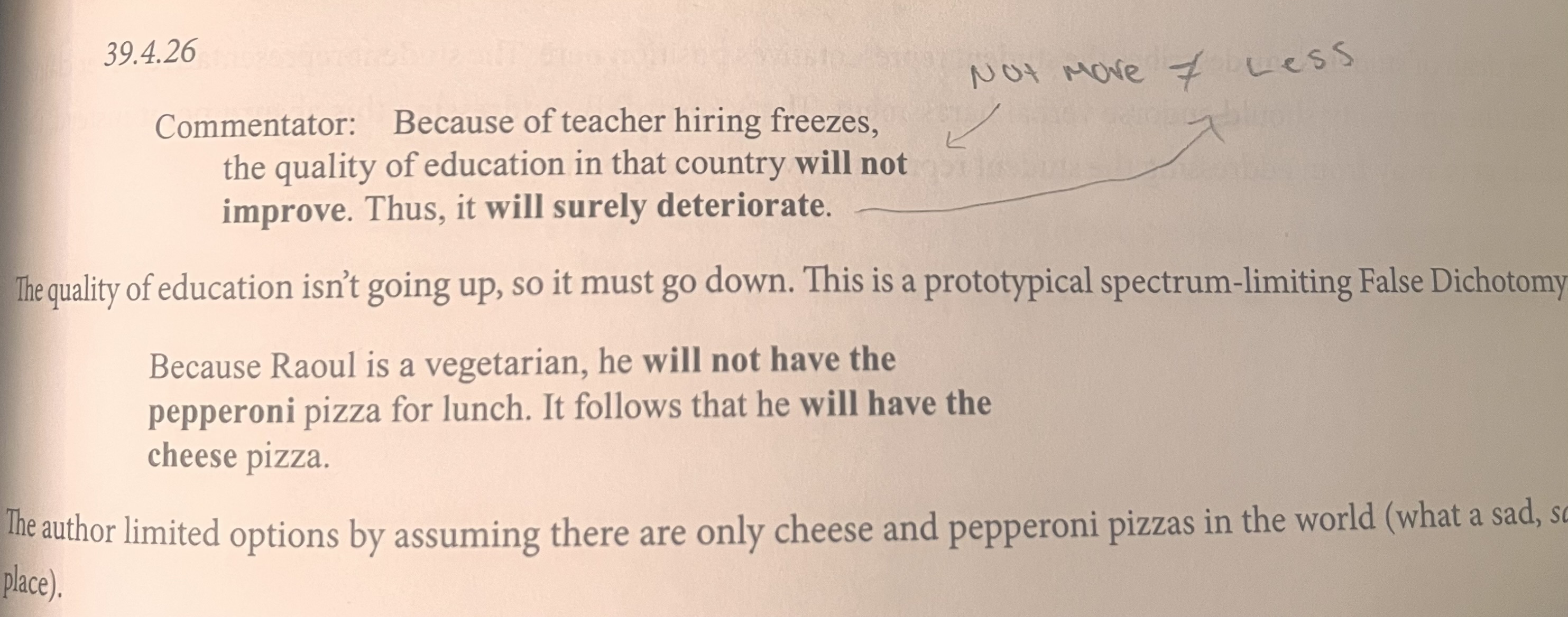
False Dichotomy

Pretends there are only two options when there really could be more.

  1. Crazy person outlines two possible options.

  2. Crazy person eliminates one of the options.

  3. Crazy person concludes the second option must be the case.

Loophole- What if there are more than just two options?
<p>Pretends there are only two options when there really could be more. </p><ol><li><p>Crazy person outlines two possible options.</p></li><li><p>Crazy person eliminates one of the options. </p></li><li><p>Crazy person concludes the second option must be the case. </p></li></ol><p>Loophole- What if there are more than just two options?</p><p></p>
10
New cards

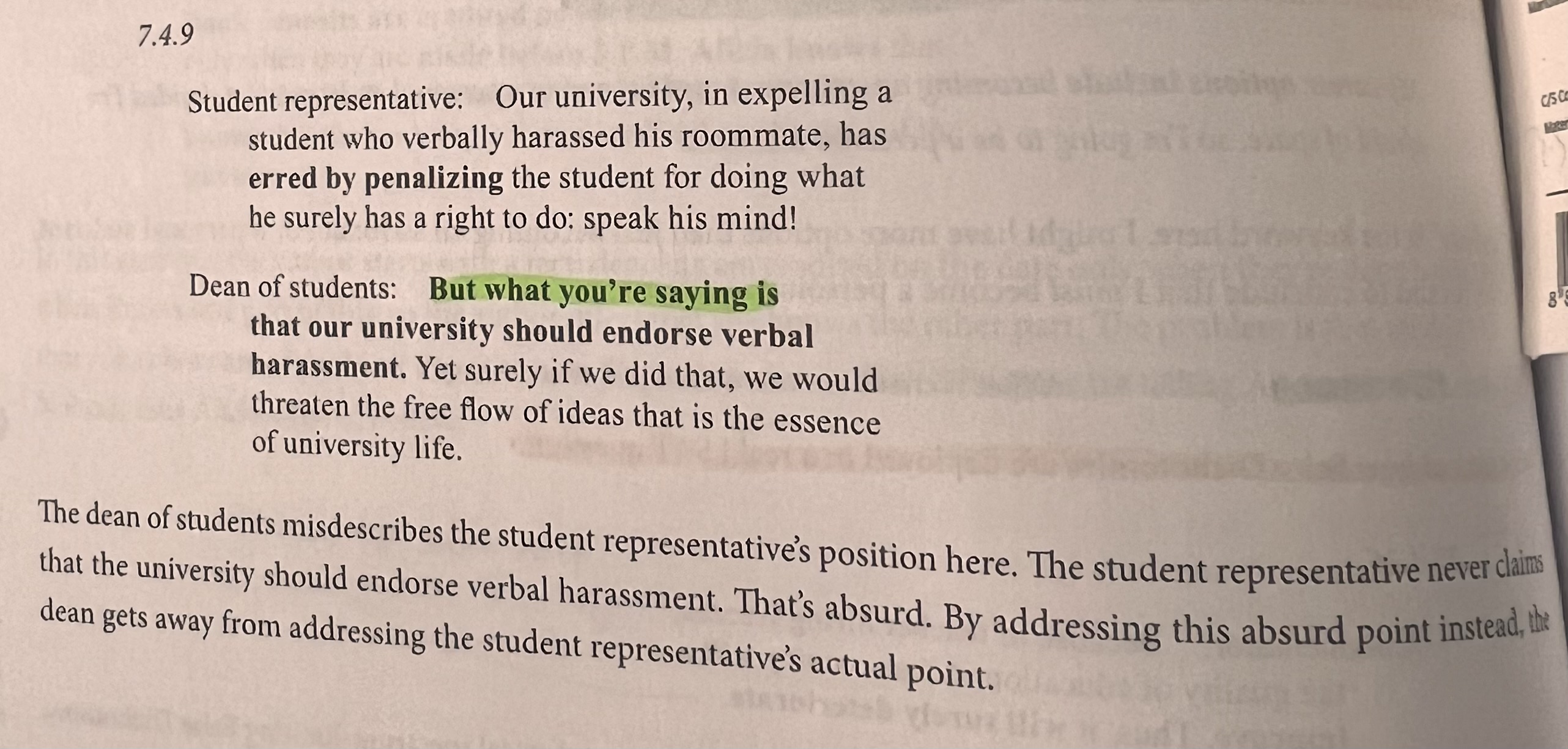
Straw Man

  1. Sane Person makes a claim.

  2. Crazy person responds to an entirely different claim, but pretends they responded to the sane person.

    Loophole- What if what they said has nothing to do with the claim they’re pretending to respond to?
<ol><li><p>Sane Person makes a claim.</p></li><li><p>Crazy person responds to an entirely different claim, but pretends they responded to the sane person.</p><p>Loophole- What if what they said has nothing to do with the claim they’re pretending to respond to?</p></li></ol><p></p>
11
New cards

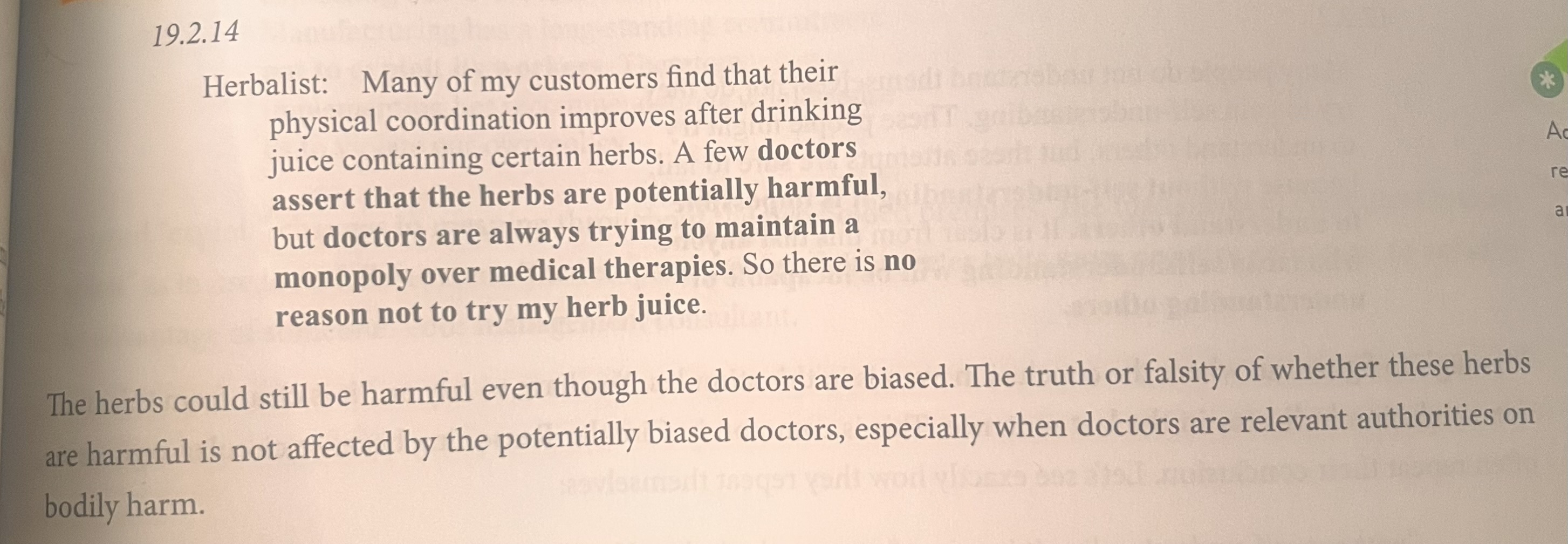
Ad Hominem

  1. Sane person makes a claim

  2. Crazy person talks about how the sane person is somehow awful.

  3. Crazy person concludes that the sane person’s claim is false.

    Its just about insulting people

    Loophole-What if this person’s character/motivation doesn’t affect the truth?
<ol><li><p>Sane person makes a claim</p></li><li><p>Crazy person talks about how the sane person is somehow awful.</p></li><li><p>Crazy person concludes that the sane person’s claim is false. </p><p>Its just about insulting people</p><p>Loophole-What if this person’s character/motivation doesn’t affect the truth?</p></li></ol><p></p>
12
New cards

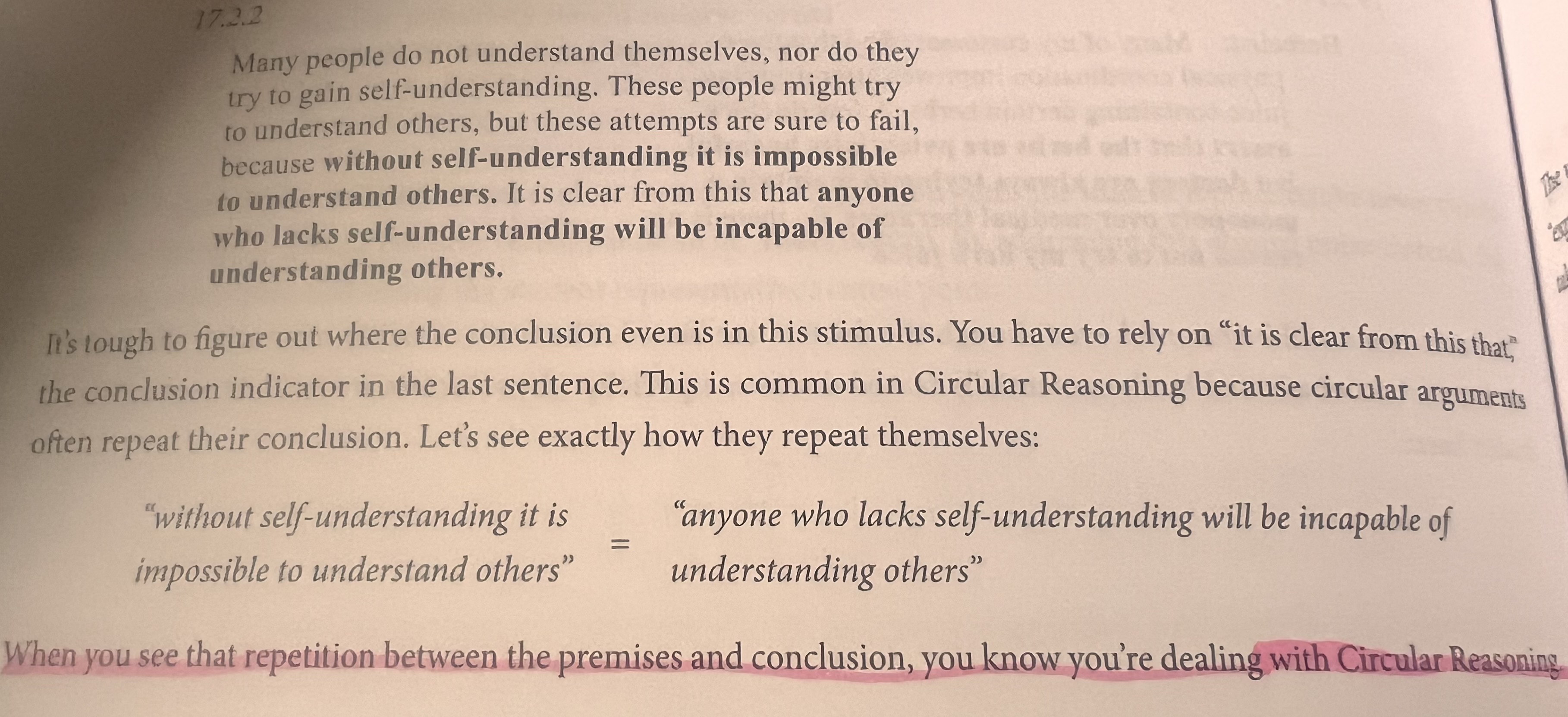
Circular Reasoning

  1. Crazy person concludes something.

  2. Crazy person supplies premises that assume the conclusion is already true.

    Assumes the conclusion is true before doing work of proving it so.

    Loophole- What of we can’t use the conclusion as evidence for itself?
<ol><li><p>Crazy person concludes something.</p></li><li><p>Crazy person supplies premises that assume the conclusion is already true. </p><p>Assumes the conclusion is true before doing work of proving it so.</p><p>Loophole- What of we can’t use the conclusion as evidence for itself?</p><p></p></li></ol><p></p>
13
New cards

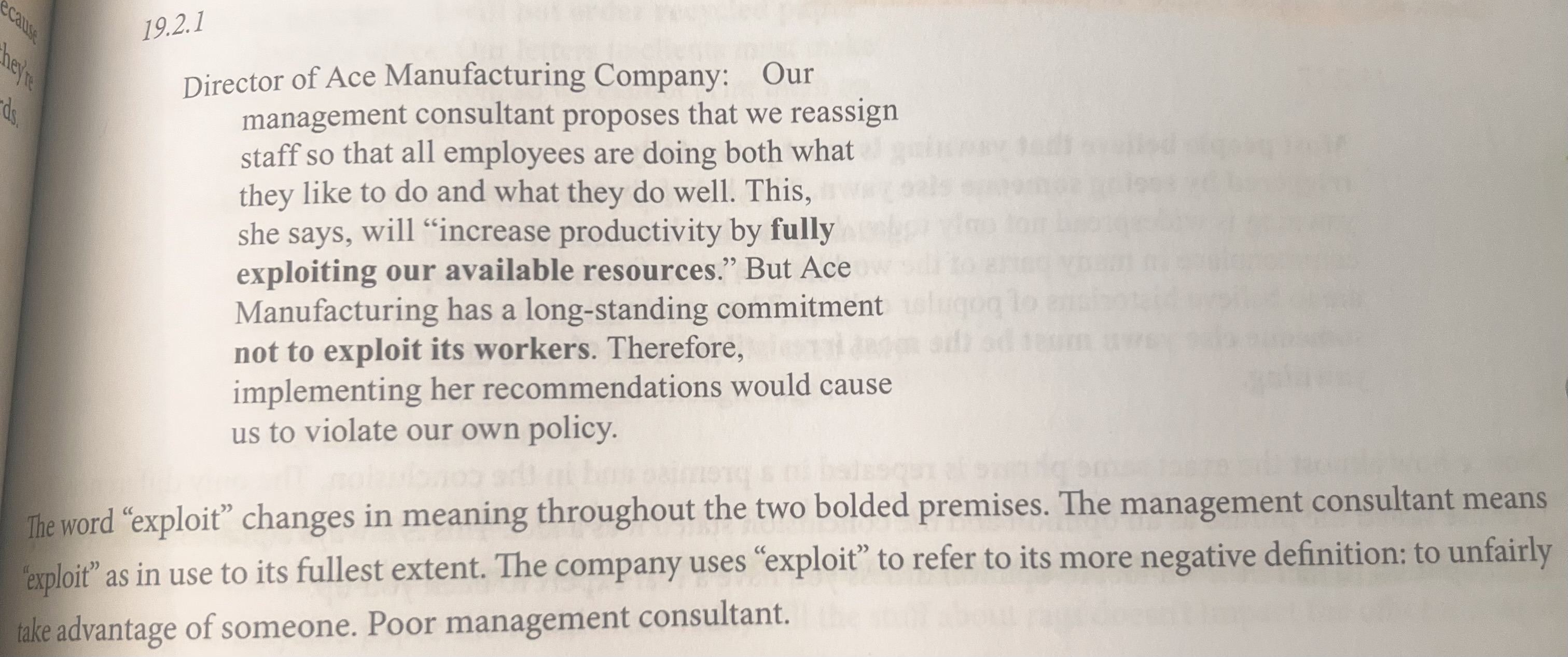
Equivocation

  1. Crazy person uses a word or idea, intending on of its possible meanings.

  2. Crazy person concludes something using the other possible meaning of the word or idea.

  3. Hilarity ensues.

    Happens when the author changes the meaning of a word throughout an argument.

    Loophole-What if we shouldn’t let words change in meaning?
<ol><li><p>Crazy person uses a word or idea, intending on of its possible meanings.</p></li><li><p>Crazy person concludes something using the other possible meaning of the word or idea. </p></li><li><p>Hilarity ensues. </p><p>Happens when the author changes the meaning of a word throughout an argument.</p><p>Loophole-What if we shouldn’t let words change in meaning?</p></li></ol><p></p>
14
New cards

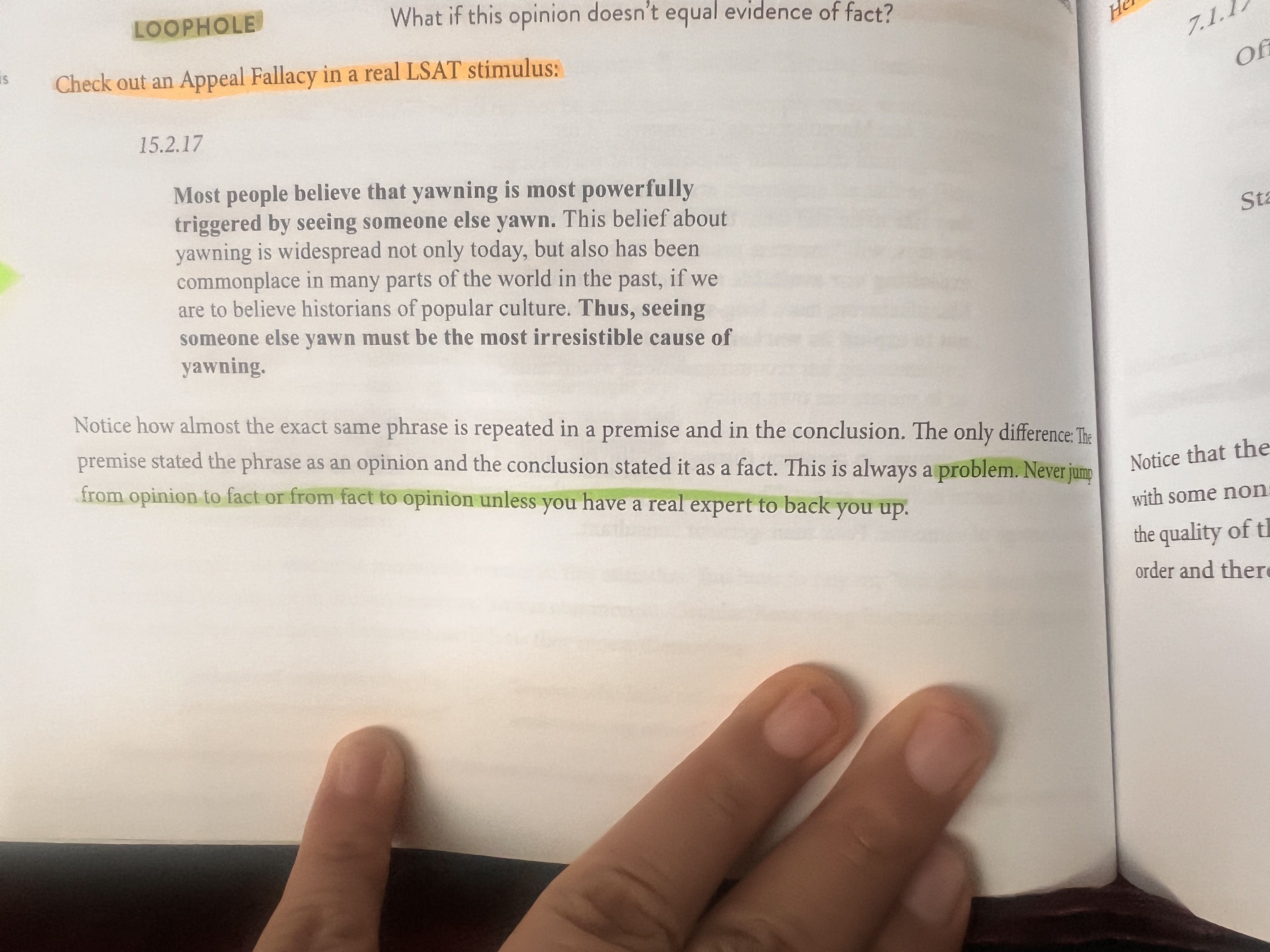
Appeal Fallacies

  1. Crazy person says that a person or group believes something.

  2. Crazy person concludes that thing must be true.

    Turning someone’s opinion into a fact.

    Invalid appeal to authority- Author uses a non-expert opinion to support their conclusion.

    Invalid appeal to public opinion- A high percentage of random people believes anything has very little bearing on whether that thing is actually true.

    Loophole- What if this opinion doesn’t equal evidence of fact?
<ol><li><p>Crazy person says that a person or group believes something.</p></li><li><p>Crazy person concludes that thing must be true. </p><p>Turning someone’s opinion into a fact. </p><p>Invalid appeal to authority- Author uses a non-expert opinion to support their conclusion.</p><p>Invalid appeal to public opinion- A high percentage of random people believes anything has very little bearing on whether that thing is actually true. </p><p>Loophole- What if this opinion doesn’t equal evidence of fact?</p></li></ol><p></p>
15
New cards

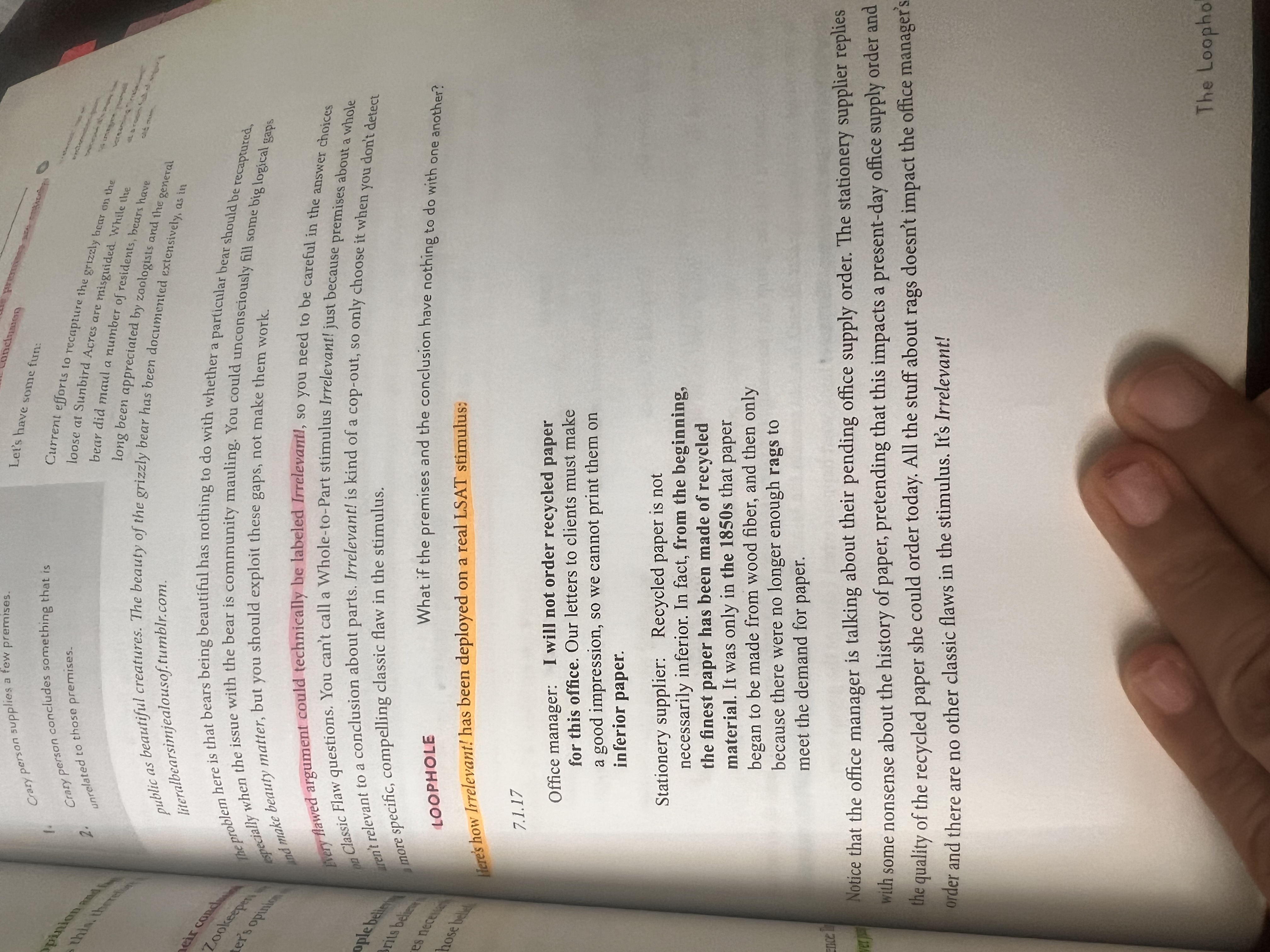
Irrelevant!

  1. Crazy person supplies a few premises.

  2. Crazy person concludes something that is unrelated to those premises.

    Loophole-What if the premises and the conclusion have nothing to do with one another?
<ol><li><p>Crazy person supplies a few premises. </p></li><li><p>Crazy person concludes something that is unrelated to those premises.</p><p>Loophole-What if the premises and the conclusion have nothing to do with one another?</p></li></ol><p></p>
16
New cards

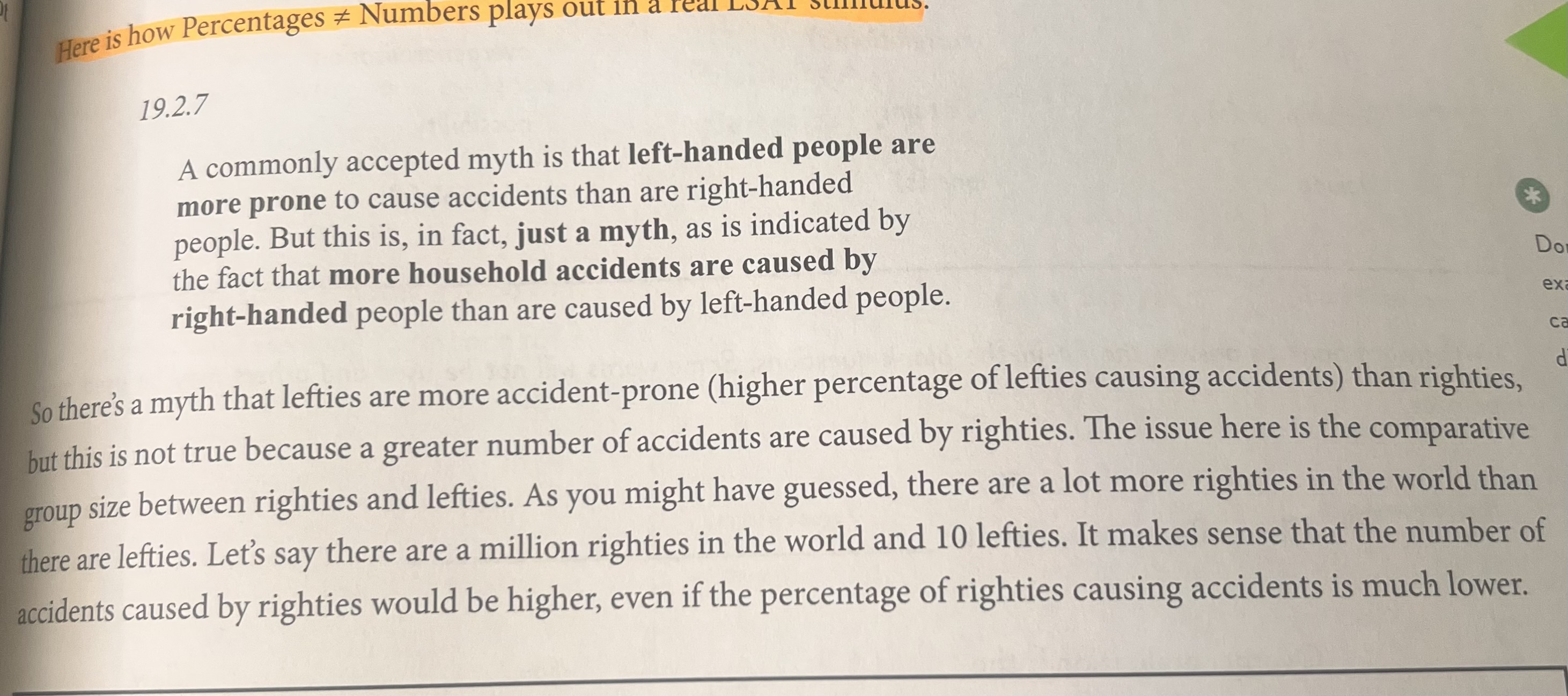
Percentage are not Numbers

  1. crazy person says, “A percentage went up!”

  2. Crazy person concludes that the associated real number also went up.

    or

    1. Crazy person says “A real number went up!”

    2. Crazy person concludes the associated percentage also went up.
<ol><li><p>crazy person says, “A percentage went up!”</p></li><li><p>Crazy person concludes that the associated real number also went up.</p><p>or </p><ol><li><p>Crazy person says “A real number went up!”</p></li><li><p>Crazy person concludes the associated percentage also went up.</p><p></p></li></ol></li></ol><p></p>

Explore top flashcards

CMS II Geriatrics: E2
Updated 289d ago
flashcards Flashcards (129)
ap gov
Updated 1020d ago
flashcards Flashcards (55)
Lec 15 Cancer
Updated 678d ago
flashcards Flashcards (22)
100 Infinitivos
Updated 184d ago
flashcards Flashcards (100)
CMS II Geriatrics: E2
Updated 289d ago
flashcards Flashcards (129)
ap gov
Updated 1020d ago
flashcards Flashcards (55)
Lec 15 Cancer
Updated 678d ago
flashcards Flashcards (22)
100 Infinitivos
Updated 184d ago
flashcards Flashcards (100)