MIL MODULE4-5???
 Call Kai
 Learn
Learn Practice Test
 Spaced Repetition
 Match
Match Flashcards
 Knowt Play
1/99

There's no tags or description
Looks like no tags are added yet.
Name | Mastery | Learn | Test | Matching | Spaced | Call with Kai |
|---|
No analytics yet
Send a link to your students to track their progress
100 Terms
Print media
is comprised of newspapers, magazines, brochures, pamphlets, or any other medium printed on paper, and other visual media such as picture books, comics, illustrated magazines, photographs, or advertisements, is a major media type under this category.
Elements of Visual Information
color, space, lines, shapes, texture
color
determined by its hue, intensity, value. Color may be used for emphasis or may elicit emotions from viewers. Color may be warm, cool, or neutral. It plays a major role in our visual perception, as it influences our reactions to the world around us. It is therefore important to create color palettes that evoke the appropriate audience reactions.
Space
refers to the container of the elements of the visual design. Space can suggest depth or even present the subject with shallow space.
Lines
connect points, creates shapes, give direction, and suggest stillness and/or motion.
Shapes
define figures and content areas. They come in different sizes and they may or may not suggest dimensions of volume and mass.
Texture
refers to the quality or characteristics of a surface, for instance, if it is rough or smooth.
Other Elements Visual Information
TYPEFACE, GRID, AND LAYOUT AND TYPOGRAPHY
TYPEFACE
refers to the representation or style of a text in the digital format.
Serif
connotes formality and readability in a large number of texts. This font is usually used for the body text of books, newspapers, magazines, and research publications. Also, serif fonts give a classic or elegant look when used for title or heading.
San Serif
brings a clean or minimalist look to the text. This font is used for clear and direct meaning of text such as road signage, building directory or nutrition facts in food packages. Also, sans serif fonts give a modern look and are used primarily in webpage design.
Script
draws much attention to itself because of its brush-like strokes.
Decorative
Display or decorative- caters to a wide variety of emotions
Typography
is the art of arranging letters and text in a way that makes the copy legible, clear, and visually appealing to the reader. It involves font style, appearance, and structure, which aims to elicit certain emotions and convey specific messages. is what brings the text to life.
GRID
s a structure made up of a series of intersecting straight (vertical, horizontal, and angular) or curved lines (grid lines) used to structure content. This serves as a framework on which a designer can organize graphic elements in a rational, easy-to-absorb manner.
LAYOUT
is the manner by which the elements are composed, arranged, or placed on a page. The choice of layout in graphic design is largely determined by the type of media and its purpose or intention.
Visual elements
Hierarchy, Emphasis, Proportion, Contrast, Movement, Balance, Unity, and Space
FIGURE/GROUND
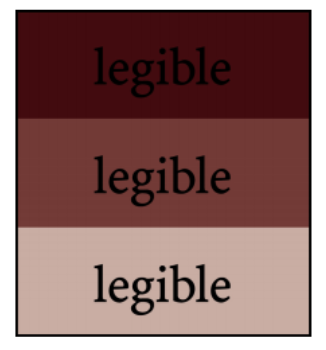
PROXIMITY
the closer items are spatially or temporally located near each other, the more likely they are to be considered part of an organized and unified group.
CLOSURE
The power of a line in motion to attract the human eye is well known. Designers can use moving lines to direct the user’s attention to specific content, to entertain, or to establish a style.
SIMILARITY
Visual elements that are similar in shape, size, color, proximity, and direction are perceived as part of a group.
CONTINUATION
The human eye seeks the relationships between shapes: continuation occurs when the eye follows along a line, curve, or sequence of shapes.
Different Types of Audio Information
Radio broadcast, Music, Sound recording, Sound clips/effects, AND Audio Podcast
Radio broadcast
live or recorded audio sent through radio waves to reach a wide audience.
Music
vocal and/or instrumental sounds combined in such a way as to produce beauty of form, harmony, and expression of emotion
Sound recording
recording of an interview, meeting, or any sound from the environment.
Sound clips/effects
any sound, other than music or speech, artificially reproduced to create an effect in a dramatic presentation, as the sound of a storm or a creaking door.
Audio Podcast
digital audio or video file or recording, usually part of a themed series, that can be downloaded from a website to a media player or computer.
Characteristics of Sound
Loudness, Pitch, AND Timbre
Loudness
Loudness refers to how loud or soft a sound seems to a listener. The loudness of sound is determined, in turn, by the intensity of sound. Intensity is a measure of the amount of energy in sound waves. The unit of intensity is the decibel (dB).
Pitch
Pitch depends on the frequency of sound waves. High-pitched sounds have high-frequency waves while low-pitched sounds have low-frequency waves.
Timbre
the harmonic components of a sound give it a certain “color” or tone quality.
Principles of Sound Design
the techniques for combining the different elements or objects.
Mixing
the combination, balance, and control of multiple sound elements.
Pace
Time control. Editing. Order of events: linear, non-linear, or multi-linear
Transitions
How you get from one segment or element to another.
Stereo Imaging
Using left and right channel for depth
Surround sound
a technique for enriching the fidelity and depth of sound reproduction by using multiple audio channels from speakers that surround the listener. Example: Dolby digital, DTS.
Non-diegetic sound
s sound whose origin is from outside the story world. Voice-overs are typically non-diegetic, since the narration does not appear in the film’s story world.
Diegetic sound
is any sound that emanates from the story (or narrative) world of a film, which is referred to in film studies as diegesis.include everything from the voices of characters to the sounds of objects or music coming from a radio or an instrument–anything that exists in the story world.
Dialogue
any piece of a conversation or comment or speech that elaborate
Natural sound
sounds that exist in the immediate surrounding of a film scene. This can either be recorded live during the shoot or enhanced or recreated during post-production.
Foley
re-created sounds for film, video, and other media in post-production to enhance audio quality by using various tools. They replace sounds that cannot properly be recorded on set.
Sound Effects
is an artificially created or enhanced sound, or sound process used to emphasize artistic or other content of films.
Film
comes from the fact that photographic film was the medium for recording and displaying motion pictures. These days, however, films are more often recorded digitally.
Television
is the electronic delivery of moving images and sound from a source to a receiver. By extending the senses of vision and hearing beyond the limits of physical distance, television has had a considerable influence on society.
Semiotic analysis
is crucial in the creation and development of an effective film or any motion media.
Cinematography
is the art and the science of recording light either electronically onto an image sensor or chemically onto film stock. cinematography is understood to encapsulate everything having to do with the camera — its movement, the images, the light it receives, etc.
Leading Lines
Leading lines are actual lines (or sometimes imaginary ones) in a shot that lead the eye to key elements in the scene
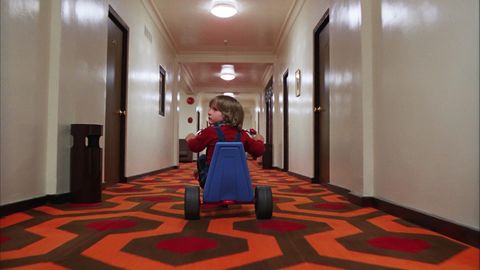
High Angle
a high-angle shot is a technique where the camera looks down on the character or subject from an elevated perspective
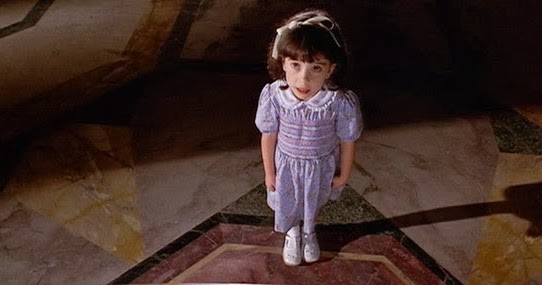
Low Angle
a low-angle shot is a shot from a camera angle positioned anywhere below the eye line, pointing upward
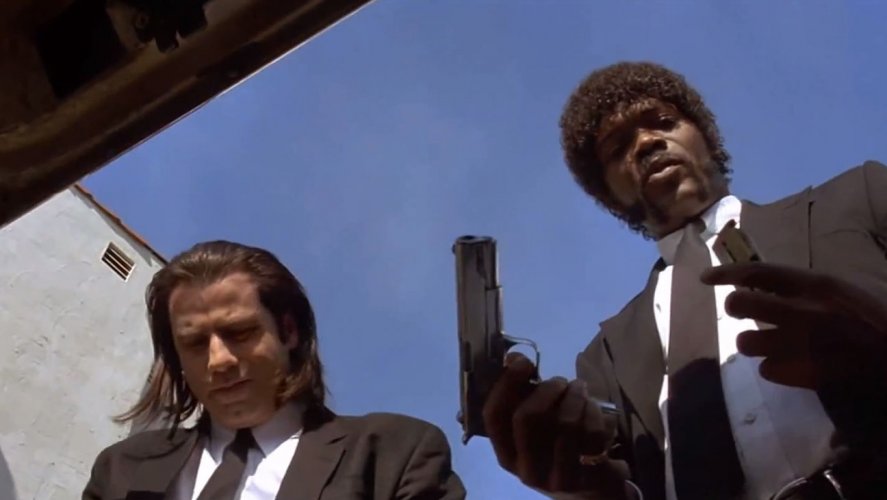
Medium Shot
is captured at a medium distance from the subject
Over-the-Shoulder Shot
is a shot in which the camera is placed just behind an "off-screen" actor so that their shoulder is in the frame while you capture the "on-screen" actor's coverage
Wide Shot
also referred to as a long shot, is a camera angle that shows the entire object or person and their relation to what surrounds them (
Close-up Shot
Close-up shots signal to the audience that something is important, and this can be a prop or reaction, but often it is best when the subject or object has a significant influence on the story and the viewer's understanding of your story
Production Design
is the creation and organization of the physical world surrounding a film story.is usually composed of designing the set, planning the wardrobe or costume, props, makeup, and prosthetics.
Editing
is the way the film is put together
Montage
a series of short shots edited together to condense a part of the story. Montages suggest the passing of time.
Transitions
There are a number of ways two scenes can be connected
Special Effects
is a broad term for fantastical audio and visual illusions that could not have been filmed by normal means. Special effects include in-camera effects, miniatures, CGI, rear-camera projections, and stop motion animation. Visual effects are a subcategory of special effects.
Continuity
in filmmaking is the practice of ensuring that details in a shot are consistent from shot to shot within a film scene
Conceptualization and Scriptwriting
n essence, this is the stage of the process where "the idea is crystallized"
Pre-Production
Here, the "casting, auditions, location hunting, budgeting, preparations of the production designer's group, scheduling, and rehearsals"
Production, or Principal Photography
In the realm of moving pictures, the production proper is called principal photography, or in layman's terms, "the shooting"
Post-production
Now comes the most complex part of the production process. Post-production includes editing, which would sometimes result in reshoots, audio correction, and other refinements of the product. Title cards, color grading, and the like are all done in this stage
Marketing, Distribution, and Exhibition
When the films are ready for screening, the production company formulates strategies to market and promote the picture.
Media effects
are the procedures and outcomes of media influence that have an impact on targets
Individual-level effect
Effect on an individual person
Macro-level effect
Effect on an aggregate, such as the public, institutions, society, or the media industries themselves
Cognitive effect
Media exposure exercising an influence on an individual’s mental processes or the product of those mental processes; typically involves the acquisition, processing, and storage of information
Belief effect
Media exposure exercising an influence on an individual’s perception that the probability that an object or event is associated with a given attribute
Attitudinal effect
Media exposure exercising an influence on an individual’s evaluative judgments; typically involves providing people with elements to evaluate or shaping standards of evaluation
Affective effect
Media exposure exercising an influence on an individual’s feelings such as emotions and moods
Physiological effect
Media exposure exercising an influence on an individual’s automatic bodily responses to stimuli
Behavioral effect
Media exposure exercising an influence on an individual’s doing something
Acquiring
he media influence the person to obtain something he/she did not have prior to a particular exposure
Triggering
The media influences the person by activating something that already exists in the individual
Altering
The media influence the person to change something that the person already had
Reinforcing
The media influence the person by gradually making something in the person more difficult to change over time
Purchasing and Advertising
The influence of media can drive consumers to take in products advertised by companies, resulting in enlarged profits.
Political Campaigns on Voting
Media can change the whole outcome of an election for better or for worse.
Propaganda and Ideology
In general, the media can sway public opinion and persuade people's opinions regarding certain issues and causes.
Media Violence and Aggressive Behavior
Media subconsciously ingrains violent tendencies in viewers, resulting in real-life violence.
Social Construction of Reality
The media warps and distorts the real world from the "imagined."
Media Bias and Stereotyping
Due to proper and improper representations, some argue that this results in real-life stereotyping for some demographics.
Sexual Material
It is argued that promiscuous content may lead to enhanced promiscuity in their real-life behavior and disposition
Post-positivist Theory
based on empirical observation guided by the scientific method, but it recognizes that humans and human behavior are not as constant as elements of the physical world.
Cultural Theory
seeks to understand contemporary cultures by analyzing the structure and content of their communication.
Critical Theory
aims to study inequality and oppression. It challenges existing ways of organizing the social world and the people and institutions that exercise power in it.
Normative Theory
explains how a media system should operate in order to conform to or realize a set of ideal social values.
Newcomb’s Model
introduces the role of communication in a society or social relationship.
Magic Bullet / Hypodermic Needle Theory.
Encouraged a relatively uncomplicated view of the media as all-powerful propaganda agencies brainwashing a susceptible and defenseless public
Two-Step Flow Theory
Hypothesized that information from the media moves through two distinct stages: first through the "opinion leaders", then to the people.
Kincaid’s Convergence Model (Minimal Effect)
Shows a process of convergence through which participants share information so that mutual understanding is reached. MUTUAL AGREEMENT
Effects Tradition
The ‘effects’ of watching a horror movie on Netflix alone in bed might be quite different from watching the same movie in a theater with your friends, for example
Third-person effect
is the tendency for people to perceive others as being considerably more influenced by mass media messages as compared to themselves
Uses and Gratification Theory
Posits that audiences are active and that they use media according to their own goals, which would elicit certain gratifications based on their usage.
Agenda Setting Theory
A process whereby the Mass Media determine not what we think, but what we think and worry about.
The public reacts not to actual events but to the pictures in our heads created by the media.
The Spiral of Silence
Society threatens deviant individuals with isolation.
Individuals experience fear of isolation continuously.
This fear of isolation causes individuals to try to assess the climate of opinion at all times.
The results of this estimate affect their behavior in public, especially their willingness or not to express opinions openly.
Cultivation Theory
Was used to distinguish long-term cultivations of assumptions about life and values from short–term effects.
Media violence affects audience conceptions of social reality and who has power and who does not in that construct.

