Sport Injuries of the Knee & Hip: Causes, Treatment, and Anatomy
 Studied by 0 people
 Call Kai
 Learn
Learn Practice Test
 Spaced Repetition
 Match
Match Flashcards
 Knowt Play
1/21

There's no tags or description
Looks like no tags are added yet.
Name | Mastery | Learn | Test | Matching | Spaced | Call with Kai |
|---|
No analytics yet
Send a link to your students to track their progress
22 Terms
What are the objectives when studying sport injuries of the knee and hip?
Identify causes, mechanisms of injury, signs and symptoms, treatment options, and the relationship between hip and knee conditions.
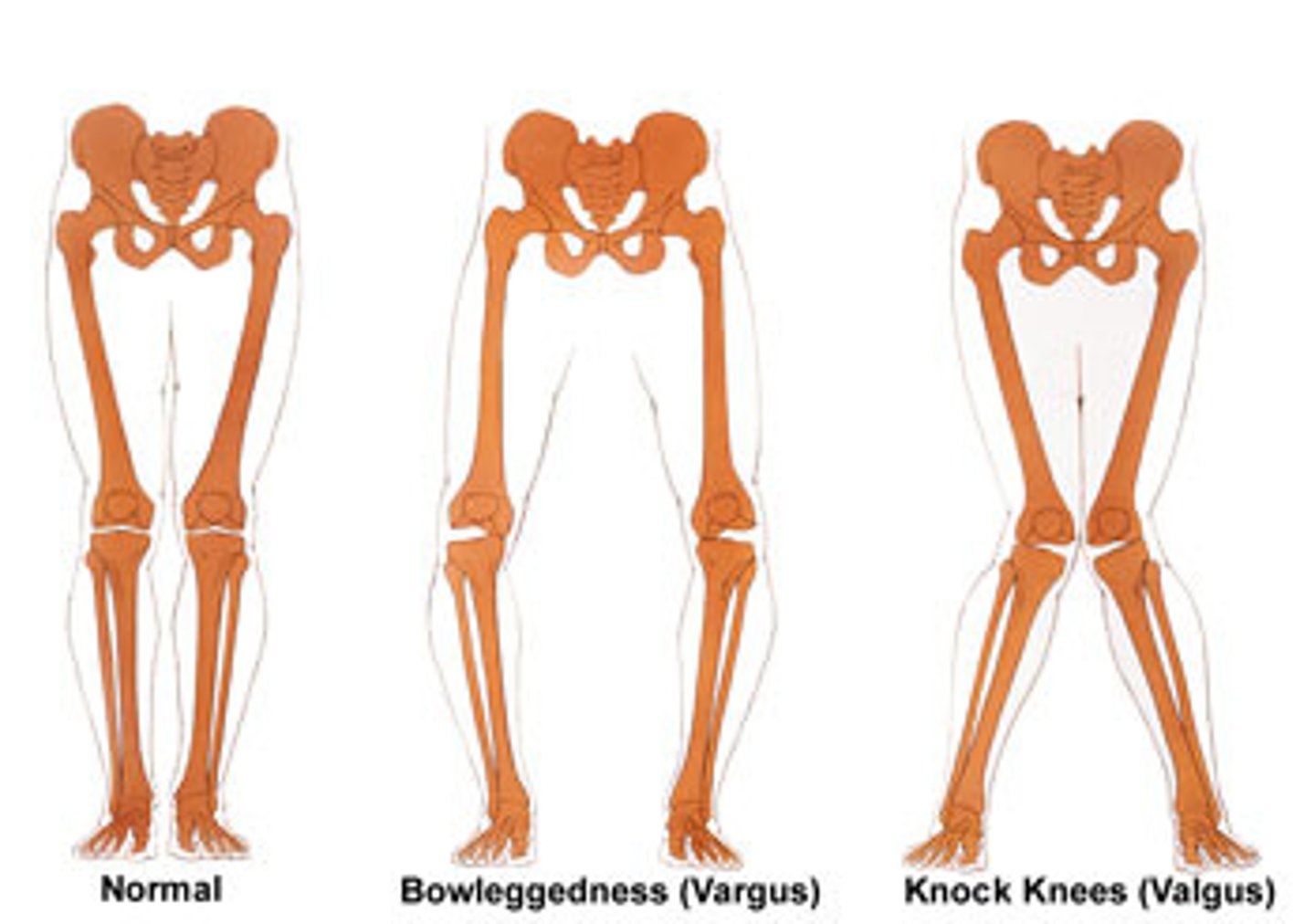
What anatomical abnormalities are concerning in an athletic population?
Coxa vara and genu valgum.
How does coxa vara affect the risk of injury?
It predisposes individuals to a higher risk of femoral neck stress injury.
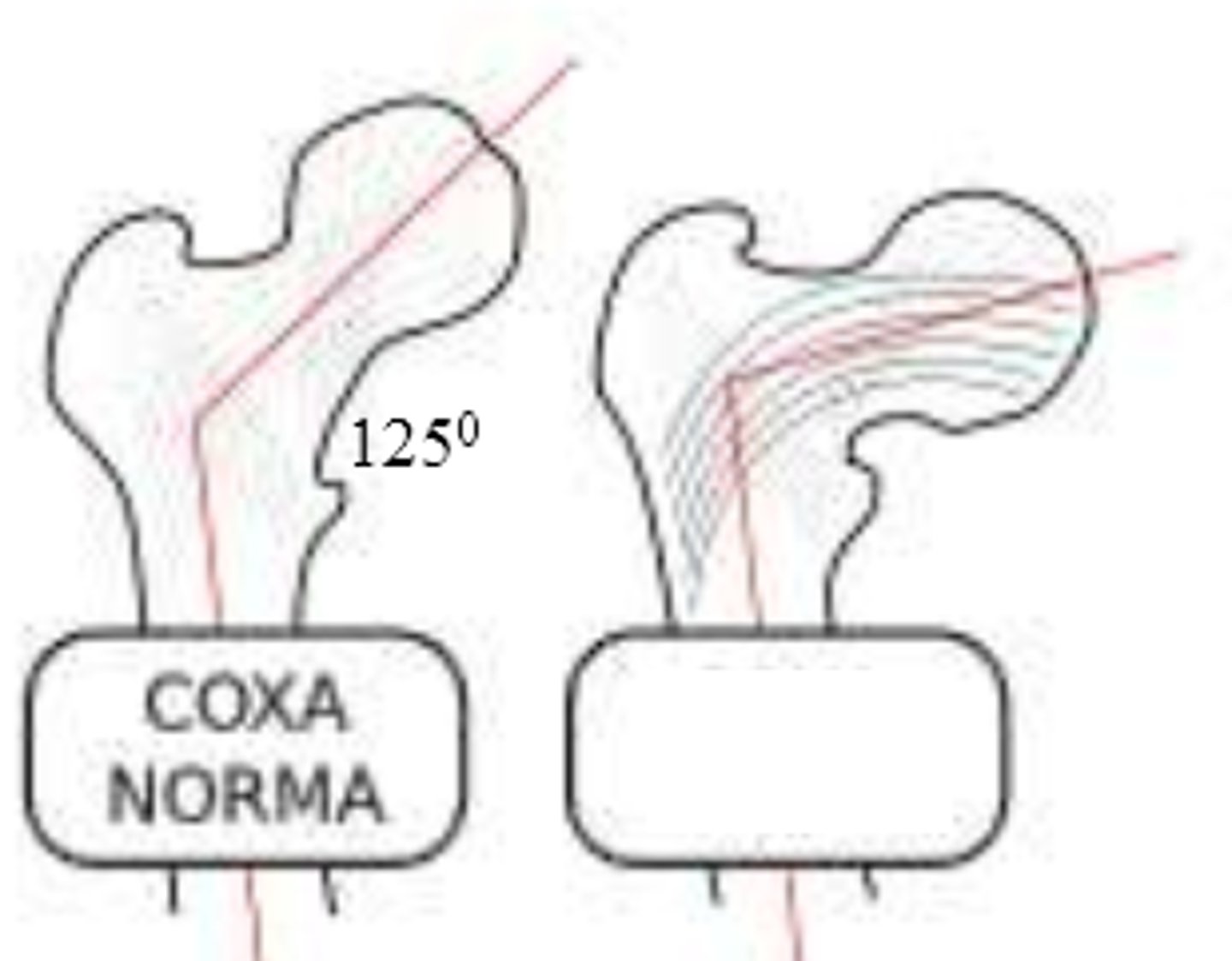
coxa vara
angle of inclination less than 125 degrees
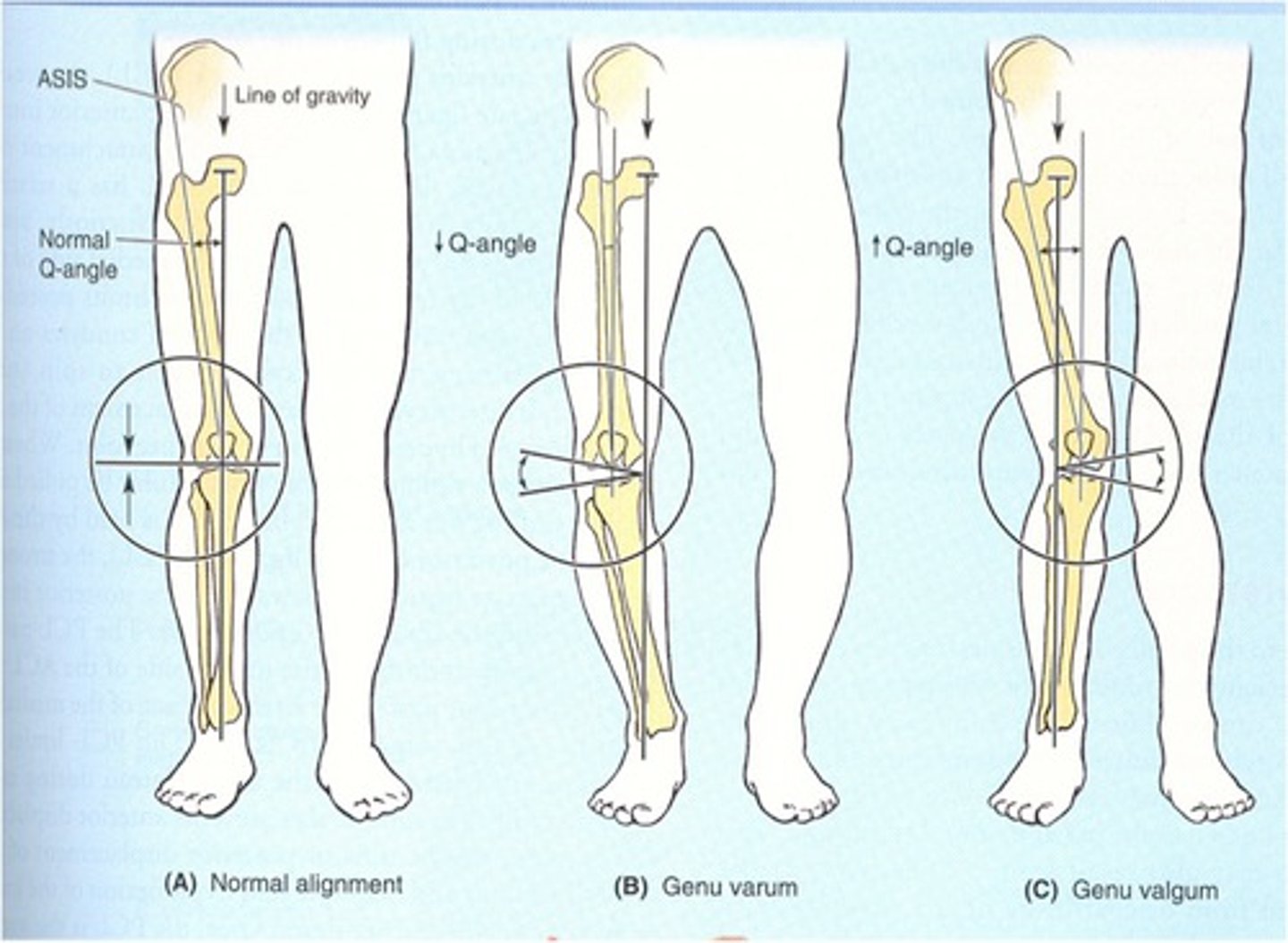
genu valgum
a condition where the knees angle inward, causing them to touch or nearly touch when the feet are together
What is the significance of the Q angle in knee injuries?
A normal Q angle is around 15 degrees; increased Q angles can lead to patellofemoral pain and increased risk of dislocation.
What percentage of ACL injuries are non-contact?
70% of ACL injuries.
What are common symptoms of an ACL injury?
Pain, instability, muscle guarding, and a popping sound or sensation.
What is a common rehabilitation approach for ACL injuries?
Detail-oriented, data-driven rehabilitation with consistent strength assessments.
What is the most common type of meniscus injury?
Medial meniscus injuries.
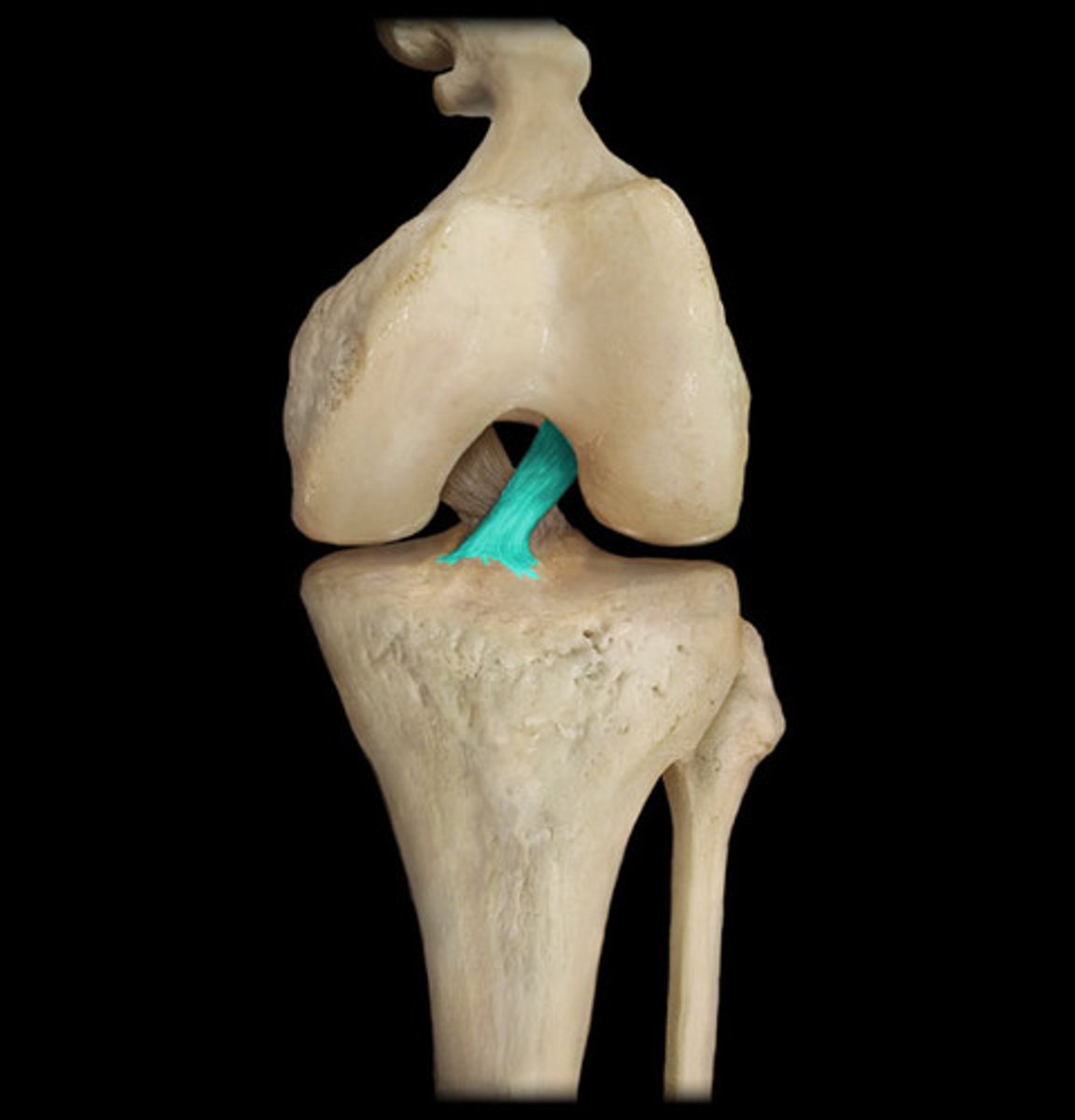
What are the common symptoms of a meniscus injury?
Locking or clicking sensation in the knee.
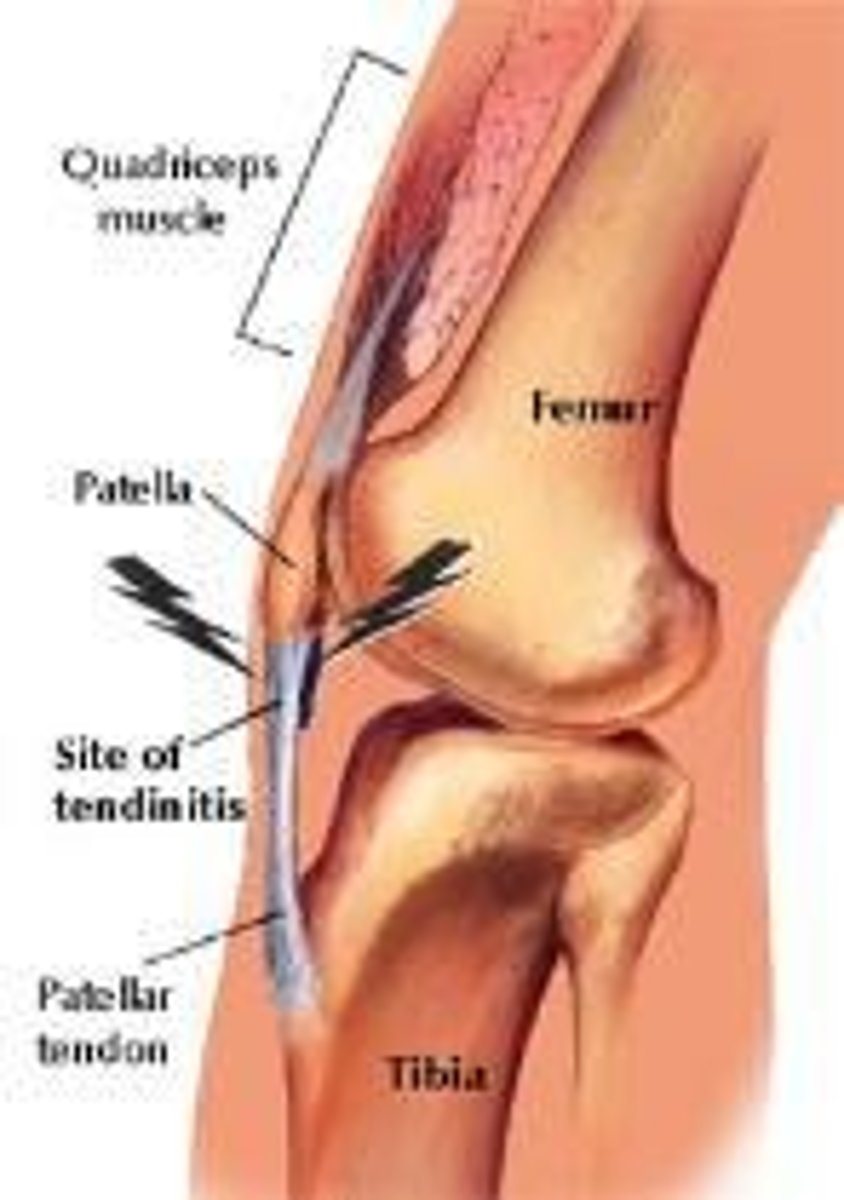
What is patellar tendonitis?
Pain along the patellar tendon, typically under the patella or at the tibial tuberosity, often associated with quad weakness.
What is patellofemoral pain syndrome commonly known as?
Runner's knee.
What are the symptoms of hip dislocations or femoral fractures?
Dull, achy pain, numbness, and tingling down the leg; considered a medical emergency.
What is femoroacetabular impingement (FAI)?
A condition where there is an issue between the femoral head and hip labrum due to bony abnormality.
What are common symptoms of femoroacetabular impingement and labral tears?
Anteromedial hip pain, potential locking/clicking, muscle weakness, and pain with hip flexion.
What are stress injuries of the femur commonly associated with?
Coxa vara increases the likelihood of stress injuries along the femoral neck.
What is a common symptom of a hip flexor strain?
Sharp pain felt with each step, typically along the hip flexor mass.
What is the typical treatment approach for a hip flexor strain?
Conservative management including rest, rehabilitation, and progressive return to activity.
What can cause patellar tendonitis?
Repetitive movements, muscle imbalances, glute weakness, poor form, and improper footwear.
What is the mechanism of injury for medial meniscus injuries?
Can be acute (landing with knee fully extended) or chronic (wear and tear from activities).
What is the treatment approach for labral tears?
rest and onservative treatment such as rehab and injections, with surgical intervention if necessary.
 Note
Note  Flashcards (46)