biology EOY
 Call Kai
 Learn
Learn Practice Test
 Spaced Repetition
 Match
Match Flashcards
 Knowt Play
1/124

There's no tags or description
Looks like no tags are added yet.
Name | Mastery | Learn | Test | Matching | Spaced | Call with Kai |
|---|
No analytics yet
Send a link to your students to track their progress
125 Terms
what is a enzyme
large proteins that catalyse (speed up) reactions. Enzymes are not changed in the reactions they catalyse.
what is a tissue
group of cells with similar structures and functions
what is an organ
group of tissues working together to perform a specific function
What is the function of the liver in digestion?
produces bile, which neutralises hydrochloric acid from
the stomach and emulsifies fat to form small droplets with a large surface area
what is the function of saliva in digestion?
lubrication to help swallowing – contains amylase to
break down starch
name three proteins produced in the pancreas
amylase, protease, lipase
why are enzymes described as specific?
each enzyme only catalyses a specific reaction, because
the active site only fits together with certain substrates
(like a lock and key)
describe the function of amylase
designed to break down starch into glucose
where is amylase produced?
salivary glands, pancreas, and small intestine
describe the function of proteases
to break down proteins into amino acids
where are proteases produced?
stomach, pancreas, and small intestine
describe the function of lipases
to break down lipids into fatty acids and glycerol
where are lipases produced?
pancreas and small intestine
What are two factors that affect the rate of activity
of an enzyme?
temprature and pH
what does denatured mean?
shape of an enzyme’s active site is changed by high
temperatures or an extreme pH, so it can no longer bind
with the substrate
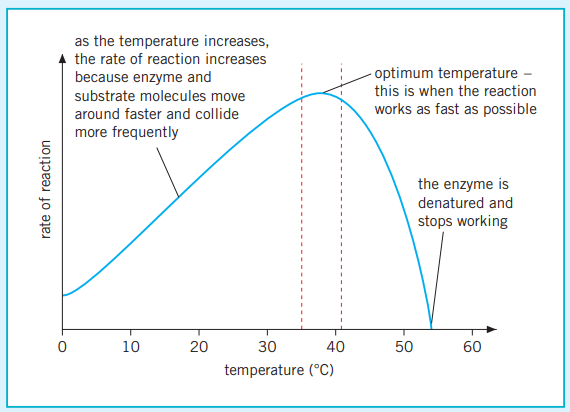
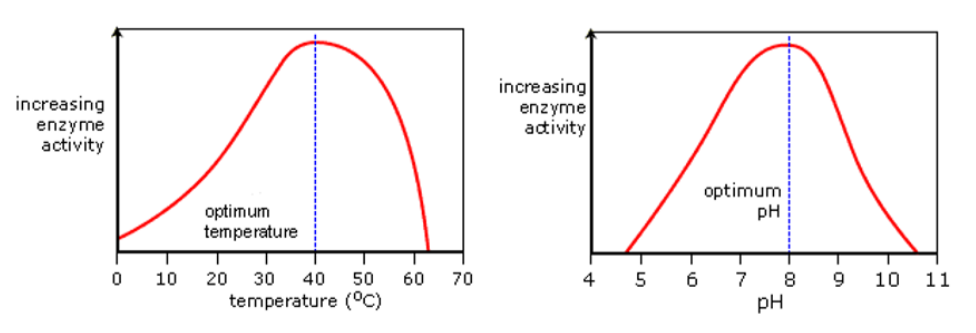
describe the effect of temprature on enzyme activity
as temperature increases, rate of reaction increases
until it reaches the optimum for enzyme activity –
above this temperature enzyme activity decreases and
eventually stops
describe the effect of pH on enzyme activity
different enzymes have a different optimum pH at which
their activity is greatest – a pH much lower or higher
than this enzyme activity decreases and stops
why do different digestive systems have different optimum pH s?
Different parts of the digestive system have very
different pHs – the stomach is strongly acidic, and the
pH in the small intestine is close to neutral
what is an organ system?
a group of organs working together to perform a
specific function
what does the gall bladder do in digestion?
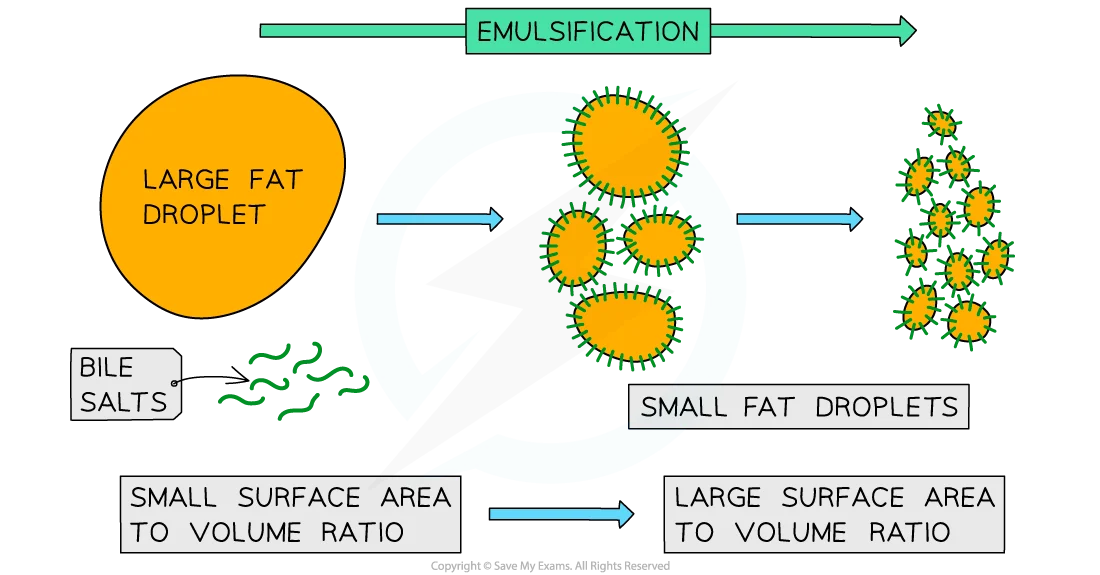
stores bile – bile is alkaline to neutralise hydrochloric acid from the stomach, and emulsifies fat to form small droplets with a large surface area.
what does the stomach do in digestion?
• churns food
• releases protease – digests proteins
• releases hydrochloric acid – kills pathogens
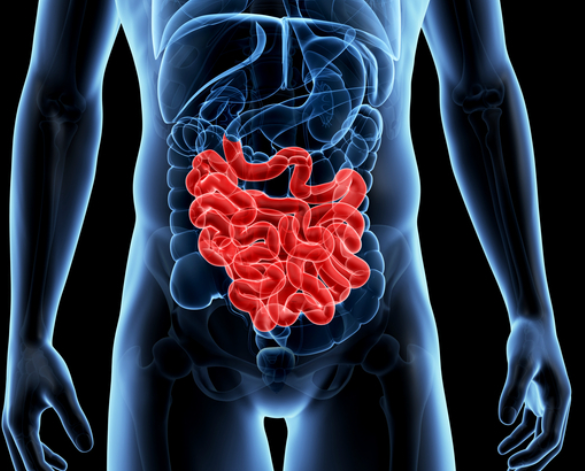
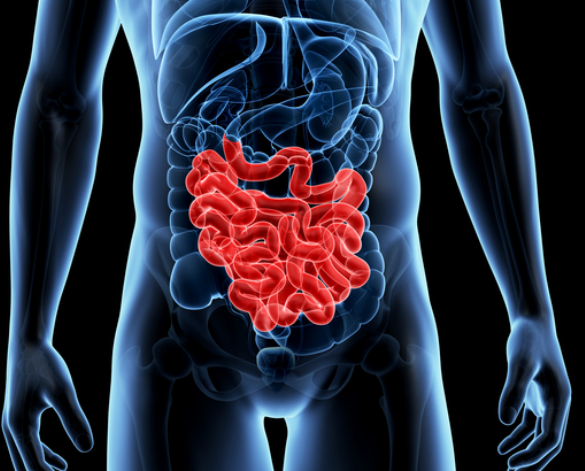
what happens in the small intestine?
digested food is absorbed into the blood
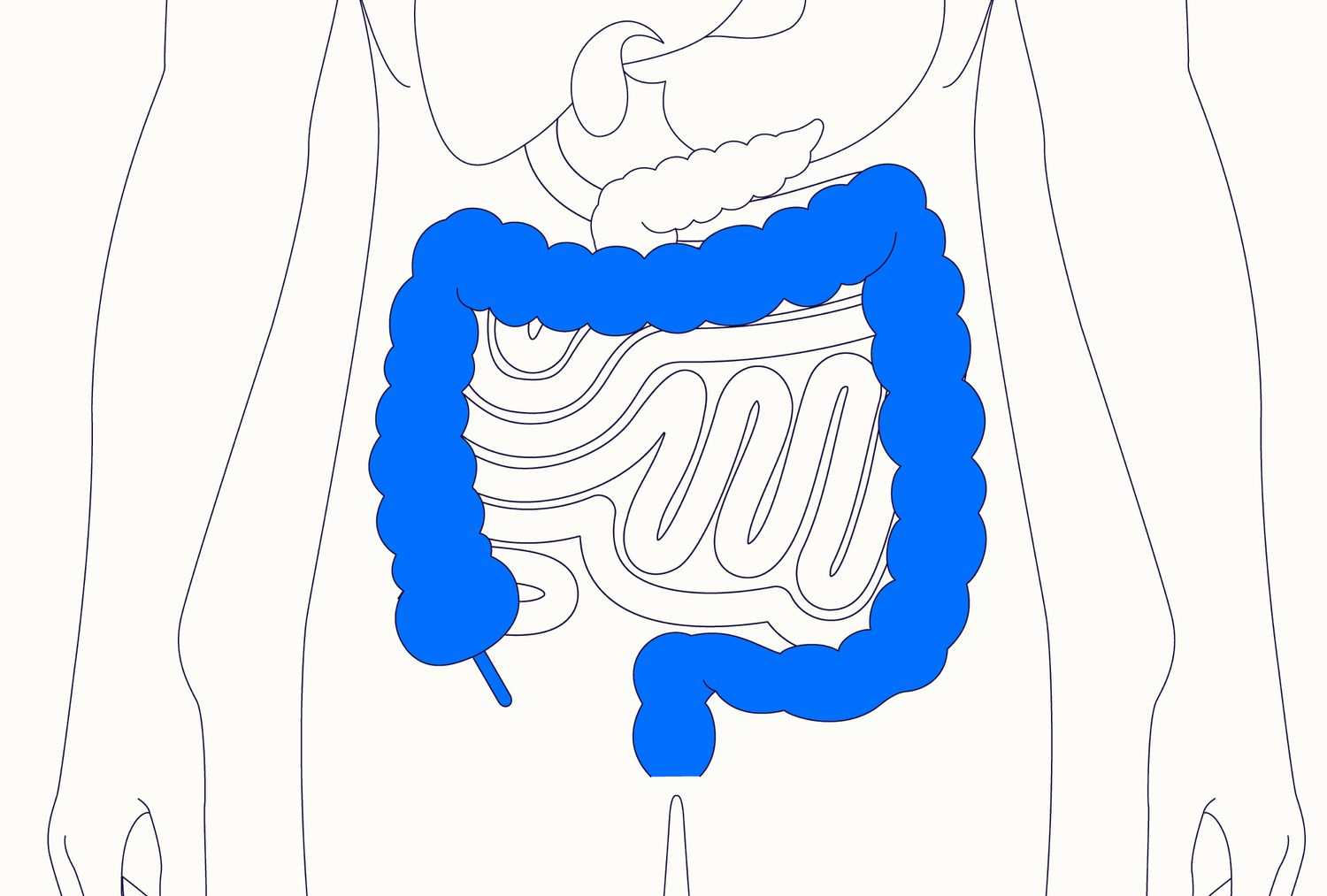
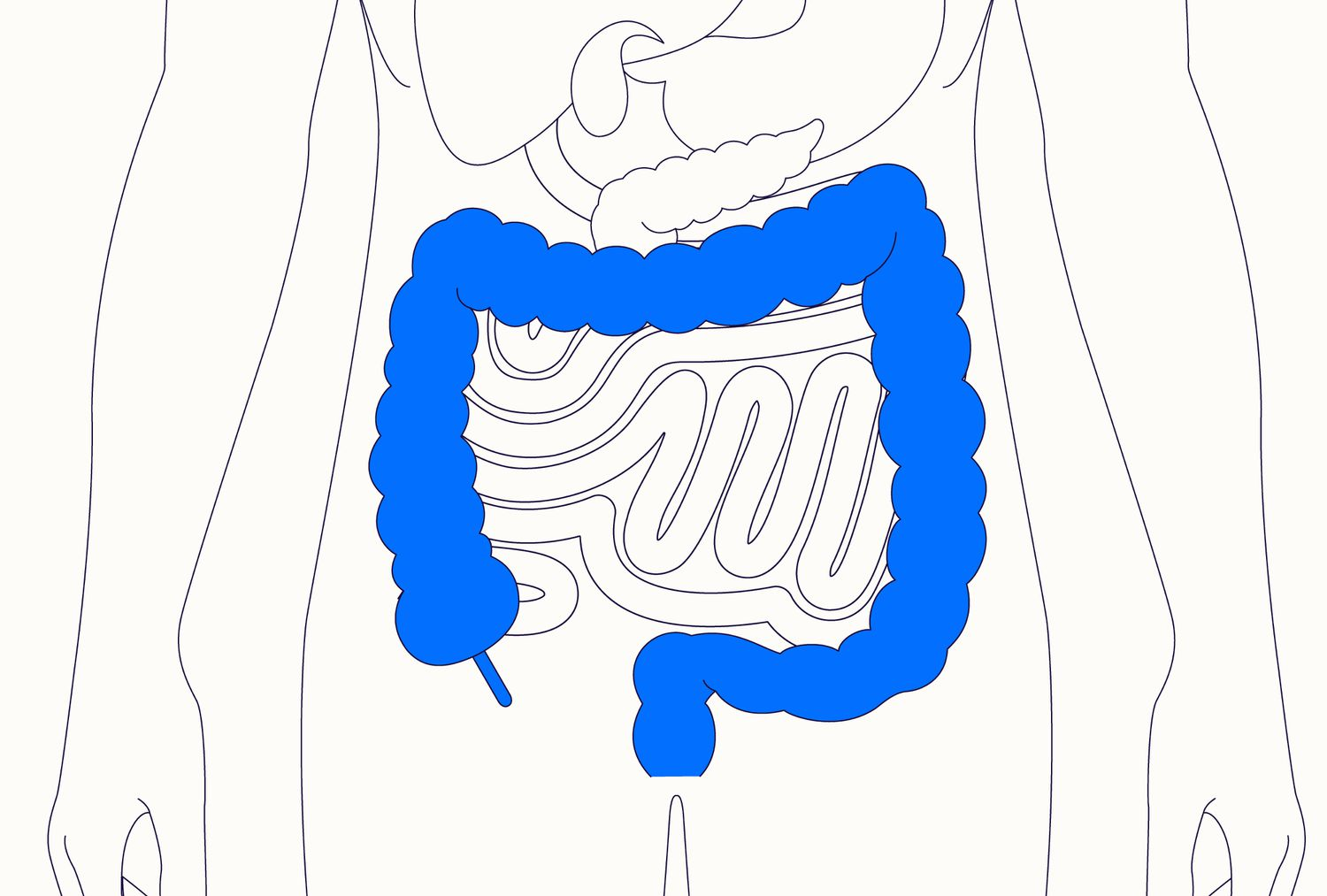
what happens in the large intestine?
water and minerals are absorbed into the blood
sites of production for amylase
salivary glands
pancreas
small intestine
sites of production for proteases
stomach
pancreas
small intestine
sites of production for lipases
pancreas
small intestine
effect of temprature on enzymes GRAPH
how doe enzymes work? (lock and key theory)
1) The enzyme’s active site (where the reaction occurs) is a specific shape.
2) The enzyme (the lock) will only catalyse a specific reaction because the substrate (the key) fits into its active site.
3) At the active site, enzymes can break molecules down into smaller ones or bind small molecules together to form larger ones.
4) When the products have been released, the enzyme’s active site can accept another substrate molecule
metabolism
the sum of all reactions taking place in your body
what nutrient does the benedicts test detect
sugars
what nutrient does iodine solution detect?
starch
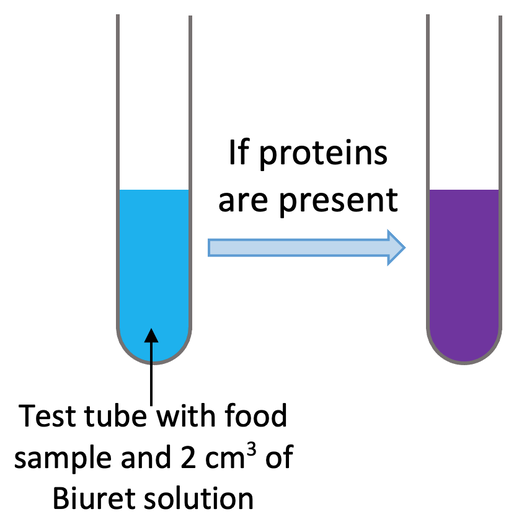
what nutrient does the biuret reagent test detect?
protein
what nutrient does the ethanol test detect?
fats/lipids in solution
what colour change occurs in a positive iodine test
orange/brown to blue/black
what colour change occurs in a positive benedicts test?
blue to green/ orange/ brick red
what colour change occurs in a positive biurets test?
blue to purple
what colour change occurs in a positive ethanol test?
solution will turn cloudy
*memorise method for enzymes required practical*
*memorise method for enzymes required practical*
what substrate does amylase act on?
starch
what type of molecule is an enzyme?
a protein
in the enzyme required practical, what does the colour change of the iodine solution indicate?
blue black- starch still present
colourless- starch has been broken down by amylase
background info on enzymes required practical
The activity of biological catalysts (enzymes) are affected by pH. This practical explores how different pH levels affect the activity of amylase, an enzyme that breaks down starch into sugars. Using buffer solutions to alter pH, you will measure the rate of starch breakdown by observing changes in the colour of an iodine solution.
what is the purpose of labeling the test tubes with the pH of the solution in an experiment investigating the effect of pH on the rate of reaction of amylase enzyme?
to ensure the correct pH is added to the starch solution
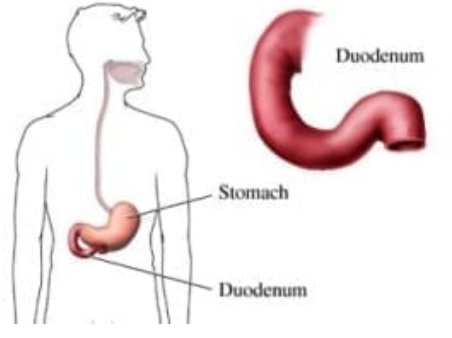
what connects the stomach and small intestine?
duodenum
what is the role of bile?
produced by the liver
stored in the gallbladder
bile will neutralise the contents of the stomach as it moves into the small intestine
bile emulsifies fats- this increases the surface area of the fat droplets allowing lipase to be more efficient
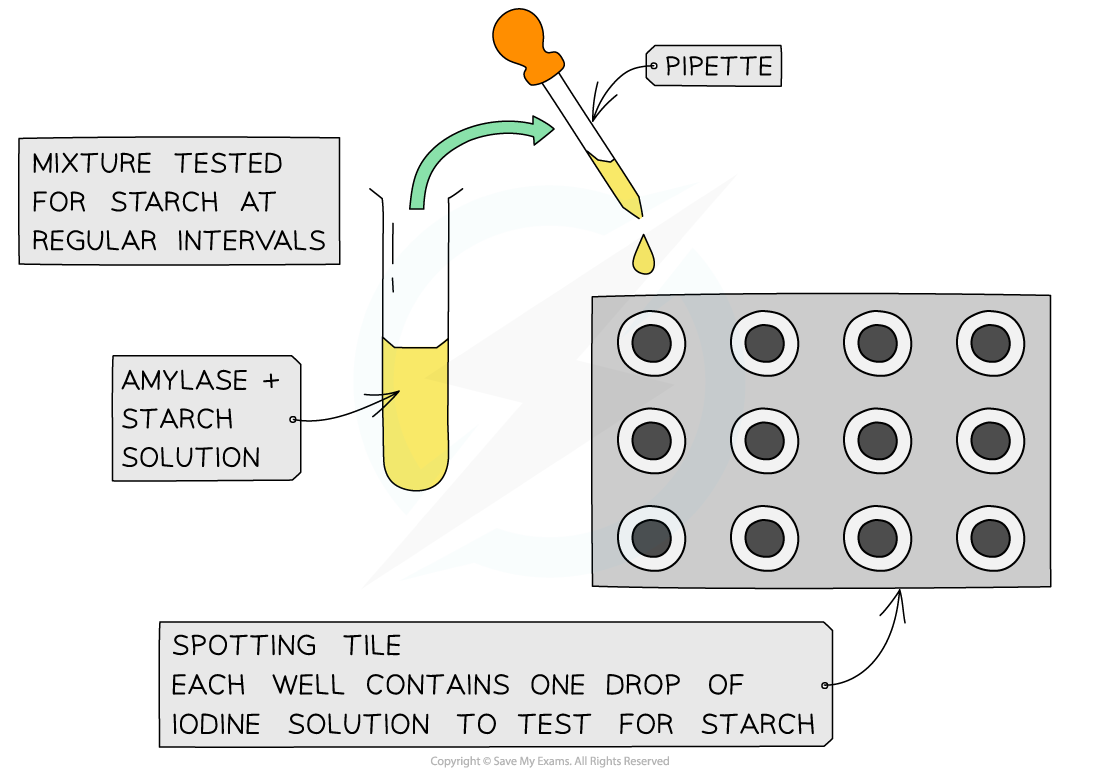
how would you investigate the effect of temperature/ pH on the activity of amylase?
enzymes required practical (learn method)
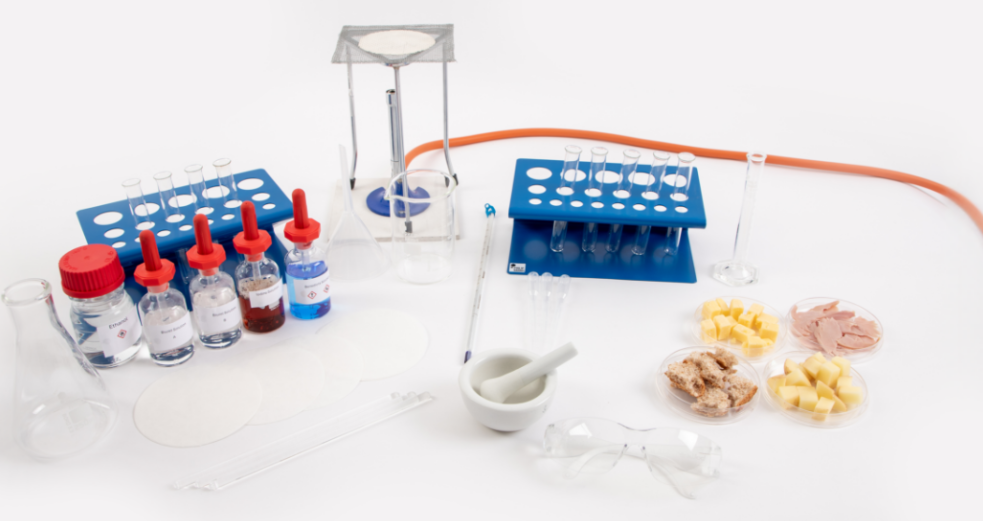
how would you test for the presence of different nutrients in a food
food tests- e.g. benedicts, biurets, iodine, ethanol (learn methods)
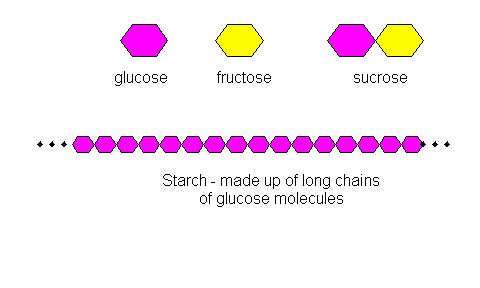
what are carbohydrates made of?
units of sugars You can have simple carbohydrates (only the units of sugars) and complex carbohydrates (long chains of simple sugar units bonded together- starch/ fiber)
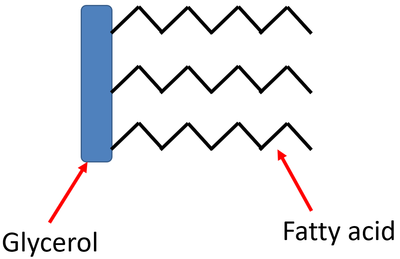
what are lipids made of?
three molecules of fatty acids joined to a molecule of glycerol
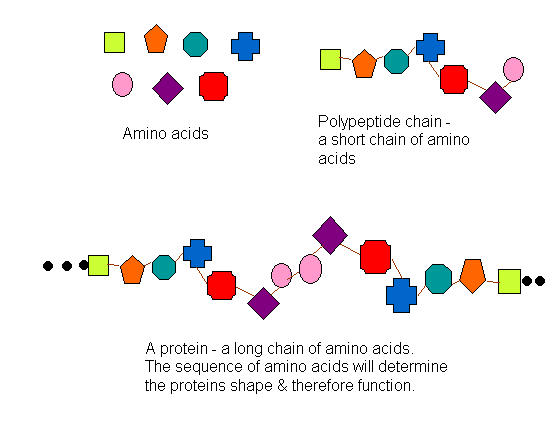
what are proteins made of ?
long chains of small units called amino acids
functions of proteins in the body
structural components of tissues like muscles/ tendons
responsible for hormones such as insulin
antibodies which destroy pathogens as part of the immune system
enzymes, which act as catalysts
function of lipids in the body
used in your body for cell membranes, hormones and the nervous system
function of carbohydrates in the body
Carbohydrates are the body's primary energy source, broken down into glucose for immediate energy in cellular respiration.
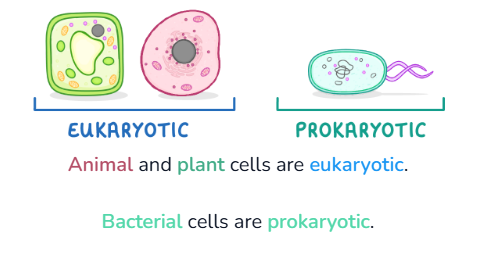
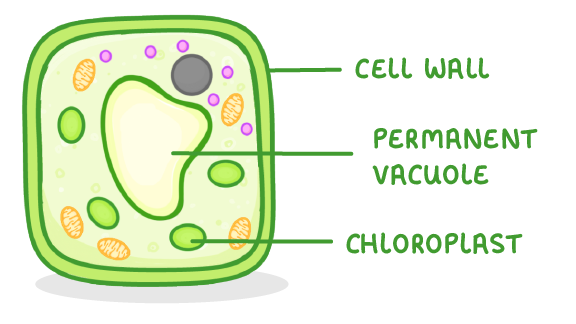
for animal, plant and bacterial cells, state whether they are eukaryotic or prokaryotic
name the five cell structures that are found in both animal and plant cells.
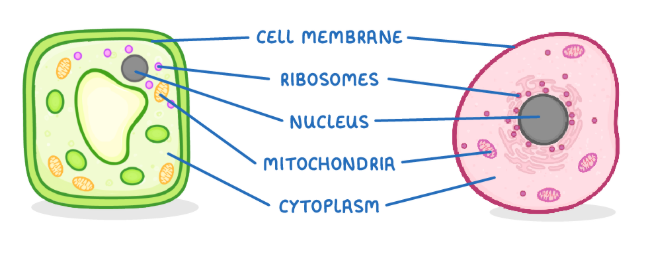
name the three cell structures that are found in plant cells but not in animal cells.
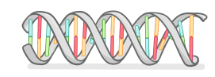
what is the role of the nucleus?
controls cell activity, contains genetic information.
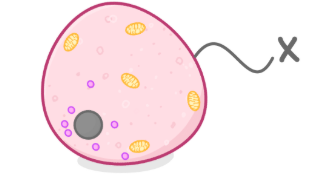
what is the role of the cell membrane?
controls substances going in / out of the cell.
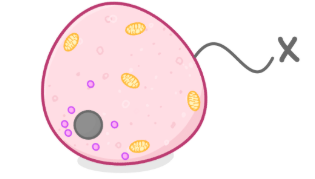
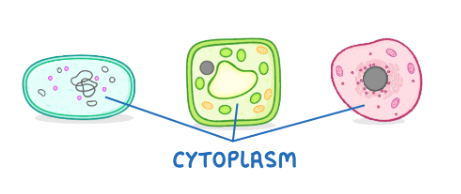
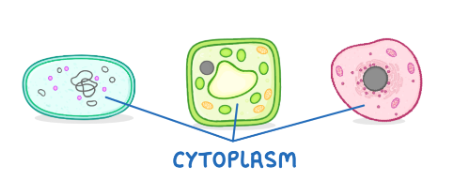
what is the role of the cytoplasm? (and what is it?)
it is a liquid gel and the site of most chemical reactions.

what is the role of mitochondria?
where aerobic respiration happens and energy is released.

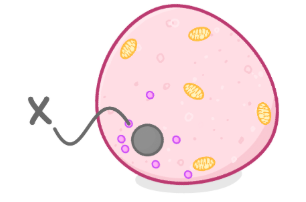
what is the role of the ribosomes?
protein synthesis takes place, all proteins are made.
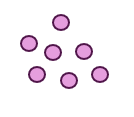
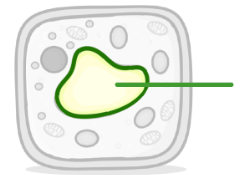
what is the role of the vacuole? (only found in plant cells)
place in cytoplasm filled with cell sap, gives cell structure.
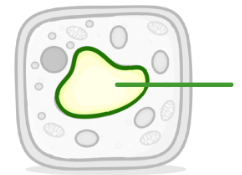
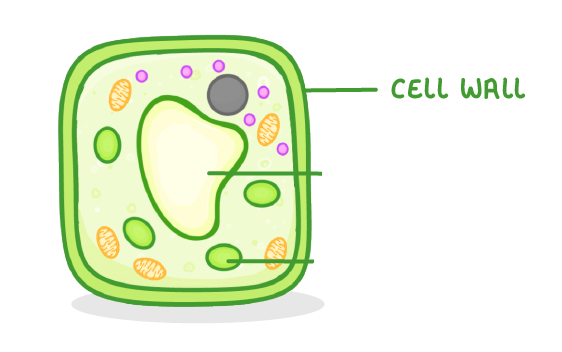
what is the role of the cell wall? (only found in plant cells)
strengthens cell, gives it support, contains cellulose.
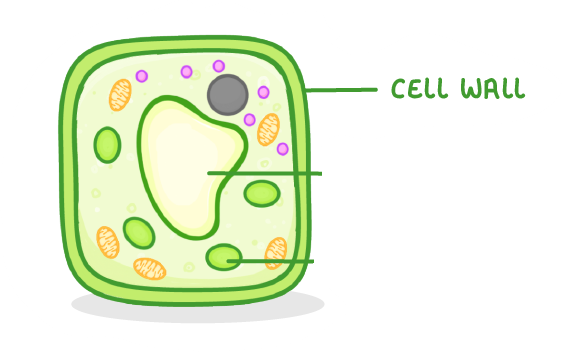
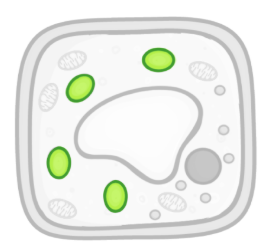
what is the role of chloroplasts? (only found in plant cells)
green, contain chlorophyll which absorbs light used for photosynthesis.
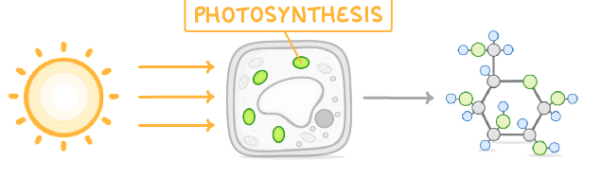
define diffusion
movement of particles from a high concentration to a low concentration.
where is the DNA stored in a eukaryotic vs prokaryotic cell?
eukaryotes: nucleus
prokaryotes: single loop of DNA
compare the size of eukaryotic and prokaryotic cells.
eukaryotes: large
prokaryotes: 1μ (very small)
compare the cell walls of eukaryotic and prokaryotic cells.
eukaryotes: made of cellulose
prokaryotes: peptidoglycan (not cellulose)
compare the number of cells of eukaryotic and prokaryotic cells.
eukaryotes: multicellular
prokaryotes: unicellular
define cell differentiation
the process by which cells become specialised

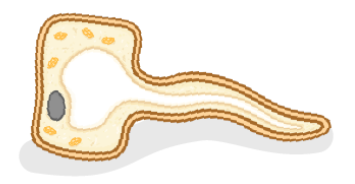
ROOT HAIR CELL
plant cell
function- designed for absorbing water and mineral ions from soil
adaptations- large surface area to help absorb water and minerals
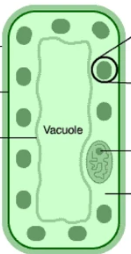
PALISADE CELL
plant cell
function- designed for photosynthesis
adaptations- tall and have a large surface area
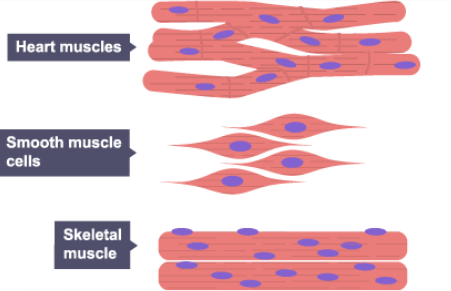
MUSCLE CELL
animal cell
function- contains proteins that contract
adaptations- many mitochondria to transfer energy
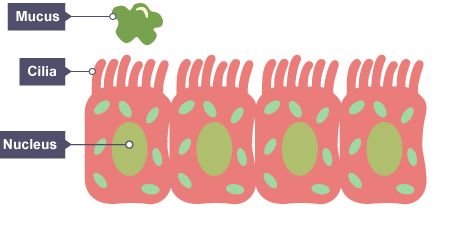
CILATED CELL
animal cell
function- line air passages in lungs, stop lung damage
adaptations- tiny hairs called cilia
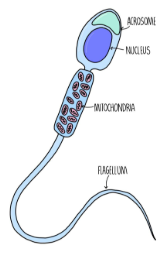
SPERM CELL
animal cell
function- fertilise eggs
adaptations- enzymes on head and tail
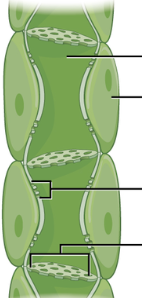
PHLOEM CELL
plant cell
function- carry food around plant
adaptations- cell walls between cells
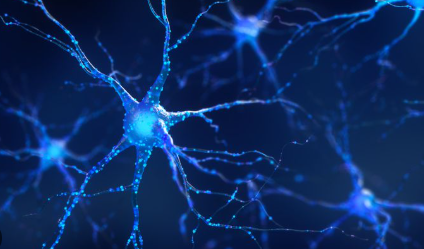
NERVE CELL
animal cell
function- to carry electrical impulses around the body
adaptations- long, thin, highly branched
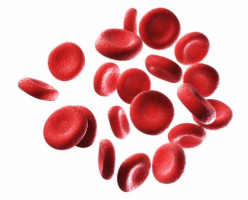
RED BLOOD CELL
animal cell
function- to carry oxygen
adaptations- large surface area for o2 to pass through.
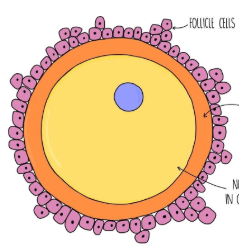
EGG CELL
animal cell
function- to be fertilised
adaptations- provides large food store
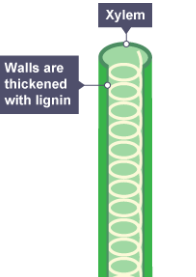
XYLEM CELL
plant cell
function- carries water and minerals to roots/ leaves
adaptations- lingrin supports plant
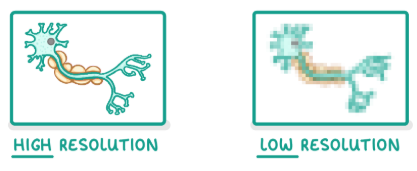
define resolution
“the degree to which it is possible to distinguish between two objects that are very close together. the higher the resolution, the greater detail you can see.”

define magnification
“how many times larger an image is that the actual object”

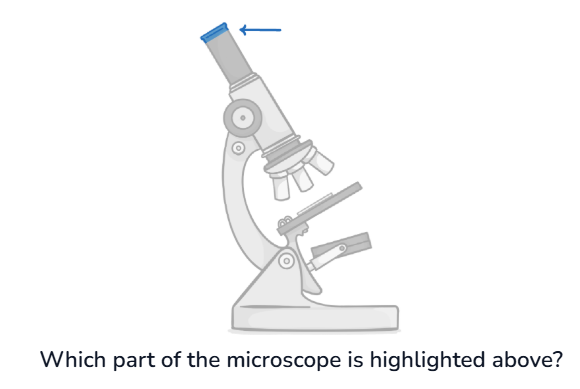
eyepiece lens
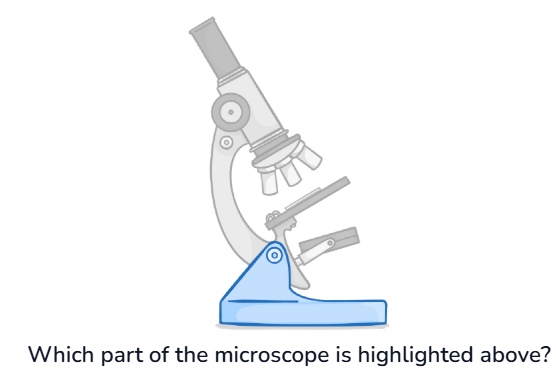
base
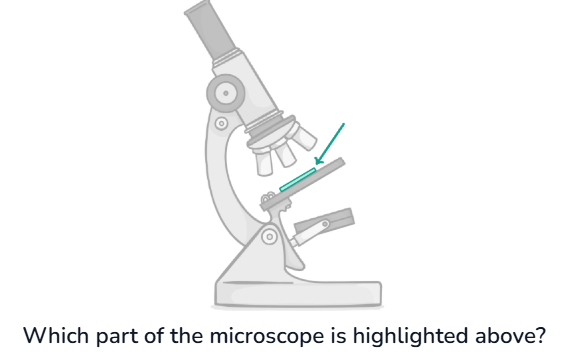
slide and clips
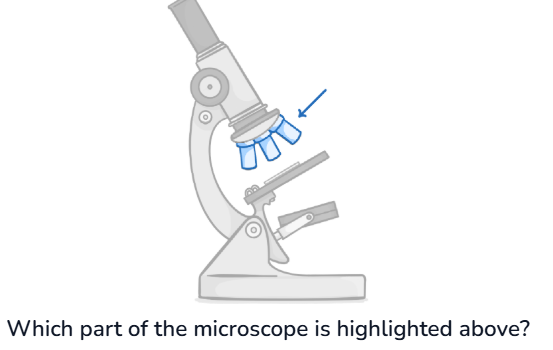
objective lens
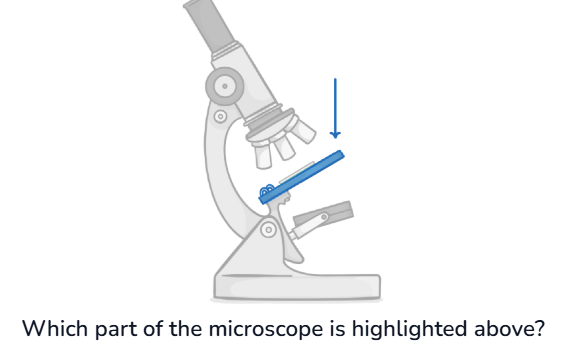
stage
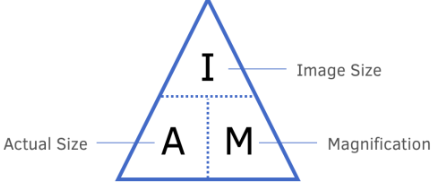
equation for magnification
magnification = image size
. actual size
how many μ (micrometers) in 1mm?
1 millimeter = 1000 μ (micrometers)
how many chromosomes do humans have?
46 chromosomes or 23 pairs
what do we call cells produced by mitosis?
daughter cells
how many cells does mitosis create?
mitosis produces 2 cells
( 1 cell divides into 2)
why is mitosis needed to create new cells?
to grow (e.g. bones, muscle)
to replace worn out cells (e.g. blood cells, skin)
to repair damaged tissue (e.g. wounded skin)
describe the cell cycle:
interphase- dna is copied
mitosis- replicated chromosomes separate and move to opposite ends of the cell
cytokenesis- splits into two daughter cells
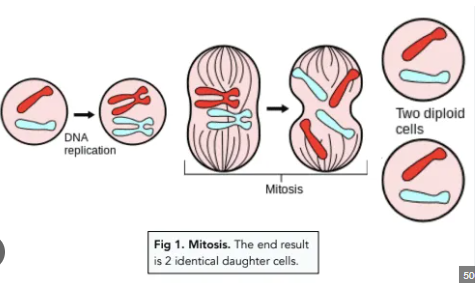
what happens to the number of cells during mitosis?
number of chromosomes stays the same
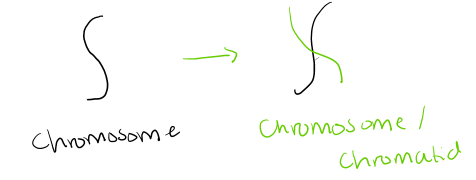
the cell replicates its DNA so each chromosome now consists of two new identical sister chromatids
this doubled the amount of DNA, but the number of chromosomes stays the same (they are just duplicated)
what is a stem cell
an undifferentiated cell
what is meristem tissue?
located in tips and roots of plants, similar to embryonic stem cells but for plants.
define diffusion
diffusion is the net movement of particles from an area of high concentration to an area of low concentration. the particles move down their concentration gradient. it is passive- does not require energy.
what are some examples of diffusion occuring in animals
small intestine: glucose moves from the small intestine into the blood
alveoli in lungs: O2 diffuses into the blood from the alveoli / CO2 moves from the blood into the alveoli, where it is breathed out.
what is an example of diffusion occuring in plants?
in plants, gas exchange occurs, with oxygen leaving the plant, moving from a high concentration to a low concentration of oxygen.

