The Cardiovascular System
 Call Kai
 Learn
Learn Practice Test
 Spaced Repetition
 Match
Match Flashcards
 Knowt Play
1/14

There's no tags or description
Looks like no tags are added yet.
Name | Mastery | Learn | Test | Matching | Spaced | Call with Kai |
|---|
No analytics yet
Send a link to your students to track their progress
15 Terms
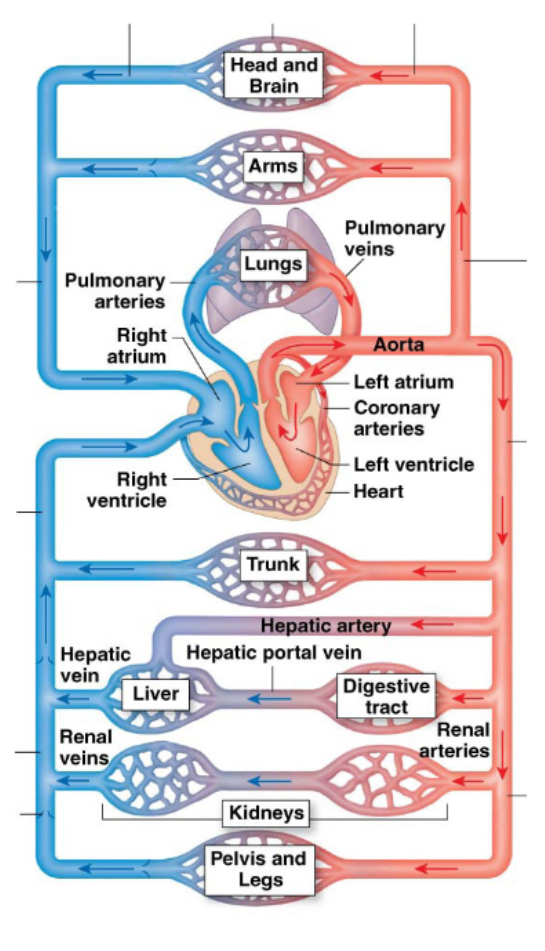
The heart MUST move the blood through…
vessels!
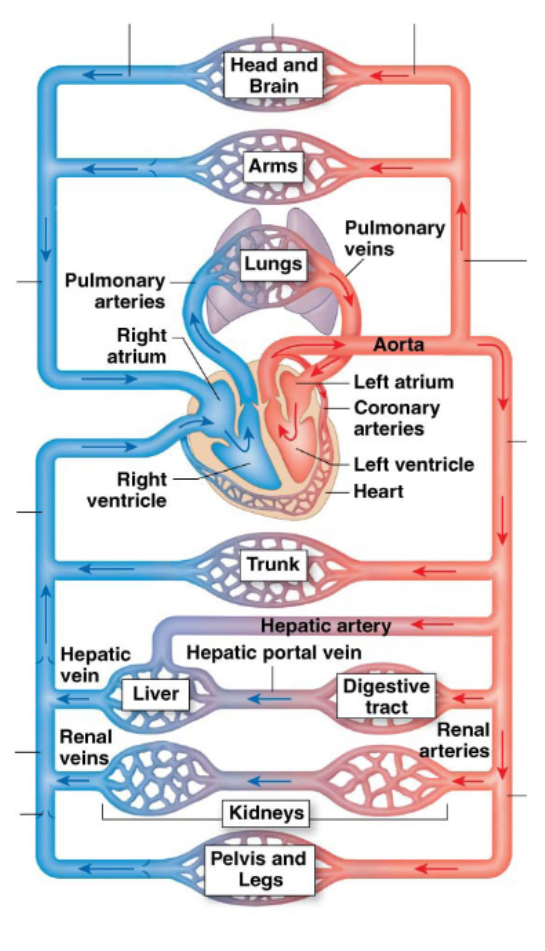
Frank-Starling Law
The heart MUST pump all blood that returns to it and its force of contraction is partially determined by how much blood returns to it (how much venous return stretches its sarcomeres)
There is a length-tension relationship in cardiac muscle
Force of contraction is ALSO regulated by the autonomic nervous system
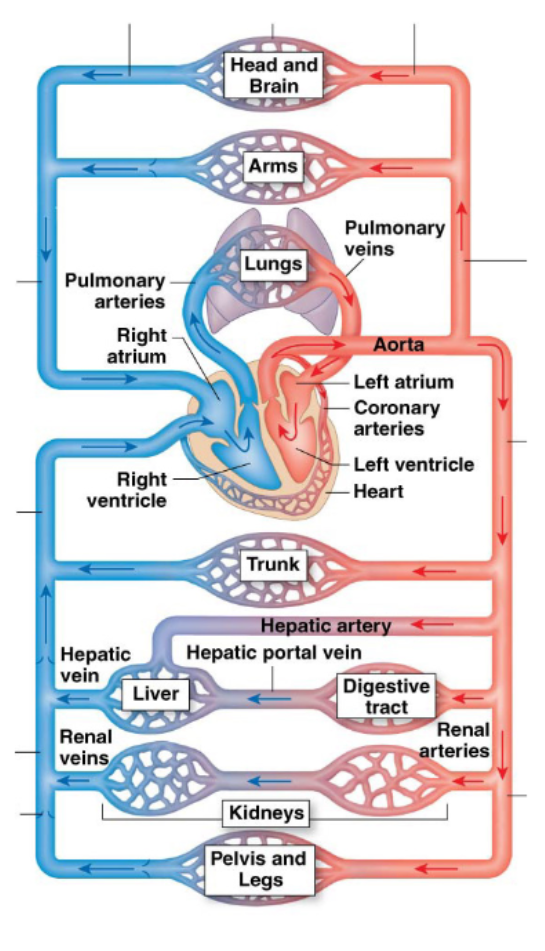
Pulmonary Circuit
From right side of heart to the lungs
Blood picks up O2 and drops off CO2
Returns to left side of heart
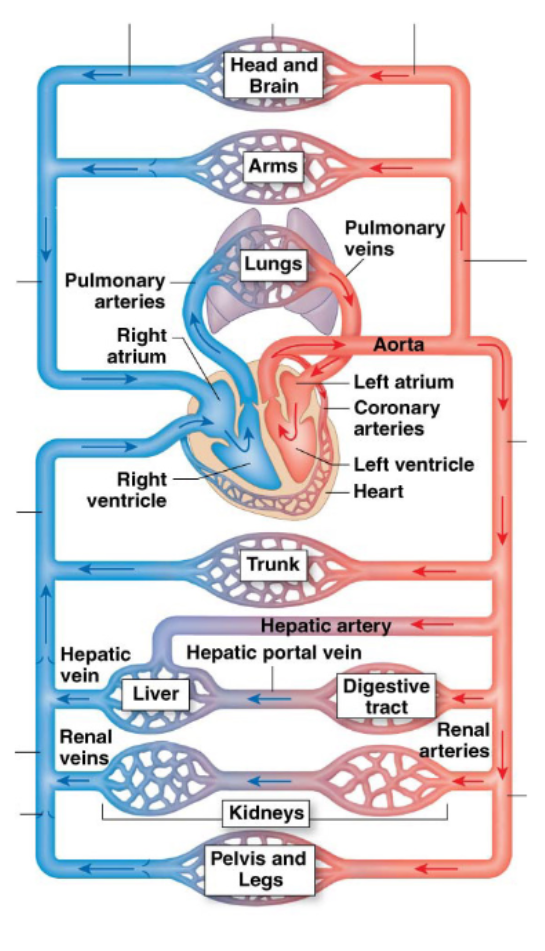
Systemic Circuit
From left side of heart to all body cells
Blood drops off O2 and picks up CO2 and other metabolic wastes
Also distributes hormones, stored nutrients (glucose, triglycerides, etc) immune cells, and immunoglobins around the body
Returns to the right side of the heart
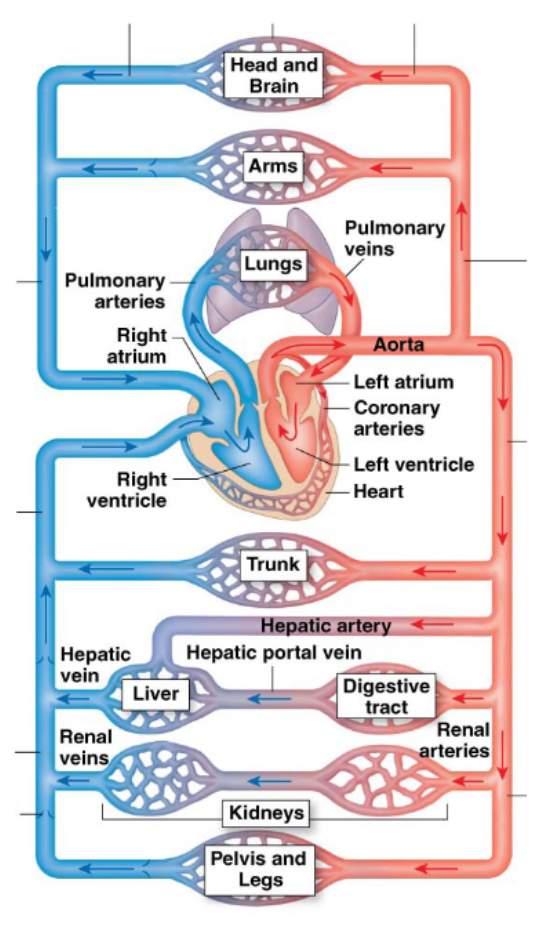
Blood is composed of…
formed elements (cells, platelets)
Plasma
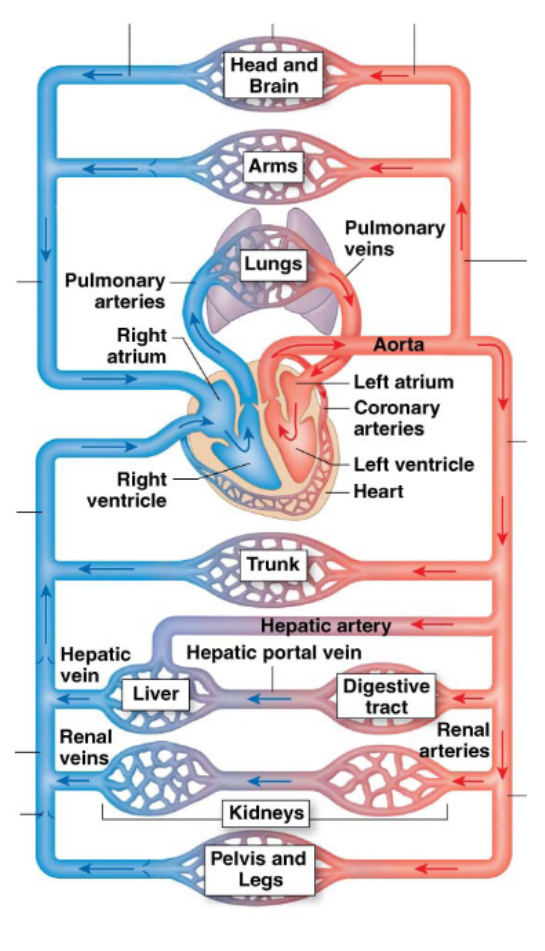
The _____ is the pump!
Heart
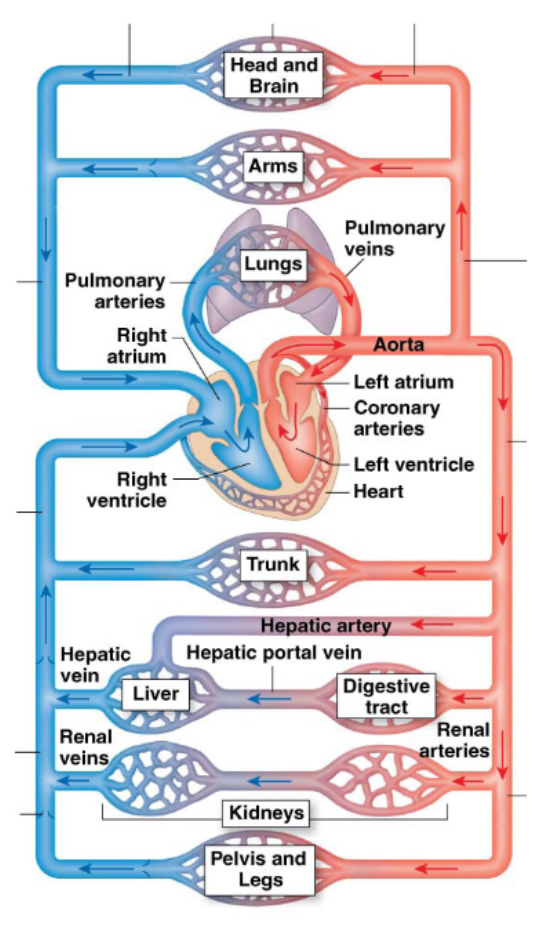
The vasculature (blood vessels) distributes blood to all body cells
Arteries, arterioles, venules, veins
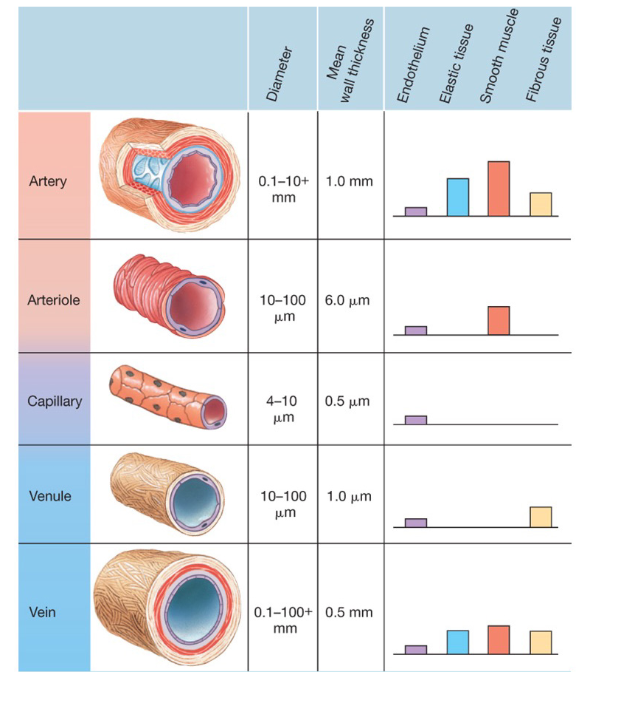
What are the structural differences between these arteries, arterioles, venules, and veins?
Arteries and arterioles have thick, muscular, elastic walls with small lumens to handle high-pressure blood flow away from the heart.
veins and venules have thin, less muscular walls with large lumens and valves to manage low-pressure blood returning to the heart, preventing backflow
Pressure gradient
There must be a pressure gradient for fluid to flow from one place to another
If there is no pressure gradient, then there will be no flow
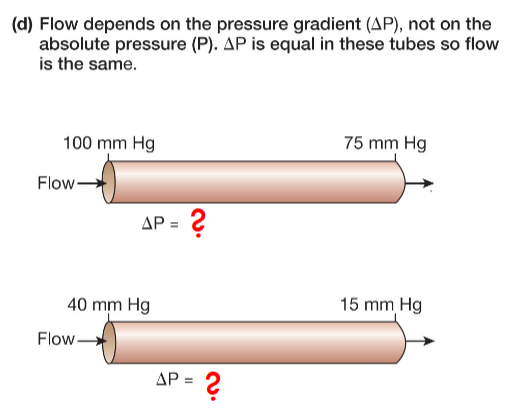
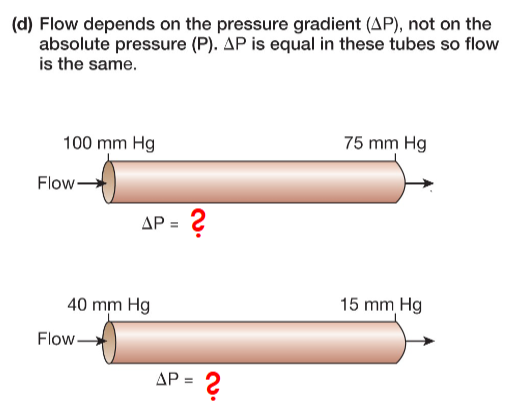
The difference in pressure between two points on a vessel determines the ______ .
flow rate (volume per unit time)
40mmHg and 15mmHg will have a greater flow rate
Oneway valves prevent…
backflow if pressure builds up on one end
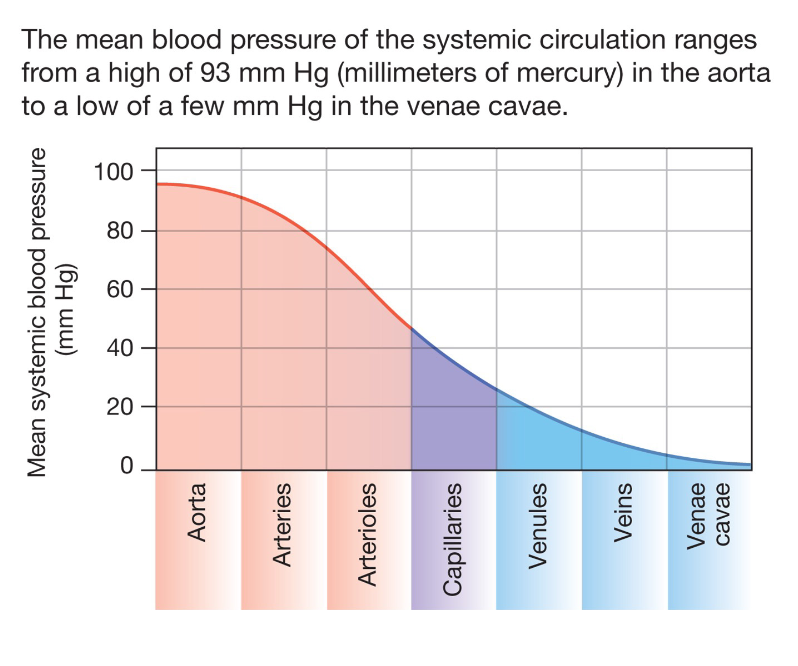
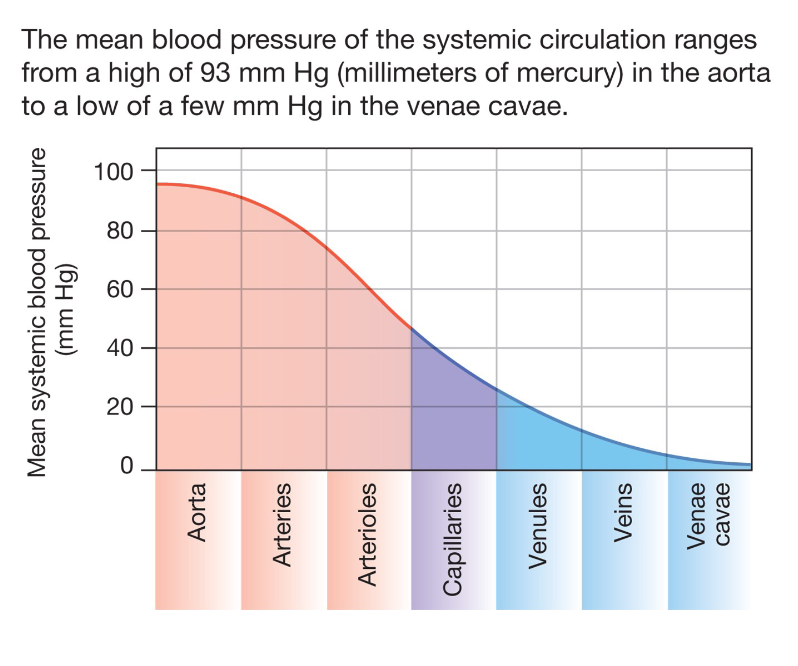
Blood pressure is highest at or near its source (the heart)
Decreases as it progresses
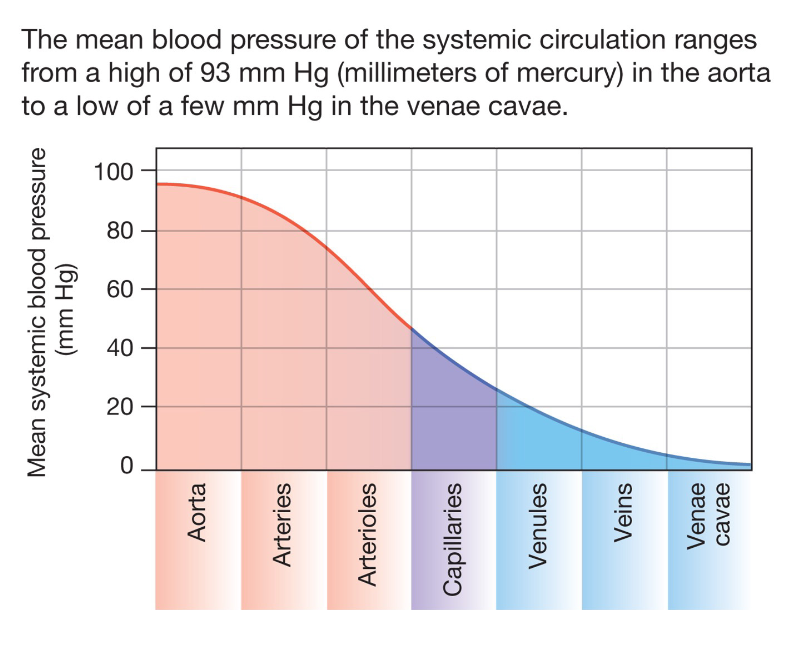
Note the dynamic drop in pressure by the time blood gets to the capillaries
Allows for slower movement to facilitate transfer of gases, waste, and nutrients
Capillaries are also very delicate
The heart is responsible for getting blood to tissues, not for bringing low pressure blood in the venules and veins back to it
There are two other mechanisms for this
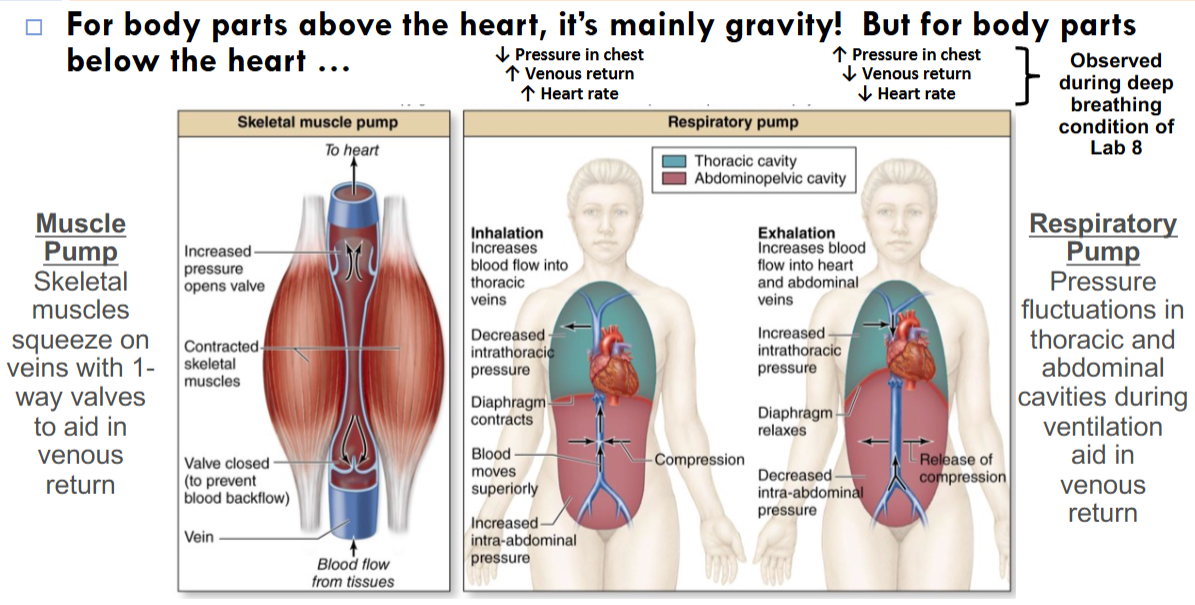
How is venous return accomplished?
For body parts above the heart, it’s mainly gravity but for body parts below the heart…
Sympathetic efferent pathways stimulate greater activity and efficiency in both pumps when activity levels increase

